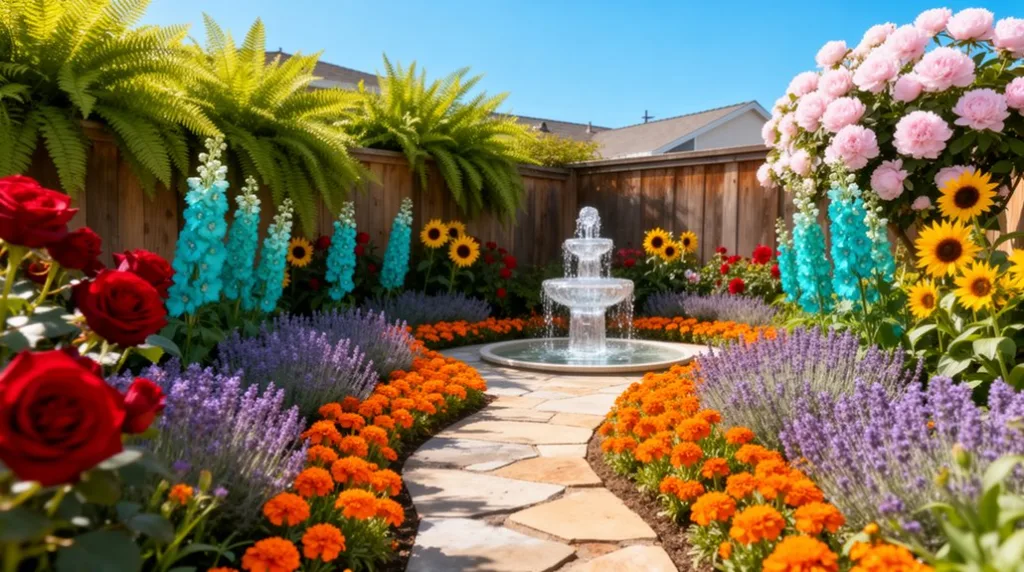
You want a backyard that stays vibrant all year, but you’re not sure where to start. Imagine mixing bold pollinator‑friendly perennials with low‑maintenance annuals, then layering textures and colors for depth. Add fragrant borders, evergreen structure, and a spring bulb burst, all tied together with smart mulch and stone accents. The next step shows how each idea fits together and why the timing of blooms matters.
Key Takeaways
- Use color‑blocking with solid‑colored perennials, arranging tall, medium, and low plants in distinct blocks for bold, cohesive visual impact.
- Combine pollinator‑friendly species like coneflower, bee balm, and Russian sage to attract bees, butterflies, and hummingbirds while providing continuous bloom.
- Incorporate a wildflower meadow with staggered bloom times—early poppies, mid‑season coneflowers, late asters—for season‑long color and habitat.
- Add structural elements such as a trellis with climbing morning glories and a serpentine dwarf‑zinnia path to create vertical interest and vibrant walkways.
- Plant shade‑tolerant groundcovers (hostas, ferns) and edible nasturtiums in partially shaded zones to fill gaps and extend the garden’s color palette.
Choose a Bold Pollinator‑Friendly Perennial Bed

Usually you start with a striking, pollinator‑friendly perennial bed that draws bees, butterflies, and hummingbirds while adding bold color to your garden. Pick a mix of tall, medium, and low‑growth plants to create layered interest and easy access for pollinators.
Plant coneflower (Echinacea) for bright pinks and purples, Russian sage for silvery foliage and summer blooms, and bee balm for aromatic, tubular flowers that hummingbirds love. Space each specimen about 18‑24 inches apart to allow airflow and reduce disease.
Amend the soil with compost, then water thoroughly after planting; keep the bed moist for the first month. Mulch with shredded bark to retain moisture, suppress weeds, and maintain a tidy appearance throughout the growing season.
Create a Low‑Maintenance Annual Mix for Summer Color

Start with a handful of hardy, heat‑tolerant annuals that thrive on minimal care. Choose marigolds, petunias, and zinnias for bright, nonstop color. Plant them in groups of three, spacing 12‑18 inches apart, and water only when the soil feels dry. Fertilize once with a slow‑release blend, then let the plants self‑sustain. Mulch to suppress weeds and retain moisture, and deadhead any faded blooms to keep the display tidy.
| Plant | Height (in) | Bloom Time |
|---|---|---|
| Marigold | 12‑18 | Summer‑Fall |
| Petunia | 10‑12 | Spring‑Fall |
| Zinnia | 18‑24 | Summer‑Fall |
| Cosmos | 24‑30 | Summer‑Fall |
Build a Color‑Block Flower Garden With Contrasting Hues

When you group bold, solid‑colored perennials in distinct blocks, the garden instantly becomes a striking visual puzzle; choose a palette of complementary hues—like deep violet lavender beside sunny yellow coreopsis—to create contrast, then plant each block in uniform rows or curves, spacing the specimens 12‑18 inches apart so the colors stay crisp and the design stays easy to maintain.
Pick a soil‑draining site, amend it with compost, and mark block outlines with string or garden hose. Use edging material to keep blocks tidy and prevent creeping species from spilling over.
Water deeply after planting, then mulch to retain moisture and suppress weeds.
Maintain color intensity by deadheading spent blooms and dividing overcrowded clumps each spring. This approach yields a vibrant, low‑maintenance backdrop that highlights each hue’s brilliance.
Layer Tall, Medium, and Short Stalks for Texture
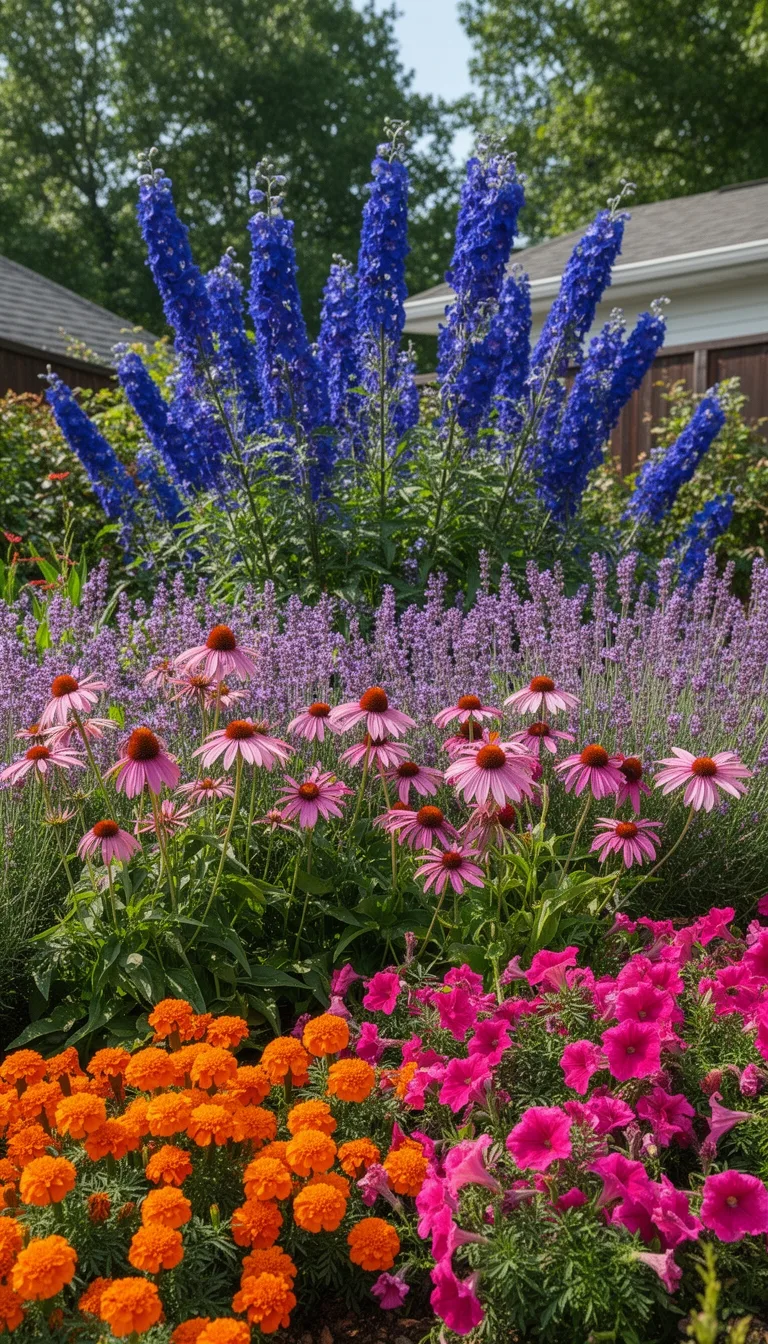
If you arrange plants by height—tall perennials at the back, medium‑sized in the middle, and short groundcovers up front—you instantly add depth and texture to any garden.
Choose a vertical line of spikes, such as ornamental grasses or delphiniums, to draw the eye upward.
Fill the middle tier with medium stalks like coneflowers, coreopsis, or dwarf lavender, which provide color without overwhelming the backdrop.
Plant low‑lying groundcovers—creeping thyme, sedum, or dwarf ajuga—along the front edge to soften edges and create a lush carpet.
Keep spacing consistent to avoid crowding; each layer should have room to breathe and bloom.
Regularly deadhead and trim to maintain shape, ensuring the texture stays vibrant throughout the season.
Add a Fragrant Flower Border of Lavender & Rosemary

A few well‑placed lavender and rosemary shrubs can turn a plain garden edge into a fragrant, low‑maintenance border.
Choose a sunny spot with well‑draining soil, then space plants 2–3 feet apart to allow airflow.
Plant lavender at the front for color, rosemary behind for height and texture.
Mulch with gravel to suppress weeds and retain heat.
Water sparingly after establishment; both herbs thrive on drought.
Trim rosemary after flowering to keep the border tidy and encourage fresh growth.
- Select hardy Lavandula angustifolia varieties
- Use rosemary (Rosmarinus officinalis) with upright growth
- Plant in raised beds or mounds for drainage
- Apply a light layer of sand‑based mulch
- Prune annually after bloom for shape and vigor
Plant a Naturalistic Wildflower Meadow
After the fragrant border, you can let the garden breathe by planting a naturalistic wildflower meadow that blends color, texture, and pollinator support.
Choose a mix of native perennials, annuals, and grasses suited to your climate and soil.
Prepare the site by removing weeds, loosening the top 6‑8 inches, and adding a thin layer of compost.
Scatter seed evenly, then lightly rake it into the soil; a seed‑to‑soil contact of about ¼ inch works best.
Water gently until germination, then let rain take over.
Mulch with straw or shredded bark to retain moisture and suppress weeds.
Aim for a staggered bloom schedule—early‑season poppies, mid‑season coneflowers, late‑season asters—to keep the meadow vibrant all summer.
Maintain Your Wildflower Meadow for Year‑Round Health
Regularly inspecting your meadow keeps it thriving year‑round; start by walking the rows each spring to spot dead or overcrowded stems, then trim and thin them to maintain airflow and light penetration.
Keep soil moisture steady with a drip line or soaker hose, especially during dry spells, and mulch lightly to retain humidity.
Divide and reseed patches every two years to boost vigor and prevent monocultures.
Watch for invasive weeds and pull them promptly before they seed.
In fall, cut back tall foliage and spread a thin layer of compost to feed roots for winter.
- Water deeply, but infrequently, to encourage deep roots.
- Remove spent blooms to redirect energy.
- Apply a balanced organic fertilizer in early spring.
- Use a garden fork to loosen compacted soil each season.
- Rotate mowing height to avoid over‑cutting.
Build a Raised Bed With Cascading Petunias & Begonias
Keeping your meadow vibrant shows you already understand the value of good soil and moisture management, which translates directly to a successful raised bed.
Choose a 12‑inch‑deep frame, line it with landscape fabric, then fill with a 1:1 mix of compost and coarse sand for drainage.
Plant petunias at the back, spacing 8‑10 inches, and arrange begonias in front, spacing 6‑8 inches, allowing each cascade to spill over the edge.
Water thoroughly after planting, then set a drip‑irrigation line to keep soil consistently moist without waterlogging.
Mulch with shredded bark to suppress weeds and retain moisture.
Fertilize every four weeks with a balanced liquid feed, and deadhead spent blooms to encourage continuous color throughout the season.
Add a Sun‑Loving Succulent Border for Drought Tolerance
Choosing a sun‑loving succulent border not only boosts drought tolerance but also adds striking texture to your raised bed.
Succulents store water, need minimal irrigation, and thrive in full sun, making them perfect for low‑maintenance borders. Plant them in well‑draining soil, space them a few inches apart, and mulch with gravel to reduce evaporation.
Their varied colors and forms create visual interest year‑round while conserving water.
- Echeveria – rosette foliage, bright blues and pinks
- Sedum ‘Autumn Joy’ – chartreuse leaves, pink flower clusters
- Sempervivum ‘Hens and Chicks’ – tiny rosettes, hardy spreading habit
- Graptopetalum ‘Ghost’ – silvery, translucent leaves, subtle hue
- Aeonium ‘Sunburst’ – deep green foliage with orange‑red tips
These choices keep your garden resilient, attractive, and water‑smart.
Add a Seasonal Spotlight Plant to Extend Bloom Time
If you want your raised bed to stay colorful from spring through fall, add a seasonal spotlight plant that fills the gaps between your main bloomers. Choose a plant with a distinct bloom window—like a summer‑blooming coneflower, a late‑summer black-eyed Susan, or a fall‑flowering chrysanthemum—to bridge the transition periods.
Plant it in a sunny spot where it won’t compete for nutrients with taller perennials. Space it 12‑18 inches apart to allow airflow and reduce disease risk. Water consistently until established, then taper watering to encourage deeper roots.
Deadhead spent flowers to prolong display and prevent self‑seeding. By timing its peak, you’ll keep color continuous, making the bed look full and vibrant all season.
Mix Cool‑Season Blooms for Spring and Fall Interest
Combining cool‑season bloomers like early‑spring crocuses, late‑spring hellebores, and fall‑time asters creates continuous color without relying on heat‑loving perennials. You’ll keep the garden lively from March through November by layering plants that thrive in cooler temperatures.
Choose varieties with overlapping bloom periods, and pair them with low‑maintenance groundcovers that fill gaps. Plant in well‑drained soil, mulch to retain moisture, and water consistently until roots establish. This approach reduces watering needs and minimizes dead zones, letting you enjoy a vibrant backdrop all season.
- Early‑spring crocuses (bright yellows, purples)
- Late‑spring hellebores (deep reds, greens)
- Mid‑summer primroses (soft pinks)
- Early‑fall asters (lavender, white)
- Late‑fall ornamental kale (textured foliage)
Install a Vertical Trellis for Impatiens & Morning Glories
After layering cool‑season bloomers for year‑round color, add height and visual interest by installing a vertical trellis for impatiens and morning glories. Choose a sturdy, weather‑resistant trellis 6‑8 ft tall, anchor it securely, and position it where morning sun meets afternoon shade. Plant impatiens at the base for continuous color, then train morning glories to climb, creating a lush, layered effect. Water consistently, mulch to retain moisture, and prune vines to prevent overcrowding. The trellis also defines space, guiding foot traffic and framing views.
| Feature | Benefit |
|---|---|
| Height | Adds vertical dimension |
| Dual species | Extends bloom season |
| Shade tolerance | Works in mixed light |
| Easy maintenance | Simple pruning and watering |
Build a Rainbow Path With Dwarf Zinnias & Marigolds
Lay out a winding path of bright, dwarf zinnias and marigolds to create a vivid rainbow trail through your garden. Choose a serpentine layout that follows natural sightlines, then space plants 6‑8 inches apart for dense color. Mix red, orange, yellow, and orange, and violets to mimic a full spectrum.
Water regularly until seedlings root, then switch to deep, infrequent watering to encourage deep roots. Mulch with bark chips to retain moisture and suppress weeds. Keep the path clear of debris so the colors stay bold and inviting.
- Select dwarf varieties that stay under 12 inches tall
- Plant in staggered rows for a seamless gradient
- Use a garden hose with a fine spray to avoid soil compaction
- Add a low border of stepping stones for easy access
- Fertilize monthly with a balanced, slow‑release formula
Add a Water‑Feature Edge With Iris & Lotus
Your rainbow path now leads to a water‑feature edge where iris and lotus can thrive together.
Choose a shallow basin or liner, line it with waterproof material, and grade the surrounding soil to keep water at a 4‑6‑inch depth.
Plant irises in the moist, well‑drained border; they prefer full sun and will anchor the edge with their clumping roots.
Position lotus seedlings in deeper pockets, 8‑12 inches of water, using heavy pots or a floating mat to keep them stable.
Install a low‑flow pump for gentle circulation, which prevents stagnation and supplies oxygen.
Add gravel or river rock for visual texture and to suppress weeds.
Regularly remove spent foliage and trim iris leaves to maintain a tidy, vibrant edge.
Plant Shade‑Tolerant Groundcover of Hostas & Ferns
Introduce hostas and ferns as the ideal shade‑tolerant groundcover for your garden’s darker corners. Their lush foliage thrives where sunlight is scarce, filling voids with texture and color while suppressing weeds.
Choose varieties with contrasting leaf shapes and tones to create depth, and space them enough for air circulation to prevent rot.
- Plant hostas in moist, well‑drained soil; mulch to retain moisture.
- Use fern fronds (e.g., Japanese painted fern) to soften hard edges.
- Group plants by height: low‑growing hostas in front, taller ferns behind.
- Divide and replant every 3–4 years to maintain vigor.
- Pair with ornamental grasses for subtle movement in breezy shade.
These steps give you a resilient, low‑maintenance carpet that turns dim spots into thriving garden features.
Add Edible Nasturtiums for Color and Cuisine
Spice up those shady borders by planting edible nasturtiums, whose bright blossoms and peppery leaves instantly add color and flavor to your garden. Choose a sunny spot or a light‑shaded border; nasturtiums thrive in well‑draining soil and tolerate modest neglect.
Sow seeds directly after the last frost, spacing them 12‑18 inches apart, and water lightly until germination. Once seedlings appear, thin to the strongest plants and mulch to retain moisture.
Harvest leaves for salads, sandwiches, and garnish; pick flowers for salads, desserts, or infused vinegar. Their sprawling habit suppresses weeds, reducing maintenance.
Rotate the crop yearly to prevent soil‑borne diseases, and compost spent foliage. You’ll enjoy a vibrant, edible display that boosts both aesthetics and cuisine.
Design a Cottage‑Style Garden With Herbs & Flowers
When you blend herbs and flowers in a cottage‑style garden, you create a fragrant, low‑maintenance oasis that feels both rustic and inviting.
Choose a mix of hardy herbs and native perennials, group them in informal clusters, and let them spill over low fences or garden boxes.
Keep pathways narrow and winding to encourage strolling, and use reclaimed wood or stone for edging.
Water wisely with drip irrigation, and mulch to retain moisture and suppress weeds.
Harvest herbs regularly to promote bushier growth, and deadhead flowers to extend bloom time.
- Lavender, rosemary, and thyme for scent and culinary use
- Shallow‑rooted sage mixed with dwarf coneflower
- Basil paired with marigold for color contrast
- Chives interspersed with sweet pea vines
- Mint contained in a raised bed to prevent spreading
Create a Moon Garden With Evening Primrose & Other Night‑Bloomers
After the herb‑and‑flower cottage feels fragrant and low‑maintenance, shift your focus to a moon garden that shines after dusk.
Choose evening primrose, moonflower, and night phlox for their luminous white or pale‑colored blooms that reflect moonlight. Plant them in raised beds or shallow containers, spacing 18‑24 inches apart for airflow.
Amend soil with coarse sand and organic compost to improve drainage, then water deeply once a week, reducing frequency as plants mature. Add low‑lying, silver‑foliaged foliage like lamb’s ear or dusty miller to enhance the night‑time sparkle.
Install subtle LED or solar spotlights to highlight focal points without overwhelming the natural glow. Mulch with fine bark to suppress weeds and retain moisture, and prune spent stems after flowering to encourage a second flush.
Plant a Butterfly Garden With Milkweed & Coneflower
Often the most rewarding garden projects start with a simple goal: attracting butterflies.
Plant milkweed and coneflower in sunny spots, space them 2‑3 feet apart, and water consistently until roots establish.
Milkweed supplies monarch larvae food, while coneflower offers nectar for adults.
Add a shallow water source and a few flat stones for basking.
Avoid pesticides; they’ll deter the very pollinators you want.
- Choose native milkweed varieties (e.g., Asclepias tuberosa for local butterflies.
- Select coneflower species with long blooming periods, like Echinacea purpurea
- Plant in well‑drained soil enriched with compost.
- Mulch to retain moisture and suppress weeds.
- Group plants in clusters to create visual impact and easier navigation for butterflies.
Add Low‑Light Accent Flowers: Japanese Anemone & Astilbe
Add Japanese Anemone and Astilbe to your shade‑loving beds for instant color and texture. Both thrive in partial to full shade, so you can fill dark corners without extra sunlight. Plant anemones in late summer; they send up tall stems with delicate white or pink blooms that last into fall.
Pair them with astilbe, which offers feathery plumes of red, pink, or white that flourish in moist, well‑drained soil. Space plants 12‑18 inches apart for airflow, and mulch to retain moisture. Divide clumps every three years to keep vigor high.
Choose a mix of heights—anemone 2‑3 ft, astilbe 1‑2 ft—to create layered interest. Water consistently during dry spells, and you’ll enjoy a lush, low‑light accent garden all season.
Create a Formal Boxed Flower Garden With Boxwood & Petunias
If you’ve already brightened shady corners with Japanese anemone and astilbe, you can now shape a crisp, formal box garden that showcases boxwood’s evergreen structure alongside the vivid, continuous blooms of petunias.
Start by laying out a rectangular frame with 12‑inch‑wide boxwood hedges, trimming them to a uniform height of 18 inches. Plant petunias in dense, staggered rows inside the frame, choosing a mix of colors for a seamless gradient. Water consistently, mulch to retain moisture, and fertilize every four weeks to keep blooms prolific. Prune boxwood lightly in early spring to maintain sharp edges and prevent overgrowth.
- Select disease‑resistant petunia varieties
- Space plants 8‑10 inches apart for full coverage
- Use a drip‑irrigation line for even watering
- Apply a slow‑release fertilizer at planting and mid‑season
- Trim boxwood annually to keep clean, geometric lines
Apply Color‑Theory to Create a Cohesive Visual Theme
When you apply basic color‑theory principles, you can turn a mix of petunias and boxwood into a harmonious visual story rather than a random splash of hues.
Start by picking a dominant hue—say a cool blue—and surround it with complementary oranges or yellows to create contrast without chaos. Use analogous colors, like violet and magenta, for a soothing gradient that flows across beds.
Limit your palette to three shades; too many will clash. Group plants in clusters of the same hue to reinforce the theme, then intersperse accent foliage for texture.
Remember the 60‑30‑10 rule: 60 % dominant, 30 % secondary, 10 % accent. This structure guides the eye and keeps the garden looking intentional and balanced.
Incorporate Evergreen Shrubs for Year‑Round Structure
A well‑planned color scheme looks even better when evergreen shrubs give the garden structure throughout the year. You’ll create visual anchors that balance seasonal blooms and keep the space feeling full even in winter.
Choose varieties with contrasting foliage, texture, and height to add depth without overwhelming color. Plant them in groups of three for a natural look, and space them to allow light to reach perennials. Maintain shape with light pruning after flowering, and mulch to protect roots.
- Boxwood: dense, low‑grow, perfect for hedges.
- Dwarf Alberta spruce: upright, fine needles, winter interest.
- Inkberry holly: glossy leaves, berries for wildlife.
- Japanese pieris: glossy leaves, early spring blooms.
- Mahonia: leathery leaves, bright yellow flower clusters.
Add a Spring Bulb Display With Tulips & Daffodils
Planting a spring bulb display with tulips and daffodils instantly lifts your garden’s early‑season appeal, delivering bold color and height before perennials awaken.
Choose a sunny, well‑drained spot and amend the soil with compost to improve fertility.
Plant bulbs 4–6 inches deep, spacing tulips 6–8 inches apart and daffodils 8–10 inches apart for airy growth.
Arrange them in clusters of mixed colors to create visual interest, and stagger planting dates by a week for a longer bloom period.
Water thoroughly after planting, then let the soil dry between waterings.
Mulch lightly to retain moisture and suppress weeds, but keep it thin enough to allow easy spring growth.
As the shoots emerge, stake taller tulip varieties to prevent wind damage, and enjoy the vibrant carpet that greets your garden each spring.
Finish With Mulch & Decorative Stones to Highlight Color Pops
Choosing the right mulch and decorative stones instantly amplifies the vivid hues of your spring bulbs. A well‑chosen ground cover frames the colors, retains moisture, and reduces weeds, letting each bloom stand out.
Pick a mulch that contrasts with your flower palette—dark cedar for bright yellows, light straw for deep purples. Then scatter decorative stones to create visual “pops” that catch the eye and guide the gaze.
Keep the layer even, about 2–3 inches deep, and edge it neatly for a polished look. This final touch ties the garden together while staying low‑maintenance.
- Dark cedar mulch for contrast
- Light straw mulch to brighten bold colors
- River rock stones for reflective accents
- Colored glass pebbles for playful sparkle
- Slate chips for a sleek, modern edge
Conclusion
By mixing bold perennials, low‑maintenance annuals, color‑blocking beds, layered textures, fragrant borders, and evergreen shrubs, you’ll keep pollinators buzzing and colors shifting all season. Add spring bulbs, mulch, and decorative stones for structure, then set up drip irrigation and staggered bloom schedules. The result is a vibrant, low‑maintenance backyard that stays interesting year after year, with every corner offering a fresh splash of color and texture.
The Only Tools You Need for a Thriving Garden 🌱
Whether you're a weekend gardener or growing daily — these hand-picked tools make every session faster, easier, and more satisfying.