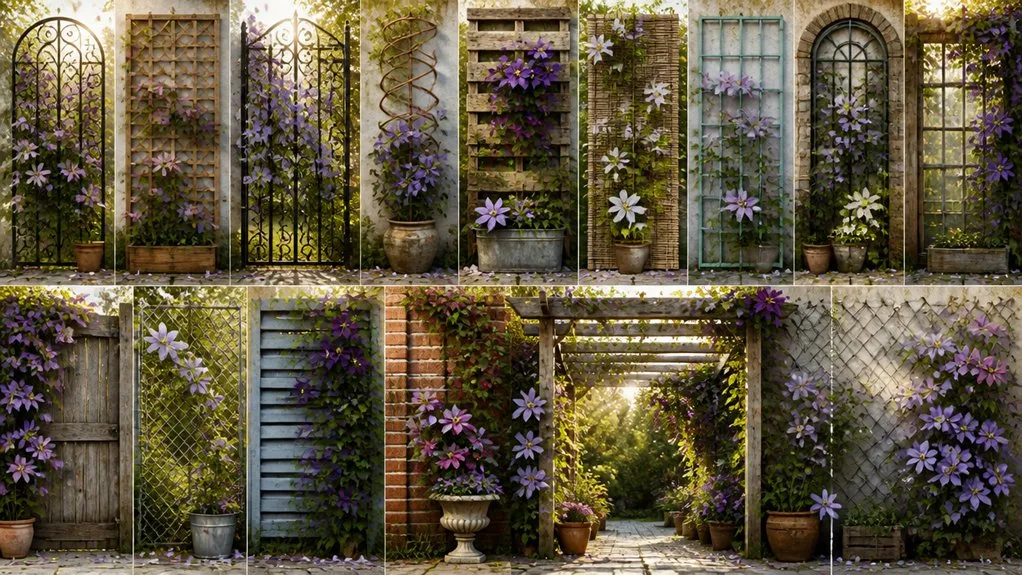
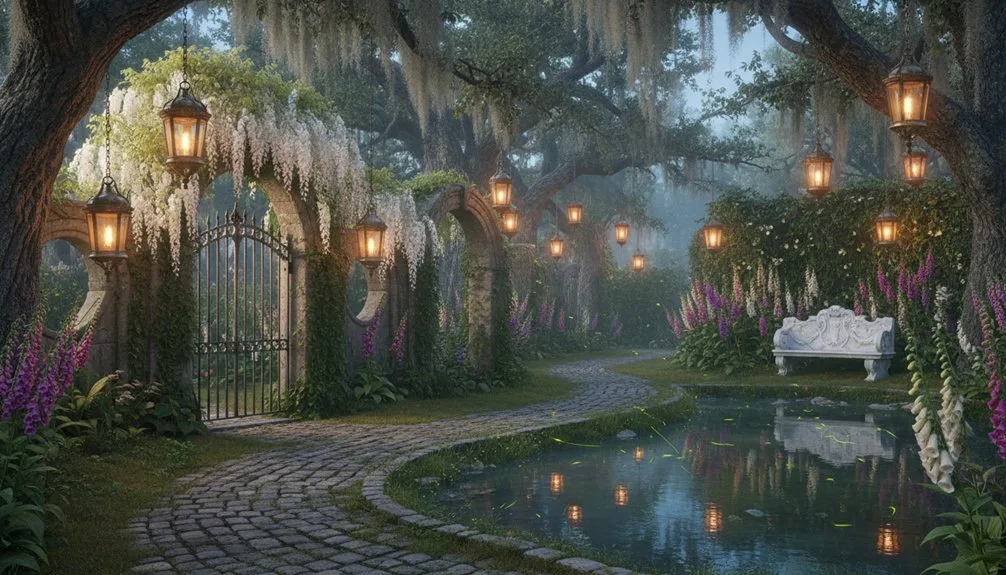
You’ll transform your space into an enchanted fairy garden by selecting dappled-shade locations beneath mature trees, then layering plants strategically—tall shrubs at peripheries, medium plantings mid-garden, low ground covers near seating. Guide exploration with curving pathways embedded with LED stones. Install pondless waterfalls or bubble fountains as focal points. Choose a primary color palette—cool blues with silver or warm golds with chartreuse—and repeat three main colors plus one accent. Position fragrant herbs along paths and add ambient lighting for twilight magic. The specific techniques for creating mystery and depth await your discovery.
Key Takeaways
- Choose dappled-shade locations with curving pathways and off-center furniture to create an enchanting, exploratory atmosphere.
- Layer plants by height—tall shrubs peripherally, medium mid-garden, low ground covers near seating—for visual depth and intrigue.
- Install low-voltage moonlighting, embed LEDs in stepping stones, and position stained-glass panels for magical twilight effects.
- Place fairy figurines strategically in treetops, mushroom clusters, and structures; use aromatic plants like lavender and honeysuckle for sensory immersion.
- Integrate whimsical hardscapes: miniature cottages, moss-covered water features, and mixed stepping-stone shapes to enhance fairytale storytelling.
Choose Your Fairy Garden Location and Size
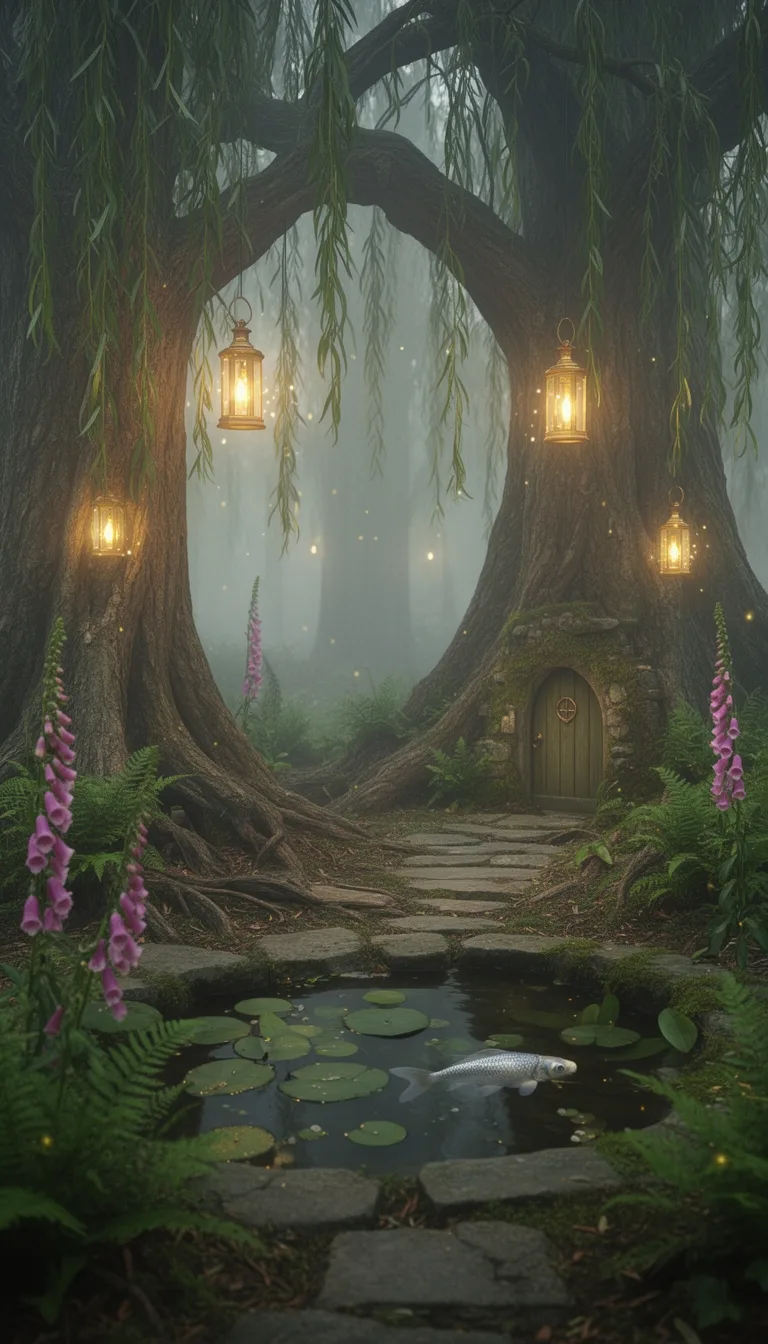
Where should you establish your fairy garden?
Scout locations that combine accessibility with atmospheric appeal.
Natural hollows at tree bases with jutting roots provide ideal settings, while transitional zones between maintained and wild spaces attract fairy garden aesthetics.
Select spots receiving dappled shade—essential for plant health and fairy attraction—avoiding intense direct sunlight that fades delicate features.
Consider your space constraints.
Large yards accommodate ground-level gardens beneath substantial trees, while compact areas benefit from portable containers like wheelbarrows, terra cotta trays, or window boxes.
Choose sheltered placements protected from excessive rain and positioned for frequent visibility and enjoyment.
Proximity to natural features matters: meadows, hiking paths, or water sources enhance the enchanted atmosphere while supporting beneficial insects.
Ensure your chosen location remains accessible for regular maintenance and appreciation.
Scale your garden proportionally—small-growing plants maintain fairy proportions without overwhelming the space.
Map Out Pathways With Magical Stepping Stones

How you arrange your stepping stones fundamentally shapes your fairy garden’s flow and visual impact.
Start by excavating 4-6 inches below ground, then add compacted gravel for drainage and level with sand.
Set large flat stones—at least 18 inches wide—flush with your lawn for seamless integration.
Space stones 24 inches apart to create a comfortable walking rhythm while allowing room for plant growth between them.
Mix circular, irregular, and square shapes to guide visitors naturally through your space.
Rotate some 24-inch bluestone squares diagonally for dynamic visual interest.
Vary stone sizes to encourage downward focus and require thoughtful stepping.
Embed LED lights into select stones for ethereal nighttime glow, or surround stepping stones with creeping thyme and drought-resistant plants for a floating, enchanted appearance.
Create Water Features: Ponds, Fountains, and Faux Waterfalls
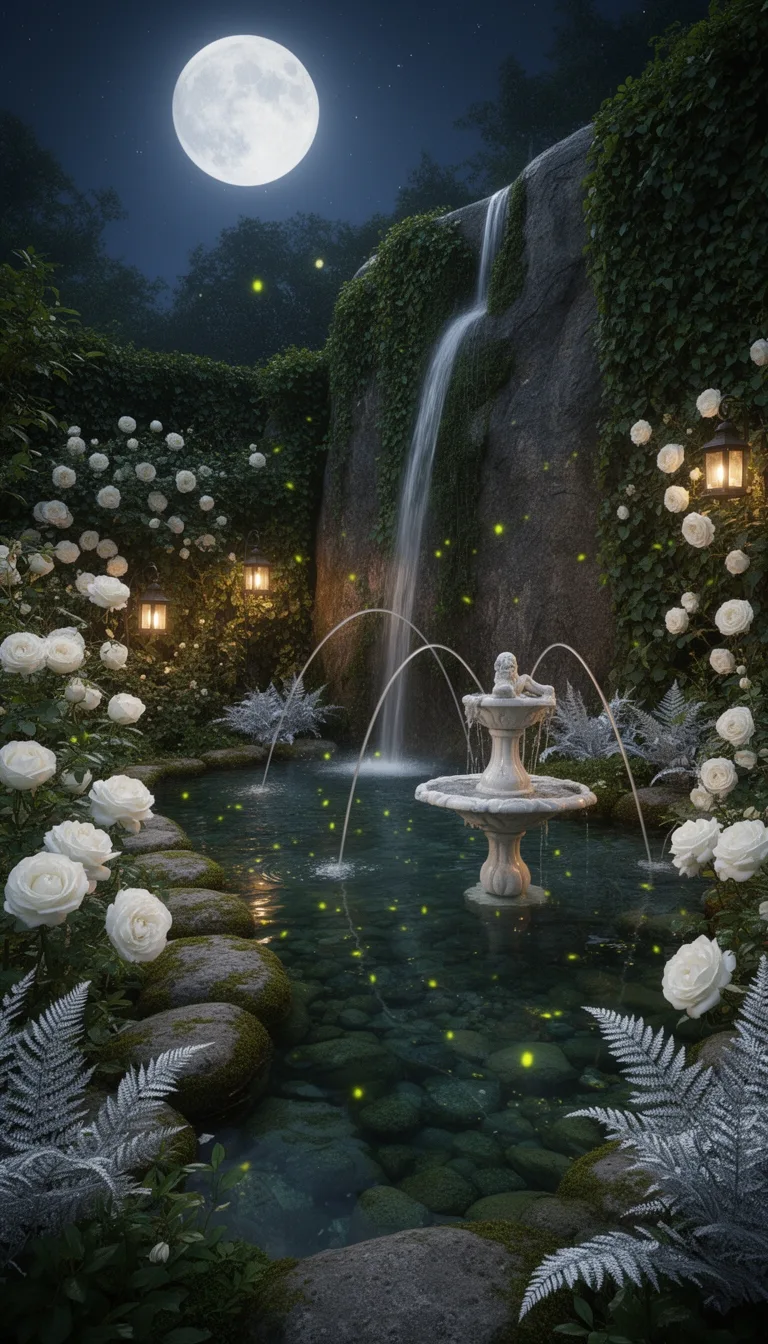
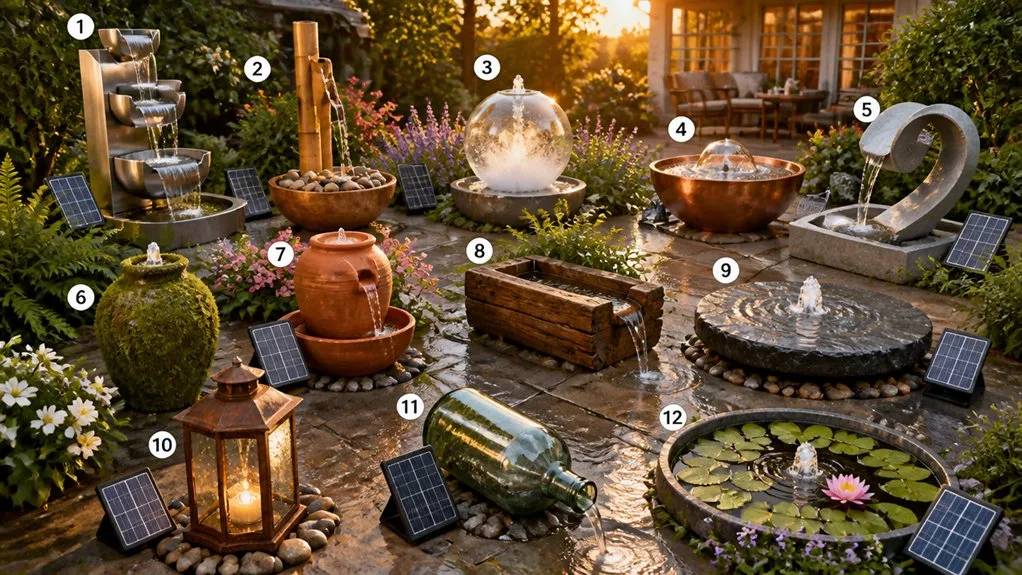
Water features transform your secret garden from a quiet retreat into a dynamic sanctuary by introducing movement, sound, and reflective surfaces that enhance the enchanted atmosphere you’ve established with your stepping stone pathways.
You’ll want to select features that match your space and maintenance capacity:
- Ponds and pondless waterfalls offer visual appeal with minimal upkeep, using recirculating pumps to create cascading water effects without basin collection.
- Sphere and bubbler fountains provide serene, space-efficient options that fit compact yards while delivering soothing acoustic qualities.
- Stacked rock waterfalls deliver luxurious focal points using concrete, fiberglass, or natural stones positioned strategically for privacy and visual interest.
Install your chosen feature by digging a basin, embedding the pump,
and surrounding it with moss-covered rocks and plantings like boxwoods for natural integration.
Select Plants That Tell Your Fairy Tale Story
Since your water features have established the garden’s sensory foundation, you’ll now choose plants that reinforce your fairy tale narrative through purposeful selection.
| Plant Category | Recommended Species |
|---|---|
| Focal Flowers | Johnny Jump Ups, Celosia, Dahlias |
| Ground Cover | Scotch Moss, Creeping Thyme, Irish Moss |
| Backdrop Plants | Foxgloves, Corncockle, Cosmos |
Select Johnny Jump Ups for their distinctive faces that evoke storybook characters. Layer Creeping Thyme as ground cover—it’s hardy, fragrant, and attracts pollinators. Position Foxgloves as dramatic backdrops, reaching three feet with delicate flowers suggesting magical shelter.
Incorporate Sedum varieties for drought-tolerant texture and Pilea Glauca for silvery “fairy dust” effects. Use Miniature Ivy to frame intimate spaces without overwhelming compact areas. Combine sun-loving annuals like Petunias with shade-tolerant Trilliums to maximize your garden’s varied microclimates while maintaining narrative cohesion throughout.
Layer Your Plantings for Hidden Depth and Mystery
What transforms a flat garden into an enchanting landscape you’ll want to explore? Strategic layering creates the illusion of hidden spaces and mystery.
You’ll build depth by establishing three distinct zones:
- Backbone Layer – Position tall plants (7+ feet) like conifers or climber-covered walls at the rear to frame your garden’s structure
- Midground Layer – Fill space with medium shrubs and perennials (2-6 feet), weaving them between background and foreground to suggest concealed areas
- Foreground Layer – Plant low specimens (6 inches–2 feet) at bed edges, allowing cascading ground covers to blur transitions
Underplant taller specimens with contrasting textures like creeping gunnera or sword ferns to add visual intrigue at ground level.
Mass plants in overlapping clusters using repetition—repeat colors, grasses, or shapes—ensuring scale matches your space. This intermingling technique produces cohesion while revealing tantalizing glimpses of hidden gardens beyond.
Build Whimsical Shelters: Toadstools, Cottages, and Tree Stumps
How do you transform your secret garden into an inhabited fairytale landscape?
You’ll build whimsical shelters that anchor your design and spark imagination.
Start with fairy cottages.
Purchase pre-made options online or construct them from wood, cardboard boxes, or plastic containers.
Add miniature doors, windows, and furniture for authenticity.
Position these structures in garden corners or at tree bases to create village clusters.
For tree installations, attach fairy windows directly to trunks using nails or string.
Paint frames yellow to simulate glowing interiors, transforming ordinary trees into believable fairy residences.
Incorporate mushroom seats and tree stump shelters as functional gathering spots.
These natural elements provide seating while maintaining your fairytale aesthetic.
Strategic placement of arches between trees creates portal entrances.
Direct foot traffic through your garden using these shelters as waypoints, guiding visitors along predetermined pathways throughout your enchanted landscape.
Design Hidden Seating Nooks Throughout Your Garden
Your whimsical shelters establish gathering points throughout the garden, and now you’ll create intimate retreats by designing hidden seating nooks that invite visitors to linger and explore.
Transform compact areas into functional spaces with strategic placement:
- Micro seating solutions – Position a single chair with a side table in narrow entries, or use foldable stools in tight corners. Rustic benches fit seamlessly into compact garden spaces without consuming square footage.
- Layered privacy screening – Stack tall backdrop plants, medium shrubs, and low borders vertically. Oversized planters establish natural enclosures while maintaining openness. Climbing roses and ivy-covered walls provide romantic concealment.
- Architectural integration – Install slim vertical slats in three-foot-wide zones for contemporary definition. Pair white stucco walls with pea gravel patios, creating clean hideaways that balance privacy with visual flow.
Light Your Fairy Garden for Twilight Magic
As dusk settles over your secret garden, thoughtfully placed lighting transforms hidden nooks into enchanted spaces that invite exploration after dark.
Install moonlighting high in trees using low-voltage fixtures angled downward at 4000K color temperature, creating soft ambient glows throughout patios and garden beds.
Position spotlights strategically to cast dramatic shadows of statues and sculptures against walls, directing focus toward textures and height variations.
Place lights behind tall trees and bushes to silhouette their unique shapes against vertical surfaces, creating striking contrast.
Line pathways with alternating path lights spaced several feet apart for safety and subtle illumination.
Enhance water features with underwater fixtures that reflect landscape elements, amplifying the garden’s mysterious allure.
These layered lighting techniques craft the twilight magic your fairytale garden deserves.
Position Sparkle: Where Crystals and Glass Catch Light
Strategic placement of crystals and glass elements transforms your garden’s lighting scheme from functional to magical, capturing and refracting light throughout different zones.
Position iridescent gazing balls at garden intersections where sunlight peaks during golden hour, creating shifting color displays. Place clear glass vases along pathways to amplify surrounding plant hues while reflecting ambient light. Install metallic sculptures as focal points in open areas where they’ll catch morning and afternoon rays.
- Mount stained glass panels on fence lines facing east or west to project prismatic patterns across planting beds
- Hang crystal prisms from tree branches above seating areas for dancing light effects at dusk
- Arrange upcycled glass flowers among plantings to create concentrated sparkle zones that draw visitors deeper into garden spaces
This layered approach establishes visual depth while guiding movement through your secret garden.
Plan for Wildlife: Attracting Bees, Butterflies, and Birds
How can you transform your secret garden into a thriving ecosystem that supports local wildlife?
Start by planting diverse native species adapted to your local climate—they’ll thrive with minimal maintenance while providing essential food and shelter.
Create layered vegetation from ground cover to trees, establishing habitats for bees, butterflies, and birds.
Add water features like bird baths and small ponds to attract amphibians and dragonflies.
Install birdhouses and bat boxes for dedicated nesting areas.
Let grass grow wild in patches and leave brush piles for hiding spots.
Minimize pesticide use to protect beneficial insects, and reduce night lighting to safeguard nocturnal species.
These practices work synergistically, doubling local wildlife numbers while supporting declining pollinators like monarchs.
Balance Open Spaces With Dense, Lush Growth
Why do the most enchanting secret gardens feel both intimate and spacious? You’ll achieve this balance by strategically layering vegetation while preserving breathing room for movement and rest.
Create distinct zones using varied plant heights—tall shrubs at peripheries, medium plantings mid-garden, and low ground covers near seating areas. This tiered approach establishes visual depth without cramping your space.
Incorporate open pathways that wind through dense growth:
- Curving routes disappearing around corners guide exploration and discovery
- Irregular stepping stones partially hidden by moss create subtle movement
- Off-center furniture placement along edges maximizes open central areas
Use fine-textured foliage—’Soft Caress’ Mahonia or clover patches—to soften density visually. This contrasting interplay between lush enclosure and open refuge transforms your garden into a mysterious, inviting sanctuary.
Add Bridges and Crossing Points to Guide Movement
Bridges and crossing points transform your secret garden into a navigable landscape while deepening the sense of discovery. You’ll guide visitors naturally through densely planted areas by strategically placing wooden or stone crossings over water features and pebble streams.
Arched designs—whether wrought iron or hewn log—create focal points that reward exploration. For narrow spaces, flat stone slabs provide low-profile passages that blend seamlessly with your surroundings.
Pair bridges with contrasting pathway textures like cobblestones or rockways to emphasize direction and flow. Rope-handled cedar bridges over deeper water add dramatic interest, while cut rock footpaths extend the bridge aesthetic throughout your garden.
These crossings aren’t merely functional; they’re narrative devices that transform movement into adventure, encouraging visitors to venture deeper into hidden spaces.
Use Aromatic Herbs and Flowers to Engage the Senses
Where movement through your garden engages the eye, fragrance deepens the experience by activating memory and emotion through scent. You’ll create a multisensory fairytale by strategically positioning aromatic plants throughout your secret garden.
Position lavender and thyme along pathways so visitors brush against foliage, releasing essential oils.
Plant herbs like rosemary and sage in seating areas to create invigorating scent clouds.
Use climbing honeysuckle and jasmine on vertical structures to layer fragrance overhead.
Develop year-round aromatic coverage:
- Spring: snowdrops, crocuses, and grape hyacinths
- Summer: lavender, rosemary, and thyme for continuous mid-year scents
- Fall and winter: chrysanthemums, dianthus, and evergreens maintaining seasonal fragrance
Integrate culinary herbs near entryways and patios for maximum contact-triggered aroma release.
This approach transforms your garden into an immersive sensory sanctuary where visitors experience fragrance at multiple levels simultaneously.
Place Fairy Figurines and Character Details Intentionally
While fragrance engages visitors through scent alone, fairy figurines and companion characters ground your secret garden in visual storytelling by creating focal points and narrative moments throughout the landscape. You’ll strategically position handcrafted fairies in unexpected locations—treetops, mushroom seats, garden corners—to establish depth and intrigue. Companion woodland animals like deer and rabbits enhance the enchanted atmosphere when clustered near pathways and wells. You can attach figurines to trees, fences, and arches to create village-like dimension. Arrange groupings around fountains and wishing wells as natural gathering spots. Incorporate miniature fairy houses and shops to establish narrative context. Scale matters: use life-sized statues for prominent yard areas while positioning teacup-sized figures on windowsills.
| Placement Location | Figurine Type | Scale | Visual Effect | Narrative Purpose |
|---|---|---|---|---|
| Treetops | Seated fairies | Small-medium | Elevated discovery | Hidden village watchers |
| Mushroom clusters | Grouped fairies | Miniature | Ground-level gathering | Social community scenes |
| Pathway edges | Woodland animals | Medium | Linear movement | Journey guides |
| Water features | Fairies on stones | Medium-large | Reflective focal points | Magical gathering spaces |
| Garden structures | Dragons, gnomes | Varied | Architectural accent | Mythical protection |
Define Your Color Palette: Cool Blues or Warm Golds
How you’ll establish your secret garden’s emotional foundation depends entirely on choosing between cool blues or warm golds as your primary palette.
Cool blues create serene, Zen-like atmospheres perfect for hidden retreats.
Warm golds generate welcoming energy ideal for enchanted entrances.
You’ll want to select three main colors plus one highlight accent to maintain visual cohesion.
Consider these strategic applications:
- Cool blues with silver accents—Plant lavender, delphiniums, and white flowers in quiet corners to evoke tranquil fairytale calm
- Warm golds near sunny entries—Use yellows, soft oranges, and chartreuse to create magical glow and draw visitors inward
- Analogous schemes throughout—Combine purple-red or yellow-orange groupings in large beds, repeating color themes for harmony
This structured approach ensures your palette reinforces the garden’s mystical character while maintaining visual balance throughout your space.
Connect Your Fairy Garden to Existing Landscapes
Your fairy garden doesn’t need to exist in isolation—you can seamlessly integrate it into your established landscape by carving out small focal points within existing garden beds or positioning containers strategically around your yard.
Trees provide ideal settings with natural shade and environmental conditions that support miniature plantings.
Layer larger containers as bases with smaller pots nested inside to create visual depth.
Consider repurposed washtubs or birdbaths as standalone features that echo your broader garden aesthetic.
Raised beds elevate magical spaces while maintaining environmental control.
Coordinate thematic elements with your landscape style: woodland features near tree bases, beach components near water features, or formal structures within garden pathways.
Ensure drainage holes in all containers prevent water damage to surrounding areas.
Water, Feed, and Refresh Your Garden Seasonally
Once you’ve positioned your fairy garden within your landscape, maintaining it requires consistent attention to watering, feeding, and seasonal upkeep.
1. Watering Protocol: Check soil moisture by inserting your finger one inch deep; water thoroughly when dry.
Adjust frequency based on sunlight exposure, season, and plant type.
Succulents require drying intervals between waterings, while hostas prefer consistent moisture.
Reduce watering during winter to prevent freeze-drying, ensuring drainage holes prevent water accumulation.
2. Fertilizing Schedule: Apply balanced liquid fertilizer every 2-4 weeks during active growth periods in spring and summer.
Incorporate low-nitrogen slow-release fertilizers like Milorganite into topsoil before planting to avoid excessive growth requiring frequent pruning.
3. Seasonal Maintenance: Prune selectively in late winter or early spring to maintain compact form.
Refresh decorative elements seasonally—autumn gourds, winter pine cones, spring moss.
Clear debris and weatherproof hardscaping annually to preserve your garden’s enchanted appearance.
Add Personal Touches That Make It Uniquely Yours
What transforms a well-maintained fairy garden into a reflection of your personality? Deliberate customization through strategic design choices.
Incorporate sensory elements that engage multiple senses: fragrant flowers and herbs stimulate smell, while windchimes introduce auditory dimension.
Layer textured foliage—combining coarse, medium, and fine varieties—to create visual depth.
Position vintage lanterns and solar lights along pathways for ambient evening illumination.
Personalize your entrance with arbors framing climbing plants or topiary arches lining secret passages.
Install wrought iron screens or lattice fences to subtly obstruct views and build anticipation.
Select themed accessories strategically.
Potted plant escort cards serve dual purposes as favors and décor.
Consider farmer’s market stations in rustic crates or handmade pieces from artisan sources.
These curated details transform your garden into an authentic, distinctly personal fairytale sanctuary.
Conclusion
You’ve crafted your charming, carefully composed corner that captivates and mesmerizes. By blending botanical beauty with purposeful pathways, you’ve positioned your personal paradise perfectly. You’ll want to watch water features, monitor moisture, and maintain mulch meticulously—these technical tasks truly transform your terrain. Your thoughtfully tailored touches create that treasured, timeless atmosphere. You’re now nurturing nature’s narrative, delivering that decidedly dreamy, delightful destination you’ve designed.
The Only Tools You Need for a Thriving Garden 🌱
Whether you're a weekend gardener or growing daily — these hand-picked tools make every session faster, easier, and more satisfying.