You’re likely envisioning a garden with lush structure even in winter. Achieving this relies on mixing evergreen trees with layered shrubs. First, assess your site’s light and soil. Then, you’ll need to choose key plants that anchor the space year-round. But you must also understand how to protect them from seasonal stresses. We’ll explore the crucial steps for a resilient design.
Key Takeaways
- Use evergreen trees and shrubs as structural framework for year‑round privacy and garden rooms.
- Layer different heights and textures of evergreens to create visual depth and all‑season interest.
- Select plants suited to your site’s specific sunlight, soil, and hardiness zone for winter survival.
- Incorporate colorful evergreens with berries or foliage in gold, blue, or silver for focal points.
- Establish evergreen groundcovers to unify the landscape, suppress weeds, and retain soil moisture.
What Makes a Truly Year-Round Evergreen Garden?
Because you want a garden that thrives in all seasons, start by selecting evergreens with varied textures and colors beyond basic green. You’ll find blues in Colorado blue spruce, silvers in Japanese pittosporum, and golds in varieties like Chamaecyparis ‘Golden Mop’.
Don’t just plant shrubs; incorporate evergreen trees, groundcovers, and grasses for structural layers. Think about seasonal interest: some conifers display bronze winter tones, while hollies and skimmias offer bright berries.
You’re creating a living tapestry, so mix needle-like foliage with broad leaves. This visual diversity holds your garden’s composition together when deciduous plants drop their leaves. Your goal is a scene that feels intentional and vibrant, even under a blanket of snow.
Map Your Site: Climate, Light, and Soil
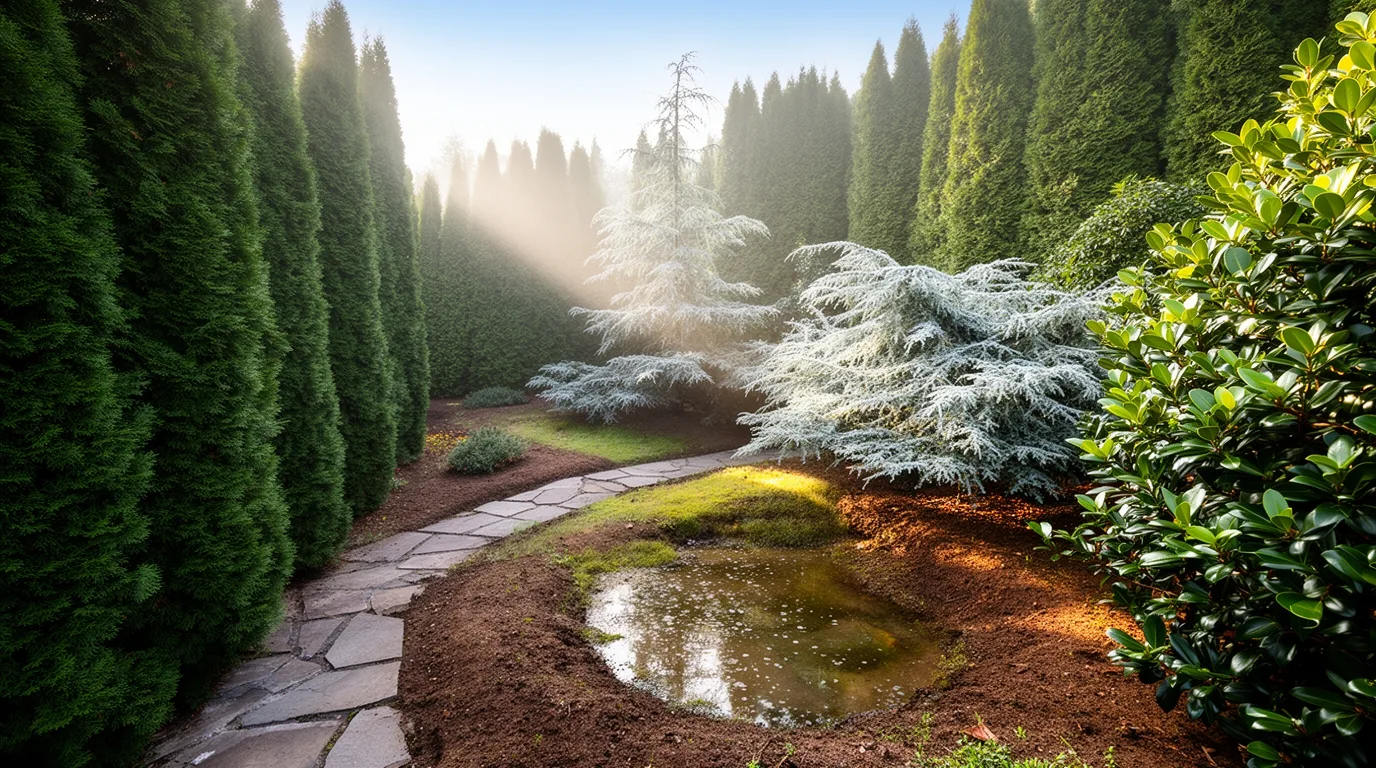
Before you choose a single plant, take time to understand the conditions your garden already has. Start by checking your USDA Hardiness Zone to know which plants will survive your winters. Observe sunlight patterns over a few days; note areas of full sun, partial shade, and deep shade. Evergreens for full sun differ from those for shade.
Then, test your soil. Is it heavy clay that stays wet or sandy and drains fast? You can amend soil somewhat, but choosing plants that naturally thrive in your existing conditions is far easier. For example, many conifers need excellent drainage, while some broadleaf evergreens tolerate heavier soil. This foundational knowledge ensures you plant the right evergreen in the right place.
Choose Your Evergreen Style: Formal or Natural

Once you’ve mapped your site, consider the overall look you want, as evergreens can create either a formal, manicured garden or a relaxed, naturalistic one.
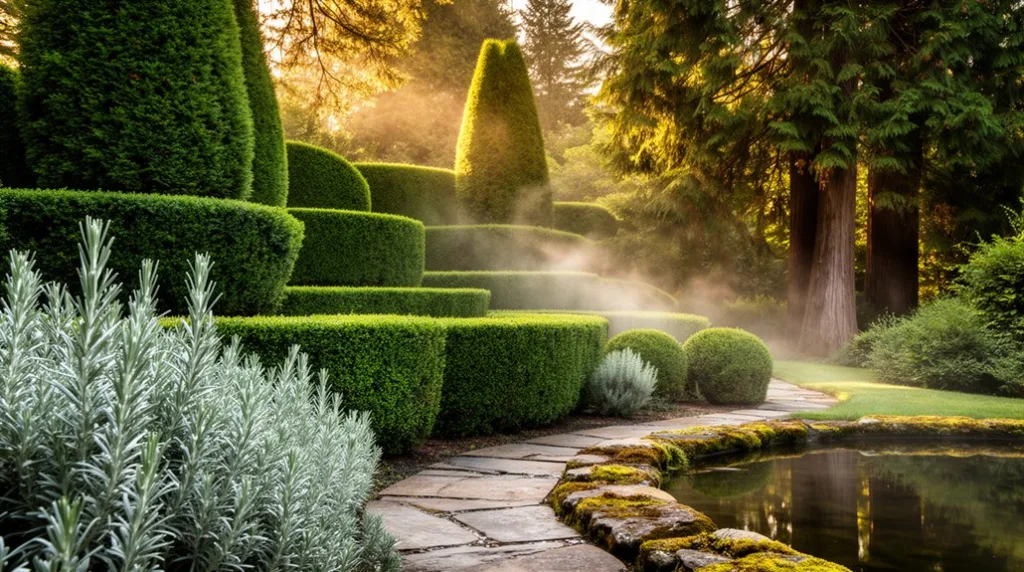
For a formal style, select plants with strong, geometric shapes like upright yews, clipped boxwood hedges, or spiraled junipers. You’ll maintain this crisp look with precise, seasonal pruning.
For a naturalistic feel, opt for species with varied, organic forms such as spreading junipers, irregular pine trees, or loose clusters of rhododendrons. Let these plants grow more freely, just lightly shaping them as needed.
Your choice dictates plant selection and care. Mixing styles often looks disjointed, so commit to one aesthetic for a cohesive garden that provides structure and color through every season.
Build Structure With Evergreen Trees
With your garden’s style decided, you can now use evergreen trees to create a permanent framework for your landscape. They act as living architecture, providing year-round form and privacy. Plant them where you need to define boundaries, frame a view, or establish a focal point. Consider their mature size to avoid future overcrowding.
- Anchor Corners: Place columnar trees, like Italian cypress, at property corners to visually ground your space.
- Create Screens: Use dense, fast-growing arborvitae in a row to block an unwanted view or buffer wind.
- Add Focal Points: Feature a sculptural tree, such as a weeping blue atlas cedar, where it draws the eye.
- Check Hardiness: Always verify your USDA zone to ensure your chosen tree will thrive in your winter climate.
Layer in Evergreen Shrubs for Texture
Your evergreen trees establish the bones of your garden, so now you can layer in evergreen shrubs to add flesh and texture. Plant them in groups for impact, mixing different forms like rounded boxwoods, upright yews, and spreading junipers. This creates a rich tapestry of greens.
Consider foliage texture too; pair the fine needles of a dwarf spruce with the broad, glossy leaves of a cherry laurel. For seasonal interest, choose shrubs like rhododendrons that offer spring blooms or pieris with colorful new growth.
Place medium-sized shrubs in front of your trees and lower growers toward your borders. This layering builds depth, ensuring your garden remains visually engaging even in winter’s sparse months.
Cover Ground With Evergreen Carpets
Often overlooked, the ground plane presents an opportunity to unify your landscape with evergreen carpets. These low-growing plants suppress weeds, retain soil moisture, and provide a lush backdrop throughout the year. Choose varieties suited to your climate and site conditions.
Here’s how to establish a successful evergreen ground cover:
- Select by Light: For sun, consider hardy creeping thyme or junipers. For shade, opt for slow-spreading dwarf mondo grass or wintergreen.
- Prepare the Site: Clear all weeds thoroughly before planting. Amend poor soil with compost to give plants a strong start.
- Plant Strategically: Space plants according to their spread rate. Water them diligently during their first growing season to establish roots.
- Maintain Seasonally: In early spring, lightly rake out debris and trim any winter-damaged foliage to encourage fresh growth.
Add Conifers for Shape and Year-Round Interest
To introduce structure and permanent greenery to your garden, consider adding a variety of conifers. They provide architectural form, from spiky upright columns to soft, spreading mounds, anchoring your design throughout the seasons. Select types suited to your space, like dwarf pines for compact areas or majestic firs as backdrops. Conifers also come in colors beyond green, including blues, golds, and silvers.
For year-round interest, you’ll want to incorporate a mix of textures and growth habits. They’re remarkably low-maintenance once established. In winter, their persistent needles become the garden’s mainstay, catching frost and snow beautifully. Plant them in well-draining soil where they’ll receive ample sunlight to ensure healthy, vibrant growth.
Select Broadleaf Evergreens for Softness
While conifers bring strong form, broadleaf evergreens introduce a softer texture and lush foliage that’s perfect for creating gentle backdrops. You’ll use them to fill in spaces with their dense, leafy presence, which provides excellent coverage and a sense of established fullness year-round.
Consider these key plants:
- Rhododendrons & Azaleas: Choose these for stunning spring blooms and leathery leaves; they thrive in dappled shade and acidic, well-drained soil.
- Boxwood: Employ this classic for low hedges or structured forms; it tolerates heavy pruning, so you can shape it in early summer.
- Cherry Laurel: Pick this robust shrub for quick, tall screens; its glossy leaves reflect light, brightening shady corners in every season.
- Japanese Skimmia: Opt for this shade-lover in colder zones; its fragrant spring flowers and red winter berries offer multi-season appeal.
Mix Foliage Colors for Visual Depth
Because your foundation of broadleaf evergreens provides lush greenery, you can now layer in varied foliage colors to create richer visual depth. Don’t just rely on standard green; incorporate evergreens with golden, blue, or silver foliage.
A golden yew or a blue spruce adds striking contrast. For silvery tones, consider varieties like blue holly or some junipers.
Place these colorful specimens strategically as focal points or use them to punctuate green hedges. Remember that some foliage colors, like the gold on certain conifers, can intensify in winter sunlight, offering a seasonal highlight.
You’re not just adding color—you’re building a more complex and engaging scene that maintains interest even when flowers are absent.
Play With Textures for Winter Appeal
Texture becomes your garden’s winter wardrobe when flowers fade and leaves drop. It’s the key to visual interest in the colder months. You’ll create a tactile scene by combining plants with contrasting surfaces.
- Pair Needles with Scales: Contrast the fine, soft needles of a blue spruce with the flat, overlapping scales of an Arborvitae.
- Add Bold, Leathery Leaves: Use broadleaf evergreens like Rhododendron or mountain laurel for large, glossy leaves that catch the low winter light.
- Introduce Feathery Grasses: Incorporate ornamental grasses, such as feather reed grass, for movement and a soft, airy texture.
- Employ Textural Bark: Plant trees with interesting bark, like the peeling, cinnamon-colored strips of a paperbark maple.
This layered approach ensures your garden remains compelling all season.
Frame Views and Entryways With Evergreens
Beyond adding winter texture, evergreens can shape the spaces around your home. Use them to frame a beautiful view from your window or to create a welcoming entryway.
For a classic look, plant two upright evergreens, like pyramidal cedars or columnar junipers, flanking your front door. Their symmetry provides a year-round formal greeting.
To frame a garden vista, place lower, spreading shrubs, such as compact boxwoods, at the corners of your sightline; they’ll guide the eye without blocking the scene. Remember to consider the plant’s mature size when you position it to avoid future overcrowding.
In autumn, assess your frames and prune lightly if needed to maintain their clean shape before winter growth slows.
Plant an Evergreen Privacy Screen or Windbreak
Transform your property’s boundaries into beautiful, functional barriers with an evergreen privacy screen or windbreak. You’ll gain year-round seclusion and protect delicate plants from harsh winds.
Start by choosing the right species for your climate and spacing them correctly for a dense wall.
- Select dense growers like arborvitae, holly, or cedar for a solid visual block and effective wind reduction.
- Plant in early spring or fall to let roots establish before summer heat or winter frost.
- Stagger plants in two rows for a thicker, more robust barrier that fills in gaps faster.
- Maintain with annual pruning after the growth season to encourage bushier foliage and control height.
Create a Secluded Evergreen Garden Room
While your privacy screen defines the border, you can use evergreens to carve out a private retreat within your yard.
Start by outlining a space with a mix of upright evergreens, like arborvitae, for walls. Train espaliered conifers on a trellis for a flat, space-saving green screen. For a softer, lower partition, consider spreading junipers or dwarf boxwoods.
Inside this room, a specimen tree like a Japanese pine adds a focal point. Dense, shade-tolerant plants like boxwoods thrive on the garden floor.
As seasons change, this enclosed space becomes a sheltered haven from winter winds and summer sun, maintaining its structure and greenery for year-round enjoyment.
Design a Low-Maintenance Evergreen Front Yard
For a polished first impression without constant upkeep, your front yard can rely on the steady beauty of evergreens. These plants provide structure and color through every season, cutting down on your gardening chores.
- Start with a simple foundation. Frame your entryway with a pair of upright evergreens like columnar blue spruce or fastigiate yews; they’ll add symmetry without spreading.
- Layer textures for depth. Place lower, spreading shrubs like dwarf mugo pine or glossy abelia in front; their varied foliage creates visual interest.
- Incorporate durable ground cover. Plant creeping jenny or dwarf mondo grass between stones or along borders; these suppress weeds and fill gaps.
- Apply mulch seasonally. Refresh a layer of bark mulch in spring; it conserves water, protects roots, and keeps the beds looking neat year-round.
Use Evergreens to Stabilize Slopes and Control Erosion
If you’re dealing with a steep or erosion-prone area on your property, planting the right evergreens is a practical and lasting solution. Their dense, year-round root systems bind the soil, while their foliage reduces surface runoff.
For quick stabilization, choose fast-spreading groundcovers like creeping juniper. On larger slopes, install shrubs like rugosa rose or dense junipers; their interlacing roots create a strong net.
Plant in early spring or fall when the soil is moist for easier root establishment. Space plants closely for immediate coverage and mulch between them to further prevent soil displacement.
Over seasons, these plants will grow into a resilient, living barrier that manages water flow and holds the earth firmly in place.
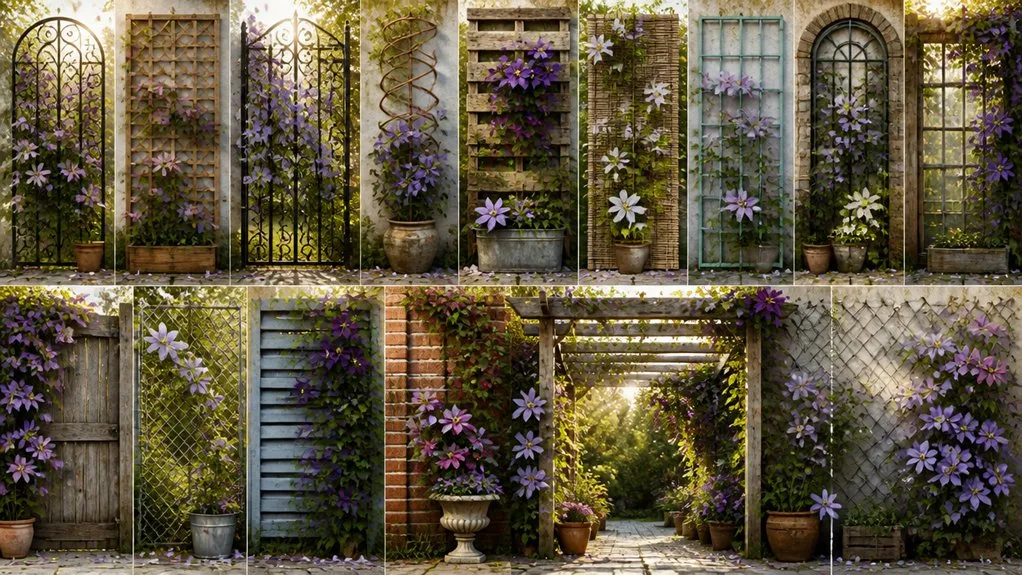
Soften Walls and Fences With Evergreen Vines
Evergreen vines are a perfect and practical solution for transforming stark walls and fences into lush, textured living features. They provide year-round privacy, visual interest, and can even insulate surfaces.
Choose a support system suitable for your vine’s climbing method, whether it’s a trellis, wires, or the surface itself. Plant in spring or early autumn for best establishment, ensuring you water regularly during the first growing season.
- Select the Right Vine: For quick coverage, consider fast-growing ivy. For fragrant flowers, choose star jasmine.
- Provide Proper Support: Install a sturdy trellis for clingers like climbing hydrangea.
- Prune for Control: Perform annual pruning in late winter to manage growth and shape.
- Feed Seasonally: Apply a balanced fertilizer each spring to support vigorous, healthy foliage.
Anchor Garden Beds With Evergreen Focal Points
While vertical surfaces can be dressed with climbing greenery, the structure of a garden often depends on strong foundations. Use an evergreen as a living sculpture to anchor your planting beds and provide year-round structure.
Consider a dwarf conifer like a slow-growing spruce, or a broadleaf such as a boxwood, holly, or pieris. Place your focal point where it’s most needed—framing an entrance, ending a path, or stabilizing a border’s corner.
Check its mature size to avoid future crowding. In winter, this permanent element becomes your garden’s backbone, holding visual interest when other plants recede.
Through every season, its reliable form gives the entire design cohesion and a sense of permanence you’ll appreciate.
Blend Evergreens With Deciduous Plants and Flowers
For a garden that feels alive in every season, pair your reliable evergreens with plants that change. Their static structure highlights the dynamic beauty of flowering shrubs and perennials, creating year-round visual interest.
To blend them successfully, follow these practical tips.
- Highlight Seasonal Color: Plant spring bulbs like tulips or summer perennials like coneflowers in front of evergreen shrubs. The green backdrop makes their colors pop.
- Embrace Fall Foliage: Pair blue spruce or pine with deciduous trees known for brilliant autumn color, such as Japanese maple or serviceberry.
- Add Winter Texture: Let the sculptural forms of evergreens contrast with the seed heads of ornamental grasses or the bare, elegant branches of a crepe myrtle.
- Layer for Depth: Use taller evergreens in back, mid-layer deciduous shrubs, and low perennials in front to create a lush, full border.
Craft Dynamic Evergreen Container Displays
Elevate your garden’s winter charm by designing evergreen container arrangements that thrive beyond the holiday season. Focus on combining varied textures, heights, and colors. You’ll want a “thriller, filler, spiller” structure. Choose a sculptural central conifer, like a dwarf blue spruce. Then, surround it with smaller, bushier evergreens such as boxwood. Finally, let trailing plants like English ivy spill over the edge. Ensure your pots have excellent drainage and use a quality potting mix. These displays need little winter care, but you should water them during dry spells when the soil isn’t frozen.
| Plant Role | Evergreen Example |
|---|---|
| Thriller | Dwarf Alberta Spruce |
| Filler | ‘Green Mountain’ Boxwood |
| Spiller | Creeping Jenny (semi-evergreen) |
Avoid Common Evergreen Planting and Spacing Mistakes
Properly placing evergreens in your landscape means understanding how large they’ll get.
You’ll avoid future crowding, root competition, and blocked views by planning for their mature size, not their nursery pot dimensions. Plant in early fall or spring for the best root establishment before extreme weather.
Here are key spacing and planting tips:
- Check the Tag: Always reference the plant tag or a reliable source for the specific variety’s mature height and width. A dwarf Alberta spruce stays small, while a white pine becomes massive.
- Measure from Structures: Plant large trees at least 15-20 feet from your house’s foundation and underground utilities to prevent damage.
- Space for Airflow: Allow enough room between plants for air circulation; this reduces disease risk like fungal infections.
- Dig the Right Hole: Dig a planting hole two to three times wider than the root ball but no deeper, encouraging roots to spread outward.
Prune Evergreens to Enhance Their Natural Form
While you might think pruning is just about control, it’s really a way to highlight the inherent beauty of your evergreens by working with their natural growth habit. You’re not sculpting a new shape but revealing the one already there.
For conifers like pines, prune only the new growth candles in late spring. For broadleaf evergreens like boxwood, you can lightly shear after their spring flush to maintain density.
Always remove dead, diseased, or awkwardly crossing branches first. Avoid drastic pruning into old wood as many evergreens won’t regenerate from it.
Your main goal is a clean, balanced look. The best time for most shaping is late winter or early spring, just before new growth starts, so cuts heal quickly.
Protect Evergreens From Winter Burn and Snow
Because winter’s wind and sun don’t stop, your evergreens can suffer from dehydration, leading to brown or scorched foliage known as winter burn.
Heavy snow can also break branches.
Your key defense is ensuring plants are well-hydrated before the ground freezes.
Apply these practical measures in late fall.
- Water deeply in autumn until the soil freezes, especially for new transplants.
- Shield susceptible plants like rhododendrons with burlap screens on their windward sides.
- Brush off heavy snow accumulations gently with a broom to prevent limb damage.
- Apply an anti-desiccant spray to broadleaf evergreens; it coats leaves to reduce moisture loss.
Avoid fertilizing late in the season, as this can promote vulnerable new growth.
Source Evergreens for Sun, Shade, and Part-Shade
Since you want evergreens to thrive in their specific spots, you need to choose varieties suited to the light conditions you’ve got.
For full sun (six-plus hours), pick tough plants like Blue Star juniper or dwarf Alberta spruce; they’ll hold their color best. In dense shade, go for classics like yews, certain hollies, or mountain laurel, which naturally grow under forest canopies.
For tricky part-shade areas (like under trees), opt for adaptable types such as Japanese plum yew or some boxwoods. Always check the plant tag for its light requirement; that’s your best guide.
Planting in the right light prevents sparse, weak growth and keeps your evergreens lush and healthy through every season.
Implement Your Design in Manageable Phases
Now that you’ve selected the right evergreens, you can begin installing them in stages. Break your plan into yearly phases to manage costs and effort. This lets you observe how plants mature and adjust spacing. Prioritize structural plants first, like hedges or large specimen trees, as they define your garden’s bones.
Follow this phased plan:
- Install Structural Elements First: Plant foundational evergreens, such as arborvitae for screening or a pine as a focal point, in early spring or fall for easier establishment.
- Add Complementary Layers Next: In subsequent seasons, introduce mid-size shrubs and groundcovers like creeping juniper to fill the middle landscape.
- Incorporate Seasonal Accents: Use containers with dwarf conifers or colorful heathers for flexible pops of greenery and winter interest.
- Refine and Edit Annually: Assess each area after a full growing cycle; you can always transplant younger shrubs if needed.
Enjoy Your Four-Season Garden Sanctuary
Once your evergreens are established, you’ll start to appreciate the garden’s year-round structure and evolving beauty.
Notice how conifers change hue in winter and how hollies brighten with berries. Add winter-blooming plants like hellebores for off-season color. Prune your evergreens in late winter before spring growth begins, removing any dead or damaged branches.
In summer, your garden provides a cool, shaded retreat; simply ensure new plantings get adequate water during dry spells.
Come autumn, the evergreen backdrop makes fall foliage from companion plants truly pop. Make time to simply sit and observe the seasonal shifts.
Your garden is now a dynamic sanctuary, offering serenity and visual interest every single day.
Frequently Asked Questions
How Can I Keep Deer From Eating My Evergreens?
You can use fencing or repellents. Try planting deer-resistant companions. For repellents, rotate types so deer don’t become accustomed. Apply them consistently, especially after rain, to keep evergreens protected throughout the year.
What Are Pet-Safe Evergreen Options?
You can plant boxwoods or skip laurels. They’re safe for pets. Avoid toxic yews. Holly’s berries are harmful, so choose male, non-berry varieties. Always confirm a plant’s safety with the ASPCA list before you buy.
Are There Any Fast-Growing Evergreen Trees?
Yes, Leyland Cypress and Eastern Red Cedar grow quickly. You’ll get privacy fast. Remember, fast growth often means weaker wood, so you must prune them properly to keep them strong against wind.
Which Evergreens Are Best for Coastal Climates?
For coastal winds and salt spray, you’ll want tough evergreens. Monterey cypress and shore juniper handle exposure well. You can also plant Japanese black pine; it’s salt-tolerant and thrives in sandy soil.
What Evergreen Flowers Bloom Year-Round?
You’ll find few true evergreen flowers, but some bloom nearly year-round in mild climates. Try reliable perennials like hellebores for winter and reblooming daylilies for summer. Your climate dictates what you can grow successfully.
Conclusion
With your design in place, start implementing it in phases. Mulch well and water deeply in the fall so your evergreens enter winter strong. Remember their mature sizes when spacing. A little seasonal pruning keeps things neat. Now, enjoy your four-season sanctuary—it provides that crucial green structure and winter interest while everything else sleeps. Your year-round garden is a resilient, living retreat.
The Only Tools You Need for a Thriving Garden 🌱
Whether you're a weekend gardener or growing daily — these hand-picked tools make every session faster, easier, and more satisfying.