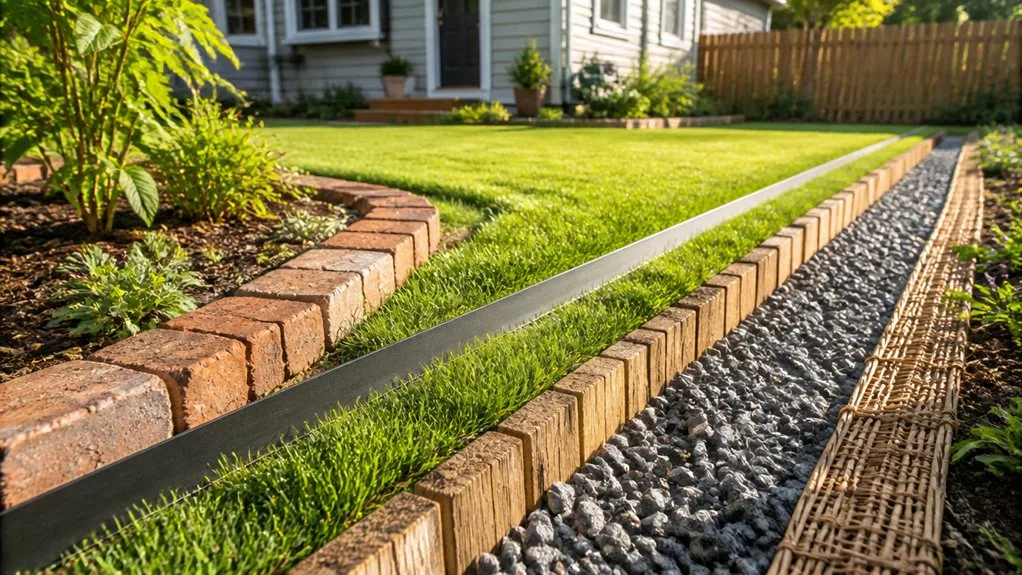
You can transform your yard’s appearance by installing budget-friendly edging that defines beds, contains soil, and suppresses weeds. Salvage free materials like reclaimed brick, stone, and wood from demolition sites and construction zones. Repurpose painted pallets, rope, or PVC tubing for durable borders. Install edging 4–6 inches deep with compacted soil backing for longevity. Consider your soil type and climate when selecting materials—metal suits clay while recycled plastic resists moisture damage. The right installation technique ensures your edging performs season after season.
Key Takeaways
- Salvaged materials like reclaimed brick, stone, and demolition site wood provide authentic, budget-friendly edging options.
- Recycled plastic edging resists rot and UV damage while requiring minimal maintenance and accommodating curved designs.
- Rope and twine borders using jute or polypropylene create soft, natural aesthetics for temporary garden spaces.
- Metal galvanized steel strips offer longevity in wet climates while preventing root spread and soil migration.
- Repurposed terracotta pots and tiles arranged vertically create clean borders while allowing moisture penetration for plants.
How to Choose the Right Budget Edging Material
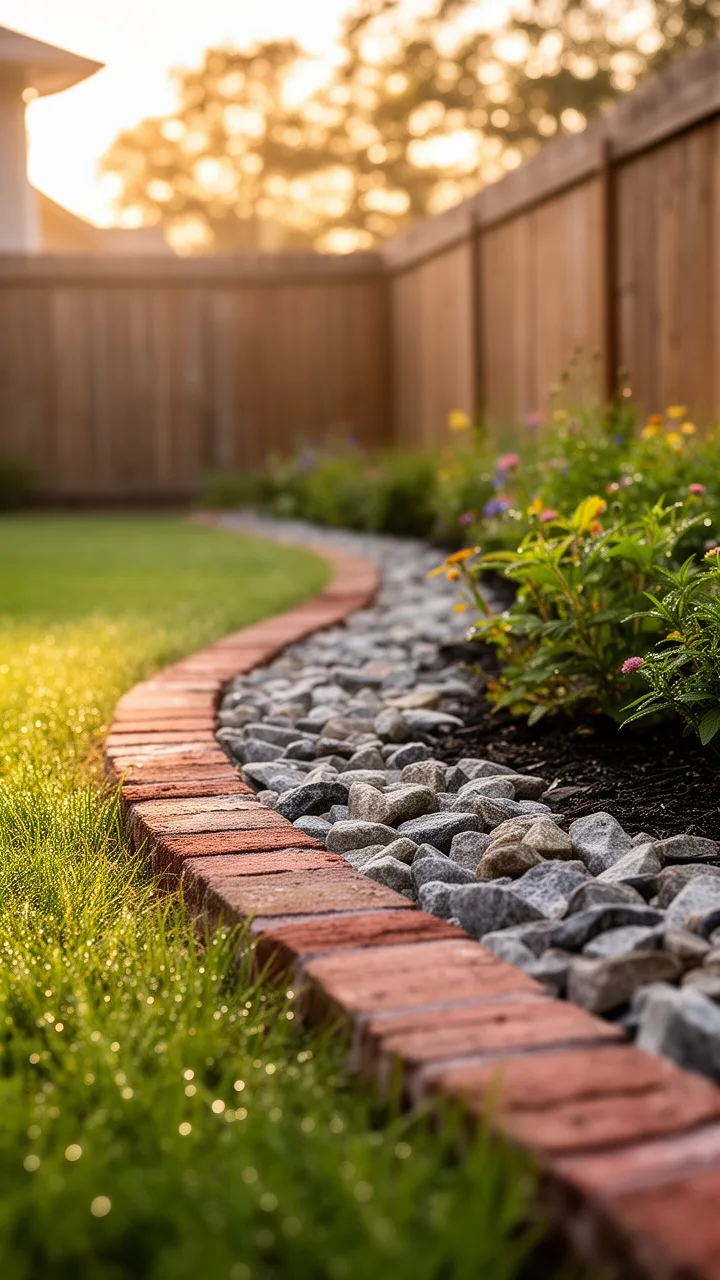
When you’re planning landscape edging on a tight budget, you’ll want to evaluate materials based on durability, maintenance requirements, and how well they’ll perform with your specific plant types and soil conditions. Consider recycled plastic, which resists rot and won’t degrade around moisture-loving plants. Galvanized steel offers longevity for clay soils prone to shifting. For sandy beds, composite materials won’t warp. Metal edging works best with shallow-rooted perennials, while rubber suits aggressive spreaders. Assess your climate’s freeze-thaw cycles—they’ll impact material expansion. Calculate long-term costs by factoring replacement frequency. Match edging height to your plants’ mature width for optimal containment and aesthetics.
Free Edging: Salvaged Brick and Stone
Resourcefulness beats expense when you’re sourcing reclaimed brick and stone for landscape edging. You’ll find salvaged materials at demolition sites, architectural salvage yards, and online marketplaces. These weathered pieces create authentic borders that establish planting beds while reducing waste.
Consider these installation approaches:
- Dry-stack without mortar for flexible, adjustable edging
- Partially bury stones to anchor perennials and prevent soil erosion
- Layer varied heights to create tiered borders for slope management
Reclaimed brick and stone develop natural patina, complementing established plantings. You’re establishing durable containment while eliminating material costs entirely.
Recycled Wood Logs and Branches
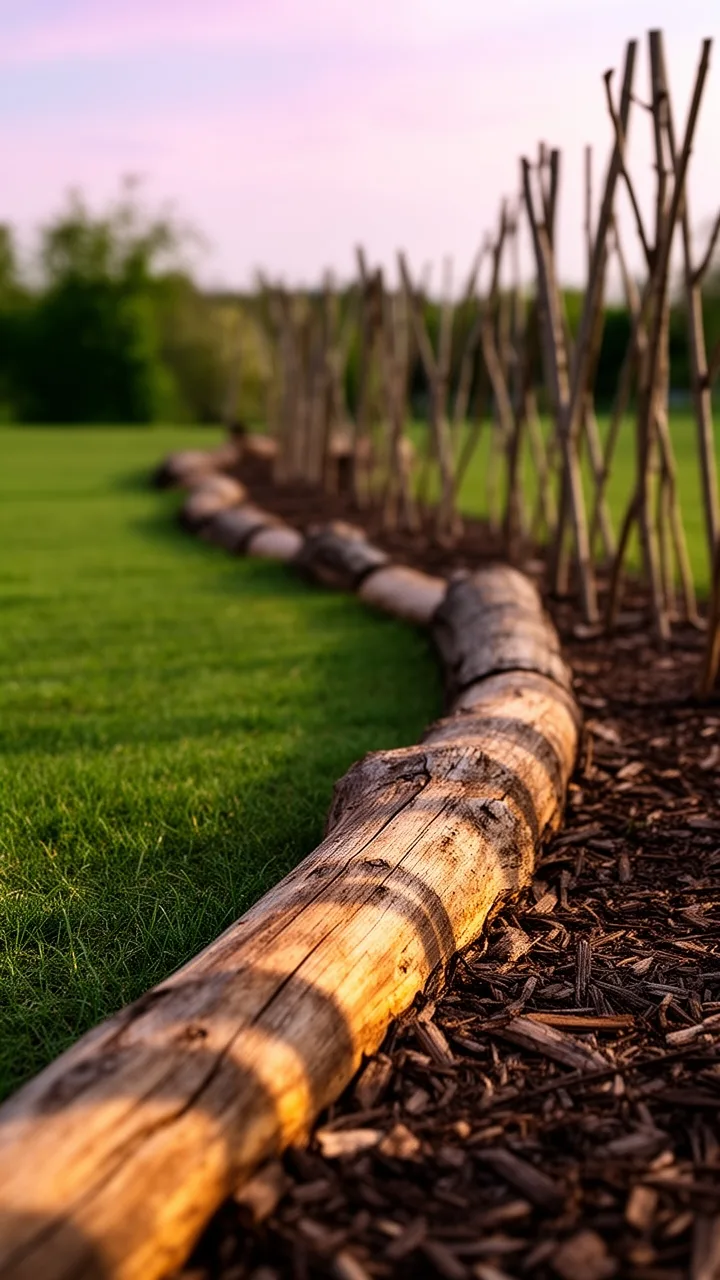
One of the most accessible edging materials sits in your own yard—fallen logs and branches create natural, rustic borders that’ll contain soil while decomposing gradually to enrich your beds. You’ll want to select wood with sufficient diameter to maintain structural integrity through multiple seasons. Arrange logs horizontally or vertically, securing them with stakes if needed. Smaller branches work well for curved borders. This method suits woodland gardens and native plantings particularly well. As wood breaks down, it adds organic matter and improves soil structure. Replace deteriorating pieces annually to maintain clean bed definition and consistent nutrient cycling.
Painted Wood Pallets as Borders
Wooden pallets offer an economical and versatile edging solution that you can customize to match your garden’s aesthetic. You’ll disassemble pallets and arrange the boards vertically or horizontally along planting beds. Paint them with exterior-grade finishes to protect against moisture and UV damage while achieving your desired color scheme.
- Select rot-resistant wood species or treat pallets with preservative before installation
- Space boards 12-18 inches deep to contain soil and prevent root migration
- Secure pallets with galvanized stakes driven through the structure into compacted ground
This edging method effectively contains mulch, defines planting zones, and creates professional-looking borders without expensive materials.
Salvaged Fence Pickets and Boards
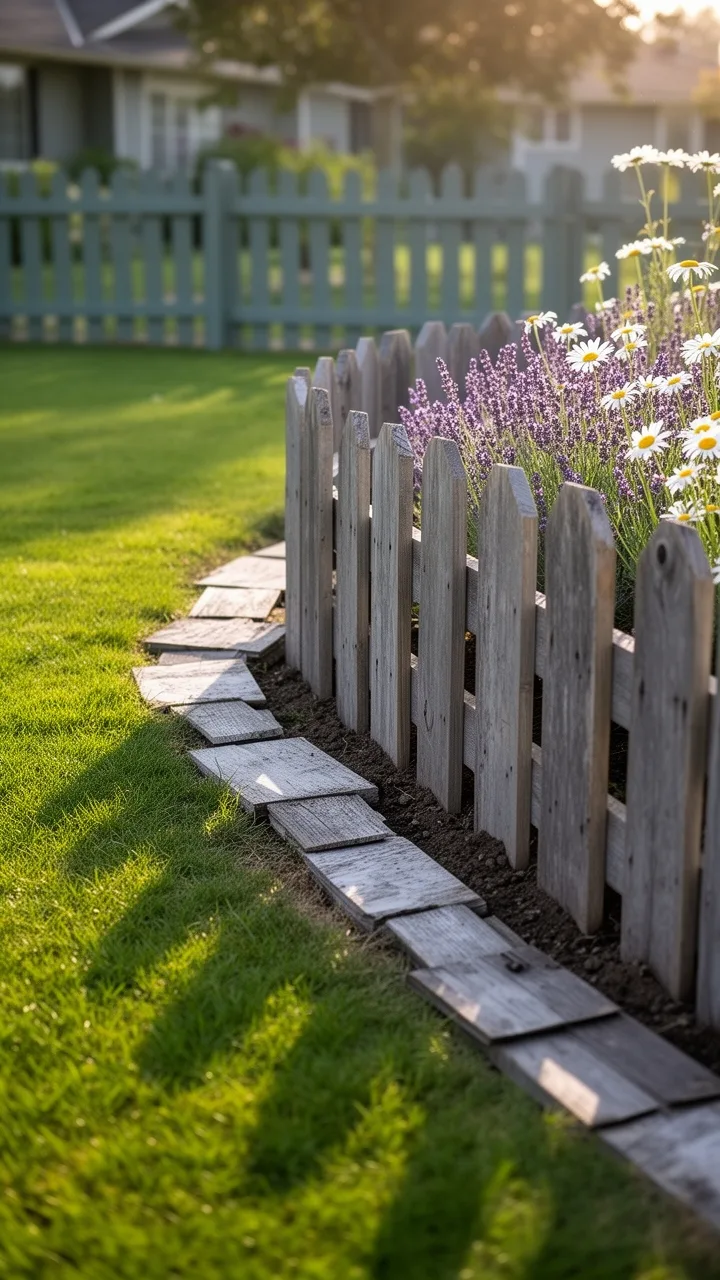
When you’ve got old fence materials lying around, they’re perfect for creating attractive garden borders that’ll save you money while reducing waste. You’ll want to salvage sturdy pickets and boards from dismantled fences, then cut them to your desired lengths.
| Material | Height | Depth | Best For |
|---|---|---|---|
| Pickets | 12-24″ | 4-6″ | Flower beds |
| Boards | 8-16″ | 6-8″ | Vegetable gardens |
| Mixed | Varied | 5-7″ | Perennial borders |
| Weathered | 10-20″ | 5-6″ | Rustic plantings |
Install them vertically or horizontally using landscape spikes. This approach naturally blends with plantings while providing excellent soil retention for your garden beds.
Galvanized Steel Strips
Galvanized steel strips offer a more durable, modern alternative to wooden edging, especially when you’re working with raised beds or demanding garden conditions. You’ll appreciate their longevity in wet environments where wood deteriorates. They’re ideal for containing soil in vegetable gardens and preventing root spread from aggressive perennials.
- Install strips 4-6 inches deep to effectively barrier underground runners
- Overlap seams by 2 inches and secure with stainless steel fasteners
- Use between beds to separate incompatible plants or soil types
You’ll find galvanized steel won’t rust quickly and requires minimal maintenance. Its neutral appearance complements various garden styles while providing structural integrity for years.
PVC Pipe and Flexible Tubing
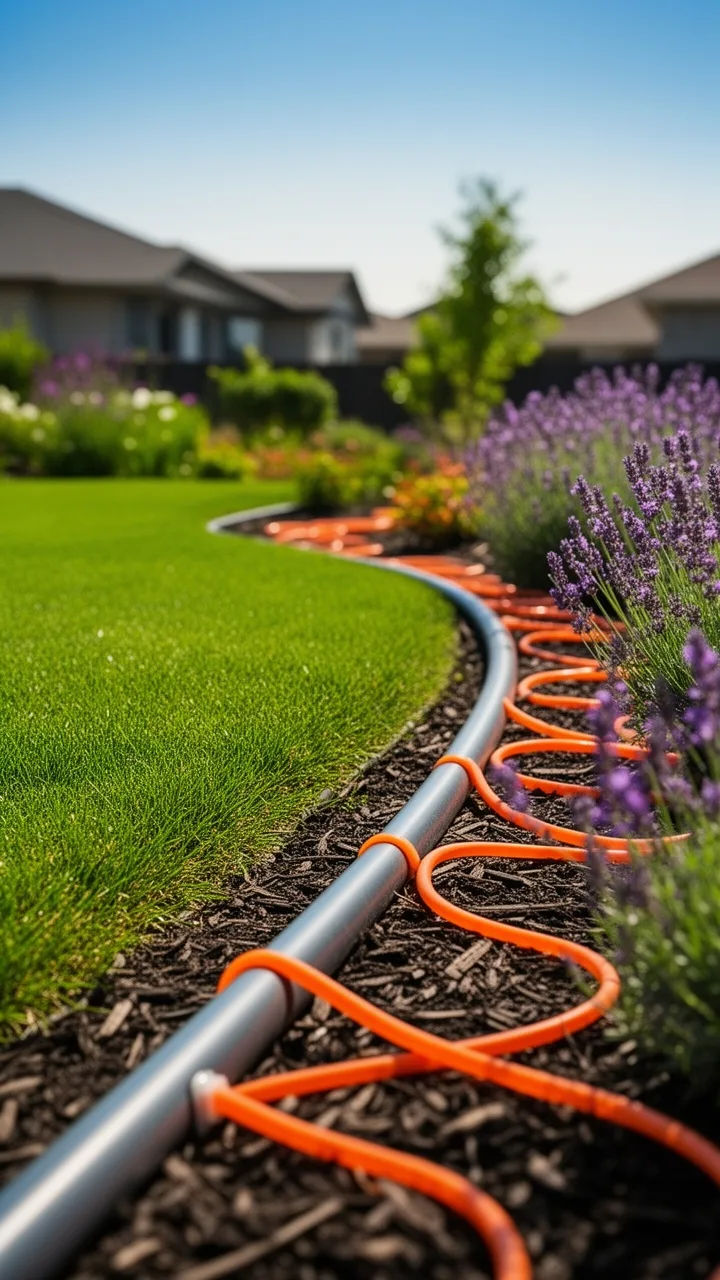
For budget-conscious gardeners seeking lightweight, versatile edging, PVC pipe and flexible tubing deliver practical solutions without the maintenance demands of wood or steel. You’ll appreciate their durability and resistance to rot, rust, and UV degradation. Cut standard PVC pipes lengthwise to create rigid borders, or use flexible tubing for curved bed designs. Both options accommodate ground settling without warping. Installation requires minimal tools—simply push edges into soil or secure with stakes. You can paint PVC to match your landscape aesthetic. Their affordability makes replacing sections economical, and they won’t decompose, providing decades of reliable containment for plantings.
Rope and Twine Borders
While rigid materials like PVC offer permanence, rope and twine borders provide a softer, more natural aesthetic that complements organic garden designs. You’ll appreciate their flexibility and ease of installation around curved planting beds.
Consider these practical applications:
- Jute twine anchors shallow borders around herbaceous perennials and annual beds, biodegrading naturally within seasons
- Polypropylene rope withstands moisture and UV exposure, ideal for vegetable garden delineation
- Manila rope creates rustic edging that blends seamlessly with cottage-style plantings
You’ll need stakes or landscape pins every 12-18 inches to secure borders. Rope edges work best for temporary or transitional spaces where you’re experimenting with garden layouts.
River Rocks and Natural Stone
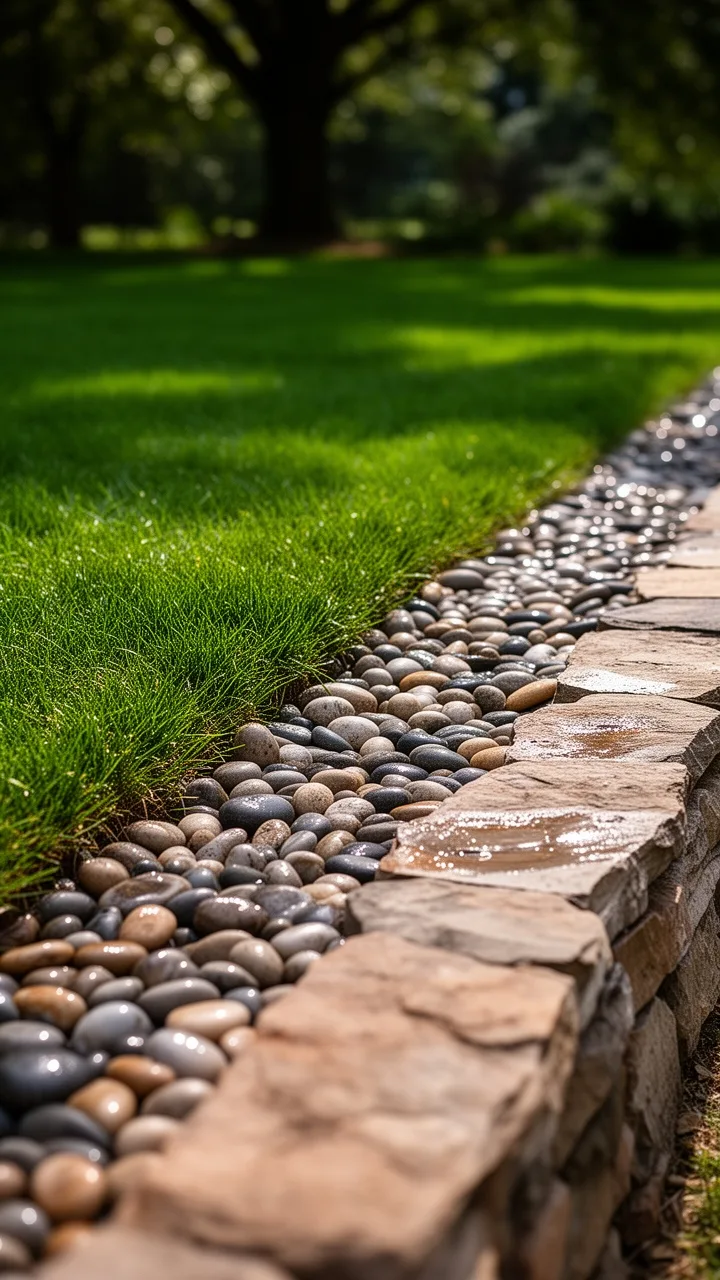
Natural stone and river rocks create durable, low-maintenance borders that’ll last for decades without degradation. You’ll appreciate how these materials suppress weeds while allowing water infiltration around plant roots. Lay river rocks directly against soil or use them atop landscape fabric for enhanced weed control. Select stones matching your regional geology for aesthetic cohesion. Arrange larger pieces as anchors, filling gaps with smaller rocks. This method works excellently for perennial beds, shrub borders, and transitional zones between lawn and planting areas. River rocks won’t decompose or require replacement, making them economical long-term investments for landscape definition and plant protection.
Concrete Pavers as Edging
Concrete pavers offer you a clean, defined border that’ll withstand heavy foot traffic and seasonal stress without cracking or settling unevenly. You’ll appreciate their durability and low maintenance requirements for garden beds and walkways.
Consider these advantages:
- Interlocking design prevents soil migration while allowing water drainage around plant roots
- Varied sizes and colors let you customize aesthetics to match your landscape scheme
- Easy replacement means damaged pavers swap out without disturbing surrounding plantings
You can install pavers directly against soil or on a sand base for optimal stability. Their uniform edges create sharp planting boundaries, preventing grass encroachment and simplifying bed maintenance while protecting root zones from compaction.
Terracotta Pots and Tiles Repurposed
If you’re seeking an economical and aesthetically appealing edging option, terracotta pots and tiles offer versatility that’ll enhance your landscape beds while providing functional benefits. You can arrange broken terracotta tiles vertically into soil for clean borders, or line beds with intact pots tilted at angles for visual interest. This approach prevents soil erosion and contains mulch effectively. Terracotta’s porous nature allows moisture penetration, benefiting root systems near edges. You’ll appreciate how this material weathers beautifully, developing patina over time. Source reclaimed pots and tiles from salvage yards to maximize cost savings while creating distinctive, personalized garden edging.
Recycled Plastic Edging
Plastic edging materials, typically manufactured from reclaimed bottles and containers, provide durability that’ll outlast traditional options in most climates. You’ll appreciate their resistance to rot, UV degradation, and pest damage. Installation requires minimal tools—simply stake the edging into soil along your planting beds.
Consider these advantages:
- Low maintenance—no painting or sealing needed throughout seasons
- Flexible design—curves and angles accommodate various garden layouts
- Weed suppression—creates effective barriers preventing soil migration
You can source recycled plastic edging affordably from landscape suppliers. The material won’t decompose or attract insects, making it ideal for perennial plantings and vegetable gardens. Installation takes hours, not days.
Gravel and Mulch Containment Borders
When you’re laying down gravel or mulch beds, you’ll want to set up borders that keep these materials contained within your planting areas. Metal or plastic edging strips work effectively for this purpose, creating clean lines while preventing spillage onto adjacent lawn or hardscape. You can bury these barriers partially underground to anchor them securely. Alternatively, composite landscape edging offers durability without maintenance concerns. For budget-conscious gardeners, wooden boards provide a natural aesthetic, though they’ll eventually decompose. Whatever material you choose, proper installation ensures your mulch stays put, reducing maintenance time and keeping your planting beds looking professionally finished.
Where to Source Free or Cheap Materials
You’ll find plenty of affordable edging materials if you know where to look. Construction sites often discard reclaimed wood and metal scraps perfect for borders. Check these resources:
- Craigslist and Facebook Marketplace—locals frequently give away landscaping materials free
- Demolition sites—salvage intact bricks, stones, and timber before disposal
- Tree services—obtain wood chips and logs from recent jobs
Reclaimed materials provide excellent drainage properties for mulch containment while reducing costs significantly. Partner with arborists who need disposal solutions; they’ll often deliver materials cheaply. Your local municipality may also offer free wood chips from landscape waste recycling programs, ideal for edging applications and soil amendment.
Installation Tips for Long-Lasting Budget Edging
Because proper installation determines how well your edging’ll perform over time, you’ve got to prioritize soil preparation and material positioning. Clear away debris and create a level trench slightly deeper than your edging height. Compact the base firmly—loose soil causes settling and misalignment. Position materials vertically, anchoring them securely with stakes or landscape fabric underneath to prevent root penetration. For recycled materials like wood or metal, ensure proper drainage to avoid waterlogging adjacent plant beds. Backfill with compacted soil, pressing firmly against the edging. This meticulous approach maximizes durability and maintains clean garden bed definition through multiple growing seasons.
Conclusion
You’ve discovered that affordable edging transforms your landscape without draining your wallet. By selecting salvaged materials and recycled options, you’re creating borders that’ll last seasons. Your yard’s finished appearance rivals expensive installations—like polishing a diamond that’s already within reach. Proper installation ensures your edging containment performs its job: preventing soil erosion, protecting plant roots, and maintaining clean garden bed definition. You’re investing smart labor into sustainable landscaping success.
The Only Tools You Need for a Thriving Garden 🌱
Whether you're a weekend gardener or growing daily — these hand-picked tools make every session faster, easier, and more satisfying.