
You’re looking to upgrade your backyard without overcomplicating things, so consider a fence that balances style and durability. From sleek, powder‑coated metal panels to reclaimed barn‑wood slats, each option offers a distinct vibe while staying low‑maintenance. Mixing materials—like cedar posts with aluminum rails—adds visual interest, and adding solar LED strips can turn a simple barrier into a nighttime feature. The next step is picking the right system for your space and budget.
Key Takeaways
- Choose durable, low‑maintenance materials like pressure‑treated wood, vinyl, or powder‑coated steel to match climate and budget.
- Incorporate modern aesthetics with horizontal wood slats, black metal panels, or mixed wood‑metal designs for sleek visual appeal.
- Add texture and privacy using woven bamboo, decorative lattice, or reclaimed barn wood with breathable sealant.
- Enhance functionality with integrated seating, low‑profile baseboards, and sturdy post foundations anchored in concrete.
- Boost ambiance and greenery by pairing fences with climbing vines, ornamental grasses, and recessed LED lighting.
Two‑Panel Fence Systems – Quick Install
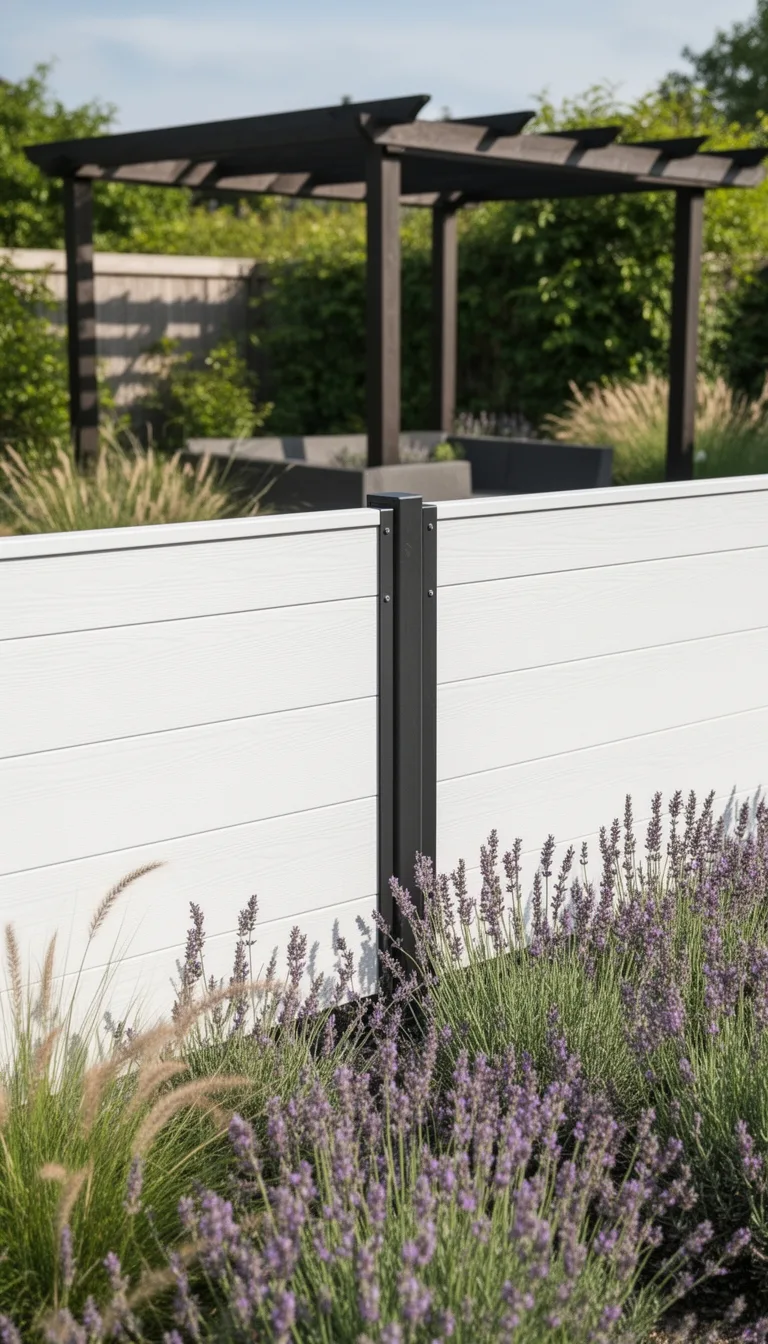
If you’re after a fence that’s up fast and looks solid, two‑panel systems are the answer. You’ll grab the pre‑drilled panels, align them with the post holes, and bolt them in place—no complex framing required. The panels lock together with simple hardware, so you can finish a 10‑foot stretch in under an hour.
Choose a material that matches your garden’s soil conditions; pressure‑treated wood resists rot, while vinyl won’t absorb moisture. Make sure the posts sit on a compacted gravel base to prevent settling. Tighten every bolt before the soil dries, then backfill with sand or loam for stability. The result is a sturdy, attractive barrier that’s ready for planting, pets, or privacy without a lengthy build.
How to Choose the Right Garden Fence: Decision Guide

When you’re picking a garden fence, start by listing your priorities—privacy, durability, cost, and aesthetic—then match each one to a material and style that fits your yard’s conditions and budget. First, assess soil type and drainage; heavy clay may favor metal posts, while sandy loam works with wooden stakes. Next, consider sunlight exposure: UV‑resistant vinyl holds up in full sun, whereas cedar ages gracefully in shade. Finally, sketch a simple layout to visualize line of sight and flow.
| Priority | Best Material | Typical Cost |
|---|---|---|
| Privacy | Wood (cedar) | $$ |
| Durability | Metal (steel) | $$$ |
| Aesthetic | Vinyl (white) | $$ |
DIY Pallet Garden Fence – Budget‑Friendly Style

Start by gathering a few sturdy pallets, removing any loose boards, and sanding rough edges.
Measure your fence line, then cut pallets to the desired height with a circular saw, keeping cuts straight for a uniform look.
Attach the cut pieces to vertical posts using galvanized brackets; the brackets prevent rust and hold the wood securely.
Fill gaps between pallets with reclaimed lumber or metal strips for extra privacy.
Apply a weather‑proof seal or paint to protect against moisture and UV damage.
Add simple décor—like hanging planters or reclaimed garden lights—to personalize the space.
This DIY pallet fence costs far less than commercial options while delivering a rugged, stylish backdrop for your backyard garden.
Colorful Vinyl Garden Fence – Low‑Maintenance Patterns

After the rustic charm of pallets, you can upgrade to a color‑rich vinyl fence that stays pristine with minimal effort.
Choose panels in bold hues—emerald, teal, or sunrise orange—to create visual rhythm without paint. The material resists UV fading, so you won’t need annual touch‑ups.
Install pre‑drilled posts, align them with a level, and secure with concrete for stability; the lightweight panels snap into place, cutting labor time in half.
Add a simple lattice top for extra texture, and let the fence blend with flower beds and pathways. Because vinyl doesn’t warp or rot, you’ll spend less on maintenance and more on planting.
The result is a vibrant, low‑maintenance boundary that elevates your backyard’s style.
Woven Bamboo Garden Fence – Tropical Vibes

Woven bamboo fences bring instant tropical vibes to any garden, offering a natural, breathable barrier that’s both sturdy and stylish. You’ll love how the slats filter light, creating dappled shade while letting airflow keep soil moisture balanced. Install panels with simple post‑and‑rail brackets; the flexible weave conforms to uneven ground, reducing the need for extensive grading. Pair the fence with low‑maintenance groundcovers like creeping thyme to enhance the island feel. When you trim the bamboo every spring, you preserve height and prevent sagging, keeping the fence tight and resilient against wind.
| Feature | Benefit | Maintenance |
|---|---|---|
| Natural weave | Light diffusion | Annual trim |
| Flexible panels | Easy on slopes | Spot‑clean with hose |
| Durable stalks | Wind resistance | Replace broken sections |
| Eco‑friendly | Sustainable material | No chemicals needed |
Horizontal Wood Slat Garden Fence – Modern Minimalism
If you loved the breezy, tropical feel of woven bamboo, you’ll appreciate how a horizontal wood slat fence swaps that softness for sleek, modern minimalism.
The clean lines frame your garden, letting light filter through while keeping pets and kids safe. Choose sustainably sourced cedar or pine, treat it with a clear sealant, and let the natural grain add subtle texture.
Installation is straightforward: attach slats to sturdy posts, keep gaps uniform, and you’ll have a fence that feels both airy and grounded.
- Use 2‑inch thick slats for durability.
- Space slats 1‑inch apart for balanced privacy.
- Opt for a matte finish to reduce glare.
- Align slats parallel to your house for visual flow.
- Add low‑profile lighting at the base for evening ambience.
Black Metal Garden Fence – Sleek Minimalist Look
Embracing the bold contrast of black metal, you’ll instantly give your garden a sleek, minimalist edge while keeping it secure. The thin, vertical bars create a visual line that frames your lawn without overwhelming it. Choose powder‑coated steel for rust resistance and a matte finish that stays low‑maintenance.
Install posts 6‑8 feet apart, anchoring them in concrete or compacted gravel for stability. Use simple hinge hardware to add a gate that matches the fence’s clean lines. Pair the fence with low‑lying succulents or ornamental grasses to accentuate the modern vibe. The dark tone absorbs heat, so consider a light‑colored ground cover to balance temperature.
This design delivers a contemporary, durable barrier that complements any stylish backyard.
Reclaimed Barn Wood Garden Fence – Rustic Charm
A handful of reclaimed barn planks can instantly give your garden a warm, rustic charm while providing a sturdy boundary. You’ll love how the weather‑worn texture blends with soil, creating a seamless backdrop for plants and pathways.
The wood’s natural patina ages gracefully, and you can reinforce it with simple metal brackets for durability. Choose a low‑profile design to keep sightlines open, and treat the surface with a clear sealant to resist moisture without hiding the grain.
- Select planks with consistent thickness for even spacing.
- Use a post‑and‑rail layout to simplify installation.
- Anchor posts in concrete footings for stability on soft ground.
- Apply a breathable, oil‑based sealant to protect against rot.
- Add decorative metal caps to tops for a finished look.
Living Green Wall Garden Fence – Eco‑Friendly Privacy
Creating a living green wall fence turns your garden’s perimeter into a thriving, privacy‑boosting ecosystem while cutting down on material waste.
Start with a sturdy frame—metal or reclaimed wood—then attach modular planting pockets or a trellis. Choose fast‑growing, low‑maintenance vines like ivy, trumpet vine, or native grasses that tolerate your climate. Install drip irrigation and a simple fertilizer schedule to keep roots healthy without over‑watering. Trim regularly to maintain density and prevent overgrowth onto neighboring yards.
Mix herbs, edibles, and flowering perennials for scent and seasonal interest. The green wall filters noise, improves air quality, and creates a natural barrier that feels softer than concrete. It’s a sustainable, eye‑catching solution that boosts privacy while supporting local biodiversity.
Stone Veneer Garden Fence – Natural Sophistication
Adding stone veneer to your garden fence instantly gives it a timeless, rugged elegance while keeping costs lower than full‑stone construction. You’ll notice how the textured panels blend with soil, shrubs, and path stones, creating a cohesive backdrop that feels both natural and refined.
The lightweight panels attach to a wood or metal frame, so you avoid heavy foundations yet still achieve a sturdy, weather‑resistant barrier.
- Choose veneer colors that match existing garden stones for seamless integration.
- Use staggered rows to mimic natural rock formations and add visual interest.
- Seal the veneer with a breathable, water‑repellent coating to protect against moisture.
- Install a low‑profile baseboard to hide seams and keep the fence grounded.
- Pair the fence with low‑maintenance plants like ornamental grasses for a balanced look.
Concrete Block Garden Fence – Strong & Stylish With Accent Lighting
Stone veneer gave your fence a natural, textured backdrop, but if you need something tougher that still looks sleek, concrete blocks are the way to go.
Concrete blocks give you a solid, low‑maintenance barrier that resists weather, pests, and impact. Pair them with recessed LED strip lighting along the top edge for a modern glow that highlights the block’s geometry after dark.
Choose a neutral gray or a subtle earth tone to blend with surrounding soil and plantings. Install a simple mounting track for the lights, run low‑voltage wiring through a conduit, and use a dimmer to set ambience.
The result is a strong, stylish fence that defines your yard while adding practical illumination for evening activities.
Wrought Iron Garden Fence – Ornamental Elegance
Wrought iron fences stand out for their ornamental elegance, blending timeless craftsmanship with modern durability.
You’ll find they create a striking silhouette against any garden backdrop while offering strong security. Their open‑work designs let light filter through, keeping the space airy and visually connected to the surrounding landscape.
Maintenance is straightforward—just occasional cleaning and a fresh coat of rust‑inhibiting paint keep them looking pristine for years. Choose a style that matches your home’s architecture, and you’ll add both charm and value to your backyard.
- Pick a pattern that complements your garden’s theme
- Opt for powder‑coated finishes to resist rust
- Use decorative finials or scrollwork for extra flair
- Install a low‑profile base to protect soil and roots
- Combine with climbing vines for a living, textured look
Mixed‑Material Garden Fence – Wood Meets Metal
A mixed‑material fence blends the warmth of wood with the sleek strength of metal, giving your garden a modern yet organic edge.
You’ll start by choosing durable timber—cedar or redwood—for the vertical posts, then attach steel or aluminum rails that run horizontally. The metal adds structural stability while the wood softens the look.
Anchor each post in concrete to prevent sway, and use stainless‑steel screws to keep rust at bay. Finish the wood with a weather‑proof seal, and powder‑coat the metal for color consistency.
This combo resists rot and corrosion, so you spend less on upkeep. Plus, the contrast highlights landscaping, creating visual depth without overwhelming the space.
Decorative Lattice Garden Fence – Perfect for Climbing Vines
Spanning the garden with a decorative lattice fence instantly invites climbing vines to weave through its openwork, turning a simple barrier into a living backdrop.
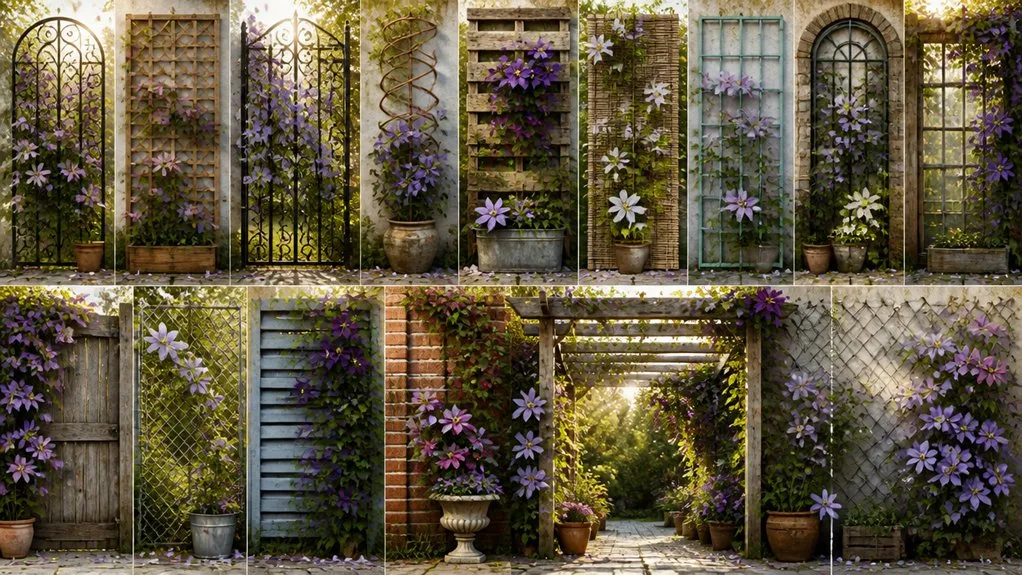
You’ll love how the lattice supports roses, clematis, and morning glories, adding color and privacy without blocking light. Choose weather‑resistant wood or powder‑coated metal, treat the posts with sealant, and space the slats evenly for strong vine attachment.
Keep the design low‑maintenance by pruning vines regularly and using a drip‑irrigation line behind the fence. The result is a dynamic, ever‑changing screen that blends structure with nature.
- Pick a durable material (cedar, teak, or aluminum).
- Space slats 2–3 inches apart for optimal plant growth.
- Install a sturdy post foundation to prevent wobble.
- Add a trellis strip for extra support on heavy vines.
- Use a protective sealant to extend fence lifespan.
Privacy Screen Garden Fence – Integrated Seating Solution
After the lattice’s vines have filled the space, you can turn that same framework into a privacy screen that also offers a place to sit. Use sturdy, weather‑resistant timber for the screen panels and integrate a bench that follows the fence line.
Cut the bench depth to 12‑14 inches, add a slatted seat for drainage, and reinforce the back with diagonal braces. Choose a low‑profile design so the screen blocks sight without overwhelming the garden.
Fill the area beneath the bench with soil, then plant low‑maintenance shrubs or groundcover to blend the structure with the landscape. Secure the bench with stainless‑steel brackets, apply a UV‑protective sealant, and you’ll have a functional, attractive retreat that maximizes both privacy and seating.
Solar‑LED Smart Garden Fence – Night‑Time Ambiance
Illuminate your garden after dusk by integrating solar‑LED strips into the fence’s top rail, letting the panels charge during the day and automatically switch on at sunset. You’ll get a gentle glow that highlights pathways, defines boundaries, and adds a low‑key vibe without wiring hassles.
The system runs on a rechargeable battery, so you avoid extra electricity costs and keep the setup eco‑friendly. Adjust brightness with a simple remote or smartphone app, and set timers for seasonal moods. This DIY upgrade blends safety and style, turning a plain fence into a night‑time centerpiece.
- Choose waterproof LED strips rated for outdoor use.
- Mount a small solar panel on the fence post top.
- Connect a rechargeable battery pack beneath the rail.
- Install a motion sensor for occasional bright flashes.
- Use a weather‑proof controller to set dimming schedules.
Artistic Mosaic Garden Fence – Pop of Color
Often the most eye‑catching fence upgrades start with a simple mosaic, letting you turn plain boards into a vibrant, personalized canvas.
Begin by selecting a sturdy, weather‑resistant base—cedar or pressure‑treated pine works best. Sketch a design that reflects your garden’s palette; geometric patterns or abstract shapes add visual intrigue without overwhelming the space. Use mosaic tiles or broken ceramics, arranging them in a grid or freeform flow. Apply thin‑set mortar, press each piece firmly, and wipe away excess before it dries. Once set, grout the gaps, then seal with a clear, UV‑protective coating to guard against rain and sun.
Finally, step back, admire the pop of color, and enjoy the low‑maintenance, eye‑catching fence that instantly livens your backyard.
Curved Garden Fence – Flowing Landscape Design
A gently curving fence can guide the eye and create a seamless transition between garden beds, pathways, and the surrounding landscape, so you’ll want to start with flexible, weather‑resistant material such as treated cedar or composite slats.
Curves soften hard lines, encourage movement, and let you shape micro‑climates for different plants. When you lay out the curve, map it on paper first, then stake the posts at consistent intervals to keep the arc smooth. Use a level and a string line to verify alignment, and anchor each post securely to prevent drift. The result feels natural and inviting, turning ordinary borders into a flowing garden narrative.
- Choose a radius that matches your yard’s scale
- Space posts every 6–8 ft for stability
- Use pre‑drilled holes for easier installation
- Apply a UV‑protective sealant to extend lifespan
- Integrate low‑profile lighting along the curve
Conclusion
You’ve got a toolbox of ideas that blend style and function, from sleek metal slats to warm reclaimed wood and vibrant mosaics. Pick the material and design that match your vibe, budget, and maintenance preferences, then mix textures—like cedar posts with aluminum rails—for visual punch. Add lighting or a living trellis for extra charm, and you’ll end up with a fence that protects, beautifies, and elevates your backyard without hassle.
The Only Tools You Need for a Thriving Garden 🌱
Whether you're a weekend gardener or growing daily — these hand-picked tools make every session faster, easier, and more satisfying.