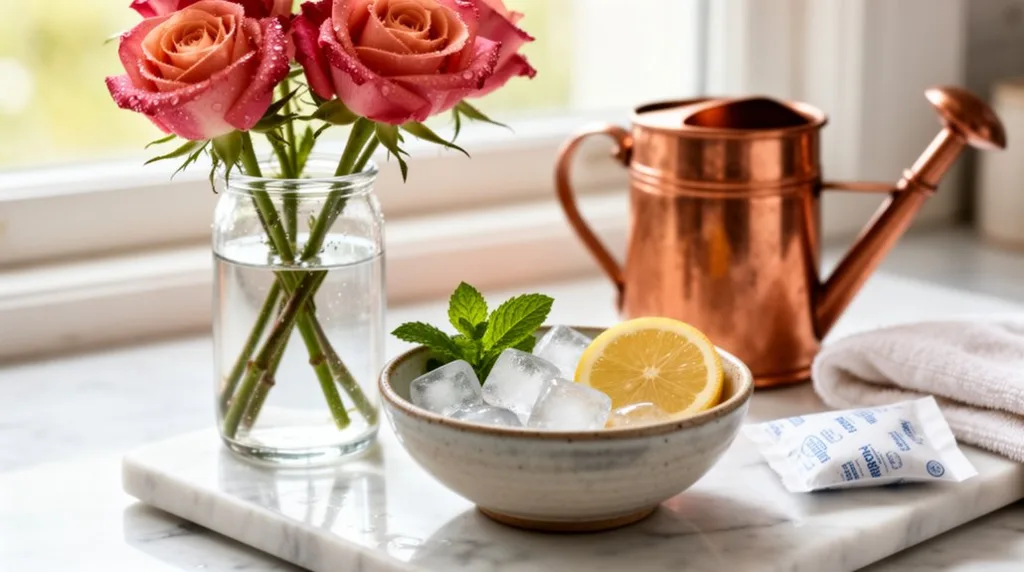
You’ve probably noticed how quickly cut flowers wilt, but a few simple tweaks can extend their life dramatically. Pick a clean vase, fill it with lukewarm water and a DIY preservative, trim the stems at a 45° angle, and keep the arrangement out of direct sun. Adding a splash of bleach or vodka helps prevent bacterial growth, while a quick refrigeration boost can revive drooping buds. Want to learn the exact steps and a few extra tricks for long‑term preservation?
Key Takeaways
- Use a clean vase filled with lukewarm water and a commercial preservative or a DIY sugar‑vinegar‑bleach mix; change the solution every 1‑2 days.
- Trim stems at a 45° angle 1–2 cm before placement and re‑cut every few days to expose fresh tissue and improve water uptake.
- Remove any leaves that sit below the water line and discard wilted petals promptly to prevent bacterial growth.
- Keep arrangements in a cool, shaded area away from direct sunlight, heat sources, and ripening fruit; refrigerate at 34‑38 °F for short‑term storage.
- Add a small amount of bleach or vodka to the water for antimicrobial protection and monitor clarity, replacing cloudy water immediately.
Choose the Right Vase and Fill It Properly to Make Cut Flowers Last Longer
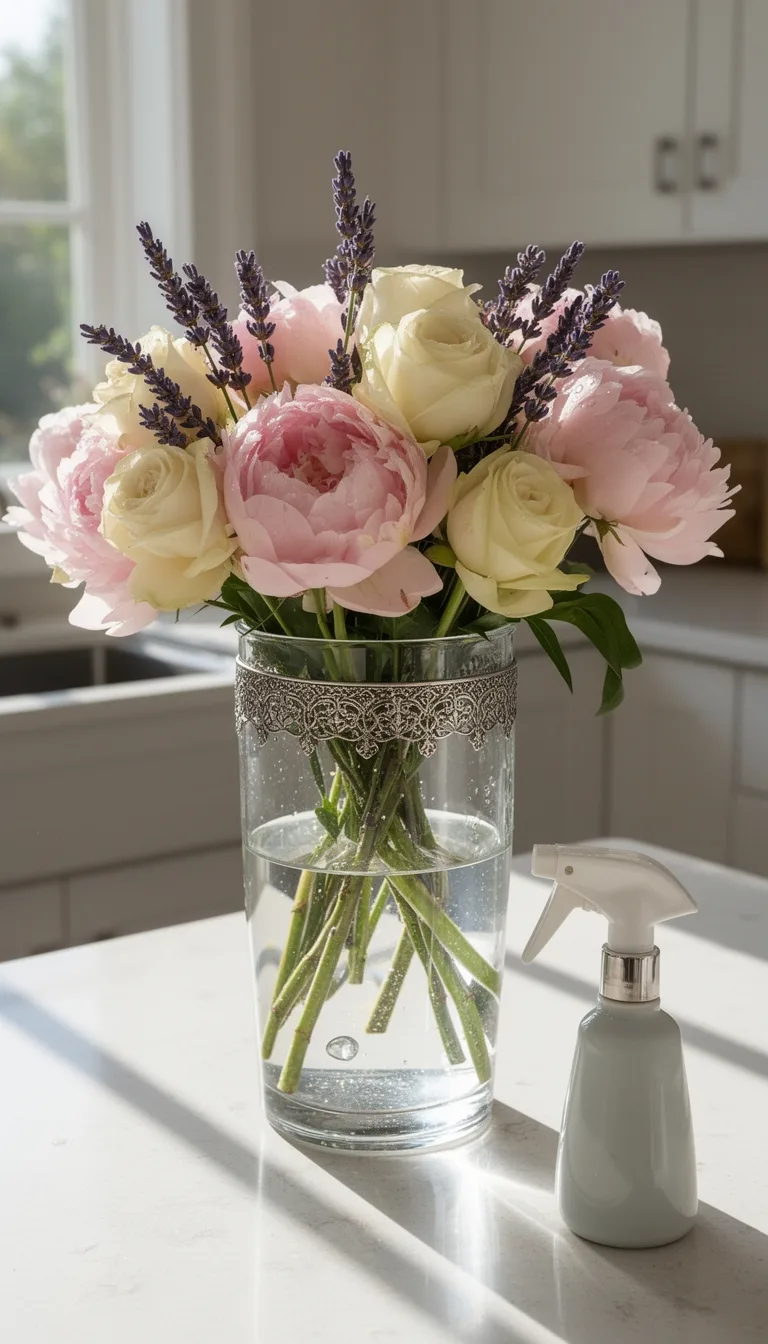
Select a vase that fits the bouquet’s size and shape, then fill it with lukewarm water mixed with a floral preservative.
Make sure the vase is clean; any residue can harbor bacteria that shortens stem life.
Use a container tall enough to submerge at least half the stems, but not so deep that leaves sit in water and rot.
If the vase is narrow, spread the stems gently to avoid crowding, allowing each flower to breathe.
Add a teaspoon of sugar or a commercial preservative per quart of water; the sugar feeds the blooms while the preservative limits microbial growth.
Change the water every two days, recutting stems at a fresh angle each time to keep the vascular system open and the flowers vibrant.
Trim Stems at a 45° Angle and the Ideal Length
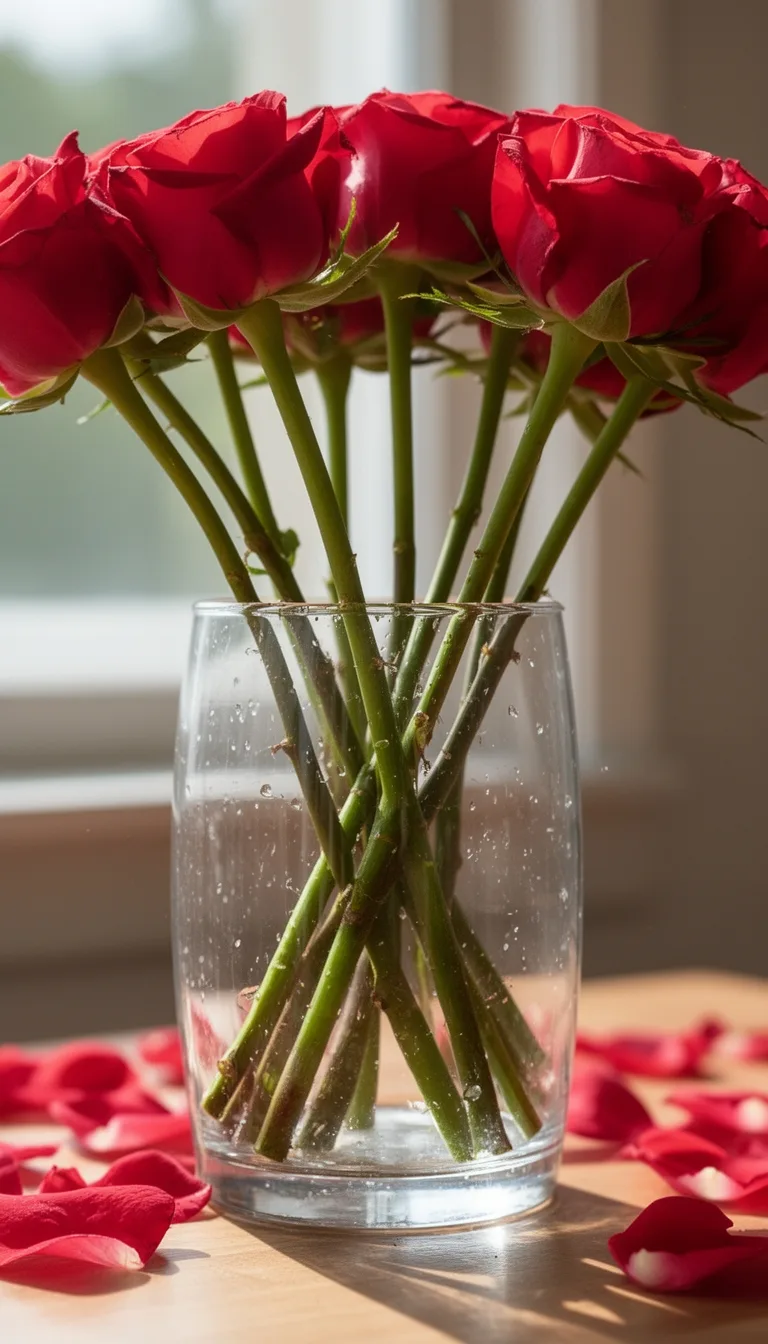
After filling a clean, appropriately sized vase, cut your stems at a 45° angle and trim them to the right length.
A slanted cut prevents the stem from resting flat against the vase bottom, allowing water to flow freely into the vascular tissue.
Aim for a length that keeps the flower’s bloom above the water line while providing enough stem for stability—typically 2–3 inches above the water.
Use sharp, clean shears to avoid crushing cells; a single, smooth slice is best.
Remove any foliage that will sit below the water to prevent decay.
Re‑cut the stems every few days to maintain a fresh surface and maximize uptake.
This simple adjustment dramatically extends vase life.
Create a Sugar‑Vinegar Cut‑Flower Preservative Solution
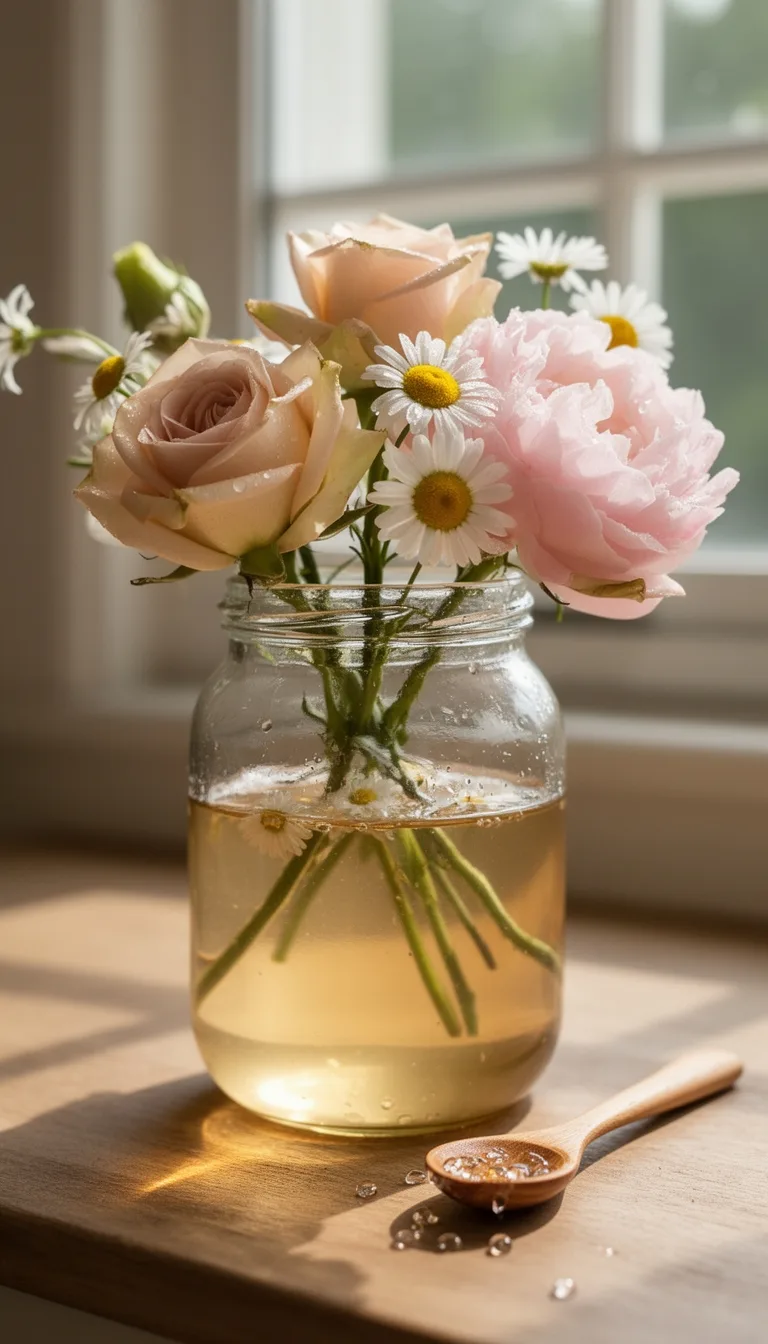
If you want your cut flowers to stay vibrant longer, mix a simple preservative by dissolving one tablespoon of sugar and one teaspoon of white vinegar in a quart of lukewarm water. Stir until the sugar fully dissolves, then let the solution cool to room temperature.
Trim the stems at a 45° angle, removing about an inch, and place them in the solution immediately. The sugar feeds the blooms, while the vinegar balances pH and inhibits bacterial growth.
Change the water every two days, replenishing the sugar‑vinegar mix each time. Keep the vase away from direct sunlight and drafts, and avoid overcrowding stems so each flower gets enough airflow.
This routine extends freshness and maintains vivid colors.
Add Bleach or Vodka to the Water for Antimicrobial Protection
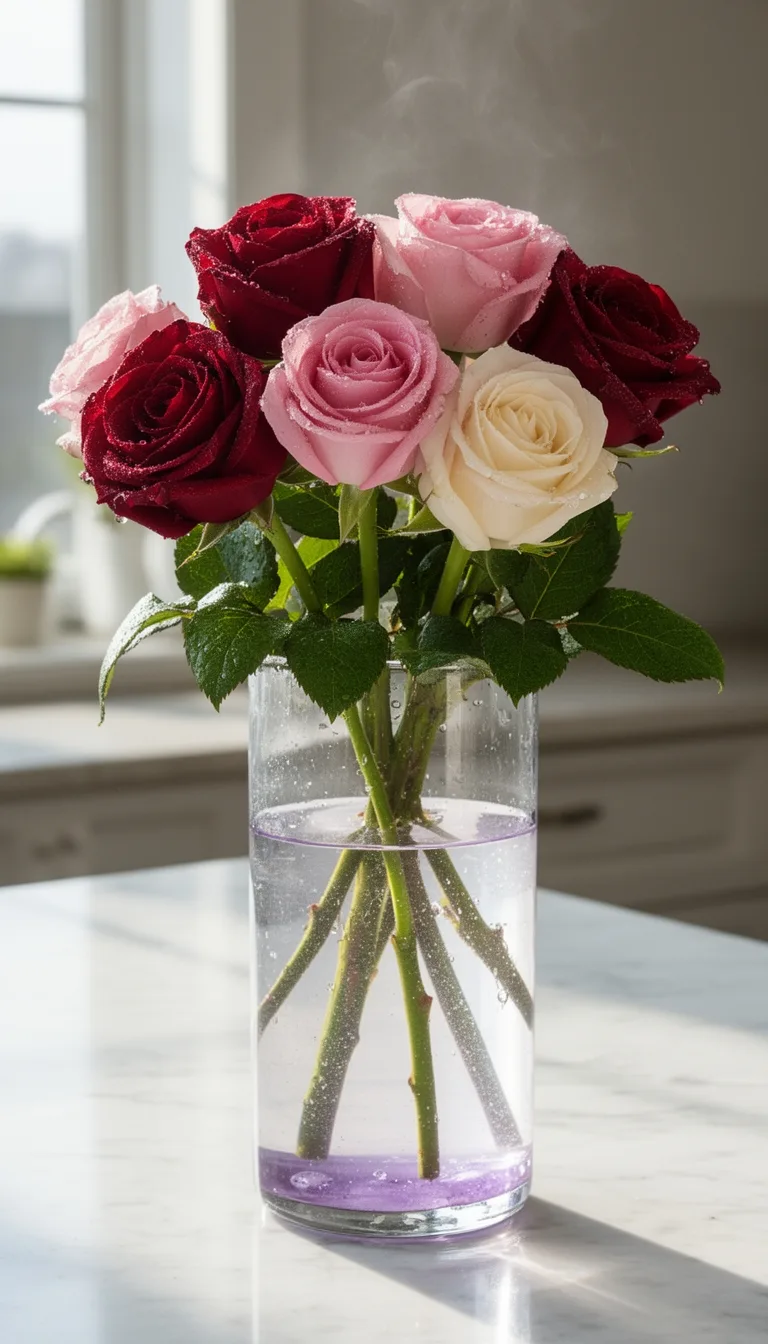
Adding a small amount of bleach or vodka to your vase water boosts antimicrobial protection without disrupting the sugar‑vinegar balance you already use.
Both agents keep bacteria and fungi in check, extending vase life while preserving color and fragrance.
Use a measured dose—too much can damage petals, too little won’t curb microbes.
- Choose the right concentration – add 1 ml of household bleach (5 % sodium hypochlorite) or 1 ml of vodka per quart of water.
- Mix thoroughly – stir the solution so it distributes evenly before inserting stems.
- Monitor water clarity – if it turns cloudy, replace the mixture with a fresh batch.
- Combine with your sugar‑vinegar mix – pour the antimicrobial solution into the existing preservative, then add flowers.
These steps keep microbes at bay, letting your bouquet stay fresh longer.
Keep Flowers Cool and Away From Direct Sunlight
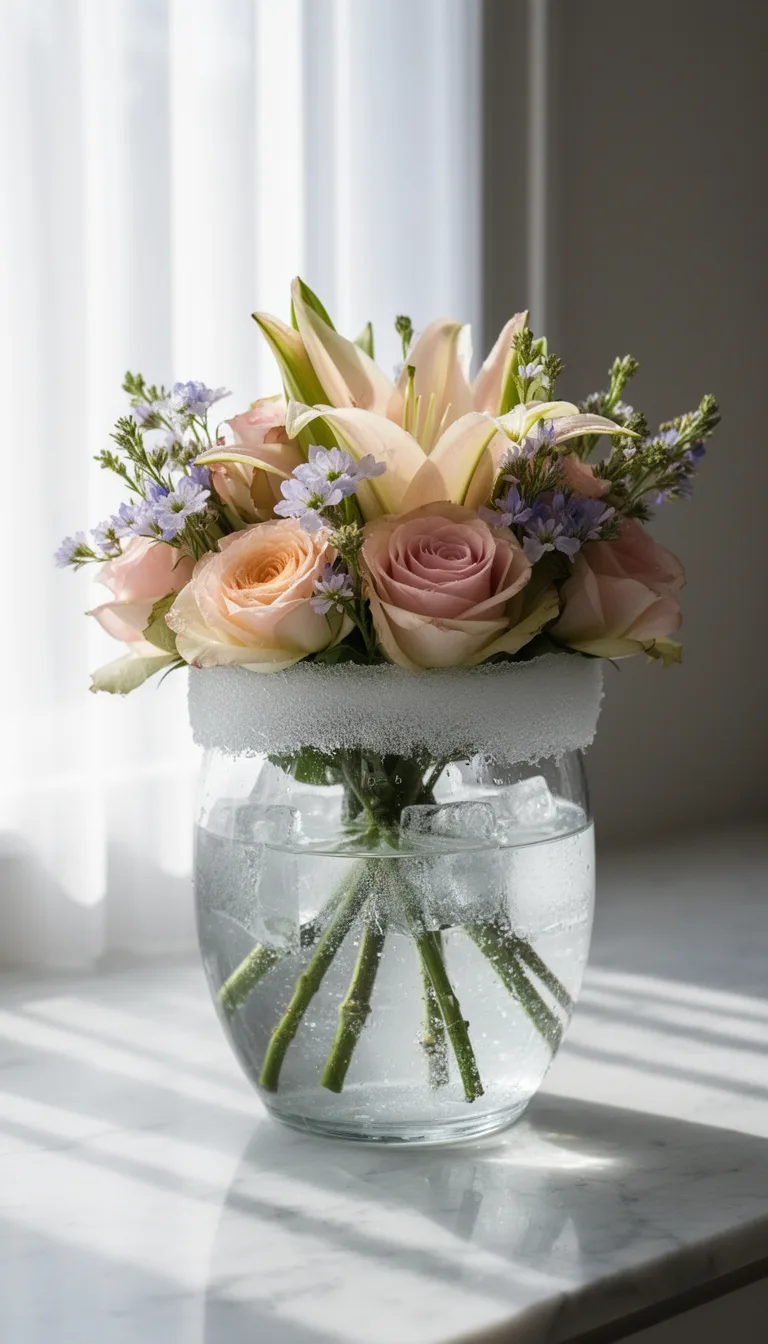
Usually, you’ll keep your bouquet out of direct sunlight and away from heat sources, because high temperatures accelerate water loss and bacterial growth, shortening vase life.
Choose a cool spot—think kitchen counter away from the stove, or a table near a window with curtains drawn. Avoid placing flowers near radiators, ovens, or air‑conditioner vents that blow hot air. If you’re in a bright room, use a sheer cloth or a decorative shade to filter light.
A cooler environment slows metabolism, so stems stay hydrated longer and petals stay vibrant.
For larger arrangements, consider a refrigerated cabinet or a cooler with ice packs, but keep the ice away from the water to prevent dilution. Consistently maintaining low temperatures extends freshness without extra effort.
Change the Water Every Day and Trim Off Bad Leaves
Changing the water daily and cutting away any wilted leaves are essential steps to keep your bouquet fresh. Fresh water removes bacterial buildup, while trimmed leaves prevent decay from spreading.
You’ll notice longer‑lasting blooms when you stay consistent with these habits.
- Replace water each morning – discard old liquid, rinse the vase, and fill with lukewarm water mixed with a preservative packet.
- Trim stems at a 45‑degree angle – use sharp scissors or a knife, cutting 1–2 inches to expose fresh tissue for better uptake.
- Remove all wilted or yellowing leaves – pull them away from the stem to keep rot from contaminating the water.
- Spot‑check the vase – look for floating debris or cloudiness; if present, change water again immediately.
These simple actions keep nutrients flowing and bacteria low, extending your arrangement’s life.
Store Flowers in the Refrigerator for a Quick Freshness Boost
Chill your bouquet in the refrigerator for a quick freshness boost, but keep it away from fruits and vegetables that emit ethylene.
Choose a crisper drawer or a dedicated shelf where temperature stays steady at 34‑38 °F (1‑3 °C) and humidity is moderate.
Trim stems a fresh inch before cooling, then wrap them loosely in a damp paper towel or place them in a vase with a little water to prevent dehydration.
Avoid direct contact with freezer walls to stop frost damage.
Keep the door closed as much as possible; frequent opening causes temperature swings that can wilt petals.
Check the flowers daily, removing any that show signs of browning or drooping.
This short chill—usually 2‑4 hours—rejuvenates turgor pressure, extending vase life before you arrange them.
Re‑hydrate Flowers After Refrigeration Before Arranging
After you pull the bouquet from the fridge, give it a quick re‑hydration before you start arranging. Bring the stems to room temperature, trim the ends, and submerge them in lukewarm water for five to ten minutes. This restores turgor, opens closed petals, and revives drooping foliage, giving you a healthier canvas for your design.
- Use a clean bucket with fresh, lukewarm water; add a teaspoon of floral preservative if you have it.
- Cut 1‑2 inches off each stem at a 45° angle to improve water uptake.
- Gently shake off excess water, then place the bouquet in a shallow tray to drain for a minute.
- Pat the leaves dry with a soft cloth to prevent excess moisture on the petals.
These steps wake the flowers up, so they look vibrant and last longer in your arrangement.
Spritz Hairspray or Aloe Gel to Seal Moisture and Reduce Wilting
Usually, a light mist of hairspray or a thin layer of aloe gel creates a protective barrier that locks in moisture and slows wilting.
You can spray a fine veil over each stem, keeping the nozzle about a foot away to avoid saturating the petals.
Let the spray dry for a minute before arranging, then repeat every two to three days.
If you prefer a natural option, dab a small amount of aloe gel onto the cut ends with a cotton swab; the gel seals the vascular tissue and reduces water loss.
Store the flowers upright in a cool spot, and avoid direct sunlight.
This quick seal keeps stems supple, extends vase life, and lets you enjoy vibrant blooms longer.
Freeze or Dry Unused Blooms for Future Arrangements
Seal the moisture with hairspray or aloe gel, then set aside any blooms you won’t use right away.
When you have extra stems, freeze or dry them so they’re ready for future arrangements. Freezing preserves color and shape, while drying creates a rustic look that lasts indefinitely.
Both methods let you reuse flowers without waste, saving money and time.
- Freezing – Trim stems, wrap in damp paper towels, place in freezer bags, and store flat.
- Air‑drying – Hang upside‑down in a dark, ventilated room for 1‑2 weeks.
- Silica gel – Bury buds in silica gel in an airtight container for 3‑5 days.
- Pressing – Sandwich flowers between parchment and heavy books for 1‑2 weeks.
Choose the technique that fits your décor, and you’ll have fresh‑looking blooms whenever you need them.
Conclusion
By picking the right vase, trimming stems at a 45° angle, and adding a sugar‑vinegar preservative (plus a splash of bleach or vodka), you’ll keep blooms fresh longer. Change the water every couple of days, keep the flowers cool and out of direct sun, and give them a quick fridge boost when needed. Spritz with hairspray or aloe gel for extra moisture protection, and preserve any leftovers by freezing or drying. Follow these steps, and your arrangements will stay vibrant and beautiful.
The Only Tools You Need for a Thriving Garden 🌱
Whether you're a weekend gardener or growing daily — these hand-picked tools make every session faster, easier, and more satisfying.