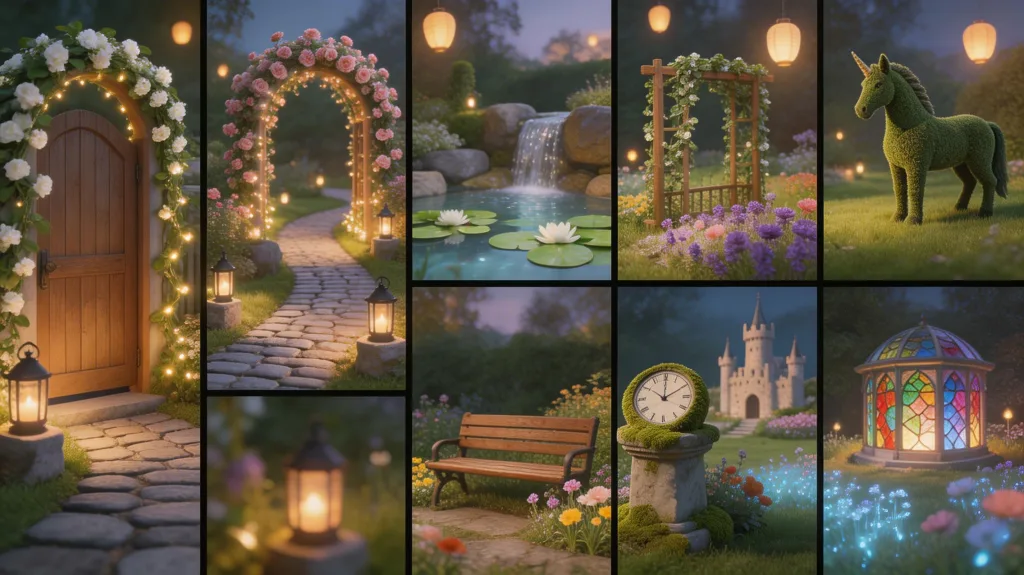
You might start your storybook garden by planting a winding path with creeping thyme between stones. In my own yard, I’ve found that building a living arch with a climbing rose like ‘New Dawn’ and a clematis creates an irresistible entrance. This practical framework leads to more enchanting corners, but you’ll need to consider which plant combinations work best for your space to unlock the full magic.
Key Takeaways
- Use curved paths with fragrant groundcovers to create a hidden, meandering journey.
- Build romantic flower borders with billowing heirloom varieties for loose, wild charm.
- Add rustic arches and arbors draped with climbing roses for secret entrances.
- Place vintage benches and swings as discovered retreats nestled among soft plants.
- Create miniature fairy villages and water features for enchanting detail and sound.
Start With a Winding Garden Pathway
Begin by paving a winding path to establish a sense of whimsy and discovery. You don’t need expensive stone; I’ve used reclaimed bricks set in a gentle curve, leaving gaps for creeping thyme or Corsican mint. The scent releases underfoot. Avoid straight lines—your path should disappear around a bend, hinting at hidden spaces.
Choose materials that age gracefully, like mossy flagstones or weathered gravel. Soften the edges generously. Let lady’s mantle spill over, its dew-catching leaves glistening, or allow alpine strawberries to trail, offering tiny treats. This journey is the garden’s backbone. You’re not just connecting points; you’re crafting an experience where every turn feels intentional and a little magical.
Plant a Fairytale Cottage Flower Border
Build your flower border with romantic, billowing shapes and soft textures that feel timeless, like the lavender and catmint I’ve grown alongside my own path. Layer in height for depth. I use tall foxgloves and delphiniums at the back, medium-height roses and peonies in the middle, and low-growing violas or creeping thyme at the front. Choose heirloom varieties with single, open blooms that pollinators love; avoid overly rigid, modern hybrids.
Let plants gently self-seed and spill over edges. My ‘Munstead’ lavender always looks perfect tumbling onto the gravel. For continuous bloom, mix early poppies, summer phlox, and autumn sedum. You’ll want a loose, slightly wild look, so don’t space plants too evenly.
Tuck Away a Secret Garden Nook

Every garden holds the potential for a tucked-away retreat, where you can escape into quiet enchantment.
You can create a secret nook by using plants to form living walls. I’ve found tall, fragrant shrubs like lilac or viburnum work perfectly for this. Tuck a simple bench inside and surround it with soft, sprawling groundcovers like creeping thyme or sweet woodruff that release scent when crushed.
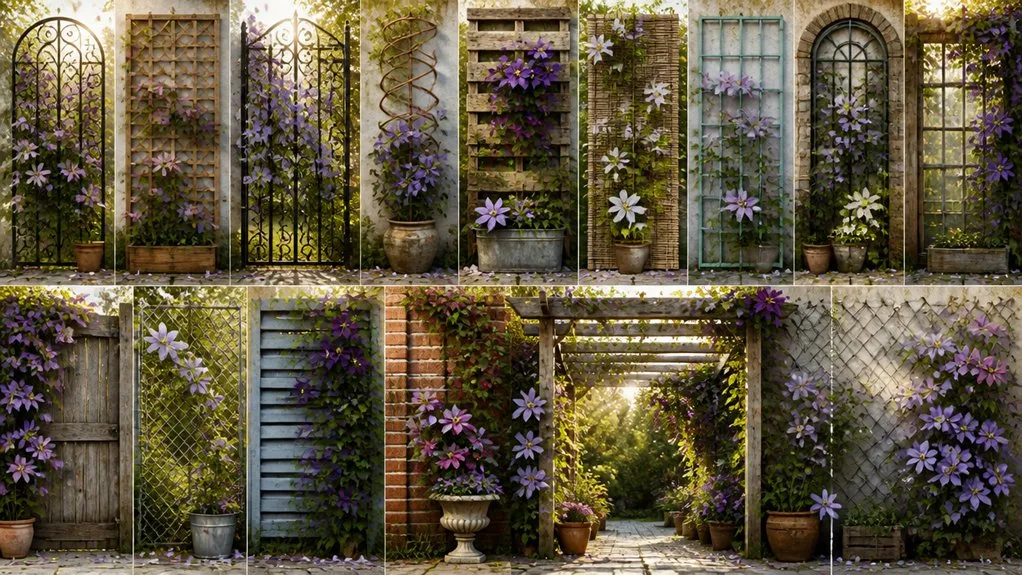
- Create a living arch with climbing roses or clematis to serve as a hidden entrance.
- Plant a fragrant perimeter using lavender or daphne to define the space.
- Add a secluded seat, like a weathered stone bench or a simple wooden chair.
- Incorporate sound with a small bubbling fountain tucked among ferns.
- Use groundcover like Corsican mint or chamomile for a soft, fragrant floor.
Frame Spaces With Rustic Gates and Arches

As you wander deeper into your garden, framing a view with a rustic gate or arch can turn a simple pathway into an invitation to another world. I’ve found using weathered wood or simple ironwork instantly adds a storybook feel. Position your gate to reveal just a glimpse of what’s beyond, like a curved bench or a fountain, to spark curiosity.
For arches, plant fast-growing annual vines like sweet peas or moonflower on each side; their delicate tendrils and fragrant blooms will weave through the structure by midsummer. You’re not just building a structure, you’re creating a portal. Ensure it’s sturdy, as I learned when a vigorous clematis once toppled a flimsy arch during a summer storm.
Weave Magic With a Climbing Rose Archway

Envision a climbing rose archway as a living sculpture that transforms with the seasons, and for real fairy-tale impact, you should choose a variety known for both fragrance and form. I’ve found that planting two of the same rose on opposite sides creates a fuller, more balanced display.
You’ll need a sturdy, rust-resistant metal or cedar arch that’s firmly anchored.
- ‘Zéphirine Drouhin’: A thornless wonder with vibrant pink blooms and an intense raspberry scent, perfect for arches near pathways.
- ‘New Dawn’: Reliable and vigorous, it offers soft pearl-pink flowers with a light, sweet fragrance from summer into fall.
- Training Tip: Weave new canes horizontally along the arch in early spring to encourage more flowering along their length.
- Companion Planting: Underplant with lavender or catmint; their silvery foliage makes the rose colors pop.
- Maintenance: A top-dressing of compost each spring feeds the roses and keeps the soil healthy for years of blooms.
Craft a Mossy, Enchanted Forest Corner

Creating a mossy, enchanted forest corner invites serenity and ancient charm into your garden. You’ll want a shaded, moist area, ideally under a large tree.
Start by encouraging moss; I’ve had great success with buttermilk moss “slurry” painted on rocks and soil. Introduce lush, textural plants like hardy ferns, such as Autumn Fern for coppery hues, and shade-loving hostas with their broad, sculptural leaves.
Tuck in some delicate foamflower or sweet woodruff for ground cover. Add a simple stone path or a few moss-covered logs to define the space.
The key is layering; let plants spill over each other naturally. This creates that timeless, secret-grove feel you can lose yourself in for a quiet moment.
Pick Out Vintage or Ornate Garden Furniture

Now consider how your furniture choices can enhance that fairytale atmosphere. Opt for pieces that look like they’ve a story, with intricate scrollwork or a timeworn patina. I’ve found wrought iron benches perfect flanked by fragrant lavender or climbing ‘New Dawn’ roses, while a rustic wooden table can nestle perfectly under a flowering crabapple tree. You want furniture that feels discovered, not just placed.
- Wrought iron benches: Their elegant curves look stunning when climbing sweet peas or clematis weave through them.
- Weathered wooden chairs: Place them on a flagstone patio where creeping thyme grows between the stones.
- Ornate metal bistro set: Perfect for a secluded nook under a canopy of wisteria.
- A reclaimed church pew: Line it with cushions and let ivy trail over its sides.
- A vintage garden swing: Suspend it from a strong apple tree branch for a truly magical spot.
Add Twinkling Fairy Lights and Lanterns

You can often extend the magic of your fairytale garden into the evening by weaving twinkling fairy lights and lanterns throughout the space. I like to wrap mini LED strings around the trunks of my Japanese maple, letting the branches cast intricate shadows. Solar-powered lanterns nestled in hosta beds add a soft glow and eliminate messy cords. For a truly enchanting effect, you’re creating layers of light.
| Light Type | Best Placement |
|---|---|
| Fairy Lights | Drape in climbing roses or weave through arbors. |
| Glass Jar Lanterns | Cluster at the base of ferns or along pathways. |
| Globe Lights | Hang from lower tree branches, like dogwoods. |
Build a Miniature Fairy House Village

Bring out your inner craftsman to fashion a miniature village that gives your garden’s smallest visitors a place to call home. Use materials like bark, stones, and moss to build tiny cottages nestled between plant roots. I’ve found that shallow-rooted ground covers make perfect foundations; my village thrives under a carpet of Irish moss, which stays cool and looks lush. Remember, your fairies love shade, so tuck these houses under the sprawling foliage of a hosta or beneath a fern. It’s all about creating a hidden world.
- Construct a tiny bridge across a small depression using twigs and pebbles.
- Use a hollowed-out log or a large pinecone for an instant rustic cottage.
- Create winding paths with fine gravel or crushed seashells between dwellings.
- Plant miniature ‘Tom Thumb’ lettuces or creeping thyme as tiny fairy gardens.
- Use acorn caps and dried seed pods as bowls and furniture on a mossy patio.
Include a Birdbath or Fountain for Sound

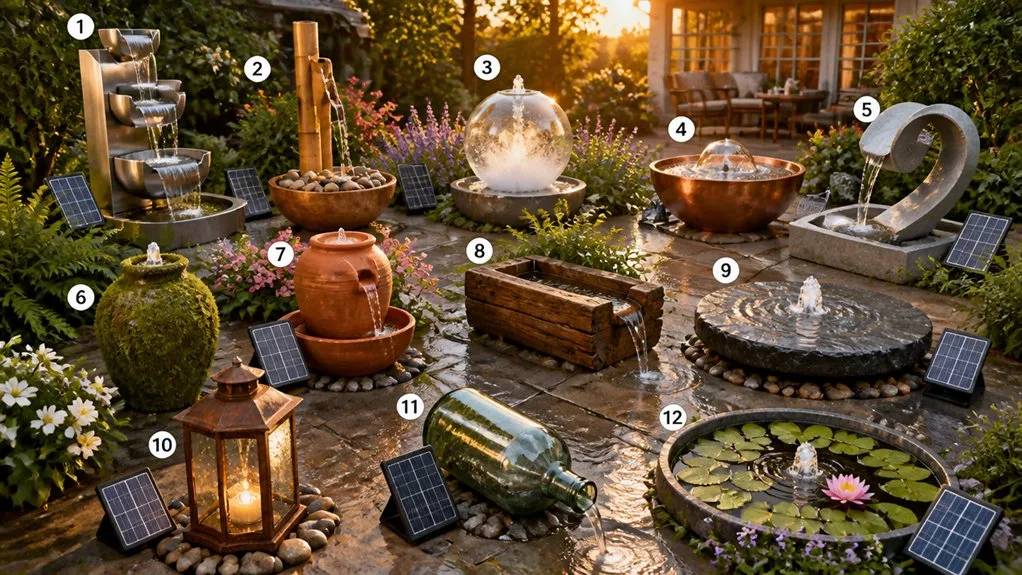
Let’s move from building houses to adding ambiance. You can’t have a true enchanted glen without the gentle soundtrack of water. A simple birdbath attracts feathered visitors whose splashes and songs add life, while a recirculating fountain creates a constant, soothing murmur that masks street noise. I tucked a small stone fountain beneath the draping branches of my weeping cherry; the sound seems to emanate from the tree itself. Surround the base with moisture-loving plants like ferns and mosses to blend it seamlessly into your landscape.
| Feature | Sound Profile | Best Plant Pairing |
|---|---|---|
| Classic Birdbath | Gentle splashes, bird chatter | Sedums for perching |
| Bubble Fountain | Soft, constant burble | Creeping thyme (groundcover) |
| Tiered Fountain | Multi-layered trickle | Lady ferns (for damp shade) |
| Wall Fountain | Focused, vertical flow | Hart’s tongue fern (shade) |
Grow a ‘Giant’s Garden’ With Oversized Blooms
Scale up the whimsy by planting varieties known for their colossal flowers or leaves, creating a space that feels delightfully out of proportion. You’ll feel like an explorer in your own yard when you tuck these botanical giants into sunny borders. Their sheer size creates instant drama and a magical sense of scale that’s perfect for a storybook setting.
From my own experience, mixing a few of these with smaller plants amplifies the fantastical effect even more.
- ‘Paul Bunyan’ Sunflowers reliably reach over 12 feet tall with massive, seed-filled heads that birds adore.
- ‘Dinner Plate’ Dahlias produce stunning blooms up to 10 inches wide in a carnival of summer colors.
- Elephant Ears (Colocasia) unfurl huge, heart-shaped leaves that bring a lush, tropical texture.
- Giant Hibiscus (Hibiscus moscheutos) showcases plate-sized flowers in brilliant reds, pinks, and whites.
- Mammoth Russian Sunflowers are the classic giant, easily soaring to 12 feet with strong, single stalks.
Upcycle Teacups and Pots Into Whimsical Planters
Dig out your forgotten treasures from the back of the cupboard; chipped teacups and old pots can easily be transformed into charming homes for tiny plants.
First, drill a drainage hole in the bottom; I use a special ceramic bit and go slowly to prevent cracks.
Choose diminutive, shallow-rooted plants. For a sunny sill, succulents like echeveria or string of pearls thrive with minimal water. In shadier spots, try baby’s tears or a single fern frond. I’ve planted creeping thyme in a teapot; it spills over the spout beautifully.
Remember, these small containers dry out fast. You’ll need to check the soil moisture frequently, watering gently when the top inch feels dry.
Group them on a shelf for a magical display.
Design a Moon Garden for Evening Magic
Sometimes the most enchanting garden space isn’t the one you enjoy under the midday sun, but the one that comes alive at dusk. A dedicated moon garden, planted with white and silver flora, glows magically in twilight and attracts nighttime pollinators.
My own evening retreat feels like a secret garden. Focus on plants that reflect moonlight and release fragrance after dark.
- White blooming perennials: Start with reliable night-bloomers like white evening primrose, whose flowers open at dusk, or fragrant white nicotiana.
- Silver foliage: Incorporate plants like dusty miller or lamb’s ear; their leaves shine all night.
- Night-scented stars: Plant night-blooming jasmine or moonflower vines; their perfume is intoxicating.
- Textural ground covers: Use silver mound artemisia or snow-in-summer for a luminous carpet.
- Structural elements: Add white-barked birch trees or a simple, pale-colored bench to complete the scene.
Hang a Swing or Create a Reading Perch
To round out your magical space, consider a place to pause and enjoy it. Hang a simple rope swing from a sturdy, mature branch on a strong tree like an oak or maple. Ensure the branch is thick and healthy. I’ve found positioning it under a canopy of flowering vines, like clematis or star jasmine, adds scent and dappled shade.
For a reading perch, repurpose a weathered bench or build a simple platform nestled among shrubs. Surround it with tall, soft plants like lady’s mantle or ornamental grasses that rustle in the breeze; they create a private, cozy nook. Add a small side table for your tea and book. This intentional spot turns your garden from a view into a lived-in experience.
Embrace a Casual, Wildflower Aesthetic
Planting a loose, informal tapestry of native wildflowers is the quickest path to a garden that feels effortlessly magical. I’ve found this approach forgives imperfection, inviting butterflies and bees to create constant, charming movement.
The key is to choose self-seeding varieties that thrive with minimal care, creating new surprises each season. Skip orderly rows and instead broadcast seeds in gentle drifts, allowing plants to mingle naturally.
- Scatter California poppies for a carpet of brilliant orange that thrives on neglect.
- Let purple coneflower establish; its sturdy stems and seed heads provide winter interest.
- Incorporate foxgloves for towering spires that add vertical drama and shelter for fairies.
- Add clumps of nodding camassia for early spring blooms in damp, grassy areas.
- Allow native grasses like switchgrass to weave through, adding texture and soft, whispering sounds.
Frequently Asked Questions
What Is a Fairytale Garden’s Most Essential Element?
You can’t skip the “enchanted” atmosphere. Choose plants like foxgloves or rambling roses that have a storybook feel. I’ve found adding a hidden nook creates a sense of magic you can actually step into.
Is a Fairytale Garden Style Expensive to Create?
No, you don’t need a huge budget. Start with inexpensive, self-seeding plants like poppies or foxgloves. I’ve found that old, mismatched pots and a simple, winding path create magic without breaking the bank.
How Do I Maintain a Wild, Casual Garden Aesthetic?
You’ll let plants self-seed and avoid neat rows. Keep things like foxgloves and forget-me-nots, and only prune to manage growth. You’ll embrace a little chaos—it’s that unplanned look that creates the magic.
Can I Create a Fairytale Garden in a Small Space?
Absolutely! You can. Focus on vertical elements like vines or climbers. Add whimsical containers and fragrant, small-scale plants like herbs and fairy roses. Dappled light from a single tree helps immensely.
What if My Garden Doesn’t Get Much Sunlight?
Choose shade-loving plants. You can grow magical foxgloves, fairy-bell hostas, and fragrant ferns. I’ve found adding sparkly glass ornaments or a tiny fairy door on a shady tree trunk really brightens up those dark corners.
Conclusion
Just start with your favorite corner. I planted a single moonflower vine one summer; now its night‑blooming magic transforms my evenings. Choose the idea that truly sparks your joy—be it a path of creeping thyme or a sunflower tower—and build from there. Your own hands will weave the real enchantment, one plant, one stone, one twinkling lantern at a time.
The Only Tools You Need for a Thriving Garden 🌱
Whether you're a weekend gardener or growing daily — these hand-picked tools make every session faster, easier, and more satisfying.