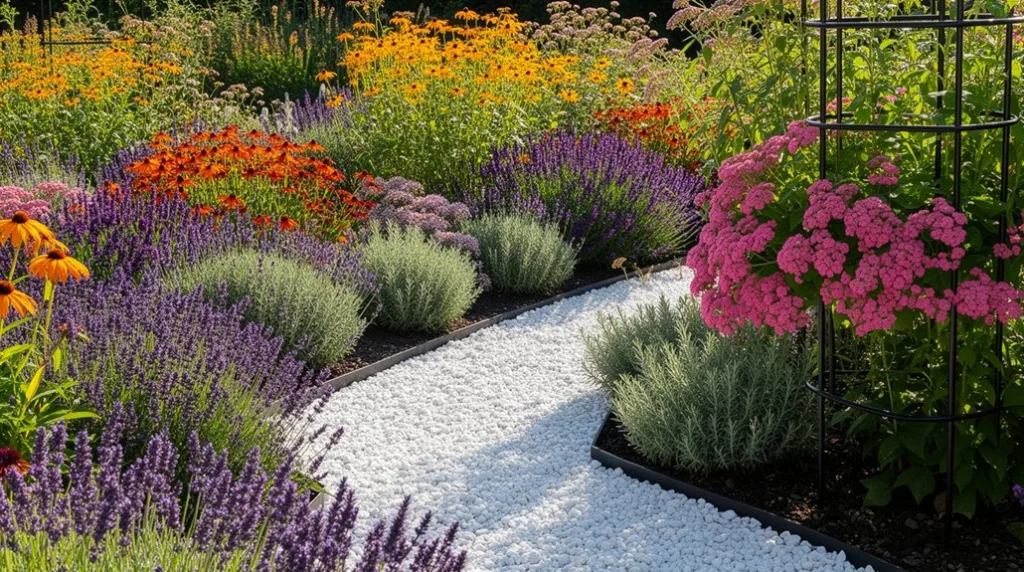
Planning a full sun perennial garden means you’re working with at least six hours of direct light. You must consider the quality of that light and your soil’s condition first. By arranging plants in strategic drifts and selecting for continuous bloom, you can create a vibrant, low-maintenance landscape. The real challenge lies in balancing height and color from spring’s first phlox to fall’s last aster.
Key Takeaways
- Plan for at least six hours of direct sun, prioritizing intense afternoon light in your layout.
- Structure beds with tall anchors in back, mid-height fillers, and low-growing edging plants in front.
- Choose a dominant color palette and sequence plants for continuous blooms from spring through fall.
- Select drought-tolerant perennials like coneflower and sedum, and water them deeply but infrequently.
- Prepare soil with compost and mulch to conserve moisture and suppress weeds in hot conditions.
What Defines a “Full Sun” Garden?
When you’re planning a full sun garden, you’re essentially selecting a spot that gets at least six hours of direct sunlight every day, especially during the peak growing season from late spring through summer.
You’ll need to observe your space across different months, noting how shadows from buildings or trees change.
True full sun often means intense afternoon light, which is hotter and more demanding than gentler morning rays.
You must also consider your climate’s summer heat; that sun can be brutal in July.
This defines the growing environment, determining which plants will thrive versus those that’ll scorch.
It’s about the quality and duration of light, not just an open sky.
Why a Perennial-Only Garden Is a Smart Choice
Understanding that your sunny spot offers a specific set of conditions lets you focus on selecting plants built for the long term.
You choose perennials for their durability and recurring blooms. They’ll establish deep roots in that bright, hot soil, becoming more robust and drought-tolerant each year.
You avoid the annual chore of replanting, saving you significant time and money. Your garden’s structure becomes predictable; you’ll know which clumps of peonies erupt in late spring and which asters paint the border in autumn.
You manage it seasonally, cutting back spent stems in fall or early spring. This creates a self-sustaining cycle where plants naturally fill their space, reducing weeds and requiring less overall maintenance than a mixed garden.
Map Your Simple Sun Garden Layout
A simple garden map puts your vision on paper before you dig a single hole. Grab graph paper and sketch your bed’s shape, noting north for sun direction. Mark existing trees or structures casting afternoon shade.
Plot your plant groups in odd-numbered clusters for a natural look, considering each perennial’s mature spread. Place taller varieties like Russian sage or phlox toward the back, mid-height coneflowers in the center, and low-growing sedums or catmint along the front edge.
Remember to leave ample space between plants for good air circulation, which reduces disease. Your map becomes a seasonal planting guide, ensuring you account for spring, summer, and fall bloom times to maintain continuous color.
Choose the Right Perennials for Your Climate Zone
Before you select your plants, check your USDA Hardiness Zone, as it’s the essential guide to which perennials will thrive as reliable fixtures in your garden year after year. This number, based on your region’s average annual extreme minimum winter temperature, tells you a plant’s cold tolerance. A perennial rated for your zone or a colder one will survive your winters. For example, if you’re in Zone 5, choose plants hardy to at least Zone 5. You’ll find zone information on plant tags or in catalogs. Ignoring this risks losing plants to frost.
Also, consider your local summer heat; some perennials need a specific chill period to bloom well. Always match plants to both your zone and microclimate.
Select Plants for Season-Long Bloom
After choosing perennials that can handle your winters, your next step is picking plants so something’s always blooming. You’ll achieve a dynamic display by mixing perennials with staggered bloom times from spring through fall. Think of your garden in three distinct seasons and select key players for each. Prioritize varieties with long flowering periods, but don’t neglect early and late bloomers that provide essential color when other plants are resting.
- Spring: Start with reliable bulbs like tulips, followed by bleeding heart and creeping phlox for groundcover color.
- Late Spring to Early Summer: Integrate catmint and salvia; their spiky flowers complement early coreopsis.
- High Summer: Rely on steadfast bloomers like coneflower, black-eyed Susan, and blanket flower.
- Late Summer to Fall: Incorporate Russian sage and asters for structure and late-season nectar.
- Repeat Performers: Seek out plants like ‘Rozanne’ geranium or ‘Moonbeam’ coreopsis that flower for months.
Build Your Foundation With Tall, Sun-Loving Perennials
Now you can anchor your design with the vertical structure tall perennials provide. Place these dramatic specimens in the back of your border or as focal points. They’ll rise above shorter plants, creating a lush, multi-tiered effect. Choose varieties that thrive in at least six hours of direct sun and have strong stems to resist summer storms. You’ll get the most impact by planting them in odd-numbered groups. These foundational plants establish the garden’s height and shape early in the season, often blooming from midsummer into fall.
| Plant Name | Height/Spread | Key Seasonal Traits |
|---|---|---|
| Joe-Pye Weed | 5-7 ft / 2-4 ft | Mauve blooms, Jul-Sept; butterflies love it. |
| Russian Sage | 3-5 ft / 2-4 ft | Airy purple spires, Jul-Oct; drought tolerant. |
| ‘Fireworks’ Goldenrod | 3-4 ft / 2 ft | Bright yellow plumes, Aug-Oct; upright habit. |
| Boltonia | 4-6 ft / 3-4 ft | Masses of tiny white daisies, Aug-Oct. |
| Giant Coneflower | 5-7 ft / 2-3 ft | Large yellow blooms, Jul-Sept; sturdy stems. |
Add Mid-Height Plants for Vibrant Layers
Once your garden’s structural framework is established, you can weave in mid-height perennials to create rich, vibrant layers. These plants, typically 1-3 feet tall, fill the crucial space between your structural giants and future low-growers, adding depth and continuous color.
You’ll want to consider bloom time to ensure interest from spring through fall. Plant in drifts of three or five for greater visual impact.
- For Early Summer: Plant hardy geraniums like ‘Rozanne’ for months of violet-blue flowers and tidy foliage.
- For Midsummer Drama: Include daylilies, which offer a staggering array of colors and are remarkably drought-tolerant.
- For Late Summer & Fall: Add Sedum ‘Autumn Joy’ for structural pink flower heads that age to a coppery bronze.
- For Texture & Form: Incorporate ornamental grasses like Fountain Grass for graceful, arching movement.
- For Pollinators: Choose upright, nectar-rich plants like bee balm or Russian sage to support beneficial insects.
Edge Your Beds With Low-Growing Sun Perennials
To frame your garden’s vibrant layers, finish by edging the beds with low-growing perennials that thrive in full sun. These plants provide a neat border, define paths, and prevent soil erosion. Select varieties that stay compact, ideally under 12 inches tall.
For spring, use creeping phlox for a carpet of color, or candytuft for pure white blooms. Come summer, plant hardy geraniums like ‘Rozanne’ for long-lasting blue flowers, or try threadleaf coreopsis for fine foliage and yellow blossoms. Autumn sedums, such as ‘Vera Jameson’, offer late-season pink blooms and succulent leaves.
Ensure they receive at least six hours of direct sun. Space them according to their spread, water them well until established, and they’ll return reliably each year.
Incorporate Plants for Foliage Texture and Interest
Beyond the edges, you can build visual depth in your full sun garden by mixing plants with varied foliage. Contrasting textures create year-round interest, long after flowers fade.
Think of foliage as your garden’s architectural foundation; it provides structure and sophistication through its form, color, and feel.
- Silver sage (Salvia argentea) offers spectacular, broad, fuzzy leaves in spring and early summer.
- ‘Palace Purple’ coral bells (Heuchera) provide dark, maple-like foliage from spring to fall.
- Feathery yarrow (Achillea) contributes finely-dissected, fragrant leaves all season.
- Spiky sea holly (Eryngium) introduces steely-blue, thistle-like texture in mid to late summer.
- Whorls of sedum (Sedum ‘Autumn Joy’) present succulent, rounded leaves from spring through frost.
You’ll design a tapestry that’s visually compelling even without a single bloom present.
Use Grasses for Structure and Movement
You can anchor your full sun garden and weave in graceful motion by incorporating ornamental grasses. Their upright forms and fine textures provide a strong backbone, preventing the planting from looking messy.
Select tall varieties like Panicum or Miscanthus to create screens and focal points. Shorter grasses, such as Festuca, can edge a path.
You’ll appreciate their dynamic seasonal changes; in spring they emerge as fresh green tufts, summer brings feathery plumes, and autumn turns them into golden sculptures. They sway with every breeze, softening rigid layouts.
You must plant them where they’ll receive at least six hours of direct sun. Pair their linear leaves with the rounded shapes of shrubs or broad leaves of perennials for striking contrast.
Include Drought-Tolerant Perennials for Easy Care
Since you’re planning a garden in full sun, incorporating drought-tolerant perennials is a smart way to ensure it’s both resilient and low-maintenance. These plants thrive on minimal water once established, reducing your workload during hot, dry summers. Their adaptations, like deep taproots or succulent leaves, allow them to survive periods of neglect, ensuring your garden looks lush from late spring through fall.
You’ll appreciate their hardiness during heatwaves when other plants wilt. Focus on proper planting techniques for the best results.
- Sedum (‘Autumn Joy’): Succulent foliage supports dense, late-season flower heads that attract pollinators and provide winter interest.
- Russian Sage (Perovskia): Offers aromatic, silvery foliage and long-lasting lavender-blue spires from midsummer into early fall.
- Yarrow (Achillea): Produces flat, colorful flower clusters in early summer; its fern-like, aromatic foliage is highly deer-resistant.
- Coneflower (Echinacea): Forms sturdy, daisy-like blooms from early to late summer; its seed heads feed birds through winter.
- Lavender (Lavandula): Provides fragrant grey-green foliage and iconic purple spikes in early summer, perfect for sunny, well-drained edges.
Craft Your Full Sun Perennial Color Palette
Selecting plants that withstand drought sets a strong foundation, and now building a color palette brings your garden’s visual character to life.
Begin by choosing a dominant hue, like the deep purples of salvia or the sunny yellows of coreopsis. Then, add complementary colors for contrast; pair blue veronica with orange daylilies.
Remember to plan for seasonal progression. Early summer shines with pink phlox, while late summer bursts with red crocosmia.
Incorporate silvery artemisia or lavender for foliage that cools hot color schemes and provides texture. White flowering yarrow or shasta daisies act as neutral spacers, blending sections seamlessly.
This layered approach ensures vibrant interest from spring through fall.
Prepare Your Soil for a Thriving Garden
After crafting a vibrant color palette, ensuring your garden thrives begins with healthy soil—so let’s dig into preparing it. In early spring or fall, test your soil’s pH and texture. Most sun perennials prefer slightly acidic to neutral soil (pH 6.0-7.0). You’ll amend it based on the results, incorporating generous amounts of organic matter to improve structure and fertility.
- Integrate Compost: Work a 3- to 4-inch layer of well-rotted compost into the top 8-12 inches of soil to boost nutrients and moisture retention.
- Check Drainage: Perform a percolation test; amend heavy clay with coarse sand or compost to prevent waterlogging.
- Loosen Subsoil: Break up compacted layers beneath the planting zone to encourage deep root growth.
- Add Granular Fertilizer: Mix in a balanced, slow-release fertilizer to provide sustained nutrition throughout the growing season.
- Let it Settle: Allow the prepared bed to rest for a week or two before planting, watering lightly if it becomes dry.
Plant Your Full Sun Perennials the Right Way
With your soil prepared, you can now focus on the actual planting, which is best done in the cool, moist conditions of early spring or early fall.
You’ll want to water all your nursery pots thoroughly a few hours beforehand.
Always check plant tags for mature spread and dig each hole twice as wide as the root ball.
Gently loosen any circling roots before placing the plant so its crown sits level with the soil surface.
Backfill with the native soil, firming it gently to eliminate air pockets.
Create a shallow watering basin around each plant and give them a deep, initial soak.
Apply a two-inch layer of mulch to retain moisture and suppress weeds, but keep it away from the plant stems.
Follow a Sample Full Sun Garden Design
If you’re ready to transform your sunny plot, this practical design offers a proven layout, featuring plants that provide successive color from late spring through the first frost.
Begin by outlining an 8-by-10-foot bed. Position tall, structural perennials like red bee balm towards the back to bloom in high summer. For the mid-layer, intersperse clumps of coreopsis and Russian sage for continuous flowers from June onward. Place lower, mounding plants such as catmint and dianthus along the front edges; they’ll flower heavily in late spring and often rebloom. You’ll repeat these groupings to create rhythm, ensuring visual interest shifts as seasons progress without any gaps.
- Structural Anchor: Place a tall, late-summer bloomer like *Verbena bonariensis* for see-through height.
- Mid-Season Mass: Use a drift of salvia ‘May Night’ for vibrant early-summer purple spikes.
- Long-Blooming Base: Incorporate reliable daylilies, selecting early, mid, and late cultivars.
- Textural Filler: Add ornamental grasses like blue fescue for movement and contrast.
- Spring Initiator: Start the season with a cluster of hardy geraniums for rapid groundcover.
Water and Mulch Your New Garden Efficiently
Ensuring your new perennial garden thrives starts with efficient watering and mulching, especially during its first critical growing season. Water deeply and infrequently, aiming for about one inch of water per week, including rainfall. This encourages roots to grow downward, searching for moisture and building drought tolerance. Do your watering early in the morning to reduce evaporation. Apply a 2-3 inch layer of organic mulch, like shredded bark or compost, after planting. Keep it a few inches away from plant stems to prevent rot. Mulch suppresses weeds, retains soil moisture, and moderates soil temperature.
| Watering Task | Best Seasonal Timing |
|---|---|
| Deep Soaking | Spring & Fall: Weekly; Summer: Twice weekly if dry |
| Morning Watering | Always, but especially during summer heat |
| Checking Soil Moisture | Before each watering, year-round |
| Reducing Frequency | Once plants are established, usually by late fall |
| Winter Watering | On warm days if the ground isn’t frozen |
Maintain Your Full Sun Perennials With Ease
Since your garden’s first season has passed, ongoing maintenance becomes key to keeping your full sun perennials vibrant and healthy. Your focus now shifts from establishment to seasonal care and observation.
In spring, you’ll cut back any remaining dead foliage from last fall. Summer demands consistent deadheading, where you snip off spent blooms to encourage more flowers and prevent rampant self-seeding. You must also stay vigilant for pests like aphids and treat them promptly. Come autumn, after the first hard frost, you can leave some seed heads for winter interest and wildlife, but cut back most stems to tidy the garden and reduce disease.
- Deadhead Regularly: Shear or snip spent blooms weekly in summer to prolong flowering.
- Stake Early: Install supports in late spring for tall, floppy growers like bee balm before they flop.
- Monitor Moisture: Water deeply during extended summer droughts, even for established plants.
- Inspect for Pests: Check leaf undersides for aphids or spider mites; dislodge with a strong water spray.
- Autumn Cleanup: After frost, cut most stems to a few inches, but leave some for overwintering beneficial insects.
Divide Perennials to Refresh and Expand Your Garden
Dividing your perennials every few years not only revitalizes crowded clumps but also multiplies your plants for free, offering a simple way to refresh your garden’s vigor and fill new spaces. You’ll tackle spring and summer bloomers in early fall, while dividing fall bloomers in early spring.
Start by digging up the entire clump with a garden fork. Use sharp spades or knives to split the root mass into healthy sections, each with several shoots and ample roots. Discard the woody center.
Replant divisions immediately at the same depth they grew, watering them well. This process invigorates growth, prevents die-out in the center, and gives you plenty of new plants to expand your garden borders or share with friends.
Troubleshoot Common Full Sun Garden Problems
While your full sun perennials thrive on abundant light, they can still face issues like scorching, drought stress, and pest infestations. You’ll address these by monitoring conditions and applying targeted, seasonal solutions.
For scorching in peak summer, provide afternoon shade with a temporary screen. Combat drought by watering deeply in the early morning twice weekly, focusing on the root zone. In spring and fall, inspect regularly for pests, as populations surge during these transitional periods.
- Mitigate Scorching: Shield susceptible new growth with burlap or a lattice panel during intense midday summer heat.
- Prevent Drought Stress: Amend soil with compost to improve water retention and employ drip irrigation for efficiency.
- Manage Pests: Hand-remove aphids in spring; introduce ladybugs as natural predators for ongoing control.
- Boost Resilience: Apply a balanced, slow-release fertilizer in early spring to strengthen plants against environmental stress.
- Control Diseases: Ensure proper air circulation by spacing plants adequately and removing fallen autumn leaves to prevent fungal issues.
Frequently Asked Questions
How Much Will This Garden Plan Cost to Install?
Your total cost depends heavily on plant choice, quantity, and soil prep. You’ll likely spend between $200 to $800 for a typical spring installation, factoring in perennial prices, amendments, and mulch.
Can I Incorporate Any Annuals for Quick Color?
Yes, you can plant annuals like zinnias or marigolds for immediate summer color while your perennials establish. They’ll fill gaps quickly and you can easily swap them each season for a fresh look.
Are These Plants Safe for Pets and Children?
You’ll need to check specific plant safety. Some full sun perennials can be toxic. For instance, lavender is generally safe, but avoid things like foxglove if pets or kids explore the garden.
What Tools Do I Absolutely Need to Start?
You’ll need a sturdy shovel for planting, a hand trowel for detail work, and good pruners. Don’t forget a garden fork and a sharp hoe for spring weeding and a quality hose for consistent summer watering.
How Do I Protect Plants From Intense Afternoon Sun?
Use strategic shading. Plant a deciduous tree on the west side. Install a temporary shade cloth in mid-summer’s peak heat. Group sun-sensitive perennials where they’re shaded by larger plants during the hottest afternoon hours.
Conclusion
Check your new garden in fall. You’ll see your asters and sedum standing strong. Next spring, those clumps of coneflowers you planted will be ready to divide. You’ve built a living system that deepens each year. Keep up with your simple routine—the deep watering, the seasonal mulching. You’re not just tending plants now; you’re guiding a full-sun landscape that reliably returns, more vibrant and settled, with every passing season.
The Only Tools You Need for a Thriving Garden 🌱
Whether you're a weekend gardener or growing daily — these hand-picked tools make every session faster, easier, and more satisfying.