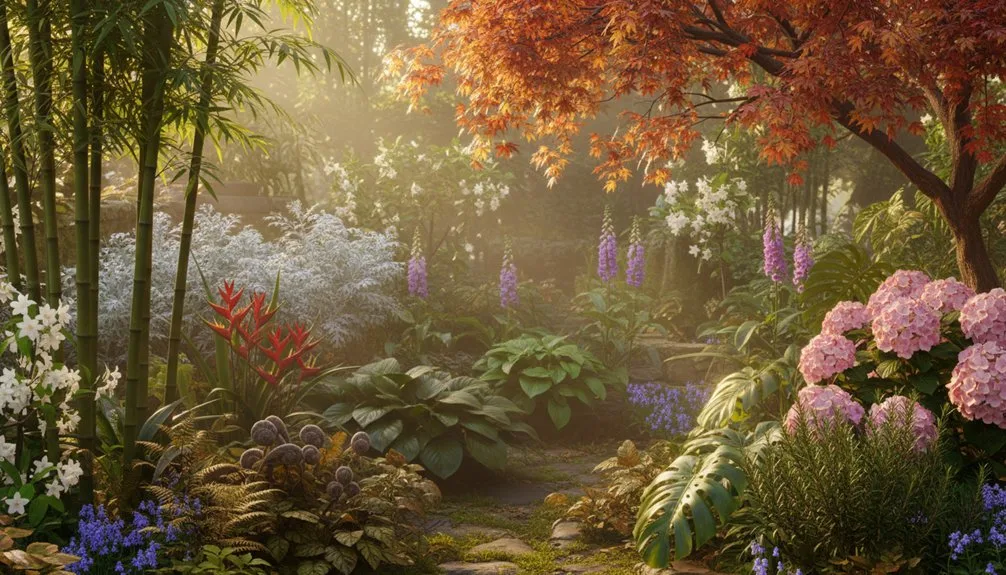
You’ll transform your garden into a hidden paradise by layering tropical plants strategically. Start with flowering beauties like hibiscus and bougainvillea for bold color, anchor with dramatic foliage from elephant ears and bananas, then soften edges with shade-tolerant impatiens and creeping ground covers. Trees like jacaranda create canopy depth while calla lilies and plumeria add fragrant focal points. Proper watering, humidity, and thoughtful placement of odd-numbered groupings unlock the full sanctuary potential your space deserves.
Key Takeaways
- Tropical flowering plants like Bougainvillea, Plumeria, and Bird of Paradise create exotic visual impact with vibrant blooms and striking architectural forms.
- Large-leaf foliage plants such as Elephant Ears and Japanese Fiber Banana establish dramatic jungle textures and aggressive shade-casting for immersive atmosphere.
- Shade-tolerant ground covers including Calathea, Impatiens, and Lamium enable lush layering in understory conditions while suppressing weeds and retaining moisture.
- Strategic layering with canopy palms, mid-tier Hibiscus, and dense groundcover creates depth and sightline focal points mimicking natural forest structure.
- Grouping plants in odd numbers with contrasting leaf shapes—paddle leaves against fern fronds—establishes rhythm and visual complexity characteristic of hidden gardens.
Tropical Flowering Plants: Bold Colors and Exotic Blooms
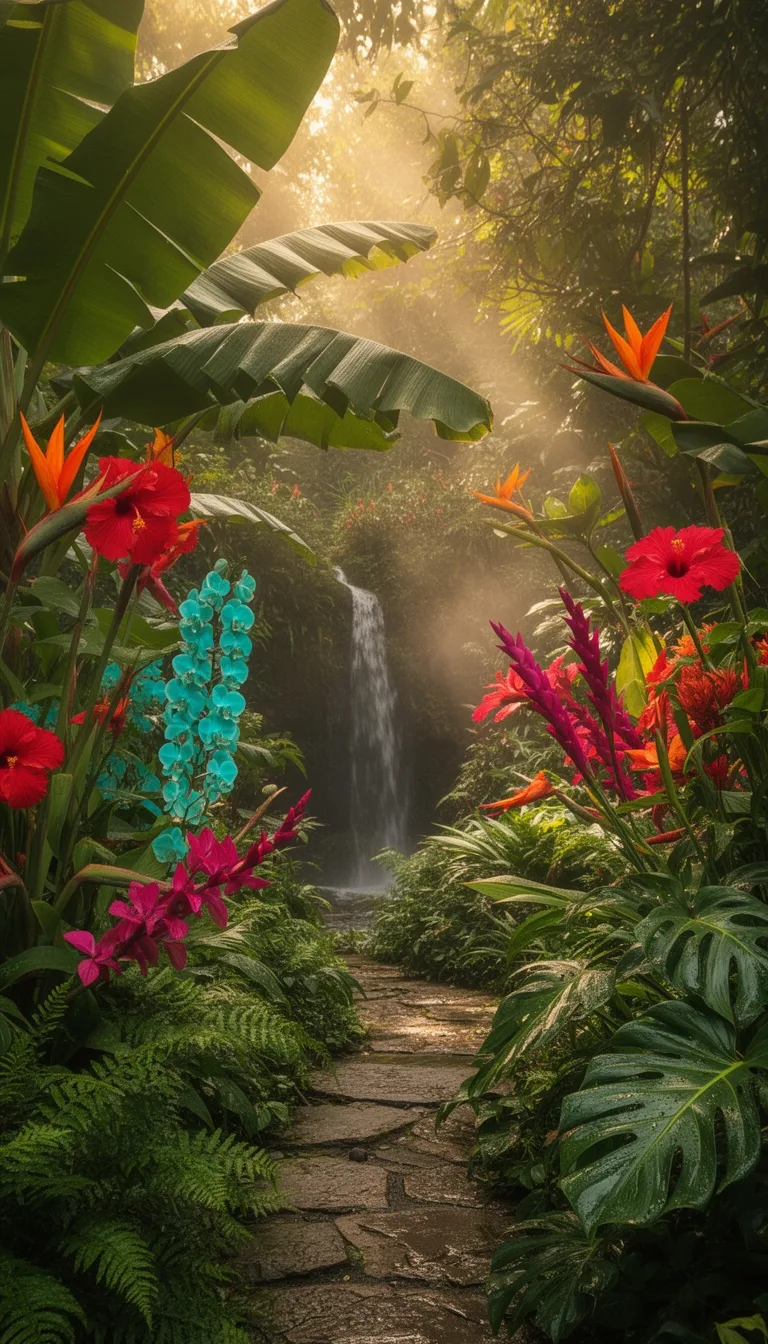
How do you transform a garden into a vibrant sanctuary? You cultivate tropical flowering plants that deliver bold, exotic blooms year-round.
Bougainvillea’s paper-like bracts explode in orange, pink, and purple across your landscape, thriving in zones 9-11 with minimal water.
Crown of Thorns rewards you with continuous red and yellow flowers amid thorny stems, flourishing in arid conditions.
Lantana attracts butterflies through summer and fall with its clustered yellow, orange, and red blooms in zones 8-11.
For shade-tolerant elegance, Calla Lilies offer trumpet-shaped white and purple flowers in late spring.
Meanwhile, Medinilla magnifica produces striking hanging panicles of pink and purple, creating drama in zones 10-12.
Each species contributes distinctive character while demanding straightforward care, allowing you to cultivate paradise effortlessly.
Large-Leaf Tropical Plants: Creating Drama and Height
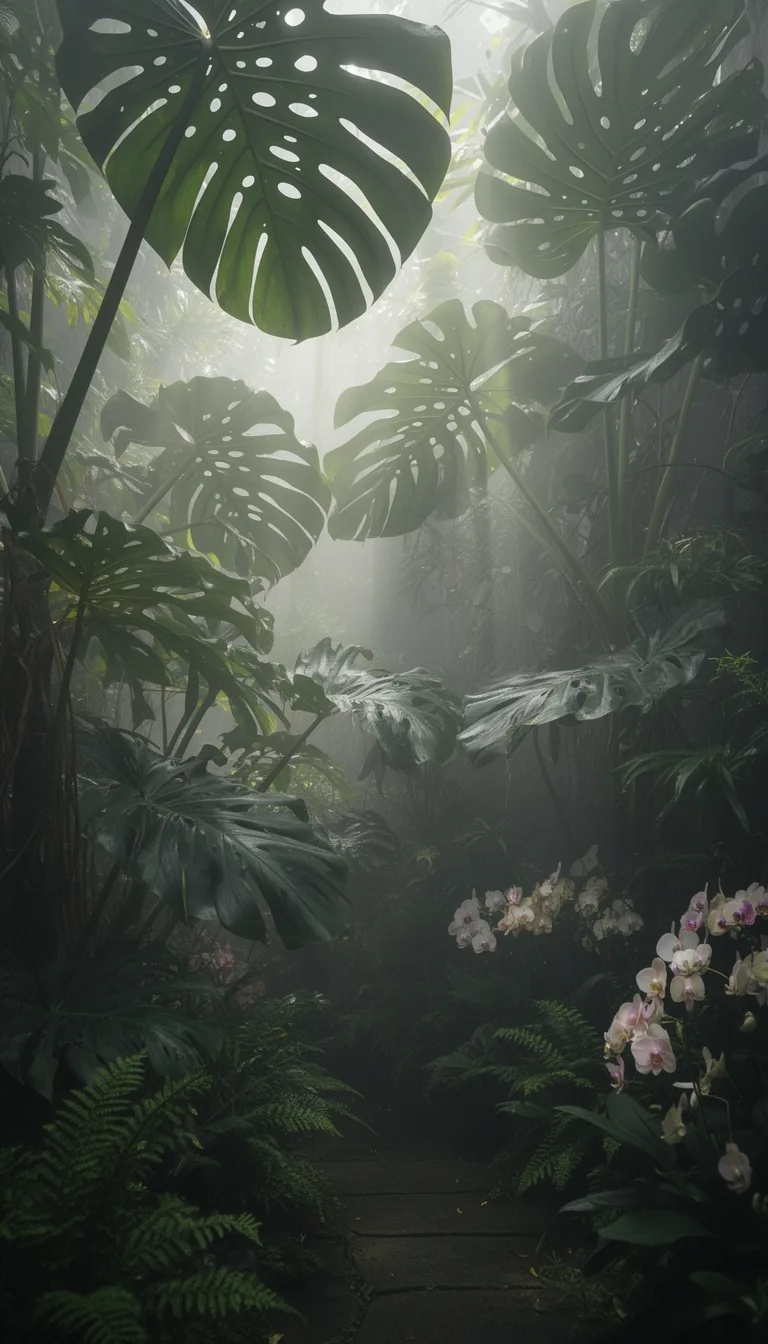
While tropical flowering plants ignite your garden with color, large-leaf specimens create the architectural backbone that transforms a modest yard into a verdant sanctuary. These foliage powerhouses deliver drama through sheer scale and sculptural form.
Giant Rhubarb unfurls umbrellas reaching 2 meters across, thriving in boggy shade.
Elephant Ears produce exotic heart-shaped leaves up to 1 meter long, flourishing in zones 8-10.
The Japanese Fiber Banana ascends 15 feet with 6-foot leaves, surprisingly cold-hardy.
Big Leaf Ligularia brightens shaded corners with 16-inch lilypad foliage and golden blooms.
Rodgersia’s palmate leaves create jungle texture while anchoring moist borders.
You’ll find each species responds to specific conditions—moisture-rich soils, appropriate light, proper hardiness zones—yet all reward your attention with structural grandeur that no flowering plant alone achieves.
Shade-Tolerant Tropical Plants: Beauty in Dappled Light
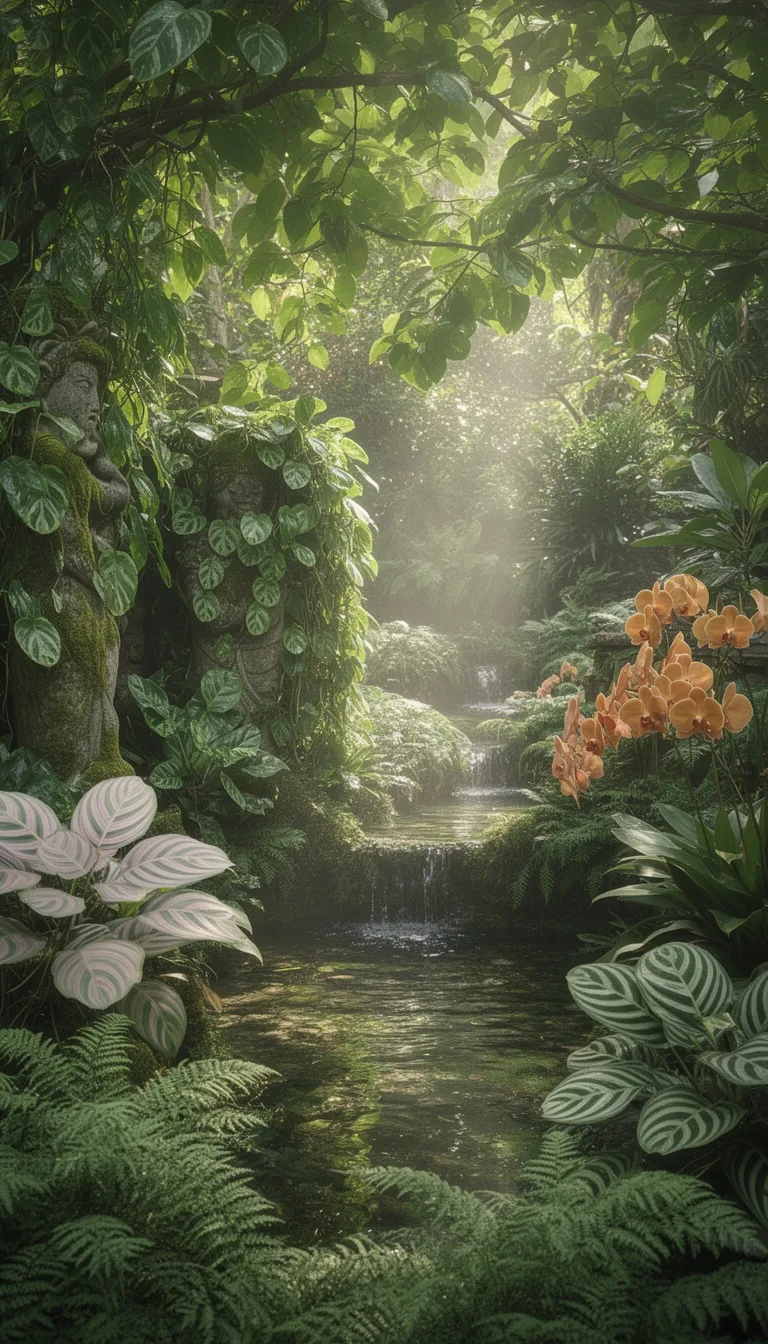
Not every tropical garden thrives under unrelenting sun—in fact, some of the most resilient and elegant specimens flourish in dappled shade, transforming those challenging corners into lush retreats. You’ll discover that shade-tolerant plants offer remarkable beauty without demanding intense light exposure.
Lady Palms create stunning privacy screens while thriving in deep shade, reaching six feet in containers.
Cast-Iron Plants live up to their name, tolerating neglect and darkness while showcasing striking variegated foliage.
Brazilian Plume Flowers deliver pink blooms throughout summer despite preferring partial shade, while Impatiens excel where sun-loving annuals struggle.
Calathea Prayer Plants bring striking variegation and nocturnal leaf movements to shaded tropical settings.
These specimens prove that shade gardens aren’t limitations—they’re opportunities for cultivating sophisticated, low-maintenance tropical sanctuaries.
Ground Covers and Compact Plants for Small Spaces
When space constraints challenge your tropical paradise, ground covers and compact plants become your secret allies, offering lush layering without demanding square footage.
You’ll discover remarkable options that transform tight corners into verdant sanctuaries:
- Shade-tolerant varieties like Laurentia Blue Star Creeper and Lamium thrive between stepping stones, creating seamless transitions while tolerating foot traffic.
- Evergreen compact plants such as Dianthus and Ajuga form thick mats year-round, connecting garden areas with minimal maintenance.
- Drought-tolerant sedums reach just 1-4 inches tall, offering dense growth for sun-exposed pockets without demanding frequent watering.
- Walkable options like Creeping Mint and Veronica tolerate both traffic and varied soil conditions, grounding your design functionally.
These diminutive specimens suppress weeds, prevent erosion, and retain moisture—essential functions disguised as delicate beauty.
Tropical Border and Container Plants for Year-Round Color
How do you sustain visual drama throughout every season?
You’ll layer tropical plants that deliver consistent color and texture year-round.
Persian Shield’s metallic purple foliage with black-green veins creates a stunning backdrop from May through October frost, reaching 30 inches in sun or shade.
Pair it with Supertunia Petunias in vibrant yellows, pinks, and oranges that bloom spring through fall, growing up to three feet wide.
For containers, Calibrachoa offers continuous summer blooms in compact six-to-twelve-inch mounds, thriving in full sun.
Bougainvillea Vines flourish nearly year-round in frost-free zones, their clustered flowers adorning walls and pergolas.
Add Colocasia Elephant’s Ear for architectural height—its massive leaves reach three to five feet, establishing bold garden structure while demanding consistent moisture and feeding.
Hibiscus: The Vibrant Heart of Tropical Gardens
Because hibiscus commands attention with its dramatic trumpet-shaped blooms reaching up to 10 inches wide, you’ll find it’s the perfect centerpiece for creating that sultry, resort-feel garden you’re after.
These tropical showstoppers thrive when you provide:
- Six to eight hours of direct daily sunlight for abundant flowering
- Rich, well-drained soil with a neutral to slightly acidic pH between 6.0 and 7.0
- Consistent temperatures between 55 to 85 degrees Fahrenheit
- High humidity levels that mimic their native warm climate habitat
You’ll enjoy an extended blooming season from late spring through fall, with select varieties like Hollywood Hibiscus™ Hot Shot™ producing flowers lasting up to three days. When temperatures spike above 90 degrees Fahrenheit, bud drop becomes a concern, so monitoring your garden’s microclimates during peak summer heat will help preserve continuous blooms.
In frost-free climates, you’re rewarded with nearly year-round color. For colder regions, simply transition your potted hibiscus indoors before winter arrives.
Plumeria and Bougainvillea: Fragrance and Cascading Color
While hibiscus demands attention through sheer visual spectacle, plumeria and bougainvillea offer you a more nuanced tropical experience—one that balances fragrant elegance with dramatic color cascades. Plumeria’s tubular, pinwheeled flowers emit a strong nocturnal fragrance that attracts moths, creating an enchanting sensory experience. Meanwhile, bougainvillea’s modified bracts deliver sustained color from spring through fall, thriving in full sun with minimal water once established.
| Feature | Plumeria | Bougainvillea |
|---|---|---|
| Hardiness | Zones 10B–11 | Zones 9–11 |
| Fragrance | Strong, pleasant | Minimal |
| Growth Habit | Flowering tree/shrub | Climbing vine |
| Water Needs | Medium | Low |
Both plants reward your nurturing with resilience, transforming your garden into a hidden paradise through complementary beauty and adaptability.
Bird of Paradise and Heliconia: Striking Exotic Shapes
If you’re seeking plants that’ll command attention through architectural drama rather than conventional beauty, bird of paradise and heliconia deliver with their sculptural forms and bold, geometric inflorescences.
Heliconias particularly excel in tropical gardens, offering year-round blooming potential with waxy bracts in vibrant reds, oranges, yellows, and greens.
These evergreen perennials reach 3-6 feet tall, displaying banana-like foliage with striking central nervation.
To cultivate thriving heliconias, provide:
- Hardiness zones 10-11 for optimal growth
- Full sun to partial shade exposure
- Moist, well-drained soil tolerating clay, loam, or sand
- Regular watering and feeding for moderate to fast growth
Their hummingbird-pollinated flowers produce blue-purple fruits dispersed by birds, creating dynamic ecological interactions.
These architectural specimens transform gardens into exotic sanctuaries through sculptural presence alone.
Elephant Ear and Banana Plants: Statement Foliage
When you’re ready to anchor your tropical garden with commanding presence, elephant ears and bananas won’t disappoint—they’re the heavyweight champions of foliage plants.
Elephant ears (Colocasia esculenta) deliver dramatic, heart-shaped leaves reaching two feet long, held on thick peltate petioles. You’ll nurture vigorous growth with consistently moist, fertile soil and warm temperatures. Full sun yields compact four-to-five-foot specimens, while partial shade creates ethereal, elongated forms—choose based on your design vision.
| Cultivar | Leaf Characteristics |
|---|---|
| ‘Black Magic’ | Deep-purple with chalky undersides |
| ‘Fontanesii’ | Dark green with purple veining |
| ‘Blue Hawaii’ | Purple-black veins, maroon backing |
Position these architectural plants strategically; their aggressive shade-casting requires thoughtful placement. Combined with bananas and caladiums, they transform gardens into lush tropical sanctuaries where you escape everyday reality.
Tropical Tree Profiles: Jacaranda, Ginger, and Specialty Species
Beyond the architectural drama of elephant ears and bananas, you’ll find that tropical trees provide the vertical structure and canopy framework your hidden paradise requires.
Consider these essential selections:
- Jacaranda – A fast-growing deciduous tree reaching 25-50 feet, showcasing lavender-purple spring flowers beneath an umbrella-like canopy that matures in 10-15 years
- Ginger – A rhizomatous herbaceous perennial producing aromatic roots and cone-like flower spikes, harvested after 8-10 months in warm, moist conditions
- Queen of the Night – A night-blooming cactus with massive white flowers up to one foot long, requiring minimal water once established
- Flamboyant Tree – A fern-leafed specimen displaying scarlet flowers that blanket the canopy throughout summer
Each species thrives in full sun with well-draining soil, establishing your garden’s living architecture.
Tropical Plant Care: Watering, Soil, and Light Essentials
How do you transform a collection of tropical specimens into a thriving hidden paradise? Master three essentials: watering, soil, and light.
Water consistently at the roots using room-temperature water, preferring mornings to prevent fungal issues. New plants need daily watering for two weeks, then 3-4 times weekly.
Established tropicals thrive on weekly or twice-weekly watering during growth, reducing to every 1-2 weeks in winter. Allow soil to dry one-third down before saturating thoroughly until water drains.
Well-draining soil prevents root rot—plastic pots retain moisture longer than clay. Bright indirect light mimics the tropical understory, but increases your watering needs.
Monitor for stress signs like curling leaves, indicating light-water imbalance. High humidity proves essential; mist leaves regularly or use humidifiers in dry climates.
Design Your Tropical Garden: Combining Plants for Maximum Visual Impact
With your tropical specimens thriving under proper care, you’re ready to arrange them into a cohesive garden that captivates the eye.
Layer your planting strategically to build visual depth:
- Establish height with canopy trees like Nikau palms and tree ferns
- Position focal specimens—Bird of Paradise, Cycads, bold Bromeliads—at key vantage points
- Fill mid-tiers with transitional plants like Cordyline and Hibiscus
- Ground your beds with Mondo grass, Clivia, and native ferns
Group plants in odd numbers to create cohesion.
Repeat leaf shapes and colors throughout your space for rhythm.
Contrast bold paddle-shaped leaves against delicate fern fronds.
Mix vibrant flowering accents—coral Hibiscus, magenta Bougainvillea—with diverse foliage greens.
Dense planting mimics tropical abundance while suppressing weeds, transforming your garden into an immersive jungle sanctuary.
Conclusion
You’ll transform your outdoor space into a lush sanctuary when you’re thoughtfully layering these twelve tropical specimens. Consider that tropical rainforests cover just 6% of Earth’s land yet shelter over 50% of all plant species—imagine recreating that biodiversity right in your garden. You’re not simply planting; you’re nurturing an ecosystem where vibrant foliage, exotic blooms, and verdant textures interweave, creating your own hidden paradise where nature thrives abundantly.
The Only Tools You Need for a Thriving Garden 🌱
Whether you're a weekend gardener or growing daily — these hand-picked tools make every session faster, easier, and more satisfying.