You’ll create a private escape by layering drought-tolerant plants—Karl Foerster feather reed grass, rosemary, and Russian sage—at varying heights to block views naturally. Build faux berms in asymmetrical corners and plant evergreens for year-round screening. Wind narrow pathways through dense foliage with abrupt direction changes that reveal hidden garden rooms. Add pondless cascades and climbing vines on pergolas to establish cooling microclimates and overhead shade. Strategic hardscaping like stone walls and timber screens reduces maintenance while enhancing seclusion. Discover how these elements work together for maximum tranquility.
Key Takeaways
- Layer plants at varying heights with tall grasses centrally to block views and create natural privacy screening.
- Build faux berms (18–24 inches) with drought-tolerant shrubs and grasses for low-maintenance privacy barriers and wind protection.
- Design narrow, curved pathways (750–900 mm) lined with overhanging foliage that open onto hidden garden rooms.
- Install pondless cascades or LED-lit recirculating waterfalls near seating for evaporative cooling and ambient tranquility.
- Train vines on pergolas and arbors to create dense living canopies that provide natural shade and intimacy.
Create Privacy Through Layered Plantings
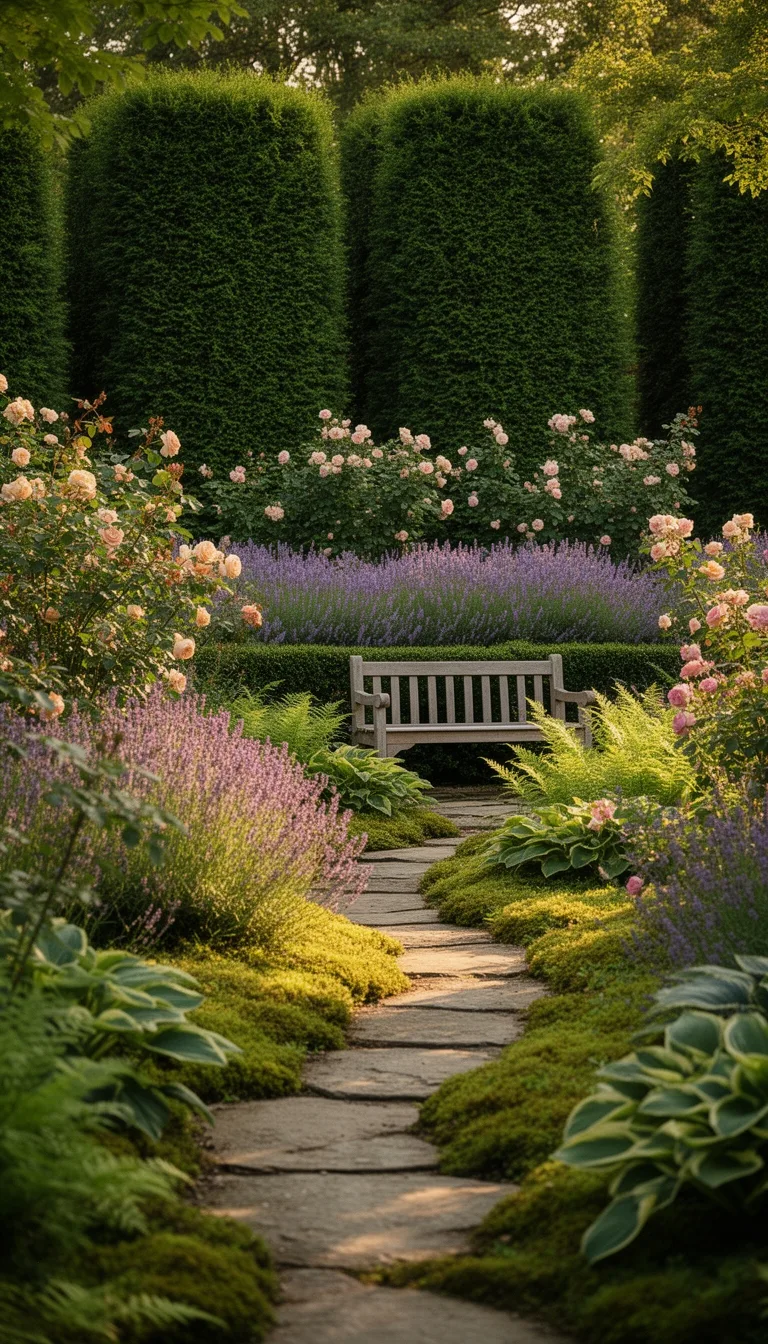
How can you transform a simple garden bed into an intimate retreat?
You’ll create genuine privacy by layering plants strategically from back to front.
Position tall specimens like ‘Karl Foerster’ feather reed grass in bed centers to screen views effectively.
Sandwich medium-height plants between them, establishing depth and visual interest.
Ring the perimeter with shorter varieties, then punctuate edges with occasional large plants for unexpected height variations.
This tiered approach mimics natural berms, building screening without rigid barriers.
You’re not just obscuring sight lines—you’re constructing a living architecture that breathes and grows.
Dense plantings suppress weeds while maintaining an organic aesthetic.
The result? A private sanctuary that feels intentional yet naturally abundant, shielding you from external distractions while fostering connection to your cultivated landscape.
Choose Drought-Tolerant Plants for Year-Round Screening
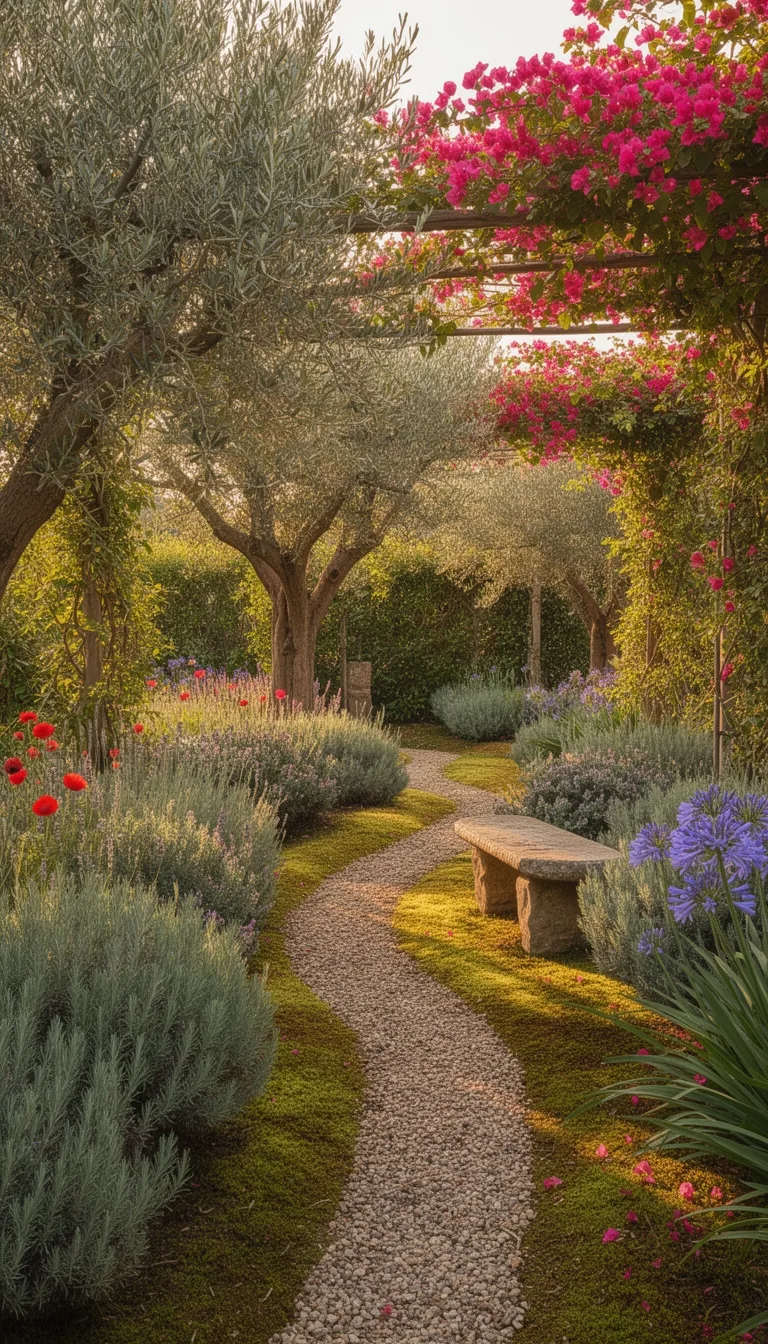
Your layered plantings will thrive year-round when you select species that flourish in drought conditions, eliminating the struggle of maintaining thirsty screening plants through dry seasons.
| Plant Type | Species | Height |
|---|---|---|
| Shrub | Tuscan Blue Rosemary | 4-6 feet |
| Shrub | Carolina Cherry Laurel | 6-8 feet |
| Perennial | Russian Sage | 3-4 feet |
| Grass | Switch Grass | 4-6 feet |
| Vine | Trumpet Creeper | 8-10 feet |
Combine evergreen shrubs like Leucadendron Safari Sunset with perennials such as Lavender to establish multi-season structure. Layer ornamental grasses—Switch Grass and Little Bluestem—for textural depth and movement. Incorporate drought-hardy vines like Trumpet Creeper on trellises for vertical coverage. These combinations demand minimal supplemental watering once established, reducing maintenance while delivering robust privacy screens throughout the year.
Build Faux Berms to Anchor Corners and Expand Small Spaces
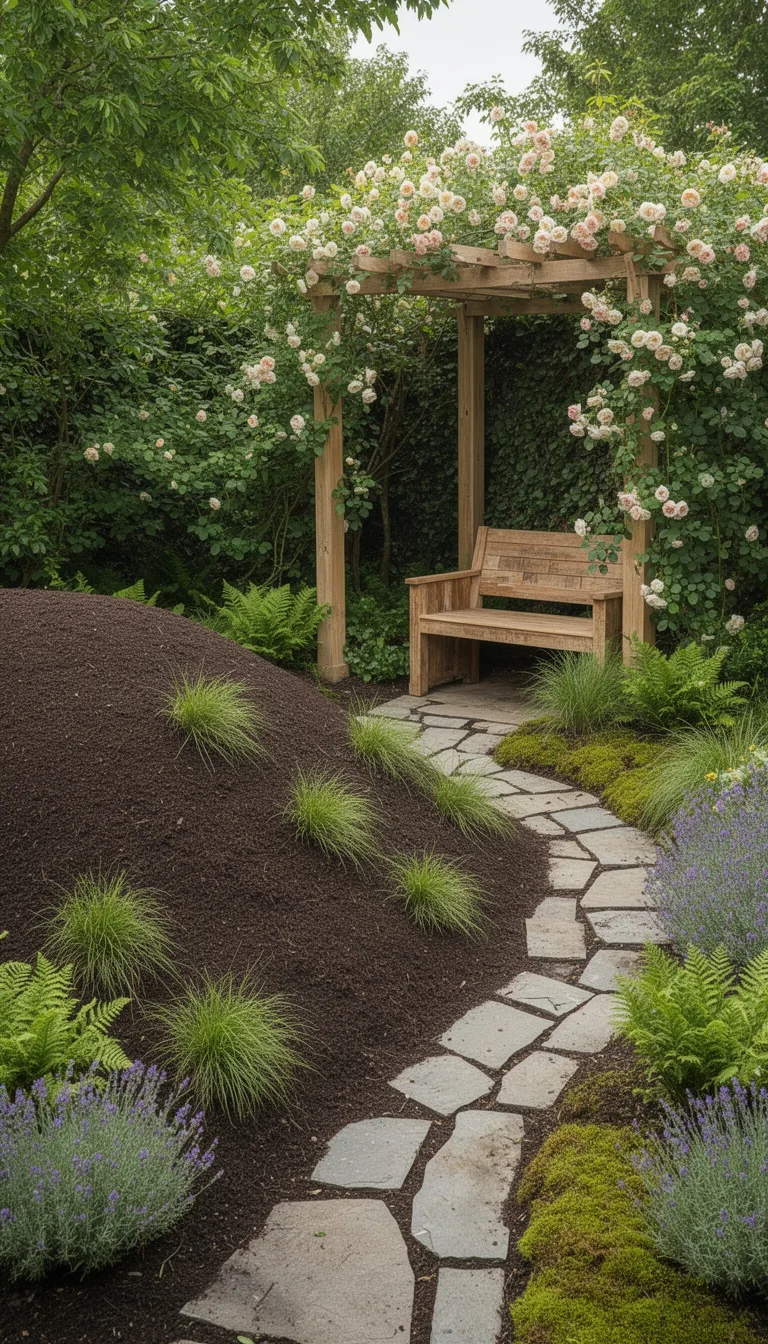
When you’re working with a compact yard or awkward corners that seem to lack definition, faux berms offer an ingenious solution—they’re densely planted mounds that anchor spaces without requiring extensive excavation or earthwork.
You’ll build these features using layered soil and wood chips, creating stable foundations that support established plant communities.
Position your berms asymmetrically in corners to enhance authenticity, then slope them gradually so they blend naturally into your landscape.
The 18–24 inch height balances privacy screening with visual integration while making small properties appear larger and more complex.
Select drought-resistant plants, ornamental grasses, and succulents to minimize maintenance demands.
Your berms create wind barriers, reduce erosion, and establish microcosystems that support wildlife—transforming underutilized spaces into structurally defined garden zones.
Design Winding Paths to Hide Views and Add Privacy
Once you’ve anchored corners with faux berms, winding paths become your next strategic tool for controlling sightlines and establishing garden privacy.
Narrow paths—750-900mm wide—lined with overhanging foliage create intimate, off-track experiences while tall planting along curves blocks external views effectively.
You’ll find that graceful, long curves suit cottage garden styles better than tight waves, directing foot traffic naturally around focal points.
Strategic direction changes hide and reveal views, preventing cluttered appearances while building mystery. Abrupt direction changes create surprise reveals that guide visitors through hidden corners without overwhelming the senses.
Plant-shrouded paths that open dramatically onto wider areas offer precious private moments.
Rustic flagstone with mulch joints or flush wood edging suits these naturalistic designs, eliminating trip hazards.
Combine narrow twisting paths with low head height for that forbidden, exploratory feeling—transforming small spaces into woodland retreats that feel substantially larger.
Add Hardscaping to Reduce Maintenance and Screen Views
How can you extend your garden’s usable seasons while simultaneously blocking unwanted sightlines?
Hardscaping offers a dual solution.
Stone walls, raised beds, and timber screens function as privacy barriers while requiring minimal upkeep compared to living hedges.
You’ll appreciate the decades-long durability of concrete patios and permeable pavers—no replanting cycles or seasonal maintenance demands.
Strategic placement of hardscape elements creates secluded garden rooms within your property.
A curved seating wall simultaneously screens neighboring views and defines gathering spaces.
Native plantings interspersed among these structures enhance privacy naturally while reducing fertilizer and pesticide needs.
This approach transforms your garden into a low-maintenance sanctuary.
You’ll spend less time weeding and pruning, more time enjoying your private retreat throughout every season.
Create Private Quiet Zones for Reading
Your hardscaping framework now becomes the foundation for cultivating intimate reading retreats—sanctuaries where you’ll genuinely linger with a book rather than rush through your garden.
Position your seating in shaded areas distant from busy streets, where you can escape auditory distractions.
Install bamboo screens or pergolas draped with climbing ivy to establish visual barriers and natural enclosures.
Enhance comfort with cushioned wicker chairs or rattan lounge chairs beneath canopies.
Layer in potted ferns, lavender, and jasmine vines to soften edges while creating fragrant atmospheres.
Add functional amenities: small shelves for books and lanterns, adjustable reading lamps for optimal visibility, and throw pillows for coziness.
These thoughtful integrations transform your garden corner into a genuine retreat where concentration flourishes and relaxation deepens.
Plant Ornamental Grasses and Evergreens for Winter Coverage
As your garden transitions into dormancy, ornamental grasses and evergreen sedges become the garden’s structural backbone, sustaining visual interest when most perennials fade. You’ll discover that upright varieties like Calamagrostis Karl Foerster and Northwind Switch Grass maintain architectural form through winter snow, while evergreen Carex species provide persistent color and texture.
| Grass Type | Winter Feature | Best Use |
|---|---|---|
| Panicum virgatum Heavy Metal | Rusty reds, golden yellows | Large landscapes |
| Carex Evergold | Bright evergreen foliage | Year-round groundcover |
| Standing Ovation Little Bluestem | Bright orange, upright form | Small gardens |
You’ll appreciate how these plants create movement and sound in winter breezes while their seed heads catch frost and snow. Layer evergreens as backdrops with ornamental grasses to establish depth. Position evergreen varieties in high-visibility areas for sustained textural interest throughout the season.
Design Hidden Entrances to Secluded Garden Spaces
Where might you create a sense of discovery in your garden?
Strategic entrances transform ordinary spaces into enchanting retreats.
You can construct curved pathways that wind through dense plantings, naturally obscuring destinations and building anticipation.
Install arbors or pergolas wrapped in climbing roses—they frame transitions while establishing clear boundaries between garden rooms.
Consider layering privacy elements: lattice fences mimic high-end wrought iron affordably, while frosted glass gates allow soft light without direct views.
Mossy stepping stones encourage intentional, slower exploration along narrow stone walks.
Material choices amplify mystery.
Reclaimed timber gates with stone pillars blend seamlessly into natural landscapes.
You might add atmospheric touches—lantern-lit pathways or whimsical “Shhhhh…” signage—that reinforce your secret garden’s intimate character.
Install Water Features and Shade to Cool Hidden Retreats
How can you transform a secluded garden space into a genuinely cool, tranquil retreat?
You’ll combine strategic water features with layered shade to create a microclimate that invites lingering.
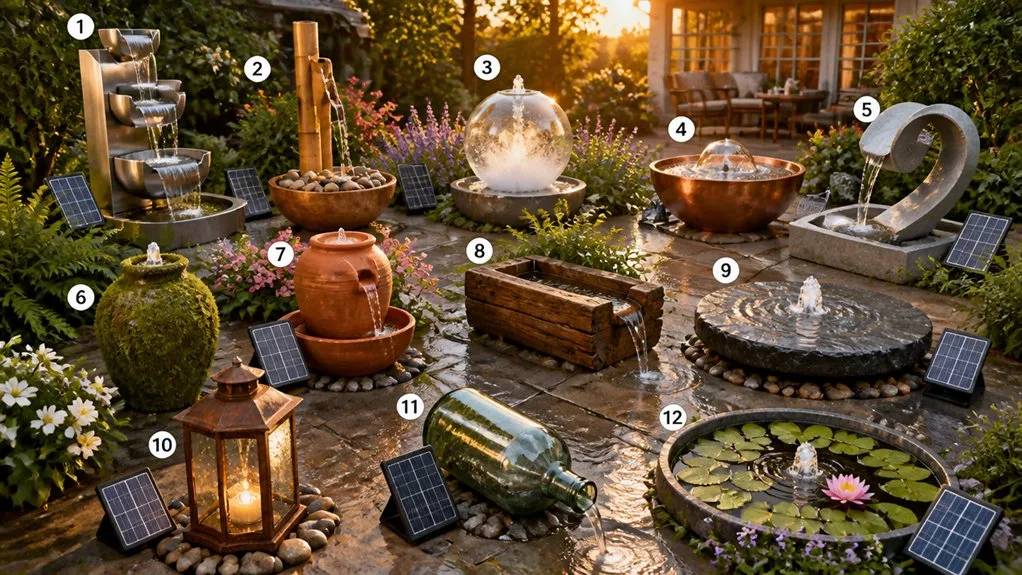
Install a pondless waterfall using moss rock boulders at precise elevations—it delivers cascading water sounds without maintenance hazards or standing water concerns.
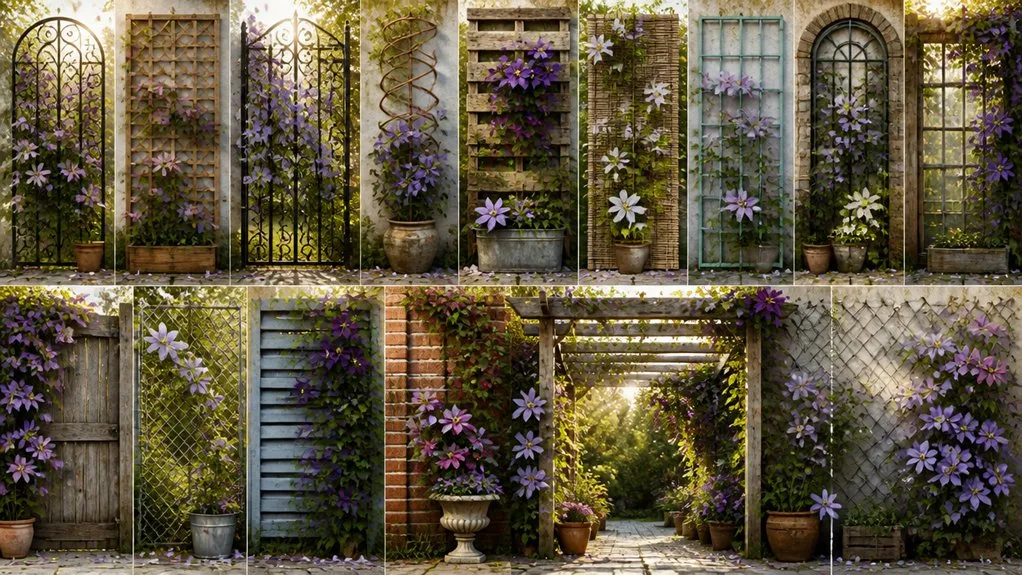
Surround your feature with lush vegetation and custom lattice screens that encourage vine growth for natural shade coverage.
Consider these cooling elements:
- Recirculating LED-lit waterfalls maintain consistent evaporative cooling
- Running water sound inspires tranquility amid shaded garden escapes
- Copper rills and bowls surrounded by dense plantings create serene oases
- Tiered fountains layer basins for varied water flow and aesthetic interest
- Rock features positioned near seating areas amplify ambient cooling effects
This combination transforms your hidden retreat into a genuinely peaceful sanctuary.
Place Trees and Climbing Plants for Natural Canopies
Creating natural canopies with trees and climbing plants transforms your garden into a shaded sanctuary while establishing vertical interest that water features alone can’t achieve.
You’ll train vigorous vines like grapevines and trumpet vines overhead on pergolas and arbors, forming dense living walls that significantly cool summer areas.
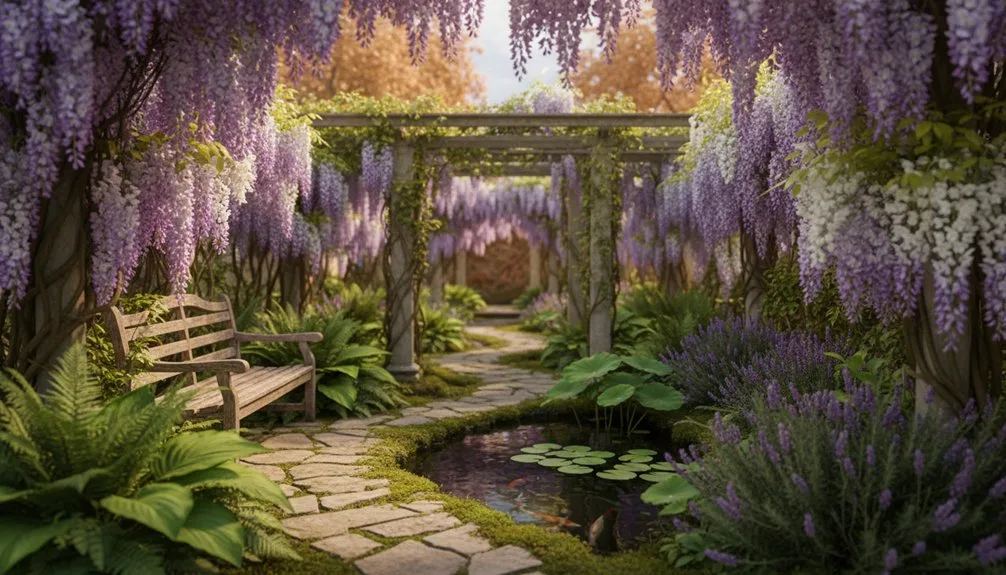
Select climbing plants matching your support structures—twining stems like Blue Moon wisteria require robust arbors, while aerial root climbers such as Japanese climbing hydrangea clamber unassisted on masonry.
Pair climbers strategically: position ferns at vine bases to shade roots and sustain plant health.
This layered approach creates dappled light passages, balancing shade coverage throughout the day while maximizing your garden’s spatial efficiency and natural cooling benefits.
Conclusion
You’re essentially building a sanctuary one layer at a time—much like a forest naturally stratifies itself. An old gardener I knew spent fifteen years establishing her secret garden, watching each planted screen mature into protective walls. You’ll discover that privacy isn’t instantaneous; it’s cultivated. Start with your evergreens and grasses today, and you’re planting tomorrow’s retreat. Your hidden escape’s becoming real through patience and deliberate placement.
The Only Tools You Need for a Thriving Garden 🌱
Whether you're a weekend gardener or growing daily — these hand-picked tools make every session faster, easier, and more satisfying.