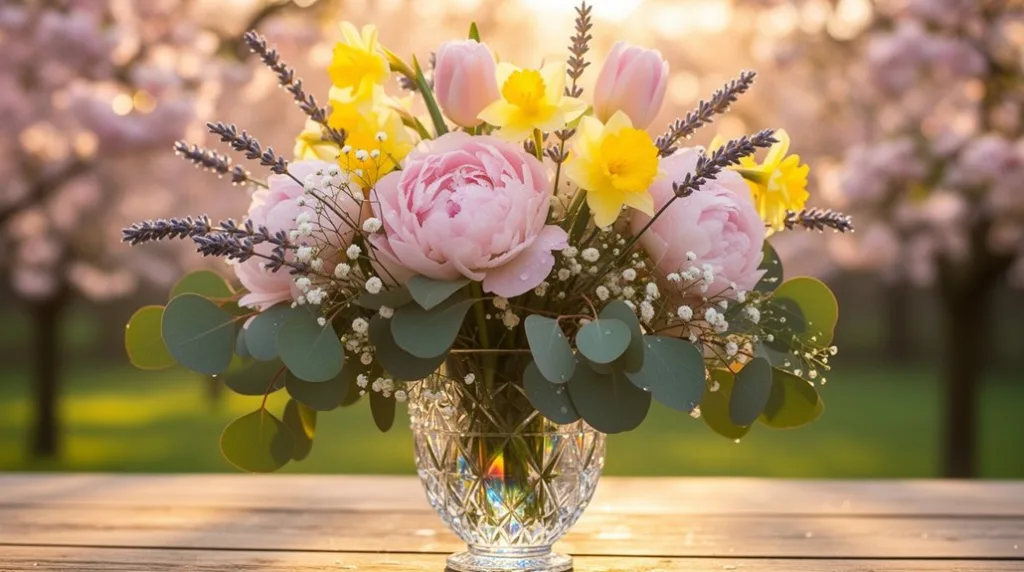
Shed winter’s quiet by welcoming spring indoors with seasonal blooms. You’ll find it’s simpler than you think to create fresh arrangements with real garden spirit. But the right techniques and a few clever tricks separate a lively display from a wilting one. Let’s begin by gathering the essential tools you’ll need to get started.
Key Takeaways
- Prioritize in-season spring blooms like peonies, tulips, and lilacs for freshness and a genuine seasonal feel.
- Choose a vase that suits your stems, such as tall vases for tulips or shallow bowls for ranunculus and anemones.
- Create natural-looking arrangements by varying stem heights and letting some blooms cascade for movement.
- Incorporate foraged branches or foliage like fern fronds and willow for sculptural lines and textural contrast.
- Use a clear tape grid or chicken wire in the vase for invisible stem support and a polished structure.
Gather Your Essential Arranging Tools and Supplies
Before you start selecting your blossoms, gather the essential tools that’ll make arranging a breeze. You’ll need a good pair of floral shears for clean cuts that help stems drink water.
Grab a few clean vases or containers; think about using vintage pitchers or mason jars for a spring feel. Don’t forget floral tape or a frog to keep your stems in place.
Have a watering can handy for a final, gentle soak. Keep a sharp knife nearby for trimming woody stems, and some twine can add a rustic touch to hand-tied bouquets.
With your tools organized, you’re ready to bring the season indoors without any fuss.
Choose Your Spring Color Palette
Once you’ve gathered your tools, you’ll want to pick a color scheme that captures the season’s energy, so think about what mood you’d like to create.
For vibrant cheer, combine saturated tones like sunny yellow, poppy red, and violet.
A serene, romantic feel uses soft pastels—think blush pink, lilac, and creamy white.
For a fresh, garden-inspired look, mix various greens with crisp white flowers.
You can also choose a monochromatic palette, using different tints of a single color like pink or blue for a sophisticated effect.
Remember to consider your room’s existing decor; your arrangement should complement it.
These seasonal palettes will give your design a cohesive foundation that feels inherently like spring.
Select the Best Blooms for Your Palette
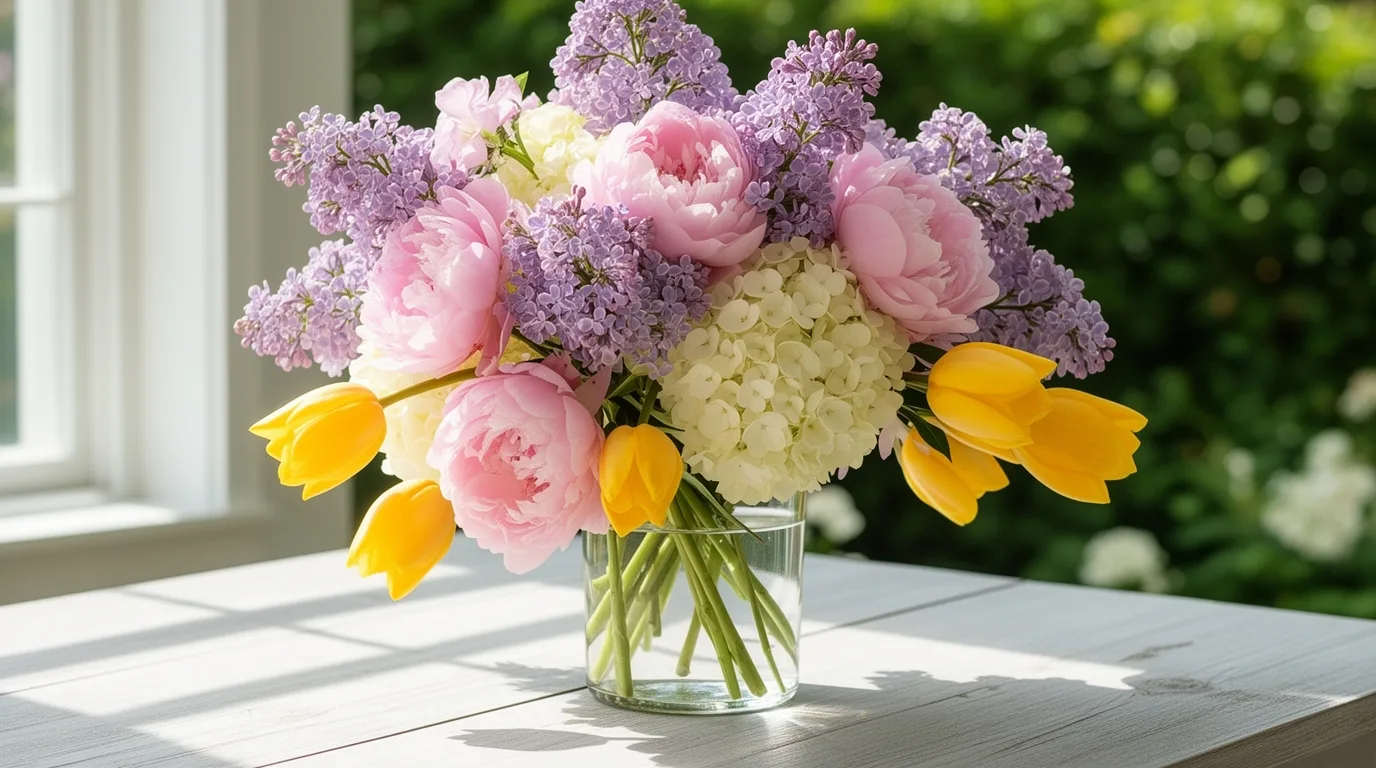
With your color palette settled, you’ll need to pick flowers that bring those hues to life.
For soft pastels, consider pale pink tulips, white ranunculus, or lavender hyacinths. If you’ve chosen vibrant tones, look for sunny daffodils, bold red tulips, or electric blue muscari. Always prioritize in-season blooms for the freshest look and best value. Visit local farmers’ markets to see what’s newly available; peonies and lilacs are late spring treasures.
Don’t just focus on color—vary your textures and shapes. Pair delicate baby’s breath with substantial roses, or use spiky snapdragons alongside round poppies. This contrast adds depth and visual interest, making your chosen colors pop even more within the arrangement.
5 Key Principles for Spring Arrangement Design
After you’ve selected your blooms, arranging them thoughtfully will transform them from a simple bunch into a cohesive spring display.
First, establish your structure by placing taller, sturdier stems in the center or towards the back. You’re creating a natural silhouette, so vary the heights to mimic a garden’s organic flow.
Next, weave in your focal flowers, like tulips or ranunculus, grouping similar types for visual impact.
Then, add filler blooms and delicate greenery to soften the edges and fill any gaps. Remember to rotate your vase as you work, ensuring the arrangement looks full from every angle.
Finally, keep your design airy and light to capture spring’s essence; don’t overcrowd the stems.
The Right Vase for Every Flower Shape
Because your flower choices influence your vase selection, it’s crucial to match their shape and support needs. Use tall, cylindrical vases for elegant, vertical stems like tulips or delphinium, which prevents slouching.
Wide, shallow bowls or compotes are perfect for spring’s short-stemmed, sprawling blooms like ranunculus or anemones; they’ll create a natural, garden-style look.
For mixed bouquets with varied heights, choose a classic pitcher or urn with a narrower neck to hold stems in place. Always consider the blossom’s weight—top-heavy peonies or blooming branches need a sturdy, weighted vase to avoid tipping.
This thoughtful pairing ensures your arrangements look intentional and last through the season.
Sustainable Alternatives to Floral Foam
While floral foam is a common tool, its environmental impact makes seeking sustainable alternatives a smart choice for your spring arrangements. You can embrace the season’s natural abundance with readily available materials that secure stems beautifully. These options aren’t only eco-friendly but also encourage a more creative and intentional approach to your designs.
For your next arrangement, try one of these four sustainable mechanics:
- Chicken Wire: Crumple a sheet into a ball and place it in your vase. It provides excellent, reusable support for most stems.
- Recycled Glass Pebbles: Use these with water for a clean, weighted base that showcases spring’s delicate blooms like tulips.
- Branches or Twigs: Crisscross freshly foraged branches in a tall vase to create a natural grid for inserting flowers.
- Floral Pins or Frogs: These classic, reusable metal pin holders are perfect for low, wide bowls of seasonal peonies or ranunculus.
Create a Monochromatic Statement Arrangement
If you’re ready to make a bold impact with your spring designs, a monochromatic arrangement creates a stunning visual statement by focusing on a single color. Choose a color that feels seasonal, like sunny yellow, soft pink, or crisp white.
Begin by selecting three to five flower varieties and textured foliages all within your chosen hue. The depth comes from varying the shapes, sizes, and tones.
For structure, place your largest, densest blooms first. Then, weave in lighter flowers and airy elements like spire-like delphiniums or wispy astilbe. This layering creates dimension and movement, making your single-color display far from flat.
It’s a powerful, elegant look that instantly elevates your spring table or mantel.
Style a Simple Single-Species Display
Since a minimalist approach can make a powerful statement, focusing on a single type of flower highlights its unique beauty and form.
For spring, choose a prolific seasonal bloom like tulips, daffodils, or ranunculus. You’ll need a clean, simple vase that complements the stems without competing. The key is in the preparation and styling.
- Select stems of varying heights to create natural, dynamic movement.
- Strip all foliage that would fall below the vase’s waterline to keep it fresh.
- Arrange the blooms loosely, allowing each one its own space to be seen.
- Change the water every other day to extend the life of your spring display.
This method turns a simple bunch into a sculptural focal point.
Build a Casual Mason Jar Bouquet
To create an effortlessly charming display, you can assemble a casual spring bouquet in a mason jar using garden clippings and foraged greenery. Begin by gathering stems of varying heights, like tulips, daffodils, or ranunculus. Add texture with sprigs of mint, rosemary, or flowering branches.
You’ll want to strip any leaves that’ll sit below the jar’s rim to keep the water clean. Fill a clean mason jar about two-thirds with fresh, cool water.
Hold your stems together in your hand to arrange their shape before placing them in the jar. Don’t aim for perfection; a loose, slightly wild look suits this style.
Place your finished bouquet on a kitchen windowsill or dining table to enjoy the spring cheer.
Forage a Backyard Bloom Arrangement
Moving beyond your mason jar, you can gather a fresh arrangement right from your own backyard. Spring offers abundant material if you know where to look. Forage with purpose, selecting only what your garden can spare. Combine flowering branches, herbs, and leafy greens for a natural, textured look. Use a simple vase and let the stems’ natural shapes guide your design.
Remember these key foraging principles:
- Ask Permission: Never cut from private property without consent.
- Identify Plants: Be absolutely certain they aren’t toxic or protected species.
- Cut Responsibly: Use sharp shears and take just a few stems from each plant.
- Condition Stems: Immediately place cuttings in water to keep them perky.
Your unique, seasonal display will capture spring’s effortless charm.
Arrange a Loose Wildflower Bouquet
You can often find a captivating, untamed beauty in a loosely gathered wildflower bouquet. Forage your spring finds, mixing different heights and textures like daisies, cornflowers, and sprigs of lavender.
Begin by clearing foliage from the lower stems and holding your first few flowers in your hand as a base. Add stems one by one, turning the bouquet as you go to create a rounded shape. Don’t aim for rigid symmetry; let some blooms naturally cascade.
Secure the stems with twine or a rubber band. Trim the ends at an angle for better water absorption. Place your finished bouquet in a simple jar filled with fresh water, allowing its natural, breezy charm to enhance your spring decor.
Craft a Mini Posy for Small Spaces
While a sprawling wildflower bouquet brings untamed energy, sometimes you need something more contained.
A mini posy is perfect for a small vase on a windowsill, nightstand, or desk. You’ll create a dense, round cluster of blooms using just a handful of spring stems. Keep your scale small and intentional. Start by gathering seasonal favorites like grape hyacinths, ranunculus, or small spray roses.
- Select a focal bloom, like one larger ranunculus, for the center.
- Add smaller flowers around it, turning the bunch as you go.
- Tuck in sprigs of greenery, such as lemon leaf or mint, for texture.
- Secure stems tightly with floral tape or a rubber band, then trim evenly.
Place it in a petite vessel with fresh water for a charming, concentrated burst of spring.
Design a Low, Lush Spring Centerpiece
Create a low, lush centerpiece to anchor your spring table with abundant, garden-inspired texture. Use a wide, shallow vessel and floral foam or chicken wire to secure stems. Focus on building outwards for a generous, sprawling look that won’t obstruct views. Start with a foundation of greenery like lamb’s ear or lemon leaf, then add your focal blooms. Keep the arrangement low by trimming stems short.
| Flower & Filler | Seasonal Color | Purpose in Arrangement |
|---|---|---|
| Ranunculus | Soft peach or pink | Voluminous focal bloom |
| Tweedia | Pale blue | Delicate texture & accent |
| Mint stems | Green | Fragrant, trailing greenery |
Intersperse with textural elements like sprigs of blooming thyme. Vary stem heights slightly within your low form, and ensure the final piece feels full and casually abundant from every angle.
Style a Spring Mantel With Flowers
As the season shifts, bring that sense of renewal indoors by styling your mantel with a fresh floral display. You’ll want to create a layered, impactful look that complements your room’s architecture. Start with a statement piece, like a large pitcher or vase, then build around it with varying heights and textures for visual interest. Think seasonal blossoms such as tulips, daffodils, and flowering branches.
Follow these key steps for a balanced arrangement:
- Anchor your display with a central, substantial vessel.
- Mix in botanical elements like moss or pussy willow for texture.
- Use candles or decorative objects to add height contrast.
- Tuck in smaller bud vases to create a cohesive, sprawling look.
This approach turns your mantel into a vibrant celebration of spring.
Brighten Your Desk With a Floral Vignette
A simple floral vignette can transform your workspace into a refreshing spring retreat. Choose a small, low vessel so it doesn’t obstruct your view.
For spring, select a few seasonal stems like tulips, daffodils, or fragrant hyacinths. You don’t need a large bouquet; even three perfect blooms make a statement.
Add textural greenery like sprigs of eucalyptus or fern for fullness. Place your arrangement near your computer monitor where you’ll see it often.
Incorporate other spring elements, such as a smooth stone or a petite, potted succulent, to complete the scene. This small, living corner will instantly lift your spirits and bring a touch of the season’s vitality directly to your daily tasks.
Make a Foraged Floral Door Wreath
Take your spring foraging outside to craft a welcoming floral door wreath. Start with a simple grapevine or wire base.
Gather materials like budding branches, delicate ferns, and early blooms such as forsythia or daffodils, ensuring you have permission to forage.
Keep your design fresh and seasonal by focusing on these key elements:
- Structural Greens: Use flexible willow or birch branches to form your wreath’s shape.
- Focal Flowers: Anchor with a few larger blossoms, like tulips or magnolia, for visual weight.
- Textural Fillers: Add interest with feathery grasses, moss, or sprigs of herbs like rosemary.
- Secure Binding: Use floral wire or twine to attach everything firmly to the base, layering materials for fullness.
Hang your creation promptly to enjoy its vibrant welcome.
Float Blossoms for Ethereal Beauty
Sometimes, the simplest floral displays capture the most magic. You can create an ethereal centerpiece by floating blossoms in water. Choose a clear, shallow bowl and fill it with fresh water. Then, select your flowers. Spring blooms with flat faces, like single camellias, ranunculus, or garden roses, float best. Snip the flower heads, leaving a very short stem if needed, and gently place them on the water’s surface. Arrange them artfully, letting them drift naturally.
Use this guide for selecting spring floaters:
| Flower Type | Key Characteristic | Best For |
|---|---|---|
| Ranunculus | Layered petals | Texture |
| Camellia | Waxy, flat bloom | Simplicity |
| Anemone | Bold central disc | Drama |
Refresh the water every other day to keep the blossoms pristine.
Weave a Cascading Spring Garland
Create a fresh, dynamic decoration by weaving a cascading spring garland for your mantel or table. You’ll need flexible greenery like ivy as a base, plus seasonal blooms like tulips and hyacinths.
Begin by securing the greenery strand along your desired length. Then, weave in your flower stems, attaching them with floral wire or simply tucking them into the vines. Let some stems dangle freely to create the cascading effect.
Focus on incorporating these key seasonal elements:
- A Flexible Base: Use ivy, willow, or other pliable vines.
- Statement Flowers: Add focal points like ranunculus or peonies.
- Delicate Fillers: Intersperse baby’s breath or forget-me-nots.
- Natural Texture: Include elements like birch twigs for contrast.
Source Affordable Spring Flowers
Many spring flowers are surprisingly affordable, and you can find them at a variety of local sources. Start by visiting your nearest farmer’s market, where local growers often sell fresh, seasonal bunches at great prices. Grocery store floral sections are another excellent and convenient option, especially for classic tulips, daffodils, and alstroemeria. Don’t overlook your own garden or a friend’s; snipping a few blooming branches or early perennials adds personal charm for free. To make the most of your budget, focus on flowers that are in peak season, as they’ll be more plentiful and less expensive.
| Source | Best For | Budget Tip |
|---|---|---|
| Farmer’s Market | Unique, locally-grown stems | Go late for potential discounts |
| Grocery Store | Reliable basics & mixed bouquets | Buy single stems to build your own |
| Your Own Garden | Free foliage & blooming branches | Snip judiciously to encourage growth |
| Local Florist | Specialty or specific color requests | Ask for “in-season” options to save |
Use Foliage When Flowers Are Scarce
Besides sourcing affordable blooms, consider the greenery and stems readily available in spring gardens. When flowers are scarce, you can create striking, textural arrangements using foliage alone. Look for branches with fresh leaves or interesting shapes. Early spring offers many options before most flowers bloom.
- Harvest fern fronds for a soft, feathery base.
- Cut young birch or willow branches for sculptural lines.
- Use variegated ivy to add visual interest and movement.
- Gather glossy rhododendron leaves for a lush, full look.
Combine different leaf colors, from silver-green to deep burgundy, for depth. You don’t need flowers to make a seasonal statement; a monochromatic foliage arrangement feels modern and elegant, celebrating the garden’s first growth.
Extend Your Arrangement’s Lifespan
Since you’ve gathered beautiful spring blooms and foliage, you’ll want them to last as long as possible. First, you’ll need to provide clean water. Strip any leaves that’ll sit below the waterline to prevent bacterial growth. Use sharp shears to cut each stem at an angle, increasing its water uptake. Then, place your arrangement in a cool spot away from direct sunlight, heat vents, or ripening fruit, which emits ethylene gas.
| Action | Purpose | Seasonal Tip |
|---|---|---|
| Strip stems | Prevents bacterial slime | Forage clean branches from spring pruning |
| Use a clean vase | Eliminates contaminants | Wash with mild soap after winter storage |
| Re-cut stems daily | Opens fresh water channels | Do this when you change the water |
| Use flower food | Provides nutrients & fights bacteria | Mix with fresh, cool water |
| Avoid direct sun | Slows the aging process | Place near a bright, north-facing spring window |
Change the water completely every other day, adding fresh flower food each time to nourish your blossoms.
Revive Wilting Blooms With This Trick
Don’t discard those drooping tulips or sagging daffodils just yet. You can easily revive them with a simple seasonal trick.
Flowers often wilt because their stems aren’t taking up enough water. To fix this, you’ll perform a quick stem refresh. It’s a practical method perfect for spring blooms that’ve softened in your vase.
- Trim one to two inches off the bottom of each stem with sharp scissors.
- Immediately submerge the freshly cut stems in a container of warm water.
- Let the flowers soak for at least thirty minutes to an hour.
- Return the revived blooms to your clean vase filled with fresh, cool water.
This often perks them right up, restoring their springtime vibrancy for your decor.
Support Flowers With Weak Stems
Strengthen tulips or daffodils that lean by reinforcing their stems directly in the vase. For a quick fix, bundle a few stems together with clear floral tape before placing them in water; they’ll support each other.
You can also insert a slender bamboo skewer into a hollow stem and secure it with a bit of tape for a nearly invisible brace.
Another spring trick is to create a grid across your vase’s opening using clear tape. This grid acts as a supportive framework, holding each stem upright in its designated spot.
Always use a clean vase and fresh water to prevent bacterial growth that further weakens stems. These simple methods keep your spring bouquets looking vibrant and structured.
Repurpose Unexpected Vessels
After securing your stems, think beyond traditional vases for displaying spring blooms. You’ll find charming containers throughout your home. Just ensure they’re watertight; you can insert a small glass or jar if needed. This approach adds a personal, creative touch to your spring decor, making arrangements feel organic and fresh.
For a seasonal look, focus on light, airy vessels that reflect the spirit of renewal. Hunt for these unexpected candidates:
- A vintage watering can for a garden-fresh centerpiece.
- Colorful ceramic mugs to brighten a kitchen windowsill.
- A clear glass teapot to showcase delicate stems.
- A woven basket lined with a waterproof container.
Group a few small, mismatched vessels together for a dynamic spring tablescape.
Keep Your Spring Flowers Fresh Longer
You’ll often want your lovely spring arrangements to last as long as possible.
Start with very clean vases and fresh, cool water.
Recut all your stems at a sharp angle right before you place them in the water; this opens their capillaries.
Strip any foliage that would sit below the waterline to prevent bacterial growth.
You can add a commercial flower food packet or a simple homemade mix of sugar and a drop of bleach to the water.
Keep your arrangements away from direct sunlight, heating vents, and ripening fruit, which emits ethylene gas.
Finally, change the water completely every other day, recutting the stems each time to maximize hydration.
These simple steps will extend your springtime joy.
Frequently Asked Questions
How Do I Prevent My Flowers From Triggering Allergies?
Choose low-pollen blooms like peonies. You’ll also want to avoid lilies and keep arrangements outside, then bring them indoors. Change the water daily and don’t let pollen accumulate on any surfaces.
Can I Use Artificial Flowers for Spring Decor?
Yes, you can. Mix high-quality silk flowers with real spring greenery. You’ll enjoy seasonal decor without pollen. Focus on pastel artificial tulips or daffodils. They’re perfect for a low-maintenance, allergy-friendly table centerpiece that lasts all season.
Are Certain Spring Flowers Unsafe for Pets?
Yes, several are toxic. Avoid lilies, daffodils, and tulips if you’ve pets. Always check each flower’s safety before you bring it indoors to keep your spring decor both beautiful and pet-friendly.
How Do I Match Flowers to My Interior Design Style?
Consider your room’s color palette and vibe. Choose flowers that complement it. Pair modern spaces with sculptural branches or monochromatic blooms. For rustic styles, you’ll want loose, wild arrangements in mason jars.
What Are the Symbolic Meanings of Common Spring Flowers?
Tulips symbolize perfect love, daffodils mean rebirth, and hyacinths signify playfulness. You’ll find peonies embody prosperity while lilies represent purity. You can choose flowers whose meanings resonate most with your personal sentiment or the event’s theme.
Conclusion
Now you’re ready to bring spring indoors. Remember your key principles: choose a fresh palette, vary your heights, and support those stems. Keep your water clean and trim stems regularly to make your arrangements last. Most importantly, have fun mixing blooms and repurposing vessels to create that effortless, garden-inspired style all season long.
The Only Tools You Need for a Thriving Garden 🌱
Whether you're a weekend gardener or growing daily — these hand-picked tools make every session faster, easier, and more satisfying.