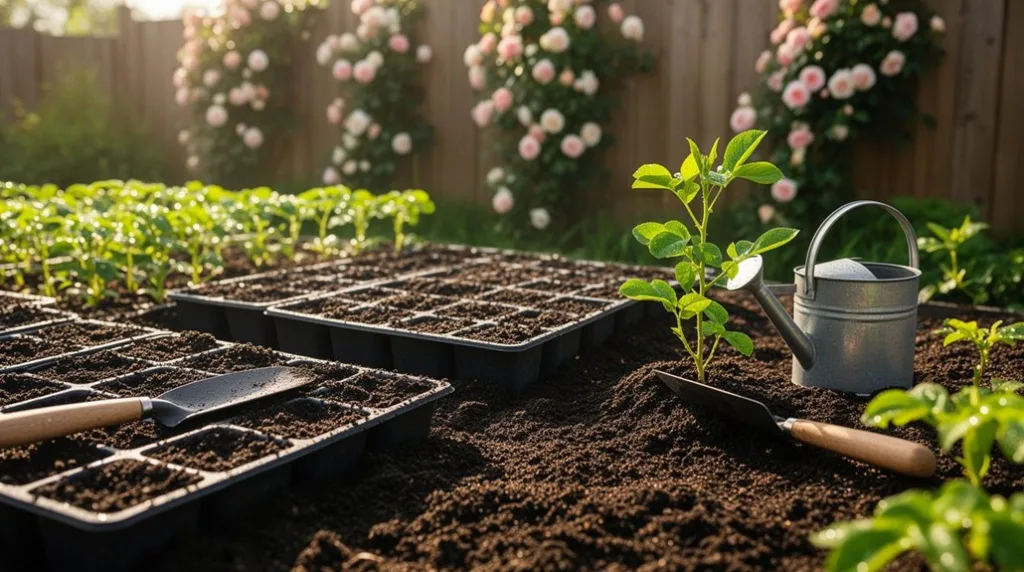
You can start your first garden this season. First, you’ll find a sunny spot and test your soil. Then, you choose easy plants like lettuce or radishes. You learn the right way to plant and water them. But how do you keep pests away and know the perfect time to harvest? The simple steps ahead will show you how to avoid common mistakes.
Key Takeaways
- Choose a sunny, flat spot with good drainage that’s convenient for daily tasks.
- Improve your soil with compost and test its pH before planting anything.
- Start with easy plants like lettuce, bush beans, marigolds, basil, and radishes.
- Water deeply at the soil in the morning and check for pests regularly.
- Keep a simple garden journal to record successes and plan for next season.
Find the Perfect Spot for Your Garden

Before you even think about seeds, take a close look at where the sun hits your yard, as most vegetables and flowers need at least six hours of direct sunlight daily to thrive. Watch how shadows move throughout the day to find your sunniest patch.
You’ll also want to consider convenience. Pick a spot you can easily access for watering, weeding, and harvesting. It’s discouraging if your garden is too far from your water source or hidden away.
Check for good drainage, too; you don’t want your plants sitting in soggy soil after a rain. A flat, level area is easiest to work on, but a slight slope can be fine if it drains well.
Finding this ideal location sets you up for success.
Test Your Soil and Amend It for Better Growth
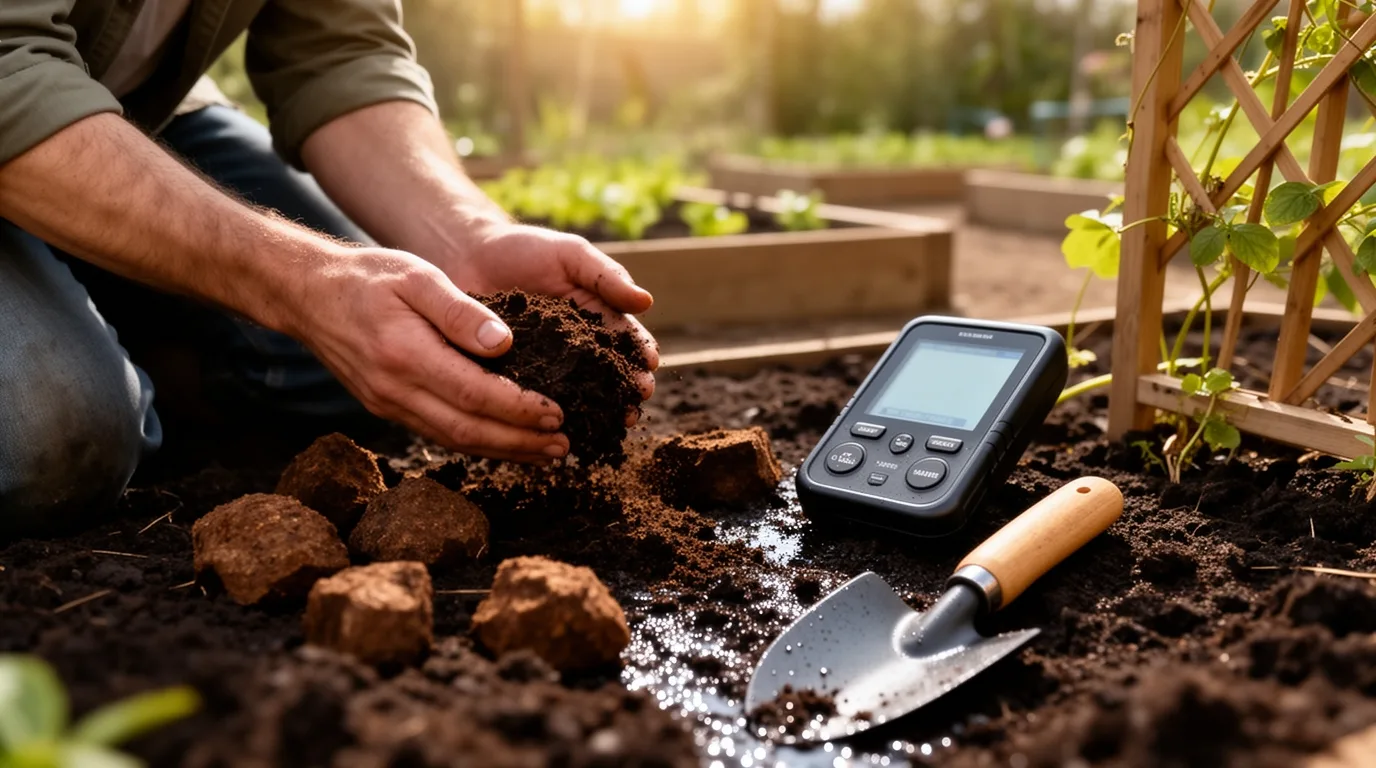
Once you’ve chosen your garden’s location, you’ll need to understand what’s happening beneath the surface. Testing your soil tells you about its pH and nutrient levels, so you know what amendments to add for better growth. You can get a simple test kit from a garden center. Amendments like compost improve most soils, adding nutrients and helping with drainage. For acidic soil, you might add lime; for alkaline soil, sulfur can help. Mixing these amendments into your soil creates a great foundation for your plants.
| Soil Type | Common Amendment | Main Benefit |
|---|---|---|
| Poor & Compacted | Compost | Adds nutrients & improves structure |
| Too Acidic (Low pH) | Garden Lime | Raises pH for most veggies |
| Too Alkaline (High pH) | Sulfur or Peat Moss | Lowers pH for some flowers |
Work these into your topsoil before you plant.
Gather Your Essential Gardening Tools
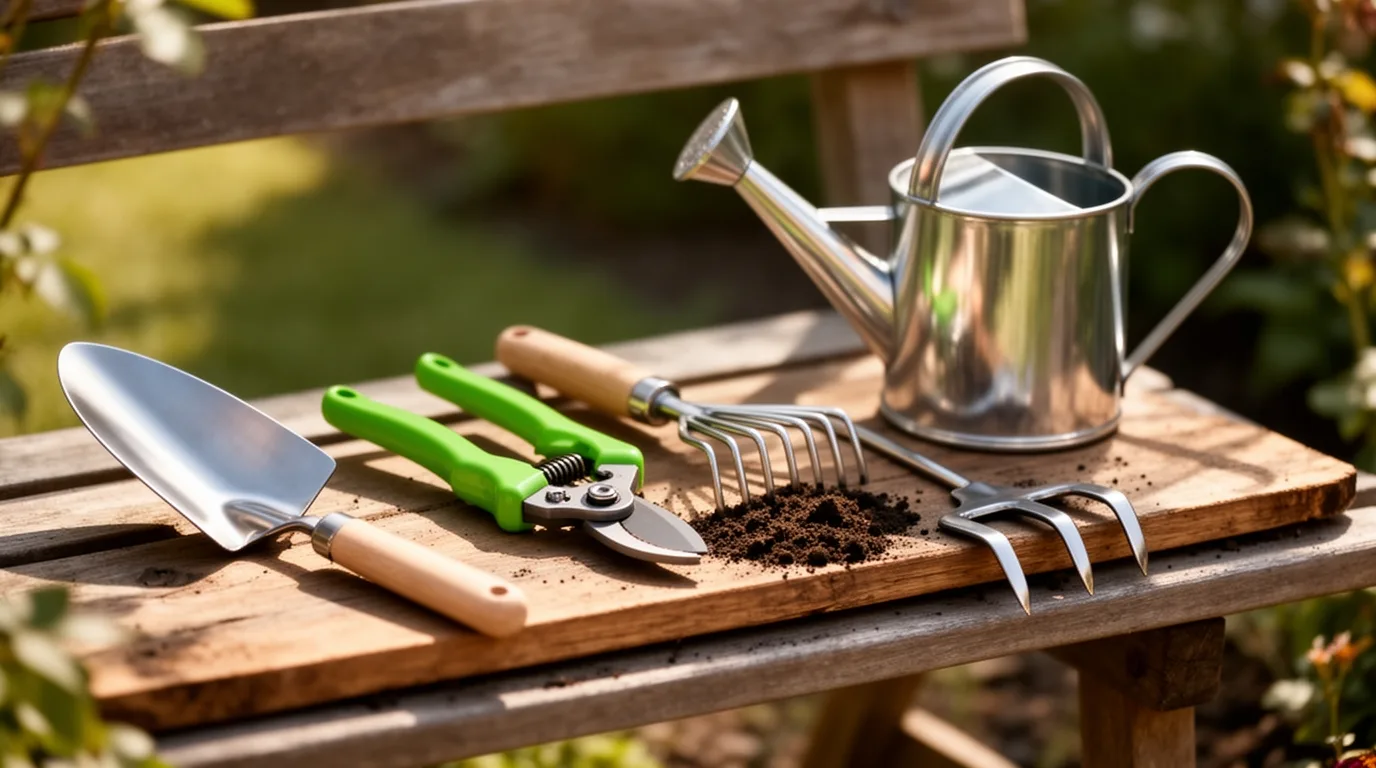
Start by collecting a few basic tools—they’ll make your gardening tasks easier and more efficient. You don’t need many to begin.
First, get a sturdy trowel for digging small holes and transplanting seedlings.
A pair of comfortable gardening gloves will protect your hands from dirt and sharp edges.
A watering can with a gentle shower nozzle is essential for hydrating your plants without washing soil away.
For pruning and cutting, find a sharp pair of hand pruners.
Finally, a garden fork or a spade is useful for loosening and turning soil.
These core items form your toolkit’s foundation. Buy quality tools that feel good in your hands, as they’ll last for many seasons.
Pick the Right Easy-to-Grow Plants for Beginners
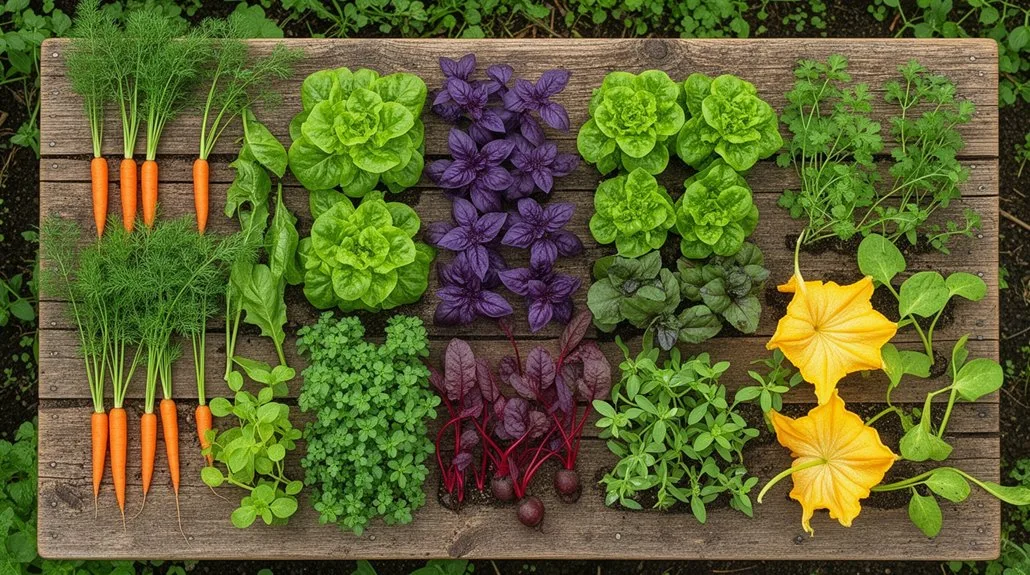
Jump right in by selecting plants that are forgiving and resilient as you learn the ropes. For vegetables, you can’t go wrong with radishes, lettuce, or bush beans. They sprout quickly and tolerate some beginner mistakes.
Herbs like basil, mint, and chives are also fantastic starter plants—they’re vigorous and useful.
In flowers, marigolds, sunflowers, and zinnias are your best bets. They’re bright, tough, and often thrive with just sun and water.
Always check your plant’s tag for its sun requirements (full sun, part shade) and match it to a spot in your yard. Starting with these reliable choices builds your confidence fast, so you’ll enjoy success from your very first season.
Learn How to Plant Seeds and Seedlings Correctly
Now that you’ve picked out your easy-to-grow plants, it’s time to get them in the ground properly. Planting correctly gives your seeds and seedlings the best start. For seeds, check your packet for the correct planting depth—it’s usually two to three times the seed’s width. Make a small hole, drop in the seed, and gently cover it with soil. For seedlings, dig a hole slightly larger than the plant’s root ball. Loosen the roots a bit, place the plant in, and backfill so the soil level matches the plant’s stem. Pat the soil gently to remove air pockets.
| Seeds | Seedlings |
|---|---|
| Check packet for depth | Dig hole larger than roots |
| Cover lightly with soil | Loosen root ball gently |
| Keep soil consistently moist | Match soil level on stem |
| Thin if crowded | Firm soil around base |
| Label your rows | Water immediately after |
Master a Simple Watering Routine for Healthy Plants
Consistently giving your new plants the right amount of water is one of the most important things you can do for them. A simple routine prevents over or under-watering, which are common beginner mistakes. The key is to water deeply but less frequently, encouraging strong root growth.
To build your routine, focus on these core practices:
- Check the soil before watering. Push your finger an inch into the dirt. If it feels dry, it’s time to water; if it’s damp, wait another day.
- Water the soil, not the leaves. Aim your watering can at the base of the plant to deliver moisture to the roots and avoid fungal diseases.
- Water in the early morning. This gives plants a good drink before the heat of the day and reduces water loss from evaporation.
Stick with this, and you’ll see your plants thrive.
Feed Your Garden With the Right Fertilizer
Since you’ve mastered a watering routine, understanding fertilizer is the next step to unlocking your garden’s full potential. Think of it as plant food, providing essential nutrients that soil often lacks. Most bagged fertilizers display three numbers, like 10-10-10, representing nitrogen (N), phosphorus (P), and potassium (K). Nitrogen boosts leafy growth, phosphorus helps roots and flowers, and potassium improves overall health.
For veggies and most flowers, a balanced, all-purpose fertilizer works well. Always follow the package instructions—more isn’t better and can harm your plants. You’ll typically mix granules into soil at planting or apply a liquid feed every few weeks during the growing season. This simple feeding gives your plants the strength to thrive and produce abundantly for you.
Protect Your Garden From Common Pests and Diseases
Keeping your plants well-fed also helps them resist trouble, but pests and diseases can still appear. The best approach is to check your plants often and act quickly if you see a problem.
You can often handle issues without harsh chemicals.
- Inspect leaves regularly. Look under leaves and along stems for insects or spots. Removing bugs by hand or using a strong spray of water can solve many problems.
- Try natural sprays first. Mix a few tablespoons of mild soap in water to control aphids. Neem oil is another effective, plant-safe option for many pests and fungi.
- Remove sick plants promptly. If a plant is badly diseased, pull it out to protect the others. Clean up fallen leaves where pests and diseases can hide.
Staying watchful is your best defense for a healthy garden.
Keep Your Garden Weed-Free With Regular Maintenance
Regularly tending to your garden makes weed control much easier. You don’t need fancy tools, just a few minutes each week.
Pull weeds by hand when the soil is moist, so you get the whole root. A simple hoe is great for slicing weeds off at the surface in dry weather.
It’s best to tackle them when they’re small, before they flower and spread seeds. Mulching is your best friend.
Spread a two-to-three-inch layer of straw, wood chips, or shredded leaves around your plants. This blocks sunlight, preventing new weeds from sprouting.
Consistent, light effort prevents a big, back-breaking job later. Your garden will look tidier and your plants will thrive with less competition.
Know When and How to Harvest Your Garden’s Vegetables
Harvesting your garden’s bounty at the right time ensures you get the best flavor and yield.
You’ll learn this by checking your plants daily. For leafy greens like lettuce, pick outer leaves when they’re young and tender.
For tomatoes, wait until they’re fully colored and slightly soft. Always use clean, sharp scissors or a knife for a clean cut; don’t just pull, as you might damage the plant.
- Check Often: Harvest most vegetables in the cool morning when their water content is highest for the best crispness and taste.
- Know the Signs: Zucchini is best small (6-8 inches), while peppers can be picked green or left to turn red.
- Keep Picking: Regularly harvesting veggies like beans and cucumbers encourages the plant to produce more.
Enjoy and Share Your Garden’s Harvest
Now that you’ve gathered your homegrown vegetables, it’s time to reap the true rewards of your effort. Enjoy them immediately for the best flavor and nutrition.
Try simple recipes that highlight your fresh produce, like a crisp salad or roasted veggies. Don’t be afraid to experiment in the kitchen with your new ingredients.
Sharing your harvest deepens the joy. Give a basket of extras to a neighbor, friend, or family member. It’s a wonderful way to connect and spread the goodness from your garden.
You can also donate surplus to a local food pantry. Seeing others enjoy what you’ve grown is incredibly satisfying and makes all the watering and weeding feel truly worthwhile.
Plan for Next Year: Record What Worked and What Didn’t
Even if you’re still enjoying this year’s harvest, start thinking about your garden’s future. Keeping notes now helps you build on success and avoid past mistakes next spring.
Use a simple notebook or your phone to record your observations while everything is fresh in your mind. This habit turns one season of experience into lasting knowledge.
- Log your winners and losers: Jot down which plants thrived and which struggled or got eaten by pests.
- Track your timing: Note when you planted, when flowers appeared, and your first harvest dates.
- Sketch your layout: Draw a simple map showing where everything grew; this helps you rotate crops next year to keep soil healthy.
Your garden journal becomes your most valuable tool for continuous improvement.
Frequently Asked Questions
How Much Does Starting a Garden Cost?
You’ll spend as little as $50 for basics like seeds and soil. Smart choices, like buying smaller plants, save you money. Just start small and you’ll grow your garden’s budget over time.
Is It Better to Use Seeds or Starter Plants?
You can start with seeds for a lower cost and variety, but beginner plants are easier. You’ll get faster results with starters, especially for vegetables. Just consider your budget and patience first.
How Much Time per Week Does Gardening Take?
You’ll spend one to two hours weekly, mostly on watering and weeding. Your small garden’s time needs grow with it. Remember, you can always start small to fit gardening into your busy schedule.
Can I Garden if I Only Have a Balcony?
Absolutely! You can garden on a balcony. Use containers for herbs, tomatoes, or flowers. Ensure you have enough sunlight and a water source. You’ll create a beautiful, productive space with just a little effort.
What Do I Do With All My Extra Vegetables?
Share them! Give them to friends or neighbors. You can preserve extras by freezing, canning, or pickling. Also consider donating to a local food bank if you’ve got a really big harvest.
Conclusion
You’ve done it! You’ve grown your own food and flowers. Enjoy those fresh harvests, and don’t forget to share your bounty. Jot down what you loved and what you’d change in your garden journal. That’s your map for an even better garden next year. Keep it simple, keep learning, and most of all, keep growing.
The Only Tools You Need for a Thriving Garden 🌱
Whether you're a weekend gardener or growing daily — these hand-picked tools make every session faster, easier, and more satisfying.