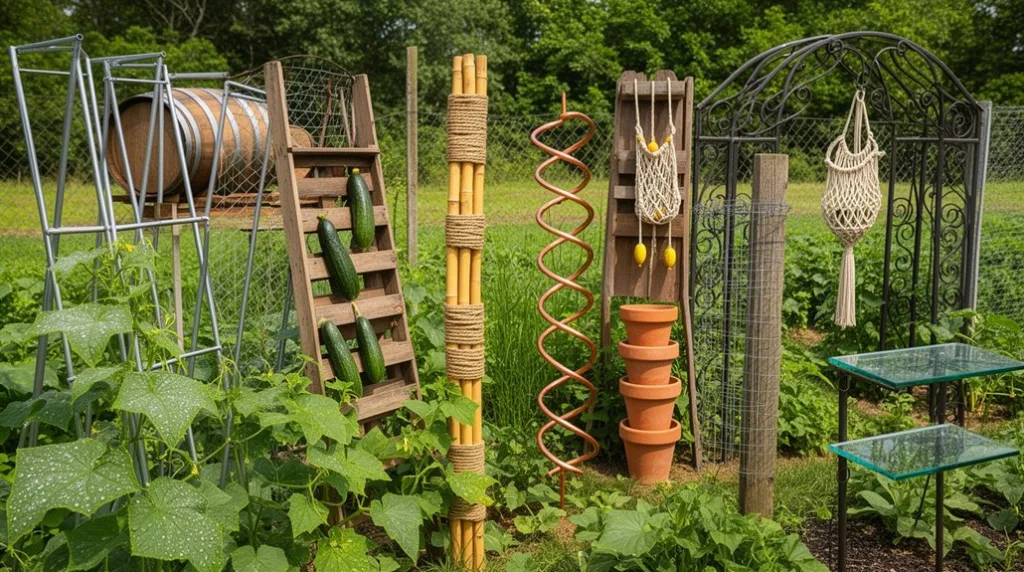
You’re looking for a trellis that boosts airflow, sun, and harvest speed while keeping cucumbers healthy. A classic A‑frame, a repurposed ladder, or a bamboo teepee can each support vines without crowding. Metal‑rope or chain systems add an industrial edge, and gutter‑style or net‑filled stakes let you adjust height on the fly. Pair any of these with rust‑resistant hardware, proper spacing, and drip irrigation, and you’ll see why the next step matters.
Key Takeaways
- Choose sturdy, rust‑resistant supports such as galvanized mesh panels, metal‑rope eye‑lets, or 12‑gauge chain trellises for long‑lasting cucumber growth.
- Space vertical supports 12–18 inches above ground and cross‑bars 12 inches apart to promote airflow and prevent disease.
- Use spring‑loaded clips or soft ties every 6 inches on rope or mesh trellises to guide vines without crushing stems.
- Install drip‑irrigation emitters (2–4 gph) near each vine node for consistent moisture while minimizing evaporation.
- Regularly prune side shoots and adjust clips or chains weekly to keep vines upright, improve sunlight exposure, and enhance fruit quality.
Choose a DIY Wooden Frame for a Classic A‑Frame Cucumber Trellis
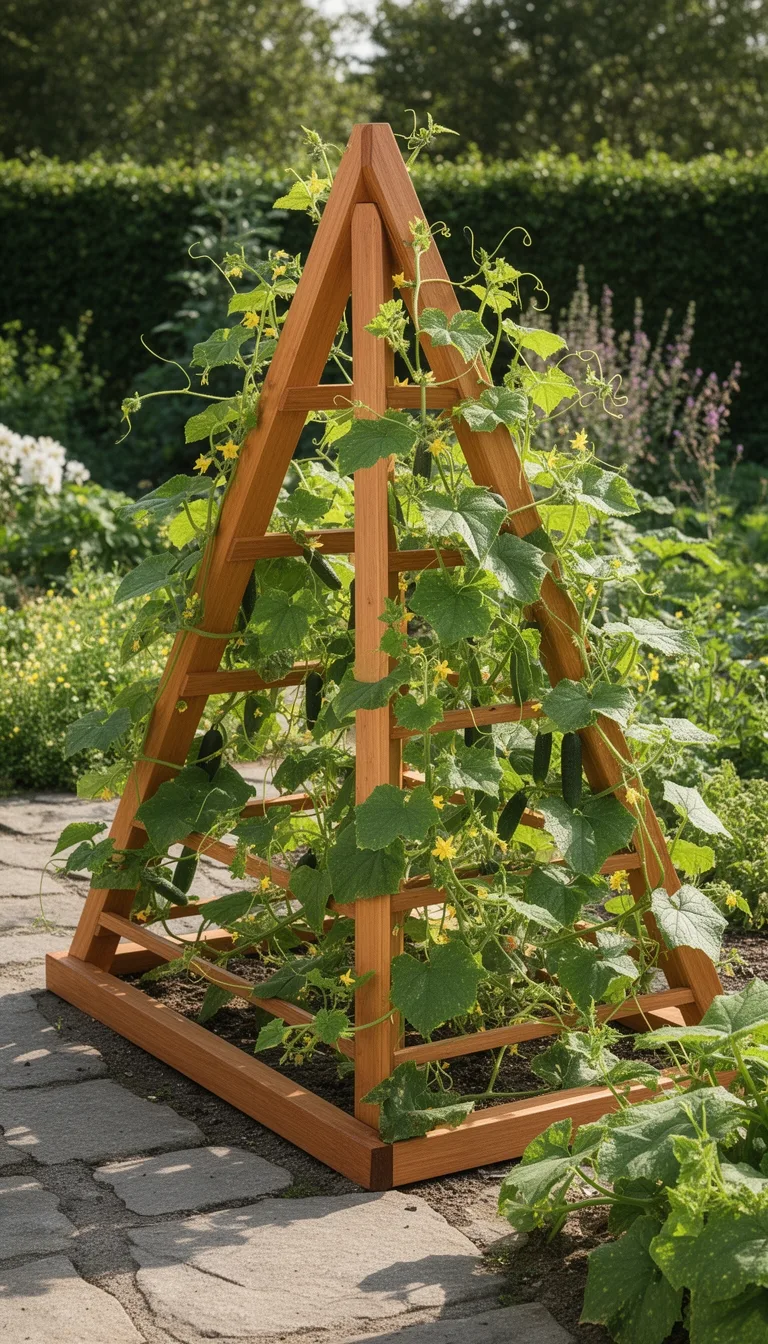
Pick a sturdy, untreated pine board for your classic A‑frame cucumber trellis and cut it to 4 feet long; this length gives enough height for vines to climb while keeping the structure stable.
Sand the cut edges, then drill two 1‑inch holes near each end for 2‑inch galvanized bolts.
Attach a matching pine cross‑brace at the top, securing it with the bolts and washers to form a triangular peak.
Cut two 3‑foot side rails, drill matching holes, and bolt them to the base of the A‑frame, creating a sturdy “A”.
Add a 1‑inch thick wooden slat across the top for vines to twine.
Stain the frame with a water‑based, non‑toxic sealant to protect against moisture while keeping the wood breathable for root health.
Repurpose a Ladder as a Vertical Cucumber Climbing System
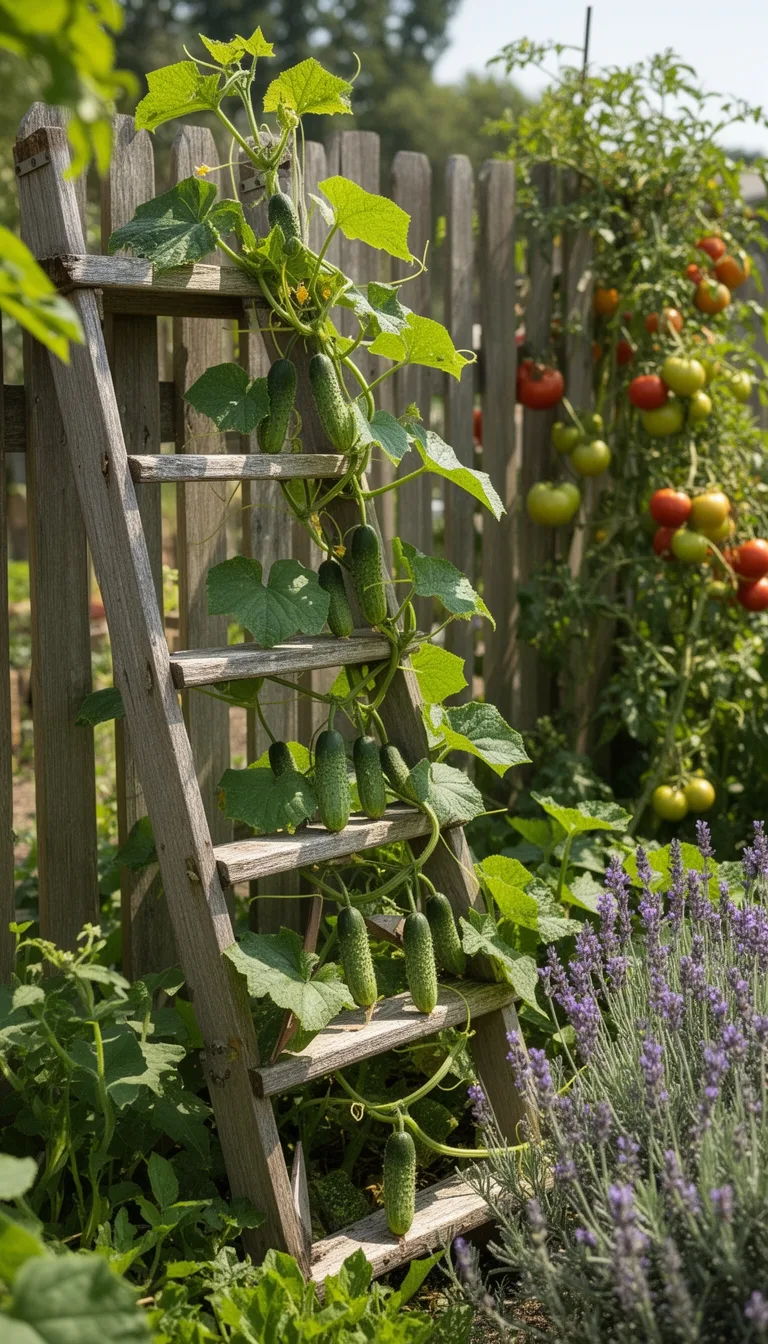
Turn an old ladder into a vertical cucumber trellis by positioning it against a wall or fence, then securing its rungs with sturdy brackets so the vines can climb the spaced steps. Choose a ladder with 3‑6 rungs; the wider the spacing, the easier you’ll guide each cucumber’s tendril. Attach a drip line at the base for consistent moisture, and mulch around the foot to retain soil temperature. Prune side shoots early to keep the main stem directed upward, preventing overcrowding. Monitor for fungal spots where humidity collects on metal, and apply a light spray of copper fungicide if needed.
| Material | Purpose |
|---|---|
| Brackets | Hold rungs steady |
| Drip hose | Provide steady water |
| Mulch | Regulate soil temperature |
Install Netting Between Stakes for an Adjustable Cucumber Trellis
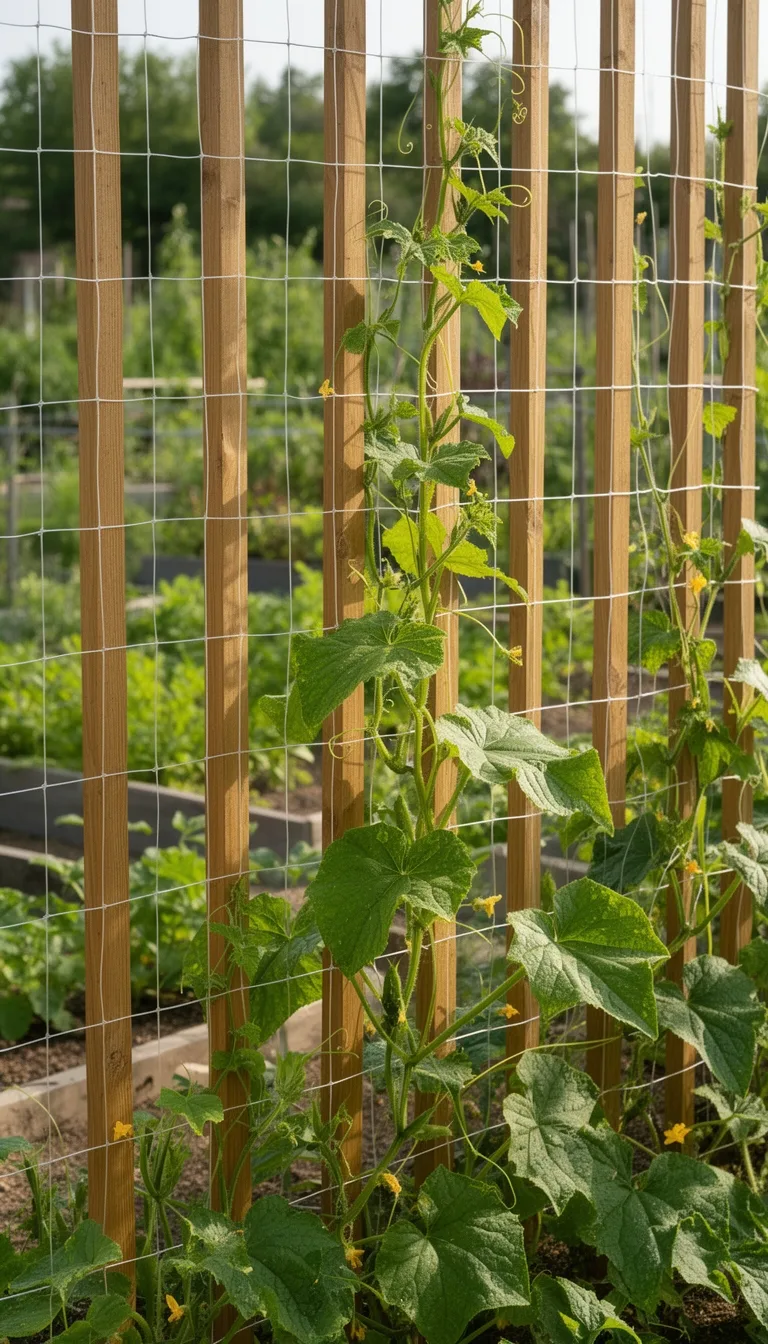
Stretch a length of garden netting between two sturdy stakes, then secure it with adjustable clips so you can raise or lower the mesh as the cucumber vines grow.
Choose UV‑resistant netting with 1‑2 cm openings to let air circulate while keeping pests out.
Insert stakes at least 1 m apart, driven 30 cm deep for stability.
Adjust clips every two weeks, matching vine length to prevent sagging and encourage vertical growth.
This system reduces disease pressure and maximizes sunlight exposure, letting you harvest longer, healthier cucumbers.
- Use galvanized stakes to resist rust.
- Space clips 15 cm apart for even support.
- Keep netting taut to avoid leaf bruising.
- Trim vines that crowd the mesh to maintain airflow.
Hang a Cucumber Basket From a Pergola for Space‑Saving Vertical Growth
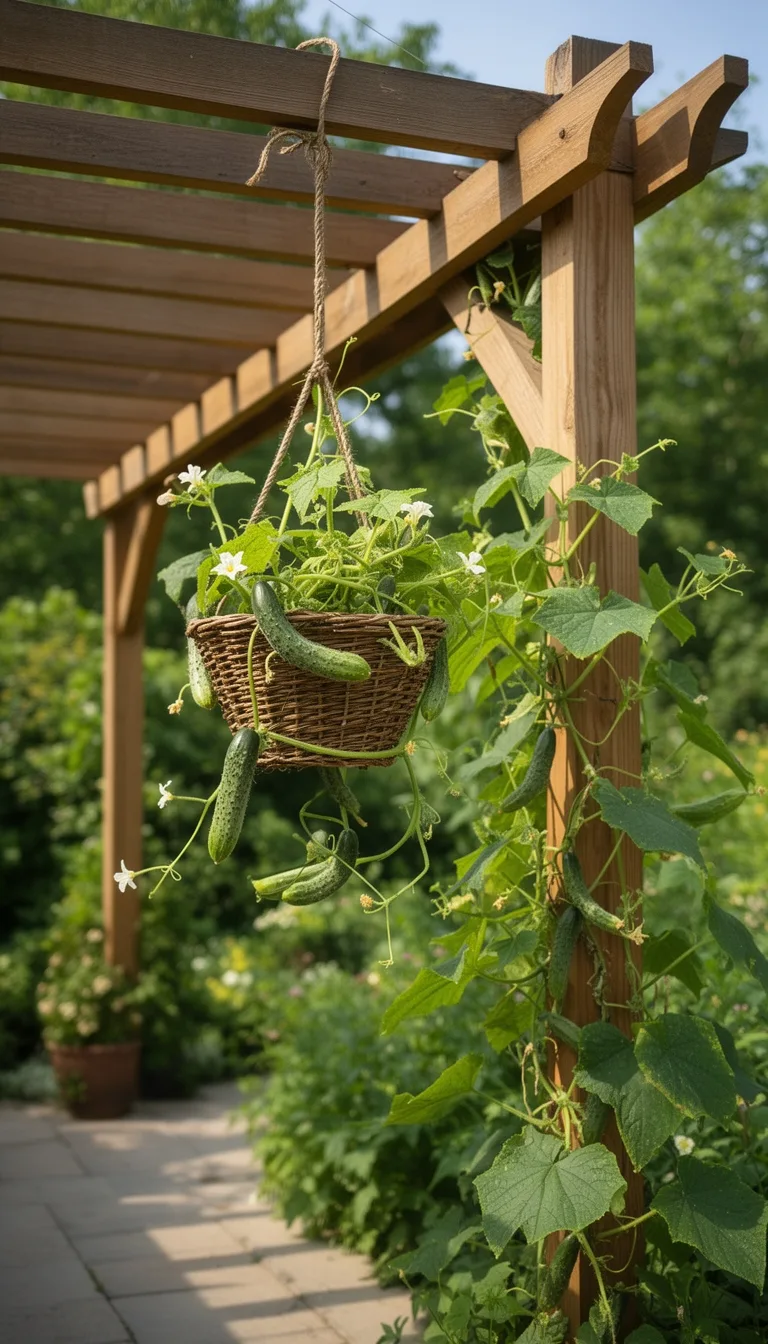
Hanging a cucumber basket from your pergola turns idle overhead space into a sturdy, vertical garden that frees up ground room and boosts airflow.
Choose a basket with slatted sides and a deep base to hold soil and allow roots to breathe. Fill it with a light, well‑draining mix—half compost, half peat moss, a dash of perlite. Plant seedlings 6‑8 inches apart, spacing them to avoid crowding.
Secure the basket with sturdy hooks or brackets, ensuring it can support the weight of mature vines and fruit. Water consistently, keeping soil moist but not soggy; a drip line or soaker hose works best.
Prune lateral shoots to direct growth upward, and monitor for pests, treating early with neem oil or insecticidal soap. This setup maximizes yield while keeping your garden tidy.
Secure Hanging Baskets With Adjustable Chains for Easy Harvest
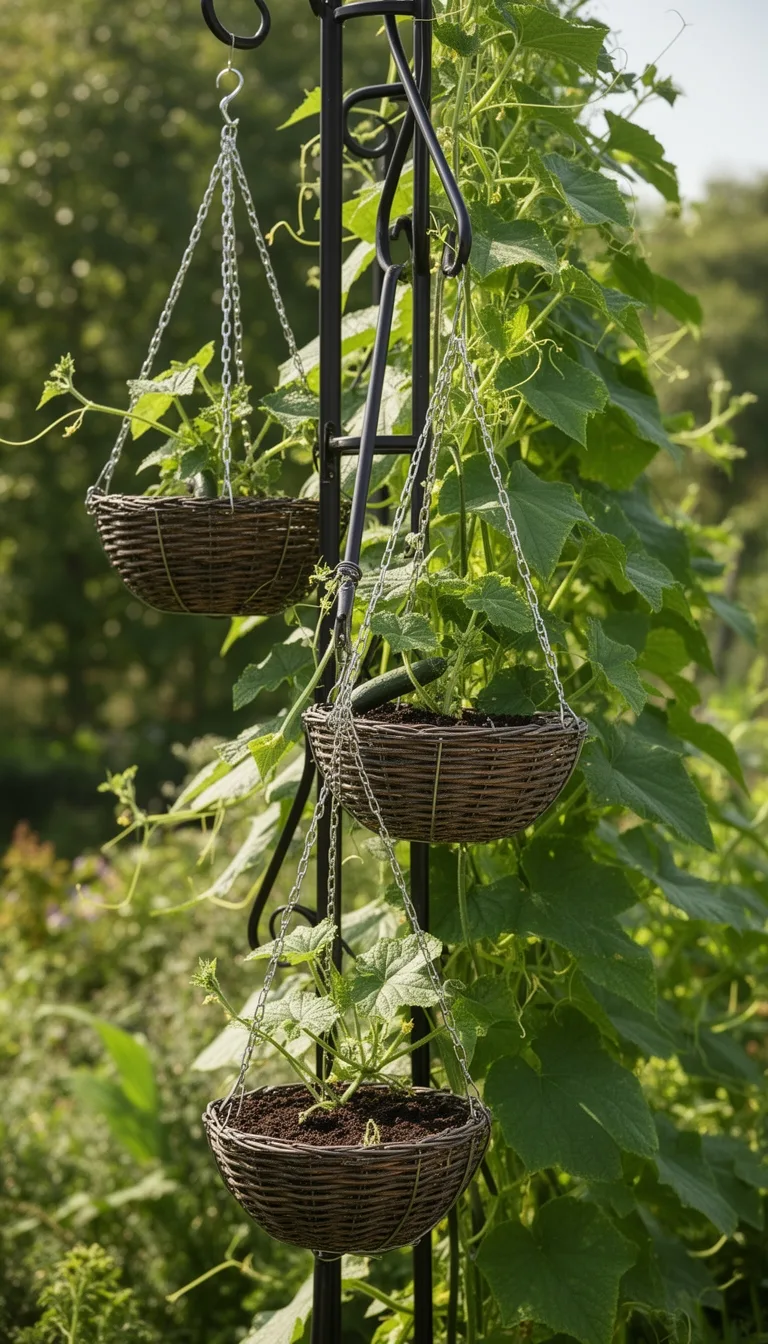
Using adjustable chains to secure hanging cucumber baskets lets you fine‑tune the height for effortless picking and optimal sunlight.
You’ll notice healthier vines when the baskets hang just above the ground‑level canopy, reducing stem stress and promoting even airflow.
Adjust the chains weekly as vines grow, keeping fruit within easy reach and preventing sagging that can invite rot.
Secure knots with carabiners for quick changes, and check tension after rain to avoid drift.
This method maximizes vertical space while keeping harvest simple and safe.
- Choose stainless‑steel chains to resist rust and UV degradation.
- Use quick‑release clamps for rapid height adjustments.
- Space baskets 12‑18 in. apart to allow air circulation.
- Inspect and tighten chains every 7‑10 days during peak growth.
Build a Wire‑Mesh Cucumber Trellis on a Patio Wall for a Modern Look
Create a sleek wire‑mesh trellis on your patio wall by anchoring galvanized mesh panels with stainless‑steel brackets, then secure cucumber vines with soft ties that slide along the mesh. Choose a mesh gauge of 1‑2 mm to support mature vines without crushing stems.
Space brackets 12‑18 inches apart vertically and 24 inches horizontally for even growth. Drill pilot holes in the wall, insert wall anchors, and tighten brackets to prevent wobble.
Plant seedlings 6 inches deep, spacing rows 12 inches apart, and water thoroughly. As vines climb, adjust ties weekly to avoid constriction and encourage upward growth.
Prune side shoots that exceed the mesh to improve airflow and reduce disease. Harvest when fruits reach 6‑8 inches, cutting them cleanly with garden shears.
Use a Pipe‑Based Cucumber Trellis for a Compact, Modular Design
Install a set of threaded PVC or metal pipes vertically into a sturdy frame, then connect horizontal cross‑bars at 12‑inch intervals to form a grid that lets cucumber vines climb without crowding. This modular system lets you adjust height and spacing as plants grow, keeping foliage airy and reducing disease risk.
Secure each pipe with clamps to prevent wobble, and use zip‑ties to attach vines gently, encouraging upward growth. The compact footprint fits balconies or narrow raised beds, while the removable sections simplify cleaning and seasonal storage.
- Use 1‑inch diameter pipes for strength without bulk.
- Space cross‑bars 12 inches apart for optimal leaf exposure.
- Anchor the frame to a solid base to resist wind.
- Trim vines regularly to maintain airflow and fruit size.
Create a Bamboo Teepee Cucumber Trellis for a Rustic Garden Feature
A bamboo teepee offers a rustic, space‑saving framework that lets cucumber vines climb naturally while adding visual interest to the garden.
First, gather 6–8 mature bamboo poles, 5–6 ft tall, and a sturdy rope. Drive the poles into the soil in a circle about 3 ft apart, then tie the tops together with the rope, pulling tight to form a stable cone. Trim the poles to equal height, leaving a 2‑ft opening at the base for airflow.
Plant cucumber seedlings at the base, spacing them 12‑inches apart. As vines grow, guide them up the sloping bamboo, using soft ties or garden twine to prevent breakage.
Water consistently, mulch the base, and prune side shoots to keep the plant focused on upward growth. This teepee not only supports fruit production but also creates a charming focal point.
Set Up a Gutter‑Style Cucumber Trellis Along a Path for Easy Harvest
Along a garden path, you can turn ordinary rain gutters into a sleek, low‑profile cucumber trellis that keeps fruit within arm’s reach. First, cut a 4‑foot section of PVC or metal rain gutter, slope it slightly toward the path, and secure it with brackets every 12 inches.
Next, drill small holes every 6 inches along the interior and insert sturdy garden twine or zip ties to create vertical guides. Plant cucumber seedlings at the base, spacing them 12 inches apart, and gently train the vines onto the twine. Water consistently, mulch to retain moisture, and prune side shoots to maintain airflow and prevent disease.
- Use UV‑stable gutters to resist weathering.
- Anchor brackets to a low fence or wooden stakes.
- Tie vines loosely to avoid girdling.
- Harvest when fruits are 6‑8 inches long for peak flavor.
Attach a Rope‑and‑Clip Cucumber Trellis to a Fence for Adjustable Vine Height
By threading sturdy rope through eye‑let clips mounted on a fence, you can quickly adjust cucumber vine height as they grow. Choose a UV‑resistant synthetic rope, ⅜‑inch diameter, and clip it to 1‑inch stainless steel eye‑lets spaced 12 inches apart.
Tie a secure knot at each end, then attach a small, spring‑loaded clip to the rope every 6 inches; these clips hold vines without crushing stems. When a vine reaches the clip, slide it up and lock it in place, keeping foliage upright for optimal air flow and sunlight exposure.
Trim any excess rope to prevent sagging, and replace worn clips each season. This system lets you raise or lower vines easily, promoting robust growth and reducing disease risk.
Use a Metal‑Chain Cucumber Trellis for an Industrial‑Chic Garden Aesthetic
If you want an industrial‑chic look while giving cucumber vines sturdy support, a metal‑chain trellis does the trick. Choose stainless steel or galvanized chain to resist rust, then anchor the top to a sturdy post or wall. Space the links 2–3 inches apart so vines can thread through without crowding. Secure the base with a heavy‑duty hook or a welded bracket to keep the structure upright under wind and fruit weight. The reflective metal also deters pests by reducing shade.
- Use 12‑gauge chain for optimal strength.
- Attach a swivel joint at the top for easy adjustment.
- Position the trellis 12–18 inches from the ground to improve airflow.
- Prune side shoots regularly to maintain fruit quality.
Add Drip‑Irrigation to a Cucumber Trellis for Water‑Efficient Growing
A metal‑chain trellis already gives your cucumber vines the sturdy, industrial‑chic framework they need, and pairing it with a drip‑irrigation system takes water efficiency to the next level.
Install a main supply line along the trellis backbone, then attach ½‑inch emitters near each node where vines attach. Set emitters to 2‑4 gph, delivering water directly to the root zone while minimizing evaporation. Use a pressure regulator and backflow preventer to protect your garden.
Schedule watering early morning, 30‑45 minutes per session, adjusting for soil moisture and temperature. Monitor leaf turgor; if leaves wilt, increase duration slightly.
This precise delivery reduces runoff, prevents fungal disease, and promotes vigorous, uniform fruit development.
Conclusion
Pick the trellis that fits your space, budget, and style, then install rust‑resistant hardware, keep vines spaced 12‑18 in., prune regularly, and add drip irrigation. Whether you choose an A‑frame, ladder, netting, basket, gutter, rope‑and‑clip, or metal‑chain system, the key is sturdy support and consistent care. With proper setup, your cucumbers will climb, air, and produce abundant, healthy fruit.
The Only Tools You Need for a Thriving Garden 🌱
Whether you're a weekend gardener or growing daily — these hand-picked tools make every session faster, easier, and more satisfying.