
You can transform your backyard into a productive and charming space with the right layout. Imagine your own salsa garden, a water-saving wicking bed, or a vertical trellis heavy with beans. These twenty ideas blend high-yield techniques with creative designs to solve common challenges. Let’s explore how to build your most successful garden yet, from the first raised bed to a continuous harvest.
Key Takeaways
- Build classic wooden raised beds for optimal soil control and drainage.
- Utilize vertical trellises for climbing plants to maximize space and yield.
- Create a keyhole garden with a central compost basket to conserve water.
- Use straw bales as a fertile, weed-free growing medium for many vegetables.
- Grow compact dwarf varieties in patio containers for sunny, small spaces.
Start With Classic Raised Bed Gardens
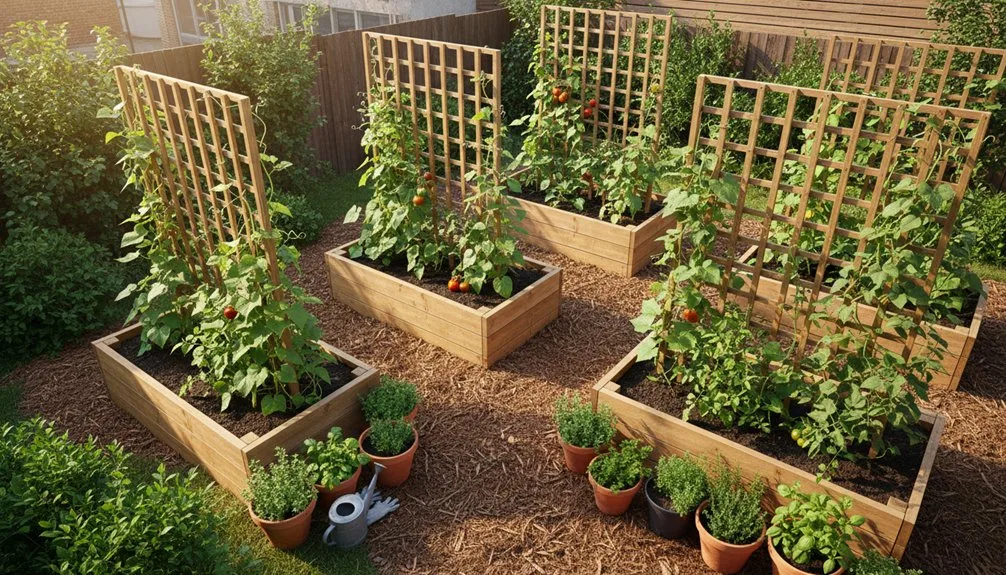
For beginners, a classic raised bed garden is your most straightforward and productive entry point.
You construct a simple wooden frame, fill it with high-quality soil, and plant directly into that perfect mix. This method gives you complete control over your soil’s health and drainage, which is a huge advantage if your native ground is poor.
You’ll appreciate the defined space, as it makes weeding, watering, and harvesting much easier on your back. Start with a manageable size, like a 4×8-foot bed, and position it where it gets at least six hours of sun daily.
You can grow almost anything, but focus on vegetables you love to eat—think tomatoes, lettuce, and carrots for your first rewarding season.
Build a Simple Square Foot Garden for High Yields
Elevate your garden’s productivity by dividing a raised bed into a grid of one-foot squares, each dedicated to a specific crop. This simple system maximizes yield by spacing plants intensively according to their mature size. You’ll plant, for instance, sixteen radishes, nine beans, or just one tomato per square.
Use string or thin lumber strips to create the visual grid. It helps you organize planting and prevents overcrowding. You can grow a remarkable variety in a small area, reducing wasted space.
Rotate crops between squares each season to keep soil healthy. This method simplifies planning, makes weeding and harvesting easier, and delivers a continuous, abundant harvest right from your backyard.
Create a Water-Conserving Wicking Bed
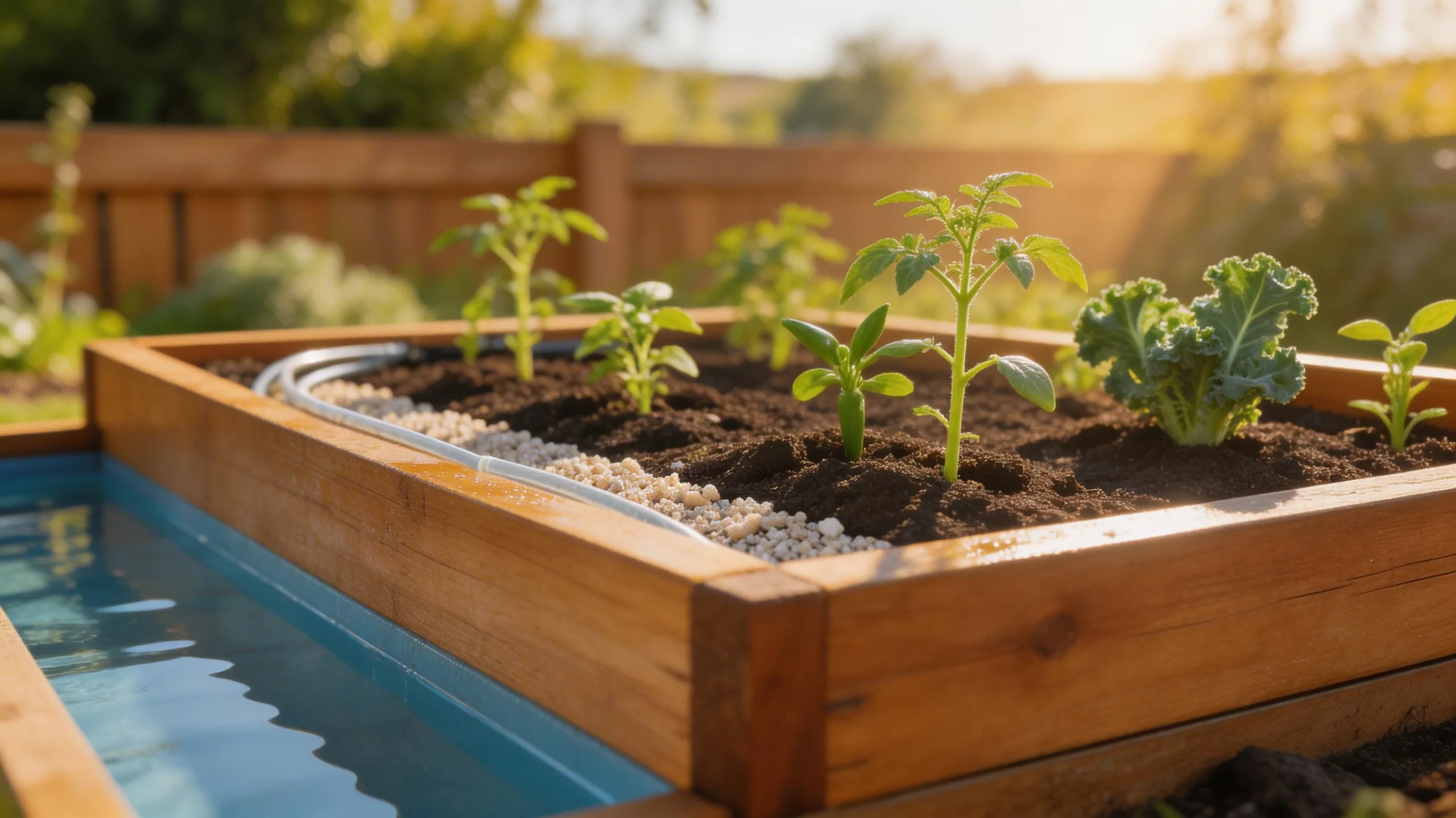
If a square foot garden helps you use space wisely, a wicking bed does the same for your water. It’s a self-watering system where plants draw moisture up from a reservoir below, drastically reducing runoff and evaporation.
You’ll build a raised bed with a watertight liner. First, install a vertical fill pipe and lay perforated pipe on the bottom. Cover this with a geotextile fabric to prevent soil from clogging the reservoir, then add a layer of gravel. Fill the rest with your soil mix. When you add water through the fill pipe, it saturates the gravel layer. Your plant roots then “wick” up only what they need, meaning you might only water every week or two, even in summer heat.
Try Easy Straw Bale Gardening
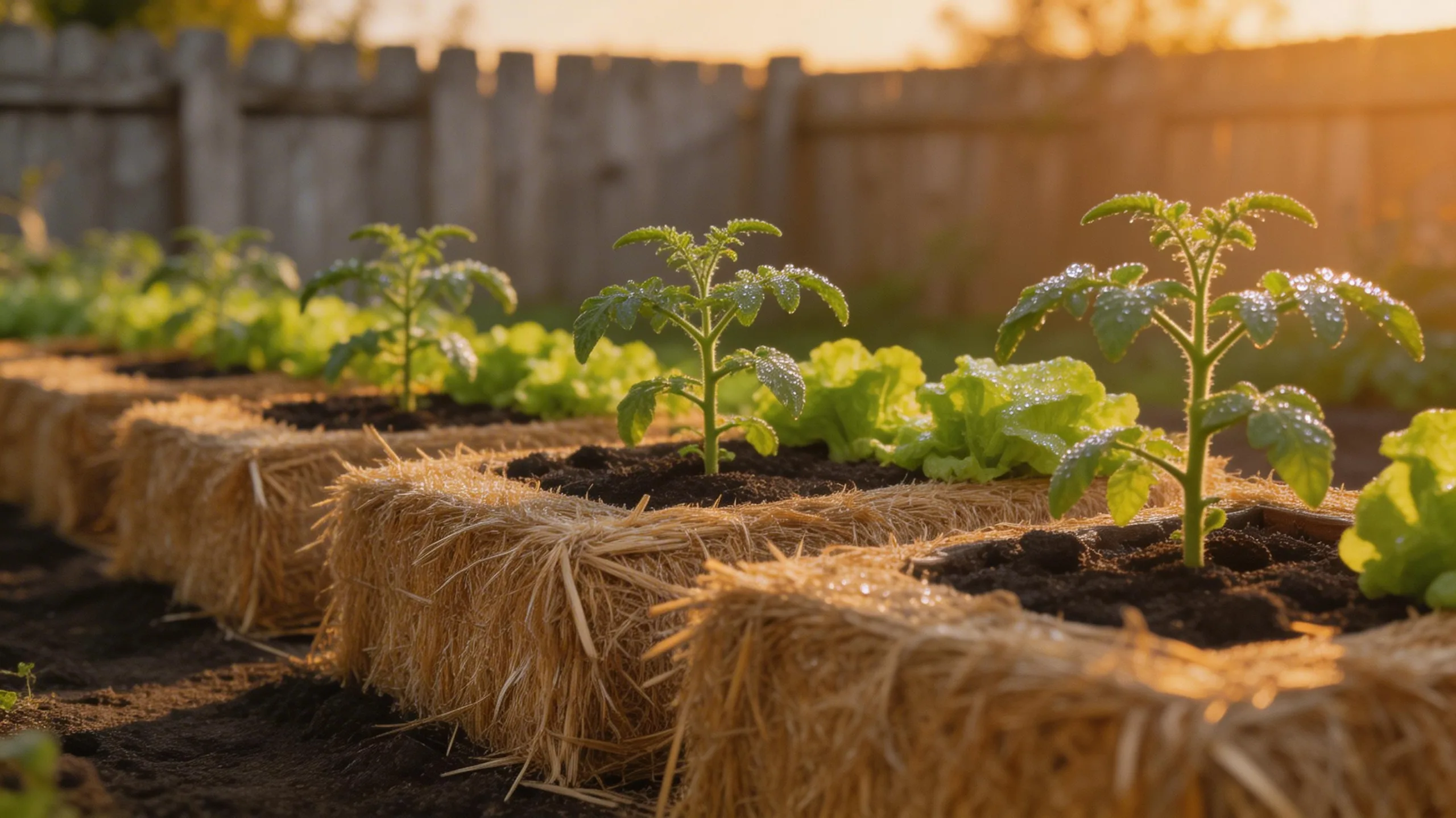
Shaking up your gardening approach, straw bale gardening turns a humble bale into a ready-made, above-ground bed.
You’ll condition it for about two weeks by watering daily and adding a nitrogen source like blood meal; this starts a composting process inside that’ll warm the roots and feed your plants.
Once it’s cooled down, you simply fill planting pockets in the bale’s top with a bit of compost or potting mix.
It’s fantastic for poor or compacted soil, and you’ll find it’s easier on your back.
You can grow tomatoes, cucumbers, squash, and greens directly in it.
The bale provides excellent drainage and aeration, helping to prevent root rot while naturally suppressing weeds around its base.
Install a Keyhole Garden for Dry Climates
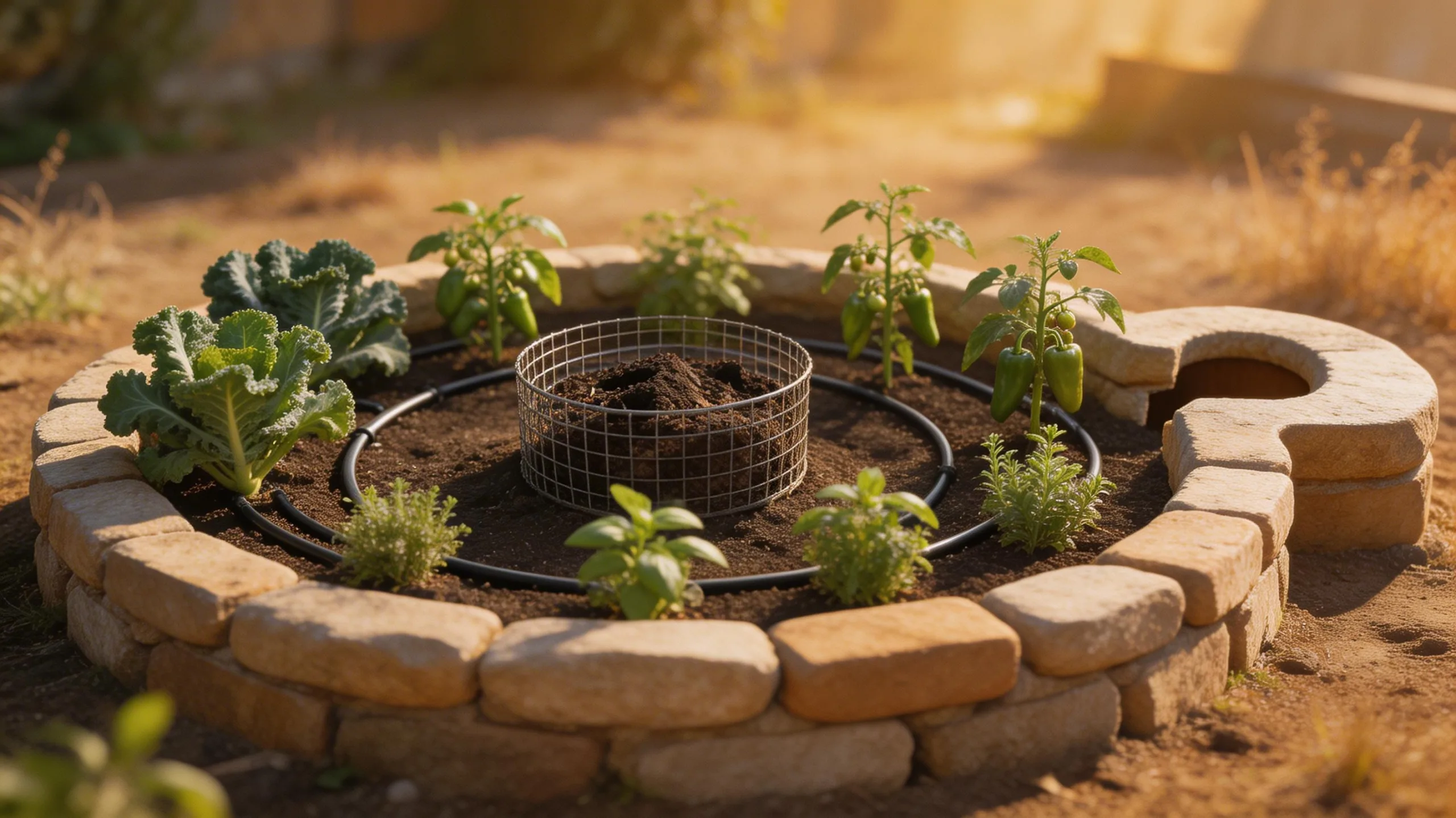
Drawing from an ancient technique, a keyhole garden is a circular, raised bed with a notch and central compost basket that’s designed to conserve water and nutrients in arid regions.
You’ll build a circular wall from stone, brick, or recycled materials about six feet across, leaving a keyhole-shaped entry path. Place a wire basket in the center and fill it with compostable materials. Then, layer your bed with cardboard, soil, and manure. The magic happens when you water; you pour it directly into the central basket. This allows moisture and nutrients from the decomposing compost to seep slowly outward to your plant roots, drastically reducing your need to irrigate the entire bed while feeding your vegetables.
Grow a Lush Patio Container Garden
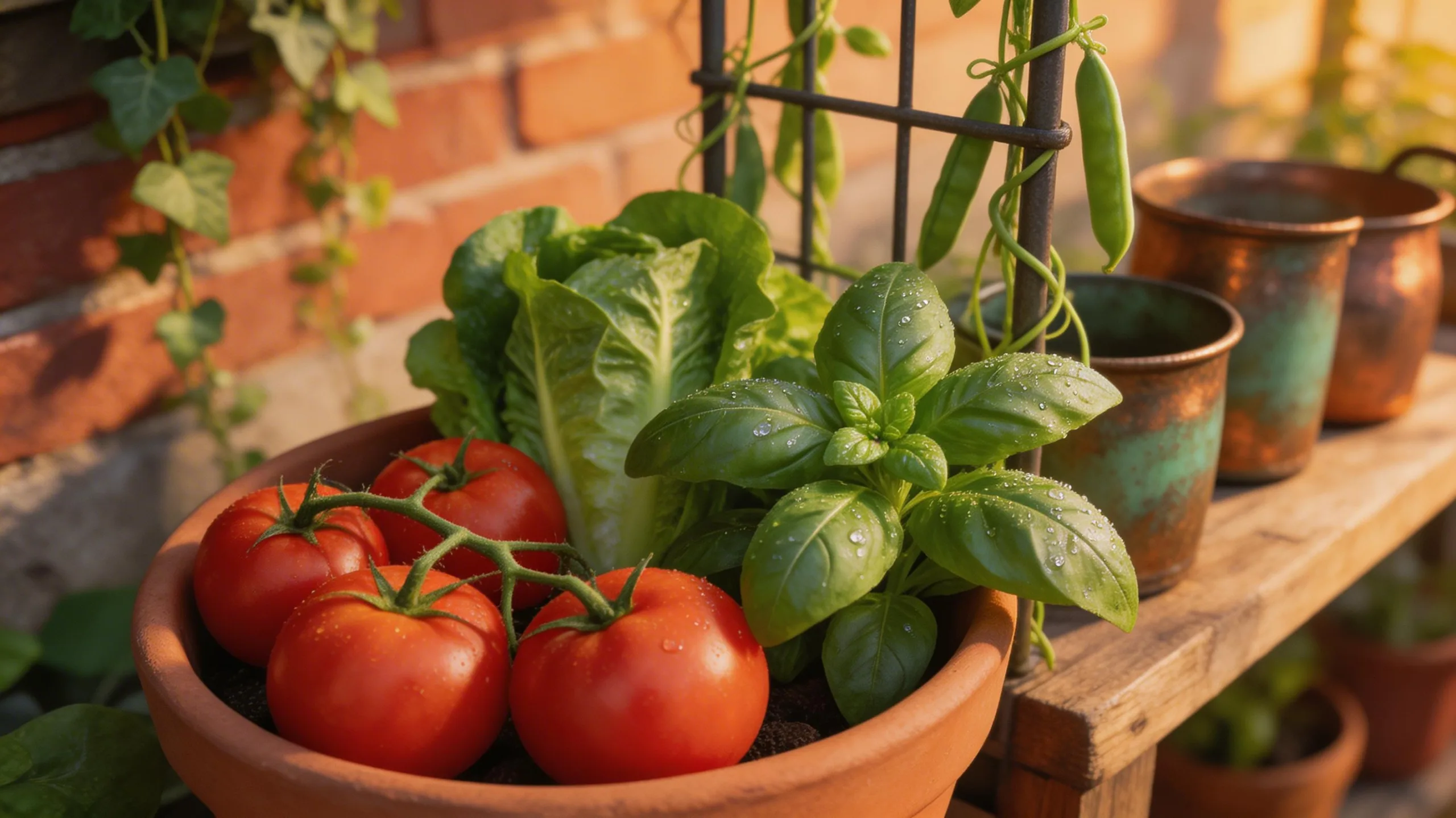
Even in spaces where you can’t dig into the ground, you can cultivate an abundant vegetable harvest. Patio container gardening makes this possible.
Start by selecting pots with adequate drainage holes; a five-gallon size works for many veggies. Use a premium potting mix, never dense garden soil, for proper root growth.
Choose compact or dwarf varieties like ‘Bush Champion’ cucumbers or ‘Tiny Tim’ tomatoes.
Place sun-loving plants like peppers and basil where they’ll get at least six hours of light.
Remember to water consistently, as containers dry out faster. You’ll need to feed your plants more often too; apply a balanced liquid fertilizer every couple of weeks during the growing season.
With this care, your patio can become a lush, productive oasis.
Build a Vertical Garden on a Wall or Fence
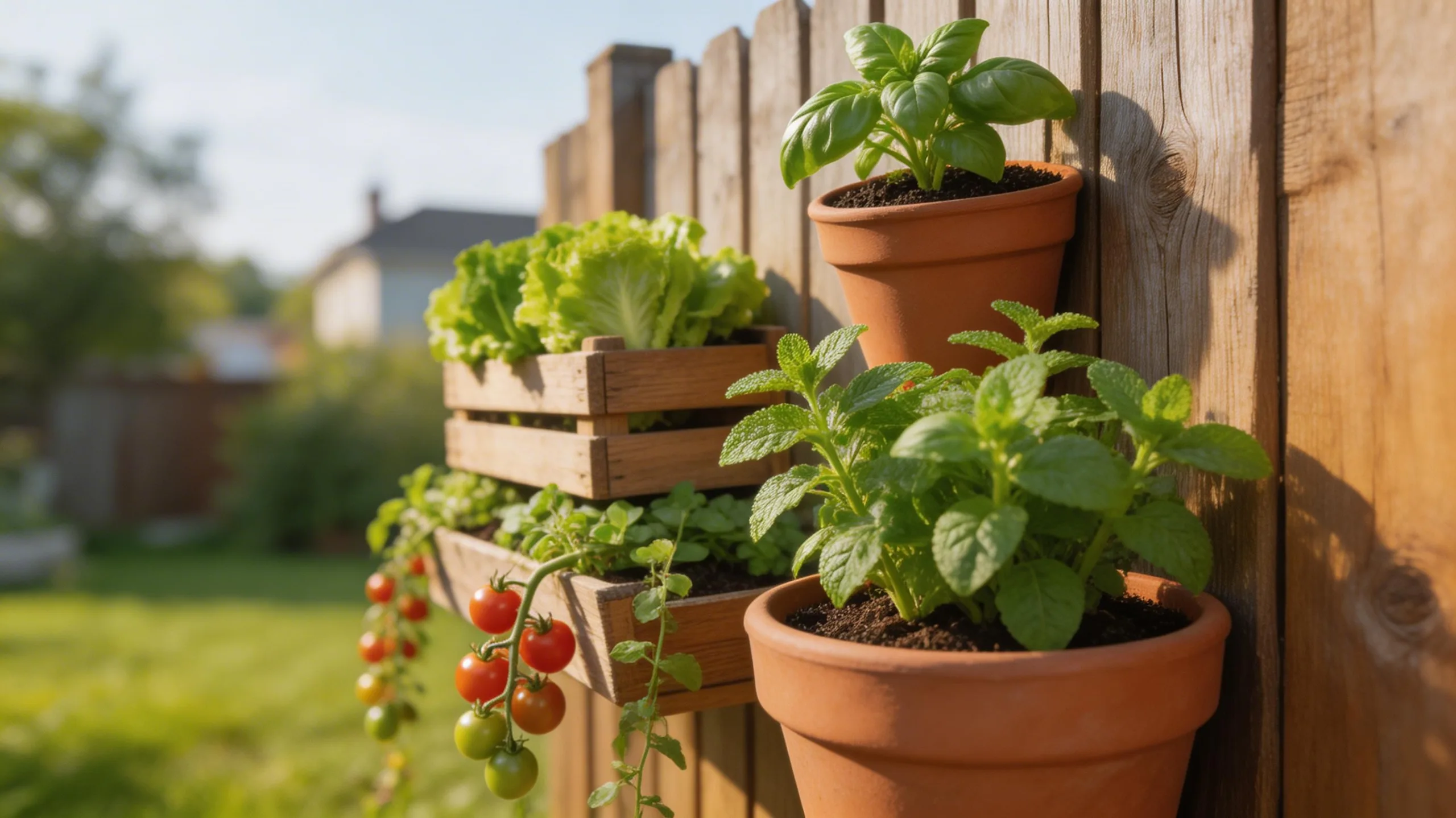
If you’re short on square footage but have an unused wall or fence, you can grow upwards by creating a vertical garden. This method saves ground space and turns a blank surface into a productive, living feature. You’ll need a sturdy structure, suitable containers, and plants that thrive in these conditions.
- Choose your system: Mount ready-made pocket planters, fabric panels, or repurpose items like wooden pallets or hanging shoe organizers. Ensure your support structure is securely attached to handle the weight when wet.
- Select your plants: Opt for shallow-rooted, lightweight vegetables and herbs like lettuces, spinach, strawberries, thyme, and cascading cherry tomatoes.
- Manage irrigation: Vertical gardens dry out faster. Install a simple drip irrigation system on a timer or commit to frequent, thorough watering, checking soil moisture daily.
Start a Salad Table for Easy-Pick Greens
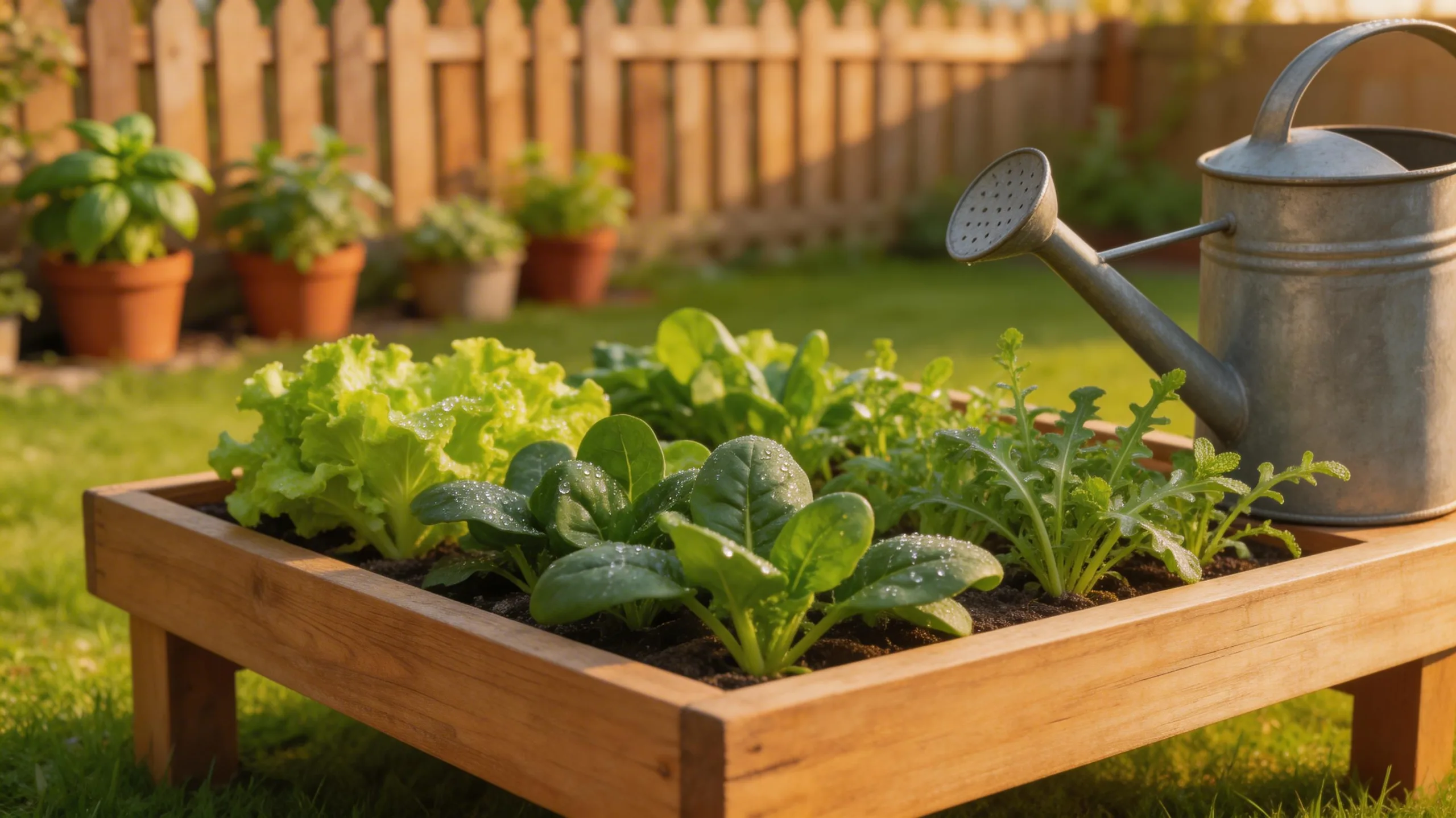
For a truly efficient way to harvest fresh greens right outside your door, consider building a raised salad table. This waist-high planter makes tending and harvesting effortless.
You’ll construct a simple wooden frame, typically about two feet by four feet, and line its bottom with hardware cloth to hold soil while allowing drainage. Fill it with a lightweight potting mix, as regular garden soil is too heavy.
You can then densely sow seeds for fast-growing crops like lettuce, spinach, arugula, and kale. The elevated design protects your greens from many ground pests and reduces weed competition.
You’ll be amazed at how quickly you can snip a fresh salad, and successive plantings ensure a continuous harvest all season long.
Plant a Kitchen Window Herb Garden
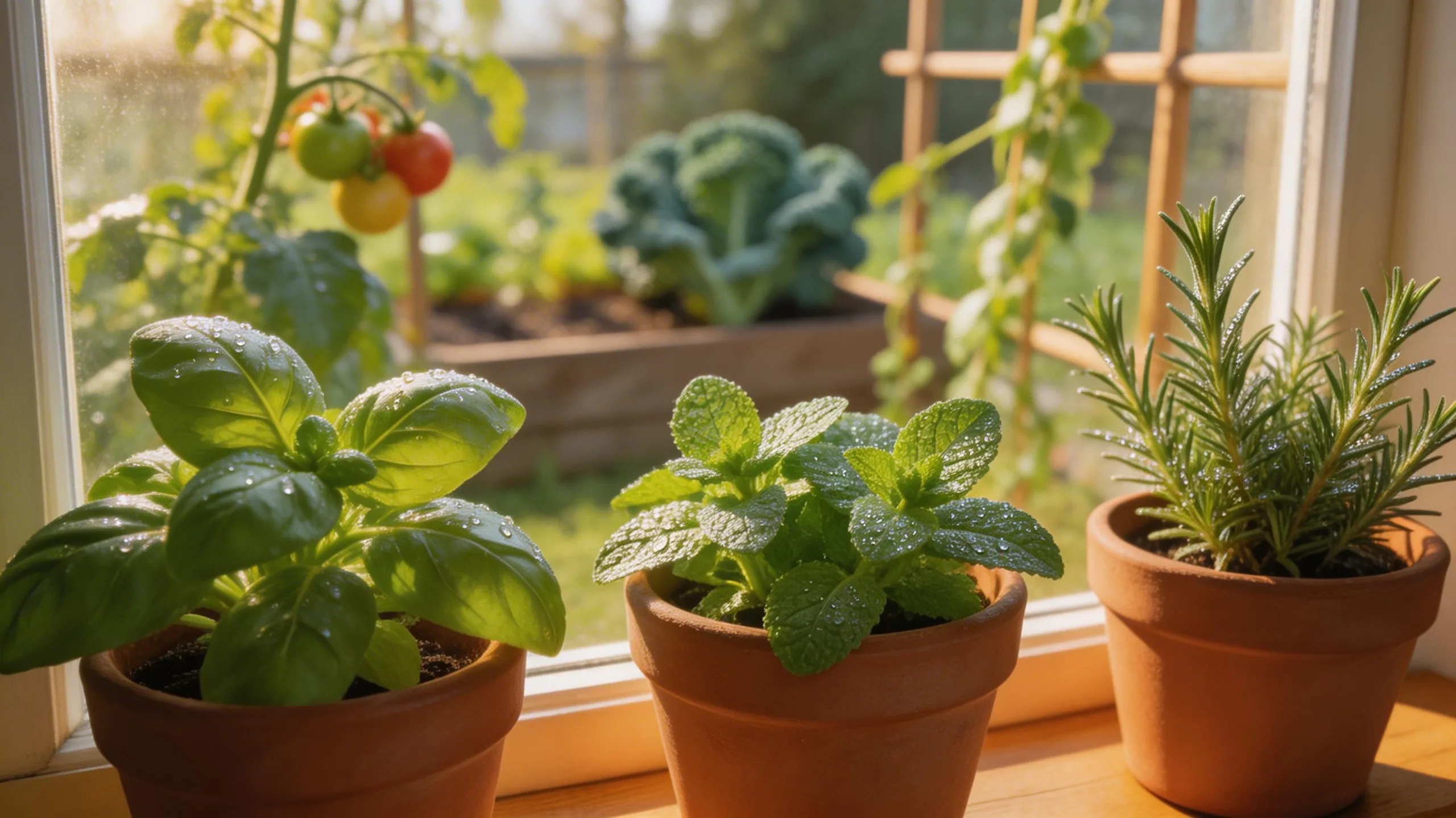
While a salad table brings greens to your back door, a kitchen window herb garden keeps flavors within arm’s reach. You’ll snip fresh herbs right into your cooking pot, transforming everyday meals.
Start with a sunny sill and a container that has drainage holes. Fill it with a quality potting mix, not garden soil, to ensure healthy roots. Choose compact, frequently used herbs like basil, thyme, and parsley for your first attempt. Water them only when the top inch of soil feels dry to your touch.
- Maximize your harvest by pinching off the tips of stems regularly; this encourages bushier growth and prevents flowering.
- Ensure sufficient light by placing herbs in a south or west-facing window where they’ll get at least six hours of sunlight daily.
- Boost flavor and growth with a monthly feeding of a balanced, water-soluble organic fertilizer to keep plants vibrant.
Use Trellises for Climbing Vegetables
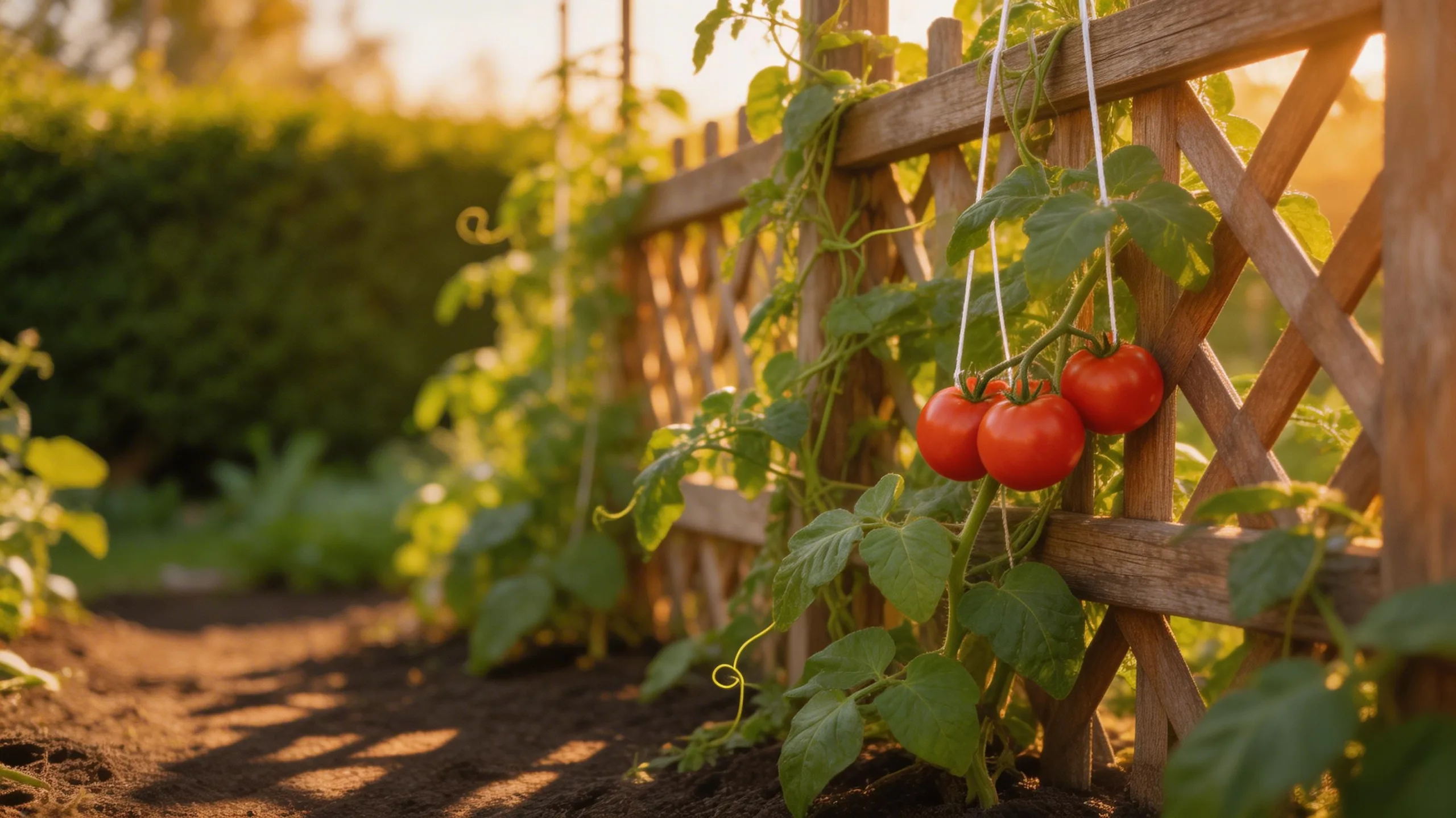
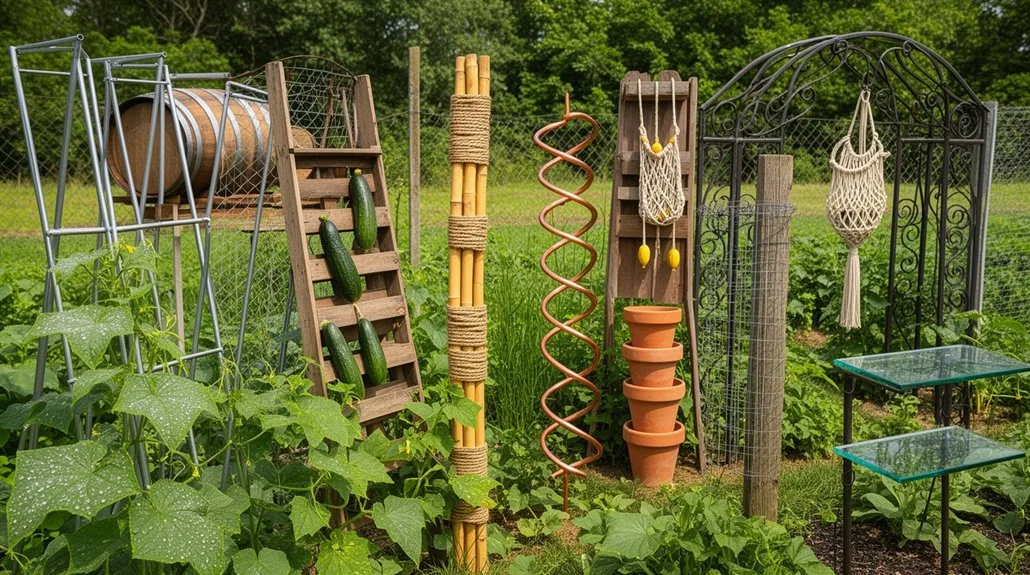
Take your vegetable garden vertical by adding trellises for climbing plants like cucumbers, peas, and pole beans. You’ll save valuable ground space, improve air circulation to reduce disease, and make harvesting much easier.
Install a simple A-frame, a sturdy wall panel, or even just a few tall stakes with twine strung between them. Position your trellis on the north side of your garden bed so it doesn’t shade smaller plants.
You’ll need to gently train young vines onto the support; they’ll quickly grab hold with their tendrils. For heavier fruits like melons, use slings made from old fabric to support them as they grow.
This simple structure maximizes your yield in a small footprint.
Design a Shade-Tolerant Garden
Just as trellises let you grow upwards, you can also make the most of shaded spaces by choosing plants that thrive without full sun.
First, assess your light; dappled shade or three to four hours of morning sun is ideal for many leafy crops. You’ll focus on vegetables where we eat the stems or leaves, not the fruit.
- Select the right varieties: Prioritize leafy greens like spinach, kale, Swiss chard, and lettuces. Herbs such as mint, parsley, and cilantro also perform well.
- Amend your soil: Since these plants won’t get intense sun, ensure your soil is rich with compost to provide ample nutrients for strong growth.
- Monitor moisture carefully: Shaded soil stays damp longer, so water less frequently to prevent root rot, but don’t let it dry out completely.
Grow Cut-and-Come-Again Vegetables
Maximizing your harvest doesn’t mean constantly reseeding; by growing cut-and-come-again vegetables, you’ll get multiple yields from a single planting.
You simply harvest the outer, older leaves while letting the younger center growth continue. This technique works perfectly for leafy greens like loose-leaf lettuce, kale, Swiss chard, and spinach.
You can also apply it to herbs such as cilantro, parsley, and basil; just snip stems above a leaf node.
Use sharp scissors or a knife for clean cuts that won’t damage the plant.
Start harvesting when plants are well-established, and they’ll often produce for weeks.
You’re creating a compact, productive patch that provides continual salads and garnishes from a small space.
Plan a Succession Planting Schedule
To keep your garden harvests abundant from spring through fall, you should plan a succession planting schedule, which involves timing new plantings to replace those that are finishing.
First, review each crop’s “days to maturity” on the seed packet. Then, map out your garden season on a calendar. You’ll maximize every square foot and avoid having empty beds.
- Stagger plantings of the same crop. Sow a short row of lettuce or radishes every two weeks instead of all at once for a continuous supply.
- Follow a fast crop with a slow one. After harvesting spring peas, you’ve got perfect space to plant summer tomatoes or peppers.
- Use seedlings to bridge the gap. Start your next round of broccoli or kale indoors so they’re ready to transplant the moment a spring bed empties.
Use Companion Planting for Pest Control
Harness the natural relationships between plants to defend your garden without chemicals. Companion planting works by using certain plants to repel pests, attract beneficial insects, or mask the scent of your vegetables.
For instance, you can interplant strong-smelling herbs like basil with your tomatoes to deter hornworms. Grow marigolds, especially French marigolds, near beans and squash; their roots release a substance that repels nematodes.
Dill and parsley attract predatory insects that eat common pests. Remember, spacing is key—don’t crowd your companions.
You’ll create a more resilient ecosystem, reducing your need for sprays. It’s a simple, effective strategy that leverages nature’s own defenses for a healthier, more productive plot.
Attract Pollinators to Boost Yields
Often, the secret to a more bountiful harvest isn’t just in the soil, but in the air—specifically, with the bees, butterflies, and other vital pollinators you can invite to your garden.
You’ll see a direct impact on crops like squash, cucumbers, and beans that depend on pollination to set fruit. Transform a corner into a pollinator pitstop with these simple strategies:
- Plant native, nectar-rich blooms like coneflower, bee balm, and lavender to provide a long season of food.
- Offer a shallow water source, such as a birdbath with stones for landing, so these helpful insects can drink safely.
- Reduce or eliminate pesticides, especially during peak bloom times, to protect the very creatures you’re trying to attract.
Grow a Pizza Garden With Tomatoes and Herbs
After attracting pollinators to boost your harvest, you can put those fresh vegetables to delicious use by growing a pizza garden. Dedicate a small, sunny plot to this culinary project. You’ll need determinate tomato varieties for a concentrated harvest, along with compact basil, oregano, and thyme. Plant them in rich, well-draining soil. The key is strategic spacing; give tomatoes cages for support and interplant herbs around them. You’ll be amazed how these companions enhance each other’s flavors and growth. Your reward is the unmatched taste of sun-warmed tomatoes and fragrant herbs, transforming your homemade pizza from ordinary to extraordinary.
| Garden Action | Culinary Reward |
|---|---|
| Prune tomato suckers | Concentrate flavor in remaining fruit |
| Pinch herb tips | Encourage bushier, more abundant growth |
| Water at the soil line | Prevent disease and develop robust roots |
| Harvest herbs in morning | Capture peak essential oils for potent taste |
| Allow tomatoes to fully ripen on vine | Achieve maximum sweetness and acidity |
Plant a Salsa Garden With Peppers and Cilantro
One of the easiest ways to enjoy garden-fresh flavor is by planting a salsa garden, combining crisp peppers and aromatic cilantro. You’ll need a sunny spot and well-draining soil.
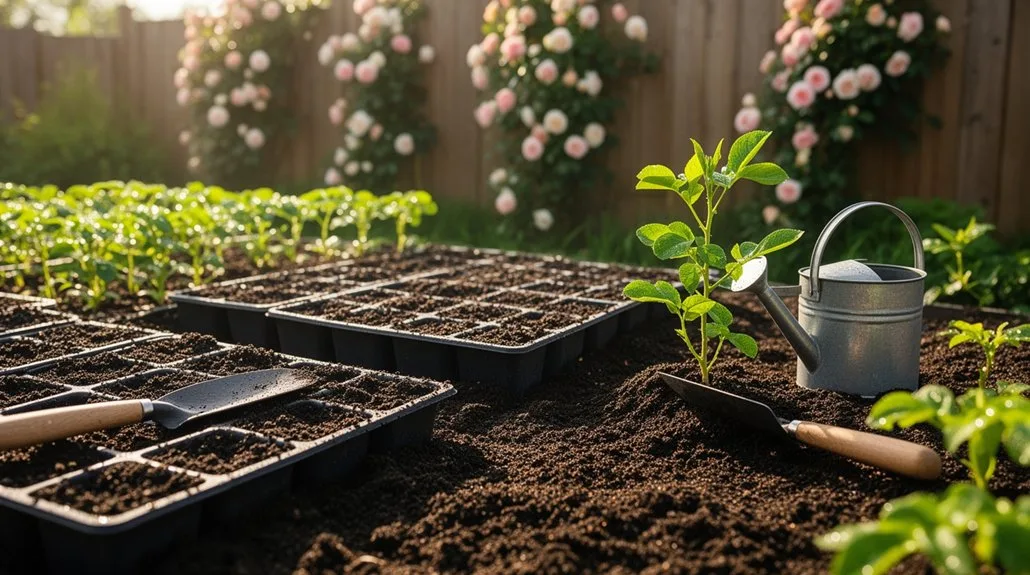
Start seeds indoors six weeks before your last frost, or buy young plants for a quicker harvest. Choose your pepper heat level, from sweet bells to fiery habaneros, and plant cilantro nearby for easy picking. Remember to space plants properly for good air circulation.
- Select your peppers: Grow a mix like jalapeños for heat, poblanos for roasting, and sweet cherry peppers for color.
- Sow cilantro successively: Plant seeds every two weeks to ensure a continuous harvest of fresh leaves throughout the season.
- Harvest at the right time: Pick peppers when they’re firm and fully colored. Cut cilantro stems before the plant bolts and turns bitter.
Build a Culinary Herb Spiral
Because a culinary herb spiral efficiently organizes several varieties in a compact, vertical space, it’s a perfect project for any kitchen gardener short on room.
You’ll start by mounding soil into a spiral-shaped berm, about two feet high at the center. Build it using a mix of topsoil and compost.
The design creates microclimates; plant sun-loving rosemary and thyme on the hot, dry, south-facing top.
Place moisture-craving parsley and cilantro midway down.
Locate shade-tolerant mint in the cool, northern base.
Use stones or bricks to retain the soil and add thermal mass.
This structure saves steps while harvesting, maximizes growing area, and gives you a beautiful, functional focal point packed with flavor just outside your door.
Create a Child-Friendly Garden
A culinary herb spiral brings sophisticated flavor close to your kitchen, but you can also cultivate a space for young gardeners to explore. Designate a small, clearly defined plot just for them with soft, loamy soil. Choose fast-growing, engaging plants that are easy to sow and harvest with little hands. You’ll create lasting memories and foster a love for growing food.
- Pick engaging crops: Focus on quick wins like radishes and snap peas, plus sensory plants like fuzzy lambs ear and towering sunflowers.
- Use child-sized tools: Invest in durable, lightweight tools like a small trowel, watering can, and gloves to empower their work.
- Incorporate playful elements: Add whimsical signage, painted rock markers, or a simple teepee made from pole bean vines.
Design a Whimsical Cottage-Style Garden
Although the orderly rows of a vegetable patch have their place, you can abandon that rigid structure to design a whimsical cottage-style garden where charm and a gentle sense of abundance reign.
Intermix your lettuces and herbs with vibrant edible flowers like nasturtiums and calendula, letting them spill over winding paths of wood chips or stone. Train climbing beans and peas up rustic, twiggy teepees instead of straight trellises. Tuck ruby-stemmed Swiss chard and frilly kale among flowering companions, and allow some parsley or dill to self-seed for a happily unplanned look. This approach prioritizes beauty and discovery over pure productivity, creating a lush, enchanting space where every harvest feels like a delightful surprise.
Frequently Asked Questions
What’s the Best Soil Mix for Raised Beds?
You want a mix of one-third compost, one-third topsoil, and one-third coarse sand or perlite. This creates a balanced, well-draining foundation. You’ll feed your plants and prevent waterlogged roots, giving them a perfect home.
How Do I Keep Squirrels Out of My Garden?
Try combining physical barriers with strong scents. Use wire cloches for seedlings and sprinkle cayenne pepper around plants. A motion-activated sprinkler also works well, as squirrels don’t like getting sprayed.
Which Vegetables Are Easiest for Total Beginners?
Start with radishes, lettuce, and bush beans. You’ll find them forgiving and fast. Just give them decent soil, regular water, and sun. You’ll harvest your own food before you know it.
How Often Should I Water Container Gardens?
Check soil daily. Stick your finger in; water when it’s dry an inch down. You’ll often water containers daily in hot sun. Remember, you want moist, not soggy, soil for your plants to thrive.
What Are Good Organic Fertilizers for Vegetables?
You’ll find that compost, worm castings, and fish emulsion work great. You can also try homemade options like diluted coffee grounds or banana peel water. They provide nutrients plants love without harsh chemicals.
Conclusion
Don’t let limited space or experience deter you! Start with just one of these ideas. You’ll find that growing your own food is a deeply rewarding cycle. Each season, you’ll learn more about your soil and sunlight, allowing you to expand and experiment. Soon, you’ll be harvesting continuous, fresh flavors right from your own creative and productive backyard haven.
The Only Tools You Need for a Thriving Garden 🌱
Whether you're a weekend gardener or growing daily — these hand-picked tools make every session faster, easier, and more satisfying.