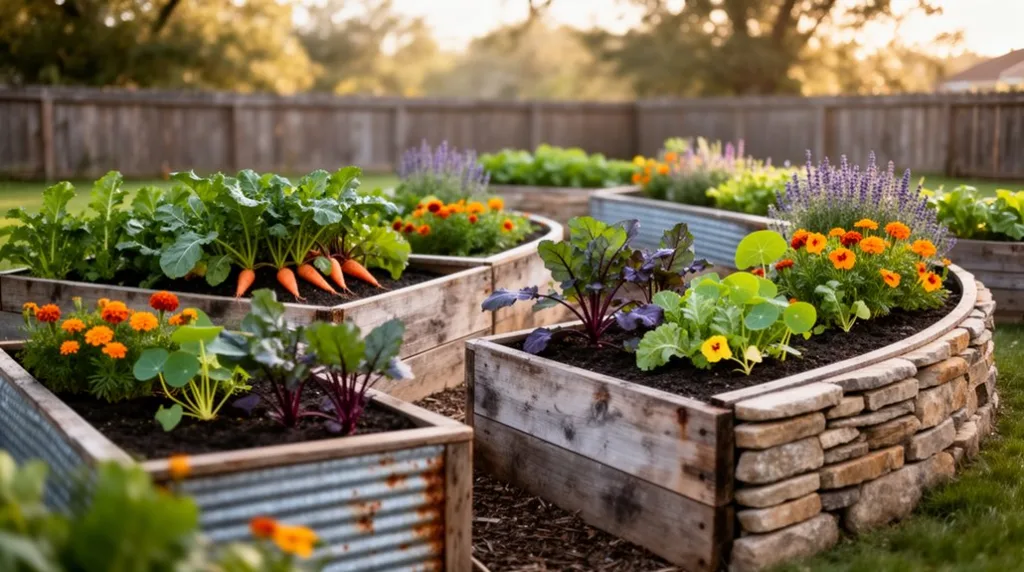
You’re probably wondering how to turn a modest backyard or balcony into a productive, low‑maintenance oasis. With a few basic materials—pallets, cedar planks, barrels, concrete blocks, or even straw bales—you can build raised beds that suit any space, soil type, or crop. Each design offers its own advantages, from easy drainage to vertical growing, and the right choice can save you time, money, and effort. The next step is to match the style to your garden’s needs and see which option fits best.
Key Takeaways
- Use repurposed pallets, cedar planks, or wine barrels for budget‑friendly raised beds that warm quickly for early vegetables and flowers.
- Incorporate drainage by lining beds with landscape fabric, drilling holes, or adding a gravel base to prevent waterlogging.
- Choose soil mixes tailored to bed depth: compost‑topsoil‑perlite for shallow trays, and a gravel‑then loamy compost‑perlite layer for deep barrel or log beds.
- Add vertical or tiered designs—stacked straw bales, concrete‑block towers, or fold‑down shelves—to maximize growing space in small gardens.
- Secure structures with galvanized brackets, stainless‑steel screws, and powder‑coated metal framing for durability and corrosion resistance.
Why Choose a Raised Garden Bed?
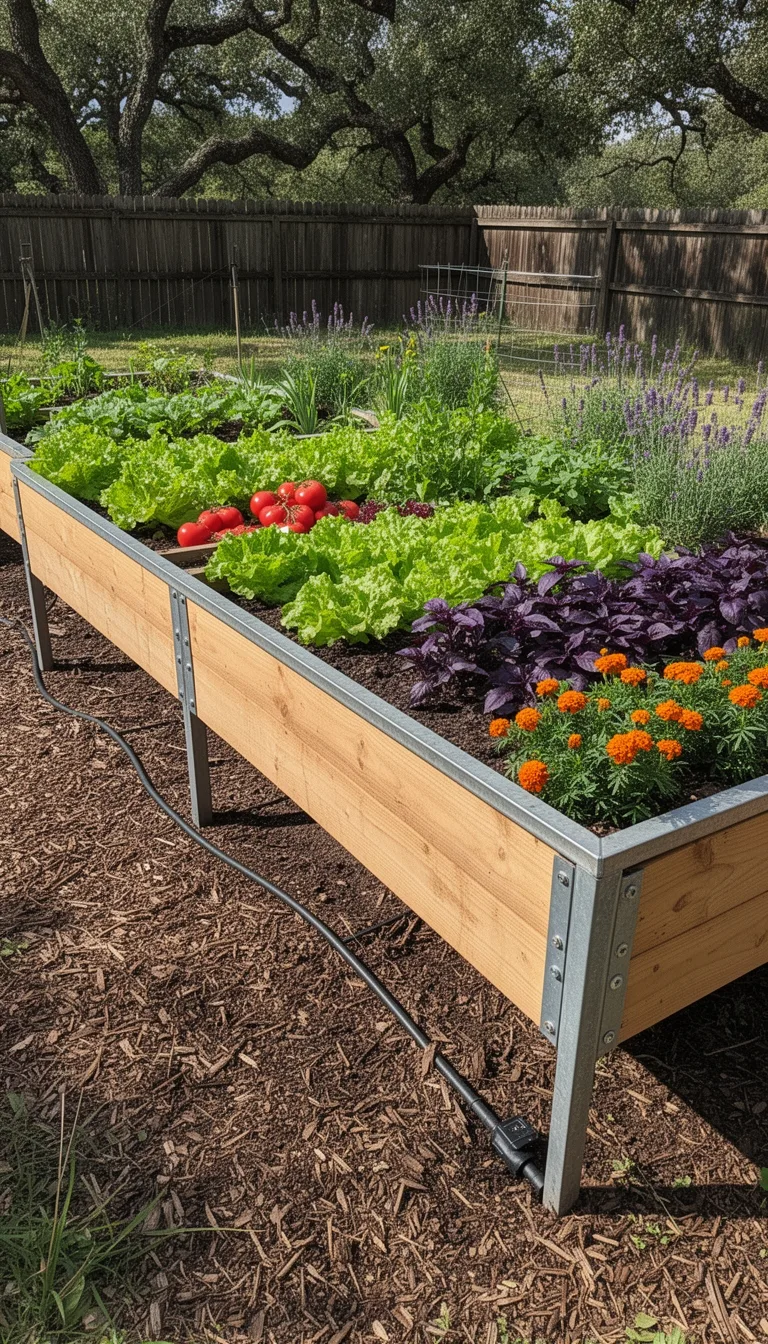
Because raised beds give you better control over soil quality, drainage, and weed pressure, you’ll grow healthier plants with less effort.
You can fill the frame with a custom mix of compost, peat, and perlite, ensuring optimal texture and nutrient balance. Water drains evenly, preventing root rot, while the elevated height reduces compaction and makes weeding quicker.
You’ll also enjoy a cleaner garden aesthetic; the defined borders keep soil from spilling onto pathways. The beds warm up faster in spring, extending your growing season and allowing early planting of cool‑season crops.
Easy Upcycled Pallet Raised Bed
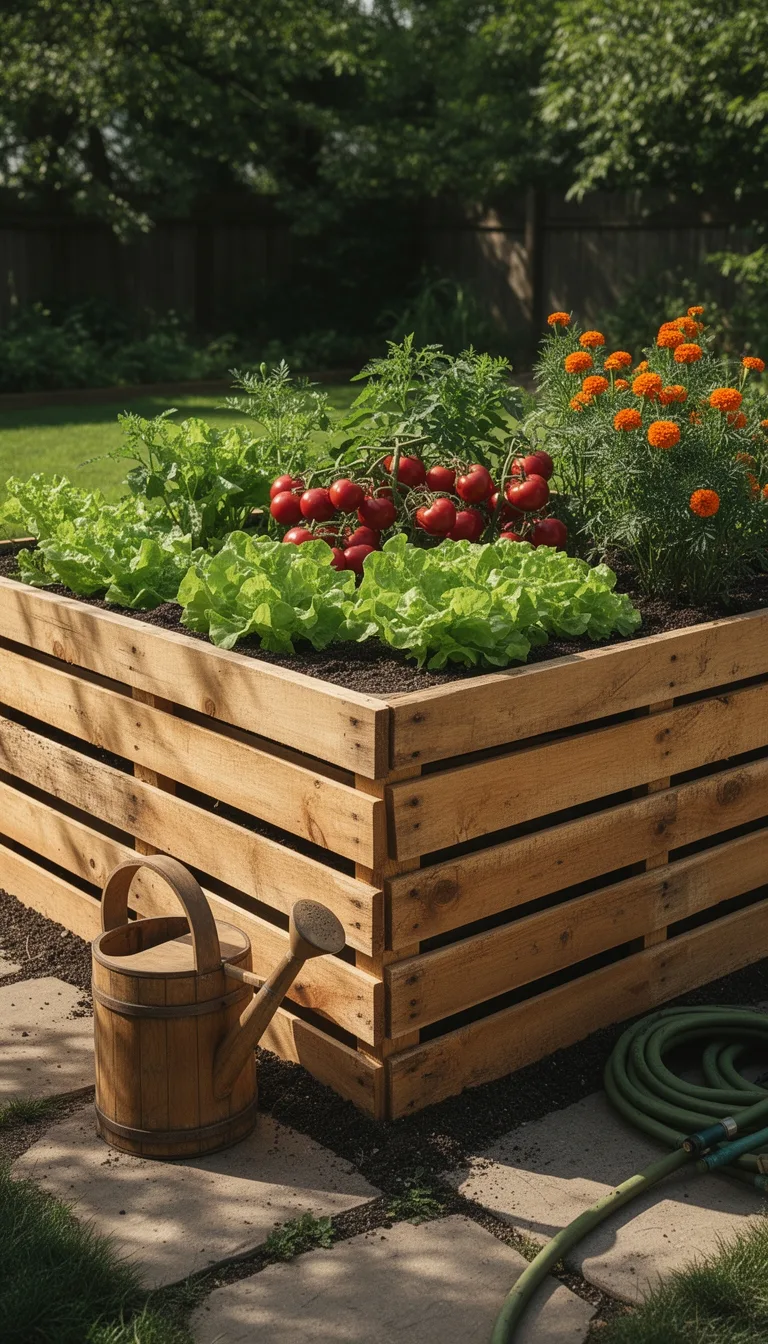
You can turn discarded pallets into a sturdy, budget‑friendly raised garden bed in just a few steps.
First, pick pallets that are heat‑treated (look for the “HT” stamp) and free of chemicals. Scrape away loose boards, then sand rough edges to protect your hands and plants.
Arrange three pallets side‑by‑side, secure them with galvanized brackets, and add a bottom layer of landscape fabric for drainage.
Fill the interior with a mix of compost, peat, and perlite, then plant your veggies or flowers.
- Foundation – a flat, weed‑free ground patch, compacted and leveled.
- Structure – three pallets stacked, bolted, and reinforced at corners.
- Soil – a nutrient‑rich, well‑draining blend, tamped lightly before planting.
Classic Cedar‑Plank Rectangle Bed
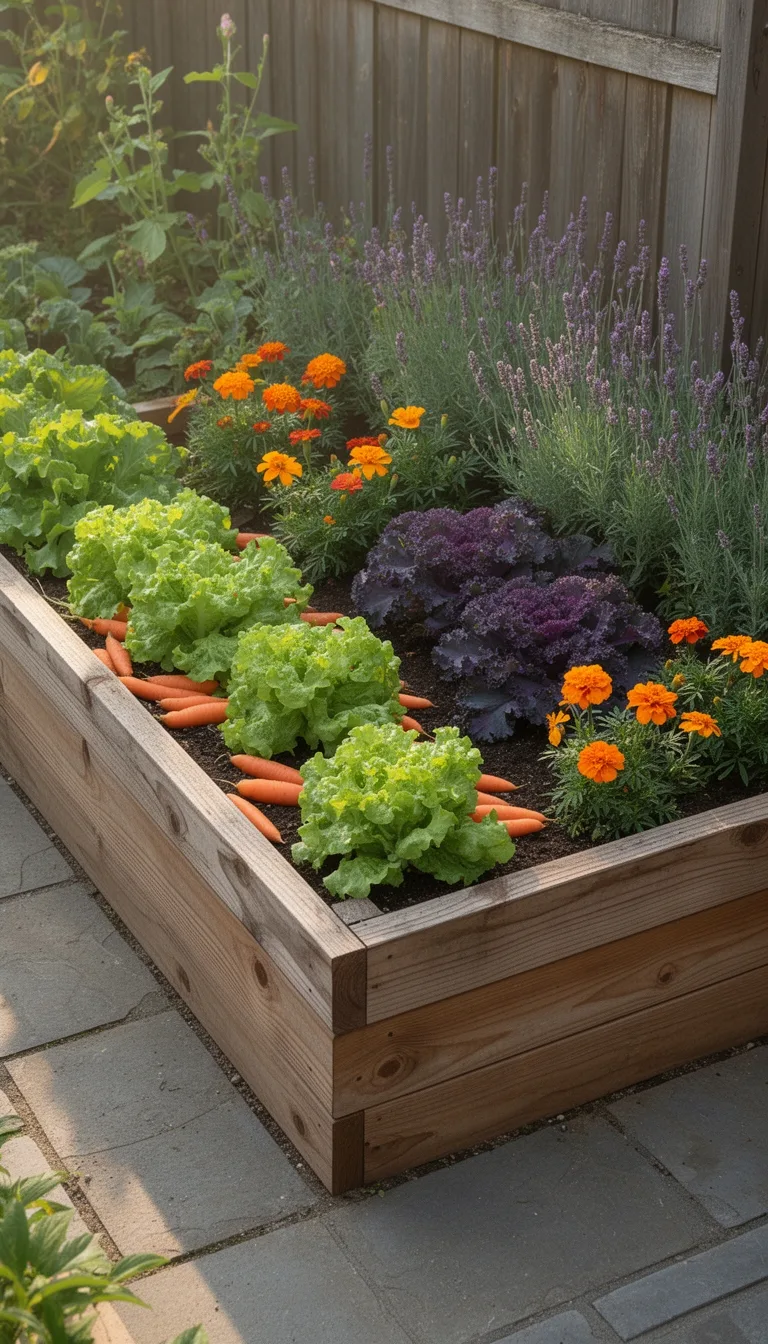
Build a classic cedar‑plank rectangle bed by laying out a level, weed‑free foundation, then assembling four 6‑foot cedar boards into a sturdy frame with galvanized brackets and stainless‑steel screws.
Cut the boards to exact dimensions, pre‑drill holes to prevent splitting, and secure each corner with two brackets for extra stability.
Lay a breathable landscape fabric inside, then fill the bed with a 60‑40 mix of compost and topsoil, tamping gently to eliminate air pockets. Water thoroughly before planting to settle the soil.
Space rows 12‑18 inches apart, allowing easy access for weeding and harvesting.
Maintain the cedar by applying a natural oil or sealant annually, extending its lifespan and preserving its resistance to rot and insects.
Rustic Log‑Cabin Style Raised Bed
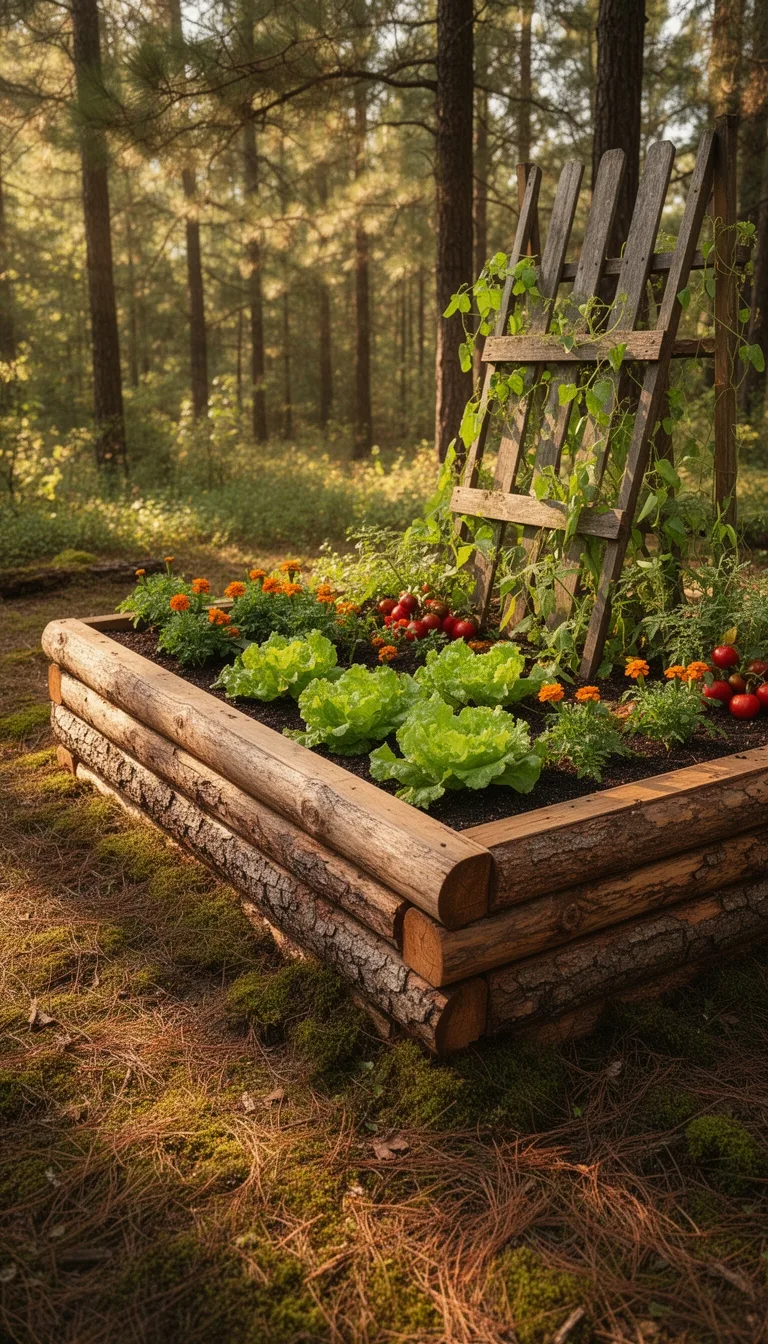
If you want a raised bed that feels like a miniature cabin, start by gathering sturdy, weather‑resistant logs and arranging them in a rectangular frame.
Cut each log to a uniform length, notch the corners for a tight joint, and secure with galvanized brackets.
Lay a weed‑blocking fabric inside, then fill with a mix of compost, topsoil, and sand.
Water thoroughly and plant your vegetables or flowers, letting the log walls retain heat and add rustic charm.
- Log selection – Choose cedar or pine, treat with a non‑toxic sealant.
- Corner joints – Notch and bolt for stability, ensuring no gaps.
- Soil layering – Add fabric, then a 12‑inch blend of compost, topsoil, and sand.
Concrete‑Block Tower Vertical Bed
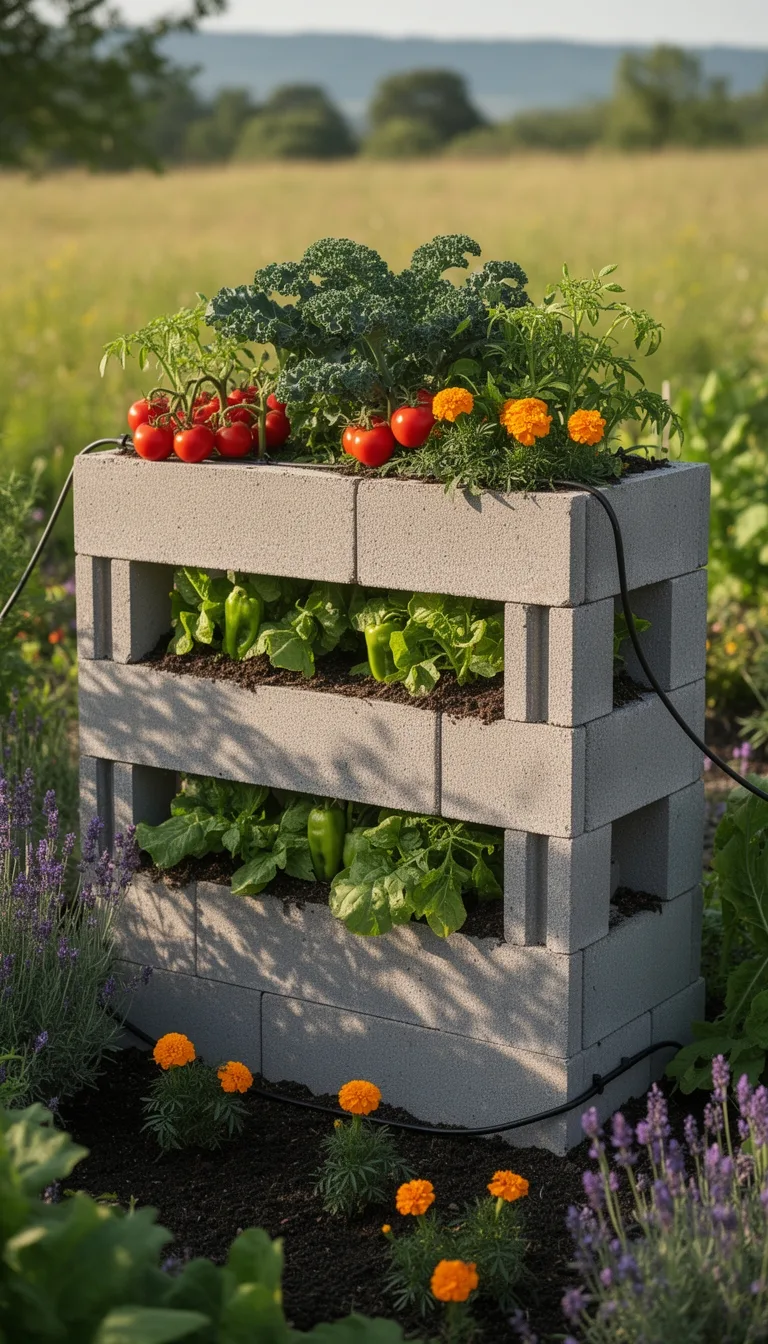
Stack sturdy concrete blocks into a vertical tower and you’ll instantly gain a space‑saving, high‑yield garden.
Choose standard 16‑inch blocks, stack them three to four high, and drill drainage holes in each layer.
Insert a 2‑inch PVC pipe through the center for water runoff, then fill the interior with a lightweight potting mix.
Plant fast‑growing veggies like lettuce, radishes, and herbs in the upper rows; place deeper‑rooted crops such as carrots or beets lower down where moisture stays higher.
Secure the base with a level concrete slab or compacted gravel to prevent tipping.
Water from the top, letting gravity feed the lower levels, and add a drip‑irrigation line for consistency.
This vertical design maximizes yield on patios, balconies, or small yards while keeping maintenance simple.
Compact Reclaimed‑Wood Crate Bed
A reclaimed‑wood crate makes a compact, ready‑to‑use garden bed that fits snugly on a balcony or patio. You’ll sand the interior, line it with landscape fabric, and fill it with a light, well‑draining mix. Choose dwarf varieties—herbs, lettuce, or cherry tomatoes—that thrive in shallow soil and give you a quick harvest. Position the crate where morning sun hits, and water with a drip‑irrigation hose to keep moisture even.
1. Weathered pine: deep, amber tones that soften with age,
a. Recycled metal hinges: sturdy, rust‑patina accents that secure the lid,
3. Terracotta saucers: sit under the crate to catch excess water and protect the floor.
This setup maximizes space, reduces waste, and delivers fresh produce within arm’s reach.
Circular Old‑Tire Raised Garden Bed
After the compact crate, you can repurpose old tires into a circular raised bed that fits neatly on a patio or garden corner.
First, gather two or three tires of the same size, clean them thoroughly, and stack them with the top tire slightly offset to create a stable dome. Fill the interior with a mix of compost, peat moss, and coarse sand in a 2:1:1 ratio for drainage and aeration.
Plant shallow‑rooted vegetables like lettuce, herbs, or dwarf tomatoes around the perimeter, leaving a central gap for a decorative mulch island. Water evenly, and add a drip‑irrigation line around the outer edge to conserve moisture.
The tire walls retain heat, extending the growing season for cool‑weather crops.
Deep‑Soil Wine‑Barrel Raised Bed
Transform a reclaimed wine barrel into a deep‑soil raised bed, and you’ll instantly gain a sturdy, moisture‑retaining container perfect for root‑heavy veggies and herbs.
First, cut the barrel in half and remove the metal hoops; sand the edges to avoid rust. Fill the bottom with a few inches of coarse gravel for drainage, then add a mix of compost, peat, and perlite for a loamy, deep‑root environment. Plant tomatoes, peppers, or rosemary, whose roots will thrive in the extra depth. Keep the barrel in a sunny spot, water evenly, and mulch to retain moisture.
- Gravel base – creates a drainage layer that prevents waterlogging.
- Rich soil blend – supports deep root growth and nutrient uptake.
- Mulch cover – conserves moisture and suppresses weeds.
Sleek Metal‑Frame Raised Bed
The wine‑barrel bed shows how a sturdy container can hold deep soil, and a metal‑frame raised bed takes that durability a step further with a sleek, modular design that’s easy to assemble and customize. You’ll love the quick‑connect brackets, rust‑proof coating, and the ability to swap panels for longer or shorter beds as your garden evolves. The frame holds soil steady, preventing bulging, while the open lattice improves drainage and aeration.
| Feature | Benefit |
|---|---|
| Adjustable length | Fit any garden space |
| Powder‑coat finish | Resists corrosion |
| Tool‑free assembly | Saves time and effort |
Choose this frame for vegetables that need deep roots and flowers that appreciate consistent moisture, and you’ll harvest more with less hassle.
Turn‑Around Garden‑Hose Reel Bed
Spin the hose reel into a sturdy, rotating base and you instantly get a compact, space‑saving garden bed that doubles as a watering system.
The reel’s metal frame becomes the bed’s perimeter; you fill the central cavity with soil, plant herbs or lettuce, and let the hose coil unwind as the bed turns.
Because the reel rotates, you can water any side without dragging hoses, keeping the area tidy and reducing wear on your garden tools.
You’ll also enjoy a visual focal point that moves with the wind, adding a playful element to your patio or backyard.
- Reel‑mounted frame – metal circle, 4‑foot diameter, rust‑proof coating.
- Soil chamber – 6‑inch deep, filled with compost mix, lined with landscape fabric.
- Rotating mechanism – ball‑bearing hub, smooth 360° spin, lockable position.
Multi‑Tier Bookshelf Raised Bed
Set up a multi‑tier bookshelf raised bed by stacking sturdy wooden shelves, each fitted with a shallow soil tray, so you can grow herbs, greens, and small vegetables on every level while keeping the footprint compact.
Choose 2‑by‑4 lumber, reinforce joints with metal brackets, and ensure each shelf is level to prevent water pooling.
Line trays with landscape fabric, then fill with a lightweight potting mix—about 2‑3 inches deep works for lettuce, basil, and radish.
Install a drip‑irrigation line at the top and let gravity feed lower tiers, saving water and time.
Position the unit near a sunny wall, but leave space for easy access to each level.
Rotate crops weekly to maintain soil health and maximize yields.
Insulated Straw‑Bale Raised Bed
A good insulated straw‑bale raised bed starts with tightly packed bales, a moisture‑proof liner, and a layer of straw‑bale that keeps heat in while protecting roots from freeze‑thaw cycles.
First, lay a heavy‑duty tarp or pond liner, then stack the bales, alternating orientation for stability.
Fill gaps with loose straw, then cover the top with another liner to seal moisture.
Plant your veggies or flowers directly into the straw, letting the bales act as natural insulation that releases heat slowly, extending the growing season.
- Tight bales – compact enough to hold shape, yet porous for airflow.
- Moisture‑proof liner – prevents waterlogging while allowing drainage.
- Straw layer – adds extra thermal mass and protects roots from temperature swings.
Waterproof Plastic‑Barrel Raised Bed
A 55‑gallon plastic barrel, cut in half and fitted with a sturdy wooden frame, becomes a waterproof raised bed that lets you grow veggies year‑round with minimal effort.
First, clean the barrel, remove any labels, and drill drainage holes 2‑3 inches apart near the bottom.
Next, line the interior with landscape fabric to keep soil from escaping while allowing water flow.
Fill the barrel with a mix of compost, peat moss, and vermiculite for drainage and fertility.
Position the bed where it receives 6‑8 hours of sunlight, then plant seedlings or sow seeds directly.
Water consistently, but the barrel’s sealed sides reduce evaporation, so you’ll water less often.
Add a mulch layer to retain moisture and suppress weeds.
When the season ends, simply empty the soil, rinse the barrel, and store it for next year.
Eco‑Friendly Composite Deck‑Board Bed
Switching from a plastic barrel to a composite deck‑board lets you build a sturdy, weather‑resistant raised bed that blends seamlessly with a patio or deck.
The material resists rot, insects, and UV, so you won’t need to replace it for years.
You can cut the boards to any length, drill drainage holes, and line the interior with a fabric liner for extra moisture control.
The sleek, natural finish looks professional and can be painted to match existing outdoor décor.
- Cut‑to‑size boards – visualize precise, clean edges that snap together without gaps.
- Drill drainage holes – picture a uniform pattern that lets excess water escape while keeping soil in place.
- Install a liner – imagine a breathable fabric that protects the composite while allowing roots to breathe.
Fold‑Down Portable Raised Bed for Small Spaces
Fold the frame flat, then lift it into position when you need a garden, and you’ll have a compact, portable raised bed that fits tight balconies or tiny patios. Choose lightweight aluminum or cedar slats, hinge them for quick folding, and attach a removable fabric liner that slides in like a tray. When you’re done, fold the slats back, lock the hinges, and store the bed in a closet or garage. The design lets you swap soil mixes, rotate crops, and keep weeds out without permanent construction.
| Height | Width | Depth |
|---|---|---|
| 12 in | 24 in | 24 in |
| 18 in | 30 in | 30 in |
| 24 in | 36 in | 36 in |
Follow the simple steps, and you’ll enjoy fresh produce even in the smallest urban nook.
Conclusion
You’ve got a toolbox of options, from upcycled pallets to sturdy cedar rectangles and space‑saving vertical towers. Pick the style that fits your yard, budget, and crops, then level the base, use galvanized fasteners, add a breathable liner, and fill with the right soil mix. Install drip irrigation, seal or sand wood edges, and you’ll enjoy a durable, productive garden that thrives year after year.
The Only Tools You Need for a Thriving Garden 🌱
Whether you're a weekend gardener or growing daily — these hand-picked tools make every session faster, easier, and more satisfying.