Struggling with low yields or pest problems? Your garden’s layout might be the culprit. A smart design does more than look neat—it directly fuels your harvest. By mastering a few foundational principles, you can transform any space into a highly productive system. Let’s explore how the right arrangement of plants, paths, and supports solves common frustrations and unlocks your garden’s true potential.
Key Takeaways
- Prioritize a sunny location with at least 6–8 hours of direct sunlight daily for most vegetables.
- Choose a layout style matching your space, like raised beds for control or vertical gardening for small areas.
- Group plants with similar water and sunlight needs together to simplify care and reduce stress.
- Design permanent, accessible pathways between planting areas to prevent soil compaction during maintenance.
- Use trellises and interplanting to maximize yield, improve air circulation, and naturally deter pests.
Solve Your Garden Problems With a Smart Layout
Since even the most vibrant plants can struggle in a poorly planned space, designing a smart layout is the first critical step toward solving common issues like poor yield, disease, and pest pressure. Think of it as preventative medicine for your garden.
You’ll directly tackle problems by ensuring each plant gets the sunlight it craves. Proper spacing becomes your secret weapon, allowing vital air circulation to dry leaves and thwart fungal diseases before they start.
A considered plan also lets you group plants with similar water needs, preventing over or under-watering stress. You can strategically place sacrificial plants to lure pests away from your prized vegetables.
This proactive approach saves you countless hours of reactive troubleshooting later.
3 Foundational Principles for a Productive Garden Layout
Whether you’re sketching your first garden on a napkin or revamping an established plot, a truly productive layout is built on a few key principles you can’t afford to ignore.
First, prioritize sunlight; most vegetables need a solid six to eight hours of direct sun daily, so analyze your space’s exposure before planting a single seed.
Next, master plant spacing; overcrowding stifles growth and invites disease, while proper air circulation promotes health.
Always consider your access; you need clear paths to water, weed, and harvest without compacting your precious soil.
Finally, practice crop rotation by grouping plant families and moving them yearly; this prevents soil depletion and disrupts pest life cycles, ensuring long-term vitality.
Compare 4 Essential Vegetable Garden Layout Styles
| Layout Style | Best For | Core Advantage |
|---|---|---|
| Row Garden | Large, traditional plots | Simple access and cultivation |
| Raised Beds | Improved soil & drainage | Intensive planting in controlled soil |
| Square Foot | Small, organized spaces | Maximizes yield per square foot |
Plan a Simple and Efficient Row Garden Layout
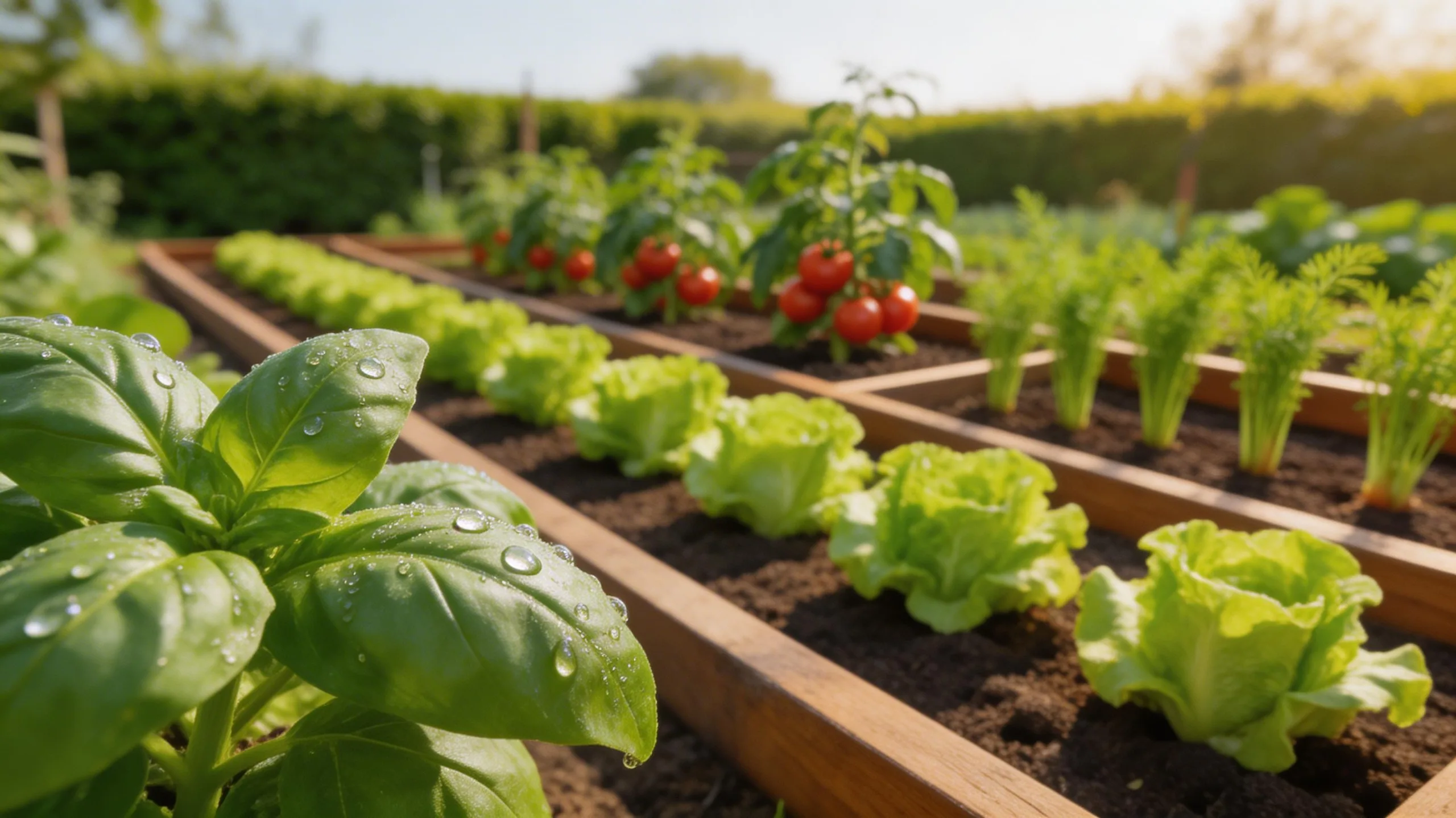
To plan a simple and efficient row garden, start by choosing a flat, sunny site and marking straight, parallel rows running north to south. This orientation maximizes sunlight exposure for all your plants.
Keep your rows wide enough for easy walking and maintenance—about 18 to 24 inches apart is ideal. Plant your seeds or transplants in straight lines within each row, grouping similar vegetables together for streamlined care.
You’ll efficiently manage watering, weeding, and harvesting by moving easily between these clear pathways. This classic layout makes your garden tasks logical and straightforward, letting you focus on the joy of growing.
It’s a timeless, productive method that turns your plot into an orderly and bountiful space.
Build a High-Yield Square Foot Garden Layout

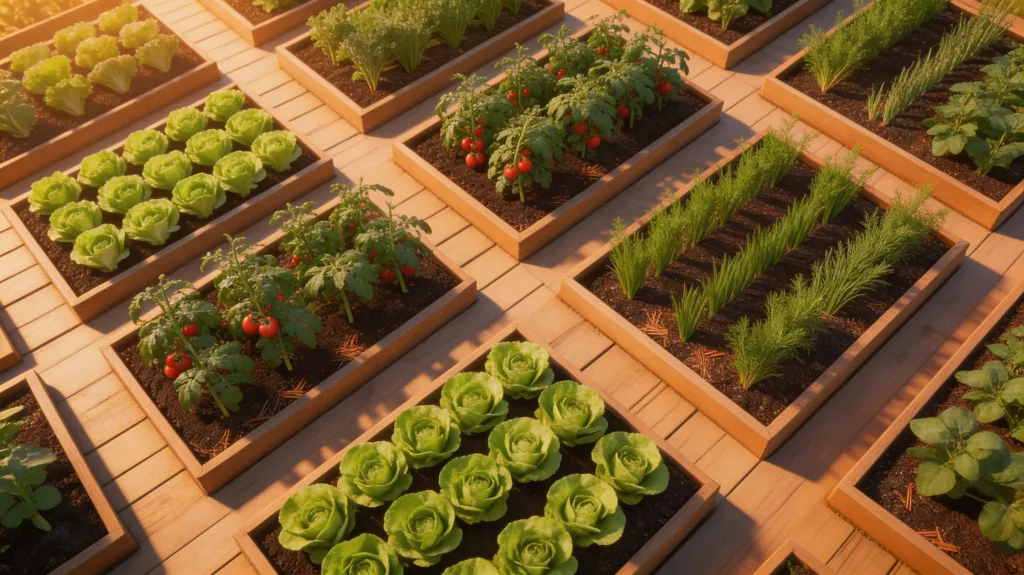
Imagine boosting your harvest by dividing your garden space into a grid of one-foot squares, each dedicated to a specific vegetable.
You’ll build a raised frame, fill it with a perfect soil mix, and snap string to define your grid.
Instead of long rows, you’ll plant intensively within each square.
Follow the seed packet’s spacing guidelines to determine how many plants fit per square—one broccoli, four lettuce, or sixteen carrots.
This method eliminates wasteful gaps, suppresses weeds, and maximizes yield.
You’ll water efficiently and can easily reach every plant for maintenance.
By rotating crops yearly within your squares, you’ll prevent disease and keep your soil vibrant.
It’s a systematic, space-maximizing approach that delivers astonishing results from a compact area.
Create a Small-Space Layout With Vertical and Container Gardening
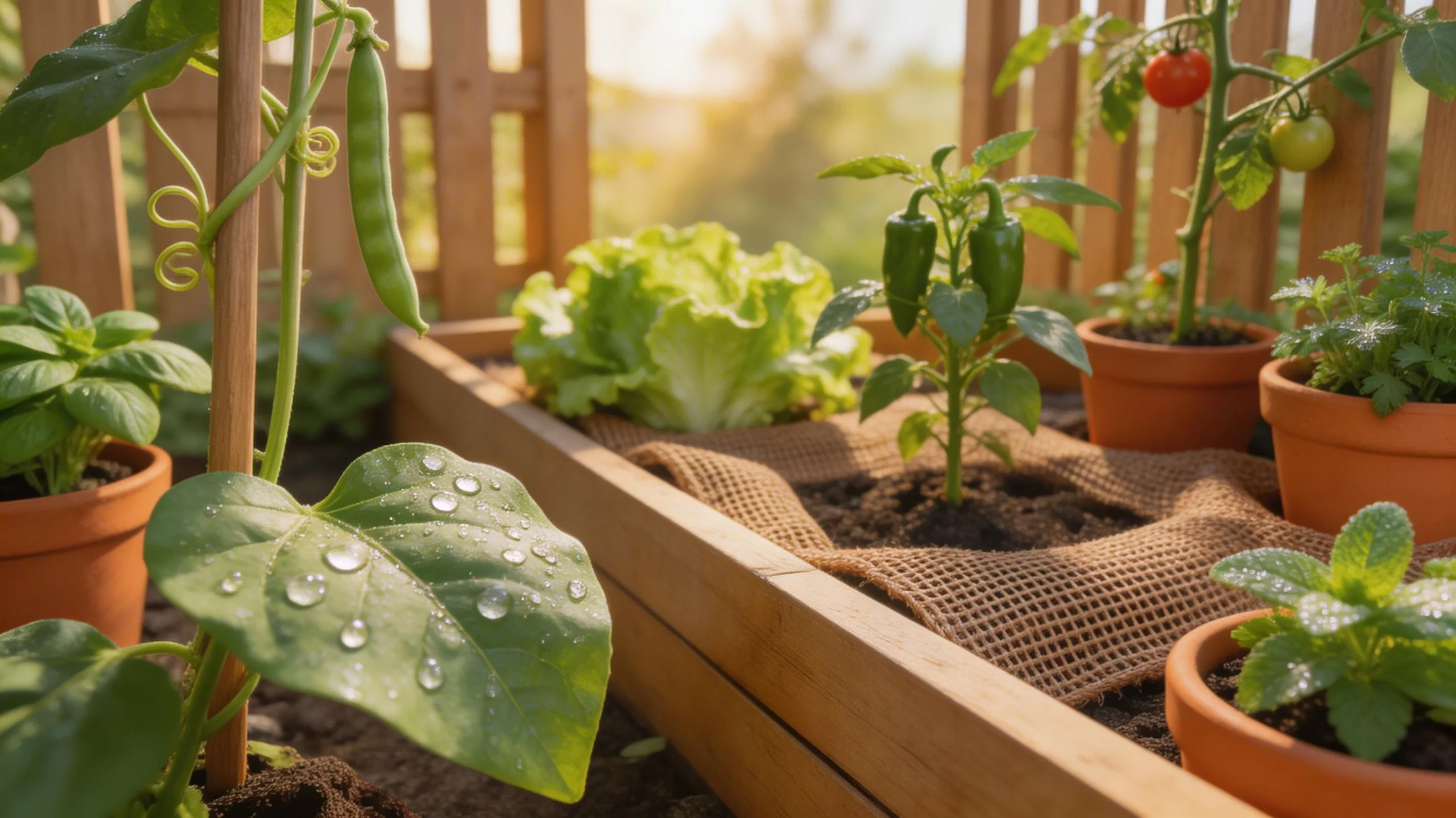
Even when you’re tight on square footage, you can still grow up a storm by embracing vertical and container gardening. This approach turns walls, railings, and balconies into productive spaces. You’ll maximize your yield by letting vining crops like tomatoes and beans climb upwards on simple structures, freeing ground space for shallow-rooted plants.
Simultaneously, you’ll cultivate herbs, lettuces, and even compact peppers in pots, crates, and hanging baskets. The key is matching plant needs to container depth and leveraging every vertical plane.
- Defy Ground Limits: Train cucumbers up a nylon net or let strawberries cascade from a stacked tower, fundamentally redefining your “garden” as a three-dimensional volume.
- Master Mobility: Use containers to move plants into optimal sun throughout the day or shield them from harsh weather, granting you control impossible in a fixed bed.
- Curate Your Soil: Tailor the potting mix in each container to its specific crop—airy blend for carrots, rich compost for kale—ensuring perfect growing conditions from the start.
Add Pathways and Trellises for Structure and Support

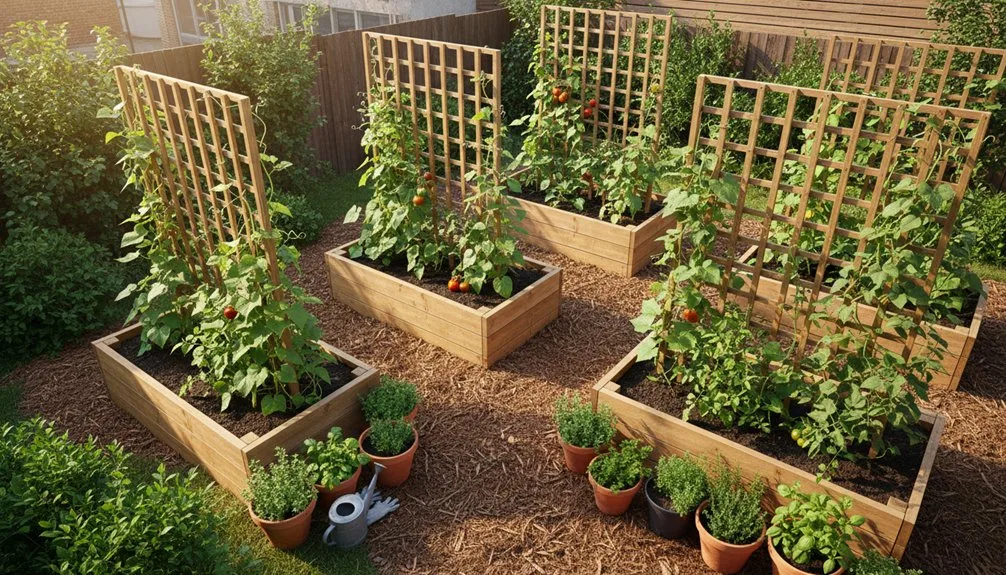
While your plants are thriving, a well-planned layout needs to consider your access and their support. Install permanent pathways first. You’ll use durable materials like wood chips or gravel for main walkways, keeping them at least 18 inches wide so you can comfortably kneel and tend your crops. This prevents soil compaction around your precious plants.
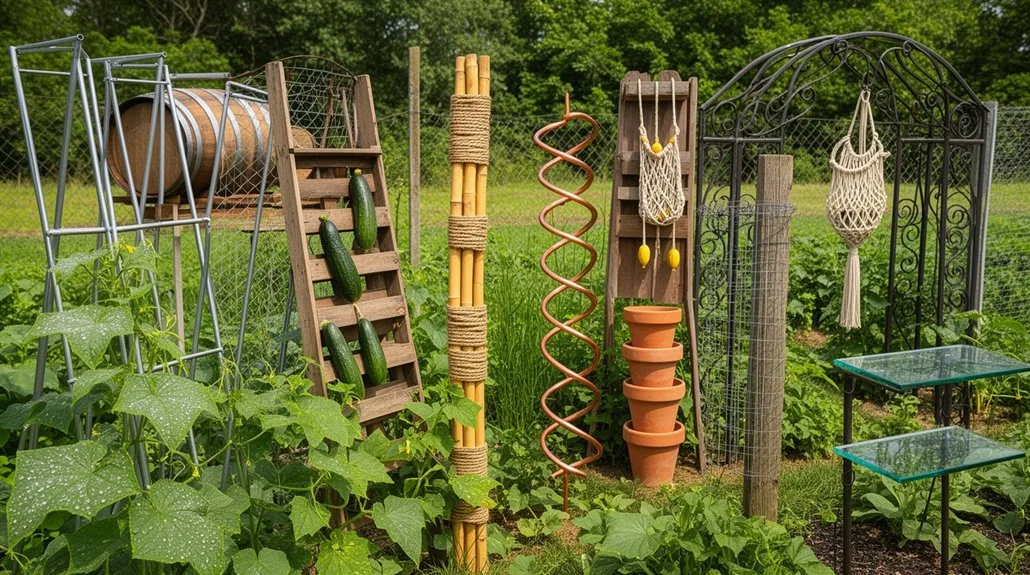
Then, erect sturdy trellises and stakes for vining vegetables like tomatoes, cucumbers, and pole beans. Training them upwards saves immense space, improves air circulation to reduce disease, and makes harvesting a breeze. You’re creating a living architecture that maximizes sunlight exposure for every leaf. This structural framework isn’t just practical; it’s the skeleton of a truly productive and beautiful garden.
Boost Your Harvest With Interplanting and Companion Planting

This structural framework you’ve built becomes even more powerful when you fill it with plants that actively help each other grow. Interplanting lets you layer fast-growing crops between slower ones, maximizing every inch. Companion planting pairs specific vegetables, herbs, and flowers to create a living support system. They’ll deter pests, attract pollinators, and improve growth, turning your garden into a synergistic ecosystem.
- Defend Naturally: Pair basil with tomatoes to repel flies, or let marigolds protect your squash from nematodes.
- Share Space Wisely: Sow quick lettuce around young broccoli; harvest it before the brassicas need the full space.
- Nourish the Soil: Beans fix nitrogen in the earth, providing a vital nutrient boost for neighboring corn or leafy greens.
Maintain Your Soil With a Simple Crop Rotation Plan

Since you’re already working with companion planting, you can protect your soil’s long-term health by adding a simple crop rotation plan to your routine. It prevents nutrient depletion and disrupts pest and disease cycles, boosting your garden’s resilience. You don’t need a complex system; just avoid planting the same crop family in the same bed year after year. Track your plantings and rotate groups through your garden beds over a three-year cycle.
| Year One Bed | Year Two Bed |
|---|---|
| Legumes (Peas/Beans) | Leafy Greens (Lettuce/Kale) |
| Leafy Greens (Lettuce/Kale) | Fruiting Crops (Tomatoes/Peppers) |
| Fruiting Crops (Tomatoes/Peppers) | Legumes (Peas/Beans) |
This rotation naturally replenishes nitrogen and manages soil-borne issues, ensuring your soil stays vibrant and productive for seasons to come.
Frequently Asked Questions
How Much Time Does Each Layout Style Require Weekly?
You’ll dedicate weekly time based on your style: simple rows might need 2 hours, while intensive raised beds demand 4+ hours for close monitoring and dense planting, which you’ll manage efficiently.
What Are the Exact Sunlight Hours Needed for Each Vegetable?
You need at least six hours for sun-lovers like tomatoes and peppers. Aim for four to six for leafy greens, but check your seed packets as each plant’s needs differ for peak flavor and yield.
Can I Mix These Layout Styles in One Garden?
Yes, you can absolutely mix layout styles. Just group plants with similar sun needs from your previous plan, and ensure you’re not overcrowding. This lets you maximize your unique space for a wonderfully diverse and productive harvest.
Which Layouts Are Best for Renters or Temporary Gardens?
Use container, vertical, or portable raised bed layouts. You’ll maximize limited space with movable pots. Focus on herbs and fast-growing veggies. You can take everything with you if you have to relocate.
What Is the Estimated Startup Cost for Each Garden Type?
Startup costs vary widely. You’ll spend $50-$100 for container gardens, $200-$500 for raised beds, and $1,000+ for in-ground plots. Your biggest expenses are soil, lumber, and quality seeds or starter plants.
Conclusion
Your perfect garden layout is the ultimate tool. You’ll solve space and pest issues, boost yields, and simplify care. Put your plan into action—build those beds, lay the paths, and plant your companions. Now get outside, get your hands dirty, and watch your thoughtful design transform into an abundant, thriving harvest. You’ve got this.
The Only Tools You Need for a Thriving Garden 🌱
Whether you're a weekend gardener or growing daily — these hand-picked tools make every session faster, easier, and more satisfying.