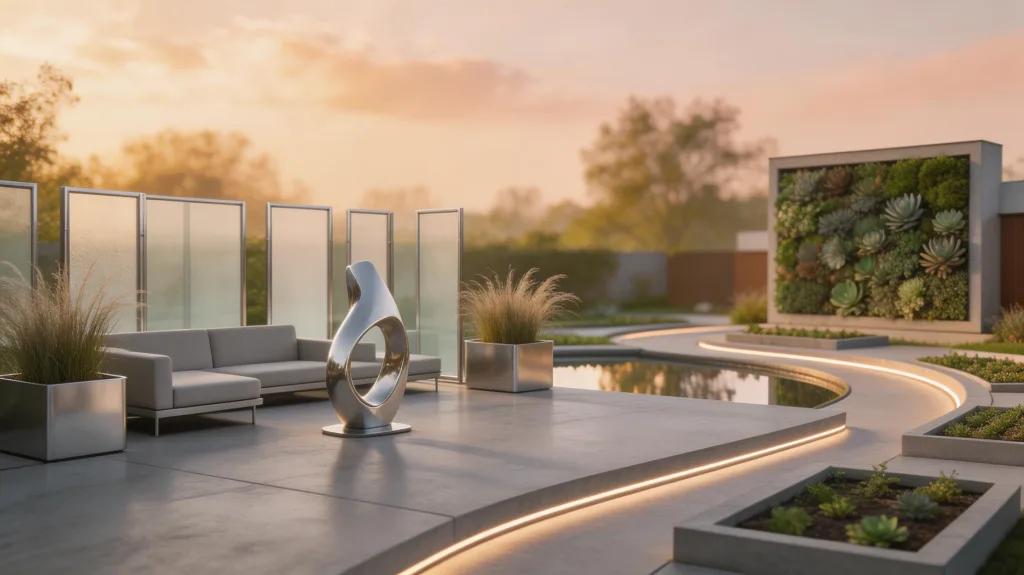
You’re envisioning a backyard where drought‑tolerant natives and sculptural succulents replace thirsty turf. Your palette focuses on two or three colors, repeated in sleek porcelain pavers and timber planters. This restraint creates cohesion, but how do you layer lighting or select the right creeping sedge? The following ideas transform these principles into a low‑maintenance, living design that awaits your interpretation.
Key Takeaways
- Replace traditional lawns with low‑water groundcovers like creeping thyme or clover for a clean, low‑maintenance look.
- Define crisp geometric spaces using linear pavers, gravel beds, and low boxwood hedges for a structured layout.
- Install a minimalist water feature with a sharp weir for a reflective surface and tranquil sound without excess spray.
- Select a limited plant palette of drought‑tolerant, textural plants like ornamental grasses and succulents for year‑round interest.
- Use focused LED lighting to graze architectural plants and illuminate paths, creating dramatic evening ambiance.
Start With a Minimalist Garden Philosophy
Grasp minimalist gardening by adopting a deliberate mindset where every element earns its place. You’ll begin by critically assessing your existing landscape, removing anything that doesn’t serve a clear purpose.
Focus on selecting a limited palette of plants that provide structure and year-round interest. Choose durable, textural specimens like ornamental grasses like ‘Karl Foerster’ Feather Reed Grass or the sculptural blades of Yucca filamentosa.
Prioritize native, drought-tolerant species like Sedum ‘Autumn Joy’ or Lavender to reduce water use and support local ecology. You’re not just planting; you’re curating.
Every tree, shrub, and paving stone must contribute to a cohesive, serene environment. This philosophy naturally leads to lower maintenance and a more resilient, impactful garden.
Define Spaces With Clean Geometric Shapes
Transitioning from a minimalist philosophy, you’ll now shape your garden by establishing clear boundaries with crisp lines and deliberate forms. Use low, horizontal boxwood hedges to outline rectangular gravel beds or define a serene Zen quadrant.
You can create a striking central axis with a linear path of rectangular stone pavers, flanked by uniform rows of drought-tolerant blue fescue or liriope. Consider geometric raised beds, built from sustainably sourced timber or recycled composite, to cultivate your culinary herbs in organized squares.
These defined shapes bring order, making the space feel intentional and calm. You’re not just planting; you’re architecting an outdoor room where every element, from paving to planting, contributes to a cohesive, structured landscape.
Limit Your Modern Garden Color Palette

While the clean lines of your hardscape establish structure, it’s your plant selection that can either reinforce that modern tranquility or disrupt it with visual noise. Limit your palette to two or three dominant colors. Monochromatic schemes using varying textures of green, like the broad blades of Black Mondo grass against fine-leaved Blue Fescue, are profoundly calming.
Introduce restrained color with architectural plants like burgundy Cordyline or silvery artemisia. For blooms, select a single, repeating hue from sustainable perennials like white Gaura or purple salvia, which support pollinators. This discipline creates cohesion, letting you appreciate sculptural forms and the subtle interplay of light and shadow across foliage.
Choose Sleek, Contemporary Hardscape Materials

Your hardscape’s materials form the foundational bones of your design, setting a sleek, contemporary tone. Prioritize large-format, smooth pavers in porcelain or concrete for your walkways.
Their clean lines and uniform color create a minimalist canvas. Choose sustainably sourced natural stone, like honed basalt or dark slate, for a textured, organic counterpoint.
For edging and retaining walls, opt for smooth, dark-stained timber or precast concrete blocks. These materials provide structure for architectural plants like Phormium ‘Platt’s Black’ or linear clumps of Liriope muscari.
Source local, durable materials to reduce environmental impact; their longevity means less frequent replacement and a timeless aesthetic for your landscape.
Build a Modern Deck or Patio Platform
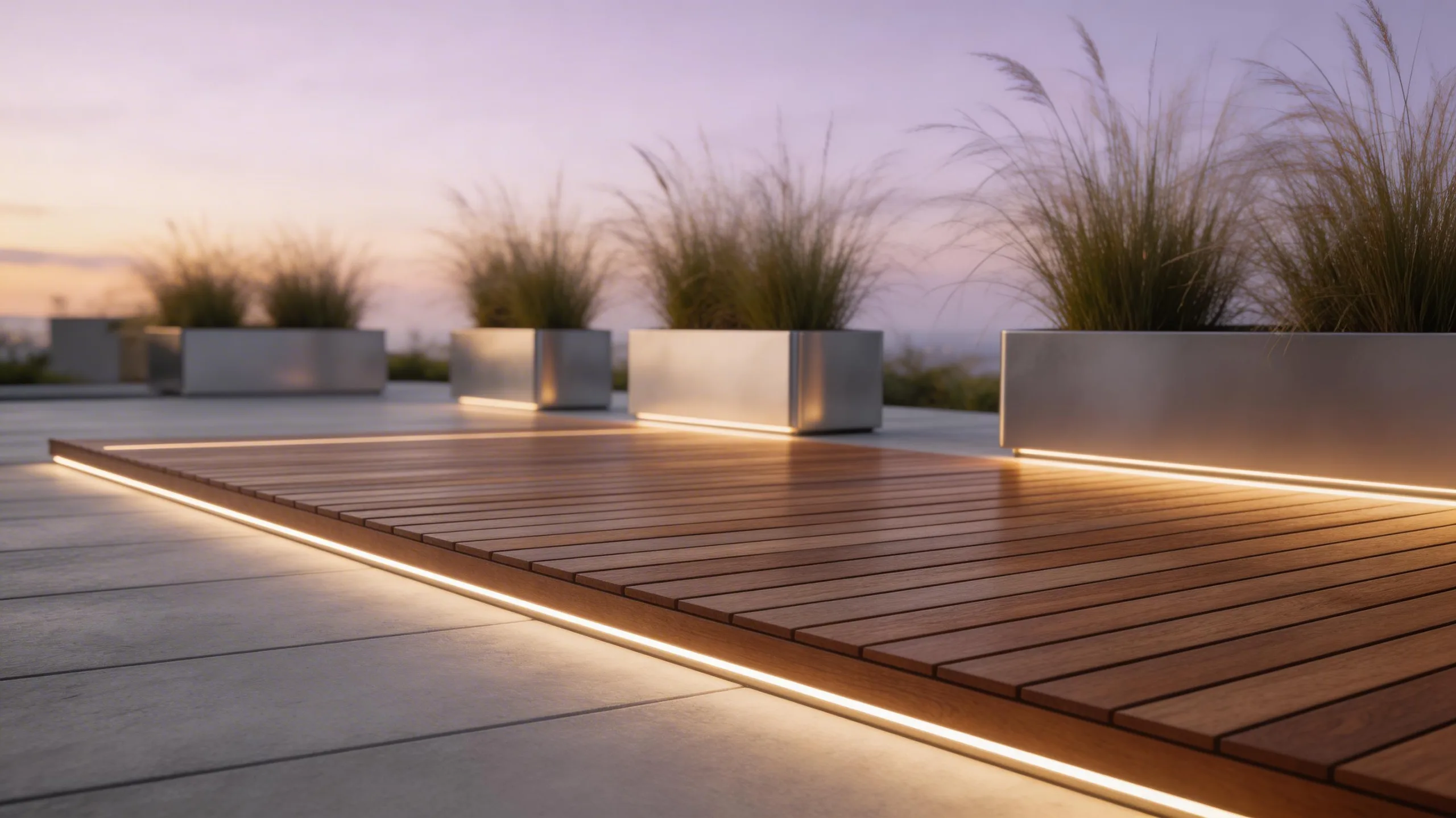
Elevate your living space by extending it outdoors onto a sleek, low-profile platform. Opt for a minimalist deck using composite materials or sustainably sourced, FSC-certified ipe wood, laid in a clean linear pattern. Flush-mount lighting or recessed LED strips within the platform’s edges will provide ambient illumination.
You can integrate your design with the landscape by creating deliberate planting pockets. For instance, surround a corner with low, structural clumps of blue fescue or allow trailing varieties of creeping thyme to soften the platform’s edges, spilling from narrow gaps between planks. This approach creates a seamless indoor-outdoor flow while respecting the garden’s ecosystem, reducing your project’s environmental footprint through material choice and integrating greenery.
Use Linear Hedges for Crisp Garden Borders
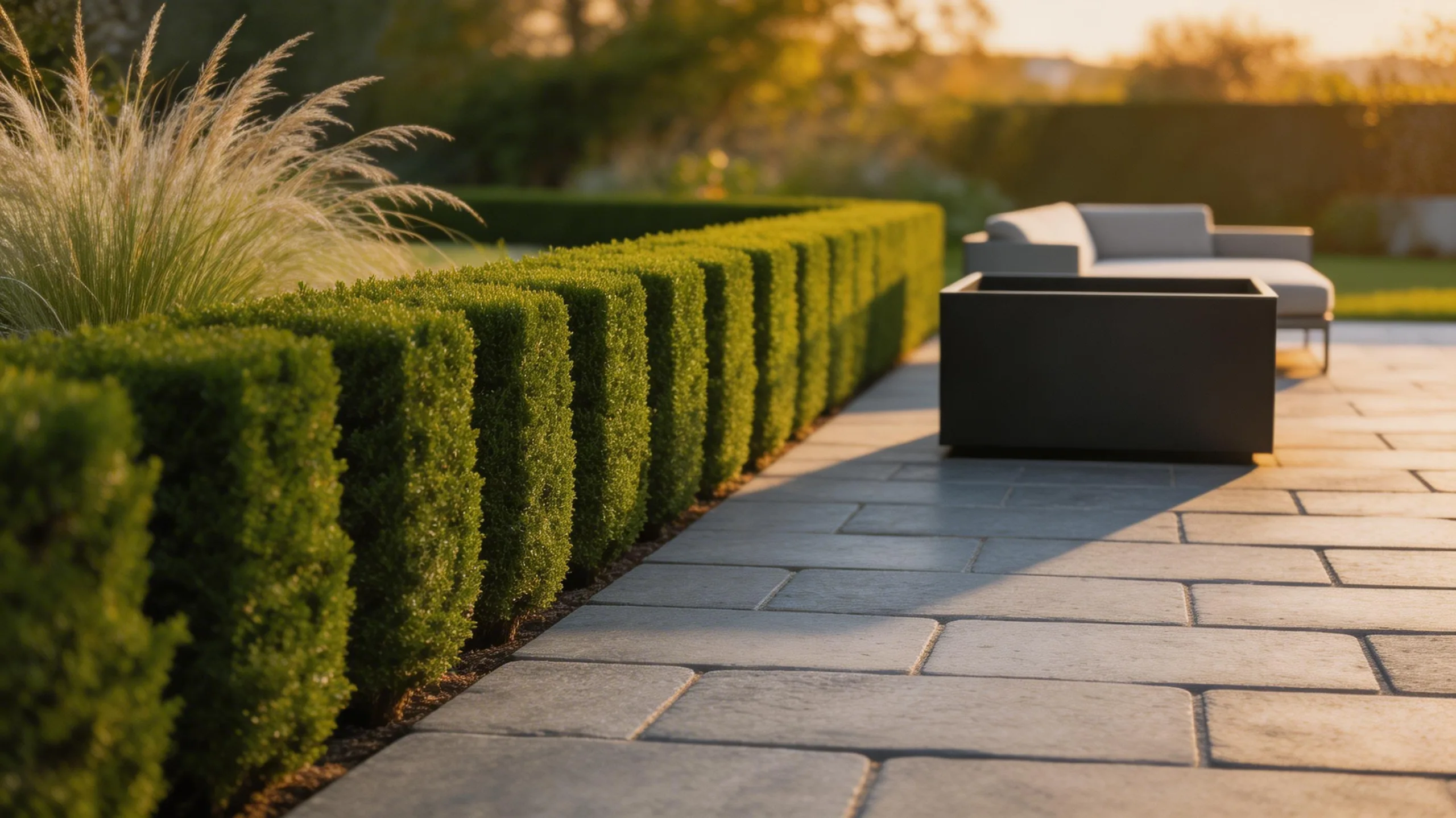
Linear hedges can further define the geometry established by a deck, bringing structured greenery to the ground plane.
You’ll create crisp, architectural lines that frame spaces and guide the eye.
For a successful modern hedge, consider these plant-specific and sustainable choices:
- Evergreen Structure: Use drought-tolerant *Buxus sempervirens* ‘Suffruticosa’ (English Boxwood) for a dense, low border you can shear into razor-sharp edges.
- Native Screening: Plant a row of *Ilex vomitoria* ‘Sky Pencil’ (Yaupon Holly), a narrow native holly, for a tall, vertical screen that provides wildlife habitat without extensive watering.
- Floral Definition: For a softer, pollinator-friendly line, try a hedge of *Spiraea japonica* ‘Little Princess’; shear it after flowering to maintain a clean form.
Select Low-Maintenance Modern Lawn Options
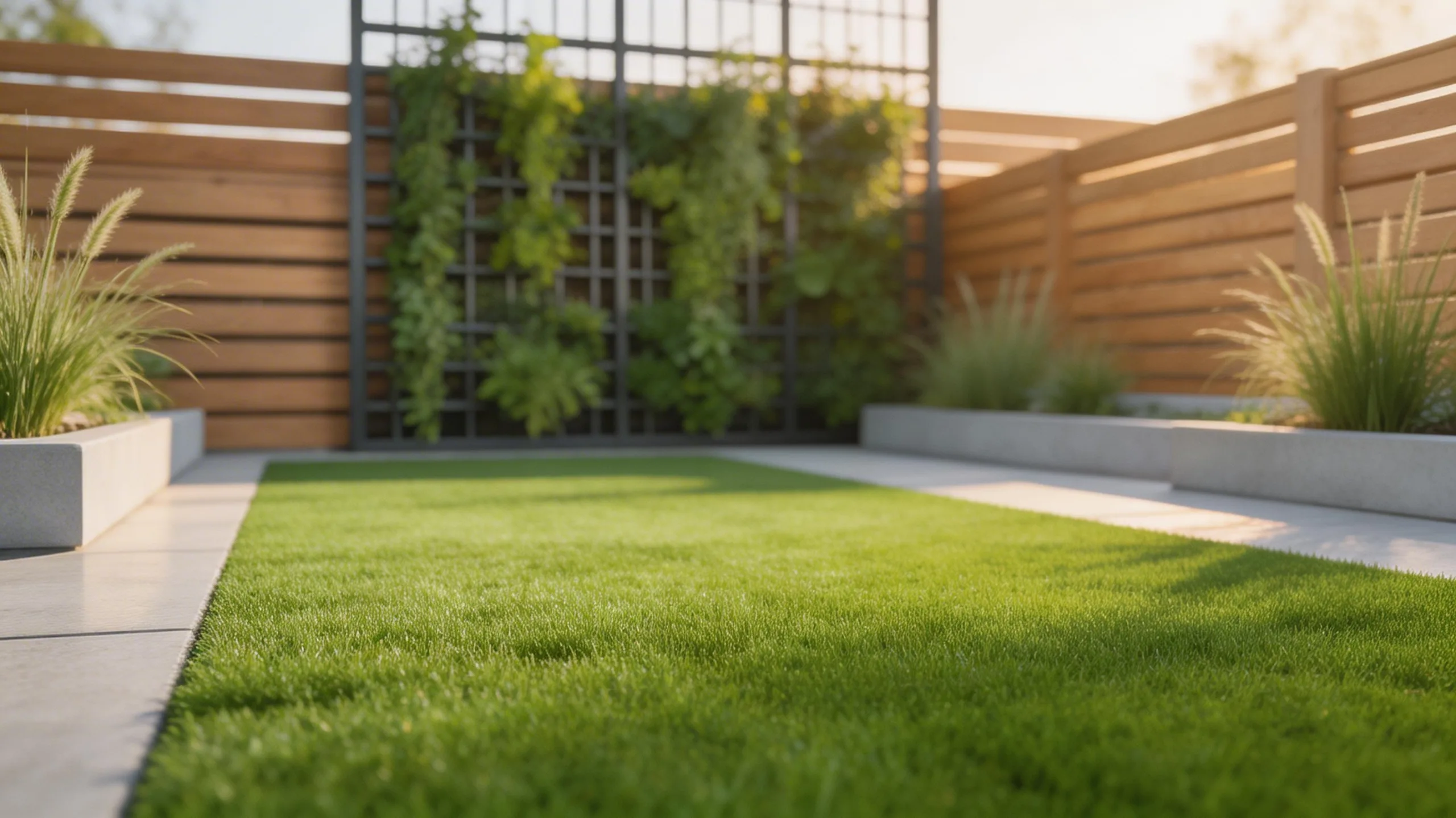
Transform your expectation of the traditional grass lawn by considering lower-maintenance, eco-friendly alternatives. Replace resource-intensive turf with drought-tolerant ground covers.
For sunny areas, plant creeping thyme, which forms a fragrant, walkable mat requiring little water. In partial shade, use sweet woodruff or Irish moss, which provide lush, green carpets without weekly mowing.
Consider low-growing sedges like *Carex pensylvanica*; they mimic grass but need minimal upkeep and tolerate varied conditions. For a modern, textural look, install clover lawns, which stay green with infrequent watering and naturally fertilize the soil.
These specific choices significantly reduce your water usage, eliminate chemical inputs, and free you from constant mowing, aligning with a sustainable, contemporary aesthetic.
Plant Architectural Specimens and Ornamental Grasses
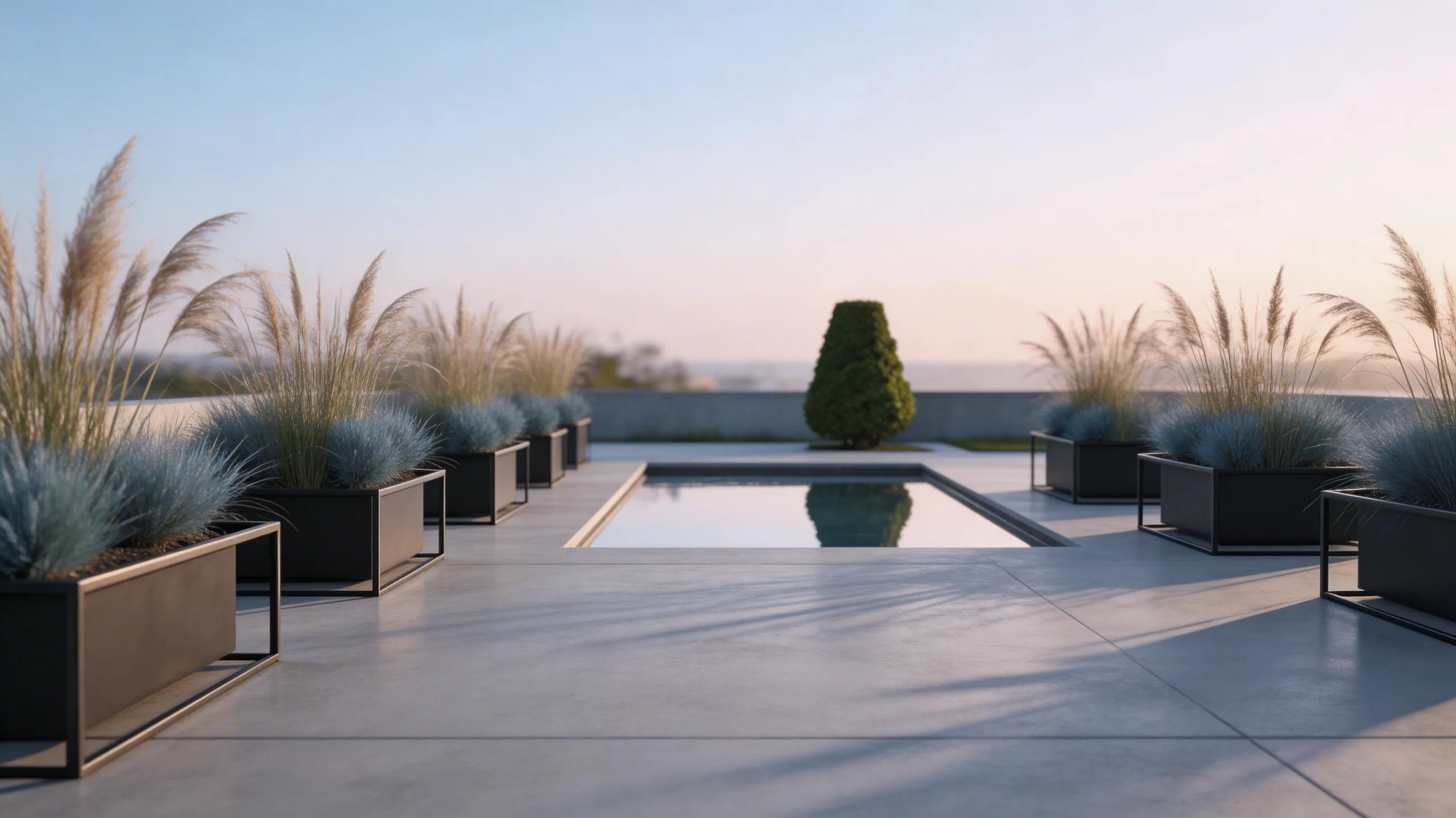
Instead of focusing only on ground-level options, you can also integrate striking vertical elements and dynamic textures with architectural specimens and ornamental grasses. These plants provide year-round structure and require minimal resources. Select a few bold specimens as focal points, then use grasses to add movement and softness.
- Install a sculptural focal point like a Phormium ‘Rainbow Sunrise’ for its sword-like, multi-colored leaves. It’s drought-tolerant once established and offers evergreen architectural form.
- Incorporate ornamental grasses such as Calamagrostis × acutiflora ‘Karl Foerster’. Its vertical feather reed plumes provide seasonal interest, winter structure, and support local pollinators.
- Combine textures sustainably by pairing the rigid, geometric shapes of a yucca filamentosa with the airy, fine foliage of Festuca glauca; both thrive in poor, well-drained soil with little water.
Design a Vertical Garden Living Wall
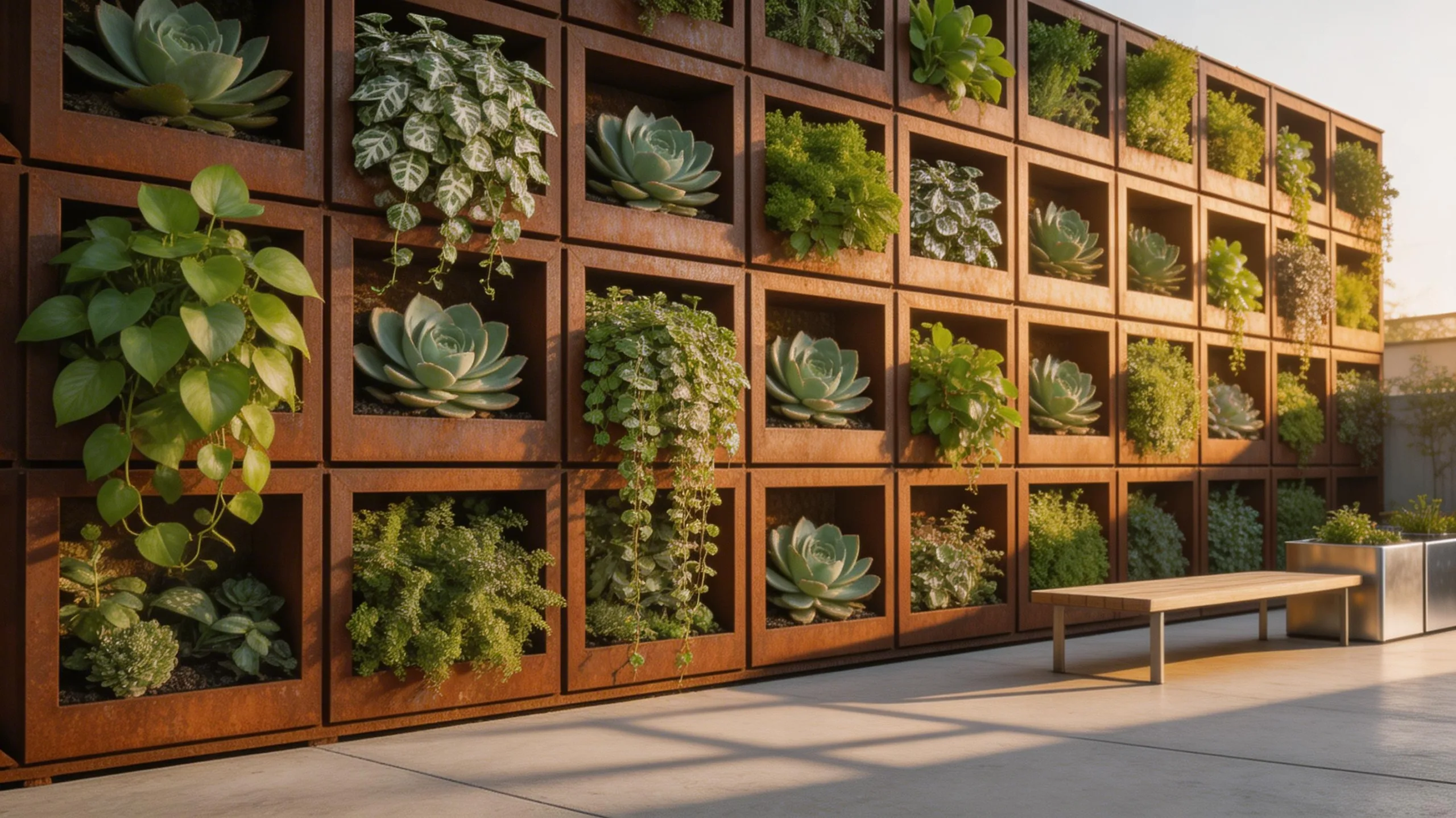
When you’re short on space, a living wall allows you to cultivate a tapestry of plants vertically, merging artistic design with ecological function.
Select species with similar light and water needs for a low-maintenance system.
Use drought-tolerant succulents like *Sedum spurium* for sun, or texturally rich ferns such as *Asplenium scolopendrium* for shade.
Incorporate edible herbs like creeping thyme and prostrate rosemary.
A well-designed modular panel system with integrated drip irrigation conserves water and supports healthy root zones.
This approach actively reduces the urban heat island effect, improves air quality, and provides vital habitat for pollinators, turning a blank wall into a dynamic, sustainable focal point without consuming valuable ground area.
Add a Statement Modern Water Feature
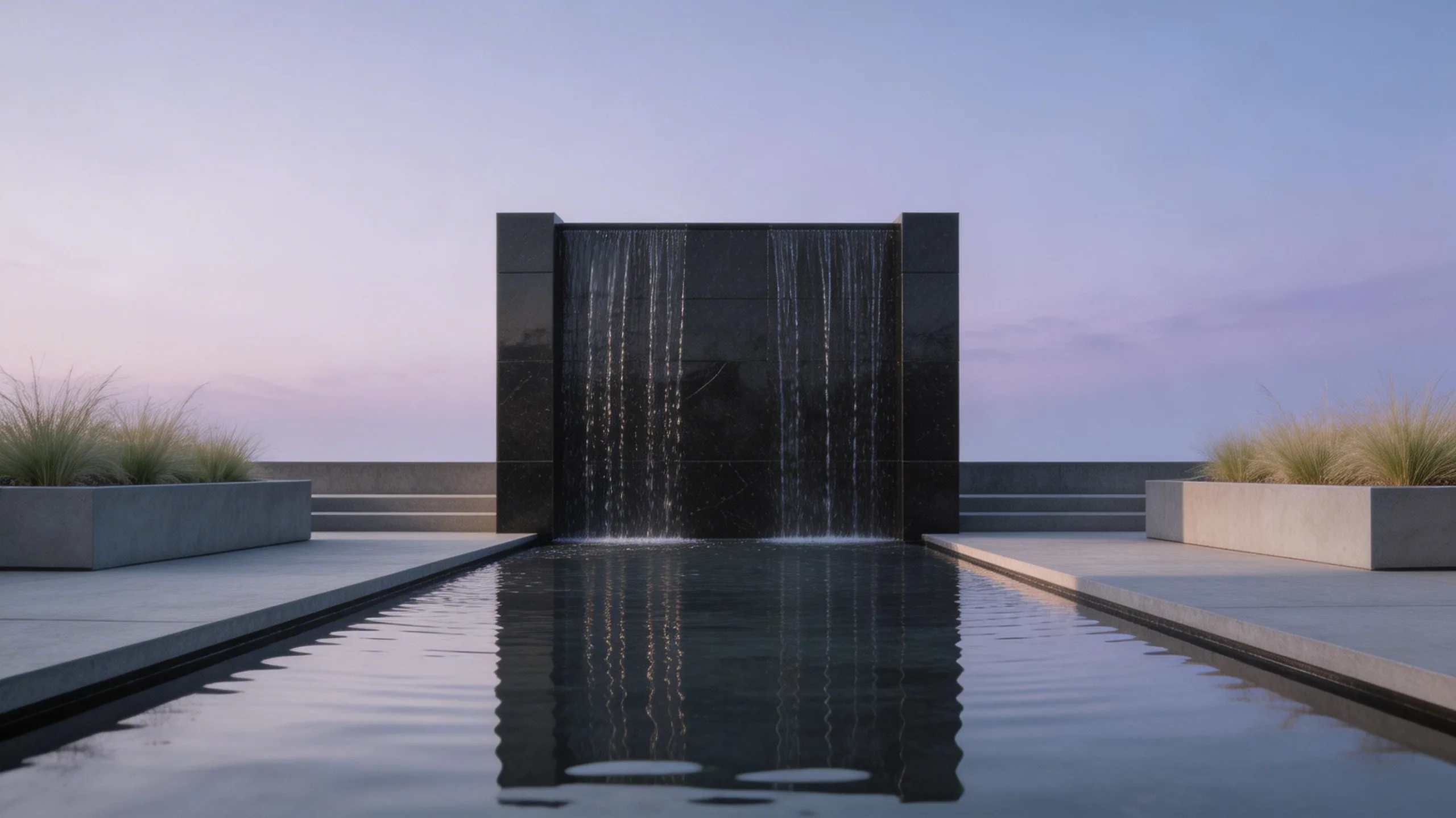
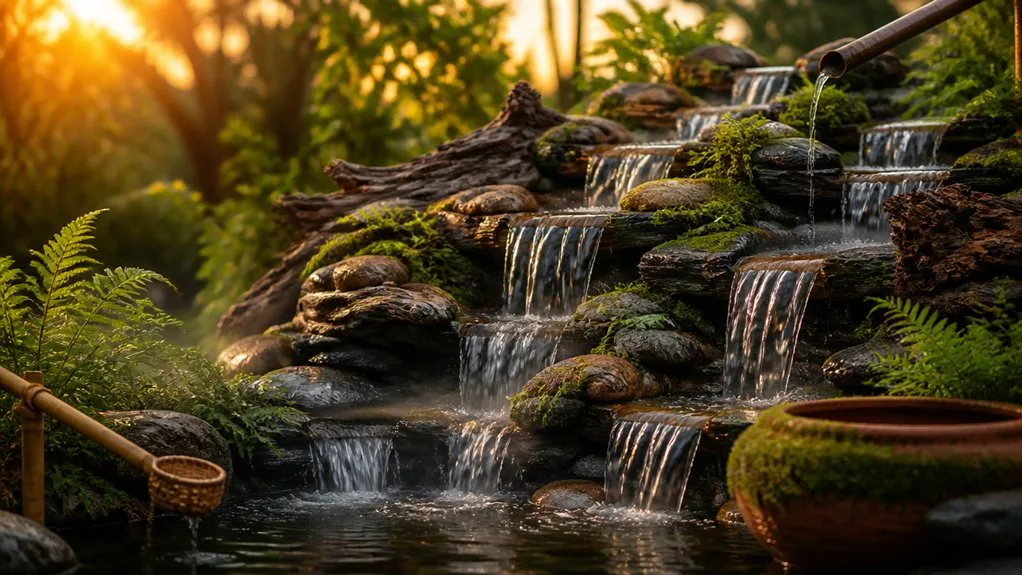
Beyond the greenery of your vertical wall, a minimalist water feature creates a dynamic counterpoint. Its calm, reflective surface and soft sound enhance the garden’s sensory experience while supporting a sustainable microclimate. Choose a recirculating pump system to conserve water and integrate native moisture-loving plants like soft rush (Juncus effusus) or cardinal flower (Lobelia cardinalis) along its edges for natural filtration and habitat.
- Select a Geometric Vessel: Opt for a simple, rectilinear basin in textured concrete or matte steel. This clean form contrasts beautifully with the organic shapes of neighboring ferns and ornamental grasses.
- Incorporate a Single Sheet of Water: A smooth, laminar flow from a sharp weir provides visual stillness and auditory subtlety, attracting birds without creating excessive spray or water loss.
- Edge with Functional Flora: Plant blue flag iris (Iris versicolor) or dwarf cattail (Typha minima) in a gravel bog filter to biologically clean the water, reducing maintenance and supporting local pollinators.
Illuminate With Dramatic Outdoor Lighting
Moving from the reflective stillness of your water feature, consider how light shapes the evening garden. You’ll want to create layers, not just flood the space. Use focused uplights to graze the architectural bark of a paperbark maple or silhouette the sculptural form of a giant feather grass.
Recessed path lights, set low and warm, safely guide steps while minimizing skyglow. For sustainability, choose LEDs and integrate solar panels into design elements. Position a single, dramatic pendant over a dining area to define the zone.
Avoid lighting every plant; select key specimens like a dramatic phormium or a twisted contorted hazel for impact. This focused approach crafts mystery and highlights your garden’s best forms after dark.
Furnish Your Space With Minimalist Outdoor Furniture
To anchor your contemporary garden’s clean lines, select minimalist outdoor furniture crafted from sustainable materials like FSC-certified teak or recycled aluminum. Choose pieces with simple, geometric frames that won’t compete visually with your structural plants, such as upright Japanese maple cultivars or clipped boxwood spheres.
The low-profile design creates an open feel, allowing groundcovers like silver mound artemisia or blue star creeper to flow seamlessly around the furniture legs.
- Opt for Modular Seating: Use adaptable, flat-weave modular sofas in neutral tones. You can reconfigure them easily for different gatherings without damaging delicate adjacent plantings like Hakonechloa macra ‘Aureola’.
- Select a Slim-Profile Table: A simple, powder-coated steel table provides a durable surface for drinks, while its slender structure maintains sightlines to your ornamental grasses.
- Incorporate a Statement Bench: A single, long bench made from reclaimed ipe wood offers streamlined seating and highlights a bordering bed of lavender or nepeta.
Create a Modern Outdoor Kitchen or Dining Area
Extend your home’s clean aesthetic outdoors by integrating a sleek kitchen or dining zone that uses durable, eco-conscious materials and complements your garden’s palette.
Opt for stainless steel appliances and a countertop of recycled glass composite. Build cabinetry from sustainably harvested teak or thermally modified ash for longevity. Anchor the area with a pergola clad in a fragrant star jasmine vine, providing dappled shade for your dining table.
Plant a low hedge of rosemary or lavender nearby; its scent deters pests while defining the space. Choose a built-in grill fueled by natural gas or a high-efficiency pizza oven to minimize your carbon footprint. This functional hub becomes a seamless extension of your indoor living.
Incorporate a Minimalist Stone and Gravel Feature
Introduce serenity into your modern garden with a minimalist arrangement of stone and gravel. This feature provides strong visual structure with low maintenance.
Choose locally sourced, smooth river rocks or angular basalt slabs to define a precise geometric bed. Fill surrounding areas with light-colored pea gravel or crushed granite for a cohesive, textural base that suppresses weeds and aids drainage.
Select just one or two striking plants, like a solitary specimen of Japanese maple (*Acer palmatum*) or a cluster of structural black mondo grass (*Ophiopogon planiscapus ‘Nigrescens’*), to provide a focal point.
- Define the Space with Stone: Use large, flat stepping stones or a single, sculptural boulder to anchor the composition, creating a clean, intentional layout.
- Select Low-Impact Plantings: Incorporate drought-tolerant sedums or ornamental grasses, such as blue fescue (*Festuca glauca*), which thrive in gravel and reduce water usage.
- Ensure Sustainable Drainage: Layer the gravel bed over a permeable landscape fabric and a sub-base of crushed stone, allowing rainwater to infiltrate the soil and reducing runoff.
Maintain Your Modern Garden With Ease
Although the materials in your modern garden are inherently low-maintenance, establishing a few key routines will ensure its pristine, sustainable form persists effortlessly. You’ll focus on strategic, infrequent tasks. Spot-weed gravel beds before seeds establish. Deeply water drought-tolerant specimens like Agave or Sedum ‘Autumn Joy’ only when soil is completely dry, directing water to the root zone. Prune structural plants like Boxwood spheres in early summer for clean lines. Use collected rainwater for irrigation and let fallen leaves decompose in planted zones to nourish soil.
| Task | Sustainable Practice |
|---|---|
| Weeding Gravel | Hand-pull to avoid herbicides. |
| Watering Agaves | Soak deeply, then allow long dry spells. |
| Pruning Ornamental Grasses | Cut back spent foliage in late winter. |
| Fertilizing | Use a single annual application of compost. |
| Debris Management | Leave small leaf litter as natural mulch. |
Frequently Asked Questions
How Can I Add Privacy Without a Fence?
You can use structural plantings. Try a dense row of arborvitae or bamboo in contained planters. You’ll also create living screens with fast-growing, evergreen climbers like star jasmine on a trellis.
Will This Style Work in a Small Urban Space?
Yes, you can adapt this style. Use vertical planting with native climbers, multi-level raised beds for herbs, and sleek, space-saving furniture. Select drought-tolerant plants for low water use, ensuring your urban retreat’s sustainability.
Is This Approach Child and Pet Friendly?
Yes, you make it safe. Choose non-toxic plants like ferns, snapdragons, and tough native grasses. You avoid sharp-edged hardscaping, use permeable pavers, and install raised beds to protect wildlife-friendly zones.
What’s the Estimated Budget for This Transformation?
Your budget depends on materials. Using drought-tolerant succulents and recycled composite decking reduces long-term costs, but expect to invest several thousand dollars for clean, durable hardscaping and quality perennials.
How Do I Add Personal Touches Without Clutter?
Choose a statement pot with one sculptural plant, like an agave. Display a singular, well-made object. Limit color palettes to two or three tones. You’ll add personality without sacrificing your minimalist aesthetic.
Conclusion
Finish your yard by planting architectural succulents and native grasses that thrive on neglect. Edge them with sharp gravel lines or timber planters for contrast. Illuminate key specimens with subtle LEDs. Your reward is a resilient, water-wise garden where minimalist form meets function, and every element—from creeping thyme groundcover to a sculptural stone feature—contributes to a calm, collected outdoor room that asks little and gives back year after year.
The Only Tools You Need for a Thriving Garden 🌱
Whether you're a weekend gardener or growing daily — these hand-picked tools make every session faster, easier, and more satisfying.