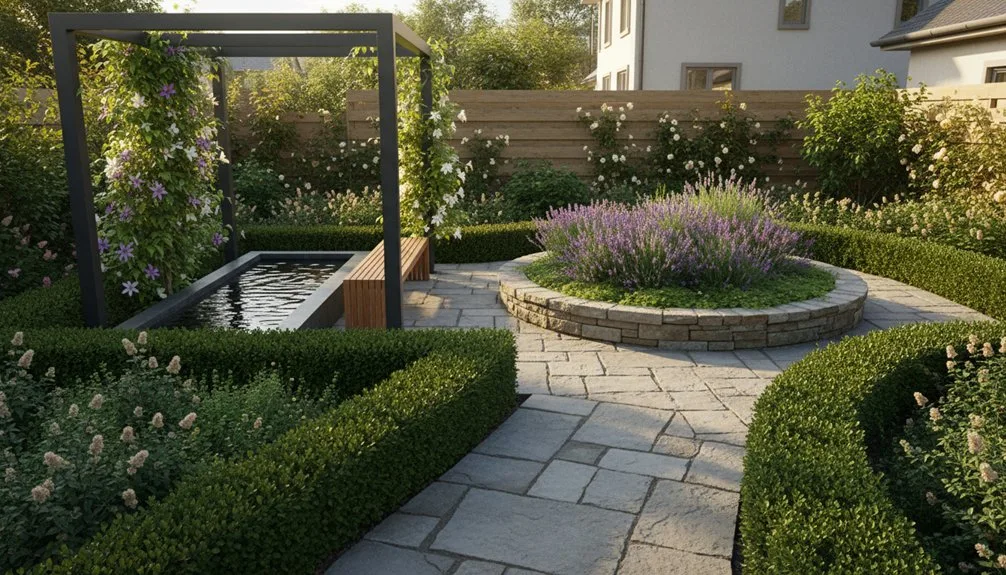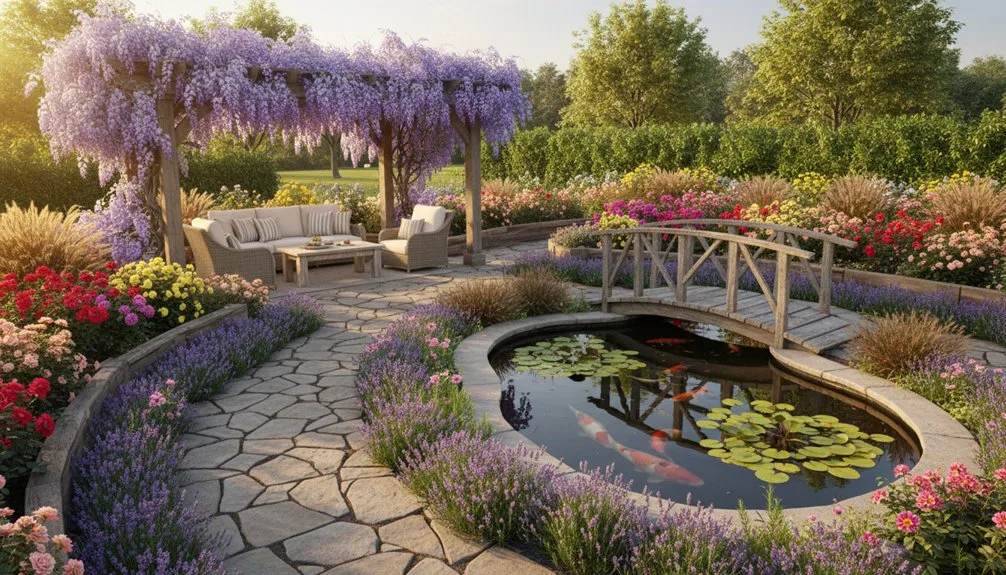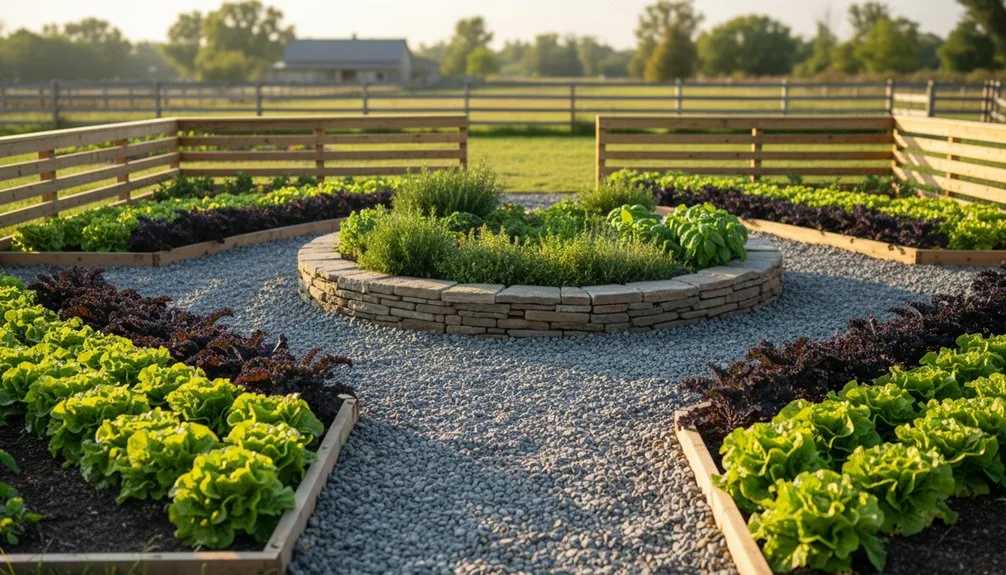
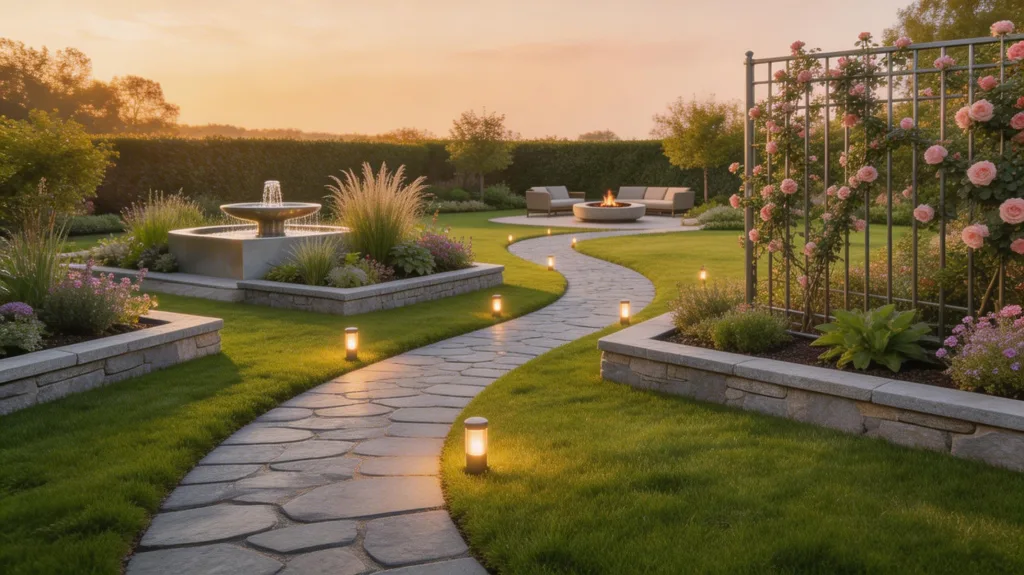
You can transform your backyard with a few key principles. Start by establishing a strong focal point to anchor your view. Then, build structure with paths and borders to define the space. A cohesive plant palette and layered textures create depth, while repetition ties everything together. But the real secret to a garden that feels intentional lies in the subtle details that guide you effortlessly from one area to the next.
Key Takeaways
- Establish a clear sculptural focal point like a tree or fountain.
- Define crisp borders and rooms using edging, hedges, or paths.
- Create layers and rhythm with a limited, repeated plant palette.
- Incorporate hardscape like paths, patios, and walls for structure.
- Plan for year-round interest with seasonal plants and strategic lighting.
Start With a Clear Garden Focal Point
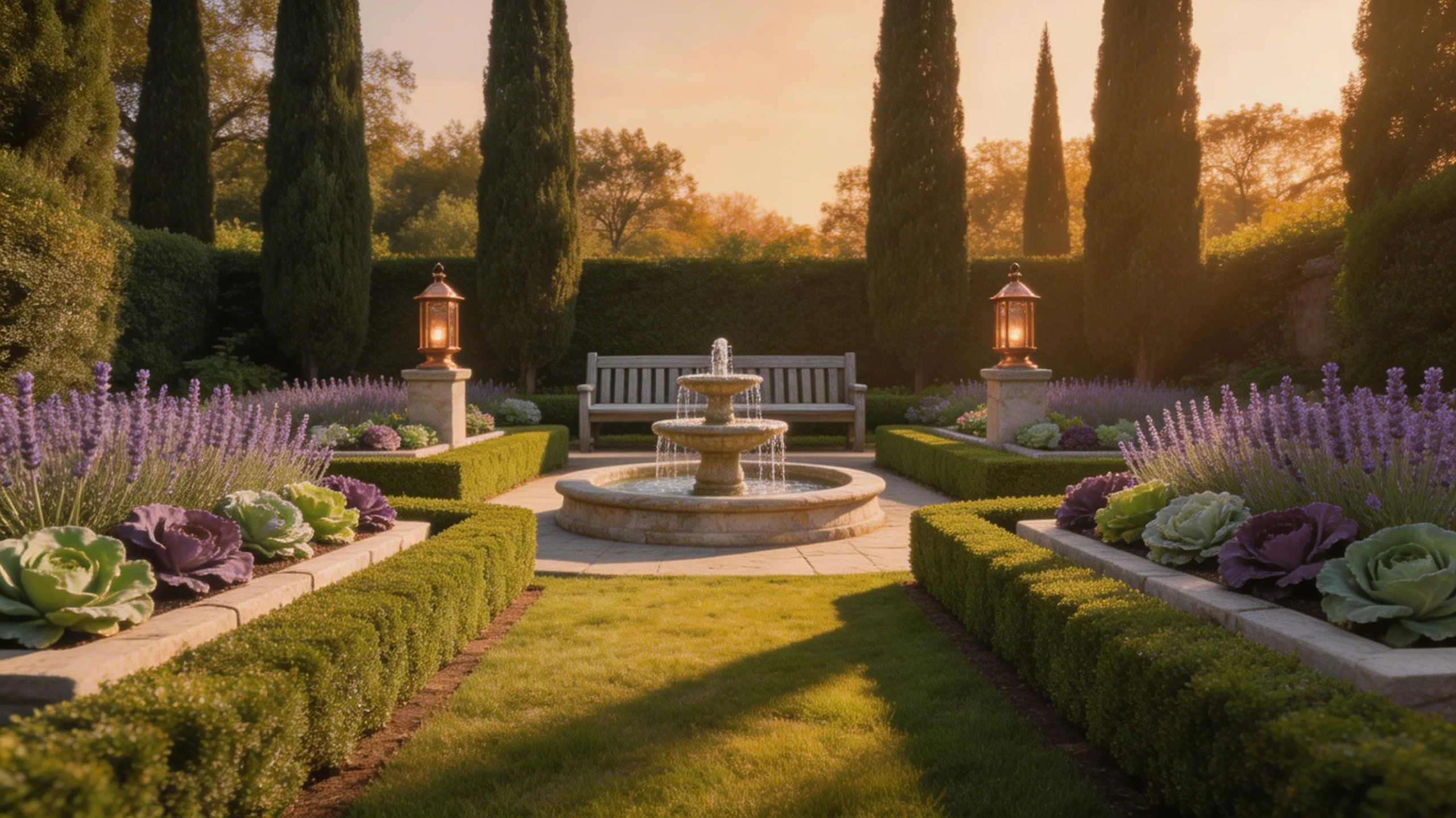
Every great garden tells a story, and your story needs a clear main character—that’s your focal point. It’s the first thing your eye lands on, drawing you into the space.
Think about what captures your attention: a sculptural Japanese maple, a bubbling fountain, or a striking piece of garden art. Place it where you’ll naturally see it, like from your patio door or at the end of a view.
You’ll build everything else around this anchor. It gives your design purpose and stops the layout from feeling scattered.
Build Structure With Hardscaping and Paths
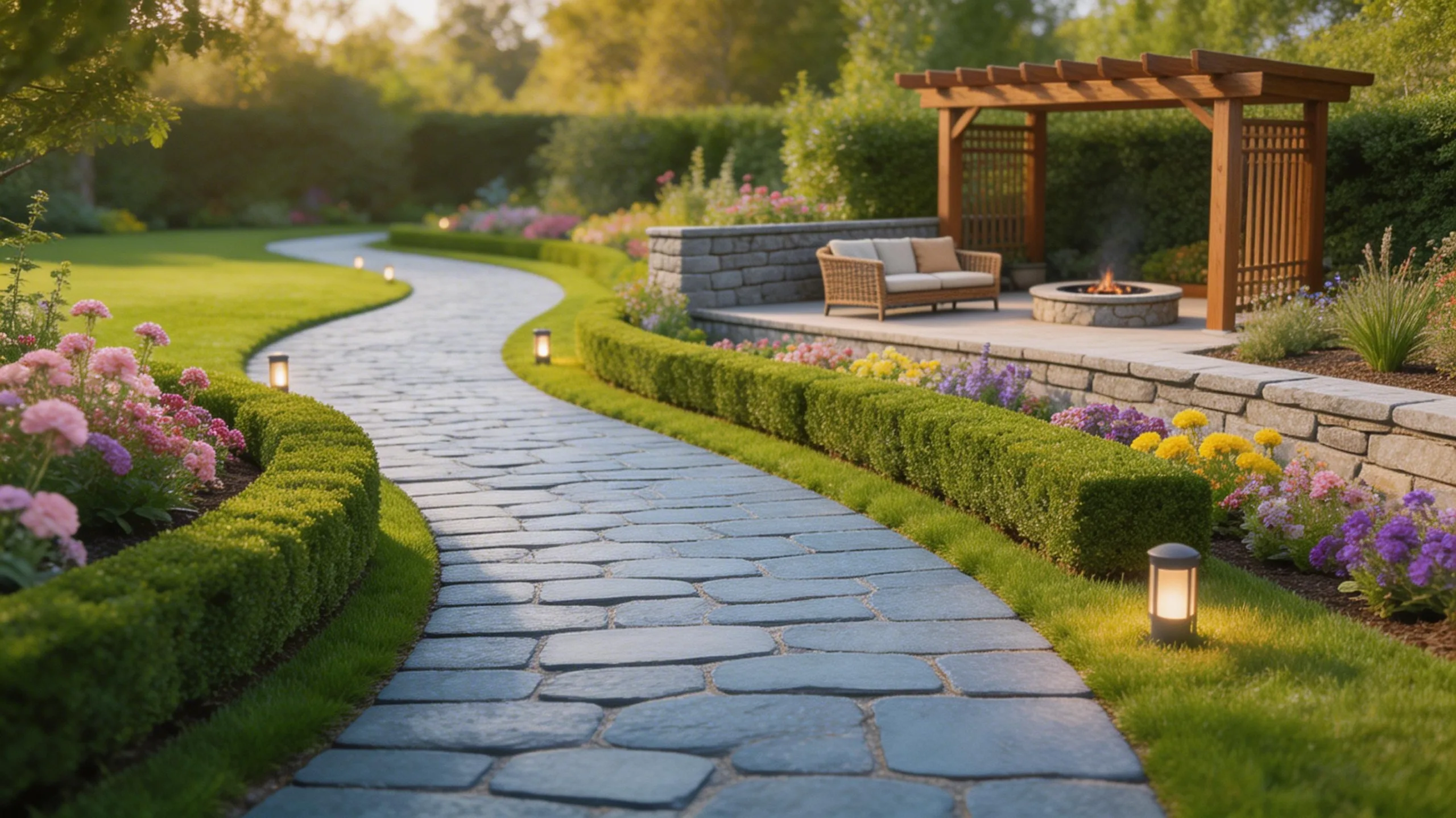
Once you’ve established your focal point, you can give your garden a practical backbone with hardscaping and paths. Lay stone or gravel walkways to guide movement and protect your planting beds from compaction. You’ll use retaining walls to create terraces on slopes, which adds usable flat space and visual drama. A simple flagstone patio extends your living area outdoors, providing a spot for a bench or a dining set. Even a modest gravel path through a shaded corner transforms it into a destination.
| Hardscape Element | Primary Garden Function |
|---|---|
| Gravel Pathway | Defines a walking route & reduces mud |
| Stone Retaining Wall | Manages slope & creates planting tiers |
| Paver Patio | Establishes a durable outdoor room |
| Stepping Stones | Encourages exploration in lawn areas |
| Dry Creek Bed | Handles drainage & adds textural interest |
Define Garden Spaces With Strategic Borders
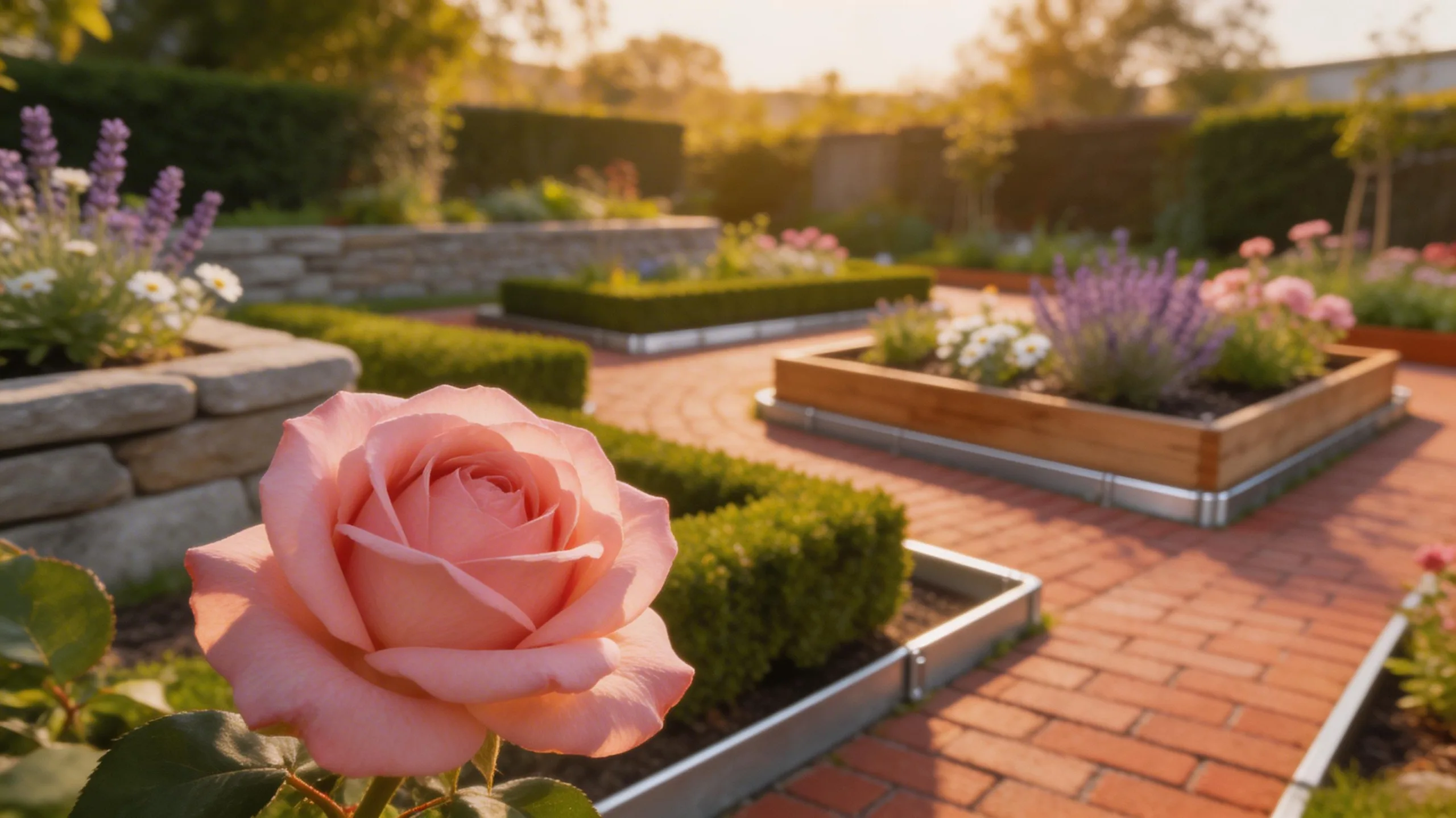
While you’re adding practical structure, you can also use borders to carve out distinct areas, giving each part of your garden its own purpose and feel.
A crisp line of bricks set flush with the lawn instantly frames your flower bed. You can edge a vegetable patch with pressure-treated timber to keep soil in and define the work zone. For a looser, cottage-garden look, plant a low, dense hedge of lavender or boxwood. These physical lines guide the eye and movement, creating organized “rooms” without the need for walls. The materials you choose directly influence the space’s character.
- Picture a serene patio lounge bordered by a raised planter brimming with ornamental grasses.
- Imagine a dedicated play area safely contained by a knee-height fence of painted pickets.
- Envision a winding gravel path clearly separated from flower borders by a trench of dark river stones.
Design With Cohesive Color and Texture Palettes
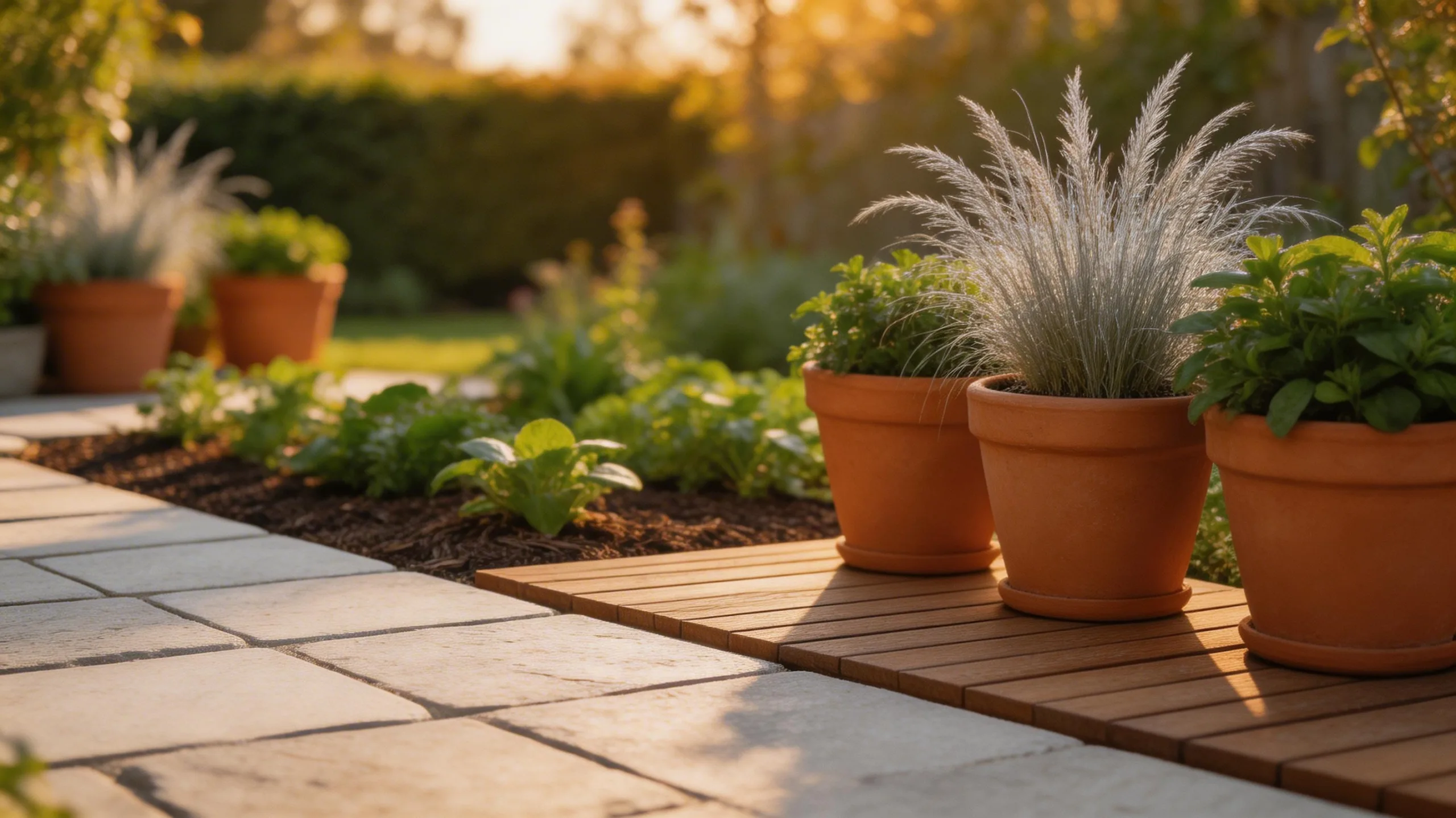
Building on that sense of organized space, you can unify your garden’s distinct areas through a thoughtful selection of colors and textures. Limit your main plant palette to three or four hues, repeating them throughout your borders. This creates rhythm. For instance, weave silver-leaved lavender or lambs ear alongside purple salvia and white Shasta daisies in different beds.
Texture is equally vital. Juxtapose bold, architectural leaves like those of a hosta with the feathery fronds of a fern or the fine, wispy blades of ornamental grasses. This contrast adds visual weight and complexity without clutter. Your choices should feel intentional, tying the vegetable patch to the perennial border and making the entire garden read as one cohesive composition.
Create Layers for Professional Depth and Interest
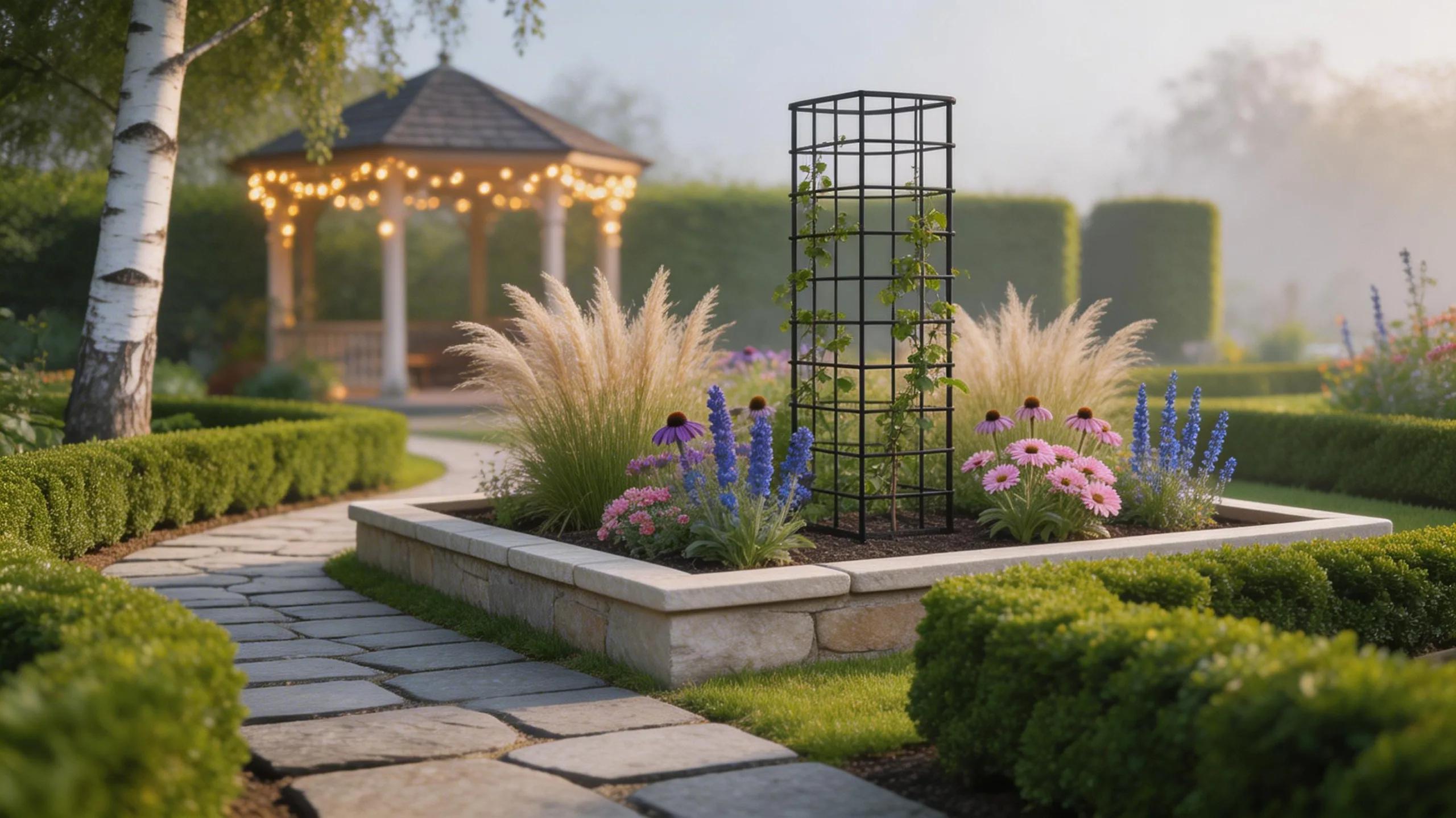
Since your garden already has a cohesive palette, you can now add dimension by arranging plants in distinct vertical layers. Think of your space as having a foreground, middle ground, and background. You’ll place taller specimens like small trees or ornamental grasses at the rear, medium-height flowering perennials in the center, and low-growing ground covers or annuals at the front.
This tiered approach guides the eye through the scene, creating a sense of abundance and hiding bare stems. For a truly immersive effect, weave these layers together.
- Imagine the delicate fronds of a maiden grass swaying behind the bold purple spikes of salvia.
- Picture a carpet of creeping thyme spilling over a path, softening its edge.
- Envision the middle layer filled with the billowy blooms of hydrangeas, concealing the leggy bases of your rear-layer shrubs.
Incorporate Repetition to Unify Your Garden
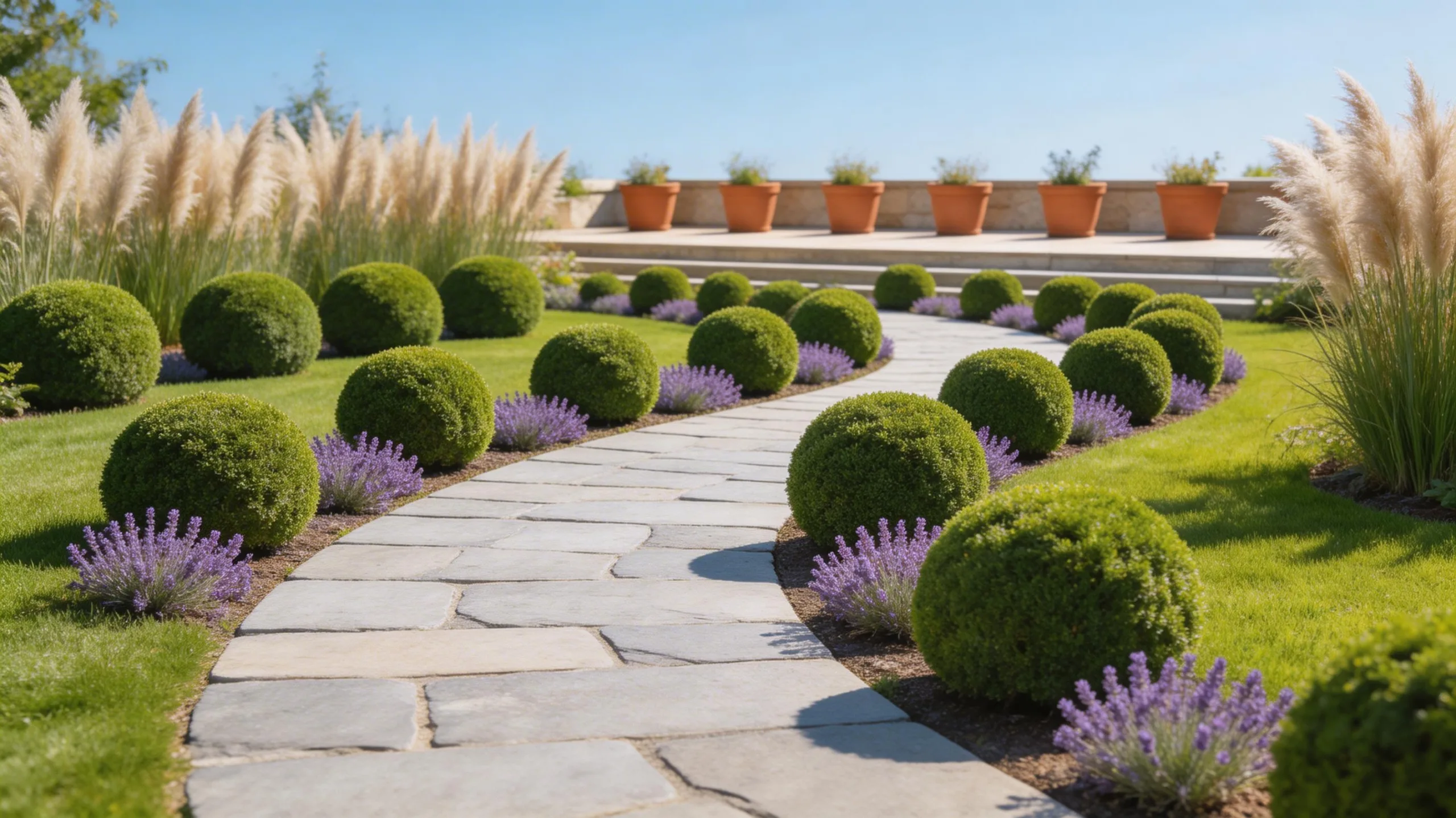
Now that you’ve established a layered structure, you can use repetition to tie the whole garden together.
Repeat a key element in three or more areas to create a visual rhythm. You might echo a specific plant, like clumps of ornamental grass, along a winding path. Alternatively, repeat a color—deep burgundy from a Japanese maple, then in coleus leaves, and again in heuchera blossoms. You can also duplicate structural forms; use the same style of obelisk for your clematis in separate beds.
This strategy guides the eye smoothly from one area to the next, preventing a disjointed, chaotic feel. The repeated motifs act as visual anchors, making a small space feel larger and more cohesive.
Plan for Continuous Bloom and Seasonal Flow
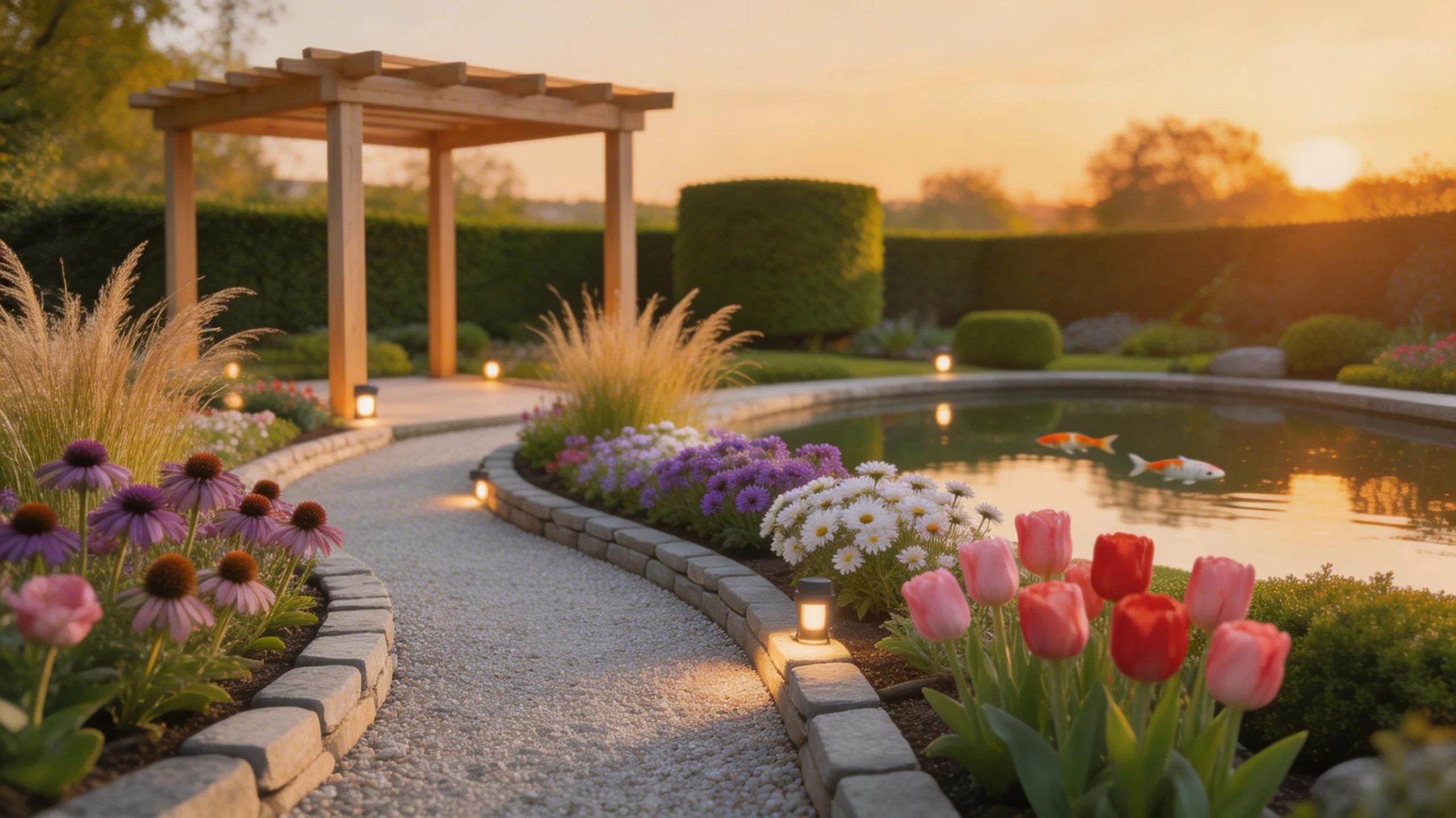
While a garden with a unified design is visually pleasing, you’ll want to extend that appeal across the seasons by planning for continuous bloom. Research each plant’s flowering period and group them so something is always performing. You’ll interplant early spring bulbs with perennials that peak in summer, ensuring a seamless transition. This creates a dynamic, ever-changing landscape instead of a single burst of color.
- Picture chartreuse lady’s mantle leaves carpeting the ground in May, with the purple spires of summer salvias rising through them later.
- Imagine the faded seed heads of your spring alliums providing structure for the July blooms of daylilies planted beneath.
- Envision autumn asters bursting into color just as your late summer hydrangeas begin to fade.
Add Personality With Decorative Pots and Lighting
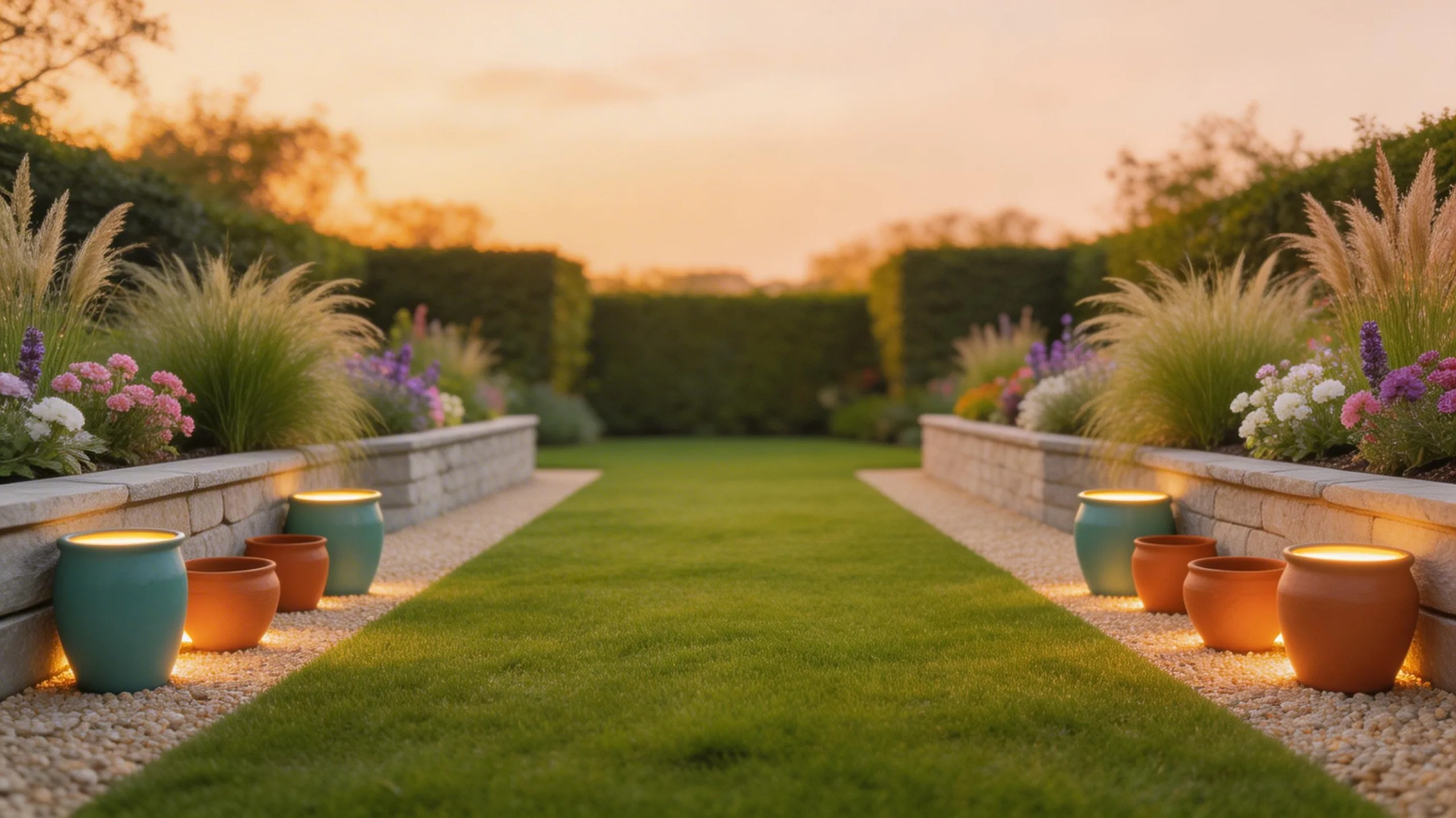
You can also introduce character and extend your garden’s hours with decorative pots and strategic lighting. Choose pots in varied sizes, materials, and colors to create dynamic clusters. Place a tall, glossy ceramic pot as a focal point, then surround it with rustic terracotta ones. For lighting, it’s about creating ambiance, not floodlights. Use solar-powered LED stake lights to softly illuminate pathways and up-light a specimen tree with a well-placed spotlight.
| Lighting Goal | Best Tool for the Job |
|---|---|
| Define a pathway | Low-voltage or solar path lights |
| Highlight a tree trunk | Waterproof uplight |
| Accent a water feature | Submersible LED pond light |
| Illuminate seating | String lights or a lantern |
| Create soft ambiance | Diffused solar stake lights |
This layered approach makes your space feel intentional and inviting long after sunset.
Frequently Asked Questions
How Do I Deter Pests Naturally?
You’ll deter pests naturally by mixing plants. Try interplanting marigolds or garlic to repel insects. Introduce beneficial predators like ladybugs. You can also use neem oil sprays and hand-pick larger pests when you spot them.
What’s the Best Way to Start Composting?
Start composting by layering brown and green materials in a pile or bin, keeping it moist like a damp sponge. Turn it every few weeks to add air and speed up decomposition.
How Much Should I Budget for a Garden?
Start with $200-$500 for basics. You’ll buy soil, seeds, and a few tools. Expect ongoing costs for water and supplies. Your budget expands if you’re building raised beds or buying many plants.
Can I Grow Vegetables With Flowers?
Yes, you can! You’ll find vegetables and flowers thrive together. Pair carrots with nasturtiums or plant tomatoes near marigolds. You’ll boost pollination and naturally deter pests while creating a beautiful, productive space.
What Plants Are Safe for Pets?
You can safely plant rosemary, sunflowers, and snapdragons with pets around. Always avoid lilies, sago palms, and azaleas, as they’re toxic. Check the ASPCA plant list before you buy anything new for your yard.
Conclusion
You can transform your garden by starting with these principles. Begin with your focal point, then build structure and define borders to shape the space. Stick to your palette, layer heights, and repeat plants to create rhythm. Add bulbs for seasonal surprises and use containers for flexible color. Finally, let lighting extend the experience. You’ll craft a cohesive, year‑round retreat.
The Only Tools You Need for a Thriving Garden 🌱
Whether you're a weekend gardener or growing daily — these hand-picked tools make every session faster, easier, and more satisfying.