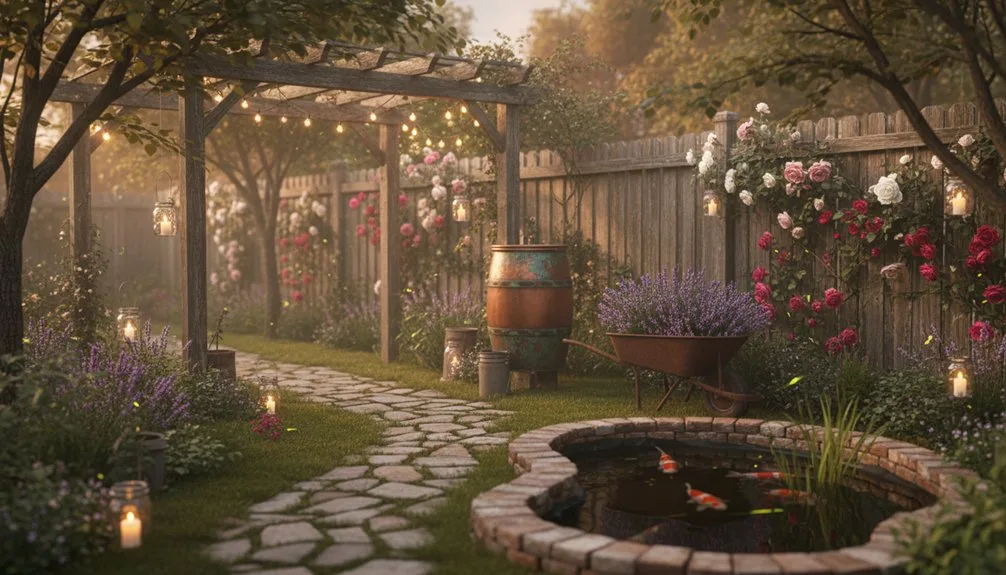
You’ll transform your backyard into an enchanting retreat by layering reclaimed wood, weathered metal accents, and meandering stone pathways that reveal hidden garden rooms. Build raised beds and compost bins from salvaged timber, arrange wrought-iron gates at entry points, and scatter vintage lanterns along winding routes. Add fairy lights strung between posts, repurpose galvanized tubs as planters, and install a rustic stone water feature as your focal point. Each element guides visitors deeper into your magical outdoor sanctuary, where discovery awaits around every corner.
Key Takeaways
- Stone pathways with creeping thyme between flagstones and meandering routes create enchanting exploration and romantic garden discovery.
- Fire pits with log seating, rustic pergolas, and metal accents establish cozy gathering spaces that enhance outdoor ambiance.
- Climbing vines on wooden arbors and metal trellises add vertical drama, softening hardscapes with lush romantic overflow.
- Raised beds from reclaimed wood combined with wildflower meadows and herb containers cultivate whimsical, productive growing spaces.
- Stone water features, salvaged lanterns along pathways, and natural lighting transform gardens into magical evening retreats.
Define Your Rustic Garden Style and Layout
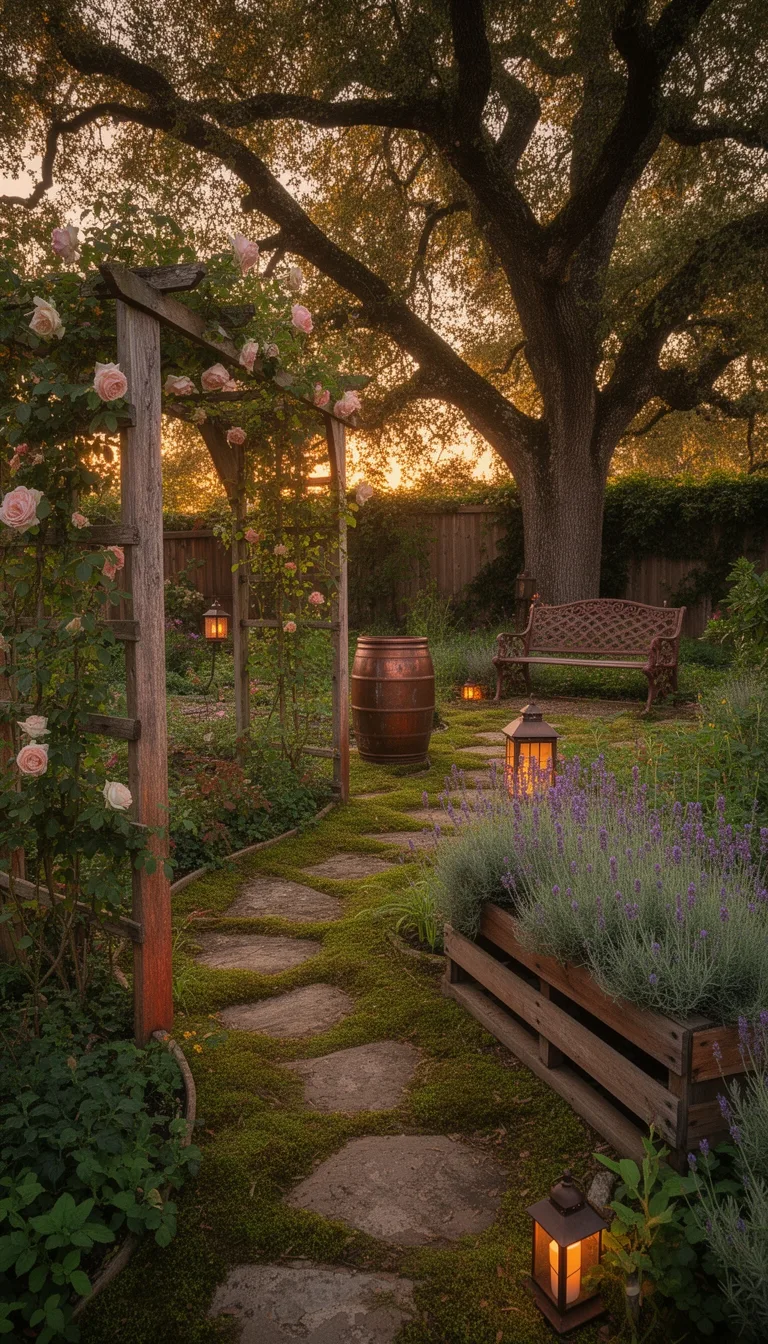
How do you want your garden to feel?
Start by envisioning the atmosphere you’re creating—perhaps a peaceful countryside retreat or a charming farmhouse escape.
Your rustic garden thrives on informal, nostalgic aesthetics that blend seamlessly with natural surroundings.
Consider your layout carefully.
Create meandering pathways using gravel, wood chips, or stone that guide visitors through the space organically. Meandering routes prevent trampling and preserve plant health while defining garden zones and guiding foot traffic.
Position seating areas nestled amid lush grass, surrounded by flower borders for balanced harmony.
Use stone steps for natural level transitions, allowing ferns and vining plants to soften edges.
Think vertically too.
Incorporate wooden arbors, reclaimed trellises, and climbing plants around doorways and walkways.
These elements add height variety while creating an enveloping nature effect that defines your rustic aesthetic beautifully.
Build Raised Garden Beds From Reclaimed Wood
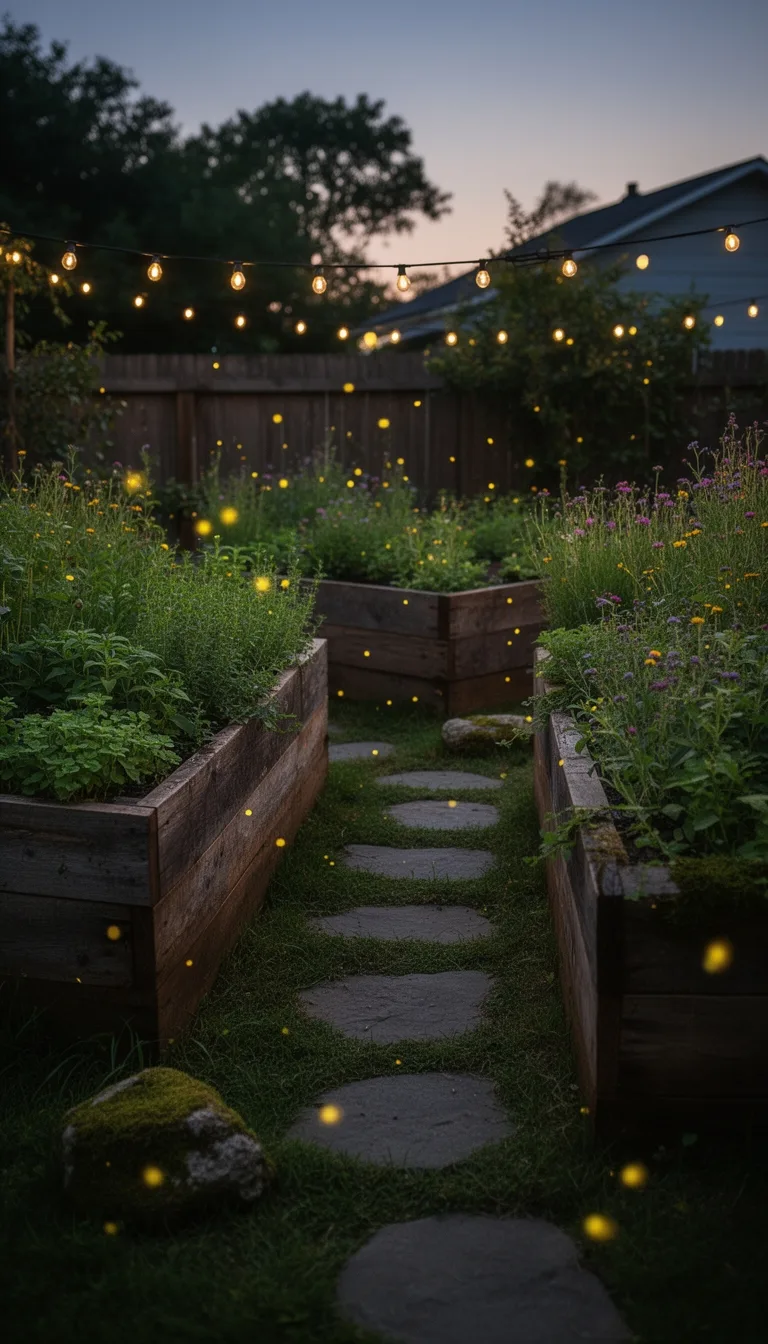
Building raised garden beds from reclaimed wood transforms your rustic garden while giving old materials new purpose. You’ll start by de-nailing reclaimed lumber and planing boards for a smoother finish. Cut your 4-by-4 corner posts and 1-by-5 side boards to size using a chop saw, then assemble them on level ground with outdoor screws. The elevated height of raised beds eases back strain during planting and harvesting compared to traditional in-ground gardens.
| Material | Size | Quantity |
|---|---|---|
| Corner posts | 4-by-4 lumber | 8 pieces |
| Long boards | 1-by-5, 72 inches | 12 boards |
| Short boards | 1-by-5, 60 inches | 12 boards |
Measure diagonals to ensure squareness, then trim corner posts to finished height. Lay cardboard underneath to suppress weeds, apply spar varnish for protection, and you’ll have beautiful, durable beds ready for planting.
Create Compost Bins From Reclaimed Timber
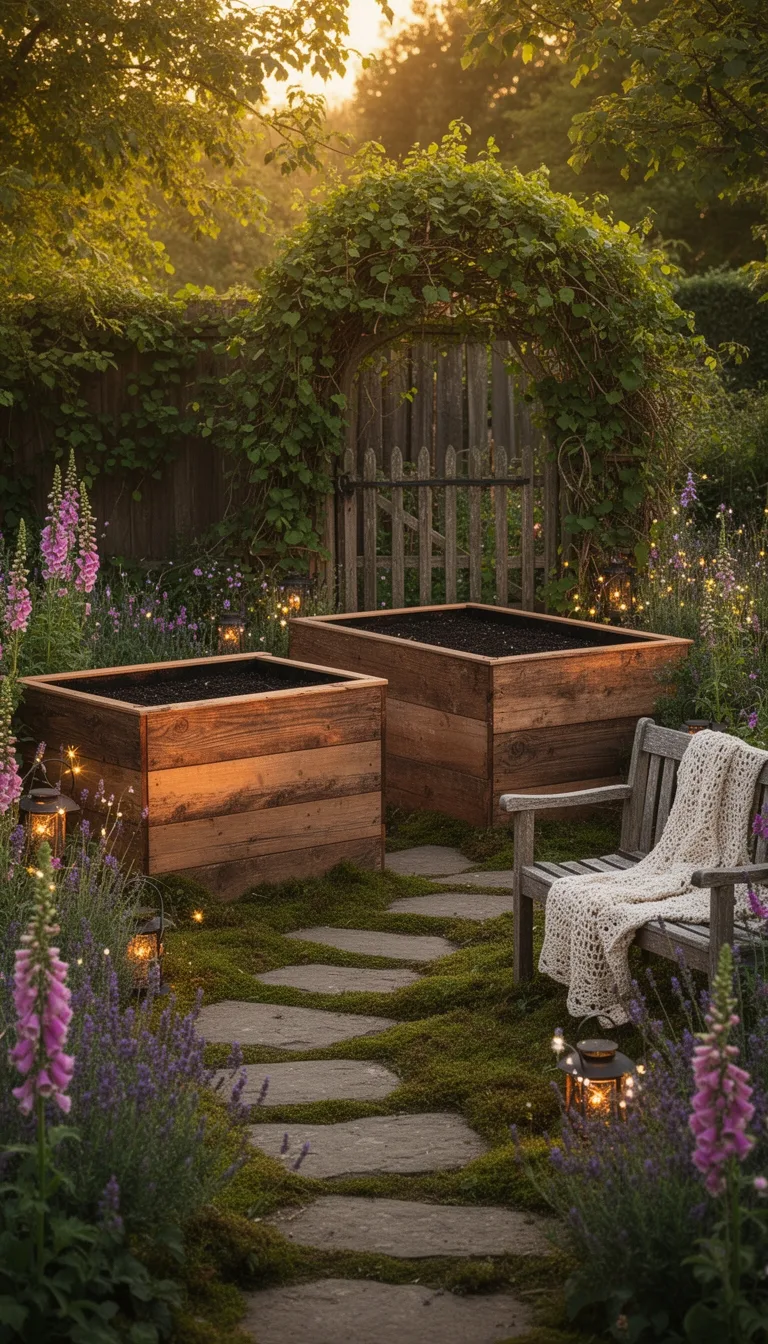
Transform your garden waste management by assembling compost bins from reclaimed timber—a resourceful project that’ll give old materials a practical second life.
Source pallets from local businesses or salvaged deck lumber to construct durable multi‑chamber systems. Position pallets perpendicular to each other, then drill and screw them together at corner edges for stability.
Staple chicken wire along interior walls to prevent rodent entry while maximizing airflow through slatted designs. Add two‑by‑four bracing to keep walls level as you fill the bins.
Install removable front panels for easy access when turning compost or harvesting finished soil. This contained system effectively mixes greens and browns, transforming garden waste into nutrient‑rich compost within months while maintaining a rustic aesthetic that complements your garden’s natural character. Alternate greens and browns layering in your bins accelerates decomposition and creates superior finished compost.
Lay Winding Stone Paths Through Your Garden
Stone paths wind through gardens like natural veins, guiding you deeper into your outdoor space while softening the transition between cultivated beds and wild growth. You’ll create a journey that feels intentional yet organic, inviting exploration at every turn.
Winding paths make small gardens feel expansive by hiding destination points behind strategic plantings.
You strategically space natural flagstones at 2′-3′ intervals, accommodating a leisurely stride while allowing ground covers like creeping thyme to lace between stones.
Wider sections around 1800mm permit billowing plants to spill naturally across edges. Abrupt direction changes in your path layout create surprise reveals that engage visitors and encourage deeper exploration of hidden garden corners.
Consider these elements:
- Use gentle curves that weave around planting beds
- Vary stone sizes for visual interest and smoother walking
- Plant taller specimens at path endpoints to enhance depth
- Layer creeping plants between flagstones for softened texture
- Route paths through flat spots to avoid awkward slopes
Install Retaining Walls to Level Your Spaces
How do you transform a sloping yard into usable terraces without losing the natural hillside’s character?
Retaining walls do exactly that.
By strategically placing stone or brick walls, you’ll level your terrain into flat spaces perfect for patios, gardens, or seating areas.
These walls anchor soil in place, preventing erosion from heavy rain and runoff while protecting valuable nutrients that nourish your plants.
You’ll also redirect water away from your home’s foundation, solving drainage issues that plague sloped properties.
The result? A multi-tiered garden that expands your outdoor living space while maintaining the rustic beauty you love.
Tiered walls with steps create natural access points from driveways to entrances, transforming an awkward slope into functional, elegant zones. Properly designed retaining walls also ward off sinkholes by preventing water accumulation in depressions that erodes soluble rock beneath your yard.
Use Gravel and Wood Chip Mulch for Low Maintenance
Once you’ve leveled your terrain with retaining walls, you’ll want ground coverings that won’t demand constant attention.
Wood chip mulch transforms your garden into a low-maintenance oasis while delivering practical benefits year-round.
Arborist wood chips excel where you need them most:
- Suppress weeds naturally through light reduction and allelopathy, requiring minimal pulling
- Retain soil moisture by acting as sponges during heavy rain, then releasing water steadily
- Moderate soil temperature by insulating against extreme heat and cold fluctuations
- Add nutrients gradually as chips decompose, enriching your soil with organic matter
- Reduce erosion and compaction while protecting soil structure during wet conditions
Lay chips 4-6 inches deep along your paths and garden beds. For optimal weed suppression and soil health, maintain a 6-8 inch depth during initial application to fully mimic the forest floor’s nutrient-rich environment.
You’ll notice fewer weeds, healthier plants, and significantly less weekend maintenance. Free arborist chips make this investment economically sustainable too.
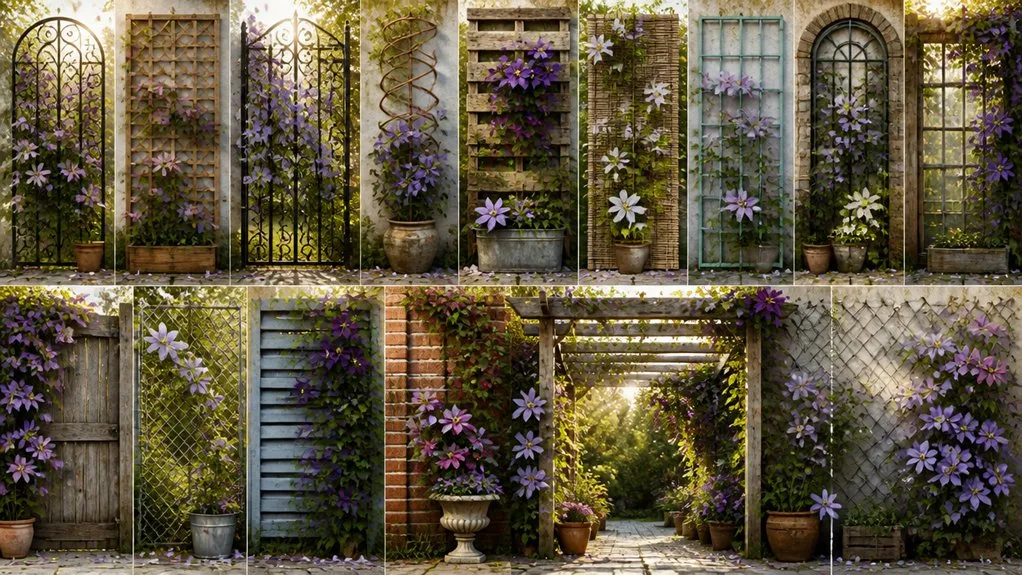
Construct Trellises and Arbors for Climbing Vines
Why settle for flat garden beds when you can build vertical structures that frame your space and support cascading vines?
You’ve got two solid options.
Metal cattle panel arches offer speed and affordability—grab two 18-foot panels at $20-$25 each, pair them with 6-foot T-posts, and secure everything with zip ties. You’ll have an instant arch supporting climbing plants within hours. These vertical structures reduce bending during harvest and keep fruit within easy reach without kneeling.
For a sturdier, custom look, build wooden frames using pressure-treated 4×4 posts.
Dig holes 36 inches deep, space posts 4 feet apart, and anchor them below the frost line.
Assemble curved 2×6 top pieces with a jigsaw, then attach lattice between 1×2 frames using a brad nailer.
Either approach transforms your garden into a romantic, functional vertical garden that draws the eye upward and maximizes your growing space.
Erect a Rustic Pergola With Rough-Hewn Timber
While trellises and arbors handle climbing vines beautifully, a pergola takes your rustic garden to another level—it’s the architectural centerpiece that anchors your entire landscape.
You’ll create an airy structure using rough‑hewn timber that weathers to silver while resisting rot for 40+ years.
Select Western Red Cedar or Douglas Fir for natural durability and strength. Pre‑assemble components on level ground, using 20‑inch spacing between joists and 3×3 angle iron brackets for support. Secure everything with galvanized carriage bolts through cutouts, anchoring posts into your house structure. These DIY pergola plans provide detailed blueprints and step-by-step instructions to guide your construction project.
Key considerations:
- Use rough-cut lumber over finished for superior weather resistance
- Install composite shims between timbers to prevent rot contact
- Position joist hangers on flat surfaces before mounting
- Maintain end-to-end straightness with string lines
- Seal cedar every 2-3 years for extended longevity
Your pergola becomes the perfect retreat for morning coffee or evening gatherings.
Create Rustic Seating From Vintage Wooden Pieces
How do you transform forgotten wooden pieces into garden seating that tells a story? You’ll find magic in repurposing vintage materials that carry history and character into your outdoor space.
| Material | Design | Visual Appeal |
|---|---|---|
| Bed frame headboards | Backrest with seat and arms | Ornate, nostalgic |
| Barn doors | Rustic bench backs | Weathered authenticity |
| Railroad ties | Industrial-style seating | Raw, durable charm |
| Driftwood | Garden seats | Organic uniqueness |
Start by sourcing vintage iron and wood combinations that mimic old park benches. Layer reclaimed doors into sturdy frames, or stack railroad ties with industrial legs. Consider repurposed bed benches constructed from old metal headboards welded to cut-in-half baseboards for an industrial look that requires minimal wood use. Add plush cushions and throw pillows for comfort. Arrange flowering planters nearby to enhance the rustic aesthetic. These pieces won’t just furnish your garden—they’ll create gathering spots brimming with personality and purpose.
Build a Cozy Fire Pit With Log Seating
There’s nothing quite like gathering around a crackling fire on a cool evening, and you can create that warmth in your garden by building a fire pit with rustic log seating.
Start by marking your pit layout and excavating 2-8 inches deep, then compact the soil. For optimal airflow and combustion, consider including four evenly spaced draw holes throughout your pit design.
Pour crushed gravel as your base, wet it thoroughly, and tamp it down.
Lay concrete blocks in staggered rows around the perimeter, securing them with heat-resistant adhesive.
Insert a metal fire ring and fill the interior with lava rock for protection.
- Select pressure-treated logs 16-18 inches tall for comfortable seating
- Space seats 4-6 feet apart for 6-8 people
- Level seating bases with gravel-filled depressions
- Secure logs with rebar stakes on uneven terrain
- Maintain 10-15 feet clearance from structures and trees
Plant a Wildflower Meadow for Effortless Color
After you’ve cleared away the hard work of site preparation, you’ll discover that a wildflower meadow rewards minimal maintenance with maximum color.
You’ll broadcast seeds in fall, mixing them with sand for even distribution across your bare, weed-free ground. Press seeds firmly into soil—don’t bury them—and add light straw mulch to anchor them through winter.
Come spring, natural stratification triggers germination in your sunny spot.
Water gently after sowing, then weed early to protect emerging seedlings.
By year two, your meadow flourishes; by year three, it’s fully established.
The annuals in your seed mix naturally crowd out weeds, so you’ll spend less time fighting nature and more time enjoying cascading blooms that transform your rustic garden into a living masterpiece.
Grow Low-Maintenance Herbs in Rustic Containers
While your wildflower meadow flourishes with minimal intervention, you can cultivate fresh herbs with equally effortless care by growing them in rustic containers.
Select drought-tolerant varieties like thyme and rosemary, which thrive in full sun with minimal watering.
Use fabric smart pots or terracotta with drainage holes to prevent root rot.
Fill containers with well-drained potting soil, then apply slow-release organic fertilizer at planting time.
Water consistently based on each herb’s needs—Mediterranean herbs prefer drier conditions, while lemon balm demands regular moisture.
Moisture-loving herbs like mint should stay in separate pots to contain their aggressive spreading.
- Thyme: drought-resistant, neglect-tolerant
- Rosemary: rich woodsy flavor, excellent drainage essential
- Lemon balm: quick-growing, regular watering required
- Greek oregano: flavor-packed leaves
- Parsley: easy from seeds, prefers consistent moisture
Design Overflowing Borders With Scrambling Plants
How do you transform a stark garden border into an exuberant display of tumbling foliage and cascading blooms?
You’ll start by preparing your soil with organic mulch and testing its pH to match plants to conditions.
Select six varieties maximum—mixing perennials, shrubs, and annuals—grouping three to seven identical plants together for impact.
Space them generously, allowing sideways growth, then soak roots before planting.
Position taller structures at the back, letting scrambling plants with mounding forms spill forward over hardscape edging like brick or stone.
Lay your plants in pots first to visualize the pattern, adjusting until the composition feels balanced.
This strategic layering creates the overflowing, romantic effect that defines rustic garden charm.
Select Climbing Vines for Doorways and Arches
What transforms a plain garden entrance into an enchanting passageway?
Climbing vines draped across doorways and arches create magical thresholds that invite exploration. You’ll discover each vine brings distinct character to your rustic garden.
Consider these options:
- Jackmanii Clematis – Vigorous grower producing vibrant summer blooms; pair with British roses for classic charm
- Climbing Hydrangea – Thrives in shade with white summer flowers; ideal for north-facing positions
- Wisteria – Strong-scented, hardy vines creating overhead canopies; plant before summer for May-June blooms
- Roses – Fast-growing iconic climbers requiring sturdy cedarwood support and secure fastening
- Jasmine – Delicate vines anchoring on metal scrollwork; adds antique mystery to brick walls
You’ll strengthen your garden’s bones by selecting vines suited to your site’s light and structure.
Each climber transforms ordinary passages into atmospheric garden rooms.
Repurpose Galvanized Metal Tubs as Unique Planters
When you’re hunting for weathered galvanized tubs, you’ll find them hiding in plain sight—abandoned at property edges, rusting in woods, or tucked away in thrift store corners. Rescue these vintage treasures and transform them into stunning planters that cost under $20 each.
Start by drilling drainage holes in the base, then cover them with landscape fabric to retain soil. Line sun-exposed sides with bubble wrap to protect roots from scorching metal heat.
Fill your tubs with quality potting mix and plant bold combinations: yellow lantana in blue-patina tubs, red geraniums near pools, or invasive mint varieties contained safely.
Bury them partially into your landscape, position them on patios, or add casters for mobility.
These rustic containers deliver authentic farmhouse charm while enabling inexpensive, creative gardening.
Arrange Rustic Metal Accents for Garden Character
Once you’ve established your garden’s foundation with repurposed planters, layering in metal accents transforms ordinary spaces into weathered retreats brimming with character.
You’ll want to strategically position focal points that draw the eye naturally through your yard. Rusted trellises guide climbing vines upward, while metal sculptures catch shifting sunlight throughout the day. Consider these arrangement strategies:
- Position wrought iron gates at garden entries for defined transitions
- Scatter vintage pieces like salvaged lanterns along pathways
- Mount corrugated steel panels as textured privacy backdrops
- Cluster small metal butterflies and flowers near plantings
- Install industrial bolts and hardware on pergolas for visual interest
Your metal accents age gracefully, developing rich patinas that complement soft greenery.
This interplay between raw industrial elements and organic growth creates the magical, lived-in aesthetic that transforms backyards into enchanting outdoor rooms.
Hang Fairy Lights and Mason Jar Lanterns Overhead
Your metal accents have established structure and industrial charm—now it’s time to layer in enchanting overhead lighting that’ll make your garden magical after dark. String fairy lights between posts and trees for a twinkling canopy, or craft custom Mason jar lanterns that combine rustic appeal with personalized charm.
Start with wide-mouth quart jars prepped with glow-in-the-dark paint and ultra-fine glitter. Cut fairy silhouettes from black foam, anchor them with cork and moss bases, then secure battery-operated tea lights to lids.
Attach wire handles using heavy-gauge wire or wired jute twine, creating curved hooks with needle-nose pliers.
Wrap burlap around battery packs to conceal them, then embellish with dried moss, faux florals, and gems. Hang your luminous creations overhead to cast dancing shadows across your garden sanctuary.
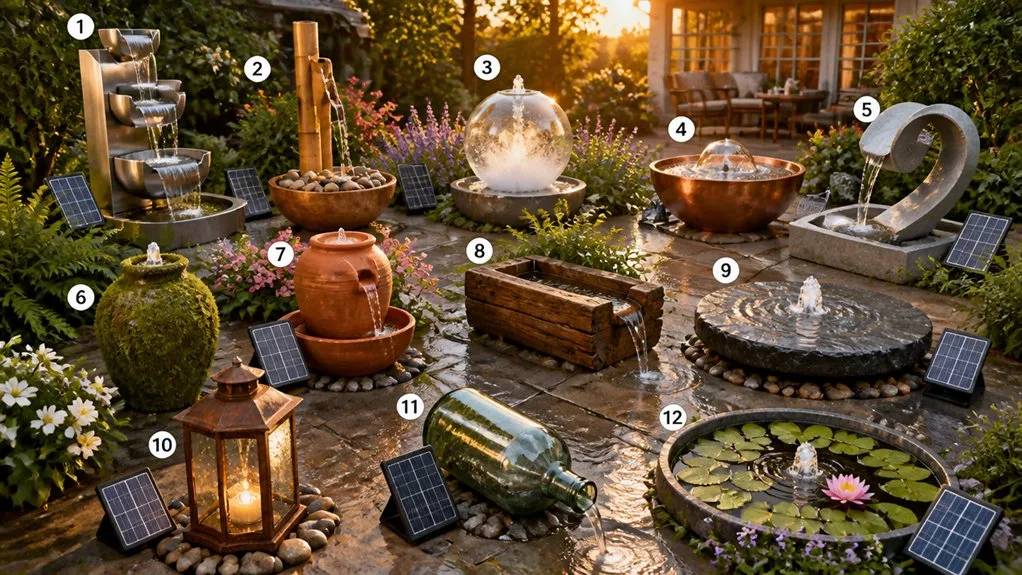
Add a Rustic Stone Water Feature or Bird Bath
How do you transform a quiet corner into a sanctuary that engages all the senses?
You’ll discover that stone water features create ambient soundscapes masking unwanted noise while establishing focal points in your garden.
Consider these options:
- Rock waterfalls cascade over stacked stones into natural basins, mimicking mountain cliffs
- Hand-drilled limestone fountains provide visual movement with lights dancing through flowing water
- Pond-less designs deliver soothing water sounds with minimal maintenance requirements
- Basalt column fountains offer rustic textures in compact sizes like H48″ x 8″
- Vanishing edge designs integrate rock accents and geysers for dramatic effect
You’ll appreciate that AquaBasin reservoirs support real stones without requiring underground vaults, enabling single-day installations.
Whether you choose authentic limestone or cast stone, your water feature enhances tranquility while transforming your backyard into an engaging retreat.
Conclusion
You’ve transformed your backyard into a rustic sanctuary where nature and creativity flourish together. As the saying goes, “the best things in life are worth the effort,” and your garden proves it. You’ll find yourself drawn outdoors more often, barefoot on stone paths, admiring galvanized planters catching sunlight. Those fairy lights you’ve hung twinkle above your workspace. You’re not just growing vegetables and flowers—you’re cultivating a personal retreat that rewards you with beauty, tranquility, and genuine connection to the earth.
The Only Tools You Need for a Thriving Garden 🌱
Whether you're a weekend gardener or growing daily — these hand-picked tools make every session faster, easier, and more satisfying.