You’ll transform your yard into an enchanting sanctuary by layering evergreen hedges, winding S-curve pathways past ornamental grasses, and anchoring hidden seating nooks with wisteria-draped arbors. Plant native self-seeders like purple coneflower and black cohosh to attract butterflies and birds while softening sight lines. Add pondless fountains for gentle soundscaping, then guide exploration through clematis-framed entrances and stepping-stone routes that reveal intimate garden rooms around each corner. Discovering exactly how to orchestrate these magical layers awaits.
Key Takeaways
- Create hidden entrances with wrought-iron arches, climbing vines, and shade plantings to define mysterious garden thresholds.
- Layer multi-season screens using pergolas, ornamental grasses, and evergreen shrubs that evolve visually throughout the year.
- Design S-curved pathways with strategic tree placement and spillover plantings that blur edges and encourage contemplative movement.
- Integrate self-seeding native perennials like black cohosh and purple coneflower for naturalistic, low-maintenance magical atmospheres.
- Position concealed seating nestled within dense shrubs and trees, enhanced by pondless fountains for ambient water sound.
Create Hidden Entrances With Arbors and Climbing Plants
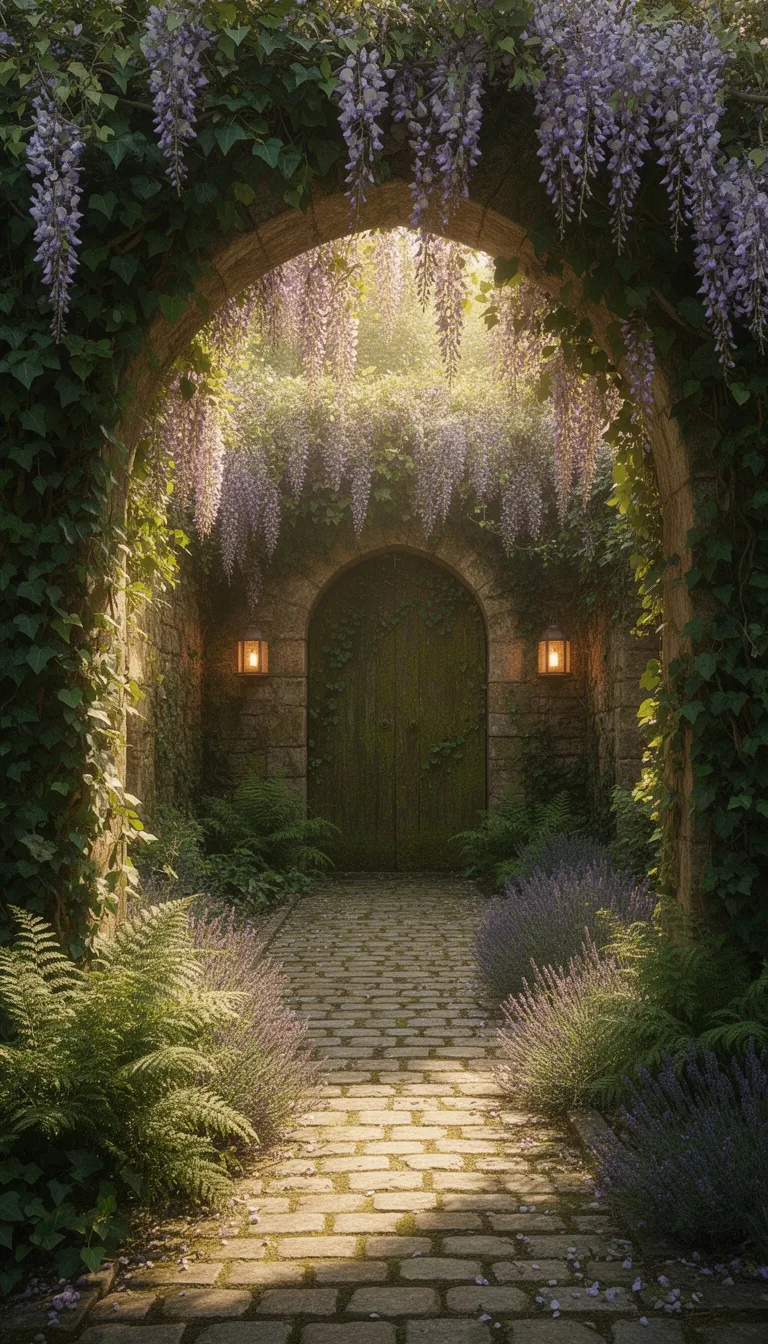
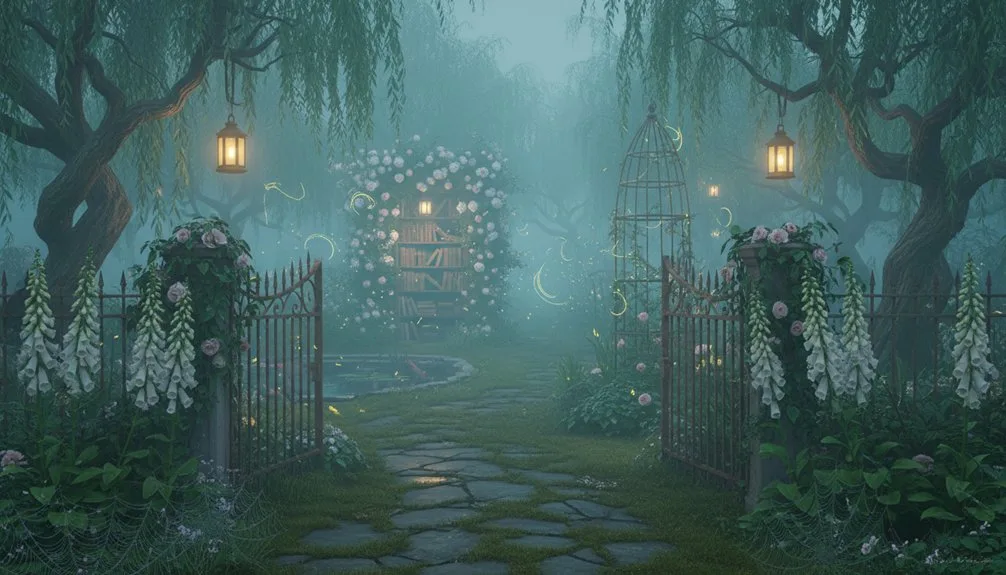
How do you transform an ordinary garden threshold into an enchanting portal? You’ll combine sturdy arbor structures with vigorous climbing plants to create magical entryways.
Start with a wrought iron arch or rustic wooden frame—these architectural anchors define your garden’s entrance while establishing visual intrigue.
Stone pillars supporting reclaimed timber gates offer organic durability that weathers beautifully over time.
Next, cultivate climbing vines across your arbor’s framework.
Clematis drapes purple blooms elegantly along wooden supports, while ivy cascades over stone arches with striking contrast.
These plants don’t just soften views; they build atmospheric mystery through dappled shadows and textured greenery.
Plant hostas and ferns at gate bases to enhance the intimate feel.
The result? A lush tunnel inviting exploration—a genuine secret garden entrance that beckons visitors forward into hidden garden sanctuaries.
Layer Evergreen Hedges for Year-Round Privacy

While arbors frame your garden’s entrance, layered evergreen hedges become the living walls that shield your sanctuary from prying eyes.
You’ll create dense screening by staggering multiple rows rather than planting single lines, maximizing visual obstruction year-round.
Select species suited to your USDA hardiness zone. Consider these options:
- Wavy Leaf Privet for lustrous, structured foliage reaching 8-10 feet
- Leyland Cypress for rapid growth up to 5 feet annually
- Eastern white cedar as a native, subsidized alternative
Space trees 12-24 inches apart from centers, accounting for mature dimensions.
Dig holes twice the root ball’s diameter, enriching soil with organic matter.
Water twice weekly with 4-6 gallons for two years.
Prune regularly above leaf nodes, encouraging dense lateral branching that transforms your garden into an impenetrable green sanctuary.
Wind Pathways to Hide What’s Around the Corner

Your evergreen hedges now form the backbone of privacy, but they’re most effective when visitors don’t see them all at once.
Design meandering paths that wind between tree placements, using S-curves and long, graceful routes to conceal views around corners.
Trees function as natural waypoints, their strategic positioning creating organic spatial boundaries that guide circulation while obscuring distant vistas.
Layer deciduous and evergreen combinations—pine, juniper, rowan, birch, oak, and whitebeam work exceptionally well—to diffuse wind as it travels through foliage.
This creates protective microclimates along pathways.
Introduce gaps in edge planting at thigh height, allowing long views while maintaining connection to surrounding areas.
Plants spilling over path boundaries hide defined edges, creating naturalistic containment that encourages slower, more contemplative exploration through your hidden garden.
Block Views With Ornamental Grasses and Tall Shrubs
Ornamental grasses and tall shrubs create dynamic vertical screens that shift and sway with the breeze, offering both privacy and movement where rigid hedges feel static.
You’ll find excellent options for varied climates:
- Switch Grass and Big Bluestem thrive in zones 3-9, reaching 4-9 feet with architectural seedheads that provide winter interest
- Giant Sacaton offers 3-8 feet of upright foliage with golden spikes, ideal for full-sun zones 5-9
- New Zealand Flax delivers year-round evergreen structure in zones 9-11, with sword-shaped foliage reaching 8-10 feet in tropical settings
You’ll appreciate how these plants establish layered boundaries through their natural forms.
Their fibrous textures diffuse sight lines more effectively than solid barriers, while their seasonal transformations keep your garden visually engaging throughout the year.
Plant Vines Like Wisteria to Cloak Garden Spaces
How can you transform stark walls and bare structures into lush, flowering sanctuaries?
Plant wisteria vines to create enchanting garden retreats.
These vigorous climbers grow up to 10 feet annually, reaching 10-30 feet high with spreads of 10-20 feet, making them ideal for cloaking arbors, pergolas, and unsightly structures.
Choose American wisteria (*Wisteria frutescens*) for a non-invasive option hardy in zones 5a-9b.
Position your vines on south- or west-facing walls where they’ll thrive in full sun and produce fragrant blooms.
They require deep, moist, well-drained soil and sturdy support systems.
Prune routinely after mid-May flowering, cutting back to 3-4 buds multiple times seasonally.
This restrains aggressive growth while promoting abundant flowers.
The result: a magical, draped vine enclosure that transforms your garden into a fragrant, hidden sanctuary.
Build Hedged-In Seating Nooks for Discovery
Beyond open garden expanses, you’ll discover that intimate seating retreats—framed by hedges and sheltered beneath shade structures—offer quiet sanctuaries for contemplation and rest.
You can craft these hidden nooks by layering botanical elements strategically:
- Plant low boxwood hedges around gravel patios, creating textured perimeter walls that enclose seating areas while maintaining visual softness.
- Combine yew at steps with hornbeam rows behind to establish layered shade enclosures that filter light and muffle external noise.
- Pair curved boxwood accents with lush hostas, ferns, and shade plants surrounding stone benches for verdant seclusion.
You’ll position stone benches in moody blue-walled spaces with statuary to deepen the retreat’s atmospheric quality. These hedged sanctuaries transform ordinary garden corners into discovery zones—places where you escape into peaceful solitude surrounded by living walls of cooling foliage.
Stack Fences and Plants for Multi-Season Seclusion
What if you could build privacy that evolves with the seasons rather than standing static year-round? You’ll achieve this by stacking vertical structures with strategic plantings that breathe and adapt throughout the year.
| Season | Structure | Planting Strategy |
|---|---|---|
| Spring | Livestock panels, trellises | Climbing beans, peas emerge |
| Summer | Pergolas, arbors | Dense vines create dense shade |
| Fall | Arches, A-frames | Ornamental grasses layer depth |
| Winter | Galvanized frameworks | Native shrubs provide evergreen coverage |
Layer low borders with rear tall plants to create psychological seclusion and defined zones. Native shrubs planted one foot apart ensure quick coverage while providing ecosystem benefits. You’ll reduce wind chill by 25% year-round while maintaining lush microclimates. These living fences adapt naturally, offering breathing privacy screens that strengthen with time. Vertical gardens simultaneously improve air circulation, minimizing pests and diseases across all seasons.
Install Wooden Screens With Artistic Cutouts
Where layered fences meet sculptural artistry, wooden screens with artistic cutouts transform privacy into a gallery experience.
You’ll discover nature-inspired patterns—Rainforest, Leaf, Spiral—that cast mesmerizing shadows across your garden beds as evening light filters through.
Consider these design strategies:
- Mount screens inches from existing fences to amplify shadow play and depth perception
- Pair cutouts with climbing vines or tall grasses to integrate living elements seamlessly
- Use CNC-cut panels featuring geometric designs that complement your planting scheme
Cedar or treated pine screens weather gracefully while maintaining crisp detail.
You can customize heights and positions to create distinct garden rooms, screening utilities or intimate seating areas.
The interplay between solid wood and negative space establishes visual rhythm while preserving airflow—essential for healthy plant growth in enclosed spaces.
Plant Self-Seeding Perennials to Build Layers of Mystery
How do you cultivate intrigue within a garden without replanting seasonally? Self-seeding perennials create layered mystery through natural regeneration.
Plant Black Cohosh for ferny 3-to-4-foot clumps with white bottlebrush spikes that self-sow obligingly.
Arkansas blue-star delivers starry light-blue late-spring flowers on disease-resistant foliage, reliable among species.
Butterfly Weed thrives in hot, dry niches, its brilliant orange clusters attracting pollinators while downy seeds float and germinate naturally.
Purple Coneflower provides rose-pink dark-coned flowers within one year, requiring no replanting once established.
Helleborus foetidus, the most adaptable self-sower, adapts to sun and shade with chartreuse flowers and pungent foliage.
These perennials establish themselves organically, deepening garden complexity and spontaneity across seasons.
Hide Seating in Unexpected Corners
While self-seeding perennials weave organic mystery through layered plantings, strategically positioned seating amplifies that sense of discovery by tucking rest spots into garden nooks where they’ll surprise and delight. You’ll create intimate retreats by:
- Positioning banquette seating in walled garden corners maximized by tall trees screening dining spots
- Anchoring two-seater benches in quiet yard angles with petite side tables for seclusion
- Framing hidden patios along fences using L-shaped timber plinths
Curved gravel paths through dense tropical planting lead visitors toward concealed seating areas.
You can place bean bags against walls, shielded from sightlines by multi-stem trees positioned in front.
Consider almost-buried benches at path ends within low shrub patches.
These unexpected corners transform your garden into a layered sanctuary, rewarding exploration with secluded havens throughout.
Create Natural Canopies With Low-Hanging Branches
To transform open garden spaces into sheltered retreats, you’ll want to layer your plantings vertically, starting with tall structural trees that’ll anchor your canopy system. Canadian hemlock and trembling aspen establish foundational shade, while mid-shrub layers filter direct sunlight into dappled patterns. Ground-level sedges and shade-tolerant companions like foam flower and wild columbine complete the ecological structure.
| Canopy Layer | Species | Height | Function |
|---|---|---|---|
| Upper | *Tsuga canadensis*, *Populus tremuloides* | 40-60 ft | Foundational shade |
| Mid | Shrubs, climbing vines | 8-15 ft | Light filtering |
| Lower | Sedges, groundcovers | 4-18 in | Moisture retention |
| Ground | Native forbs | 2-8 in | Habitat creation |
Vines cascading over pergolas and arbours deliver overhead coverage while creating an untamed aesthetic. Grapevines and pipevine establish almost-instant canopy when you need rapid coverage. Natural leaf mulch beneath trees retains soil moisture and suppresses weeds organically.
Choose Native Plants That Invite Wildlife Into Hidden Spaces
Native plants transform your garden into a thriving wildlife corridor where insects, birds, and pollinators flourish where they’ve evolved to thrive.
When you select regionally native species, you’re creating hidden pockets that offer exactly what wildlife needs.
Your native plantings provide three critical elements:
- Host plants for caterpillars – specific natives sustain butterfly and moth larvae through their complete lifecycles
- Nectar sources across seasons – year-round blooms fuel pollinators from early spring through fall
- Shelter and nesting sites – dense native growth offers protection and breeding habitat
Gardens planted with native diversity yield immediate results.
You’ll observe 17 butterfly species and 22 bird species within a single summer.
These hidden spaces reverse habitat loss, transforming your yard into a refuge where bees, birds, and beneficial insects establish populations.
Native plants do what ornamentals can’t: they sustain the complete ecological web.
Create a Garden Within Your Garden
By layering screens, defined entrances, and thoughtful focal points, you’ll carve intimate retreats from your larger landscape.
Start with a vine-draped gate or lattice arbor that signals transition into your secret space.
Position tall evergreens and layered plantings to obscure views from neighboring areas, creating natural boundaries without rigid walls.
Within this enclosed nook, arrange seating—a bench beneath a shade tree or cafe table nestled among foliage—as your destination point.
Add a water fountain to mask external noise and provide soothing ambiance.
Incorporate native perennials and ornamental grasses that billow naturally, softening edges while concealing pathways.
Balance loose, romantic planting with structured elements like clipped hedges or mowed lawn sections.
This interplay between wild growth and defined forms creates depth and mystery, transforming your garden into a layered sanctuary within a sanctuary.
Guide Exploration With Stepping Stone Paths
Once you’ve carved out your intimate garden rooms, stepping stone paths invite visitors deeper into the space, transforming wandering into discovery.
You’ll guide exploration by following natural foot traffic patterns and your landscape’s contours, avoiding rigid geometry that disrupts organic flow.
Design your path with purposeful dimensions:
- Space stones 3-6 inches apart, matching your shortest household member’s stride for comfortable navigation
- Maintain minimum 24-inch width to prevent cracking and accommodate two people walking together
- Lay pavers on grass first for visualization before committing to excavation
Layer crushed stone and sand bases for proper drainage, preventing erosion and slippery surfaces.
Mix materials strategically—combine flagstone with decomposed granite or stepping stones in bark mulch—to create textural contrast. Taper curves by tightening inside corners and widening outside edges, drawing visitors naturally through your hidden sanctuary.
Add Water Features for Sound and Solitude
Water transforms your secret garden from a visual retreat into a multisensory sanctuary, where the gentle murmur of flowing water masks outside noise and deepens your sense of solitude. You’ll find options suited to your space and lifestyle.
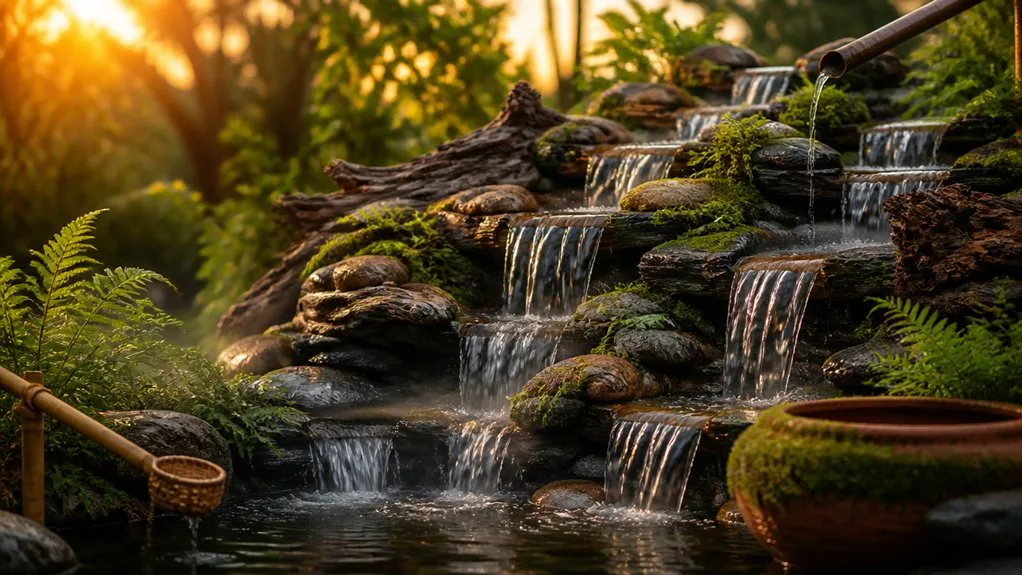
Pondless disappearing fountains work beautifully in compact gardens, offering tranquil sounds without maintenance concerns.
For larger properties, naturalistic fountains using rocks and mossy surfaces blend seamlessly into hidden corners.
Tiered fountains provide cascading auditory appeal while remaining low-maintenance.
Container bubblers offer portable flexibility for patios or intimate garden nooks.
Creek beds and streams attract wildlife while producing continuous gentle water sounds that enhance relaxation.
Select features that complement your garden’s existing plants and pathways, creating magical focal points that invite lingering and contemplation.
Conclusion
You’ve now unlocked the botanical secrets to transforming your yard into an enchanted sanctuary that’ll make you feel like you’re wandering through an endless fairytale forest. Those cascading wisterias aren’t just vines—they’re your personal green curtain to paradise. Layer those hedges thick enough to block out the entire world, wind those paths so mysteriously you’ll swear you’ve discovered Narnia, and watch as wildlife floods in like you’ve orchestrated nature’s greatest symphony. Your hidden garden’s calling.
The Only Tools You Need for a Thriving Garden 🌱
Whether you're a weekend gardener or growing daily — these hand-picked tools make every session faster, easier, and more satisfying.