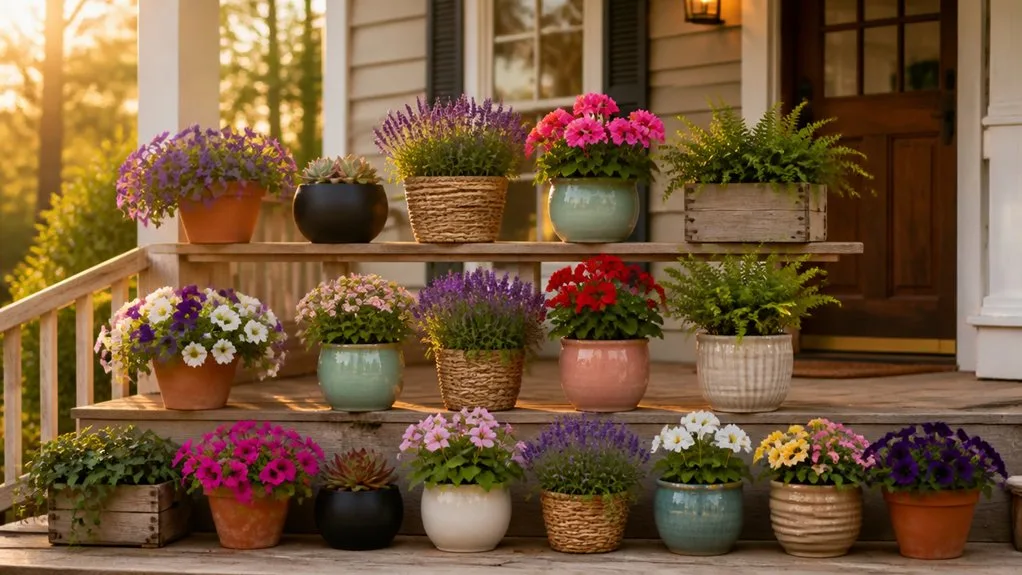
You’ll transform your front porch by matching pot sizes to your space—16-20 inches for standard doors, 24+ inches for narrow porches. Select materials like weather-resistant fiberglass or classic terracotta based on your architecture. Layer symmetrical pairs with statement plants like ornamental grasses for focal points. Arrange containers using odd-numbered groupings and tiered elevations for visual depth. Budget strategically by combining one investment piece with budget-friendly selections. Add uplighting to showcase textures and foliage. These foundational techniques set the stage for creating your ideal welcoming entryway display.
Key Takeaways
- Symmetrical pairs of identical pots flanking the door create architectural balance and establish an immediate welcoming focal point.
- Choose pot sizes proportional to your entry—16-20 inch diameter for standard doors, 24+ inches for narrow porches.
- Layer textures by combining ceramic, terracotta, and fiberglass materials for visual depth and dynamic compositional interest.
- Select low-maintenance plants like sedums, ornamental grasses, and calibrachoa that require minimal care throughout seasons.
- Arrange odd-numbered groupings with tiered elevations and trailing vines to add dimension and soften architectural lines.
Choose Your Pot Style: Classic, Modern, or Mixed
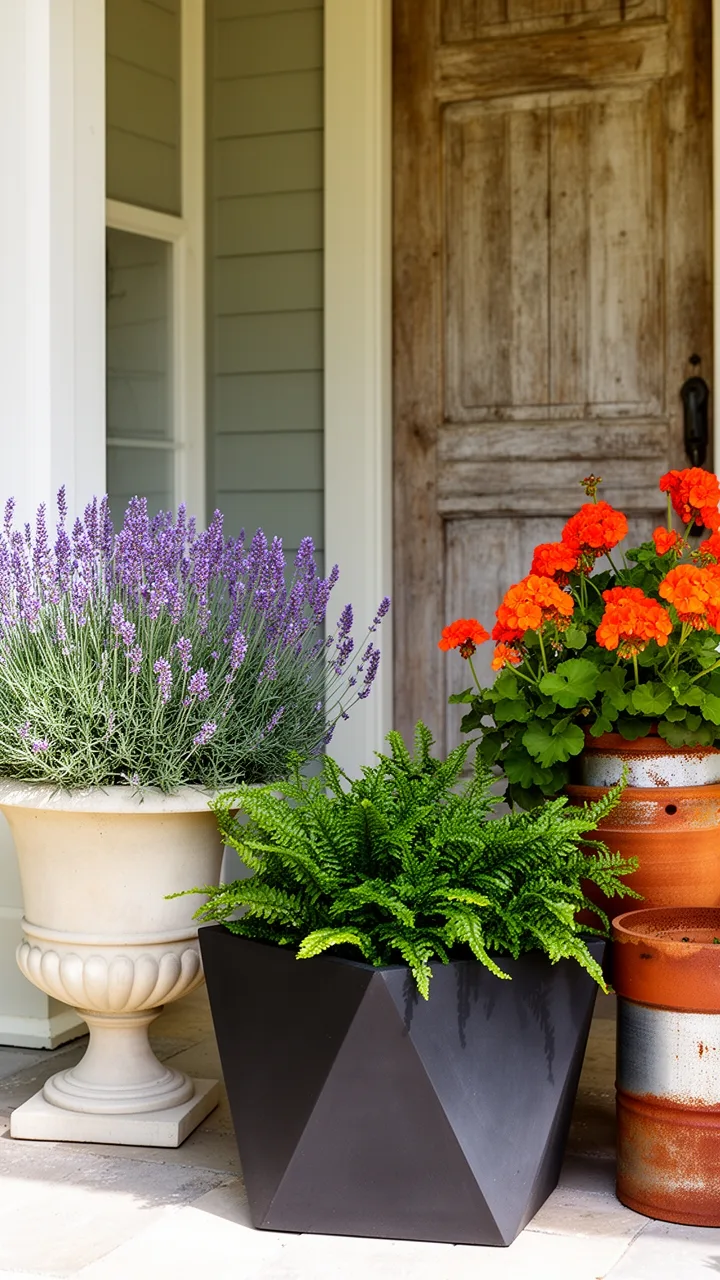
When you’re selecting pots for your front porch, the style you choose will establish the visual foundation for your entire display. Classic terracotta and ceramic containers complement traditional architecture with timeless appeal. Modern designs feature clean lines, geometric shapes, and materials like concrete or fiberglass that suit contemporary homes. Mixed approaches combine multiple styles strategically—pairing classic urns with modern planters creates visual interest and prevents monotony. Consider your home’s architectural period, color palette, and existing décor when deciding. You’ll want proportions that match your porch scale; oversized pots overwhelm small entries while undersized containers disappear on expansive porches. Your chosen style should harmonize with your home’s overall aesthetic framework.
Size Your Containers to Match Your Porch
Once you’ve settled on your pot style, container dimensions become your next critical consideration. You’ll want to match pot size to your porch’s proportions—oversized containers dwarf small entryways, while undersized pots disappear on expansive porches. For standard front doors, 16-20 inch diameter containers work well. Consider your door’s width and flanking space when positioning pairs. Taller pots (24+ inches) suit narrow porches; wider, shallow designs complement broader entries. Account for plant growth too; you’ll need adequate soil depth for root development. Proper sizing ensures visual balance, stability, and healthy plant establishment throughout the growing season.
Select Pot Materials for Durability and Aesthetics
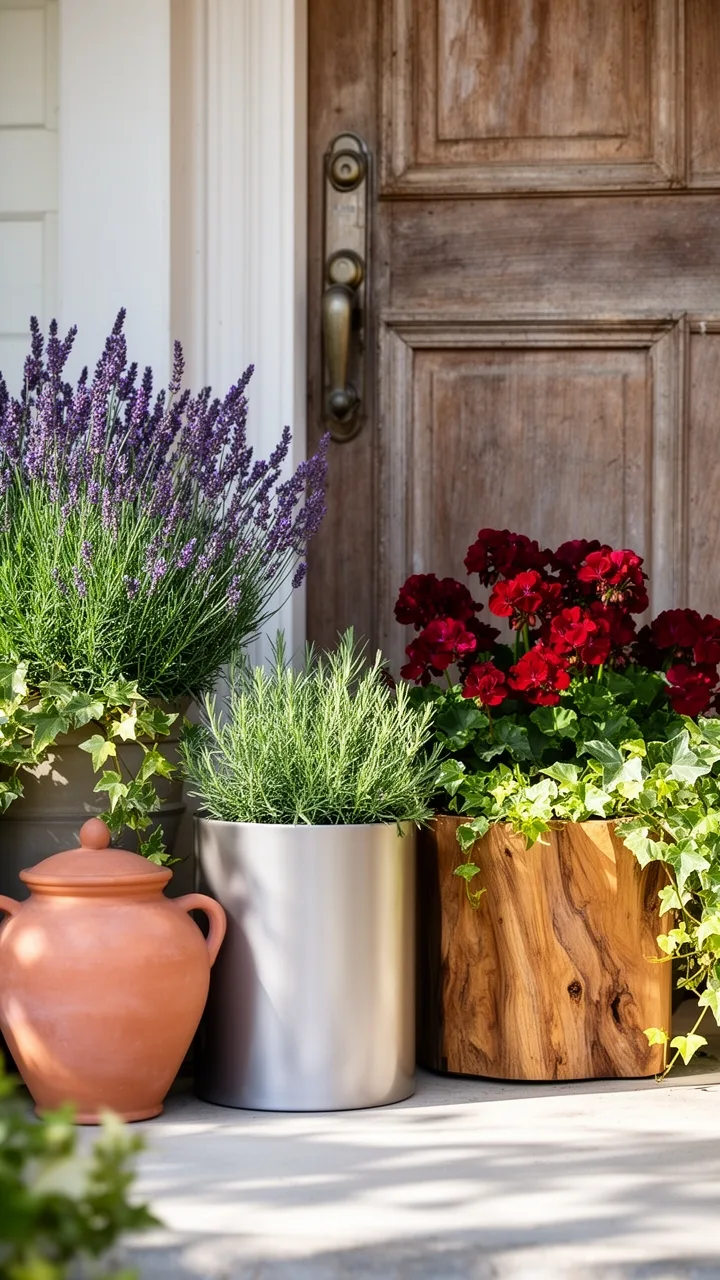
Beyond sizing considerations, your material choice dramatically impacts both the visual appeal and longevity of your front porch display. Terracotta offers classic aesthetics but demands regular sealing against freeze-thaw cycles. Ceramic provides durability with diverse design options, though it’s heavier and pricier. Fiberglass resists weather damage while remaining lightweight—ideal for frequent rearrangement. Concrete delivers permanence and modern styling but requires drainage holes to prevent water pooling. Resin combines affordability with weather resistance. You’ll want to match your home’s architectural style while considering your climate’s moisture, temperature fluctuations, and UV exposure to ensure years of reliable performance.
Set Your Budget Without Sacrificing Impact
Your material selection’s cost implications shouldn’t dictate the overall visual success of your front porch arrangement. Strategic budget allocation maximizes impact through smart choices. Consider this framework:
| Budget Tier | Material | Quantity | Visual Effect |
|---|---|---|---|
| Premium | Ceramic, stone | 2-3 large pots | Sophisticated focal points |
| Mid-range | Composite, fiberglass | 4-5 medium pots | Balanced variety |
| Economical | Plastic, terracotta | 6+ small pots | Abundant fullness |
| Mixed | Combination approach | Varied | Dynamic layering |
You’ll achieve professional aesthetics by combining one investment piece with budget-friendly selections. Layer varying heights and textures. Plant strategically to create visual density. This approach delivers impressive curb appeal while maintaining fiscal responsibility.
Symmetrical Pairs for Timeless Elegance
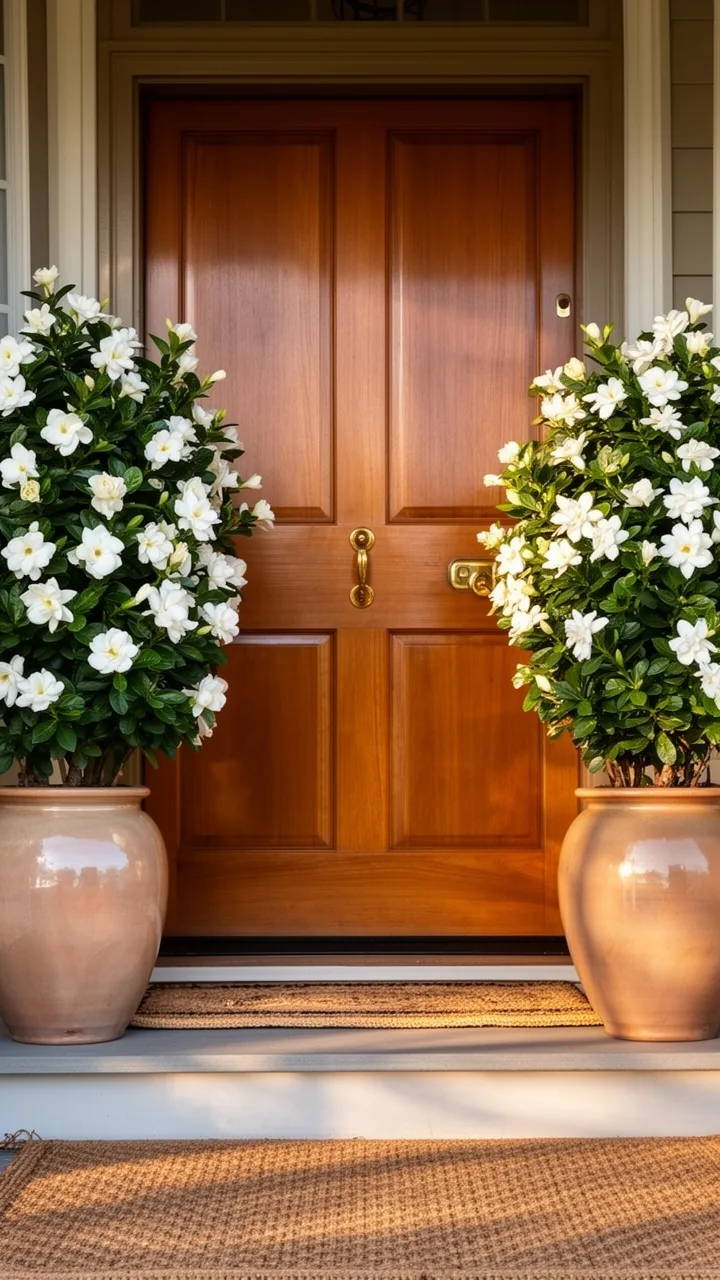
Matching pairs of flower pots flanking your front entrance create an instantly polished, architecturally balanced appearance that doesn’t require elaborate design expertise. You’ll want to select identical containers—same size, material, and color—positioned equidistant from your doorway. This symmetrical arrangement establishes visual equilibrium and frames your entry effectively. Fill both pots with complementary plantings: matching specimens for cohesion or contrasting heights for subtle interest. Consider pot material carefully; ceramic suits traditional homes, while concrete complements modern designs. Ensure drainage holes prevent water accumulation. This straightforward approach delivers professional-grade curb appeal without complexity or excessive expenditure.
Tiered Arrangements for Visual Depth
Creating height variation across your front porch transforms a flat, one-dimensional planting scheme into a dynamic composition that draws the eye upward and outward. You’ll establish visual interest by strategically positioning containers at different elevations. Employ plant stands, pedestals, and tiered shelving to achieve dimensional layering. Taller specimens anchor backgrounds while mid-height plantings create transition zones. Ground-level containers frame lower sightlines. This hierarchical arrangement maximizes your porch’s visual impact while accommodating varied light exposure and watering requirements for each tier level.
| Height Level | Container Type | Typical Plants | Visual Function |
|---|---|---|---|
| Elevated (24″+) | Tall urns | Ornamental grasses | Background anchor |
| Mid (12-18″) | Standard pots | Flowering shrubs | Transitional layer |
| Ground (0-6″) | Low bowls | Trailing petunias | Foreground definition |
Monochromatic Schemes for Sophisticated Impact
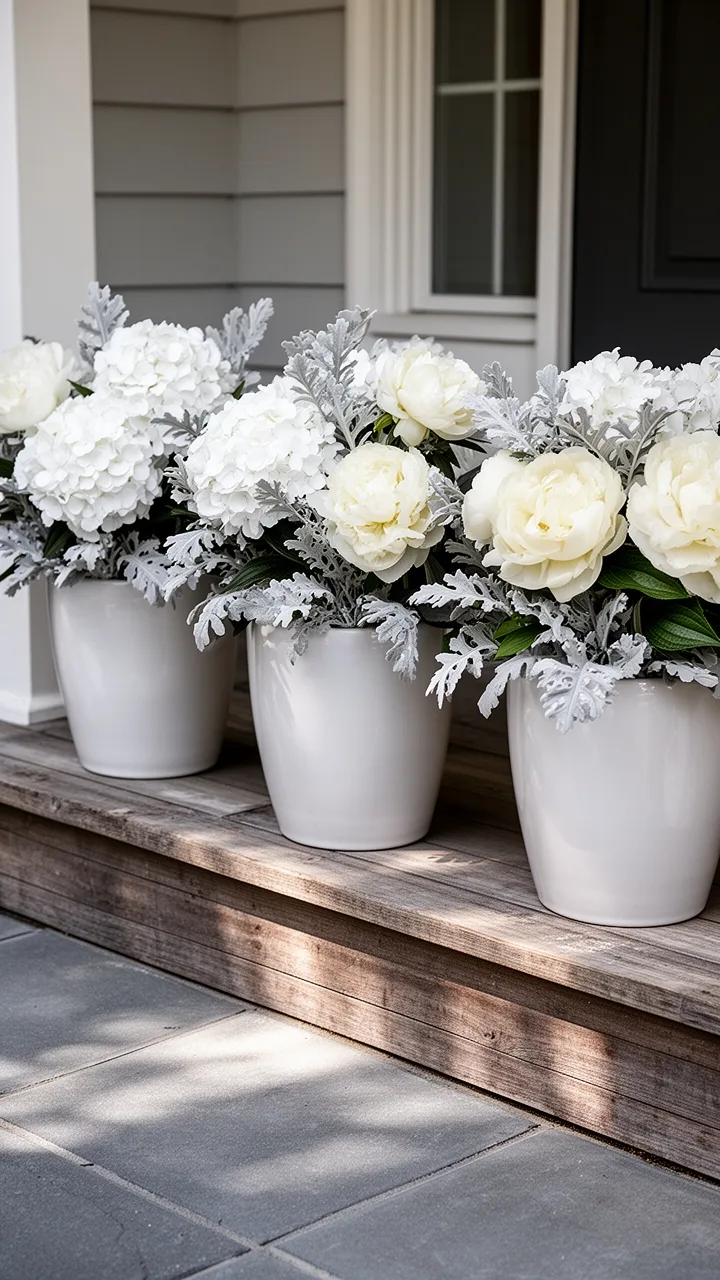
Since a single color palette demands precision in plant selection and container coordination, you’ll achieve refined elegance by committing fully to one hue family across all front porch elements. This approach creates visual cohesion while showcasing botanical diversity through varying textures and forms.
Consider these implementation strategies:
- Pot Gradation: Select containers in graduating tones within your chosen color family
- Foliage Variation: Mix plants with differing leaf textures, sizes, and growth patterns
- Seasonal Rotation: Swap blooms while maintaining the established color scheme
- Contrast Texture: Layer matte and glossy finishes for dimensional sophistication
Monochromatic schemes eliminate chromatic distraction, allowing architectural features and plant structure to command attention.
Mixed Textures and Heights for Dynamic Interest
While monochromatic schemes emphasize unity, layering varied textures and heights introduces visual rhythm that engages viewers as they approach your entry. You’ll want to combine smooth ceramic pots with rough terracotta and woven planters. Stack containers at staggered elevations—position taller specimens at 24-30 inches, mid-range plants at 12-18 inches, and trailing varieties at ground level. This tiered arrangement creates depth perception and prevents monotonous flatness. Incorporate spiky architectural plants like ornamental grasses alongside soft, billowing foliage such as petunias or calibrachoa. The interplay between contrasting surfaces and varied silhouettes transforms your porch into a sophisticated, multidimensional display that commands attention.
Trailing Vines and Cascading Blooms for Movement
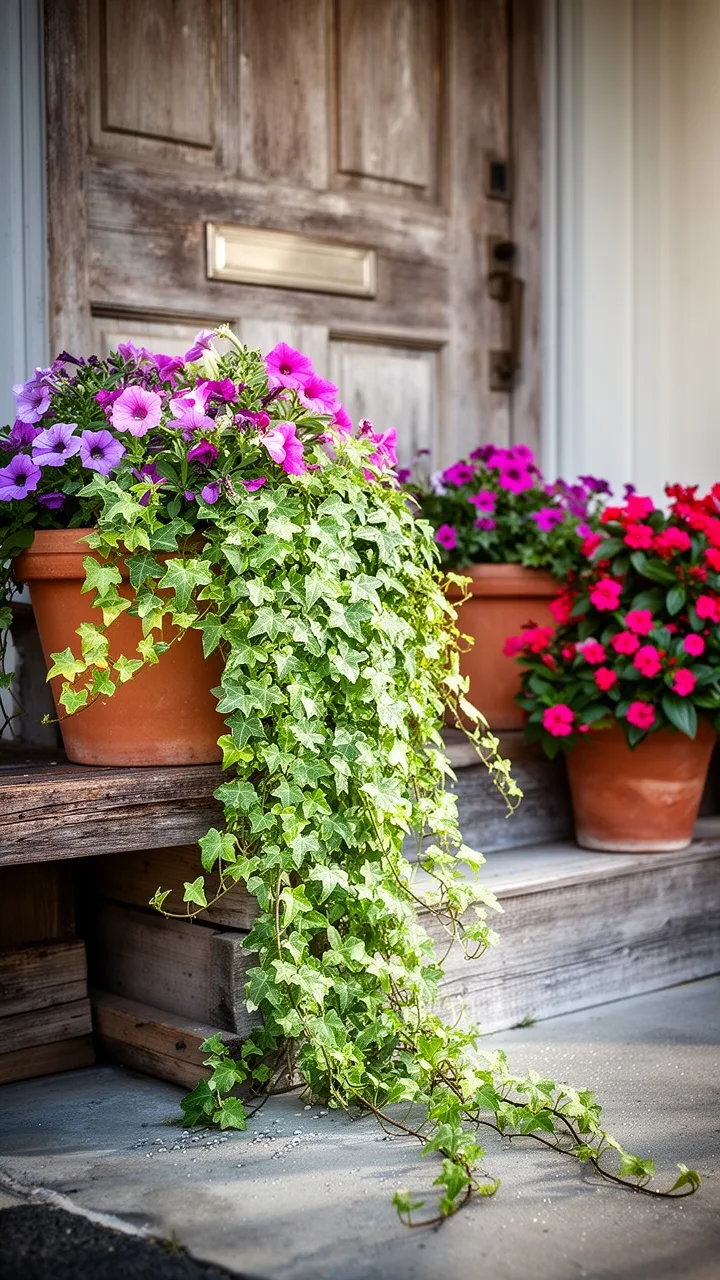
Trailing vines and cascading blooms introduce dynamic movement that softens hard architectural lines and draws the eye downward through your porch display. You’ll achieve visual fluidity by strategically positioning these plants at elevated heights.
Consider these cascading options:
- Petunias: Prolific bloomers producing continuous color from spring through frost
- Sweet potato vine: Vigorous grower with decorative foliage in chartreuse or burgundy
- Bacopa: Delicate white or pink flowers creating airy texture
- Ivy varieties: Evergreen structural elements providing year-round interest
You’ll anchor containers with upright specimens, allowing trailing plants to drape over edges. This layered approach creates depth while maintaining visual balance on your entryway.
Low-Maintenance Plants for Busy Homeowners
If you’re juggling multiple responsibilities, you don’t need to sacrifice curb appeal—selecting drought-tolerant and pest-resistant plants lets you maintain stunning front porch displays with minimal intervention. Consider sedums, which thrive in containers with infrequent watering. Ornamental grasses require deadheading only once yearly. Calibrachoa and million bells self-clean blooms, eliminating spent flower removal. Black-eyed Susans resist common pests naturally. Incorporate slow-release fertilizer pellets into potting soil to eliminate feeding schedules. Choose containers with drainage holes to prevent root rot. Water deeply but infrequently, encouraging deep root systems. This strategic approach maximizes visual impact while minimizing time investment.
Year-Round Color Combinations for Every Season
By strategically layering seasonal bloomers and foliage plants, you’ll maintain vibrant front porch displays across all twelve months. You can achieve year-round color through thoughtful plant selection and timing:
- Spring: Plant tulips, pansies, and ornamental grasses for fresh pastels
- Summer: Incorporate zinnias, marigolds, and trailing petunias for bold hues
- Fall: Add mums, ornamental cabbage, and sedum for warm tones
- Winter: Use evergreens, winterberries, and cyclamen for structure and subtle color
You’ll rotate plantings quarterly, ensuring continuous visual interest. This approach maximizes your porch’s curb appeal while accommodating each season’s unique growing conditions and aesthetic opportunities.
Bold Statement Plants as Focal Points
While seasonal rotations provide consistent color throughout the year, you’ll elevate your front porch’s visual hierarchy by anchoring each arrangement with a bold statement plant. Select specimens with commanding presence—consider ornamental grasses, architectural shrubs, or vibrant tropicals like cannas or dahlias. Position your focal point at the arrangement’s center or rear, allowing supporting plants to recede visually. Choose plants with distinctive foliage texture, unusual form, or saturated color that commands attention from the street. This strategic placement creates depth perception and draws visitors’ eyes naturally toward your entrance, establishing professional curb appeal through intentional design principles.
Themed Displays That Reflect Your Style
Your front porch flower arrangements become powerful expressions of personal aesthetic when you deliberately curate plants around cohesive design themes. You’ll establish visual harmony by selecting complementary colors, textures, and architectural styles that align with your home’s character.
Consider these thematic approaches:
- Mediterranean: Lavender, olive trees, and terracotta vessels create rustic elegance
- Modern minimalist: Ornamental grasses and monochromatic planters establish clean lines
- Cottage garden: Mixed perennials and vintage containers evoke nostalgic charm
- Tropical escape: Ferns, palms, and vibrant blooms transform entries into lush retreats
You’ll strengthen your design’s impact by maintaining consistent pot materials, heights, and plant spacing throughout your display arrangement.
Where to Place Pots for Maximum Impact
Strategic placement transforms flower pots from mere decorative elements into focal points that command attention and guide visitor movement. Position larger containers flanking your front door to create a symmetrical frame that draws eyes directly to your entrance. Place medium pots at stair edges or walkway corners to establish sight lines. Elevate arrangements on plant stands or pedestals to increase visual prominence and prevent ground-level obstruction. Cluster odd-numbered groupings—three or five pots—rather than even numbers for dynamic composition. Consider sight lines from the street, ensuring arrangements remain visible and unobstructed. Vary heights and depths to establish layered interest throughout your porch space.
Lighting Techniques to Showcase Your Display
Proper illumination transforms flower pots from daytime displays into evening focal points that’ll enhance your porch’s aesthetic appeal around the clock.
Strategic lighting amplifies your arrangement’s visual impact through these techniques:
- Uplighting: Position lights below pots to cast dramatic shadows and highlight foliage texture
- Accent lighting: Direct spotlights at specimen plants to create focal points and depth
- Ambient backlighting: Place soft lights behind displays for silhouetting and dimensional contrast
- Color-temperature selection: Use warm white (2700K) for inviting atmospheres or cool white (4000K) for modern aesthetics
Install LED fixtures with dimmer controls to adjust intensity based on seasonal changes and desired ambiance. Low-voltage systems offer safety and efficiency while maintaining consistent illumination throughout evening hours.
Conclusion
You’ve now got all the botanical artillery needed to transform your porch into a horticultural fortress. You’ll strategically position those containers—symmetrical sentinels flanking your door like floral bodyguards—while your statement plants wage psychological warfare against bland entryways. You’ve calibrated pot materials, budgeted your investment, and orchestrated lighting to interrogate every petal. Your porch won’t just welcome visitors; it’ll interrogate their taste. You’ve weaponized flowers.
The Only Tools You Need for a Thriving Garden 🌱
Whether you're a weekend gardener or growing daily — these hand-picked tools make every session faster, easier, and more satisfying.