You’ll transform your front yard by clearing debris and defining your space first. Select a unified color palette anchoring evergreens like boxwood with seasonal perennials. Layer planting beds in three tiers—tall specimens, mid-sized shrubs, low-growing plants—for depth. Add textured grasses and structural hardscaping elements like pavers or stone edging. Install uplighting to highlight focal plantings, then coordinate your front door hardware and paint. Consistent seasonal maintenance preserves your landscape’s polished appearance throughout the year. Each of these twelve strategies deserves its own detailed exploration.
Key Takeaways
- Clear debris and dead plant material to expose your yard’s true layout, microclimates, and existing infrastructure.
- Select a primary color with complementary accents, anchored by evergreens for year-round visual interest.
- Install hardscaping elements like pavers or stone edging to create clean, organized planting bed borders.
- Layer plantings in three tiers: tall specimens at back, mid-sized middle, low-growing front.
- Apply 2–3 inches of organic mulch and position uplighting to highlight trees and focal plantings.
Start Fresh: Clear Clutter and Define Your Space
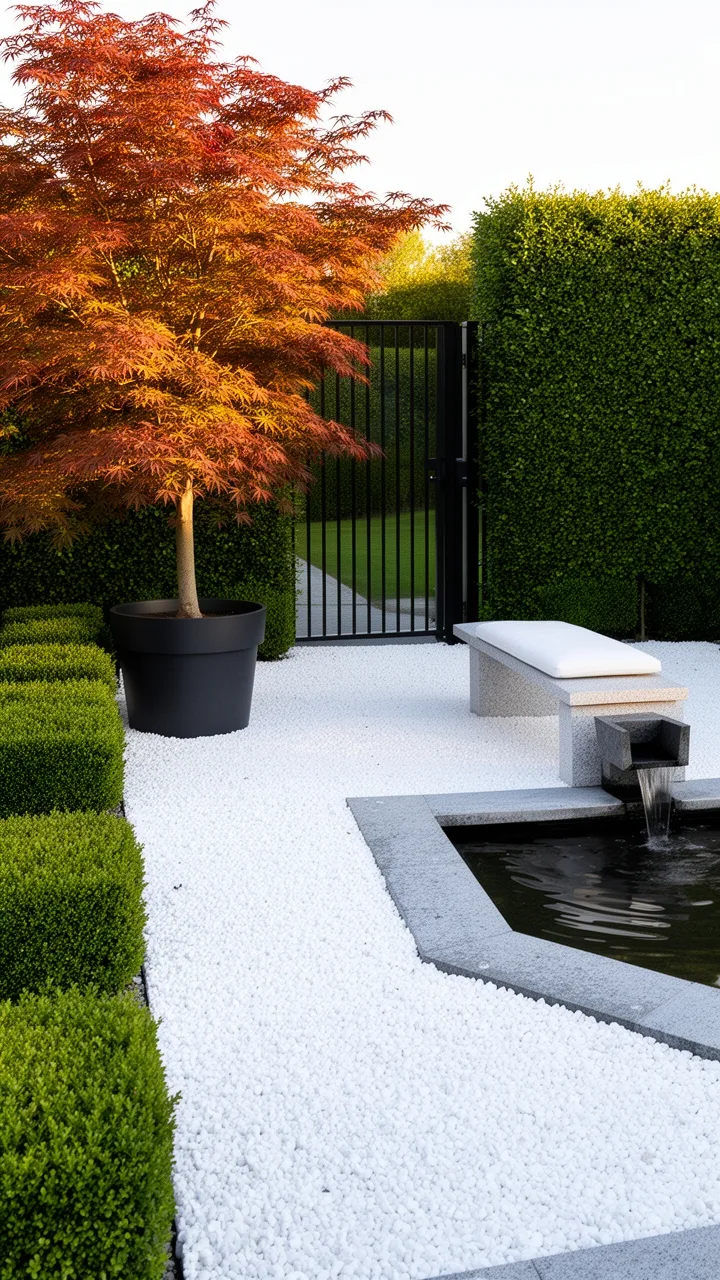
Before you’ll make any meaningful landscaping improvements, you’ve got to remove existing debris, overgrown vegetation, and hardscape obstacles that obscure your yard’s actual dimensions and potential. Clear away dead plant material, fallen branches, and accumulated mulch that’s decomposed into soil. Trim back encroaching shrubs and trees to reveal your property’s true boundaries. Remove cracked pavement, broken edging, or deteriorated hardscaping. This clearance exposes drainage patterns, sunlight exposure, and soil conditions you’ll need to assess. Once you’ve eliminated visual chaos, you’ll identify your yard’s actual square footage, microclimates, and existing infrastructure—essential information for designing a cohesive landscape plan that works with your property’s inherent characteristics.
Choose a Color Palette to Unify Your Front Yard
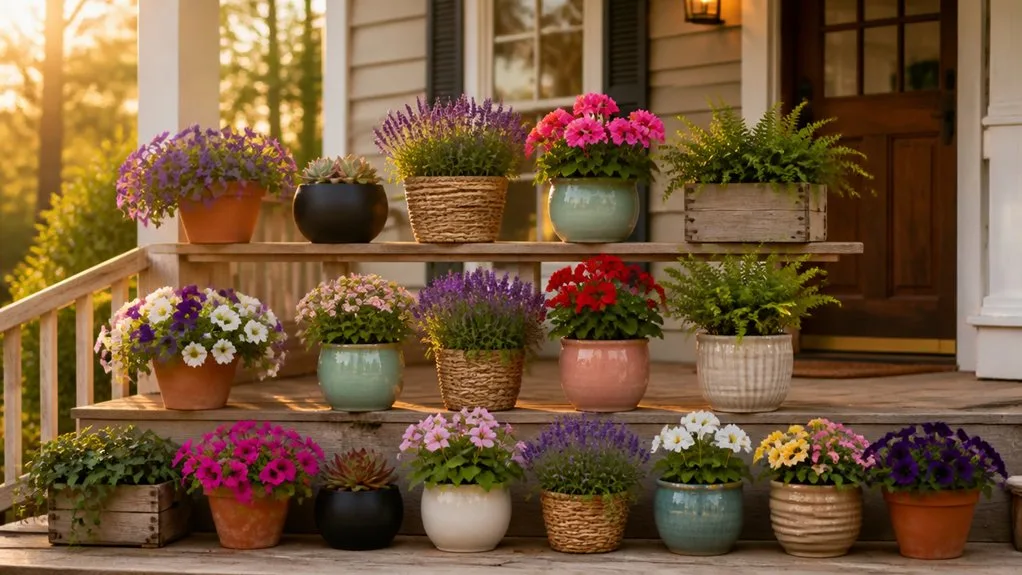
A cohesive color scheme transforms your front yard from a collection of individual plantings into a unified landscape composition. You’ll establish visual harmony by selecting a primary color, then layering complementary accent hues throughout your beds. Consider seasonal variations in foliage and blooms to maintain interest year-round.
| Color Strategy | Plant Examples |
|---|---|
| Cool Palette | Lavender, Russian sage, ornamental grasses |
| Warm Palette | Coreopsis, black-eyed Susan, coral bells |
| Neutral Base | Boxwood, euonymus, stone features |
You can anchor your scheme with evergreens, then introduce seasonal color through perennials and annuals. This disciplined approach creates professional polish while reducing visual chaos.
Create a Focal Point at Your Entrance
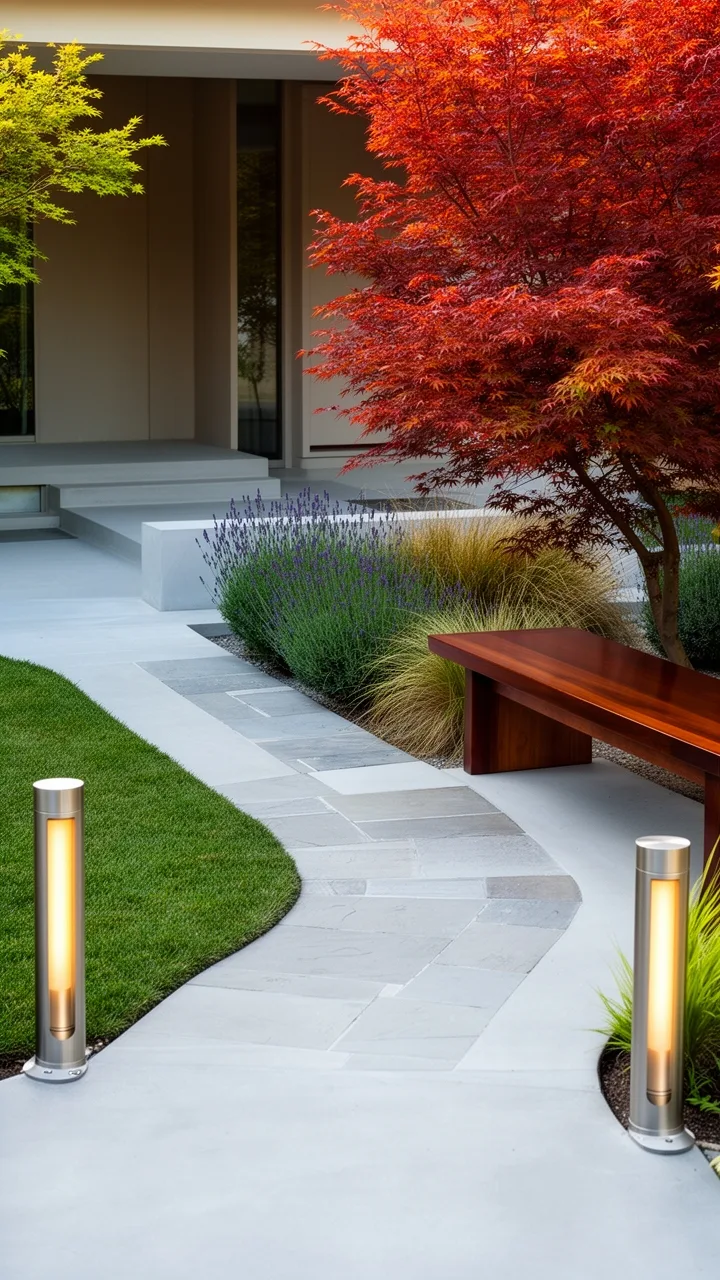
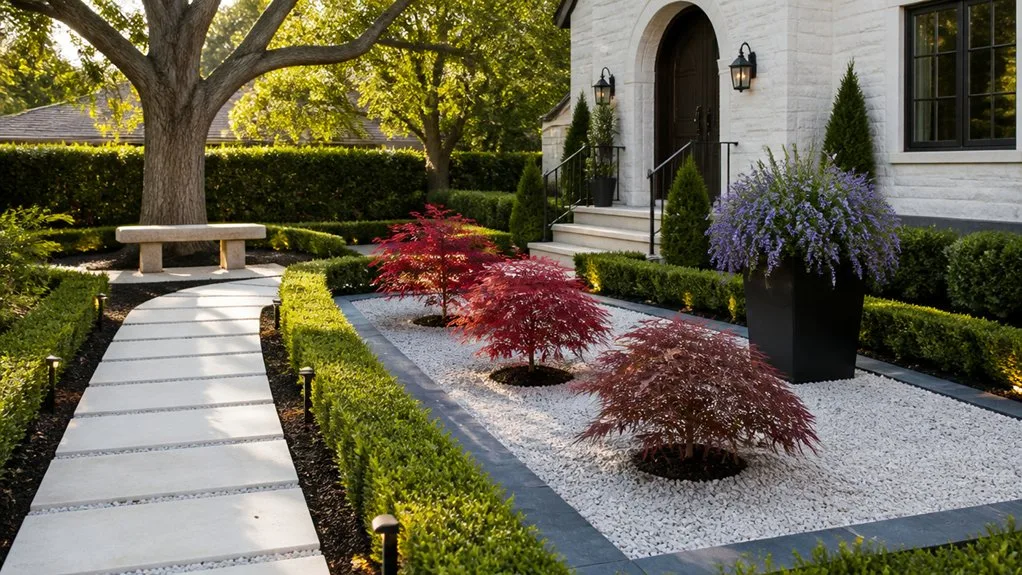
While your color palette creates cohesion across the entire landscape, you’ll want to establish a strong visual anchor at your entrance—the spot where visitors’ eyes naturally land first. Consider installing a specimen plant—perhaps a Japanese maple, ornamental grass, or flowering shrub—positioned asymmetrically near your door. Alternatively, create architectural interest through hardscaping: a decorative arch, stone planter, or sculptural element. Layer textures and heights to draw the eye upward. Ensure your focal point complements your home’s architecture and integrates seamlessly with surrounding plantings. This strategic placement immediately communicates intentional design while welcoming visitors with visual interest.
Plant Layered Beds for Depth and Visual Impact
Beyond a single focal point, you’ll create genuine depth by layering your planting beds in three distinct tiers: tall specimens (4-6 feet) positioned at the back, mid-sized shrubs and perennials (2-4 feet) in the middle ground, and low-growing groundcovers or edging plants (under 2 feet) toward the front. This graduated arrangement prevents plants from obscuring one another while establishing visual continuity. Select species with complementary bloom times and foliage textures to sustain interest throughout seasons. Vary your material choices—ornamental grasses, flowering shrubs, and evergreens—to enhance dimensionality and architectural interest without overwhelming your entry space.
Add Texture With Ornamental Grasses and Shrubs
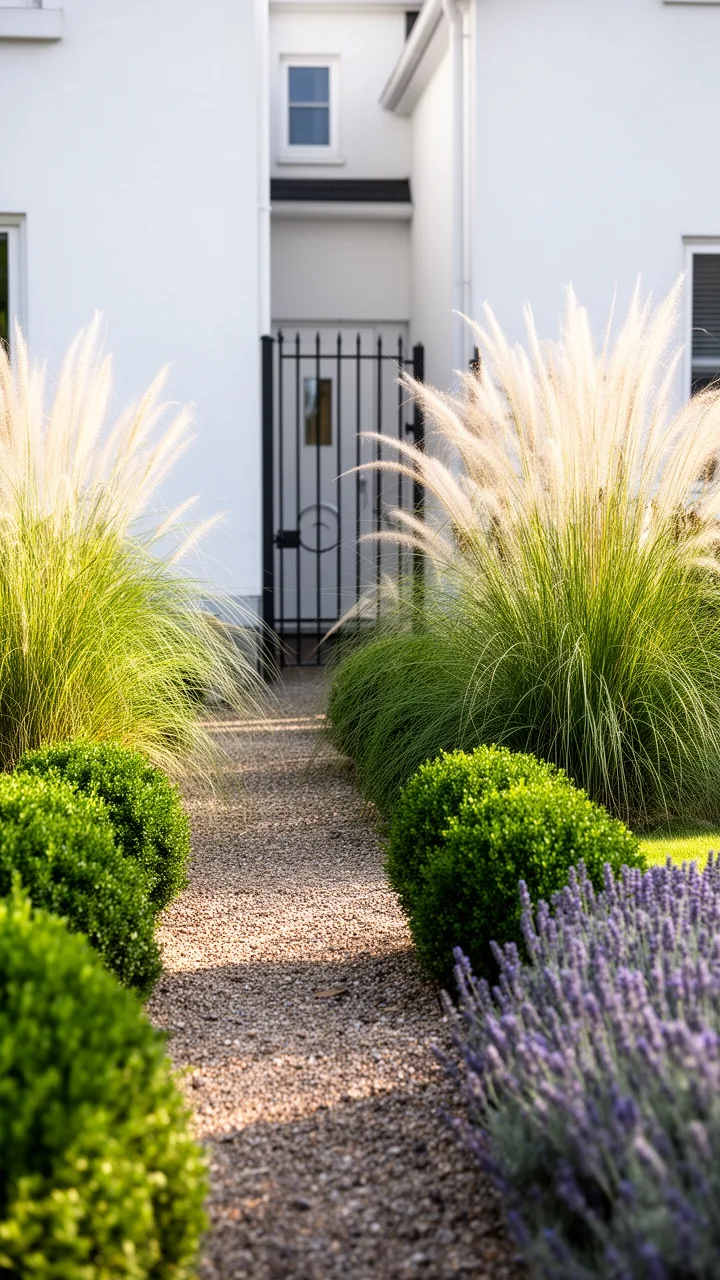
Ornamental grasses and textured shrubs amplify the layered framework you’ve established, introducing movement and tactile variety that elevate your front yard’s visual complexity. These specimens deliver year-round interest through foliage color, form, and seasonal transitions.
- Ornamental grasses like Miscanthus or Panicum create graceful motion, catching light and casting dynamic shadows while requiring minimal maintenance once established
- Textured shrubs such as Ilex or Euonymus provide structural backbone, offering contrasting leaf surfaces and seasonal berries that complement flowering perennials
- Strategic placement positions taller grasses toward borders and shorter shrubs as focal anchors, creating dimensional depth without overcrowding
This combination ensures visual sophistication throughout seasonal cycles.
Frame Your Home With Foundation Plantings
Foundation plantings frame your home’s architectural lines and create a polished transition between structure and landscape. You’ll want to select evergreens like boxwoods or hollies that maintain year-round structure and won’t obscure your home’s features. Layer plantings by height—taller shrubs in back, shorter specimens in front—to create depth. Consider your region’s hardiness zone and mature plant dimensions to avoid overcrowding. Position plantings 2-3 feet from your foundation to allow air circulation and reduce disease. Choose species that complement your home’s style, whether classic, contemporary, or cottage-inspired. Proper spacing ensures they’ll mature beautifully without requiring constant pruning.
Define Borders With Mulch and Hardscaping

Once you’ve established your foundation plantings, you’ll want to define garden beds and pathways with mulch and hardscaping materials that enhance both function and aesthetics.
- Mulch application: Spread 2–3 inches of organic mulch around plants to suppress weeds, retain soil moisture, and regulate temperature while decomposing into nutrient-rich humus.
- Hardscaping elements: Install pavers, gravel, or stone edging to create clean borders that prevent soil migration and establish visual structure.
- Material selection: Choose materials complementing your home’s architectural style—natural stone for formality, recycled rubber for sustainability, or gravel for drainage-prone areas.
These elements transform disorganized plantings into refined landscape compositions.
Refresh or Replace Your Lawn
Your lawn’s condition will determine whether you’ll refresh the existing turf or start fresh with new seed or sod. If you’re working with sparse, compacted soil, core aeration followed by overseeding promotes dense growth. For severely damaged areas, lay sod for immediate results or broadcast seed in spring or fall when moisture supports germination. Choose grass varieties suited to your climate zone and light conditions—shade-tolerant fescues for filtered sunlight, drought-resistant varieties for full sun. Apply starter fertilizer high in phosphorus to encourage root establishment. Water consistently until the grass reaches mowing height, typically two to three weeks.
Install Uplighting to Showcase Your Landscaping

Illuminating landscape features after dark transforms your front yard’s visual impact and extends the enjoyment of your investment well into evening hours. Strategic uplighting accentuates architectural elements and botanical specimens, creating depth and dimension.
Consider these placement strategies:
- Trees and shrubs: Position lights at ground level, angling upward to highlight texture and form
- Stone features: Graze lighting across hardscape surfaces to emphasize dimensional qualities
- Focal plantings: Direct warm LED fixtures toward specimen plants for dramatic silhouetting
You’ll achieve professional results by choosing weather-resistant fixtures and adjusting beam angles seasonally as your plants mature. Low-voltage systems offer energy efficiency while minimizing landscape disruption.
Update Your Front Door and Hardware
While uplighting draws the eye outward across your yard’s botanical features, the front door itself serves as the primary focal point that welcomes visitors and anchors your home’s aesthetic. You’ll enhance curb appeal by refreshing hardware and paint, creating visual continuity with your landscape design. Consider how door color complements surrounding plantings—deep greens harmonize with specimen shrubs, while warm neutrals accentuate flowering perennials. Update hinges, handles, and kick plates to coordinate with your botanical palette.
| Hardware Element | Material | Landscape Coordination |
|---|---|---|
| Door Handle | Brushed Bronze | Complements dark foliage |
| Kick Plate | Stainless Steel | Reflects light on plantings |
| Hinges | Oil-Rubbed | Coordinates with mulch tones |
| Door Color | Sage Green | Matches hedge specimens |
| House Numbers | Copper | Echoes warm perennials |
Incorporate Hardscaping for Structure and Interest
Hardscaping elements—patios, pathways, retaining walls, and edging—create the skeletal framework that organizes your landscape and provides visual relief from continuous plantings. You’ll establish purposeful structure while defining functional zones throughout your yard.
- Install permeable pavers or gravel pathways to guide foot traffic, reduce soil compaction, and facilitate water drainage while creating visual lines that draw the eye through planting beds.
- Construct raised beds or retaining walls to combat erosion, improve drainage, and enable you to cultivate plants requiring specific soil conditions.
- Apply landscape edging to delineate borders, prevent turf encroachment, and maintain crisp transitions between hardscape and planting areas.
Keep Your Landscaping Polished With Seasonal Maintenance
To maintain the structural integrity and visual appeal you’ve established through hardscaping and planting, you’ll need to implement a disciplined seasonal maintenance regimen. Spring demands deadheading, mulch replenishment, and pest monitoring. Summer requires consistent watering—deep, infrequent irrigation promotes robust root systems. Fall calls for leaf removal, perennial cutback, and soil amendment. Winter protection includes wrapping vulnerable specimens and clearing debris that harbors disease. You’ll prune dormant shrubs and trees during late winter for optimal growth. Regular edging, weeding, and pathogen management throughout each season preserve your landscape’s structural integrity and aesthetic investment.
Conclusion
You’ll transform your front yard by implementing these layered strategies systematically. Consider a home with clay soil: you’d amend beds with compost, install purple coneflower and ornamental fountain grass for texture, position uplighting to highlight specimen shrubs at dusk, and maintain seasonal deadheading. This integrated approach—combining soil preparation, plant selection, hardscape elements, and consistent maintenance—creates a professional landscape that demonstrates horticultural competence and curb appeal.
The Only Tools You Need for a Thriving Garden 🌱
Whether you're a weekend gardener or growing daily — these hand-picked tools make every session faster, easier, and more satisfying.