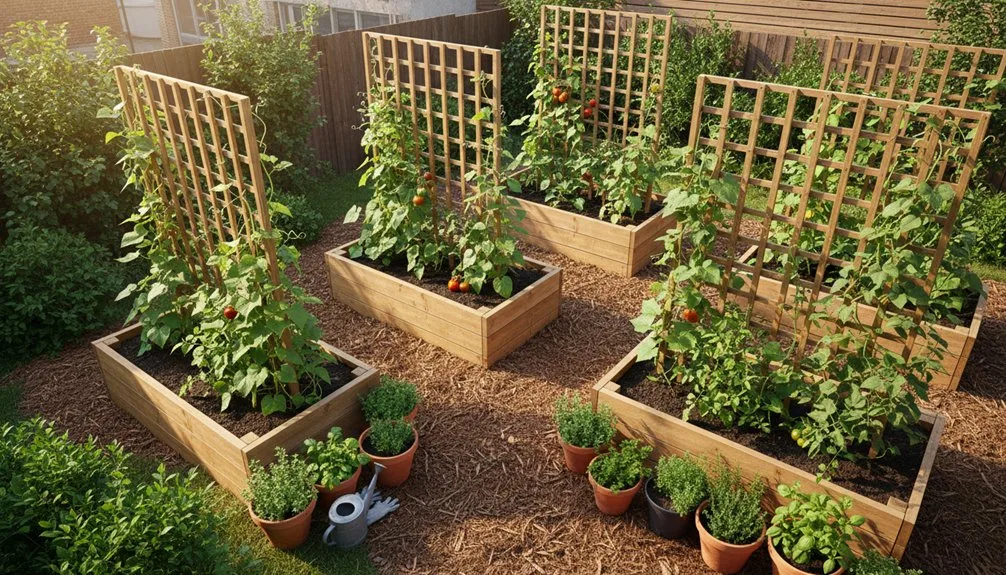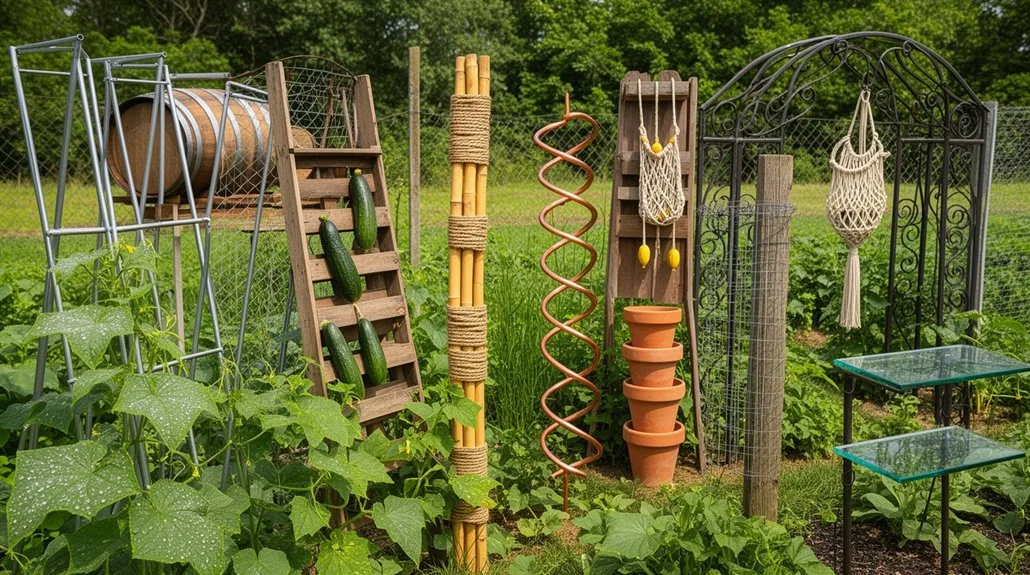

Start planning your beds by thinking of your plants as a community. You’ll place tall crops to the north, surround tomatoes with basil, and tuck in marigolds to deter pests. This strategy builds natural resilience, but common mistakes can undermine your efforts. Knowing how to arrange these allies—and what combinations to avoid—is the key to unlocking a truly thriving garden.
Key Takeaways
- Pair plants strategically to boost health, deter pests, and improve yields naturally.
- Use aromatic herbs and flowers like basil and marigolds to repel common insect pests.
- Include nitrogen-fixing plants like beans to enrich soil for neighboring heavy feeders.
- Attract beneficial insects and pollinators by planting small-flowered herbs and blooming plants.
- Plan your layout to prevent incompatible pairings and manage space for plant needs.
What Is Companion Planting and How Does It Work?
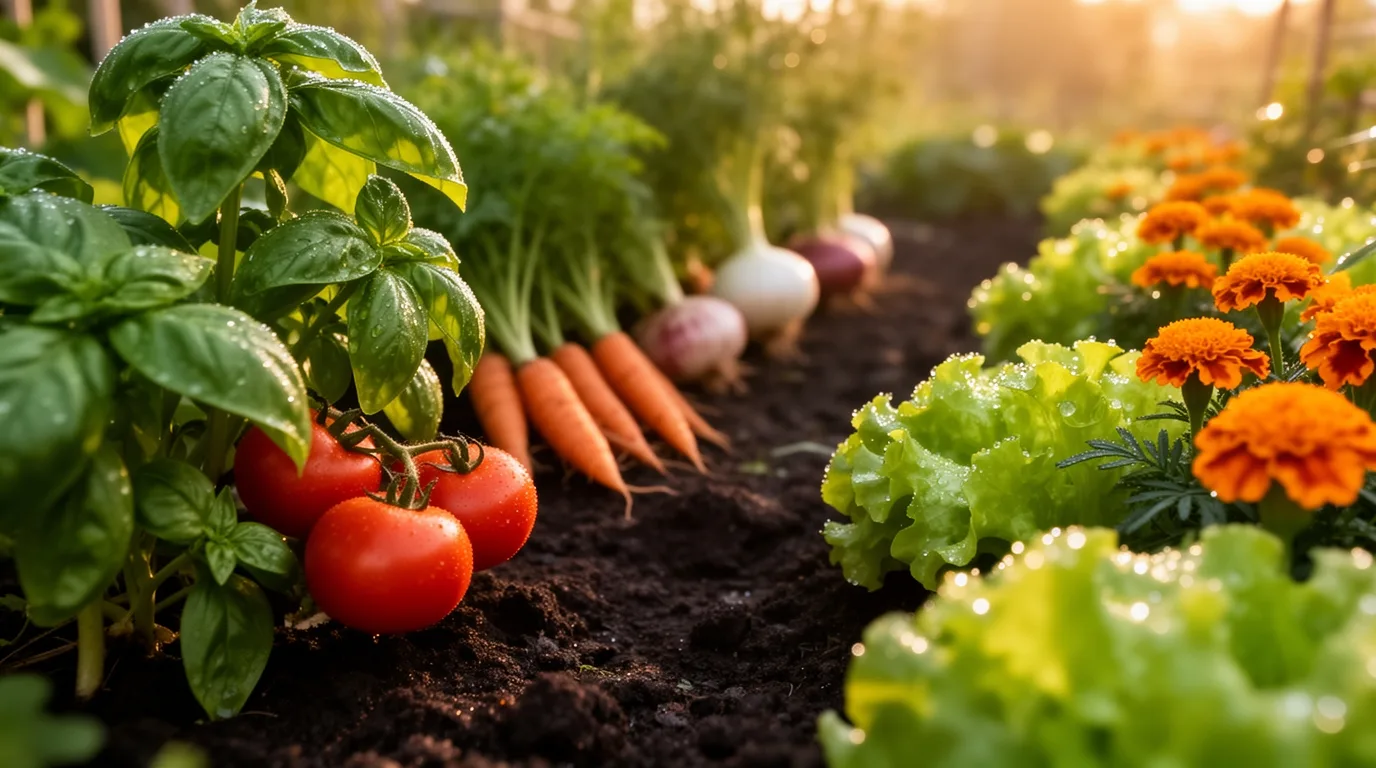
While you’re planning your garden, you might wonder if certain plants can help each other grow better, and that’s exactly what companion planting is—strategically placing plants together to boost health, deter pests, or improve yields. It works by harnessing the natural relationships between plants.
For instance, you might plant tall sunflowers next to lower-growing cucumbers; the sunflowers provide a living trellis for the cucumbers to climb. Some companions, like pungent onions, can mask the scent of more vulnerable plants, confusing insect pests.
Others, like nitrogen-fixing beans, actually feed neighboring crops like corn by enriching the soil. You’re not just planting individual species; you’re designing a miniature ecosystem where each plant plays a specific supporting role for its neighbors.
Why Plant Buddies Make Your Garden Healthier
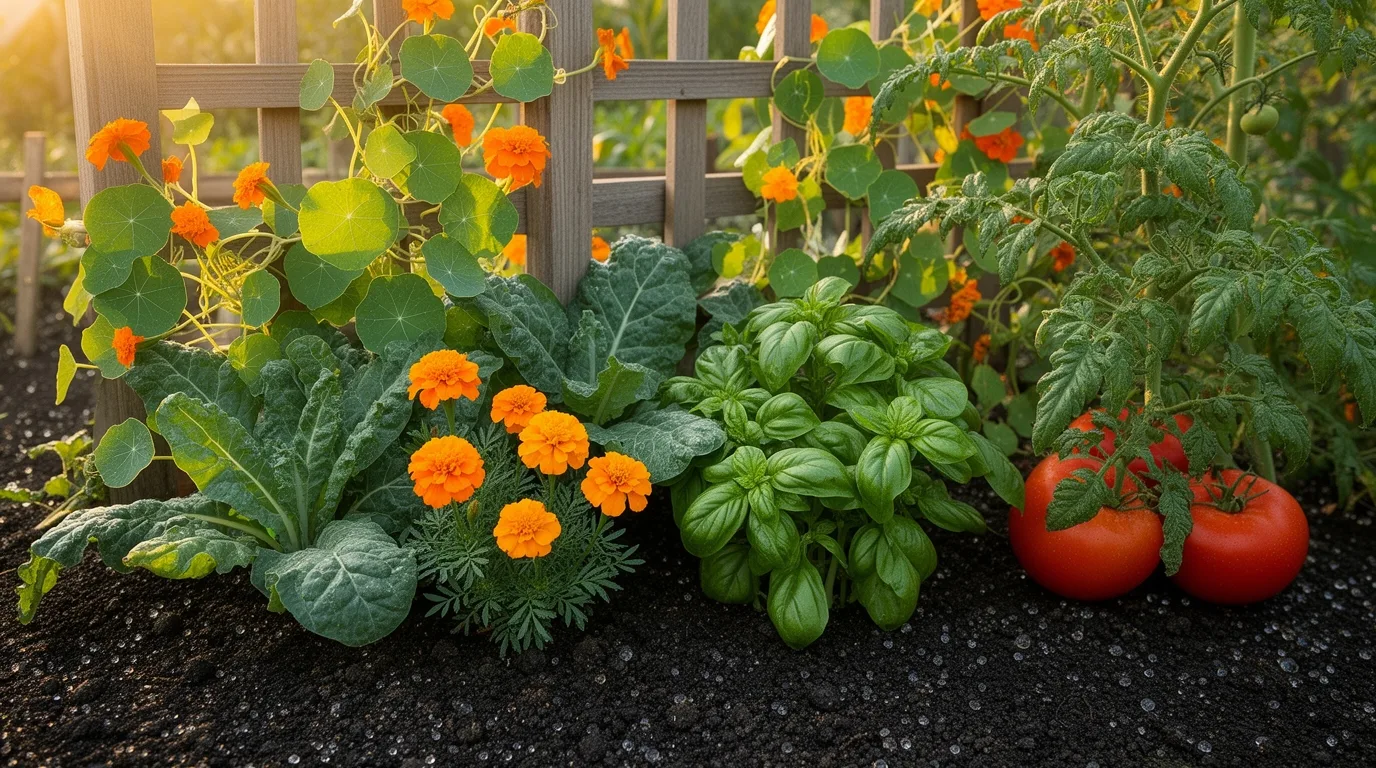
Beyond just using space efficiently, putting the right plants together strengthens your garden’s overall health. You’re creating a living support system. Strongly-scented herbs like rosemary or mint can confuse pests with their odors, protecting more vulnerable neighbors without any sprays.
You’ll see taller plants, like sunflowers, provide necessary shade for cool-weather lettuce, preventing it from bolting too early in the summer heat. Some companions, like beans with corn, share nutrients directly through the soil, with beans fixing nitrogen that the corn eagerly uses.
This cooperation leads to sturdier plants that better resist disease and stress. You’re not just growing individual crops; you’re cultivating a resilient, interconnected community where each plant contributes to the whole garden’s vitality.
Classic Vegetable Companions to Plant Together

Some of the most effective garden partnerships are classic vegetable pairings, where you’ll plant two or three crops side-by-side to boost yields and simplify care.
You’ll often get better growth and fewer pests by simply choosing the right neighbors. For instance, tall corn provides a natural trellis for vining beans, while the beans fix nitrogen to feed the corn.
Squash, with its large leaves, shades the soil to suppress weeds and retain moisture for this entire “Three Sisters” grouping.
Try these proven combinations in your own beds.
- Tomatoes with Basil: Basil helps repel flies and mosquitoes.
- Carrots with Onions: Onion scent deters carrot flies.
- Lettuce with Tall Crops: Use corn or tomatoes for beneficial shade.
- Radishes with Squash: Radishes deter squash borers.
Herbs That Boost Your Garden’s Health and Flavor
By planting certain herbs near your vegetables, you can improve their vigor and enrich their taste right from the soil.
Interplant basil with your tomatoes; its strong scent is believed to repel pests like whiteflies and aphids, and many gardeners swear it enhances the tomatoes’ flavor.
Chives deter aphids and can help prevent scab on apple trees.
You’ll find rosemary and sage are excellent repellents for cabbage moths when placed near broccoli or cabbages.
Don’t forget the power of dill and cilantro; they attract beneficial insects like ladybugs and parasitic wasps that prey on common garden pests.
You’re not just growing herbs for your kitchen—you’re deploying a living, aromatic defense system for a more productive plot.
Powerful Flower Allies for Your Vegetable Patch
While herbs offer a strong aromatic defense, many flowers also serve as formidable protectors and partners in your vegetable garden.
You’ll find they attract pollinators, repel pests, and even improve soil health. Interplanting marigolds, for example, deters nematodes around tomatoes with their pungent roots. Nasturtiums act as a trap crop, luring aphids away from your beans. For a vibrant, buzzing patch, you always include sunflowers and zinnias to draw in bees and butterflies. These floral allies aren’t just decorative; they’re functional. You’ll notice their benefits when you:
- Plant calendula near brassicas to boost pollination rates.
- Use borage alongside squash to enhance its growth and flavor.
- Grow lavender borders to confuse insect pests with scent.
- Interlace cosmos to shade delicate lettuce seedlings in summer heat.
Companion Planting Foes: Plants to Keep Apart
Just as successful pairings can boost your garden’s health, understanding which plants to keep apart is crucial, because some combinations actually hinder growth or invite trouble. Keep potatoes away from tomatoes, as they can both suffer from blight.
Don’t plant beans near onions or garlic; they’ll stunt the beans’ growth.
You should separate carrots and dill, as dill can inhibit carrot development.
Avoid placing sunflowers too close to other crops, as they can become overly dominant.
Rue is a known antagonist for many plants, including basil, so keep it isolated.
When planning your layout, give these foes ample space between them—at least a few feet—to ensure each plant thrives without competition or conflict.
Plants That Repel Pests Naturally
Often, you can harness nature’s own defenses by including plants that naturally repel pests. These botanical guardians emit strong scents or chemicals that insects find offensive, creating a protective zone for your more vulnerable crops. You’ll plant them as borders or intermingle them throughout your garden beds. It’s a simple, chemical-free strategy you can observe working; you’ll see fewer beetles on your beans and less damage on your cabbages.
- Marigolds release a compound from their roots that deters soil nematodes.
- Basil masks the scent of tomatoes, confusing and repelling hornworms and flies.
- Garlic and chives produce a sulfurous odor that repels aphids and Japanese beetles.
- Nasturtiums act as a potent trap crop, luring aphids away from your vegetables.
Plants That Improve Your Soil Nutrients
If you want to enrich your garden without store-bought fertilizers, you can turn to plants that boost your soil’s nutrients naturally.
You should plant legumes like peas, beans, and clover as cover crops; their roots host bacteria that fix atmospheric nitrogen into a form other plants can use.
Deep-rooted dynamic accumulators, such as comfrey and borage, mine minerals like potassium and calcium from the subsoil and bring them to the surface. When you cut these plants down and let the leaves decompose, they release those nutrients back into the topsoil.
You’re essentially creating a living, self-renewing fertilizer system that builds long-term soil fertility and structure with minimal effort on your part.
Plants That Attract Pollinators and Beneficial Insects
Beyond building soil fertility, you’ll also need to bring pollinators and pest controllers into your garden. You can strategically plant companions that act as living lures, drawing in beneficial insects. These allies will pollinate your vegetables for better yields and prey on common pests like aphids. To succeed, focus on plants with small, accessible flowers and provide blooms throughout the season.
Alyssum and borage are fantastic early starters, while letting some herbs like cilantro and dill bolt (flower) creates a valuable insectary.
- Borage attracts bees and predatory insects.
- Dill and fennel lure parasitic wasps that target caterpillars.
- Calendula and marigolds draw hoverflies, whose larvae devour aphids.
- Sunflowers and cosmos provide nectar for bees and shelter for spiders.
You’ll see a noticeable drop in pest pressure as these beneficials establish themselves.
How to Map Your Companion Planting Layout
After you’ve selected your beneficial plants, you’ll need to arrange them effectively on a map, which ensures your companions are positioned to support each other.
Start by sketching your garden’s dimensions on paper. Use symbols for each plant, considering their mature size.
Place taller crops, like corn, on the north side to avoid shading smaller ones.
Intersperse repellent plants, such as marigolds, throughout beds to confuse pests.
Cluster nitrogen-fixers like beans near heavy feeders like corn.
You’ll want to account for spacing; don’t cram plants together.
Draw successive planting rows, noting where you’ll rotate crops next season.
This visual plan prevents overcrowding and organizes your planting day, making your garden a cohesive, supportive ecosystem.
How to Fix Common Companion Planting Problems
Despite careful planning, you might still encounter issues like poor growth or persistent pests within your companion planting scheme.
First, assess your soil’s health and nutrient levels; some plants are heavy feeders and can outcompete their companions. You can fix this by amending the soil or adjusting your plant groupings. If pests persist, your repellent plants mightn’t be effective due to placement or quantity. Re-evaluate your layout and consider introducing new beneficial insect attractors.
Common problems often stem from a few key mistakes:
- Overcrowding: Plants competing for light, water, and nutrients.
- Incompatible Needs: Pairing plants with different water or sun requirements.
- Poor Timing: Planting companions at different maturity rates.
- Ignoring Plant Families: Grouping vegetables prone to the same diseases.
Observe your garden closely, be ready to thin plants, and don’t hesitate to relocate a problematic pairing.
Companion Planting for Small Spaces and Containers
If you’re gardening on a balcony or in a compact plot, you can still harness the benefits of companion planting by focusing on vertical pairings and mindful container selections.
Pair a tall, sturdy plant with a low-growing companion. Grow pole beans up a central trellis and surround its base with leafy spinach, which appreciates the shade.
In a single deep pot, combine tomatoes with basil; the basil may enhance flavor and deter pests. Choose compact varieties like patio tomatoes or bush cucumbers.
Ensure your container is large enough for all root systems and has excellent drainage. You’re creating a mini-ecosystem, so monitor moisture closely—small spaces dry out fast.
Regular feeding is crucial as nutrients deplete quickly in confined soil.
Frequently Asked Questions
Does Companion Planting Work With Square Foot Gardening?
Yes, you can absolutely combine them. You’re simply matching beneficial plants within your square foot grids. Group basil with your tomatoes and marigolds with carrots to save space while still deterring pests naturally.
Can I Companion Plant in a Hydroponic System?
Yes, you can companion plant hydroponically. You’ll manage plant spacing and nutrient demands carefully. Plant basil with lettuce to deter pests, or mint with your herbs to improve their overall vigor and flavor.
Do Companion Planting Benefits Apply to Fruit Trees?
Yes, it applies. You’ll find pest control improves with plants like nasturtiums, and pollination increases. You can also boost soil health with nitrogen fixers. Just ensure your companions don’t compete with the trees’ roots.
Does Companion Planting Reduce the Need for Watering?
Yes, it can. Groundcover companions act like living mulch. They’ll shade the soil, slowing evaporation. Tall plants also cast cooling shade, so you’re not watering as often to combat dry, hot earth.
Are There Companion Planting Rules for Nightshade Family Plants?
You’ll want to avoid planting tomatoes with other nightshades. Instead, pair them with basil or marigolds, which naturally repel pests, and you’ll notice healthier plants with fewer issues throughout the season.
Conclusion
Now map your garden bed, cluster your buddies, and mind the spacing. You’ll see your tomatoes thrive near basil, beans fixing nitrogen for corn, and marigolds guarding the borders. Observe what works, adjust pairings that don’t, and enjoy the harvest. This simple, attentive practice builds a resilient, buzzing garden ecosystem right under your care.
The Only Tools You Need for a Thriving Garden 🌱
Whether you're a weekend gardener or growing daily — these hand-picked tools make every session faster, easier, and more satisfying.