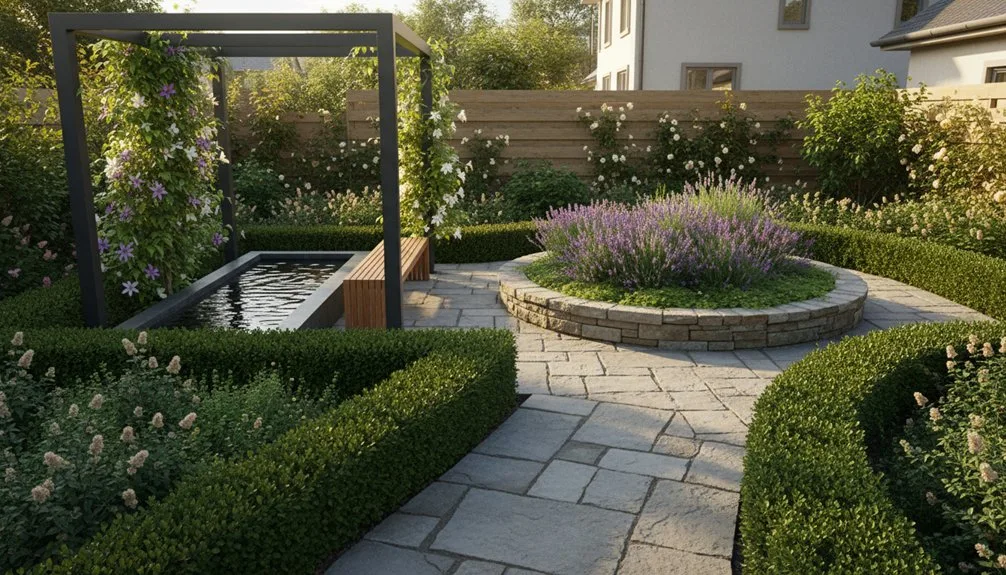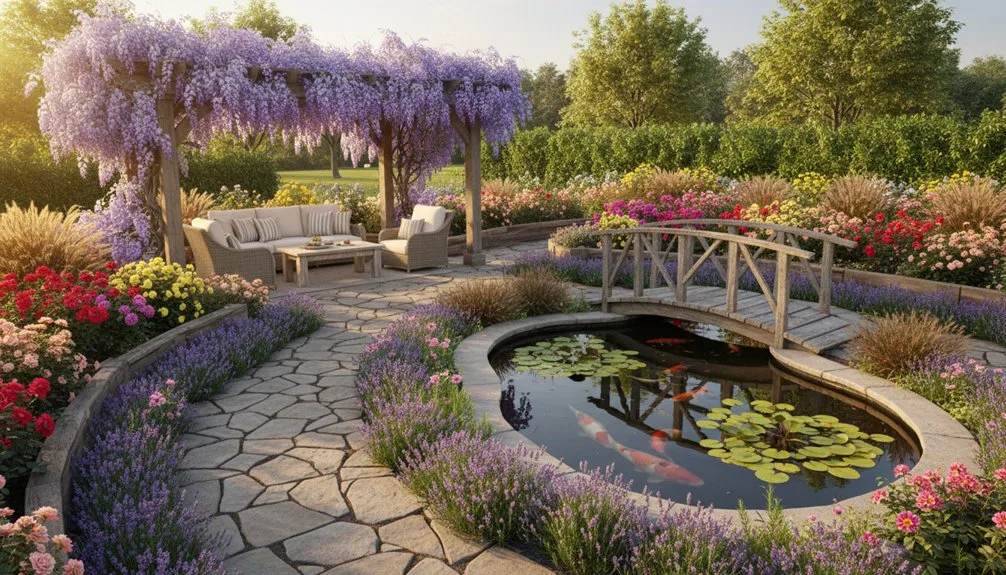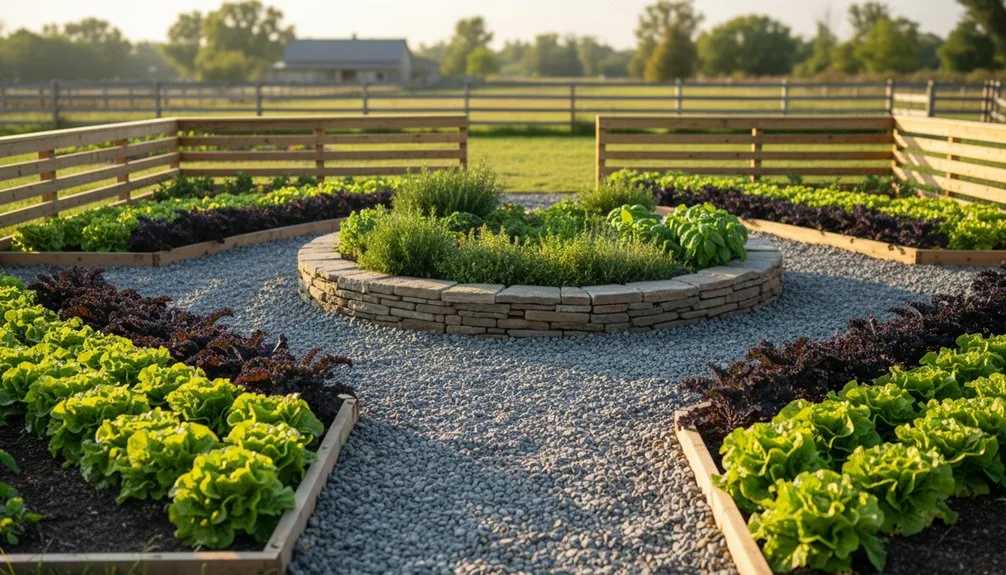

You’ve got a blank canvas at your curb, and a few thoughtful choices can turn it into a welcoming showcase. Imagine a clean gravel path leading to a modest water feature, framed by native perennials that need little water. Pair that with smart drip irrigation and low‑maintenance groundcovers, and you’ll cut upkeep while keeping the space vibrant year‑round. The next step shows how each element fits together and what you’ll need to make it happen.
Key Takeaways
- Define a cohesive design theme (e.g., meadow, structured garden) and sketch focal points with proper scale and zoning.
- Incorporate durable hardscape elements like natural stone, reclaimed brick, and permeable pavers for pathways and edging.
- Install a smart drip‑irrigation system with rain sensors and weather‑linked scheduling to conserve water.
- Use native, drought‑tolerant perennials, seasonal bulbs, and low‑maintenance groundcovers for year‑round color and texture.
- Add visual interest with a decorative water feature, varied planter textures, and flexible seasonal planting plans.
Start With a Vision: Define Your Front‑Yard Style
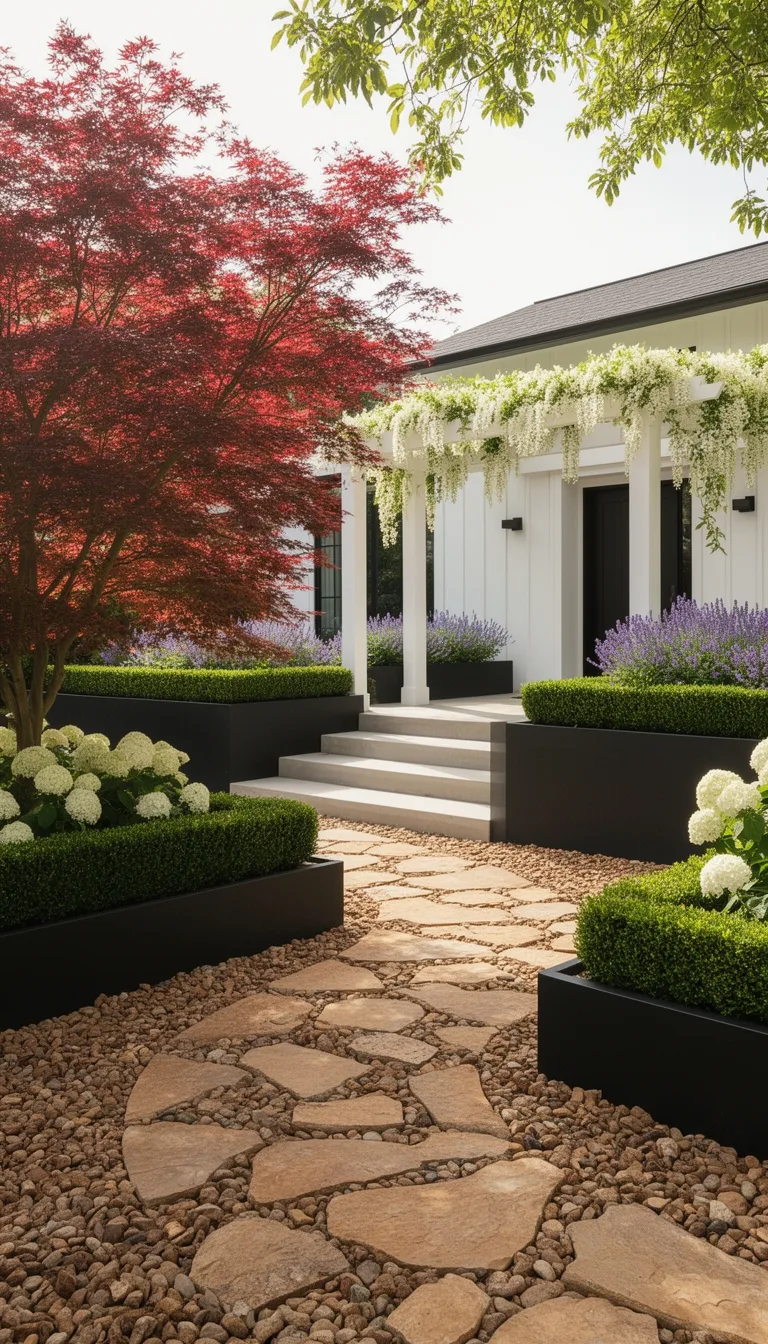
When you picture your home’s curb appeal, let that image guide every design choice, because a clear vision turns a plain front yard into a cohesive, nature‑focused sanctuary.
First, decide whether you crave a wild meadow, a structured garden, or a blend of both. Imagine the textures you’ll feel underfoot—soft moss, crisp stone, or warm mulch. Choose a palette of native plants that echo the surrounding ecosystem, ensuring seasonal interest and low maintenance.
Sketch a mental map of focal points: a sculptural tree, a water feature, or a stone pathway. Keep the scale in mind; oversized elements overwhelm, while modest details invite intimacy.
Map the Space: Measure, Sketch, and Set a Budget

Before you start planting, take a systematic inventory of your front yard: walk the perimeter, note every slope, and record dimensions with a tape measure or laser tool. Sketch a rough plan on graph paper, assigning each zone a purpose—flower beds, mulch pathways, or native grasses. Use the sketch to calculate square footage, then translate that into material costs and labor estimates. Set a realistic budget by prioritizing high‑impact, low‑maintenance elements and allocating a contingency for unexpected terrain challenges. Keep the design flexible; you can adjust plant density or replace costly features as you refine your vision.
| Zone | Approx. Cost |
|---|---|
| Front border | $350 |
| Side walkway | $620 |
| Central lawn | $480 |
Front‑Yard Makeover: Choose the Right Hardscape Material
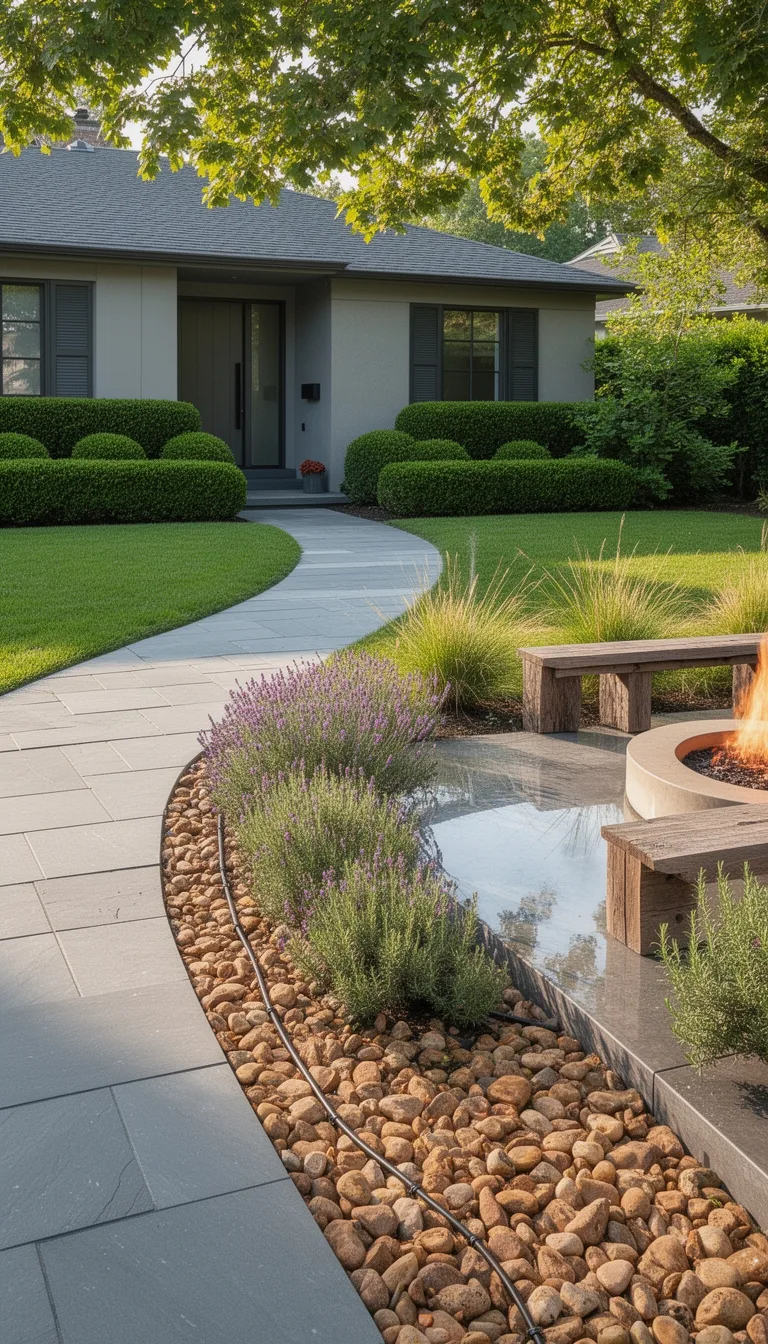
Your budget sketch shows where each zone lives, now it’s time to pick hardscape materials that complement the terrain and climate. Choose natural stone for a timeless, earthy feel; its irregular texture blends with surrounding foliage and tolerates freeze‑thaw cycles.
If you prefer a sleek look, reclaimed brick offers warm tones and porous surfaces that drain rain without eroding. Consider permeable pavers for eco‑friendly runoff control, allowing water to seep into the soil and nourish native plants.
For sloped sections, stabilized decomposed granite provides traction while staying low‑maintenance. Match material color to your home’s palette, and test durability against local weather patterns.
The right hardscape anchors your design, enhances curb appeal, and respects the environment.
Add a Low‑Maintenance Gravel Path for Easy Access

Lay down a low‑maintenance gravel path to create a smooth, inviting route that blends seamlessly with your front‑yard’s natural palette. Choose rounded river rock or crushed limestone that mimics riverbeds, letting you, subtle color variations and textures.
Before spreading, excavate a shallow trench, line it with landscape fabric, and compact the base to deter weeds and erosion. Edge the path with metal or stone curbs for clean lines and to keep gravel from spilling onto lawns.
Add low‑lying groundcovers like creeping thyme or sedum between stones; they soften the surface, release a faint fragrance, and stay resilient under foot traffic. This simple, eco‑friendly walkway guides visitors, enhances curb appeal, and requires minimal upkeep.
Install a Water‑Efficient Drip‑Irrigation System
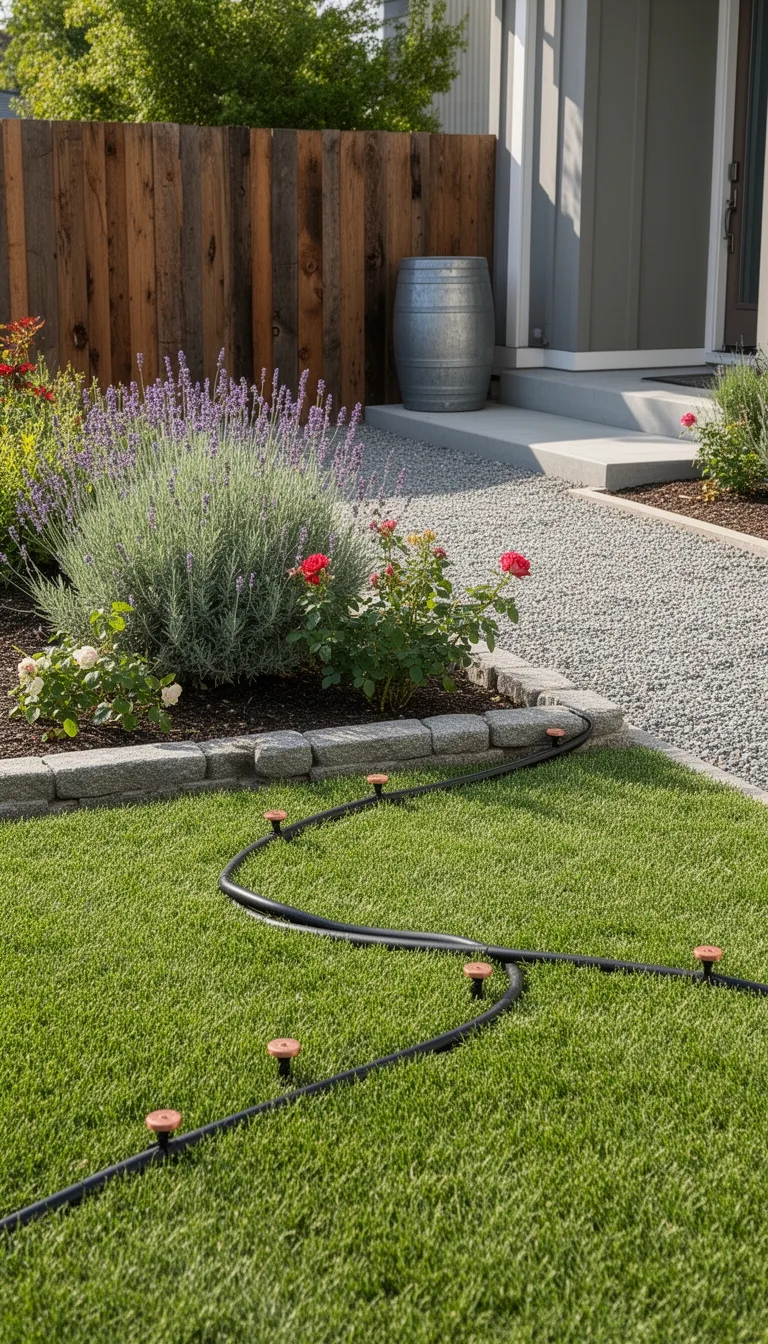
Transform your front yard into a water‑wise oasis by installing a drip‑irrigation system that delivers moisture straight to plant roots, minimizing waste and preserving the natural landscape.
Choose a timer‑controlled controller that syncs with sunrise and sunset, so you water only when the soil can absorb it.
Lay flexible tubing along mulched beds, edging, and perennials, using emitters sized for each plant’s thirst.
Seal connections with waterproof tape, and test pressure before covering the lines.
Incorporate a rain sensor to pause irrigation during storms, cutting water use further.
Regularly flush the system to prevent clogging, and adjust flow rates as plants mature.
This precise, low‑impact method keeps foliage lush while conserving every drop.
Create a Cozy Seating Nook With a Fire Pit
A drip‑irrigation system keeps your garden thriving with minimal waste, and the same water‑wise mindset can shape a welcoming fire‑pit nook.
Picture a low‑smoke pit nestled among native grasses, surrounded by reclaimed stone benches that echo the earth’s texture. Soft lanterns flicker, casting amber glows that mingle with fire’s gentle heat, while scent of pine and sage drifts on the breeze. You’ll find the space both intimate and inviting, perfect for evening chats or solitary stargazing.
- Choose a pit fuel that burns cleanly, like bio‑ethanol, to protect air quality.
- Position the pit near a natural windbreak—shrubs or a low fence—to contain heat.
- Use permeable pavers for the seating area, allowing rain to soak through.
- Add moisture‑loving plants such as hostas and ferns to soften the stone and retain humidity.
Boost Curb Appeal With a Simple Raised Garden Bed
By adding a modest raised garden bed to your front yard, you instantly lift its curb appeal while giving native plants a thriving stage. Choose a low‑profile timber or stone frame that blends with your home’s palette, then fill it with well‑draining soil enriched with compost.
Plant a mix of hardy perennials, ornamental grasses, and low‑maintenance groundcovers that spill over the edges for a soft, natural look. Position the bed where it catches the eye from the street, perhaps framing the front door or aligning with the walkway.
Add subtle lighting—solar LED strips or uplights—to highlight textures after dusk. Keep the design simple, let the plants do the talking, and enjoy a vibrant, welcoming entrance year after year.
Select Drought‑Tolerant Shrubs for Year‑Round Color
Choosing drought‑tolerant shrubs ensures your front yard stays vibrant year after year without constant watering. You’ll cut maintenance costs while showcasing resilient foliage that thrives in sun‑baked soil.
Pick varieties with diverse leaf textures and bloom times, then group them for a seamless, colorful tapestry.
- Lavender (Lavandula) – silvery foliage, purple spikes, thrives in full sun.
- Russian Sage (Perovskia atriplicifolia) – airy, blue‑gray leaves, late‑summer blooms.
- Bottlebrush (Callistemon) – striking red “brushes,” attracts pollinators, tolerates drought.
- Barberry (Berberis) – evergreen, bright red or golden leaves, winter interest.
These shrubs deliver year‑round appeal, resist heat, and require minimal irrigation, making them perfect for a low‑maintenance, high‑impact front yard.
Plant Seasonal Flowers for a Pop of Color
Ever wondered how a burst of seasonal blooms can transform your front yard into a living canvas?
Plant spring tulips, daffodils, and crocuses for early color, then swap in summer petunias, marigolds, and lavender to keep the palette vibrant.
In fall, let mums, asters, and ornamental kale take the stage, and finish the year with winter pansies and hellebores that brave the cold.
Choose varieties that match your climate and soil, spacing them for airflow and sunlight.
Group colors by hue for bold statements or mix them for a natural meadow feel.
Regular deadheading encourages repeat blooms, while mulching retains moisture and protects roots.
Use Evergreen Borders to Frame Your Yard
After the seasonal bursts of color, steady evergreen borders give your yard a timeless frame that balances the ever‑changing palette.
You’ll notice how low‑maintenance shrubs create a green backdrop, allowing seasonal flowers to shine without competing for attention.
Choose varieties that thrive in your climate, and arrange them in layers for depth and texture.
- Plant a mix of dwarf boxwood and yew for a uniform hedge.
- Add ornamental grasses for movement and soft edges.
- Incorporate fragrant rosemary or lavender to engage the senses.
- Use ground‑cover juniper to fill gaps and suppress weeds.
These borders not only define space but also enhance curb appeal, inviting neighbors to admire a cohesive, nature‑rich front yard.
Add Outdoor Path Lighting for Safety and Mood
When dusk settles, well‑placed path lights guide each step while casting a warm glow that highlights the garden’s natural textures. Choose low‑profile fixtures that blend with stone, mulch, or low‑lying shrubs, letting light spill gently across stepping stones.
Position lights at intervals of three to five feet to create a rhythmic pattern that leads visitors safely to the front door. Opt for LED bulbs with adjustable brightness, so you can dim for intimate evenings or brighten for nighttime safety.
Highlight key features—like a fragrant herb border or a wind‑swept ornamental grass clump—by aiming light upward, creating soft silhouettes against the twilight sky. This subtle illumination not only protects against trips but also deepens the sensory connection to your outdoor sanctuary.
Incorporate Solar Lanterns for Eco‑Friendly Glow
Often the most charming glow comes from solar lanterns that sip sunlight by day and radiate a gentle, eco‑friendly ambiance by night.
You’ll notice how these low‑maintenance lights blend with garden foliage, casting soft halos that highlight pathways and flower beds without a single wire.
Choose lanterns that match your home’s palette, position them strategically, and let natural energy do the work.
- Place lanterns near mature trees for extended charge time.
- Select matte metal or reclaimed wood casings to echo organic textures.
- Use dimmable models so you can adjust brightness for evenings or celebrations.
- Pair lanterns with native groundcovers to create a seamless, sustainable vignette.
Place a Decorative Water Feature for Tranquility
A gentle ripple from a decorative water feature instantly adds calm to your front yard, turning ordinary space into a soothing sanctuary. You’ll hear the soft murmur of water, feel the cool breeze, and notice how the feature draws eyes to natural textures. Choose a stone basin or a sleek metal fountain that mirrors surrounding foliage; the movement of water highlights leaf patterns and sky tones, creating a living frame for your home’s façade. Pair the sound with fragrant plantings for a multisensory welcome that feels both elegant and eco‑friendly.
| Mood | Visual Cue |
|---|---|
| Tranquil | Misty spray over river rocks |
| Inviting | Sunlight glinting on water’s surface |
| Refreshing | Lush green ferns framing the basin |
Introduce a Small Lawn Area for Play and Pets
The gentle murmur of the water feature sets a calm backdrop, and a modest lawn patch can sit next to it, inviting kids and pets to romp without overwhelming the space.
You’ll create a versatile zone that feels natural yet purposeful, blending soft green with surrounding textures. Keep the grass low‑maintenance, choose hardy seed, and outline the area with stone edging to define it without hardscaping.
- Pick a drought‑tolerant grass blend for easy care.
- Install a low fence or garden border to guide play.
- Add a few shade‑loving perennials at the edges for color and habitat.
- Use a mulch border to separate lawn from pathways, reducing mud and wear.
This small lawn becomes a lively, eco‑friendly centerpiece that boosts curb appeal while supporting family fun.
Choose Mulch Types That Reduce Weeds and Retain Moisture
Choosing mulch that suppresses weeds and locks in moisture starts with understanding each material’s properties. You’ll find that organic options decompose, enriching soil, while inorganic choices last longer and stay neat. Pick a type that matches your climate, budget, and aesthetic to keep beds tidy and water use efficient.
| Mulch Type | Weed‑Control Rating | Moisture Retention |
|---|---|---|
| Pine Bark | ★★★★☆ | ★★★★☆ |
| Cedar Shavings | ★★★★☆ | ★★★★☆ |
| Hardwood Chips | ★★★★☆ | ★★★★☆ |
| Rubber Mulch | ★★★☆☆ | ★★★★★ |
| Gravel | ★★★☆☆ | ★★★★★ |
Add a Decorative Fence or Trellis for Structure
Mulch already keeps the soil healthy and weed‑free, so adding a decorative fence or trellis gives your yard the visual backbone it needs. Choose materials that echo natural tones—cedar, reclaimed wood, or wrought iron with leafy motifs—to blend with surrounding flora. Position the structure to frame a focal point, guide sightlines, and support climbing vines that soften hard edges.
A well‑placed fence or trellis also creates depth, making a modest front garden feel expansive.
- Height selection – match the fence height to your house scale for proportion.
- Plant partners – train roses, clematis, or honeysuckle to weave through the lattice.
- Texture contrast – pair smooth metal with rustic wood for visual interest.
- Lighting integration – attach solar lanterns or LED strips to highlight the structure at dusk.
Use Planters and Containers for Flexible Design
Let’s brighten your front yard by scattering planters and containers wherever space allows. Choose weather‑resistant pots that complement your home’s palette, then mix textures—smooth terracotta, rugged concrete, woven wicker—to create visual intrigue.
Plant low‑maintenance grasses, fragrant herbs, and native perennials for seasonal color and scent. Group containers in odd numbers for a natural, garden‑like flow, and vary heights by placing taller planters on pedestals or steps.
Use railing or porch edges to host slim, vertical containers that add greenery without crowding walkways. Swap out annuals each spring for fresh bursts of hue, and rotate pots to even out sunlight exposure.
This flexible design lets you adapt to changing seasons, budget, and personal taste while keeping your curb appeal lively and inviting.
Integrate a Smart Sprinkler Controller for Automation
Install a smart sprinkler controller and let technology handle watering while you enjoy a thriving front yard. By syncing with weather forecasts, it tailors each session to real‑time conditions, conserving water and keeping plants lush.
You’ll love the effortless schedule adjustments from your phone, plus the peace of mind that comes from precise moisture levels. This smart upgrade blends eco‑responsibility with curb‑appeal, turning routine maintenance into a seamless, green experience.
- Connect to local weather APIs for rain‑skip logic.
- Set zone‑specific schedules that match soil types.
- Use mobile alerts to monitor usage and detect leaks.
- Integrate with solar power for an off‑grid, sustainable system.
Apply a Low‑Maintenance Ground Cover to Replace Grass
Replacing a high‑maintenance lawn with a low‑maintenance ground cover instantly cuts water use, reduces mowing, and adds texture to your front yard. You’ll see instant curb‑appeal boost while conserving resources. Choose native sedums, creeping thyme, or dwarf mondo grass for drought‑tolerant, soft‑footed surfaces that thrive in sun or partial shade. Their foliage provides seasonal color, and they’re resilient to foot traffic, so you can walk your dog or entertain without worrying about bare patches. Pair the cover with mulch borders for a polished look, and let the plant’s natural scent invite pollinators.
| Ground Cover | Ideal Conditions |
|---|---|
| Sedum ‘Dragon’s Blood’ | Full sun, dry soil |
| Creeping Thyme | Sun to light shade, well‑drained |
| Dwarf Mondo Grass | Shade, moist, soil |
Wrap Up: Keep Your Front‑Yard Fresh All Year
Consistently refreshing your front yard means planning seasonal maintenance that works with nature, not against it. You’ll protect curb appeal by syncing planting cycles, pruning, and soil care with local climate rhythms.
Embrace low‑impact practices, and the space will stay vibrant without constant overhaul.
- Spring – Add fresh annuals, mulch beds, and aerate soil to boost root health.
- Summer – Trim perennials, water deeply early, and replace wilted foliage.
- Fall – Plant cool‑season shrubs, spread compost, and clear fallen debris.
- Winter – Protect delicate plants with burlap, inspect drainage, and plan next‑year’s palette.
Conclusion
You’ve got the tools to turn your front yard into a stunning, low‑maintenance oasis. By mapping out the space, picking durable hardscape, and installing smart irrigation, you’ll keep plants thriving with minimal effort. Mix native perennials, drought‑tolerant groundcovers, and stylish containers for year‑round color. Layer lighting and a water feature for visual interest, and stick to a simple maintenance schedule. The result? A curb‑appealing, eco‑friendly entrance that welcomes guests and stays vibrant through every season.
The Only Tools You Need for a Thriving Garden 🌱
Whether you're a weekend gardener or growing daily — these hand-picked tools make every session faster, easier, and more satisfying.