You’ve probably noticed how vines choke a garden when they have nowhere to climb, and a good trellis can turn that chaos into order. From sturdy wooden A‑frames for beans to lightweight PVC grids for mini‑vines, each option balances durability, space‑saving design, and plant compatibility. The right structure not only boosts yields but also keeps maintenance low and aesthetics tidy. Discover which of the eighteen ideas fits your garden’s layout and seasonal needs.
Key Takeaways
- Choose a sturdy, weather‑resistant frame (e.g., pressure‑treated wood, galvanized steel, or aluminum) to support heavy vines and withstand wind.
- Space cross‑bars, rungs, or mesh openings 8–12 inches apart to promote airflow, reduce disease, and allow pods to develop freely.
- Anchor trellis securely with ground stakes, concrete anchors, or buried leg ends to prevent wobble and ensure long‑term stability.
- Match plant type to trellis design: beans/peas on ladder or A‑frame, tomatoes on double‑tiered ladders or garden, cucumbers on PVC grid or living willow fence.
- Incorporate easy‑access features such as removable panels, adjustable height, or modular snap‑together panels for seasonal planting and maintenance.
Choose a Wooden A‑Frame Garden Trellis for Beans & Peas

Planting beans or peas? You’ll love a wooden A‑frame trellis because it stands sturdy, folds flat for storage, and lets vines climb without crowding.
Build it from 2×4s, cut two legs to 4 ft, attach a cross‑piece at the top, then brace with a diagonal support on each side.
Secure the frame to the ground with garden stakes or bury the leg ends 6 in deep to prevent wobble.
Space the cross‑bars 8‑10 in apart so pods get room to develop and airflow stays good, reducing disease.
The wood resists rot when you treat it with a non‑toxic sealant, and the A‑shape lets you walk between rows for easy harvesting.
This simple, low‑cost design maximizes yield and keeps maintenance minimal.
Choose a Metal C‑Shaped Ladder Garden Trellis – Easy Build Guide

Pick up a sturdy metal C‑shaped ladder and turn it into a low‑cost garden trellis that lets beans, peas, and cucumbers climb with minimal effort.
First, clean the ladder to remove rust and debris; a quick scrub with a wire brush and a spray of diluted vinegar works well.
Next, position the ladder against a sunny wall or fence, ensuring the rungs face outward.
Secure the base with ground stakes or concrete anchors to prevent wobbling in wind.
If the ladder’s height exceeds your planting zone, cut the top off with a metal saw, then sand the cut edge.
Finally, weave twine or garden netting between the rungs to give vines extra support, and plant your climbers at the base.
Check tension weekly and adjust as vines grow.
Choose a Recycled Pallet Garden Wall Trellis for Tomatoes

After the ladder trellis, a pallet offers a sturdy, low‑cost frame that fits right against a wall or fence for tomato vines. You’ll sand the wood, treat it with a weather‑proof sealant, and attach two or three vertical slats as “rungs” to guide the vines. Space the slats 12‑18 inches apart, then secure the pallet with L‑brackets to the wall. As the plants grow, they’ll cling to the slats, keeping fruit off the soil and improving airflow.
| Feature | Benefit | Tip |
|---|---|---|
| Recycled wood | Eco‑friendly, cheap | Look for pallets marked “HT” |
| Vertical slats | Strong support | Use 2‑inch thick boards |
| Wall attachment | Saves garden space | Drill pilot holes for screws |
| Sealant coating | Longevity, rot‑resist | Apply two coats, let dry 24 h |
Choose a DIY Bamboo Teepee Garden Trellis for Sweet Peas

Create a bamboo teepee in your garden to give sweet peas a sturdy, airy support that maximizes airflow and sunlight.
Cut four 6‑foot bamboo poles, split the tops, and stake them in a circle 2 feet apart.
Tie the tops together with strong twine, then add a second ring of half‑height poles for extra stability.
Slip a length of garden twine around each pole, spacing it 6 inches apart, to form a climbing ladder.
Plant sweet pea seeds at the base, watering until, and the vines will weave through the twine, staying upright and well‑ventilated.
Harvest regularly to encourage new growth, and replace any broken poles after the season to keep the teepee functional year after year.
Choose a Hanging Gutter Garden Trellis for Mini‑Vines

Installing a hanging gutter trellis transforms an ordinary downspout into a vertical garden for mini‑vines, letting you grow cascading herbs, nasturtiums, or small tomatoes without taking up floor space.
First, clean the gutter, then attach a sturdy mesh or perforated pipe inside using zip ties or stainless‑steel clips. Choose a mesh size that holds soil but lets excess water drain.
Fill the gutter with a lightweight, well‑draining mix—coconut coir, perlite, and compost work well.
Plant seedlings at the top, spacing them 3–4 inches apart, and water gently. Add a drip line or a small hose to keep roots moist.
Hang the trellis at eye level for easy harvesting, and trim vines regularly to encourage airflow and prevent mildew. This setup maximizes vertical space while keeping maintenance simple.
Choose an Integrated Raised‑Bed Garden Trellis for Mixed Climbers
Choosing an integrated raised‑bed garden trellis lets you combine sturdy soil beds with built‑in support for a variety of climbers, from beans and peas to cucumbers and morning glories. You’ll dig a 12‑inch‑deep bed, line its perimeter with a metal or wood frame, then attach vertical lattice or wire mesh that rises with the soil. The design saves space, reduces watering effort, and lets you harvest without stepping on delicate vines. Plant low‑growth beans at the edge, train tall cucumbers up the mesh, and let trailing morning glories spill over the top. You’ll also benefit from better airflow, fewer pests, and a tidy, organized garden.
| Plant | Height | Support Needed |
|---|---|---|
| Beans | 2‑3 ft | Low lattice |
| Peas | 3‑4 ft | Medium mesh |
| Cucumbers | 4‑6 ft | Strong trellis |
| Morning Glories | 5‑8 ft | Tall frame |
Choose Vertical Netting on a Fence Garden Trellis for Eggplant
After setting up a raised‑bed trellis, you can add a vertical netting fence to support eggplant vines without crowding the bed.
Choose a sturdy, UV‑treated nylon or polypropylene mesh with 1‑inch openings; it’s strong enough to hold heavy fruit and lets air circulate.
Secure the netting to the fence using galvanized staples or zip ties, spacing them every 12 inches for even support.
As seedlings grow, gently tie the main stems to the mesh with soft garden twine, leaving room for side shoots.
Trim any wandering vines weekly to keep the canopy tidy and improve light penetration.
The open weave prevents moisture buildup, reducing disease risk while allowing easy harvest of ripe eggplants.
This low‑cost, modular setup adapts to any garden length and can be re‑used season after season.
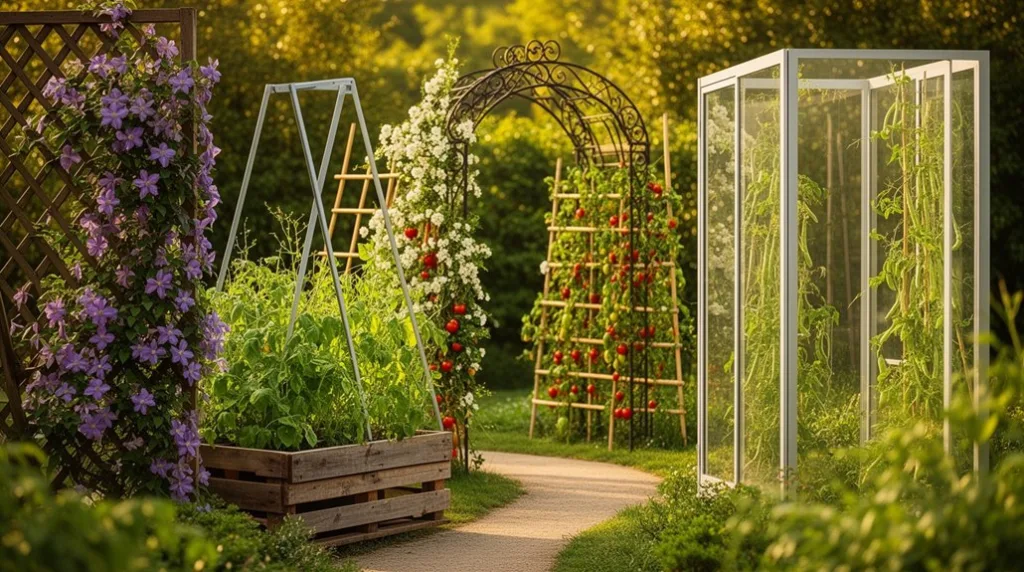
Choose a Rustic Wrought‑Iron Arch Garden Trellis for Roses & Peas
Typically, a rustic wrought‑iron arch adds elegant support for roses and peas while creating a charming garden focal point. You’ll find the arch sturdy enough to bear heavy blooms and vines, yet light enough to move if you need to re‑plant. Its open design lets air circulate, reducing disease, and the iron ages beautifully, giving your garden a timeless look.
Install the arch in a sunny spot, anchor it with concrete or deep stakes, and tie vines to the ribs with soft garden twine. The arch frames your plants, making harvesting peas easier and showcasing rose clusters for every passerby.
- Sturdy, weather‑resistant iron that supports heavy growth
- Open lattice for airflow and easy pruning
- Aesthetic aging that enhances garden charm over time
Choose a Modular PVC Grid Garden Trellis for Space‑Saving Harvest
A modular PVC grid trellis lets you maximize vertical space while keeping the garden tidy and easy to maintain.
Its lightweight panels snap together, so you can customize height and width to fit any corner or raised bed.
You’ll plant beans, cucumbers, or pole tomatoes directly into the grid’s open squares, letting stems climb without crowding.
The PVC resists rot, UV, and pests, so you won’t need frequent repairs or repainting.
Assemble the frame in minutes, then secure it with garden stakes or brackets for wind stability.
Because the grid is removable, you can relocate it each season or harvest a full crop without digging up plants.
This modular system saves floor space, improves airflow, and simplifies pruning, giving you a clean, productive harvest.
Choose a Living Willow Garden Trellis for Asparagus & Peas
Often you’ll find that a living willow trellis blends naturally with asparagus and peas, providing a sturdy, self‑healing support that grows alongside your crops.
Plant cuttings in early spring, let roots establish, then train shoots to the vertical stems.
As the willow thickens, it repairs bruises, so you never replace the frame.
The flexible branches sway with wind, reducing breakage, while the woody texture offers a natural mulch that conserves moisture for your veggies.
- Cut 6‑foot willow rods, bury 12‑inch sections, and space 2 ft apart.
- Tie asparagus crowns to the lower stems using soft garden twine; let peas climb the upper branches.
- Prune excess growth in late summer to keep the trellis tidy and encourage fresh shoots.
Choose a Double‑Tiered Ladder Garden Trellis for Heavy‑Yield Tomatoes
When you need a sturdy, space-saving support for high-yield tomatoes, a double-tiered ladder trellis delivers the strength and vertical reach you’ll want.
Build the ladder from pressure-treated wood or galvanized steel, spacing rungs every 12‑15 in. to keep vines upright and airflow high.
Plant tomatoes at the base, then train each stem to a rung using soft ties; the two tiers let you stack varieties without crowding.
The ladder’s footprint fits tight beds, while its height—typically 5‑6 ft—maximizes sunlight exposure.
Inspect joints annually, tighten bolts, and replace any rusted parts to preserve stability.
This simple, modular system boosts yields, simplifies pruning, and keeps fruit clean and accessible for harvest.
Choose a Garden Gazebo Frame as a Climbing Support Trellis
If you have a garden gazebo already standing, repurposing its frame as a climbing support trellis can turn idle space into a productive vertical garden. You’ll already a sturdy, weather‑resistant skeleton that saves you from building a separate trellis.
Attach netting or wire mesh to the existing posts, then train beans, peas, cucumbers, or even grapes to climb the lattice. The frame’s height gives plants ample sunlight and airflow, reducing disease risk.
You can also add removable panels for seasonal crops, keeping the garden tidy year‑round.
- Secure UV‑stable garden netting to each beam with stainless‑steel staples.
- Use adjustable plant ties to guide vines without damaging stems.
- Incorporate drip irrigation hoses along the lower rails for efficient watering.
Choose Hanging Macramé Garden Trellis Holders for Small Vines
Typically, you’ll find that hanging macramé trellis holders give small vines a charming, space‑saving perch while adding texture to any patio or balcony.
Choose a holder with a sturdy cotton or jute rope and a metal or wooden frame that can support the vine’s weight as it matures. Install the hook or ceiling bracket at a height where the plant can cascade without touching the ground, usually 3‑4 feet above the surface. Secure the rope knots tightly; loose knots cause sagging and may damage delicate stems.
Opt for a design with multiple loops or a rectangular net to accommodate varieties like sweet peas, morning glories, or dwarf cucumbers.
Regularly trim excess growth to keep the vine tidy and prevent overcrowding.
This setup maximizes vertical space, improves air flow, and creates an eye‑catching focal point.
Choose a Concrete Block Corner Garden Trellis for Urban Gardens
Tuck a concrete block corner trellis into your urban garden to turn an unused angle into a sturdy, space‑saving vertical garden.
You’ll find the dense concrete resists wind, and the L shape maximizes planting area without crowding walkways.
Position the block against a wall, fill the interior with soil, and let vines climb the built‑in grid.
The low‑maintenance design means you spend more time harvesting and less time repairing.
Choose a block with drainage holes, add a layer of mulch, and water from the top to keep roots moist.
This setup works for beans, peas, cucumbers, and ornamental climbers, delivering a tidy, productive corner that thrives in tight city spaces.
- Durable, weather‑proof material
- Built‑in soil pocket for easy planting
- Space‑efficient L shape maximizes vertical growth
Choose a Portable Folding Garden Trellis for Balcony Containers
With a portable folding garden trellis, you can turn any balcony container into a thriving vertical garden in seconds.
Choose a lightweight aluminum or fiberglass frame that collapses flat for storage and snaps open with a few clicks.
Look for a trellis with adjustable height—typically 3 to 5 feet—so you can match the depth of your pot and the growth habit of beans, peas, or cucumbers.
Secure the base with built‑in clamps or a rubber‑lined foot that grips the pot’s rim without damaging the material.
Position the trellis against a sunny wall or rail, then train vines using soft ties or garden twine.
When the season ends, fold it down, tuck it away, and reuse it for the next planting cycle.
Choose a Wire Mesh Garden Trellis “Living Fence” for Mixed Veggies
A wire‑mesh “living fence” gives you a sturdy, low‑maintenance support system that lets mixed veggies climb and spread while keeping the garden tidy.
Install the fence along a sunny edge, then plant beans, peas, and cucumbers directly against it.
The mesh’s gaps let air circulate, reducing disease, and the fence’s height encourages vertical growth, freeing ground space for root crops.
- Easy installation: stakes or posts secure the mesh in minutes, no digging required.
- Versatile spacing: adjust mesh size to suit beans, squash, or kale, keeping vines supported but not tangled.
- Durable material: rust‑resistant steel or coated aluminum lasts seasons, with minimal upkeep.
Choose a Solar‑Powered LED‑Backlit Garden Trellis for Night Tours
If you want your garden to shine after dark, a solar‑powered LED‑backlit trellis gives you instant illumination and a striking visual cue for night‑time tours.
Choose a trellis with a built‑in photovoltaic panel sized for your garden’s exposure; a 5‑watt panel typically powers 10‑12 LEDs for 8‑10 hours. Mount the panel where it faces south or west, and angle it to catch the afternoon sun. Connect the LED strip to a rechargeable battery pack, and set a dusk‑to‑dawn sensor so the lights turn on automatically.
Use the backlit frame to guide visitors along pathways while highlighting vines, beans, or cucumbers. The gentle glow also deters pests and extends your growing season by encouraging pollinators after sunset.
Choose a Repurposed Ladder Shelf Garden Trellis for Indoor Herb Vines
After the glow of solar‑LED trellises lights up your garden at night, you can bring the same functional charm indoors by repurposing a sturdy ladder as a shelf‑style trellis for herb vines.
Choose a wooden or metal ladder with evenly spaced rungs; sand and paint it to match your kitchen décor. Mount the ladder against a wall or lean it in a corner, then add shallow trays or pots on each rung. The vertical space encourages vines like basil, thyme, and oregano to climb, keeping foliage accessible and air‑circulated. You’ll enjoy fresh herbs at arm’s reach while the ladder’s rustic look adds visual interest.
- Secure the ladder with wall anchors for stability.
- Use lightweight, self‑watering pots to reduce mess.
- Rotate pots weekly to ensure even light exposure.
Conclusion
Pick the trellis that fits your space, budget, and plants, then set it up and let the vines climb. A sturdy frame keeps beans and peas upright, while lightweight grids or hangers work great for containers and balconies. Recycled materials save money and the environment, and solar‑lit arches add evening charm. Secure each structure, give your climbers support, and watch your garden grow taller and more productive all season long.
The Only Tools You Need for a Thriving Garden 🌱
Whether you're a weekend gardener or growing daily — these hand-picked tools make every session faster, easier, and more satisfying.