You start by mapping sunlight across your space at 9 a.m., noon, and 3 p.m. This reveals the six-hour full-sun zones you’ll reserve for tomatoes and peppers, while locating your leafy greens in those naturally shadier spots. Your garden’s health hinges on this simple, sun-focused plan, but it’s only the first step to unlocking a truly productive and thriving layout.
Key Takeaways
- Plan layout using a sunlight map to match plants to their ideal light conditions.
- Orient traditional rows north-south for even sun exposure and clear walkways.
- Build accessible raised beds under 4 feet wide for controlled soil and drainage.
- Maximize space with creative shapes like keyhole beds and intensive planting blocks.
- Pair plants by height and root depth to reduce competition and improve health.
Start With a Simple, Sun-Focused Garden Plan
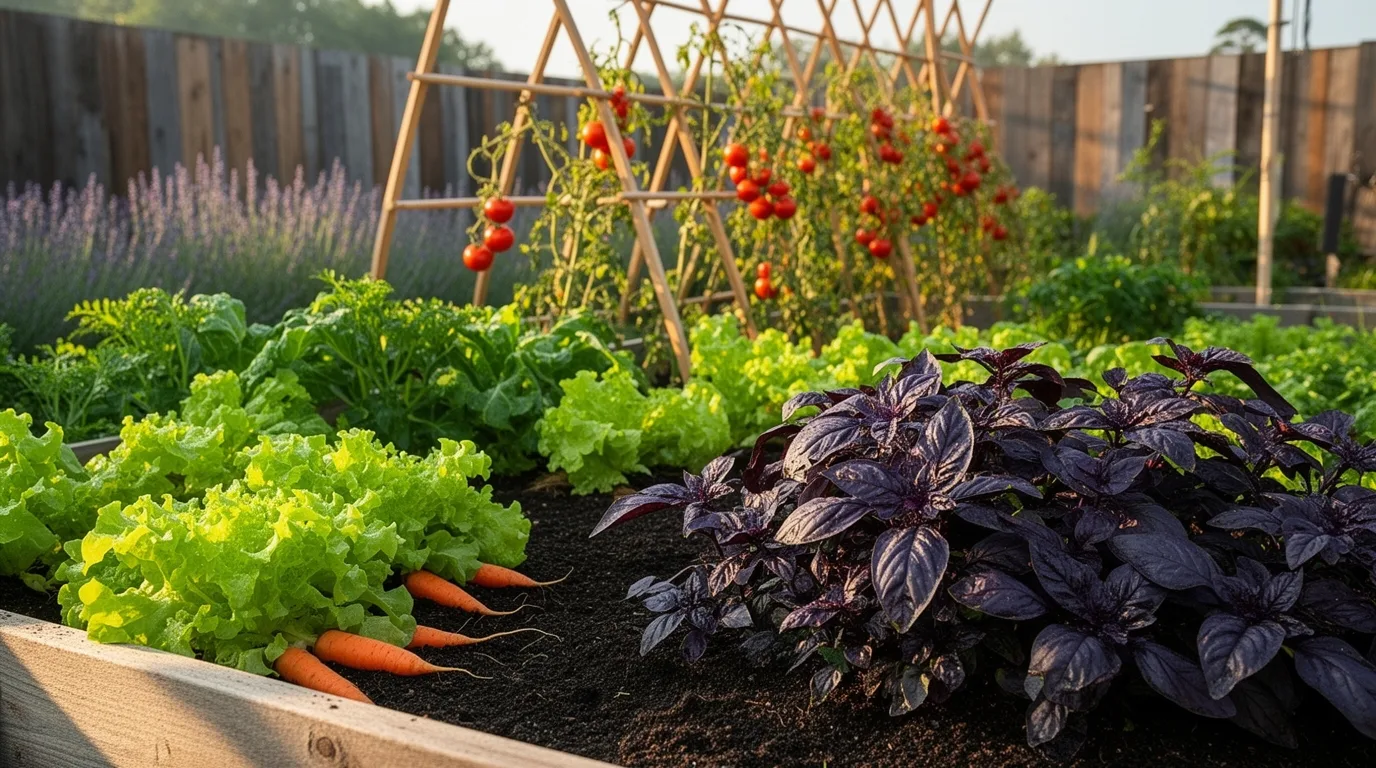
Start by observing how sunlight moves across your yard throughout the day, because that simple act will save you so much effort and frustration later on. Grab a notebook and roughly sketch your space, noting where shadows fall from fences, trees, or your house at 9 a.m., noon, and 3 p.m.
You’re looking for at least six hours of direct sun for most vegetables—that’s your prime “full sun” real estate. Identify these bright spots and mentally reserve them for your sun-lovers like tomatoes and peppers.
Shadier areas aren’t wasted; they’re perfect for leafy greens. You’ll lay out your beds within these light zones, matching plants to their ideal conditions. This foundational map is your key to a thriving garden.
The Classic Row Layout for Traditional Vegetable Plots

Once you’ve mapped your sun zones, you can fill them with a layout that’s as straightforward as it’s effective: planting in neat, single-file rows. This traditional method gives every plant equal access to sunlight, air, and water.
You’ll create clearly defined walkways between each row, which makes maintenance like weeding, feeding, and harvesting incredibly simple. Just be sure to orient your rows north to south; this ensures the sun travels evenly over the plants throughout the day, preventing them from shading each other.
Remember to space your rows generously so you can comfortably move with your tools. This orderly approach minimizes plant competition and disease, letting you cultivate a thriving, productive plot with classic ease.
Maximize Space and Soil With Raised Garden Beds

Although raised beds might look like simple boxes, they’re actually powerful tools that let you command your soil’s quality and drastically increase your growing space. You can fill them with a perfect, nutrient-rich soil mix, solving drainage issues instantly. Their contained nature prevents soil compaction, allowing roots to thrive. You’ll maximize yield by planting in tight, geometric blocks instead of wasteful rows, and you can even add vertical structures for climbers. They extend your season by warming up faster in spring. Here’s how to plan your raised bed system:
| Design Consideration | Practical Benefit |
|---|---|
| Standard Bed Width | Keep beds under 4 feet wide so you can easily reach the center from either side. |
| Bed Length & Orientation | Run beds north-south for even sun exposure on all plants. |
| Soil Depth | A minimum 12-inch depth accommodates most vegetable roots. |
| Pathway Width | Maintain 2-3 foot paths for stable wheelbarrow access. |
| Material Choice | Use rot-resistant cedar or composite lumber for longevity. |
Create Beautiful Geometry With Keyhole and Spiral Beds
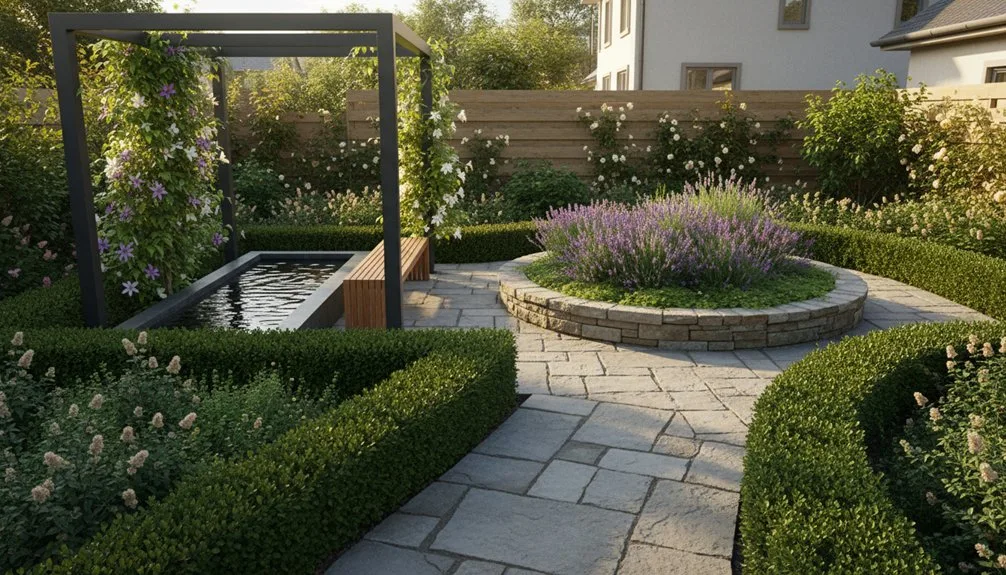
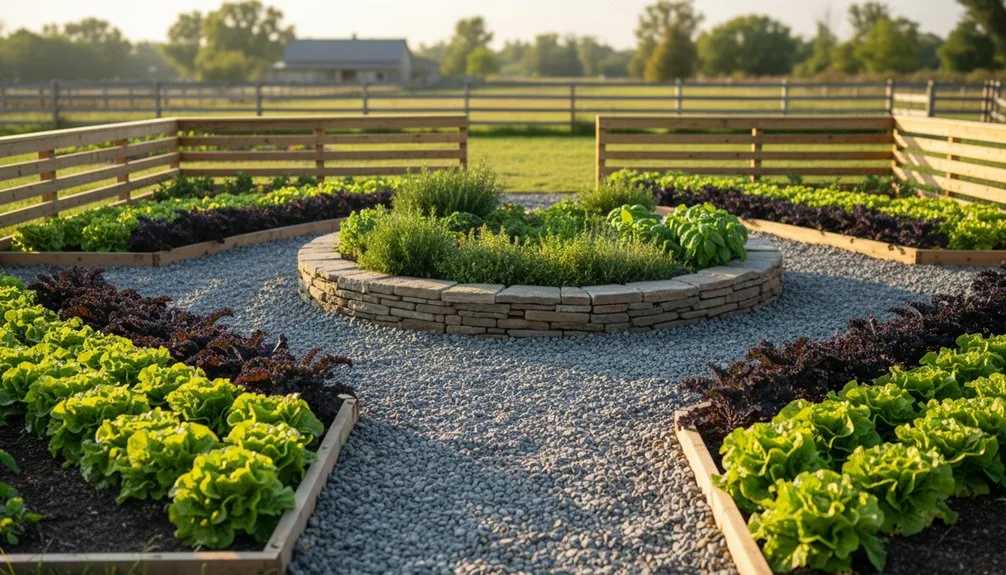
Raised beds’ structured efficiency finds an artistic partner in keyhole and spiral layouts, where you can blend high yield with striking design. A keyhole bed is a circular raised bed with a central path access point, creating a ‘keyhole’ shape. You dramatically reduce walking space while maximizing planting area, making every inch productive.
A spiral bed coils outward from a central point, creating distinct planting zones with varying microclimates. You can build it with stone, brick, or woven willow for a stunning focal point. Both designs utilize the principle of intensive planting, letting you grow more in less space. They’re perfect for creating a garden that’s not just a source of food but a true landscape feature.
Pair Plants Perfectly Within Your Chosen Layout
With your garden bed’s geometry in place, you can focus on selecting plants that complement each other in both growth habits and needs.
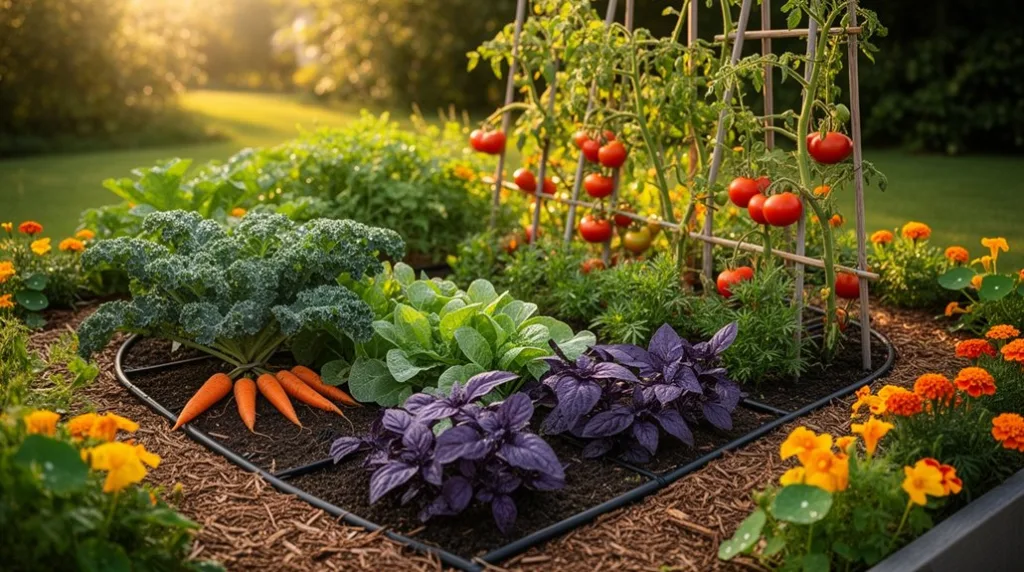
Consider height and spread; place tall sunflowers or corn at a spiral bed’s center, with mid-height peppers and bushy basil radiating outward. This layering ensures every plant gets sufficient light.
Think about root systems, too. Pair deep-rooted tomatoes with shallow-rooted lettuce to maximize soil use without competition.
Always group plants with similar water and sunlight requirements. In a keyhole bed, position thirsty crops like cucumbers near the central path for easy watering, while drought-tolerant herbs like rosemary belong on the outer edges.
This thoughtful pairing creates a thriving, symbiotic garden community.
Fix Poor Drainage and Shade With Smart Design
After you’ve matched your plants, you’ll need to address two common growing challenges: waterlogged soil and insufficient light. Fix drainage by building a raised bed, which lifts roots above soggy ground. You can also mix generous amounts of compost and coarse sand into heavy clay soil to improve texture and water flow. For shady spots, get creative with plant placement. Use vertical structures like trellises to lift sun-loving vines into brighter light. Paint a nearby fence white to reflect extra lumens onto your beds. Selectively prune overhead branches to create dappled sunlight, perfect for partial-shade varieties.
| Challenge | Smart Design Solution |
|---|---|
| Poor Drainage | Build a raised bed or amend soil with compost/sand. |
| Deep Shade | Prune tree branches to create dappled light. |
| Partial Shade | Use trellises and reflective surfaces to maximize light. |
Adapt Your Layout for Small Spaces and Containers
Even if you’re working with a balcony or patio, you can still cultivate a thriving garden by adapting your layout for containers and tight quarters. Your first step is maximizing vertical space with hanging planters, wall-mounted pockets, or tiered shelving for pots.
Choose containers of varying sizes and depths to match your plants’ root systems—herbs thrive in shallow pots, while tomatoes need deep buckets. Arrange them to ensure sunlight reaches all plants; rotate pots if needed.
Mix soil types, using light potting mix for most containers but a heavier blend for top-heavy plants. Group containers with similar watering needs to simplify your routine.
You can create a lush, productive oasis in any small space with this strategic approach.
Why Your Garden’s Layout Matters for Plant Health
Arranging your garden thoughtfully isn’t just about looks; it directly influences airflow, sunlight exposure, and root competition, setting the stage for robust plant health.
You prevent disease by spacing plants properly, allowing air to circulate and dry leaves quickly. You’ll also maximize sunlight; placing taller plants northward avoids shading shorter, sun-loving varieties.
Smart layouts manage resources, too. Deep-rooted plants won’t fiercely compete with shallow-rooted neighbors. Companion planting can deter pests naturally, reducing your need for interventions.
Ultimately, a considered design creates a resilient ecosystem where your plants support each other. This strategic approach means stronger growth, higher yields, and fewer problems for you to solve, making your gardening journey more rewarding and successful.
Frequently Asked Questions
How Can I Keep Pests Out of My Garden Layout?
Plan your garden to deter pests. Mix plant types to confuse insects, use companion planting, and leave space between beds. You’ll create barriers and discourage infestations naturally before they start.
What Companion Plants Deter Rabbits and Deer?
Choose strong-smelling companions like marigolds or alliums. You plant these around your garden’s edge to repel rabbits. For deer, try tall barrier plants like rosemary or lavender; their scent discourages browsing effectively.
Should I Change My Garden Layout Every Year?
Yes, rotate your crops! Changing your layout prevents pests and diseases and balances soil nutrients. Keep notes on what grows where; you’ll see what works best and your garden will thrive.
How Do I Add Flowers to a Vegetable Layout?
You can easily weave flowers into your vegetable garden layout by choosing companion flowers. Interplant marigolds near tomatoes for pest control, or create a vibrant border with calendula alongside your leafy greens.
What Layout Is Best for a Very Sloped Yard?
You should build raised, terraced beds to create level planting areas on your slope. You’ll retain soil, improve drainage, and make gardening much easier. Anchor them well and use materials like stone or timber.
Conclusion
Your layout’s the foundation for a thriving garden. Pair smart plant choices with your best sunlight spots and you’ll see the payoff in healthy harvests. Remember to adjust for your space, whether in raised beds or containers, and don’t be afraid to tweak your design next season. Now, get out there and plant your perfect garden!
The Only Tools You Need for a Thriving Garden 🌱
Whether you're a weekend gardener or growing daily — these hand-picked tools make every session faster, easier, and more satisfying.