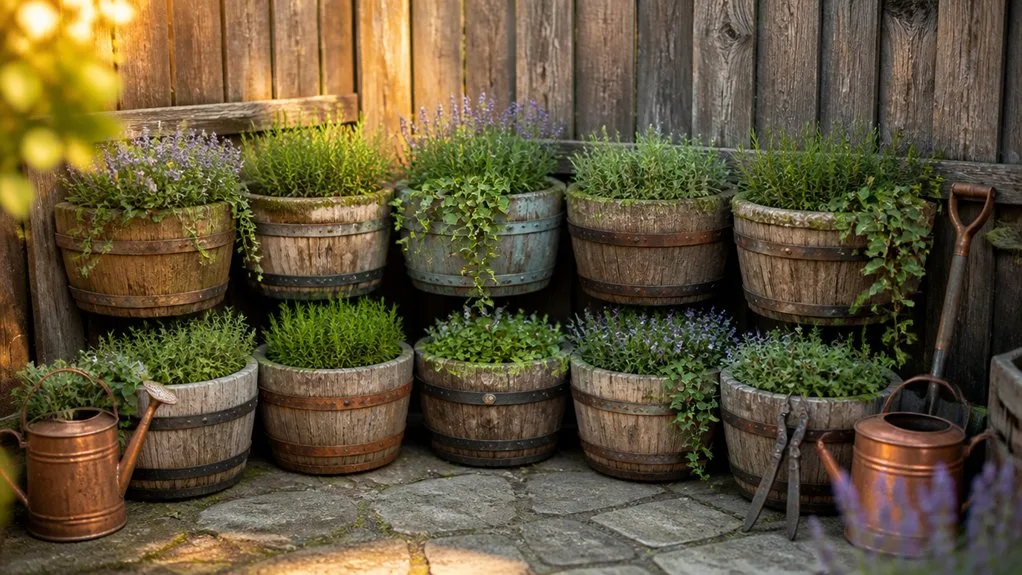
You can transform your rustic garden by positioning half barrels on either side of doorways, spacing them 4-6 feet apart along pathways, or stacking them vertically using metal brackets for tiered arrangements. Pair shallow-rooted herbs with trailing flowers like petunias, position taller specimens centrally, and train climbing vines on trellises installed within barrels. Apply exterior-grade paint in earthy tones, seal with polyurethane every 12-18 months, and drill drainage holes to prevent rot. Discover how to maximize these versatile planters throughout your landscape.
Key Takeaways
- Stack half barrels vertically using metal brackets to create tiered focal points with dimensional depth for rustic garden displays.
- Position matching barrel planters on either side of doorways or gates to frame entrances with symmetrical rustic charm.
- Fill barrels with trailing plants like ivy and petunias to soften edges while maintaining authentic countryside garden aesthetics.
- Apply exterior-grade paint in earthy tones with polyurethane sealant to protect wood while achieving weathered rustic appearance.
- Cluster multiple barrels at varying heights along pathways to create dimensional depth and define spaces with rustic character.
Start Simple: Classic Half Barrel Planters

With proper preparation, you’ll transform a standard half barrel into a functional planter that’ll serve your garden for years. Start by drilling drainage holes in the bottom—at least six quarter-inch holes prevent waterlogging. Line the interior with landscape fabric to retain soil while allowing drainage. Fill with quality potting mix, leaving two inches from the rim. Position your barrel in an appropriate location considering sunlight requirements for your plants. Half barrels accommodate multiple plantings: pair tall specimens with trailing varieties for visual interest. Their rustic aesthetic complements cottage and farmhouse gardens perfectly, requiring minimal maintenance once established.
Stack Half Barrels Vertically for Extra Space
To maximize your growing space without expanding your garden’s footprint, you can stack half barrels vertically using sturdy support structures. Secure barrels using metal brackets, wooden frames, or concrete blocks to ensure stability and prevent tipping. Space them appropriately to allow adequate sunlight penetration to lower containers. Install drainage holes in each barrel to prevent water pooling. This vertical arrangement works exceptionally well for shallow-rooted plants like lettuce, herbs, and strawberries. You’ll create multiple growing levels while maintaining easy access for watering and harvesting. Consider weight distribution carefully, placing heavier soil-filled barrels on lower tiers for optimal balance and safety.
Paint Your Barrels in Earthy, Garden-Ready Colors

Because unpainted wood barrels weather quickly and deteriorate in outdoor conditions, you’ll want to apply a protective finish that complements your garden’s aesthetic. Select exterior-grade paint or wood stain in earthy tones—terracotta, sage green, charcoal, or warm brown. These colors harmonize naturally with foliage and soil. Apply two coats of quality paint, allowing proper drying time between applications. Use a primer designed for wood to ensure better adhesion and longevity. Consider eco-friendly, non-toxic formulations that won’t leach chemicals into your soil. Seal your barrels with polyurethane for enhanced weather resistance. This investment protects your planters while establishing your garden’s cohesive visual identity.
Mix Herbs and Flowers in a Single Barrel
Once you’ve protected your barrel with quality paint and sealant, you’re ready to maximize its growing potential by combining complementary plants. Pair shallow-rooted herbs like basil, thyme, and oregano with trailing flowers such as petunias or marigolds. Position taller plants—cilantro or dill—toward the barrel’s center, surrounding them with lower-growing specimens. Ensure drainage holes accommodate your plant selection’s moisture requirements. Layer soil appropriately: coarser material at the bottom, nutrient-rich potting mix above. Space plants to prevent overcrowding as they mature. This mixed approach creates visual interest while optimizing your barrel’s limited square footage for productive gardening.
Use Barrels to Frame Entryways and Garden Gates
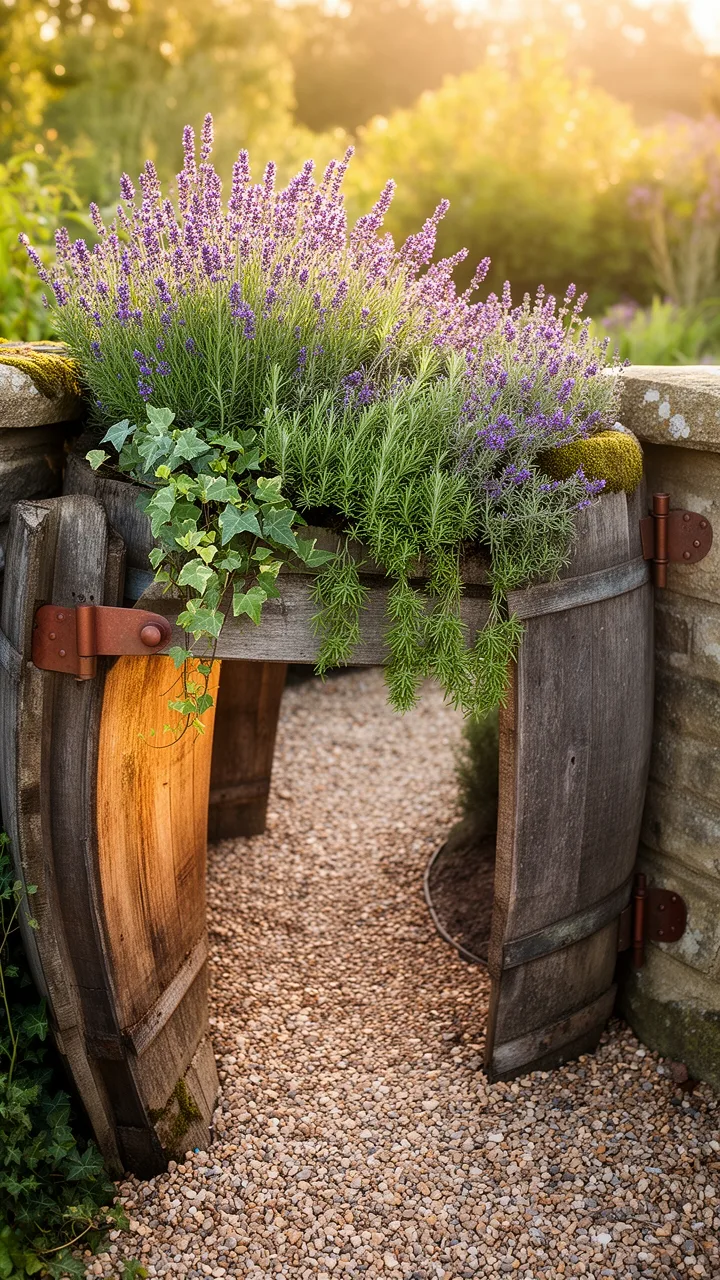
Strategic placement of half barrels can transform your entryway’s visual appeal by establishing a defined threshold between outdoor and interior spaces. Position matching barrels on either side of doorways or gates to create symmetrical focal points that guide visitors. Fill them with complementary plants—tall specimens in back, trailing varieties cascading over edges. This layered approach maximizes visual interest while maintaining sight lines. Ensure barrels sit level on stable ground to prevent tipping. Choose drought-tolerant plants if your location receives inconsistent watering. Rotate plantings seasonally to refresh your entrance’s appearance while accommodating changing light conditions throughout the year.
Line Your Pathways With Matching Barrel Planters
Lining your garden pathways with uniform half barrel planters creates a cohesive visual corridor that guides foot traffic while establishing rhythm and continuity throughout your landscape. You’ll achieve optimal impact by spacing planters at consistent intervals—typically 4 to 6 feet apart—maintaining symmetry on both sides. Select matching barrels and coordinate plantings with complementary colors and heights to reinforce visual flow. Consider using trailing plants like ivy or creeping fig to soften edges, while upright specimens anchor focal points. This strategic arrangement defines boundaries, improves accessibility, and transforms ordinary walkways into intentional garden features that enhance your property’s overall design scheme.
Design a Statement Focal Point With Tiered Barrels
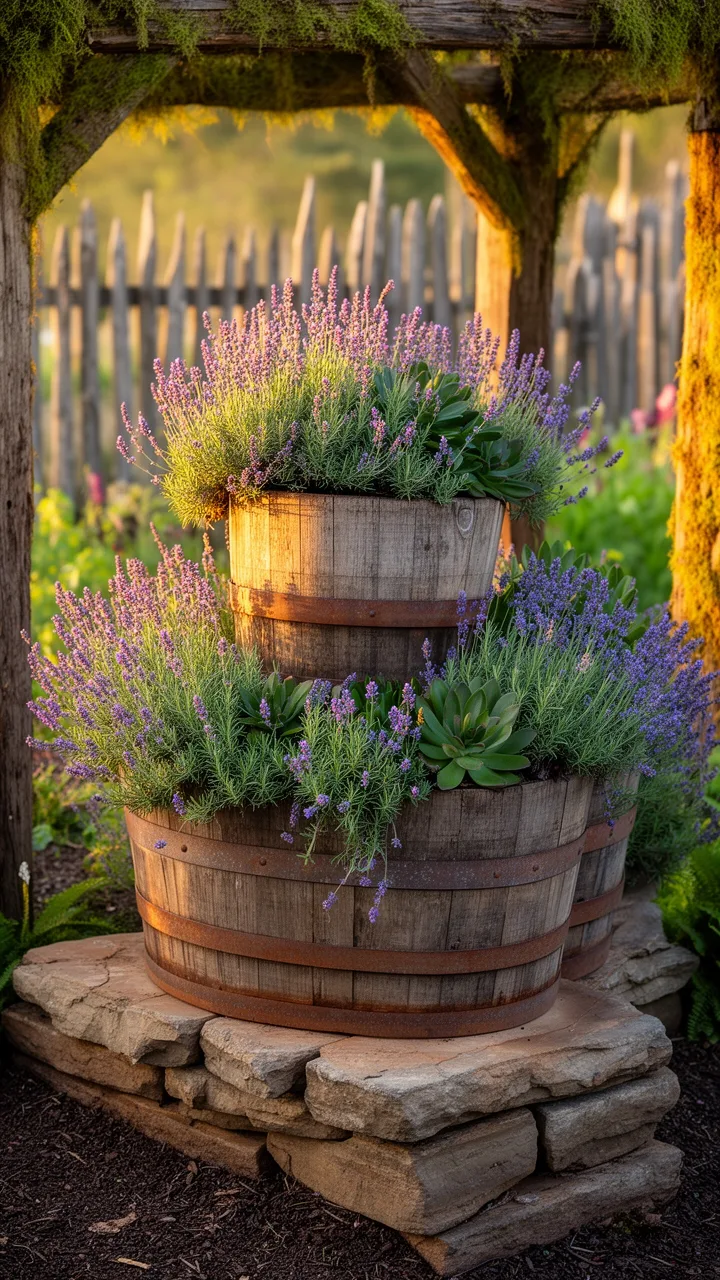
When you’re ready to create dramatic visual interest in your garden, stacking half barrels at varying heights produces an eye-catching focal point that draws attention and adds architectural dimension to your landscape. You’ll want to secure each barrel with landscape adhesive or metal brackets to ensure stability. Arrange them in a pyramid formation—three on bottom, two in middle, one on top—for optimal visual impact. Fill each tier with complementary plants, using trailing varieties for upper levels and upright specimens below. This tiered approach maximizes planting space while creating a stunning centerpiece that commands attention from every garden angle.
Frame Seating Nooks With Half Barrel Plantings
Half barrels create intimate garden rooms by framing outdoor seating areas with living walls of color and texture. Position paired planters on either side of benches or chairs to establish visual boundaries that define your space. Select trailing varieties like ivy or creeping Jenny that cascade downward, softening hard edges while maintaining sightlines. Plant upright specimens behind seating to create privacy screens. Choose complementary colors that enhance your outdoor furniture—jewel tones contrast with natural wood, while pastels complement modern designs. Stagger barrel heights using risers or soil depth variations to maximize visual impact and ensure plants don’t obstruct views across your garden.
Add Height With Climbing Vines and Barrels
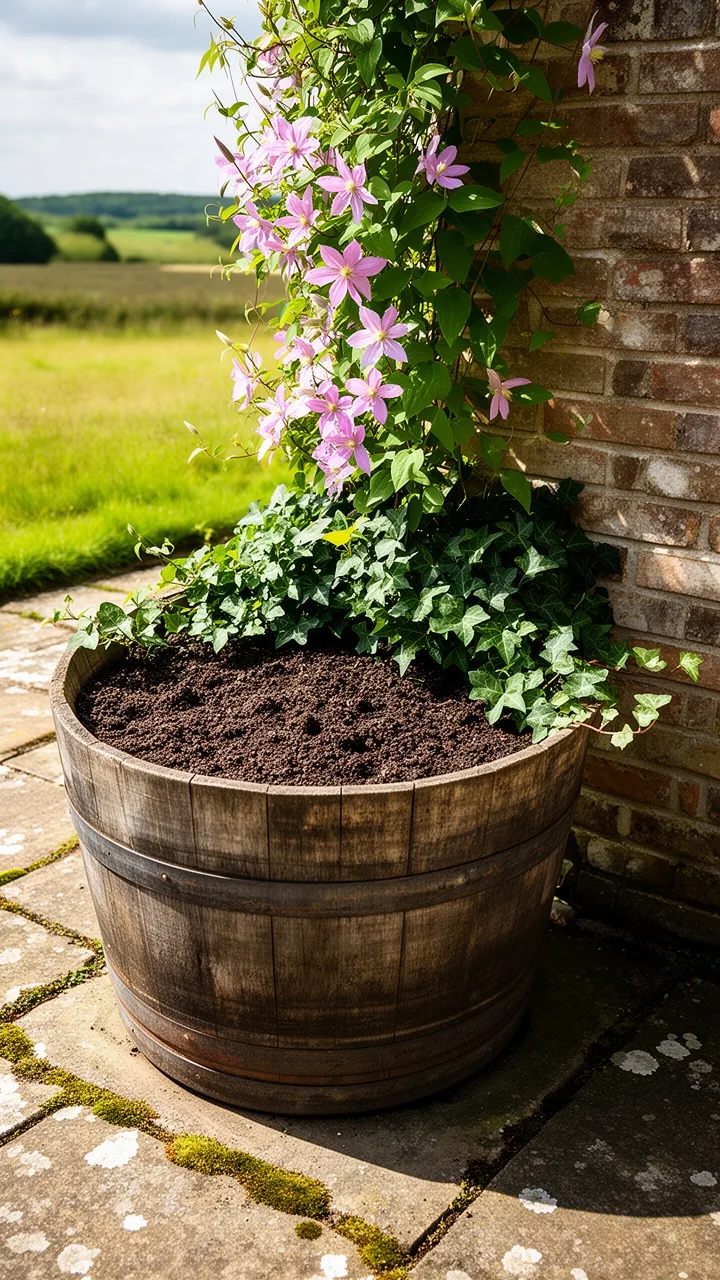
To create vertical dimension in garden spaces, you’ll want to install trellises or stakes directly into half barrels and train vigorous climbing vines up these supports. Choose varieties like clematis, jasmine, or climbing roses that suit your climate zone. Ensure your barrel contains well-draining soil enriched with compost. Position it where vines receive adequate sunlight—most climbers need six to eight hours daily. Water consistently during establishment and anchor support structures securely to withstand wind and vine weight. Prune regularly to maintain shape and encourage branching. This approach maximizes planting density while adding architectural interest and privacy screening throughout your garden.
Create Visual Drama With Wine Barrel Statement Pieces
Wine barrels serve as striking focal points that’ll instantly elevate your garden’s aesthetic appeal. You can position these substantial containers strategically throughout your landscape to draw the eye and create visual interest. Consider these approaches:
- Cluster multiple barrels at varying heights to establish dimensional depth and architectural presence
- Paint or stain barrels in complementary colors that coordinate with your home’s exterior and surrounding plantings
- Position specimen plants—ornamental grasses, flowering shrubs, or topiary—within barrels to amplify their visual impact
Select premium specimens and arrange them near seating areas or garden entries. Their substantial mass naturally anchors outdoor spaces while their rustic charm complements contemporary and traditional design schemes alike.
Weatherproof Your Barrels: Simple Maintenance Tips
Since wooden barrels face constant exposure to rain, UV rays, and temperature fluctuations, you’ll need to apply protective finishes that guard against rot, splintering, and color fading. You should seal your barrels annually with exterior-grade wood stain or polyurethane sealant. Drill drainage holes in the bottom to prevent water pooling, which accelerates decay. Add a wood preservative before staining for enhanced protection. Check for soft spots or cracks regularly—these indicate structural compromise. Reapply sealant every 12-18 months depending on climate conditions. Consider elevating barrels on gravel or pavers to improve air circulation beneath, further reducing moisture accumulation and extending your planters’ lifespan considerably.
Troubleshoot Common Half Barrel Planter Problems
Even with proper maintenance, half barrel planters can develop issues that compromise plant health and structural integrity. You’ll want to address problems promptly to extend your planter’s lifespan.
Common issues you might encounter include:
- Rot and decay – Check for soft spots in the wood; treat affected areas with fungicide or replace compromised sections
- Poor drainage – Ensure drainage holes aren’t clogged with debris; add gravel at the bottom if water pools excessively
- Pest infestations – Inspect regularly for wood-boring insects; apply appropriate treatments or consider replacing severely damaged barrels
You should monitor soil moisture levels closely and verify that your planter sits on level ground to prevent water accumulation and structural stress.
Conclusion
You’ll find that half barrel planters transform your garden into a rustic sanctuary. By combining vertical stacking, strategic color choices, and climbing vines, you’re crafting layers of visual interest like a painter building depth on canvas. Don’t overlook weatherproofing—apply sealant annually to prevent rot and extend barrel life. Ensure proper drainage holes, rotate soil seasonally, and monitor for pest infiltration. You’ve got all the technical knowledge you need to build a thriving, rustic garden.
The Only Tools You Need for a Thriving Garden 🌱
Whether you're a weekend gardener or growing daily — these hand-picked tools make every session faster, easier, and more satisfying.