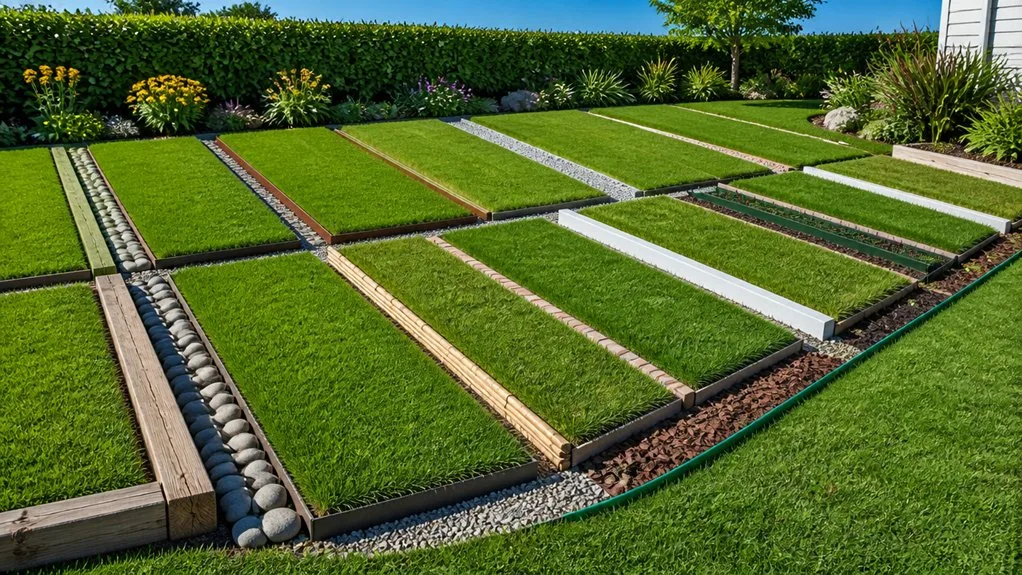
You can create crisp lawn borders without breaking the bank by repurposing plastic bottles, reclaimed wood, or salvaged pallets into edging. Budget-friendly options like river rocks, concrete poured into simple forms, and galvanized steel strips deliver professional results. Ground cover plants offer living borders that suppress weeds naturally. Mulch trenches require minimal effort and cost. Metal and plastic manufactured edging work around curves effortlessly. Each method provides durability and clean definition. The right choice depends on your yard’s specific needs and aesthetic goals.
Key Takeaways
- Repurpose plastic bottle bottoms, reclaimed wood, salvaged bricks, and disassembled pallets for free or low-cost edging materials.
- Use affordable river rocks, pea gravel, or painted stones from your property to define garden beds economically.
- Pour concrete into wooden forms for durable, crisp lawn borders requiring minimal skill, basic tools, and one weekend.
- Install budget-friendly galvanized steel or flexible plastic edging strips that are rust-resistant, repositionable, and easy to secure.
- Plant low-growing ground cover like creeping thyme or sedum along perimeters as living borders suppressing weeds naturally.
Free Lawn Edging From Recycled Plastic Bottles
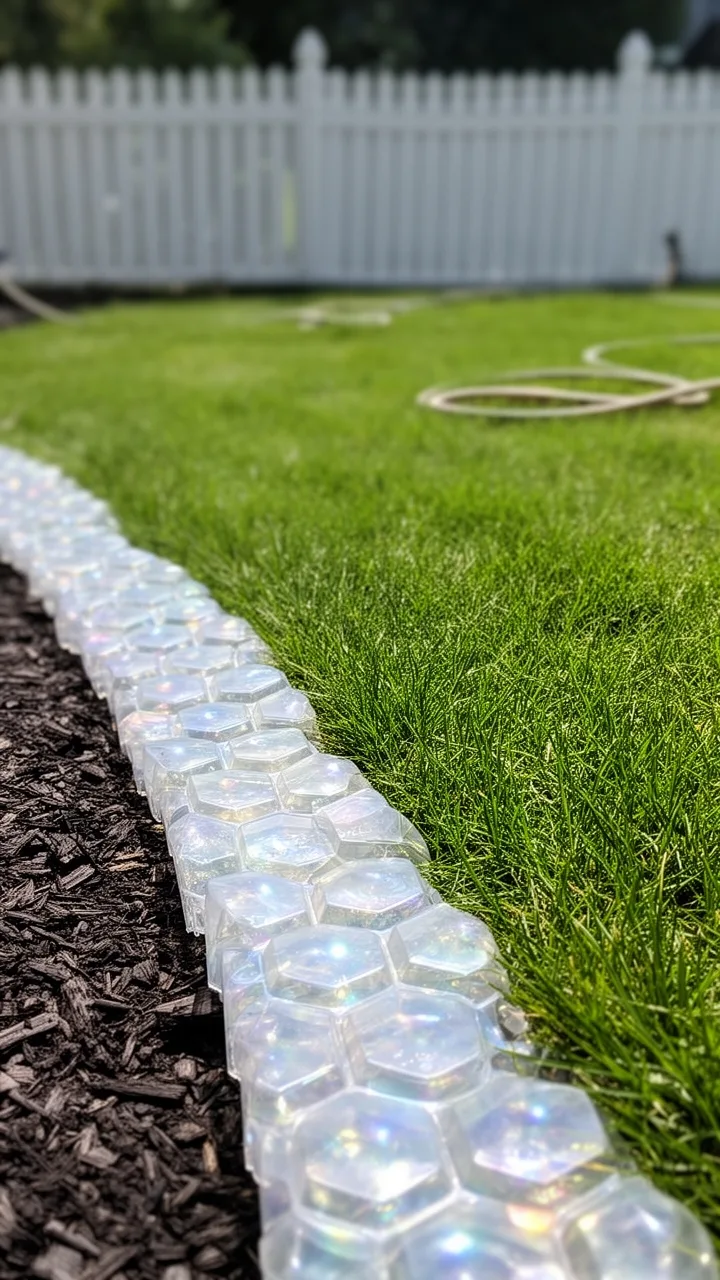
If you’re looking for an economical edging solution, repurposed plastic bottles offer a surprisingly durable alternative to traditional materials. You’ll collect empty bottles, rinse them thoroughly, and cut off the bottoms to create uniform segments. Dig a shallow trench along your garden bed’s perimeter, then insert the bottle pieces vertically, pressing them firmly into the soil. You can space them closely for a solid barrier or leave gaps for a decorative look. This method withstands weather extremes and lasts years without degrading. Paint the bottles if desired for aesthetic appeal. It’s an effective, cost-free way to define your lawn’s edges while reducing waste.
Build Borders From Reclaimed Wood
Because reclaimed wood offers rustic charm while diverting materials from landfills, it’s an excellent choice for lawn edging. You’ll find salvaged lumber at demolition sites, architectural salvage yards, or online marketplaces. Here’s how you can build durable borders:
- Select rot-resistant woods like cedar or oak for longevity
- Cut pieces to uniform lengths and secure them with galvanized nails or screws
- Dig a shallow trench, position your wood, and backfill with soil
You’ll create defined garden beds while spending minimal money. This approach transforms discarded materials into functional landscape features that’ll withstand seasons of weather exposure.
Budget Stone and Gravel Edges That Last
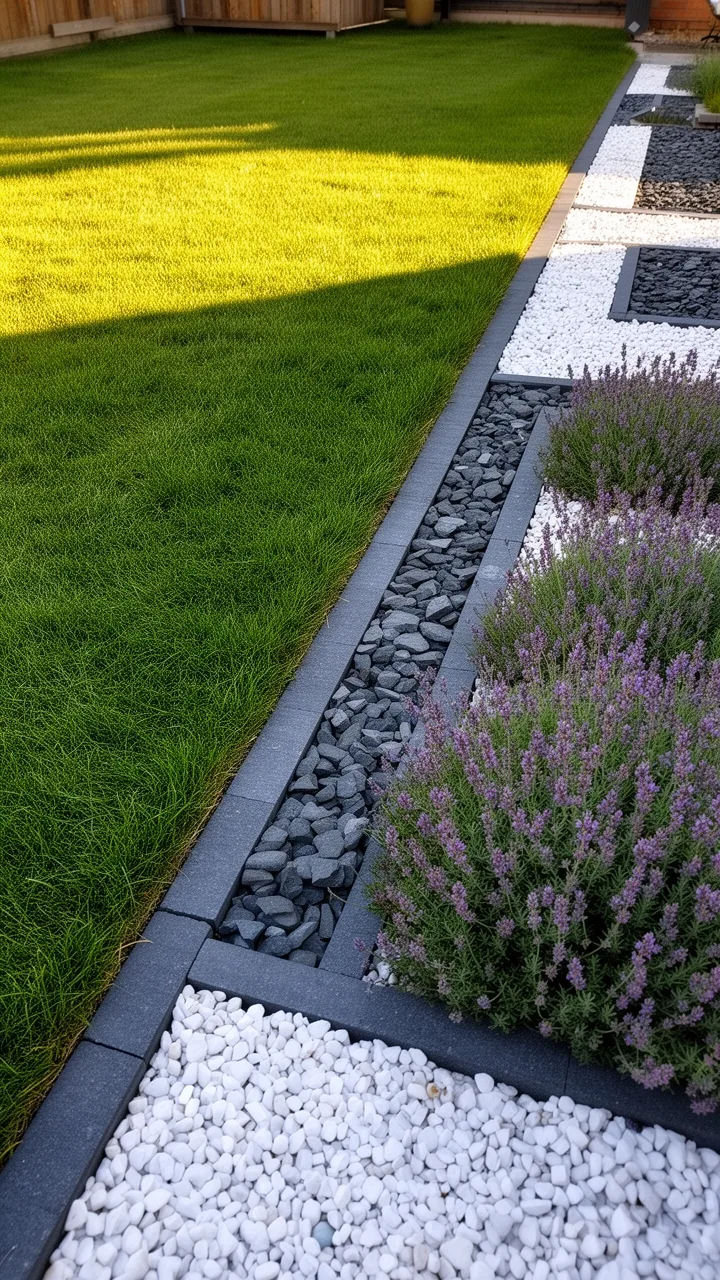
While reclaimed wood brings character to garden beds, stone and gravel edges offer you a different set of advantages—they’re lower-maintenance, naturally attractive, and won’t rot over time. You can source affordable river rocks or pea gravel from local quarries, significantly reducing costs. Create clean lines by installing landscape fabric beneath gravel to suppress weeds and extend durability. Stack flat stones for raised edges, securing them with minimal mortar. These materials integrate seamlessly into various garden styles and require only occasional raking or top-ups. They’re ideal if you’re seeking lasting, budget-friendly edging that demands minimal upkeep.
Durable Metal Lawn Edges on a Tight Budget
Metal edging delivers clean, modern lines that’ll outlast most materials—and you don’t need to spend a fortune to get them. You can find affordable options by shopping for:
- Galvanized steel strips from home improvement stores—rust-resistant and budget-friendly
- Aluminum edging on clearance or from salvage yards for significant savings
- Recycled metal materials online marketplaces that cost substantially less than new
Install your chosen metal edging by driving stakes through pre-drilled holes every two feet. This approach prevents shifting while keeping costs minimal. Metal won’t decompose like wood, eliminating replacement expenses for years. You’ll achieve professional landscaping aesthetics without draining your wallet.
Create Clean Lines With Mulch Trenches
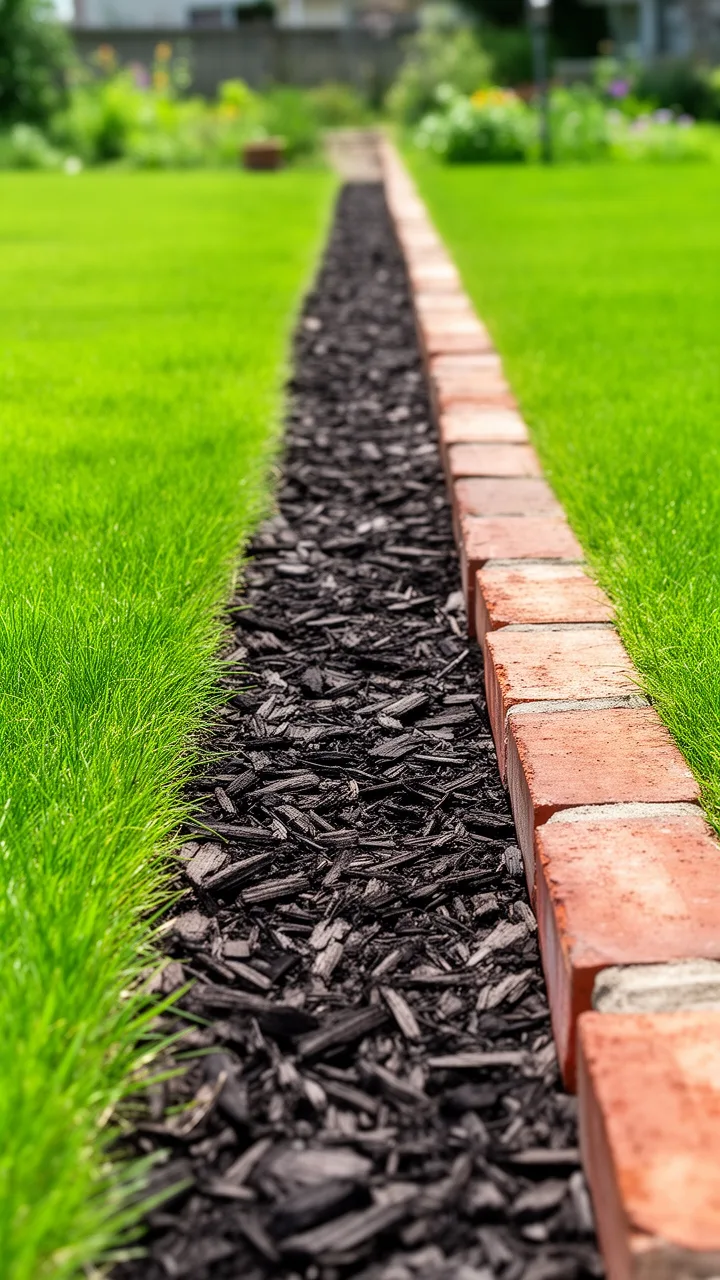
You’ll find that a well-maintained mulch trench offers an equally sharp aesthetic without the upfront investment of metal edging. Simply dig a shallow channel between your lawn and garden beds, roughly three to four inches deep. Keep the edges clean by trimming grass that creeps inward with a spade or edger. Refresh mulch annually to maintain definition and prevent the trench from filling with debris. This method works exceptionally well along curved borders where metal edging proves difficult to install. The result? Crisp, defined lines that separate your lawn from landscaping effortlessly and economically.
Repurposed Bricks and Pavers for Instant Definition
Salvaging old bricks and pavers gives you an affordable edging solution that’s both durable and visually striking. You’ll find reclaimed materials at demolition sites, salvage yards, or online marketplaces. Installation requires minimal effort:
- Dig a shallow trench along your garden bed perimeter
- Lay bricks or pavers tightly together, pressing them firmly into soil
- Backfill with dirt to secure edges and eliminate gaps
This method creates instant definition between lawn and garden while preventing grass encroachment. Weathered bricks add rustic charm, while uniform pavers offer clean aesthetics. Unlike plastic edging, brick won’t degrade or shift seasonally. You’re recycling materials while achieving professional-looking borders affordably.
Why Flexible Plastic Strips Outperform Pricey Alternatives

Flexible plastic edging strips deliver superior functionality without the premium price tag of alternatives like steel or stone. You’ll appreciate their durability, ease of installation, and flexibility around curved garden beds. They resist rust and won’t crack like brittle materials. You can reposition them whenever you redesign your landscape.
| Feature | Plastic Strips | Steel Edging | Stone Pavers |
|---|---|---|---|
| Cost | $ | $$$ | $$$ |
| Installation | Easy | Moderate | Difficult |
| Flexibility | Excellent | None | None |
| Maintenance | Minimal | Regular | Occasional |
You’ll save money while achieving clean lawn definition that lasts years.
Paint Your Own Rock Borders (Zero Cost)
Before you invest in any edging materials, consider the rocks already scattered across your property—they’re free lawn borders waiting to be transformed. You’ll gather smooth stones and paint them with weatherproof acrylic paint in contrasting colors that complement your landscaping. Here’s your process:
- Clean rocks thoroughly and let them dry completely
- Apply primer, then paint with bold, solid colors or simple patterns
- Seal with outdoor polyurethane for durability
Line your garden beds and walkways with these painted stones, creating defined borders that catch sunlight and add personality. This cost-free solution transforms yard clutter into intentional design features.
Galvanized Steel: The Best Low-Cost Edging Material
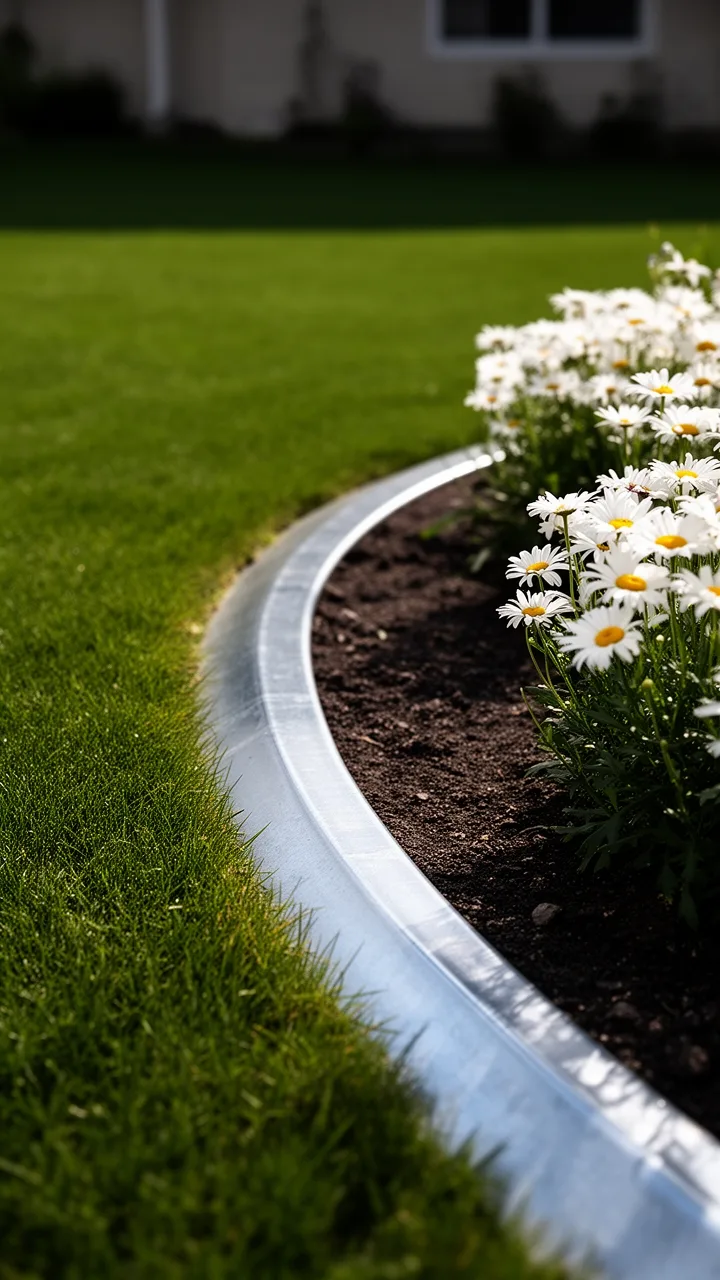
Once you’ve exhausted your supply of painted rocks, galvanized steel edging offers an affordable, durable upgrade that’ll last for years without rusting or warping. You’ll find it at most home improvement stores in various heights, typically ranging from four to twelve inches. Installation’s straightforward: simply push the steel strips into your soil along your garden perimeter, securing them with stakes if needed. The material won’t decompose like wood or shift like plastic, maintaining clean lawn lines effortlessly. Its sleek appearance complements any landscape design, and you can easily adjust or relocate sections as your garden evolves.
Turn Free Pallets Into Sturdy Garden Borders
If you’re looking for a budget-friendly alternative that rivals galvanized steel in durability, reclaimed wooden pallets offer an excellent solution for creating sturdy garden borders. You’ll find pallets readily available from warehouses and retail stores at no cost.
To create your edging, you’ll need to:
- Disassemble pallets carefully using a pry bar and remove nails
- Sand the wood smooth and apply weatherproof sealant for longevity
- Arrange boards vertically or horizontally, securing them with stakes
This approach gives you customizable heights and lengths while requiring minimal investment. The rustic aesthetic complements any garden style perfectly.
Grow Your Edges: Budget Living Borders With Ground Covers
While wooden pallets provide structure and permanence, living borders offer a dynamic alternative that’ll transform your garden’s edges with minimal effort and cost. Ground covers like creeping thyme, sedums, and ornamental grasses create natural boundaries while suppressing weeds and reducing maintenance. You’ll plant these low-growing specimens along your lawn perimeter, allowing them to spread and establish themselves over seasons. They’re affordable, environmentally friendly, and actually improve soil health as they decompose organically.
| Ground Cover | Growth Height |
|---|---|
| Creeping Thyme | 2-4 inches |
| Sedum | 3-6 inches |
| Ornamental Grass | 12-24 inches |
| Ajuga | 4-9 inches |
| Lamium | 6-12 inches |
DIY Concrete Edging (Easier Than You Think)
You’ll find that pouring concrete edging doesn’t require specialized skills or expensive equipment—just basic materials, a few hand tools, and a weekend of your time. Here’s what you need:
- Mix concrete according to package directions and pour into wooden forms along your garden bed
- Smooth the surface with a trowel, creating a slight slope for water drainage
- Allow 48 hours curing time before removing forms
This durable edging withstands weather, requires minimal maintenance, and creates crisp lawn borders. You’ll appreciate how concrete prevents grass invasion while defining garden spaces. It’s an economical solution that lasts years.
Conclusion
You’ll spend nothing creating pristine edges that’d cost you thousands at a landscaper’s office. That old plastic bottle gathering dust? It’s premium edging material. Those pallets you’re tossing out? They’re garden gold. You’ve got concrete, steel, and mulch sitting right in your yard, waiting to transform into professional-grade borders. The irony’s delicious—your cheapest options’ll outlast expensive alternatives while making your lawn look magazine-worthy.
The Only Tools You Need for a Thriving Garden 🌱
Whether you're a weekend gardener or growing daily — these hand-picked tools make every session faster, easier, and more satisfying.