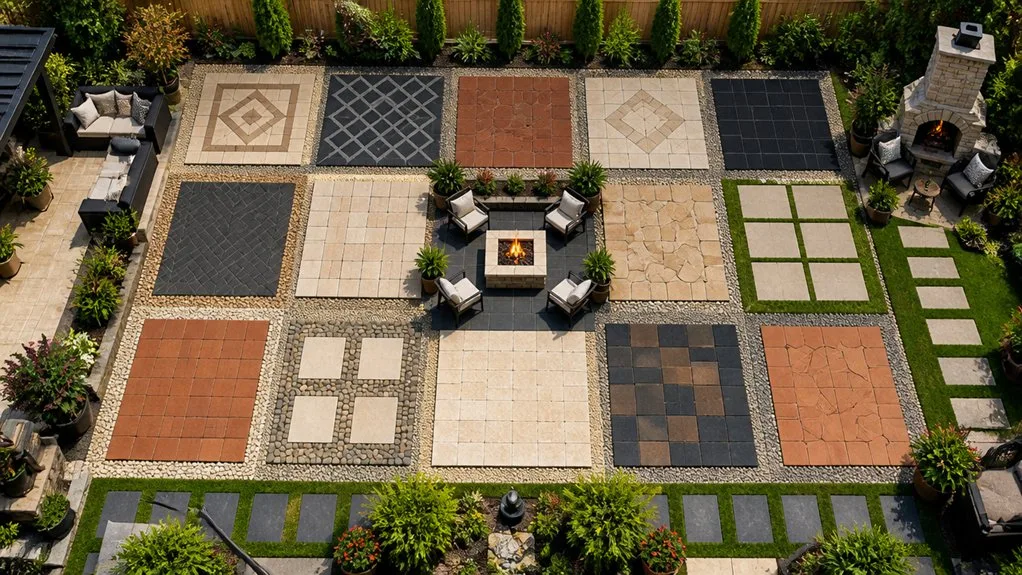
You’ll transform your 576-square-foot backyard with a 24×24 paver patio combining herringbone patterns for drainage superiority, modern geometric color blocking for visual zones, and Mediterranean earth tones for warmth. Integrate a fire pit hub with curved pavers guiding traffic, add built-in seating walls, and frame everything with bold borders. Strategic lighting extends usability while mixing premium and budget materials maximizes impact. The right design approach balances structural stability with aesthetic sophistication—discover how these elements work together.
Key Takeaways
- 24×24 pavers work perfectly for 576-square-foot patios, accommodating standard dimensions without excessive cutting or waste.
- Herringbone patterns with 24×24 pavers provide superior structural stability, excellent drainage, and create visual perspective that elongates space.
- Color-blocking techniques using alternating paver colors define distinct lounging zones around a central fire pit gathering hub.
- Combine premium natural stone borders with budget-friendly concrete paver interiors to maximize visual impact while controlling costs.
- Integrate built-in seating walls and planter boxes using matching 24×24 pavers for cohesive, functional backyard designs.
Understanding 24×24: The Ideal Patio Size and What It Offers

A 24×24 patio—576 square feet—strikes an optimal balance between usable outdoor living space and practical installation constraints. You’ll find this dimension accommodates multiple functional zones simultaneously: a dining area with table and chairs, a lounge section, and circulation space. The square footprint distributes weight evenly, reducing settling issues common with rectangular designs. You can comfortably fit standard paver dimensions without excessive cutting. This size suits most residential properties without overwhelming yards or requiring extensive grading work. Installation costs remain manageable compared to larger patios, while drainage considerations stay straightforward. You’ll appreciate the versatility this dimension offers for furniture arrangements and entertaining groups of 8-12 people comfortably.
Herringbone Paver Patio Patterns for Timeless Style
When you’re laying out a herringbone pattern on your 24×24 patio, you’re choosing one of the most structurally sound and visually dynamic paver arrangements available. This classic pattern interlocks rectangular pavers at alternating 90-degree angles, creating exceptional stability and sophisticated aesthetics.
Key advantages you’ll experience:
- Enhanced load-bearing capacity through interlocking geometry
- Superior drainage channeling between angled joints
- Visual perspective that elongates outdoor space
- Reduced lippage and settlement issues
- Timeless appeal across design styles
You’ll need precision during installation, ensuring each paver sits flush with neighbors. The 24×24 dimension accommodates this pattern flawlessly, requiring minimal cutting while maximizing visual impact and functional durability.
Modern Geometric Designs With Bold Color Blocking

While herringbone patterns deliver timeless elegance through subtle rhythm, modern geometric designs flip that approach by commanding attention through bold color blocking and striking angular compositions. You’ll create visual impact by alternating contrasting paver colors—typically black, white, and gray—in chevron, checkerboard, or diamond formations. This strategy demands precision during installation; each paver’s placement directly affects the overall pattern’s success. You can incorporate multiple colors to define distinct zones within your 24×24 space, establishing visual boundaries without physical barriers. These designs work exceptionally well with contemporary architecture, complementing clean lines and minimalist landscaping aesthetics while maintaining exceptional durability and low maintenance requirements.
Rustic Mediterranean Aesthetics With Warm Earth Tones
Shifting from geometric precision to organic warmth, you’ll embrace terracotta, sandstone, and clay-toned pavers that evoke Mediterranean landscapes and aged European courtyards.
This aesthetic demands attention to material selection and installation:
- Source tumbled or hand-finished pavers with irregular edges for authentic character
- Layer complementary earth tones—ochre, sienna, and buff—in random patterns
- Install permeable jointing sand for water drainage and natural settling
- Incorporate aged grout in warm gray or tan shades
- Integrate accent borders using darker clay pavers for definition
You’ll achieve depth through color variation and texture, creating inviting outdoor spaces that feel established and sophisticated while maintaining practical durability for high-traffic areas.
Contemporary Fire Pit Arrangements and Gathering Spaces
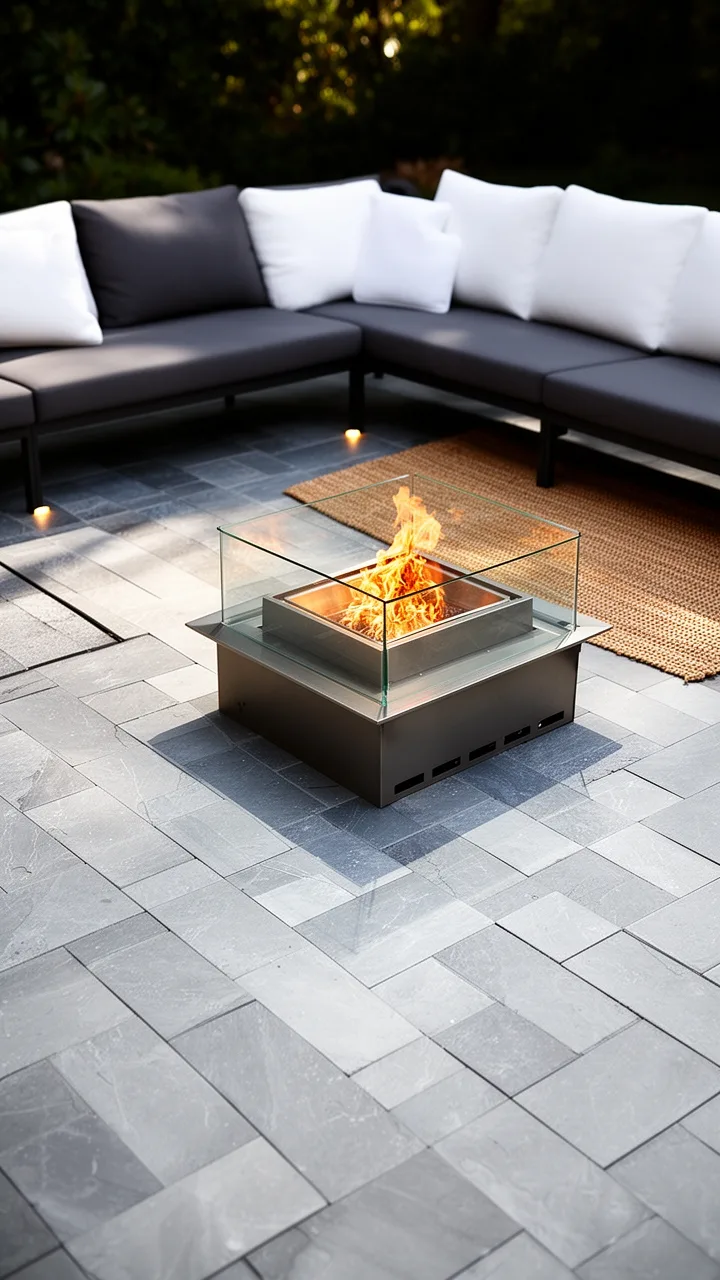
You’ll transform a 24×24 paver patio into an intimate gathering hub by centering your design around a fire pit feature, which naturally organizes seating zones and maximizes social interaction. Position your fire pit slightly off-center to create distinct lounging areas. Install curved paver patterns radiating outward to guide foot traffic and define spaces. Incorporate built-in seating walls using matching pavers for durability and cohesion. Add weather-resistant furniture in geometric arrangements. Consider ambient lighting around the perimeter to enhance evening ambiance. Ensure proper ventilation clearance from structures and vegetation for safety compliance.
Go Big: Large-Format Pavers for a Seamless Look
Large-format pavers offer a compelling alternative to the intricate paver patterns of fire pit arrangements, delivering a more streamlined aesthetic that expands your 24×24 space visually. You’ll appreciate how fewer grout lines create continuity and reduce maintenance demands.
Key advantages of large-format pavers include:
- Minimal grout joints that decrease dirt accumulation
- Enhanced visual flow across your entire patio area
- Simplified installation reducing labor costs
- Superior load-bearing capacity for heavy furniture
- Cleaner sight lines improving perceived square footage
You’ll find that 24-inch pavers require proper base preparation and leveling precision. Invest in quality materials and professional installation to ensure durability and prevent settling issues over time.
Round Out Your Space: Curved and Circular Patio Layouts
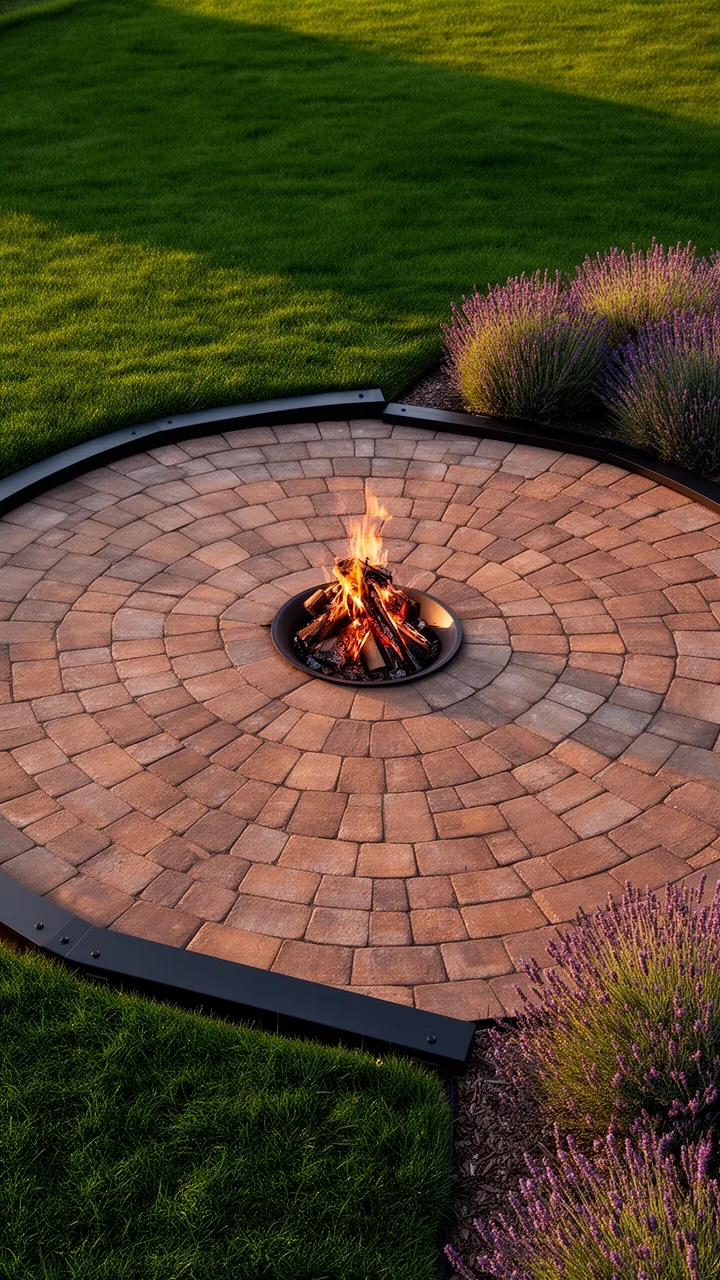
While rectangular layouts dominate patio design, curved and circular configurations can transform your 24×24 space into a more dynamic, visually interesting area. You’ll create natural flow patterns that guide foot traffic organically around your yard. Curved edges soften harsh lines, making your patio feel more inviting and spacious. Circular layouts work exceptionally well with 24×24 pavers as centerpieces, radiating outward to establish focal points. You can incorporate curved pathways, circular seating areas, or concentric ring patterns. These designs enhance visual depth and accommodate diverse furniture arrangements better than traditional straight-edged configurations.
| Layout Type | Best For | Installation Difficulty | Visual Impact | Cost Factor |
|---|---|---|---|---|
| Full Circle | Central features | High | Maximum | Premium |
| Semi-Circle | Boundaries | Medium | High | Moderate |
| Curved Edges | Flow | Medium | Medium | Moderate |
| Spiral Pattern | Focal points | Very High | Dramatic | Premium |
| Wave Design | Movement | Medium | Medium | Standard |
Sunburst Paver Patterns for Eye-Catching Drama
Radiating from a central point, sunburst patterns create one of the most visually striking paver configurations for your 24×24 space. This geometric design demands precision in layout and installation.
Key considerations for sunburst installation:
- Start at center point with reference lines to maintain symmetry
- Use wedge-shaped or tapered pavers for authentic radial effect
- Cut edge pavers precisely to fit circular perimeter
- Apply consistent grout joints radiating outward
- Select contrasting colors to enhance dimensional depth
You’ll achieve dramatic visual impact through careful planning. The sunburst’s converging lines naturally draw eyes inward, making smaller patios feel expansive. Professional-grade installation ensures longevity and maintains the pattern’s geometric integrity throughout seasonal changes.
Checkerboard Designs With Contrasting Colors
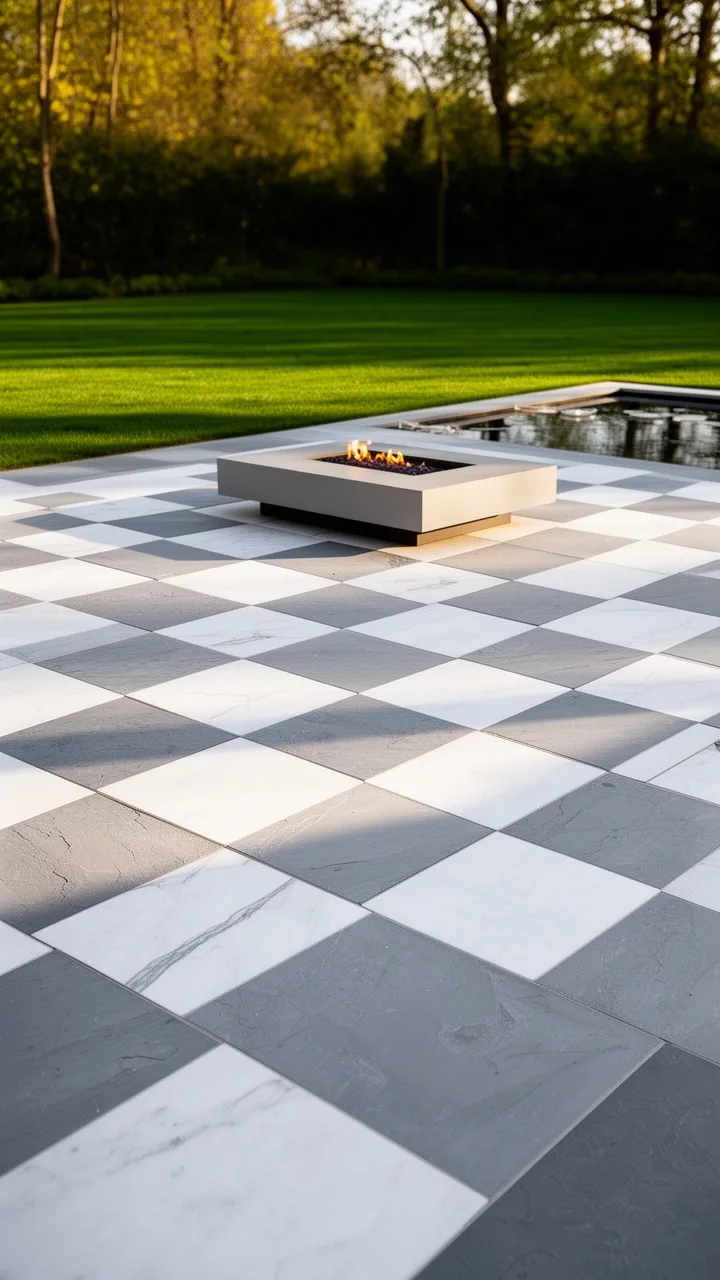
For a timeless aesthetic that doesn’t demand the precision of radial patterns, checkerboard designs offer striking visual appeal through simple color alternation. You’ll arrange 24×24 pavers in alternating colors—typically contrasting pairs like charcoal and tan, or slate and cream—creating crisp geometric rhythm across your patio space. This pattern works exceptionally well with large-format pavers since the scale amplifies the color contrast. You’ll find installation straightforward: establish a grid layout, then place alternating colors systematically. Consider complementary hues that coordinate with your home’s exterior. The checkerboard design suits modern and traditional settings equally, providing visual interest while maintaining clean, organized lines throughout your outdoor living area.
Pairing Stone, Brick, and Concrete for Depth and Texture
Beyond the visual simplicity of checkerboard patterns, you’ll discover greater design complexity by combining multiple material types within your 24×24 patio layout.
Layering diverse materials creates dynamic visual interest and improves durability:
- Stone provides stability as a foundation base layer
- Brick offers warmth with natural color variations and traditional aesthetics
- Concrete ensures longevity through superior weather resistance
- Textural contrast prevents monotony across large surface areas
- Material transitions define functional zones within your space
You’ll strategically position each material where it performs best. Stone handles high-traffic areas effectively, while brick accents add focal points. Concrete borders contain the design efficiently. This approach maximizes both aesthetic appeal and practical functionality throughout your patio.
Eco-Friendly Permeable Pavers That Look Intentional
While traditional pavers shed water and contribute to runoff problems, permeable pavers let water drain directly through their surface into the soil below, reducing environmental impact without sacrificing visual appeal. You’ll find options like permeable concrete, recycled plastic composites, and porous asphalt that maintain aesthetic appeal while improving drainage. These materials feature open-grid designs or porous surfaces that allow water infiltration while supporting vehicle and foot traffic. You can arrange them in herringbone or running bond patterns for intentional design statements. The permeable technology prevents flooding, reduces heat island effects, and supports groundwater recharge—all while creating a sophisticated outdoor space that demonstrates your environmental commitment.
Bold Borders: Frame Your Patio Like a Picture
A contrasting border transforms your 24×24 patio from a simple rectangle into a framed focal point that anchors your outdoor space. You’ll create visual definition and depth by selecting pavers that contrast with your field material.
Consider these border strategies:
- Single-row accent borders using darker or lighter pavers for subtle definition
- Double-row patterns combining contrasting colors for architectural emphasis
- Dimensional borders featuring larger pavers to establish scale hierarchy
- Diagonal edge treatments creating dynamic visual movement around perimeters
- Mixed material borders blending stone types for textural contrast
You’ll enhance drainage patterns while establishing clear spatial boundaries. Strategic border placement elevates your patio’s design sophistication and functionality without overwhelming your outdoor environment.
Build In Seating and Planters as You Design
Integrating built-in seating and planters during your initial design phase maximizes your 24×24 patio’s functionality and spatial efficiency. You’ll want to calculate dimensions carefully—bench seating typically requires 18-24 inches depth, while planter boxes need 12-18 inches. Consider positioning seating along edges to define zones without cluttering the center. Incorporate drainage holes in planter bases and use landscape fabric to prevent soil erosion. You can construct both from matching pavers or complementary materials like composite wood or stone. This integrated approach eliminates post-installation modifications, reduces costs, and creates a cohesive design that balances aesthetics with practical usability.
Extend Your Evenings: Strategic Lighting for Patios
Once you’ve established your patio’s layout with built-in seating and planters, you’ll want to layer your lighting design to create functional zones and extend usability after dark.
Strategic lighting transforms your 24×24 space into an inviting evening retreat. Consider these approaches:
- Ambient lighting – Install overhead fixtures or string lights for general illumination
- Task lighting – Position spotlights near seating areas and dining zones
- Accent lighting – Highlight architectural features, plants, and hardscaping elements
- Path lighting – Use low-level fixtures along walkways for safety
- Dimmable controls – Install smart systems for adjustable brightness and mood setting
Layer these elements strategically to maximize functionality while creating atmosphere.
Choosing Pavers by Budget: Cost-Smart Designs That Don’t Compromise
Budget constraints don’t mean you’ll sacrifice quality or aesthetics for your 24×24 patio. You’ll find cost-effective options in concrete pavers, which offer durability at lower price points than natural stone. Permeable pavers reduce drainage expenses while managing stormwater. Mix premium materials strategically—use higher-end pavers as borders or focal points, then fill interior spaces with budget-friendly alternatives. Porcelain pavers provide excellent value, resisting stains and wear effectively. Standardized sizes reduce cutting waste and labor costs. Request bulk pricing from suppliers. Plan layouts minimizing offcuts. Prioritize your design’s visual anchor, allocating funds there while economizing on less-visible areas. This approach maximizes impact within your financial parameters.
Conclusion
You’re investing in a feature that’ll transform your outdoor space. Research shows that homeowners recoup approximately 50-60% of patio installation costs through increased home value. By selecting durable pavers, implementing proper drainage, and incorporating strategic lighting and seating elements, you’re creating a functional, aesthetically pleasing gathering space. Your 24×24 patio becomes an extension of your home’s living area, enhancing both usability and property appeal for years to come.
The Only Tools You Need for a Thriving Garden 🌱
Whether you're a weekend gardener or growing daily — these hand-picked tools make every session faster, easier, and more satisfying.