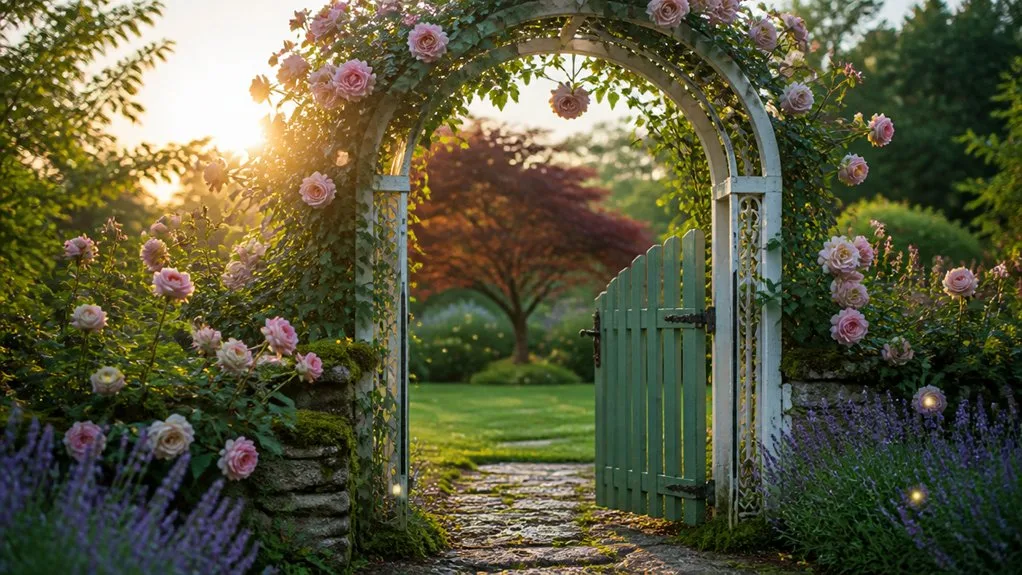
You’ll create a charming entrance by selecting an arbor style—classic, modern, or rustic—that complements your landscape. Choose durable materials like cedar, metal, or composites based on climate and maintenance preferences. Install sturdy gate hardware and train vigorous climbing vines like clematis or roses for continuous color. Incorporate lighting with warm-toned LEDs to highlight architectural details. For compact yards, narrow vertical designs maximize impact without consuming space. Stone foundations ensure stability through freeze-thaw cycles. Explore deeper into specific design combinations to discover which approach transforms your backyard best.
Key Takeaways
- Classic Victorian lattice, modern geometric, and rustic weathered finishes offer distinct design styles for charming garden entrances.
- Cedar, redwood, metal, and composite materials provide durability with aesthetic appeal suited to different climates.
- Narrow arbors and corner installations maximize visual impact while preserving precious garden space efficiently.
- Climbing vines like clematis and roses, combined with symmetrical training, create enchanting framed gate openings.
- Built-in seating and warm LED uplighting enhance functionality and ambiance for inviting backyard entrances.
Choose Your Arbor: Design Styles From Classic to Modern

When you’re planning a garden arbor with a gate, your design choice’ll set the tone for your entire entryway. Classic styles feature ornate lattice work and Victorian details that evoke timeless elegance. Modern designs emphasize clean lines, minimal ornamentation, and geometric forms. Contemporary arbors blend both approaches with streamlined structures and subtle decorative elements. Consider your home’s architectural style, landscape aesthetic, and functional requirements. Rustic options showcase natural wood and weathered finishes, while transitional designs bridge traditional and contemporary elements. Select materials—cedar, vinyl, metal, or composite—based on durability, maintenance needs, and visual impact. Your arbor style should complement existing hardscaping and plantings while creating a welcoming passage.
Wooden Arbors: Timeless Charm and Cottage Appeal
Wooden arbors deliver enduring appeal through their natural warmth, versatility, and ability to harmonize with virtually any landscape setting. You’ll find they’re available in various wood species—cedar, redwood, and pressure-treated pine—each offering distinct durability and aesthetic qualities. Cedar resists rot naturally, making it ideal for humid climates. You can customize dimensions, lattice patterns, and finial designs to match your cottage or traditional aesthetic. Regular maintenance, including staining or sealing every two to three years, preserves structural integrity and appearance. Installation requires proper foundation footings to ensure stability. Climbing vines like clematis or roses enhance their romantic charm while providing shade.
Metal Arbors: Sleek Designs for Contemporary Homes
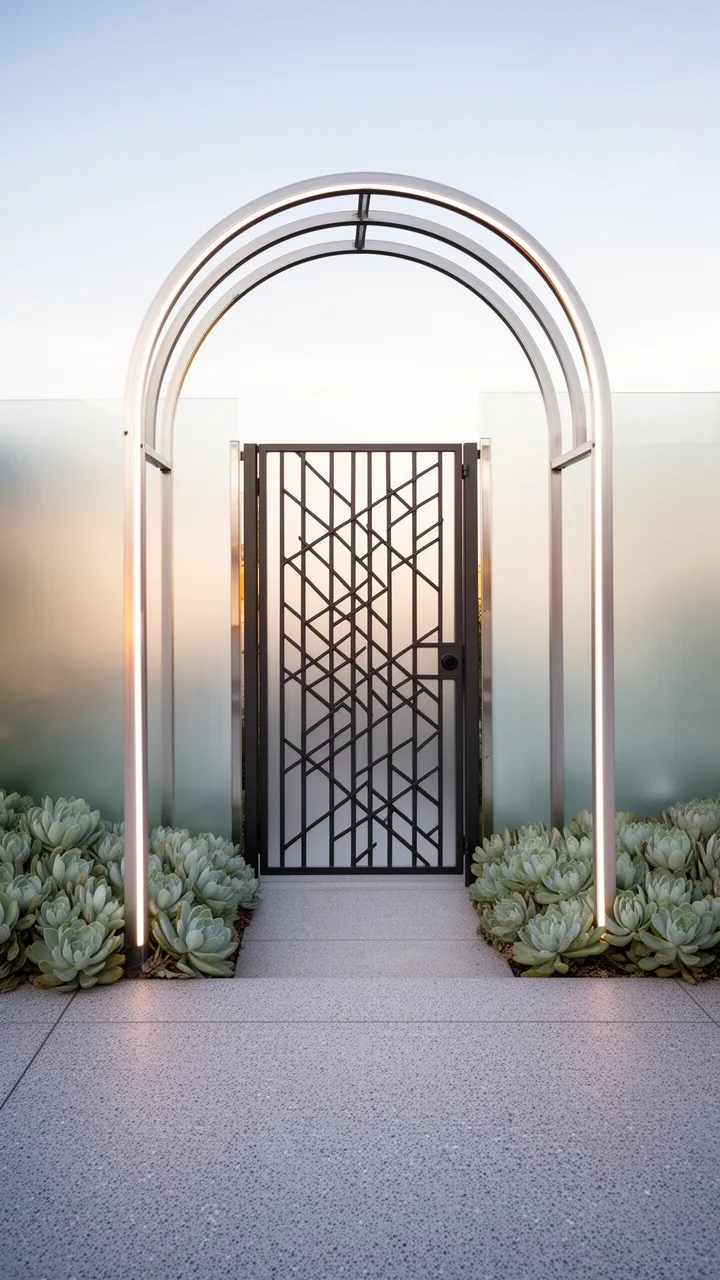
Unlike their wooden counterparts, metal arbors deliver clean lines and minimalist aesthetics that complement modern landscapes beautifully. You’ll find steel, aluminum, and wrought iron options that resist rust and weathering while maintaining structural integrity for decades. These materials support climbing vines without sagging, and their slender profiles won’t overwhelm compact yards. Metal arbors pair excellently with contemporary gates—think horizontal slat designs or geometric patterns. You can customize powder-coat finishes in bold colors or neutrals matching your home’s palette. Installation requires secure anchoring into concrete footings. Metal arbors demand minimal maintenance beyond occasional cleaning, making them ideal for busy homeowners seeking durability without constant upkeep.
Small-Space Arbors: Big Impact in Tight Yards
Compact yards don’t require you to sacrifice garden architecture—they demand it. You’ll maximize limited square footage by choosing narrow arbors that frame pathways without consuming precious space. Strategic placement transforms your entire outdoor aesthetic.
Consider these approaches:
- Vertical climbing structures — Train vines upward, preserving ground area while creating visual height
- Corner installations — Nestle arbors into unused angles, anchoring neglected spaces with purpose
- Arched entries — Install single-opening gates that define zones without sprawling horizontally
Select lightweight materials like vinyl or aluminum for easier installation in confined areas. Your small yard becomes an intentional, sophisticated outdoor room through thoughtful arbor design.
Budget Arbor Ideas: Stylish Designs Without the High Price
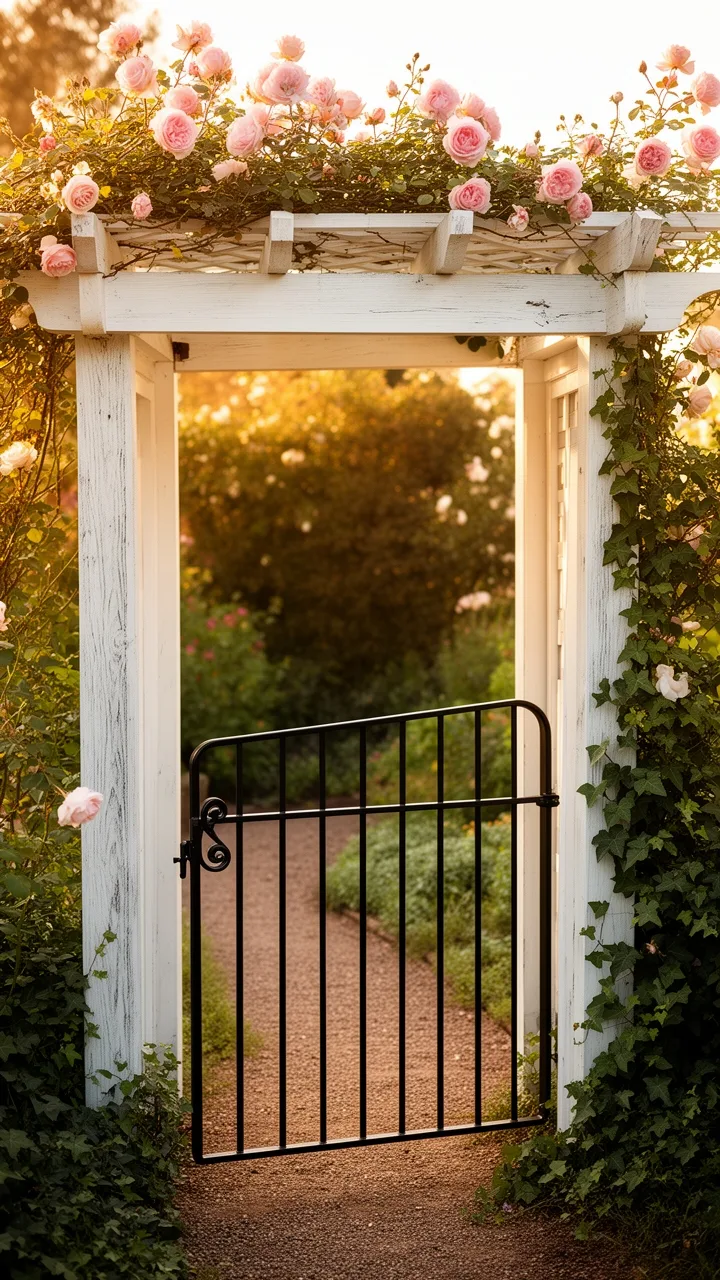
Budget constraints shouldn’t prevent you from installing an attractive garden arbor—smart material selection and DIY installation methods deliver professional-looking results without premium pricing. Consider pressure-treated lumber or recycled materials that offer durability at lower costs. PVC pipes create lightweight structures requiring minimal maintenance. You’ll save substantially by constructing basic frames yourself rather than purchasing pre-fabricated units. Galvanized hardware resists corrosion effectively while remaining affordable. Simple geometric designs—rectangular or A-frame configurations—maximize visual impact through clean lines. Paint or stain affordable wood strategically to enhance curb appeal. Source materials from reclaimed building supplies or bulk retailers. Strategic plant placement around your arbor creates perceived sophistication regardless of construction expense.
DIY vs. Built: When to Build Your Own
Weighing construction complexity against your skill level determines whether you’ll save money and time building an arbor yourself or purchasing a pre-fabricated unit.
Consider these factors:
- Tool availability – You’ll need saws, drills, and sanders for proper joinery and finishing
- Material sourcing – Selecting quality lumber requires knowledge of wood grades and weather resistance
- Installation precision – Structural integrity depends on accurate measurements and secure anchoring
DIY projects demand carpentry experience and weekend commitment. Pre-built options eliminate guesswork and guarantee stability. Assess your confidence level honestly. If you’re comfortable with basic woodworking, DIY saves money. Otherwise, invest in professionally constructed units that arrive ready to install.
Arched Gates: Frame Your Best Garden View

An arched gate’s elegant curve naturally draws the eye through your garden while creating a striking focal point that frames your most prized views. You’ll want to position your arch strategically to highlight landscape features—a flowering tree, water feature, or distant vista. Consider the arch’s height and width relative to your sightline; typically, 7-8 feet tall provides ideal proportions. Choose materials that complement your garden’s aesthetic: weathered wood for cottage styles, metal for modern designs, or vinyl for low maintenance. The arch’s curvature directs visitor flow while establishing visual depth and perspective throughout your outdoor space.
Pergola Arbors: Slatted Roofs for Dappled Shade
Where arched gates frame your garden’s focal points, pergola arbors provide functional shade structures that filter sunlight through evenly-spaced wooden or metal slats. You’ll appreciate how they create dappled shade patterns that shift throughout the day.
Consider these benefits:
- Adjustable light control by varying slat spacing and orientation
- Improved air circulation preventing heat accumulation beneath the structure
- Ideal support for climbing vines like clematis or jasmine
You can customize your pergola’s dimensions and materials to match your garden’s aesthetic. The open-roof design permits rainfall penetration while reducing direct UV exposure, making it perfect for plant growth and comfortable outdoor gatherings.
White and Painted Finishes: Fresh, Clean Looks
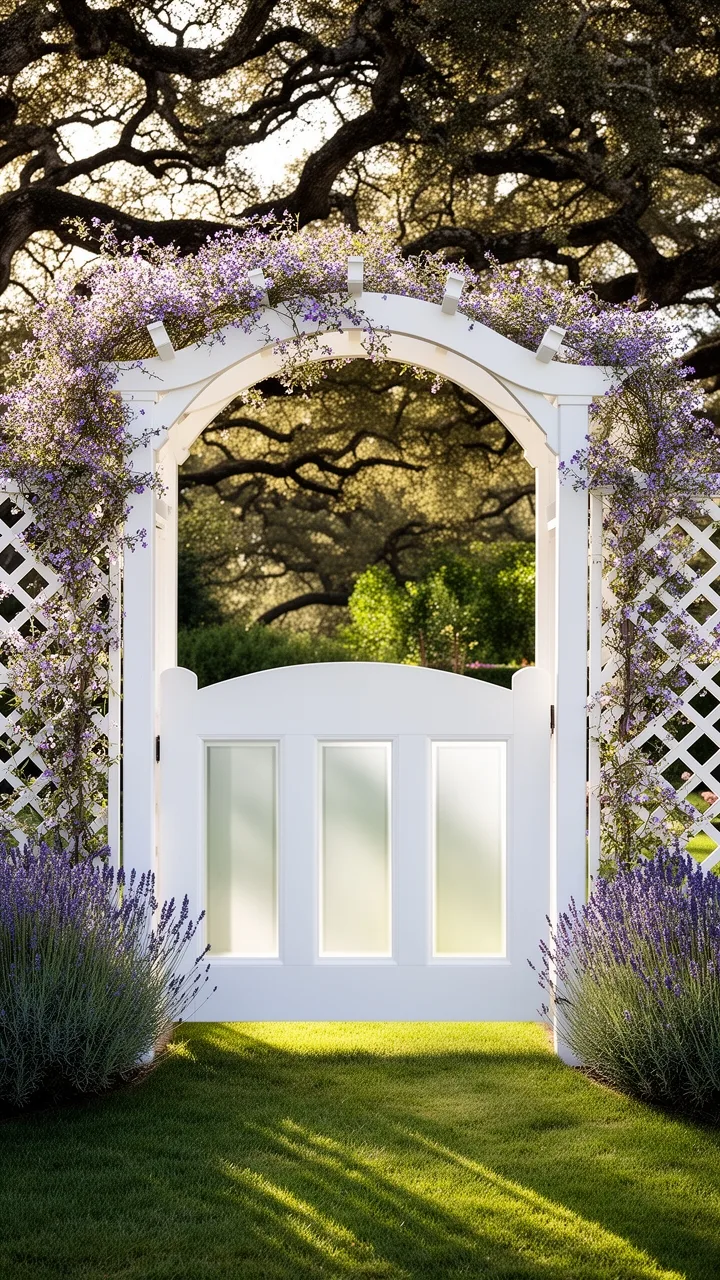
White and painted finishes transform your garden arbor into a striking design element that’ll enhance any landscape aesthetic. You’ll find that crisp white coatings reflect sunlight, brightening shadowed garden areas while creating visual contrast against foliage. Consider quality exterior paint formulated for wood durability and weather resistance. You can apply semi-gloss or satin finishes for easy maintenance and longevity. Alternatively, explore soft pastels or bold accent colors that complement your home’s exterior palette. Properly prepared surfaces and primer application ensure superior adhesion and protection. Regular maintenance, including touch-ups every 2-3 years, preserves your arbor’s polished appearance and structural integrity.
Dual-Gate Arbor Designs: Symmetrical Entries That Impress
Symmetrical dual-gate arbors create a formal entryway that’ll anchor your garden’s design while providing functional separation between landscape zones. You’ll achieve balanced proportions by matching gate dimensions and architectural details on both sides. This configuration enhances visual interest and establishes clear pathways through your landscape.
- Install matching hardware and hinges on each gate to maintain uniformity and ensure smooth operation
- Choose complementary climbing vines that’ll grow symmetrically, framing both openings identically
- Position the arbor to align with existing garden features, creating visual continuity throughout your outdoor space
Stone and Wood: A Rustic Pairing That Lasts
Because stone and wood weather differently yet complement each other structurally, this combination creates garden arbors that’ll develop authentic patina while maintaining integrity for decades. You’ll benefit from stone’s thermal mass and durability paired with wood’s aesthetic warmth and flexibility. Select stone pillars or footings to anchor your arbor, then use pressure-treated or naturally rot-resistant wood for framing and gates. This pairing accommodates freeze-thaw cycles without compromising stability. Stone resists moisture infiltration at ground level, while wood elements age gracefully overhead. You’ll minimize maintenance by positioning joints strategically, allowing proper drainage and air circulation. This marriage of materials creates visually sophisticated entries requiring minimal intervention.
Climbing Vines and Flowering Arbors: Living Color Overhead
Once you’ve established your arbor’s structural foundation, layering climbing vines and flowering plants transforms it into a dynamic living space that evolves seasonally. You’ll create vertical interest and dappled shade while enhancing curb appeal dramatically.
- Select vigorous climbers like clematis, jasmine, or climbing roses that thrive in your hardiness zone
- Install sturdy support systems—trellises or wire—ensuring vines grip securely without compromising gate functionality
- Combine early, mid, and late-blooming varieties for continuous color from spring through fall
You’ll maximize your arbor’s aesthetic potential by choosing plants suited to your site’s light conditions and soil composition. Proper pruning maintains structural integrity while encouraging prolific flowering and healthy growth patterns.
Built-In Seating: Arbors That Double as Garden Benches
While climbing vines create the visual drama overhead, you’ll amplify your arbor’s functionality by integrating built-in seating directly into its structural framework. Install sturdy benches along the arbor’s sides using pressure-treated lumber or cedar, anchoring them securely to the posts. This design maximizes your garden’s usable space while creating intimate gathering spots. You can customize seat height and depth for ergonomic comfort, typically 16-18 inches high and 15-20 inches deep. Add weatherproof cushions for comfort and style. The overhead lattice provides natural shade, making these benches ideal retreats for reading or relaxation during warm months.
Lighting for Evening Appeal: Illuminate Your Entry
Strategic lighting transforms your garden arbor and gate from daytime focal point to evening showstopper, extending your outdoor space’s usability well into dusk and beyond.
You’ll enhance architectural details and create ambiance by implementing these lighting solutions:
- Uplighting – Position LED fixtures at ground level pointing upward to highlight structural elements and climbing vines dramatically
- Accent lighting – Install spotlights to emphasize decorative gate details and archway contours
- Path lighting – Embed low-voltage lights along walkways leading to your arbor for safe, guided navigation
Choose warm-toned LEDs (2700K) for inviting atmospheres. Install dimmable systems for flexibility. These strategic placements transform your entrance into a sophisticated evening retreat.
Mixed Materials: Why Wood, Metal, and Stone Work Together
By combining wood, metal, and stone in your garden arbor design, you’ll create visual depth and structural integrity that single-material approaches can’t achieve. Wood provides warmth and natural aesthetics while offering workable surfaces for detailed craftsmanship. Metal elements—wrought iron or steel—deliver durability and support heavy climbing vines without deteriorating. Stone bases anchor your structure, resist ground moisture, and provide stable foundations for posts. This tripartite approach distributes stress effectively across your arbor frame. You’ll gain enhanced weather resistance, extended lifespan, and sophisticated visual contrast that elevates your garden’s design. Strategic material placement maximizes each component’s functional strengths while creating a cohesive, professional appearance.
Conclusion
You can transform your backyard entrance by selecting the right arbor style, integrating climbing vines for natural beauty, and adding strategic lighting for evening ambiance. You’ll enhance your outdoor space by choosing quality materials, combining wood with metal accents, and incorporating built-in seating. You’re creating a functional gateway that’s both aesthetically pleasing and structurally sound. Whether you’re working within budget constraints or seeking premium designs, you’re establishing a charming focal point that welcomes guests while defining your garden’s architectural character.
The Only Tools You Need for a Thriving Garden 🌱
Whether you're a weekend gardener or growing daily — these hand-picked tools make every session faster, easier, and more satisfying.