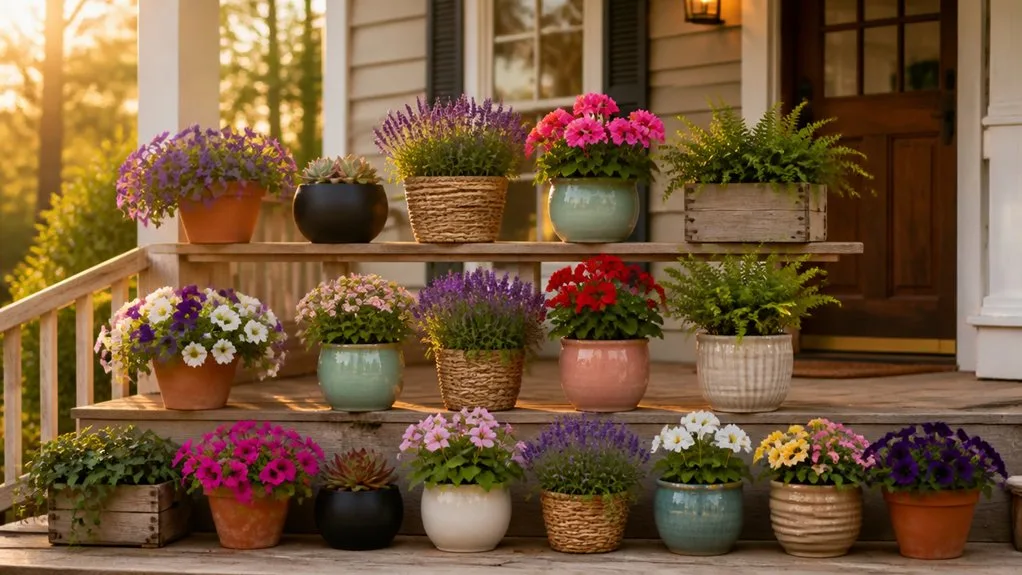
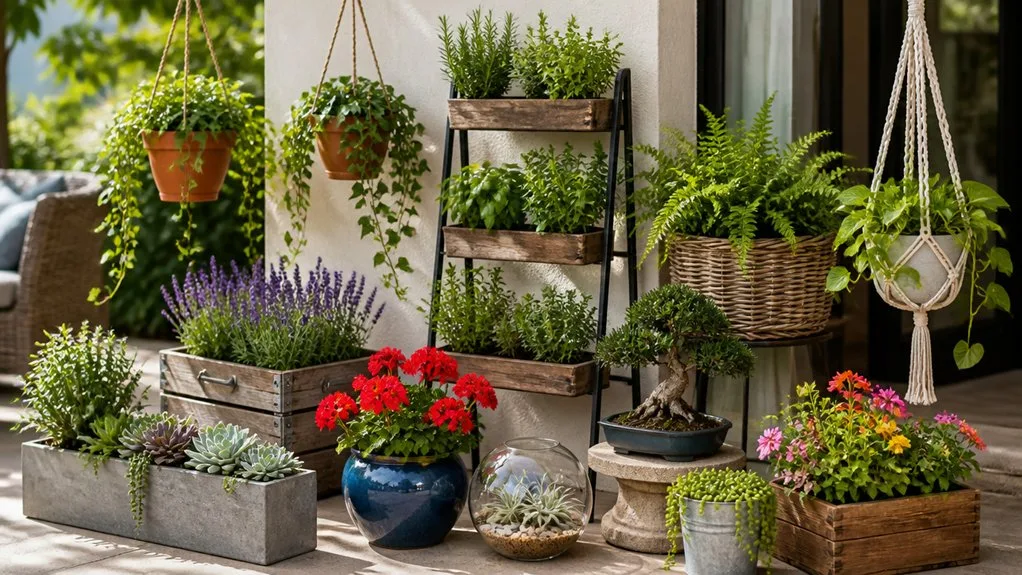
You’ll transform your patio by strategically layering planters in varying heights—cluster three to seven containers using tiered stands and tall specimens reaching 24-48 inches. Mix materials like concrete, resin, and cedar to match your aesthetic while prioritizing drainage holes and weather-resistant finishes. Arrange by sunlight and watering needs, positioning taller plants toward the back. Whether you’re drawn to modern geometric shapes or rustic charm, you’ll discover how combining vertical solutions with thoughtful placement creates professional-grade styling that solves practical garden challenges simultaneously.
Key Takeaways
- Arrange planters in odd-numbered clusters (three, five, or seven) with varied heights using pedestals for visual rhythm.
- Choose sleek concrete or fiberglass containers with geometric shapes for contemporary patios, using neutral color palettes.
- Select rustic wooden boxes from untreated cedar or reclaimed wood to achieve farmhouse charm and character.
- Position taller specimens toward the back, graduating downward, incorporating diverse textures and foliage colors for dimension.
- Use hanging planters and window boxes on vertical surfaces to maximize space and draw attention upward.
Choose Your Planter Style: Finding Your Aesthetic Match
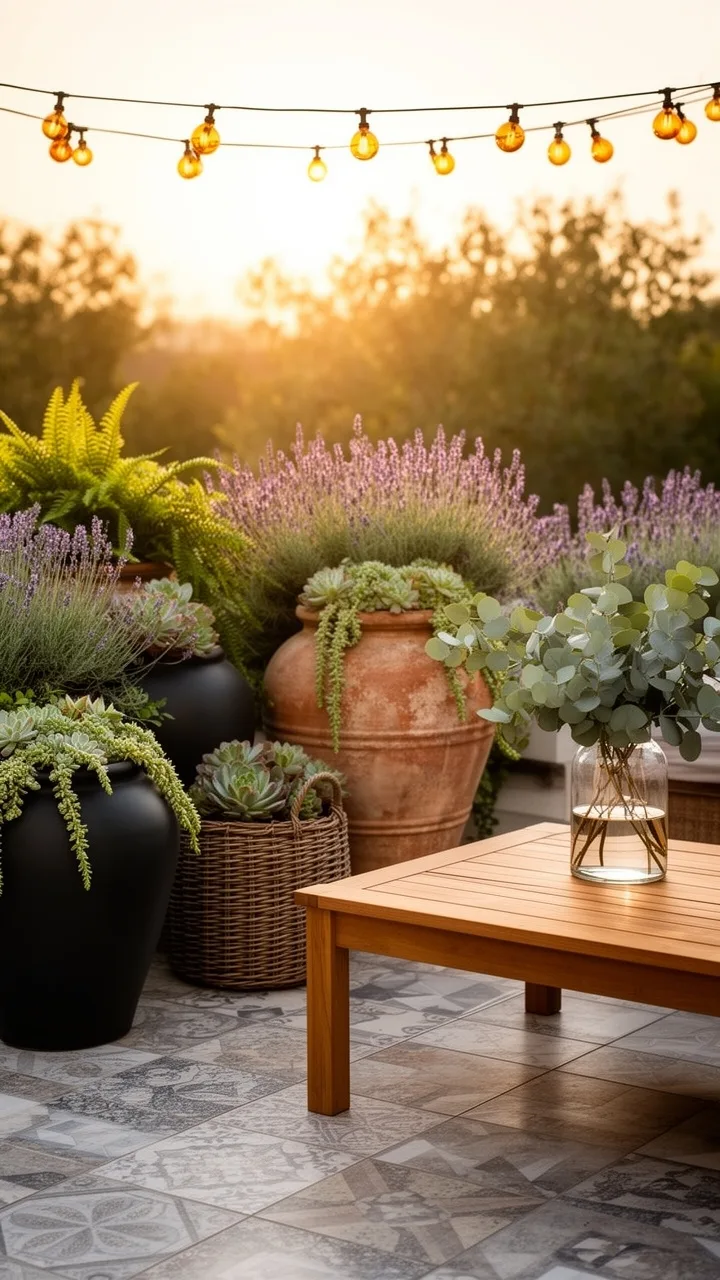
Your planter choice shapes both your garden’s visual impact and your plants’ growing conditions. You’ll find that terracotta breathes well for succulents but dries quickly in heat. Ceramic containers offer versatility with glazed finishes that retain moisture longer. Concrete planters provide durability and modern aesthetics, though they’re heavy. Wooden boxes create rustic charm while requiring drainage holes and rot prevention. Fiberglass mimics stone without the weight, ideal for large displays. Consider your patio’s style—contemporary, traditional, or eclectic—then match materials accordingly. Think about your climate too; darker containers absorb heat, benefiting cool-climate plants. Select sizes that accommodate root systems and allow proper watering access.
Drainage and Material Considerations: What Actually Lasts
While aesthetics matter, what truly determines whether your planter investment pays off is how well it manages water and weathers the elements. You’ll want drainage holes—non-negotiable for preventing root rot. Ceramic cracks in freeze-thaw cycles; concrete lasts longer but’s heavy. Composite materials resist weathering excellently. Terracotta’s porous nature demands frequent watering but ages beautifully. Metal rusts unless galvanized or powder-coated. Resin planters offer durability and lightweight convenience. Consider your climate: wet regions need superior drainage; arid zones tolerate slower water movement. Match materials to both your aesthetic preferences and environmental conditions for genuine longevity.
Tall Planters for Vertical Impact and Drama

Tall planters draw the eye upward and create architectural presence that ground-level containers simply can’t match. You’ll anchor your patio by positioning these vertical elements strategically along borders or entryways. They’re ideal for trailing vines, ornamental grasses, and specimen trees that need elevation. Consider pairing them with complementary plantings at varying heights to establish visual rhythm. Tall planters also maximize limited square footage, letting you cultivate more specimens without cluttering walkways.
| Height Range | Best Plant Types | Material Recommendation | Drainage Needs | Visual Impact |
|---|---|---|---|---|
| 24-30″ | Ornamental grasses | Fiberglass composite | Critical | Moderate |
| 31-36″ | Flowering vines | Glazed ceramic | Essential | High |
| 37-42″ | Specimen trees | Reinforced resin | Vital | Maximum |
| 43-48″ | Cascading foliage | Lightweight concrete | Paramount | Dramatic |
| 48″+ | Structural plants | Metal framework | Non-negotiable | Statement |
Tiered Plant Stands to Maximize Limited Space
Multi-level plant stands take vertical gardening beyond single containers by creating dimensional display surfaces that’ll transform even the tiniest patios into thriving plant collections. You’ll maximize square footage by stacking plants at varying heights, improving air circulation and sunlight exposure for each specimen. Corner-positioned tiered stands work particularly well for small spaces, accommodating trailing vines on upper shelves while anchoring structural plants below. Select stands with sturdy construction—wood, metal, or composite materials—ensuring weight capacity suits your soil-filled containers. Arrange plants by watering needs, placing drought-tolerant varieties higher where they’ll dry faster, while moisture-loving specimens occupy lower, shadier tiers.
Sleek Modern Containers for Contemporary Patios
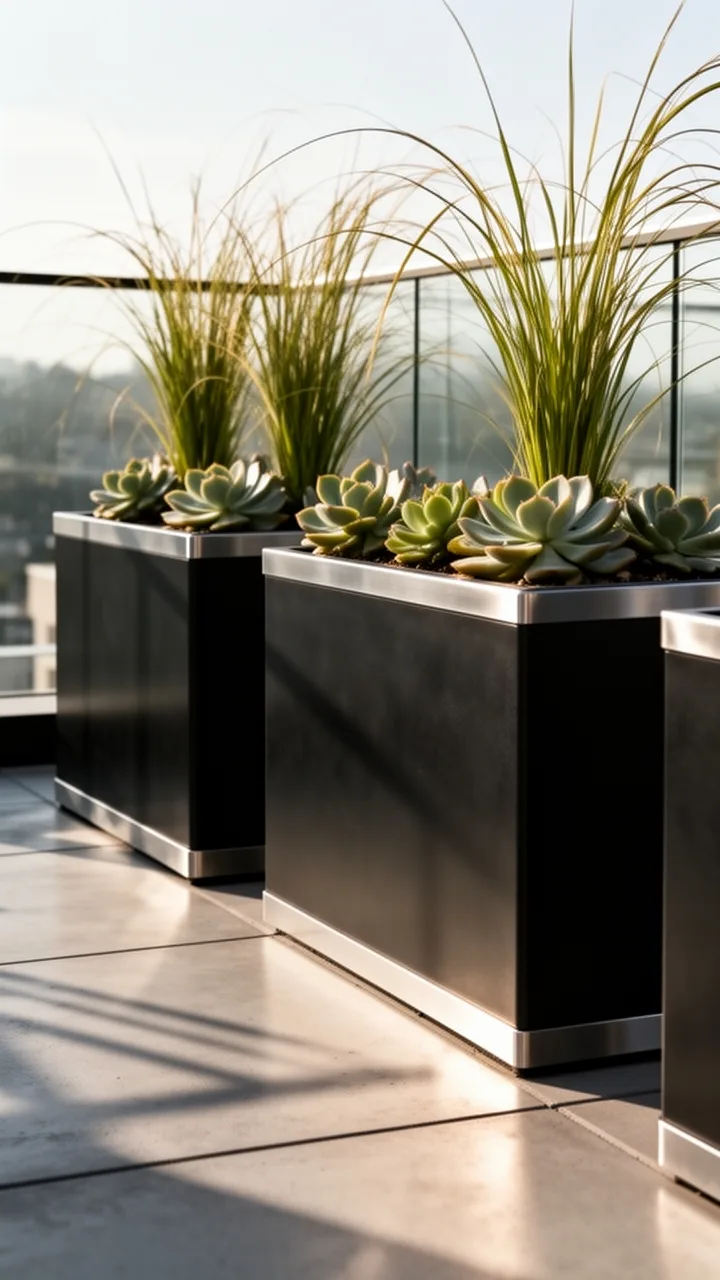
Because contemporary design prioritizes clean lines and minimalist aesthetics, you’ll find that geometric planters in concrete, fiberglass, and powder-coated steel complement modern patios far better than traditional clay. These materials withstand weathering while maintaining sleek finishes. You’ll appreciate how rectangular and cylindrical shapes create visual rhythm across your space.
| Material | Durability | Aesthetic | Maintenance |
|---|---|---|---|
| Concrete | Excellent | Industrial | Low |
| Fiberglass | Very Good | Lightweight | Minimal |
| Steel | Good | Contemporary | Regular |
| Composite | Excellent | Versatile | Low |
Select neutral color palettes—charcoal, white, or natural tones—to enhance architectural elements. Your modern patio gains sophistication through restrained, purposeful planter selection.
Rustic Wooden Boxes for Farmhouse Charm
While sleek geometric containers define contemporary spaces, wooden planters evoke warmth and authenticity that grounds a farmhouse aesthetic. You’ll want to select untreated cedar or reclaimed barn wood, which naturally resists rot and develops beautiful weathered patinas. Line your boxes with landscape fabric to prevent soil contact with wood, extending durability. Fill them with well-draining potting mix suited to your plants—herbs thrive in shallow boxes, while perennials need deeper soil. Position your wooden planters along pathways, porch edges, or garden borders where they’ll anchor your space with rustic character and seasonal plantings.
Hanging Planters to Draw the Eye Upward

Suspending trailing plants overhead creates visual movement while maximizing garden space in compact areas. You’ll draw attention upward by installing hanging planters at varying heights along your patio’s pergola or fence line. Choose lightweight containers—macramé holders, wire baskets, or fiberglass pots—that won’t strain your structure. Select cascading varieties like petunias, pothos, or string of pearls that naturally flow downward. Ensure proper drainage by lining baskets with coir fiber. Position planters where they receive appropriate light for your chosen plants. Water suspended containers more frequently since they dry faster. This layered approach transforms your patio into a dynamic, multi-dimensional garden space.
Raised Garden Beds That Double as Patio Features
Raised beds aren’t just functional garden elements—they’re architectural features that’ll anchor your patio’s design while providing excellent growing conditions. You can construct them from cedar, composite materials, or galvanized steel to complement your aesthetic. Position them strategically to create visual boundaries and define seating zones. Stock them with herbs, vegetables, or ornamental perennials that suit your climate. The elevated structure offers better drainage, warmer soil temperatures, and easier maintenance. Install edging with integrated seating to maximize functionality. Layer landscape fabric and quality soil to ensure thriving plants. These versatile structures transform your patio into a cohesive, productive outdoor living space.
Repurposed Vintage Finds: Where to Source and How to Adapt

When you’re hunting for unique planters that won’t strain your budget, estate sales, thrift shops, and online marketplaces like Facebook Marketplace and Craigslist offer treasure troves of vintage containers. You’ll find everything from old galvanized buckets to ceramic urns. Before adapting these pieces, you’ll need to ensure proper drainage by drilling holes in the bottom if they’re solid. Line wooden containers with landscape fabric to prevent soil deterioration. Verify that materials won’t leach harmful substances into your soil. Paint weathered metal pieces with rust-inhibiting primer. These adapted vintage finds create distinctive focal points while reducing waste and celebrating sustainable gardening.
Ceramic and Terracotta for Timeless Appeal
While vintage repurposing offers character and sustainability, ceramic and terracotta containers deliver unmatched durability and aesthetic consistency for your outdoor garden. You’ll appreciate terracotta’s natural breathability, which prevents root rot by allowing soil moisture to evaporate through porous walls. Ceramic glazed options protect against weathering while offering diverse color palettes that complement any landscape design. Both materials age gracefully, developing subtle patinas that enhance visual interest. You can pair larger terracotta vessels with trailing succulents or use smaller ceramic pots for herb gardens. Their neutral tones harmonize with plants, ensuring your foliage remains the focal point while these timeless containers provide reliable structural support year-round.
Clustering and Arranging: Grouping Techniques for Maximum Impact
To create visual depth and architectural interest in your garden, you’ll want to arrange planters in odd-numbered clusters of three, five, or seven rather than even groupings. This asymmetrical approach naturally draws the eye and feels more dynamic. Vary planter heights using pedestals or tiered stands to establish hierarchy. Position taller specimens toward the back, graduating downward. Incorporate diverse textures and foliage colors—trailing ivy beside upright sedums, for example. Leave adequate spacing between containers for air circulation and maintenance access. Group planters by watering needs and light requirements to streamline care while maintaining cohesive aesthetic appeal throughout your outdoor space.
Lightweight Resin Planters for Effortless Rearrangement
Because you’ll want the flexibility to adjust your garden layout seasonally or experiment with new clustering arrangements, lightweight resin planters offer a practical advantage over ceramic, concrete, or terra cotta options. You can easily relocate these planters without straining your back or requiring additional help. Resin’s durability withstands freeze-thaw cycles and UV exposure, while its nonporous surface resists moisture absorption. You’ll appreciate how quickly they dry after watering. Available in varied sizes, colors, and textures, resin planters coordinate seamlessly with your existing garden aesthetic. Their affordability lets you invest in multiple pieces for dynamic, ever-evolving outdoor compositions.
Planter Benches That Combine Seating and Greenery
If you’re seeking to maximize limited outdoor space, planter benches serve as dual-purpose furniture that won’t compromise your garden design. You’ll appreciate how these pieces anchor seating areas while showcasing trailing vines, ornamental grasses, or flowering perennials. Choose designs with integrated soil compartments along the backrest or seat edges. Cedar or composite materials withstand moisture exposure while supporting substantial plant weight. Position your planter bench where it receives appropriate sunlight for your chosen specimens. This strategy lets you cultivate greenery without sacrificing functional seating, creating an organized, visually cohesive patio that maximizes every square inch.
Window Boxes for Vertical Garden Solutions
Window boxes transform blank vertical surfaces into thriving garden displays, offering gardeners practical solutions when ground-level space runs short. You’ll maximize your patio’s visual impact by installing boxes along railings, fences, or exterior walls. Select shallow-rooted plants like petunias, trailing ivy, or sedums that thrive in confined growing conditions. Ensure proper drainage by drilling holes and adding a gravel base. Water consistently since elevated boxes dry faster than ground plantings. Combine upright and cascading varieties for dimensional interest. Rotate seasonal specimens to maintain year-round appeal. Your vertical gardens’ll create lush focal points while preserving valuable patio square footage.
Concrete Planters for Industrial-Modern Edge
As you seek to complement contemporary outdoor spaces, concrete planters deliver the aesthetic you’re after—a sleek, minimalist look that pairs beautifully with modern architecture. These durable vessels withstand harsh weather while showcasing your botanical selections with understated elegance.
Consider these advantages:
- Versatility in finish: You can customize surfaces with smooth polishes, textured patterns, or aggregate reveals
- Thermal regulation: Concrete’s mass protects roots from temperature fluctuations, benefiting sensitive plants
- Longevity: Unlike ceramic or wood, concrete resists cracking and degradation for decades
You’ll find concrete planters in geometric shapes—cubes, cylinders, rectangles—that emphasize architectural lines. Their neutral gray tones provide ideal backdrops for vibrant foliage, creating striking visual contrasts throughout your patio design.
Conclusion
You’ve planted the seeds of transformation in your outdoor space. These nine planter styles aren’t just containers—they’re your garden’s backbone, rooting visual interest into every corner. Whether you’re building upward with tall vessels or spreading horizontally across tiered stands, you’re composing a living landscape. Your patio’s personality blooms through these choices. Now you’ll watch your styled space flourish, each planter a stepping stone toward the vibrant outdoor sanctuary you’ve envisioned.
The Only Tools You Need for a Thriving Garden 🌱
Whether you're a weekend gardener or growing daily — these hand-picked tools make every session faster, easier, and more satisfying.