
You’re looking to turn a modest plot into a high‑yield oasis, and the right raised bed can make all the difference. From cedar boxes that resist rot to sleek galvanized steel that traps heat, each design offers a unique blend of durability, space efficiency, and ease of maintenance. Imagine integrating self‑watering reservoirs or sensor‑driven soil alerts, all while fitting awkward corners or wheelchair‑friendly layouts. The next step shows how those ideas translate into real‑world productivity.
Key Takeaways
- Choose a material that balances durability, cost, and weight, such as stainless‑steel‑fastened wooden frames, galvanized steel panels, or recycled pallet structures.
- Use a well‑draining soil mix (compost, coarse sand or perlite) and add a weed‑blocking fabric layer to promote healthy root growth and reduce maintenance.
- Incorporate built‑in irrigation—drip lines, wicking reservoirs, or rain‑sensor‑controlled timers—to deliver consistent moisture while conserving water.
- Optimize space with modular designs like interlocking cubes, tiered ladders, or corner‑fit L‑shaped beds for balconies, patios, and small yards.
- Add vertical support (trellis, herb spiral, or climbing frame) to increase planting density and improve airflow, boosting overall garden productivity.
Wooden Frame Raised Garden Bed – Classic Easy‑Build Design

A wooden‑frame raised garden bed combines simplicity and durability, making it the go‑to DIY project for beginners and seasoned growers alike.
You’ll start by cutting 2×4 lumber to your desired length, then notch the corners for a tight joint. Use stainless‑steel screws to secure the frame, preventing rust and ensuring long‑term stability.
Lay a weed‑blocking fabric inside, then fill the bed with a mix of compost, peat moss, and coarse sand for optimal drainage and nutrient retention.
Position the bed where it receives 6‑8 hours of sunlight, and you’ll notice healthier root development and easier weed control.
The low profile lets you tend crops without bending, while the sturdy walls keep soil in place through rain and wind.
Cedar Box Raised Garden Bed – Naturally Rot‑Resistant
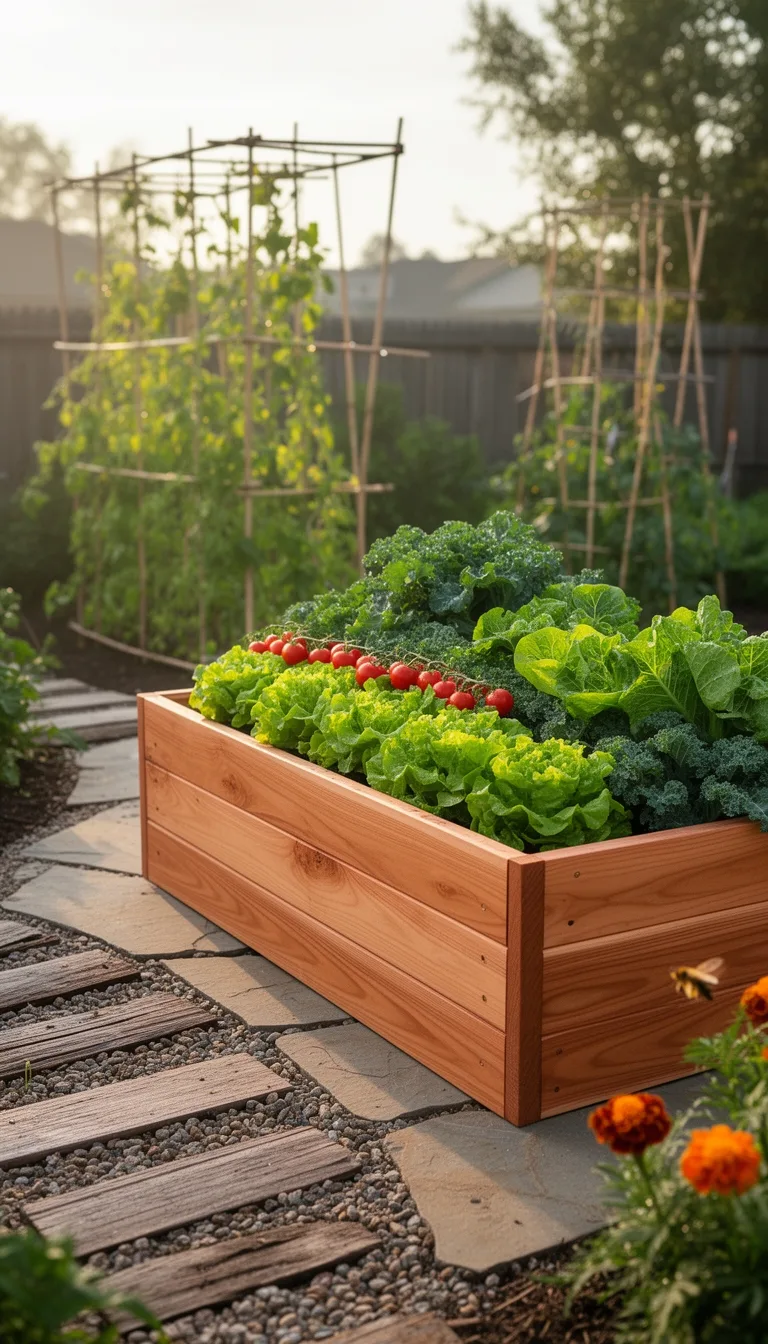
Building a cedar box raised garden bed gives you a naturally rot‑resistant container that lasts for years with minimal maintenance.
You’ll appreciate cedar’s natural oils that fend off decay, insects, and fungal growth, so you won’t need chemical treatments.
Cut four 2‑by‑6 boards to your desired length, notch the corners for a tight fit, and fasten them with stainless‑steel screws or galvanized brackets.
Add a bottom layer of landscape fabric to keep weeds out while allowing drainage.
Fill the box with a high‑quality soil mix—half compost, half peat‑free topsoil, and a touch of perlite for aeration.
The cedar’s warm hue blends with garden décor, and its sturdy walls keep soil loose, encouraging deep root development for vegetables, herbs, or flowers.
Concrete Block Raised Garden Bed – Ultra‑Sturdy & Low‑Maintenance
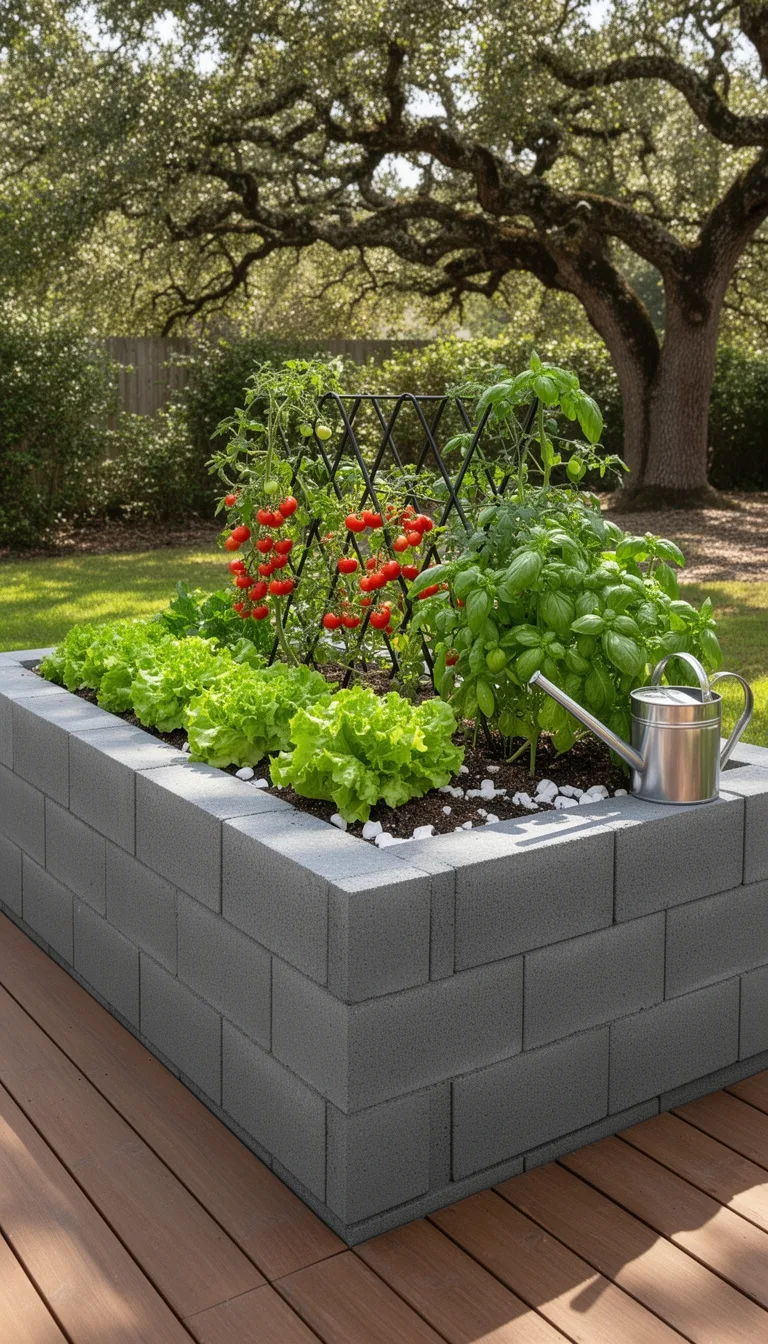
Concrete blocks give you an ultra‑sturdy, low‑maintenance raised garden bed that’s quick to assemble and virtually indestructible. You’ll stack the blocks, fill the interior with soil, and start planting without worrying about rot, rust, or warping. The modular size lets you customize dimensions, while the mass of concrete retains heat, extending the growing season. Drainage holes drilled into the bottom prevent waterlogging, and a simple weed barrier keeps the bed tidy. Because the blocks are reusable, you can relocate the bed or redesign your garden layout with minimal effort.
| Feature | Benefit | Tip |
|---|---|---|
| Weight | Stability | No anchoring needed |
| Material | Durability | Choose interlocking blocks |
| Cost | Affordability | Reuse for future projects |
| Heat retention | Longer season | Plant heat‑loving veggies |
Galvanized Steel Raised Garden Bed – Sleek, Durable & Heat‑Reflective
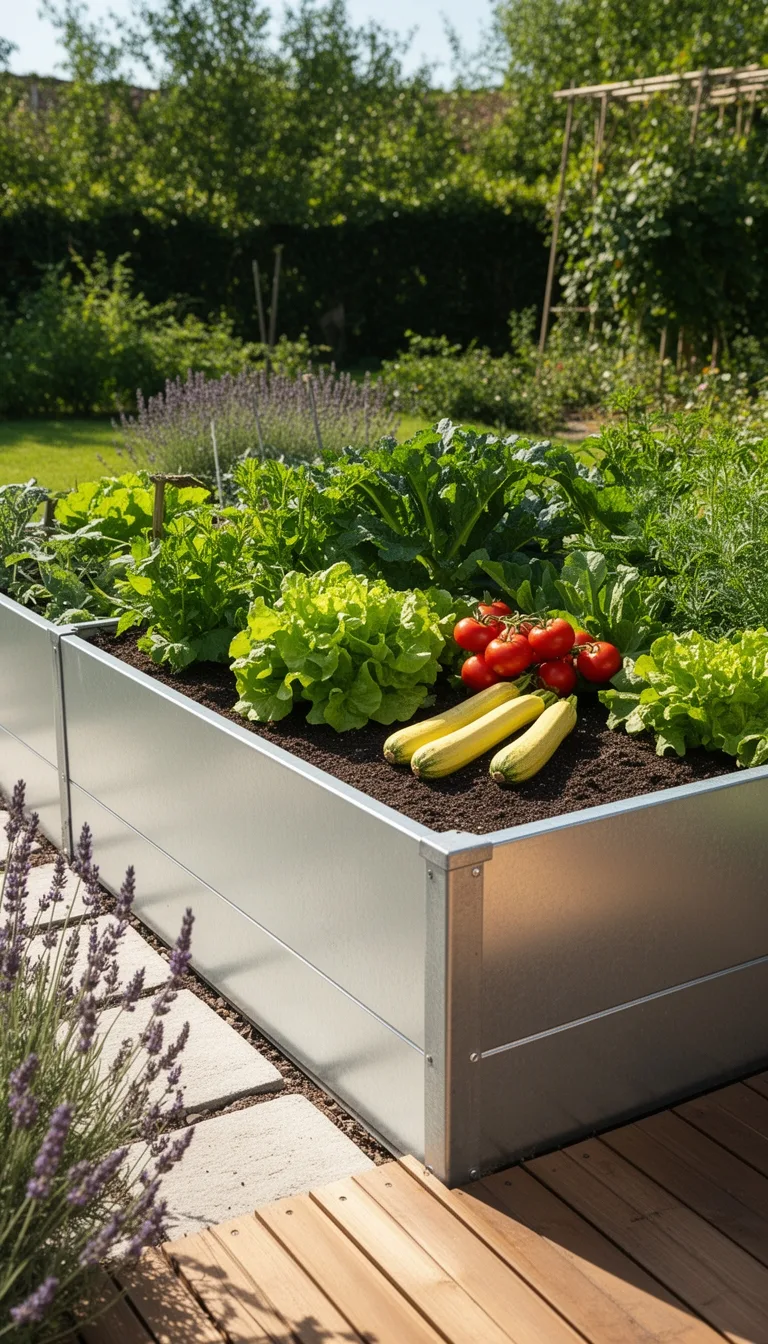
Galvanized steel raised beds snap together quickly, giving you a sleek, durable frame that reflects heat to boost soil temperature.
You’ll appreciate the interlocking panels that lock without tools, creating a rigid rectangle that resists warping.
The zinc coating guards against rust, so the bed stays bright year after year, even in rainy climates.
Heat‑reflective panels warm the soil early in spring, shortening germination time for tomatoes and peppers.
You can line the interior with a breathable fabric to keep soil from contacting metal, preventing condensation.
The open design allows easy access for watering, we, and harvesting, while the sturdy frame supports heavy soil loads without sagging.
Composite Decking Raised Garden Bed – Weather‑Proof & Low‑Retention
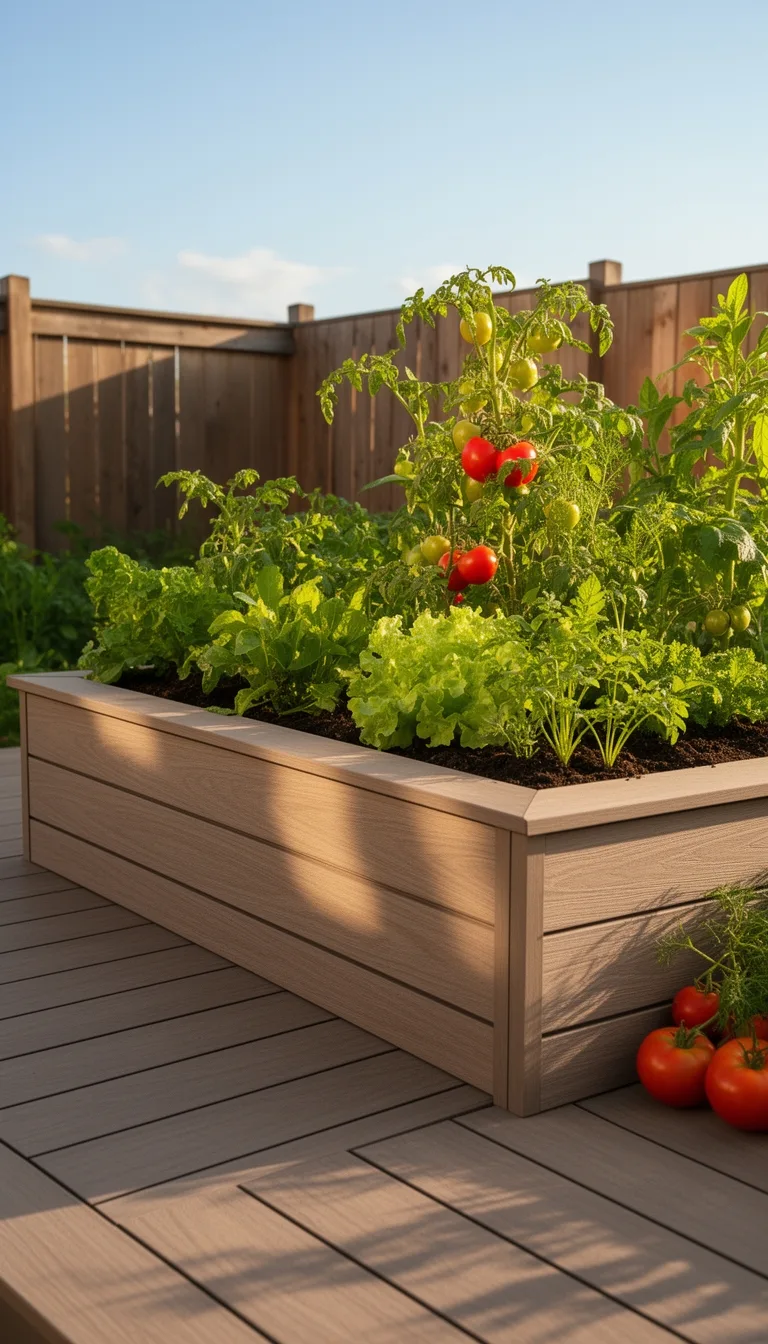
Create a composite‑deck raised garden bed and you’ll get a weather‑proof, low‑maintenance solution that resists rot, UV damage, and insect intrusion.
Choose 2‑inch‑thick decking boards with hidden fasteners; the interlocking design eliminates gaps, keeping soil in place and weeds out.
Assemble the frame on a level surface, then line it with a breathable landscape fabric to improve drainage while protecting the wood.
Fill the bed with a mix of compost, peat moss, and perlite for airy, moisture‑retentive soil.
Because the material doesn’t absorb water, you’ll notice fewer splinters and less warping over time.
The sleek, neutral tone blends with any garden aesthetic, and the sturdy construction supports heavy plants without sagging.
This setup offers durability, ease of cleaning, and a long‑lasting growing space.
Recycled Pallet Raised Garden Bed – Budget‑Friendly Upcycle Solution
Turn those discarded pallets into a sturdy, budget‑friendly raised garden bed and you’ll instantly add usable planting space without breaking the bank.
First, select pallets free of chemical stains and nails; sand any rough edges and treat the wood with a non‑toxic sealant. Disassemble the pallets, then re‑assemble them into a rectangular frame—typically 4 ft × 8 ft × 12 in. Use a drill and galvanized brackets for durability, and add corner braces for extra stability.
Fill the interior with a mix of compost, topsoil, and coarse sand, creating a light, well‑draining medium.
Position the bed in a sunny spot, water it thoroughly, and plant herbs, lettuce, or shallow‑rooted veggies.
This upcycled solution saves money, reduces waste, and delivers a productive garden patch with minimal effort.
Modular Cube Raised Garden Bed – Flexible Layout for Small Spaces
A handful of interlocking cubic modules can transform a cramped balcony or tiny patio into a versatile planting zone.
You snap the cubes together in any configuration—straight line, L‑shape, or staggered cluster—so the bed fits the exact dimensions of your space.
Each module holds a 4‑inch‑deep soil pocket, perfect for herbs, lettuce, or dwarf tomatoes.
The lightweight plastic or cedar frames let you rearrange them seasonally without digging.
Integrated drainage holes prevent waterlogging, while removable trays simplify harvesting and cleaning.
Because the cubes are self‑contained, you can add or remove sections as your garden grows or shrinks.
This modular approach maximizes usable area, keeps maintenance low, and lets you experiment with layouts without permanent construction.
Tiered Ladder Raised Garden Bed – Maximizes Vertical Growing Area
If you’ve already seen how interlocking cubes can fit a tight balcony, imagine stacking those same compact planting pockets vertically. A tiered ladder raised garden bed turns that idea into a space‑saving vertical farm.
Each rung holds a shallow tray that drains into the one below, so water recirculates and roots stay moist. Build the frame from lightweight cedar or recycled plastic, then attach removable trays with stainless‑steel brackets for easy cleaning.
Position the ladder against a sunny wall to maximize light exposure, and you can grow lettuce, herbs, and strawberries on three or four levels without crowding the ground. The design also reduces soil compaction, improves airflow, and lets you harvest from the top down, keeping lower rows undisturbed.
Corner‑Fit Raised Garden Bed – Efficient Use of Hard‑to‑Use Angles
By fitting a raised bed snugly into a corner, you turn often‑wasted space into productive garden real estate. A triangular or L‑shaped design lets you plant herbs, lettuce, and dwarf tomatoes where walls or fences normally block access. Build the frame from rot‑resistant lumber, add a sturdy bottom for soil retention, and line the edges with metal brackets for stability. Because the bed follows the wall, watering and harvesting stay ergonomic, and you can weave trellises around the outer edge for vertical growth. The compact footprint frees up the rest of the yard for larger beds or pathways.
| Feature | Benefit |
|---|---|
| Triangular shape | Maximizes corner volume |
| L‑shaped layout | Fits against two walls |
| Metal brackets | Prevents soil slippage |
| Raised depth | Improves drainage and root space |
Balcony Rail Raised Garden Bed – Space‑Saving Solution for Apartments
Optimizing every inch of a balcony becomes a breeze when you attach a rail‑mounted raised garden bed, turning narrow railings into thriving mini‑farms. You’ll find these compact units clamp securely to standard balcony rails, eliminating the need for floor space or heavy planters.
The slatted frame lets water drain while the soil stays contained, and the shallow depth—typically 6–8 inches—supports herbs, lettuce, and strawberries that don’t require deep roots. Choose a bed with a sturdy, rust‑resistant metal or reinforced plastic to withstand wind and sun.
Install it in minutes with adjustable brackets, then fill it with a light, well‑draining mix. Position the bed where the sun hits for 4–6 hours daily, and you’ll harvest fresh greens without crowding your living area.
Built‑In Irrigation Raised Garden Bed – Water‑Saving Automation
Integrating a built‑in irrigation system into your raised garden bed lets you conserve water while keeping plants consistently moist.
You’ll wire a drip line directly to a timer, set watering cycles, and let the system deliver just enough moisture to the root zone.
This automation reduces runoff, cuts labor, and lets you focus on planting, not constant watering.
The setup works with rain sensors, so it pauses when natural precipitation satisfies the plants’ needs, further saving water.
- Drip emitters placed at each plant base for targeted delivery
- Soil moisture sensor linked to the timer for adaptive watering
- Adjustable flow rates to match crop water requirements
- Easy‑to‑clean tubing and quick‑connect fittings for maintenance
Self‑Watering Reservoir Raised Garden Bed – Continuous Moisture for Busy Gardeners
Install a self‑watering reservoir beneath your raised bed and let a wicking system keep the soil consistently moist, so you can tend to other tasks while your garden stays hydrated.
Choose a sturdy, food‑grade container—plastic or metal—filled with clean water and a perforated pipe that runs the length of the bed. Lay a thick layer of coarse sand or gravel above the pipe, then add a wicking material such as polyester rope or capillary mat that bridges the water source to the planting mix.
The wicks draw water upward by capillary action, delivering just enough moisture to the roots without soggy conditions. Adjust the water level with a simple float valve, and monitor the system weekly; the reservoir refills automatically after rain, giving you reliable, low‑maintenance hydration throughout the growing season.
Herb Spiral Raised Garden Bed – Compact, Aesthetic Herb Garden
A spiral raised garden bed lets you grow a full herb garden in a compact, eye‑catching shape, perfect for patios or small yards. Its tiered design creates micro‑climates, so you can place sun‑loving basil at the top and shade‑tolerant mint lower down.
You’ll love the easy access—no bending, just walk around the spiral and harvest as you go. The stone or reclaimed‑brick exterior adds visual appeal while retaining moisture, and the central core can hold a drip‑irrigation line for low‑maintenance watering.
- Choose a 4‑foot diameter for most patio spaces.
- Build with reclaimed bricks for rustic charm.
- Fill each tier with a mix of compost and coarse sand for drainage.
- Plant herbs according to sun exposure: top for full sun, lower levels for partial shade.
Integrated Compost Bin Raised Garden Bed – Closed‑Loop Soil Nutrition
Spirals give you a striking, space‑saving herb garden, and adding a compost bin right into the same raised‑bed frame turns that beauty into a self‑sustaining system.
You’ll build a shallow, insulated compartment beneath the planting zone, lined with breathable fabric and fitted with a removable tray for easy turning. As kitchen scraps and garden waste settle, microbes break them down, releasing humus that you can pull up through a built‑in access hatch. The nutrient‑rich material mixes directly with the planting soil, boosting fertility without external inputs.
Keep the bin moist, aerate weekly, and monitor temperature to speed decomposition. This closed‑loop approach reduces waste, cuts fertilizer costs, and keeps your beds thriving year after year.
Portable Rolling Raised Garden Bed – Seasonal Sunlight Flexibility
When spring arrives, you can simply roll your garden bed to the sunniest spot, then shift it again as the season changes, giving each plant the optimal light it needs without digging up soil.
A portable rolling raised bed lets you chase sunlight, protect tender seedlings from late frosts, and harvest in cooler shade when heat spikes.
Its sturdy wheels lock in place, yet glide smoothly across decks, patios, or raised pathways.
You’ll love the flexibility of moving herbs for morning light, tomatoes for afternoon blaze, and leafy greens into partial shade during scorching afternoons—all while keeping soil structure intact and watering consistent.
- Locking casters for stability
- Lightweight frame for effortless repositioning
- Modular panels that snap together without tools
- Integrated drainage holes to prevent waterlogging
Raised Garden Bed With Trellis Frame – Supports Vining Crops & Flowers
Instead of just moving your bed for light, give your vines and blossoms a built‑in support system. A trellis frame attached to the raised garden bed creates vertical space, encourages airflow, and keeps fruit off the soil, reducing disease. You can assemble a modular lattice from cedar or metal, anchoring it to the bed’s corners with brackets. The frame supports cucumbers, beans, peas, and flowering nasturtiums, letting you harvest higher and tidy. Choose a trellis height that matches the crop’s mature length, and space the slats 6‑8 in. apart for easy pruning. This design blends aesthetics with function, turning a simple bed into a productive, eye‑catching centerpiece.
| Crop | Trellis Height | Ideal Slat Spacing |
|---|---|---|
| Cucumbers | 4 ft | 6 in |
| Pole Beans | 5 ft | 8 in |
| Nasturtiums | 3 ft | 6 in |
Low‑Profile Wheelchair‑Friendly Raised Garden Bed – Inclusive Gardening Design
A low‑profile wheelchair‑friendly raised garden bed blends accessibility with style, keeping the planting surface within easy reach while preserving a sleek, garden‑ready look.
You’ll choose a frame no higher than 24 inches, use sturdy, smooth‑finished lumber or metal, and ensure the edges are rounded to prevent snagging wheels.
Position the bed near a paved pathway and add a removable side panel for extra storage or tool‑rack integration.
The design invites everyone to tend plants without bending, fostering independence and community pride.
- Height ≈ 24 inches for seated reach
- Wide aisles (≥ 36 inches) for maneuverability
- Smooth, rounded edges and non‑slip surface
- Modular side panels for tool storage and easy access
Smart Sensor‑Enabled Raised Garden Bed – Real‑Time Soil Monitoring & Alerts
Curious how your garden could talk back? A sensor‑enabled raised bed turns soil data into instant alerts, letting you tweak watering, fertilizing, and lighting before problems surface. You’ll see moisture, pH, temperature, and nutrient levels on a sleek app, and receive push notifications when thresholds shift. The system powers a low‑energy Bluetooth hub that syncs with any smartphone, so you stay in control even when you’re away. Installation is plug‑and‑play: embed the thin sensor strip in the bed’s base, attach the solar‑charged battery, and pair it with the dashboard. The result is a thriving, low‑maintenance garden that reacts to your plants’ needs in real time.
| Feature | Benefit |
|---|---|
| Moisture sensor | Prevents over‑/under‑watering |
| pH monitor | Optimizes nutrient uptake |
| Temperature probe | Guards against heat stress |
| Nutrient tracker | Guides precise fertilization |
| Mobile alerts | Saves time and reduces guesswork |
Conclusion
Pick the design that fits your space, budget, and climate, then fill it with light, well‑draining soil and a reliable water system. Whether you choose cedar, steel, concrete, or a modular pallet, each bed boosts yields, cuts maintenance, and lets you garden comfortably. Add sensors or a wicking reservoir for real‑time care, and you’ll harvest more from every square foot, season after season.
The Only Tools You Need for a Thriving Garden 🌱
Whether you're a weekend gardener or growing daily — these hand-picked tools make every session faster, easier, and more satisfying.