You’re ready to transform your backyard into a food-producing haven. Discover how clever layouts and vertical designs can multiply your harvest in limited space. Learn to build soil fertility naturally and choose plants that thrive together. These 18 practical ideas turn challenges like shade or small patios into opportunities for fresh, homegrown flavor.
Key Takeaways
- Use keyhole gardens with central compost baskets to conserve water and nutrients efficiently.
- Build no-dig lasagna beds from layered cardboard and organic materials to create rich soil.
- Maximize vertical space with trellises, arches, and hanging planters for vining crops.
- Plant herb spirals to create distinct microclimates for a variety of herbs in small areas.
- Employ square-foot gardening in 4×4-foot grids for intensive planting and reduced waste.
Start With the Right Location: Your Garden’s Sun and Soil Check
To set the stage for a thriving garden, first assess the sun and soil in your potential spot. Spend a day noting how sunlight moves across the area; most vegetables crave at least six hours of direct sun.
Then, get your hands dirty. Grab a handful of soil and squeeze it. It shouldn’t feel like concrete or sand. Healthy soil crumbles slightly and feels alive. You’ll want to check its drainage by digging a hole and filling it with water. If it drains within a few hours, you’re golden.
This foundation isn’t just dirt; it’s your garden’s pantry. Improving it with compost now will feed your plants for seasons to come, turning a simple patch into a productive haven.
Raised Bed Garden Ideas for Control and High Yield
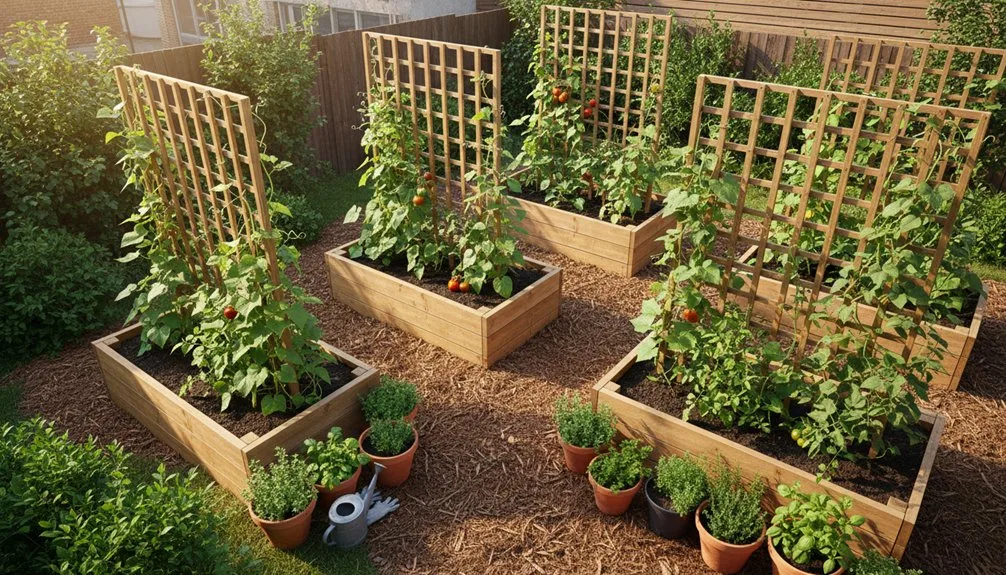
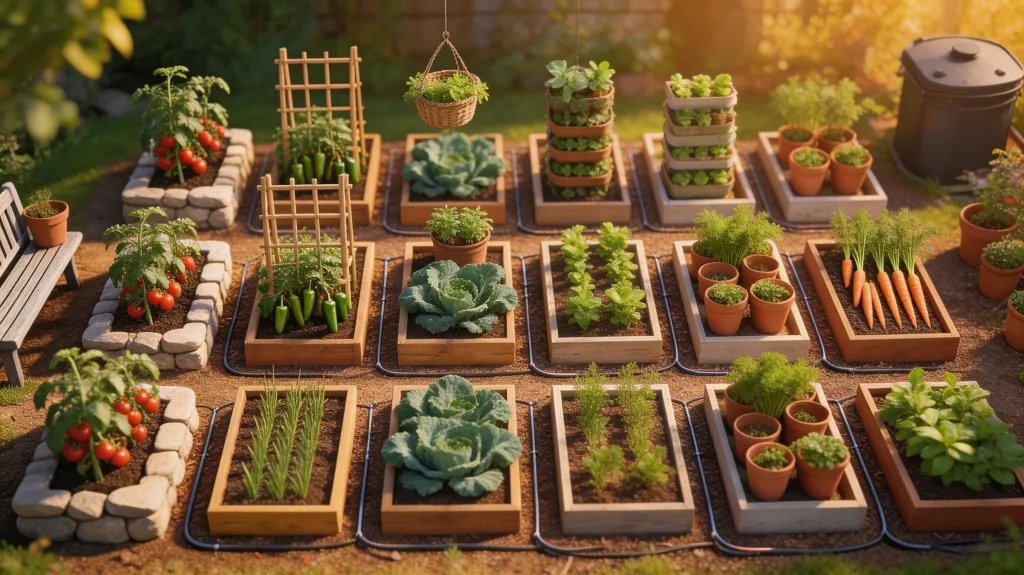
If your soil test revealed less-than-ideal conditions or you simply want more manageable planting space, building a raised bed offers a powerful solution. You can create a custom soil mix, blending compost, topsoil, and peat moss for perfect drainage and fertility. This controlled environment lets you concentrate nutrients and water where your plants need them, boosting yields.
Limit bed widths to four feet so you can reach the center without stepping in, which keeps soil loose and healthy. Frame beds with untreated lumber, bricks, or even recycled materials. You’ll extend your season too; soil in raised beds warms faster in spring for earlier planting. They’re an investment that pays off with prolific harvests.
Vertical Vegetable Garden Ideas for Small Spaces

Harness your vertical space and you can grow an impressive harvest even on a balcony, patio, or tiny backyard. Install trellises for climbing beans and cucumbers, or fix sturdy wall-mounted panels for tomatoes.
Use tiered planters or stackable pots to cultivate herbs and lettuces in layers. You’ll build hanging baskets for trailing strawberries, or repurpose a pallet into a planter for compact greens.
Always secure structures well and choose lightweight containers to prevent accidents. Select vining crops like peas and small squash varieties that thrive upward.
This approach maximizes every inch, turning walls and rails into productive surfaces. You’re not just saving ground space; you’re creating a lush, living tapestry that yields fresh food from the air around you.
Container Gardening Ideas for Patios and Balconies

Growing upward isn’t your only option; your patio or balcony becomes a full garden when you embrace containers. Start with the right pots—ensure they’re large enough for your chosen crops and have excellent drainage holes.
You can grow almost anything! Focus on compact, high-yield vegetables like bush beans, determinate tomatoes, and prolific peppers. Mix in shallow-rooted greens like lettuce and spinach.
Use a premium, lightweight potting mix, not garden soil, to keep plants healthy. Group pots to create microclimates and simplify watering.
The Productive and Pretty Kitchen Garden (Potager)

Transform your kitchen garden into a year-round source of beauty and bounty by integrating the classic potager principles of mixing edibles and ornamentals.
Imagine a design where ruby chard forms a vibrant border, fragrant herbs spill from raised beds, and climbing beans intertwine with flowering sweet peas.
You’ll create visual harmony by playing with colors, textures, and heights.
Start by defining geometric beds with low boxwood hedges or rustic pathways.
Plant lettuce beneath the dappled shade of cosmos, or let nasturtiums cascade over the edges.
This approach isn’t just decorative; it fosters biodiversity, attracting pollinators that boost yields.
Every visit becomes a sensory delight, blending the practical harvest with pure aesthetic joy.
Maximize Space With Square Foot Gardening

Square foot gardening revolutionizes small-space cultivation by dividing a raised bed into a grid of one-foot squares, each dedicated to a specific crop. You’ll plant intensively within each square according to spacing needs, drastically reducing wasted soil. Build a simple 4×4-foot frame and fill it with a premium mix of compost, peat moss, and vermiculite. This method eliminates traditional rows, letting you harvest more from less area with minimal effort. It’s perfect for beginners as you manage only what’s in each square, simplifying watering and weeding.
| Principle | Benefit |
|---|---|
| Defined Grid | Focuses effort and eliminates guesswork |
| Rich Soil Mix | Ensures optimal nutrition and drainage |
| Intensive Planting | Maximizes yield from every square foot |
You’ll transform a tiny plot into a bountiful, organized source of fresh food.
Companion Planting Ideas for a Healthier Garden

By strategically pairing certain plants together, you can naturally repel pests, enhance growth, and create a more resilient vegetable garden. This age-old practice, known as companion planting, leverages natural relationships between plants to build a supportive ecosystem right in your backyard. You’ll reduce the need for chemical interventions and enjoy a more bountiful, healthy harvest.
Consider these powerful pairings:
- Tomatoes with Basil and Marigolds: Basil may improve tomato flavor and repel flies, while marigolds deter nematodes in the soil with their roots.
- Carrots with Onions: The strong scent of onions confuses carrot rust flies, protecting your carrot crop from this common pest.
- Corn with Beans and Squash: This classic “Three Sisters” trio is the ultimate teamwork. Corn provides a stalk for beans to climb, beans fix nitrogen in the soil, and squash leaves shade the ground to suppress weeds.
Succession Planting for a Continuous Harvest

While your garden beds don’t have to sit empty after a first harvest, succession planting lets you maximize every inch of soil by strategically timing new plantings as others finish. You’ll extend your harvest window and boost your total yield from the same space. Start by pulling your finished spring peas and immediately sowing bush beans in their place. After harvesting your garlic in midsummer, fill that area with a fast-growing crop like leafy greens for fall. Keep a simple garden log to track dates and varieties, making planning easier next season.
| Initial Crop | Follow-Up Crop | Timing for Succession |
|---|---|---|
| Spinach (Spring) | Bush Beans | Plant beans after spinach bolts in early summer. |
| Garlic (Harvested July) | Kale or Lettuce | Direct seed greens in the vacant space for autumn. |
| Early Potatoes | Swiss Chard | Transplant chard after digging potatoes midsummer. |
This rhythm keeps your soil productive and your kitchen supplied for months.
Lasagna Gardening: Build Rich Soil Naturally

Another way to transform your garden’s productivity is to build its foundation from the ground up. Lasagna gardening, or sheet composting, creates rich soil naturally by layering organic materials right on top of your existing ground. You don’t need to dig; you just stack.
Start with a base of cardboard to suppress weeds, then alternate layers of “green” nitrogen-rich materials like vegetable scraps with “brown” carbon-rich materials like fallen leaves. This decomposes into a nutrient-dense, fluffy bed perfect for planting.
- Layer Up: Begin your no-dig bed directly over grass or soil.
- Feed the Cycle: Add kitchen and yard waste as your compostable layers.
- Plant Directly: Sow seeds or transplants into the finished, cool compost.
Keyhole Garden Design for Water Efficiency

If you’re gardening where water is scarce, a keyhole garden’s clever design can help your vegetables thrive. You build a circular raised bed from stone, brick, or wood, with a wedge cut out like a keyhole for easy access.
Its secret is a central compost basket that you water directly. This core acts like a wick, channeling moisture and nutrients slowly outward to your plants’ roots, drastically reducing runoff and evaporation.
You’ll conserve water while feeding your garden continuously. Planting intensively around this fertile core creates a lush, productive circle.
This method turns a simple bed into a highly efficient, self-fertilizing system, letting you grow more with less in even the driest conditions.
Hugelkultur Beds: Fertile Mounds From Garden Waste
Turning old logs and branches into rich, fertile soil, hugelkultur lets you build productive raised beds from garden waste. You’ll bury wood debris at the mound’s core, mimicking a forest floor. This decomposing wood becomes a spongy reservoir, holding water and nutrients. You’ll then layer compost and soil atop the mound, creating a self-feeding garden that lasts years.
Your hugelkultur bed provides three key benefits:
- It dramatically reduces your watering needs as the wood retains moisture.
- It slowly releases nutrients as the wood breaks down, feeding your plants.
- It repurposes fallen branches and logs, turning waste into a valuable garden asset.
Trellis and Arch Ideas for Climbing Vegetables
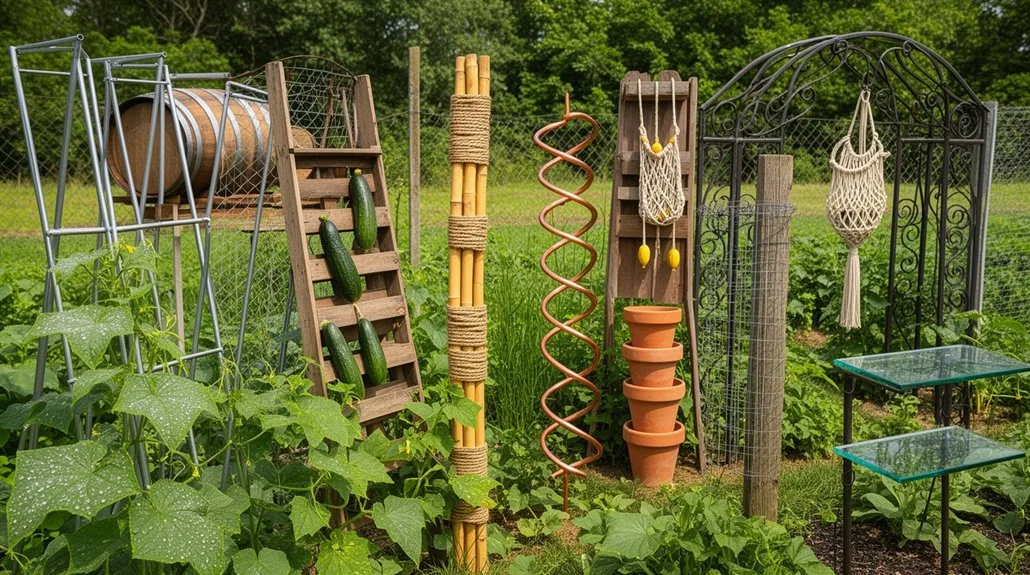
After building your hugelkultur mounds, you can focus on maximizing their yield by training climbing vegetables upward. Vertical gardening saves space, improves air circulation, and makes harvesting a breeze. You can create simple trellises with bamboo poles and twine or build sturdy arches from cattle panels. Train pole beans, cucumbers, and indeterminate tomatoes to climb these structures, turning wasted vertical air into a lush, productive canopy. An archway creates a beautiful, shaded tunnel perfect for vining squash or peas, adding structure and beauty to your garden.
| Vegetable Type | Ideal Support Structure |
|---|---|
| Pole Beans & Peas | Simple twine netting or bamboo teepee |
| Cucumbers & Melons | Sturdy wire A-frame or nylon mesh |
| Indeterminate Tomatoes | Heavy-duty wooden stake or tall cage |
| Vining Squash & Gourds | Robust metal arch or cattle panel tunnel |
Culinary Herb Spiral Design and Planting
Build a culinary herb spiral to elevate your garden’s efficiency and beauty in a compact, multi-level form. This vertical design creates distinct microclimates, allowing you to group herbs by their sun and water needs while saving valuable ground space.
You’ll construct it by mounding soil and stones in a rising spiral. Plant drought-loving herbs like rosemary and thyme at the sun-baked top, moisture-craving parsley and chives near the shaded, water-retaining base, and mid-level varieties like oregano in between. Your spiral becomes a living, aromatic sculpture.
- Site & Foundation: Choose a sunny spot. Lay a base of rubble for drainage, then form a circular mound of soil about three feet wide.
- Construction: Using stones or bricks, build a wall that spirals upward from the outer edge to the center, filling behind it with a rich soil mix.
- Planting: Position your herbs according to their water needs, from the driest top to the moistest bottom, for a thriving, low-maintenance harvest.
Interplanting Vegetables With Flowers for Pest Control
While your herb spiral organizes plants vertically, you can also design your garden horizontally by mixing vegetables with specific flowers. Interplanting marigolds, nasturtiums, or calendula with your crops creates a living pest barrier.
These flowers repel aphids, nematodes, and even whiteflies with their natural compounds, reducing your need for interventions. You’ll establish a vibrant, self-regulating ecosystem where beauty meets function.
This strategy maximizes your garden’s spatial efficiency, letting every square foot work harder for you. Simply sow flowers among your rows or use them as protective borders.
Your garden becomes not only more productive but also more resilient and visually stunning, proving that the best defense is a gorgeous, diversified offense.
Window Box and Railing Planter Ideas for Edibles
By utilizing the vertical space right outside your windows or along your railings, you can cultivate a bounty of fresh edibles even in the smallest of spaces. You’ll need containers with proper drainage and a quality potting mix.
Fast-growing, compact varieties thrive best in these confined areas. Herbs like basil, thyme, and chives are perfect for constant snipping, while leafy greens such as lettuce and spinach provide quick, repeat harvests. For a colorful yield, consider trailing cherry tomatoes or vibrant nasturtiums, whose flowers and leaves are edible.
- Choose the Right Plants: Prioritize shallow-rooted, compact, or cascading varieties like strawberries, dwarf peas, and patio peppers.
- Ensure Structural Integrity: Always secure boxes firmly to your window sill or railing and confirm the structure can support the weight when soil is wet.
- Master Watering and Feeding: These small volumes of soil dry out quickly, so check moisture daily and use a diluted liquid fertilizer every two weeks for vigorous growth.
Vegetable Garden Ideas for Shady Spots
Even if your garden doesn’t receive full sun, you can still cultivate a rewarding harvest.
Focus on leafy greens and root crops that thrive with just three to four hours of sunlight. You’ll find success with vegetables like lettuce, spinach, kale, and arugula.
Swiss chard, mustard greens, and some herbs such as cilantro, parsley, and mint also perform well in dappled light.
For roots, try growing beets, radishes, carrots, and turnips; they’ll develop flavorful, though sometimes smaller, edible parts.
Maximize available light by using reflective mulches and painting nearby fences white. Keep soil fertile and well-drained, and be vigilant about watering since shady soil stays moist longer, which can invite slugs.
Low-Maintenance Perennial Vegetable Choices
Several low-maintenance perennial vegetables can provide a reliable harvest year after year with minimal effort once established. You’ll invest upfront in planting, but they’ll return for seasons, freeing you from annual sowing. Focus on choosing robust plants suited to your climate and giving them a good start.
- Asparagus: Plant crowns in a sunny, well-drained trench. After a two-to-three-year establishment period, you’ll enjoy tender spears each spring for decades with just an annual mulch.
- Rhubarb: This hardy plant thrives with little care. Give it a sunny spot, enrich the soil at planting, and harvest stalks by pulling, never cutting, to encourage regrowth.
- Perennial Herbs & Greens: Rosemary, sage, sorrel, and walking onions offer continual pickings. They often resist pests and require only occasional division to stay vigorous.
Building Your Garden Soil With Sheet Composting
Developing a thriving garden starts with enriching your soil, and sheet composting offers a remarkably straightforward way to do this right on the ground where you’ll plant. You simply layer organic materials like cardboard, leaves, grass clippings, and kitchen scraps directly onto your garden bed.
Alternate “brown” carbon-rich and “green” nitrogen-rich layers, moistening them as you build. This lasagna-like pile will slowly decompose over several months, smothering weeds while feeding earthworms and microbes.
You’re building rich, crumbly humus without turning a pile. By spring, you’ll have a fertile, moisture-retentive planting layer.
This method transforms lawn into garden effortlessly, turning waste into black gold and setting the stage for an incredibly productive season.
Frequently Asked Questions
How Do I Protect My Garden From Animals?
Start by choosing physical barriers. You’ll find fencing’s most effective; bury its base to stop diggers. Try netting for birds and row covers for insects. Scare tactics like motion-activated sprinklers can also deter pests without harm.
What Are the Easiest Vegetables to Grow?
Start with radishes, lettuce, and green beans; they’re famously simple. You’ll find tomatoes, zucchini, and bush beans are also forgiving if you give them sun and regular water. Just plant them and watch them thrive.
How Often Should I Water My Vegetables?
Water them deeply once or twice a week, checking if the top inch of soil is dry. Focus on soaking the roots, not the leaves, and watch your plants—they’ll show you what they need.
How Do I Know When Vegetables Are Ready to Pick?
You’ll check each veggie’s specific signs. Pick beans when they snap easily. Harvest zucchini while small and glossy. For tomatoes, wait until they’re deeply colored and firm with a slight give.
What Are Some Good Organic Fertilizers?
Use compost and aged manure for a strong foundation. Try alfalfa meal for leafy greens and bone meal for root crops. You can also brew your own nutrient-rich compost tea or use organic fish emulsion.
Conclusion
Now you’re ready to transform your backyard. Start small with one or two ideas, like a raised bed or a vertical trellis, and expand as you gain confidence. Remember, the healthiest gardens are built from the ground up, so focus on enriching your soil first. You’ll be amazed at how quickly these strategies lead to a beautiful, abundant harvest right outside your door.
The Only Tools You Need for a Thriving Garden 🌱
Whether you're a weekend gardener or growing daily — these hand-picked tools make every session faster, easier, and more satisfying.