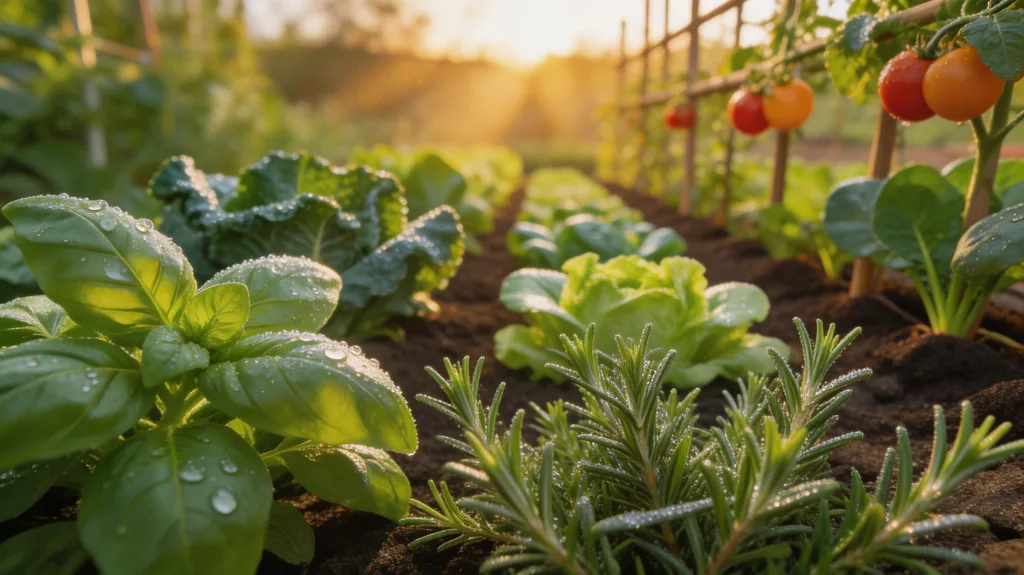
Deciding what vegetables to plant can be overwhelming. You need to balance quick harvests with seasonal timing to ensure a steady supply. Choosing crops like radishes, beans, and kale that fit your climate and space is key to success. But starting your plan without considering a few common missteps could leave you with gaps in your harvest later.
Key Takeaways
- Start with easy, fast-growing vegetables like radishes, lettuce, and bush beans.
- Choose crops based on your garden’s sunlight: tomatoes for full sun, kale for partial shade.
- Select vegetables suited to your local climate and frost dates to avoid timing mistakes.
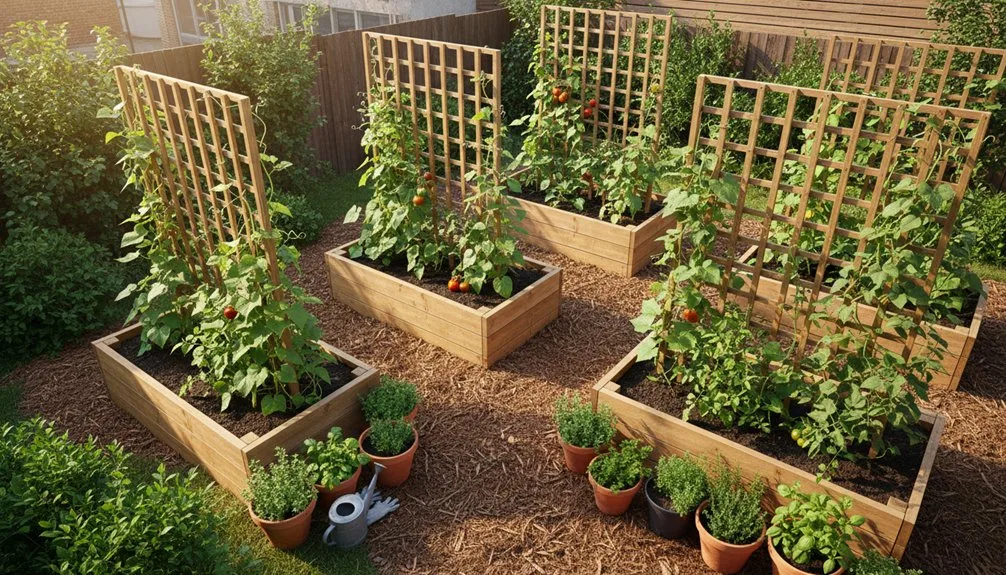
- Maximize space with vertical trellises for peas and compact varieties like bush cucumbers.
- Use succession planting every few weeks for continuous harvests of greens and lettuce.
Understand Your Local Climate for Vegetable Gardening
Before you select seeds or break ground, you must first understand your local climate because it fundamentally dictates what vegetables you can successfully grow and when.
You’ll need to know your USDA Hardiness Zone and your average first and last frost dates. These dates frame your growing season.
You can’t plant frost-tender tomatoes before that last frost without protection. Your regional climate also matters; arid, coastal, or humid conditions affect pest and disease pressure.
You’ll choose heat-loving okra for long, hot summers, but you’d pick cool-season kale for shorter, milder ones.
Always check seed packets for “days to maturity” and count backward from your first fall frost. This planning ensures you harvest before cold weather halts growth.
Check Your Garden’s Space and Sunlight Availability
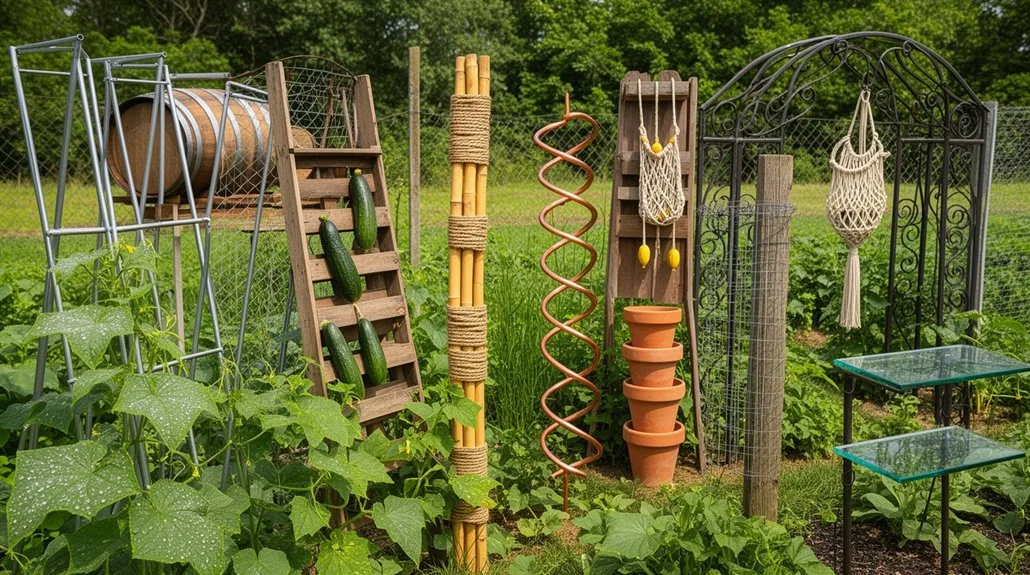
Since you know what your climate allows, you’ll next need to assess the physical realities of your garden site, starting with its space and sunlight. Measure your planting area’s dimensions to understand your square footage. Most vegetables demand at least six hours of direct sun daily. Observe your space at different times to identify full-sun spots and partial-sun areas. You’ll then match plants to these conditions. Use vertical space with trellises for vining crops to maximize small plots. Tall plants shouldn’t shade shorter ones needing full sun.
| Garden Condition | Suitable Vegetable Examples |
|---|---|
| Full Sun (>6 hrs) | Tomatoes, Peppers, Squash |
| Partial Sun (4-6 hrs) | Lettuce, Kale, Beans |
| Small Horizontal Space | Radishes, Beets, Onions |
| Vertical Trellis Space | Cucumbers, Pole Beans, Peas |
This matching prevents overcrowding and ensures each plant gets the light it needs.
Prioritize Vegetables Your Family Actually Eats

You’ve checked your space and sunlight, so now decide what to fill it with. Resist the temptation to grow everything. Instead, make a list of the fresh vegetables your household regularly buys and enjoys.
Focus your precious garden real estate on these high-value, high-consumption crops. For example, if your family goes through several heads of lettuce weekly, prioritize several successions of leafy greens. If nobody likes radishes, don’t plant them just because they’re easy.
This practical approach ensures your harvest gets used, reducing waste and maximizing your gardening effort’s return. It also makes meal planning simpler, as you’ll have a reliable supply of your favorite produce right outside your door.
Plan Your Vegetable Planting Around the Growing Season

To keep your garden productive, you’ll need to match each crop with its ideal growing window, as vegetables are categorized by their tolerance for frost. Your local frost dates are the anchors of your planting calendar.
You’ll manage this by grouping crops into three main seasonal categories:
- Cool-season crops, like peas and spinach, thrive in cool soil and air. You plant them 4-6 weeks before your last spring frost; they’ll bolt or fade as summer heat arrives.
- Warm-season crops, such as tomatoes and peppers, require warm soil and frost-free days. Transplant these outdoors only after all danger of frost has passed.
- Succession crops are your key to a continuous harvest. After harvesting early cool-season vegetables, you can immediately replant that space with fast-growing beans or heat-loving squash for a late-summer yield.
Start With These 5 Easy Vegetables for Beginners
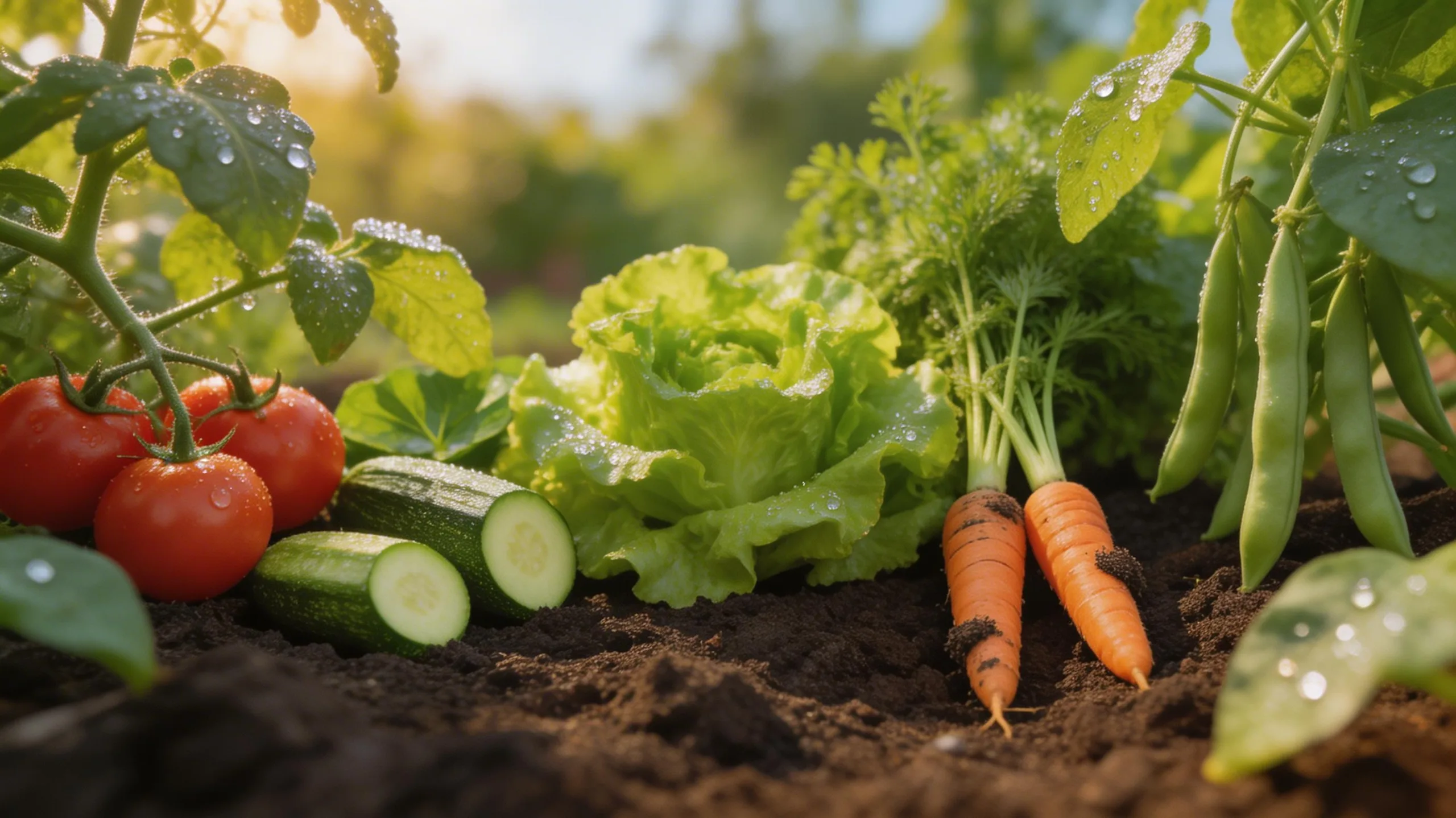
Now that you’ve organized your planting calendar, selecting which crops to grow first builds confidence and momentum. Begin with resilient, fast-growing vegetables that forgive minor mistakes. Radishes and leafy greens like lettuce offer quick harvests. Bush beans are prolific and don’t require staking. Zucchini plants produce abundantly with minimal fuss, while carrots teach soil preparation patience. Direct sowing these seeds after your last frost date is typically successful. Focus on consistent watering and weed control for these starter crops. Their early success will motivate you to expand.
| Vegetable | Key Trait for Beginners | Days to Harvest |
|---|---|---|
| Radish | Exceptionally fast | 25-30 |
| Lettuce | Tolerates cool weather | 30-45 |
| Bush Bean | Heavy yielder | 50-55 |
| Zucchini | Highly productive | 45-55 |
Select the Best Tomato Varieties for Your Garden

Once you’ve built some confidence with easy starter crops, turn your attention toward the garden’s summer highlight: tomatoes. Your first critical choice is between determinate and indeterminate types. Determinate varieties, like ‘Roma,’ grow to a compact size and produce their fruit all at once, ideal for canning. Indeterminate types, such as ‘Beefsteak,’ vine continuously and yield fruit until frost, perfect for fresh salads.
To narrow your selection, focus on these three key criteria.
- Match the Plant to Your Space: For containers or small gardens, choose determinate or dwarf varieties like ‘Patio Princess.’ Give sprawling indeterminates ample vertical support.
- Prioritize Disease Resistance: Look for codes like ‘VFN’ on plant tags, indicating resistance to common wilts and nematodes, which ensures a healthier plant.
- Consider Your Culinary Use: Grow meaty paste tomatoes for sauces, juicy slicers for sandwiches, and small, sweet cherries for snacking right off the vine.
Grow Crisp Lettuce and Greens for Continuous Harvests

While tomatoes are the summer stars, you can enjoy fresh salads much earlier by planting cool-season lettuce and greens. Start seeds indoors or sow them directly in your garden as soon as the soil is workable.
For continuous harvests, practice succession planting every two weeks. Choose a mix of leaf types like butterhead, romaine, and loose-leaf varieties for diversity. Keep the soil consistently moist and provide partial shade as temperatures rise.
You’ll begin harvesting outer leaves in just a few weeks, allowing the center to keep growing. This “cut-and-come-again” method extends your yield. Pair lettuce with fast-growing greens like spinach, arugula, and kale for a robust, season-long supply of crisp, homegrown produce.
Plant Root Vegetables for a Low-Maintenance Crop
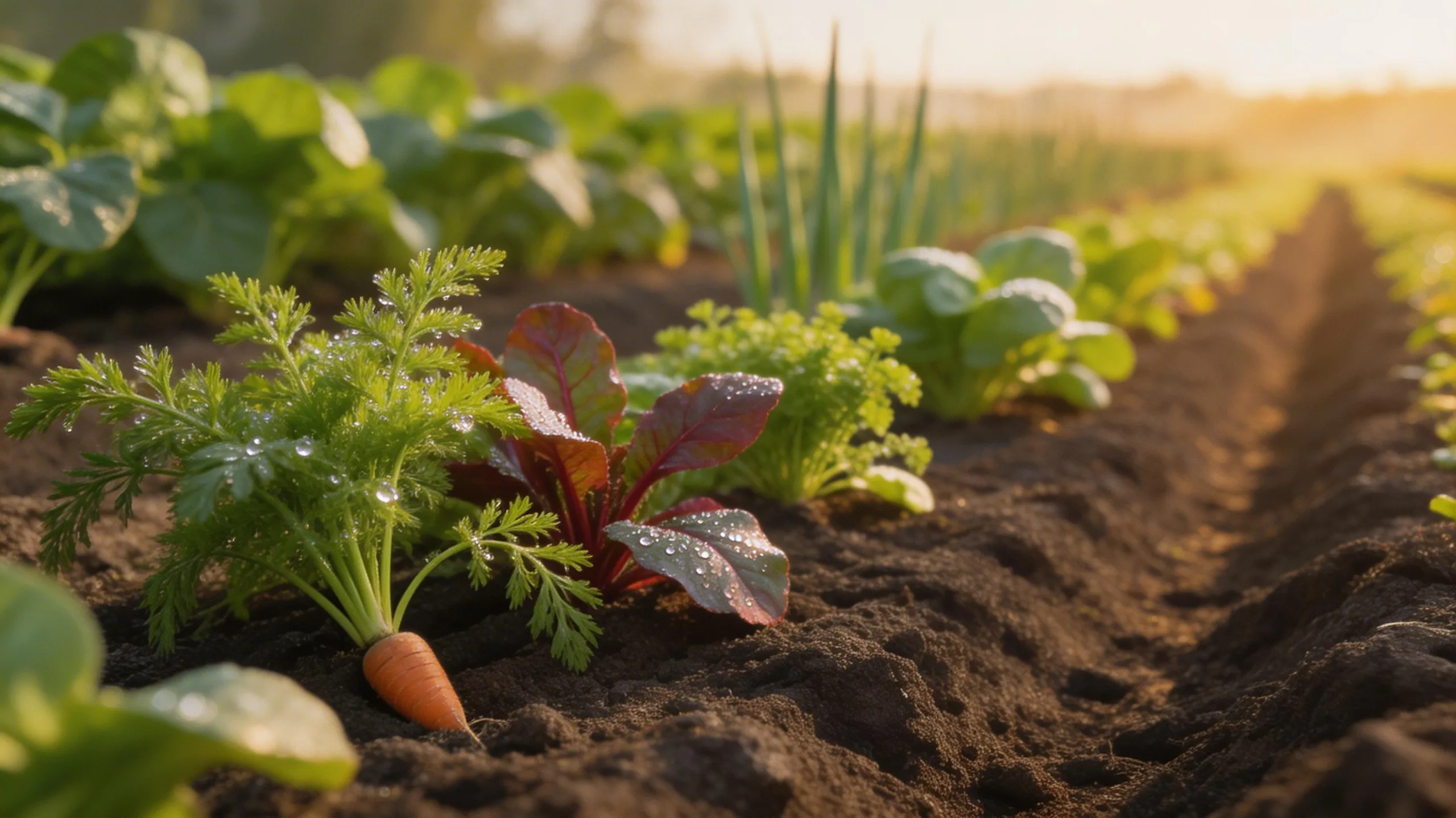
Sink your efforts into root vegetables for a rewarding, low-maintenance crop. They’re forgiving and require minimal intervention once you’ve established them in loose, rock-free soil. Your key tasks are thinning seedlings early and providing consistent moisture for even growth, then you can largely let them be.
- Prepare Deep, Loose Soil: Work your soil to a depth of at least 12 inches, removing stones to prevent forked or stunted roots, and mix in finished compost for nutrients.
- Sow Seeds Directly and Thin: Plant seeds like carrots, beets, and radishes right in the garden bed and thin seedlings aggressively to prevent crowding.
- Practice Patient Harvesting: Many roots, such as parsnips and carrots, sweeten after a frost and can be left in the ground for extended harvesting.
Add Flavor With Essential Garden Herbs and Alliums

After mastering root vegetables, you can build layers of flavor by planting herbs and alliums right alongside them. These plants are culinary powerhouses, often repelling pests while enhancing your harvest’s taste.
Start with alliums like garlic, onions, and chives. Plant garlic cloves in fall for a summer bounty. Onion sets go in early spring. Chives are perennial and provide continual snipping.
For herbs, focus on hardy perennials such as thyme, oregano, and sage, which thrive with minimal care. Annual basil loves warmth; sow it after frost.
Interplant these among your other crops. Their strong scents confuse insects, offering natural protection. You’ll transform simple dishes with just-picked intensity, making your garden’s yield truly complete.
Include Fast-Growing Vegetables for Early Success
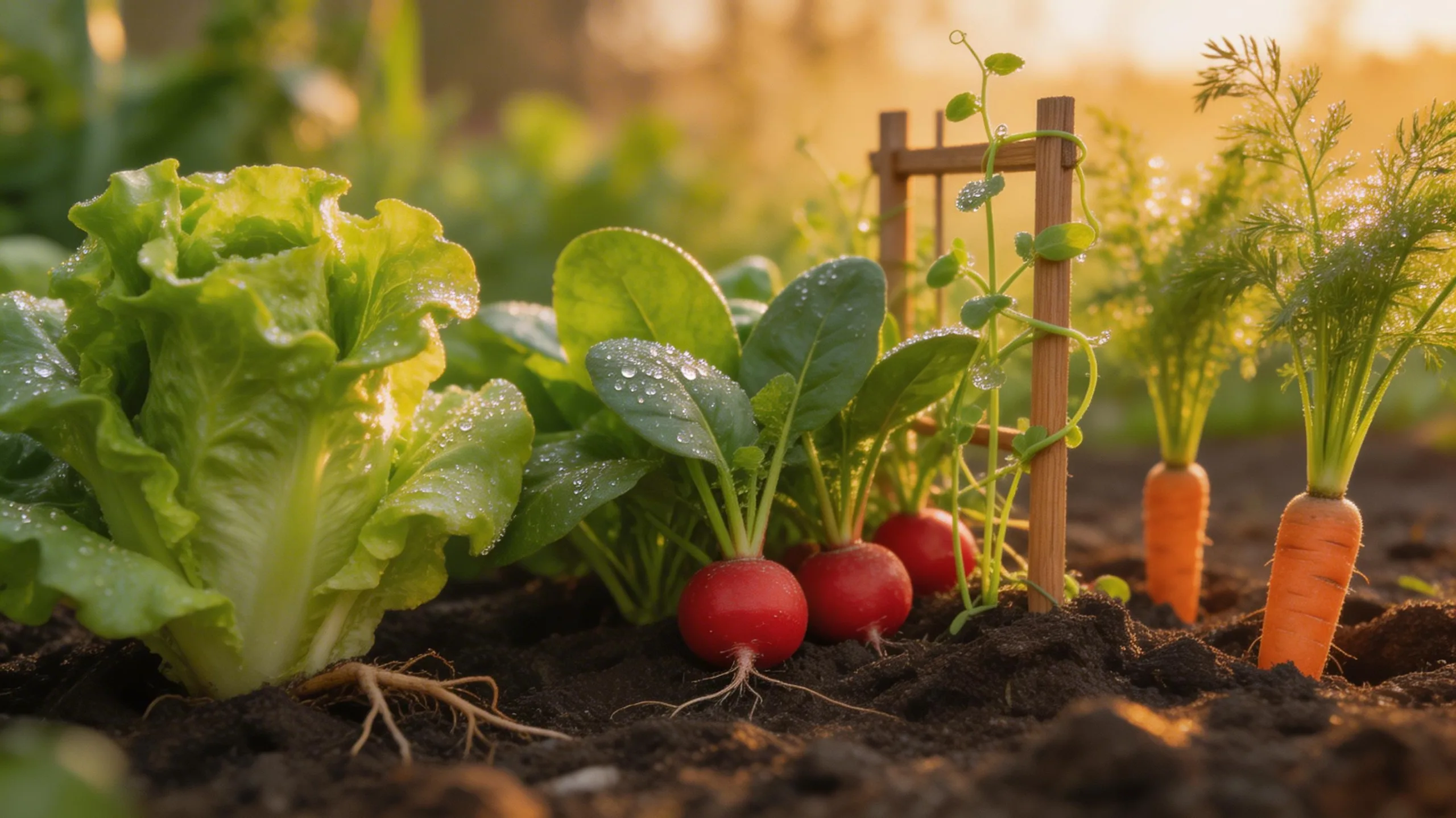
Sometimes, you’ll want to see results quickly to keep your gardening momentum strong. Integrating fast-growing crops provides that satisfying, early harvest, encouraging you to continue tending your plot.
You’ll want to focus on varieties that mature in roughly 30 to 45 days from sowing. For the quickest start, consider direct seeding these picks into well-prepared, fertile soil as soon as the season allows.
- Leafy Greens: Plant radishes for a crunchy harvest in as little as 25 days. Baby spinach and leaf lettuce mixes can be ready for cutting in about 30 days.
- Arugula: This peppery green thrives in cool weather, often yielding harvestable leaves in just three weeks from seeding.
- Bush Beans: After soil warms, these beans germinate fast and produce tender pods in approximately 50 days, offering a substantial early yield.
Maximize Yield With Small-Space Vegetable Choices
Maximize your garden’s output by strategically selecting vegetables suited for confined spaces, such as containers, raised beds, or narrow rows. Focus on varieties that grow vertically or yield prolifically from a small footprint. Pole beans and indeterminate tomatoes utilize trellises brilliantly, freeing ground area.
For leafy greens, choose cut-and-come-again lettuces, kale, and Swiss chard; you’ll harvest outer leaves for weeks. Bush-type cucumbers and zucchini are compact yet productive.
Don’t overlook root crops like radishes and cylindrical beet varieties, which need little horizontal room. For the ultimate space-savers, grow culinary herbs—basil, cilantro, parsley—which offer high flavor value.
Selecting these efficient growers ensures you get the most food from every square inch.
Avoid These 5 Common Vegetable Planting Mistakes
Even in a carefully planned small garden, your harvest can fall short if you make a few key planting errors. Sidestep these common pitfalls to ensure your vegetables thrive.
First, don’t crowd your plants; giving them proper spacing ensures adequate airflow, reduces disease, and lets roots access nutrients.
Second, always check your seed packets or plant tags for correct sowing depth—planting too shallow can expose seeds, while too deep prevents germination.
Finally, avoid planting at the wrong time. Tender crops like tomatoes are killed by frost, while cool-season peas bolt in summer heat. You’ll prevent wasted effort and disappointment by focusing on these foundational practices.
Pair Vegetables Together for a Healthier Garden
Planting the right vegetables side by side can boost your garden’s health and productivity. This practice, called companion planting, utilizes natural plant relationships.
You’ll want to pair vegetables that benefit each other by deterring pests, improving soil, or providing shade. For example, plant basil near your tomatoes; its strong scent repels thrips and hornworms.
You can grow tall corn to support climbing beans, which in turn fix nitrogen in the soil for the corn.
Conversely, avoid harmful pairings. Keep onions and garlic away from peas and beans, as they can stunt growth.
Research compatible groupings before you plant. Thoughtful pairings create a resilient, balanced ecosystem, reducing your need for chemical interventions and leading to a more bountiful harvest.
Create a Simple Vegetable Planting Calendar
While planning your companion pairings is crucial, you’ll also need to time your plantings correctly by creating a simple vegetable calendar. This schedule tracks your last frost date and groups crops by their temperature tolerances to maximize your harvest window. You can build your calendar with a basic notebook or digital spreadsheet.
- Pinpoint your frost dates. Your local last spring and first fall frost dates are the anchors. Find these from your county extension office or a reputable gardening site.
- Categorize by planting time. Organize your chosen vegetables into three groups: hardy cool-season crops (plant 4-6 weeks before last frost), tender warm-season crops (plant after all frost danger), and succession crops for fall (sown mid-to-late summer).
- Mark successive sowings. For continuous harvests of lettuce or beans, note follow-up plantings every two to three weeks directly on your calendar.
Improve Your Vegetable Choices Next Season
You can refine your vegetable selections by keeping a simple garden journal to track each variety’s performance throughout the season. Note specific details like days to harvest, disease resistance, and overall yield for each crop you plant. This record becomes an invaluable tool for planning your next garden.
You’ll quickly see which tomatoes produced the most fruit or which lettuce bolt-resistance held up in the summer heat. Use these insights to prioritize high-performing varieties and replace underperformers. Consider trialing a couple of new cultivars each year alongside your proven favorites, ensuring you’re always optimizing for your specific microclimate and soil. This data-driven approach steadily builds a personalized, reliable roster of vegetables that thrive in your garden’s unique conditions.
Frequently Asked Questions
How Do I Protect My Vegetables From Pests Naturally?
Use companion planting with herbs, try row covers as a physical barrier, and encourage beneficial insects. You can also hand-pick large pests or spray plants with a strong blast of water.
Should I Test and Amend My Garden’s Soil?
Yes, you should test and amend your soil. Start with a simple pH test, then add compost to improve texture. You’ll need lime to raise pH or sulfur to lower it based on your results.
How Often Should I Water My Vegetable Plants?
You’ll water most vegetables deeply 1-2 times weekly, adjusting for rain and heat. Always check the top inch of soil; water when it’s dry. Consistent moisture prevents stress but avoids waterlogging the roots.
What Are the Signs My Vegetables Need Fertilizer?
You’ll see slow growth, pale or yellowing leaves, and poor fruit production. Check for these signs, then apply a balanced fertilizer. Always follow the package instructions to avoid over-feeding your plants.
How Do I Properly Harvest Each Vegetable Type?
Harvest leafy greens by picking outer leaves first; cut beans and peas when young. Use pruners for tomatoes once fully colored. Pull root crops once their shoulders peek from the soil for the best flavor.
Conclusion
Remember, your garden’s success hinges on matching crops to your specific climate and space. Prioritize what you’ll eat and follow a simple planting calendar. By staggering sowings and pairing compatible plants, you’ll ensure continuous harvests. Start with resilient, beginner-friendly vegetables and avoid common pitfalls like overcrowding. Each season, note what thrived and adjust your plan accordingly, refining your choices for even better yields next year.
The Only Tools You Need for a Thriving Garden 🌱
Whether you're a weekend gardener or growing daily — these hand-picked tools make every session faster, easier, and more satisfying.