You’re staring at a small space, dreaming of homegrown veggies. A square foot garden layout makes that happen. You start by dividing a simple raised bed into a grid—it’s a wonderfully efficient way to pack in the harvest. I found the planning stage on graph paper to be half the fun. But your success hinges on one critical, often overlooked step in that first sketch. Let’s get your pencil ready.
Key Takeaways
- Sketch a planting blueprint on graph paper using one-foot squares for planning.
- Build a physical grid over your raised bed to visually organize each square foot.
- Place taller plants on the north side to prevent shading shorter crops.
- Determine plant counts per square using seed packet spacing to avoid overcrowding.
- Design accessible paths to reach every square without stepping on the soil.
What Is Square Foot Gardening?

Imagine dividing your garden into a neat grid of one-foot squares, each a mini-plot for a different crop. That’s the heart of square foot gardening.
You build a raised bed, fill it with a perfect soil mix, and place a physical grid on top. Each square gets a specific number of plants—like one tomato, nine beans, or sixteen carrots—based on their mature size.
You’re not wasting space, seeds, or water. You plant intensively and harvest continuously, replacing finished squares with new seeds throughout the season.
It’s incredibly organized, turning overwhelming ground into a manageable, productive system. You’ll find you’re growing more food in less area with far less effort and weeding.
Why Start With a Square Foot Garden?

If you’ve ever felt daunted by the idea of starting a vegetable garden, a square foot garden is your perfect launchpad. It transforms an overwhelming project into a manageable, grid-based system.
You’ll succeed quickly, which builds confidence and momentum. I started mine on a small patio, and the immediate results were incredibly rewarding!
- Maximize your yield in a tiny space, perfect for patios or small yards.
- Drastically reduce weeding and maintenance compared to traditional rows.
- Use less water and soil amendments, making it very cost-effective.
- Experience less frustration with clear organization—you always know what’s planted where.
This method gives you a foolproof structure that practically guarantees a bountiful harvest from your very first season.
Step 1: Plan Your Square Foot Garden Layout

Planning your square foot garden layout turns that initial excitement into a tangible blueprint for success. You’ll decide what to grow and where, maximizing every inch. First, grab graph paper and sketch your bed. I always mark mine into clear one-foot squares—it’s a game-changer! Then, choose crops based on that grid. Remember, one plant per square for larger veggies like broccoli, but you can fit 16 radishes in the same space. This simple plan prevents overcrowding and boosts your harvest. Your sketch becomes your planting day cheat sheet, making the whole process smooth and incredibly rewarding.
| Planning Consideration | My Go-To Tip |
|---|---|
| Sunlight | Sketch sun patterns; place tall plants (like tomatoes) on the north side. |
| Plant Spacing | Use the seed packet’s final spacing to determine plants per square. |
| Companion Planting | Pair friends like basil and tomatoes for better growth and pest control. |
| Succession Planting | After harvesting lettuce, immediately sow beans in that same square. |
| Accessibility | Design paths so you can reach every square without stepping on the soil. |
How to Build a Raised Bed for Your Garden
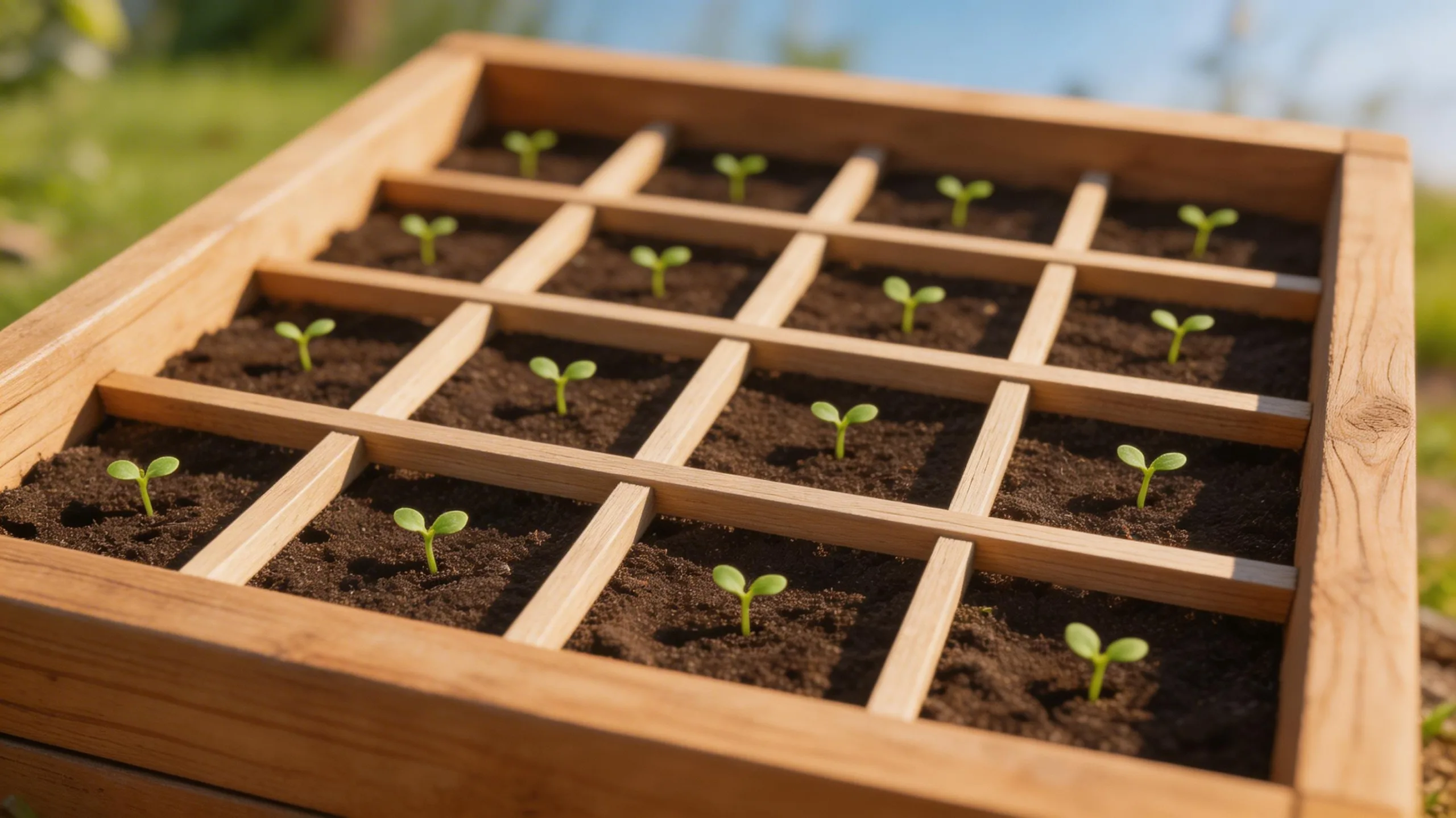
Once you’ve mapped out your perfect grid, building a raised bed brings your square foot garden to life with structure and style.
I found it’s a fantastically simple project for any beginner. You just need some lumber, screws, and tools. The classic 4×4-foot size is wonderfully manageable and perfectly aligns with the square foot method.
- Select untreated wood, like cedar or pine, for safety and durability.
- Screw your boards together at the corners to form a solid frame.
- Place the frame directly on level ground; you don’t need a bottom.
- Consider adding cross-supports on longer beds to prevent bowing.
This simple structure instantly elevates your garden, literally and figuratively, making planting and tending a joy.
The Perfect Soil Mix for Square Foot Gardening

The magic of a square foot garden blooms from a foundation of ideal soil. You won’t use dirt from your yard! You’ll create a special, lightweight mix that holds nutrients and moisture perfectly. I swear by Mel’s Mix: one-third peat moss, one-third coarse vermiculite, and one-third blended compost. This combo drains well yet stays moist, and it’s packed with food for your plants. Filling your bed with this is the single best thing you can do. Trust me, it makes everything easier—from planting to weeding. You’re giving your seeds and seedlings the ultimate home to explode with growth right from the start.
| Component | Primary Role | Pro Tip |
|---|---|---|
| Peat Moss | Retains moisture and lightens soil | Moisten it thoroughly before mixing to avoid dust |
| Vermiculite | Aerates and retains water/nutrients | Use coarse grade for the best drainage and root space |
| Blended Compost | Provides essential plant nutrients | Mix 3-5 different types (e.g., manure, mushroom, worm) for a full diet |
How to Choose Vegetables for Your Garden
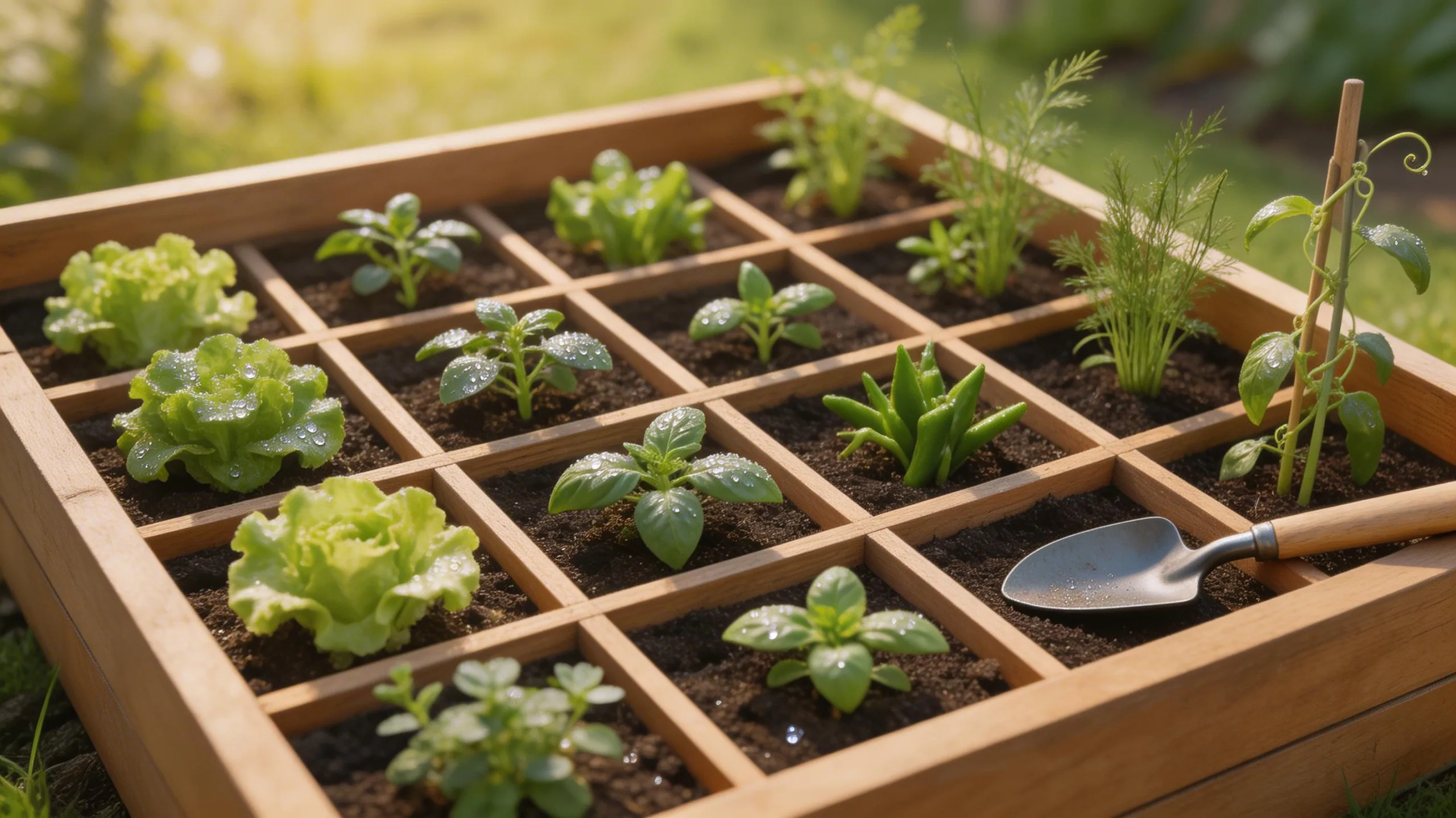
Although it’s tempting to plant everything, choosing vegetables wisely means you’ll actually enjoy a successful, manageable harvest. I learned this the hard way my first season by over-planting!
Focus on what you and your family love to eat most, then consider these key factors for a rewarding garden.
- Pick proven performers like leafy greens, radishes, and bush beans; they’re reliable and forgiving for beginners.
- Match plants to your season length; check seed packets for “days to maturity” to ensure they’ll ripen in your climate.
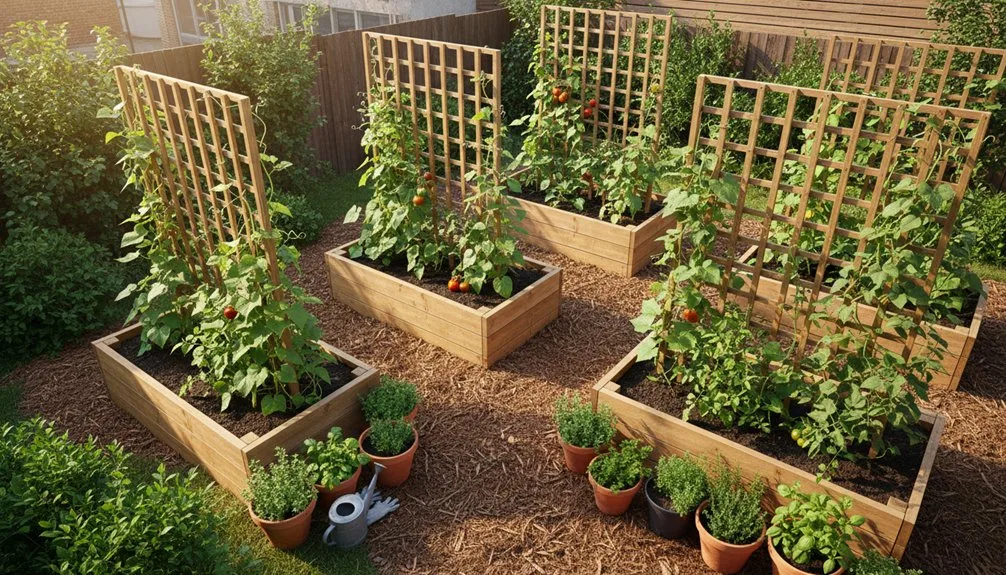
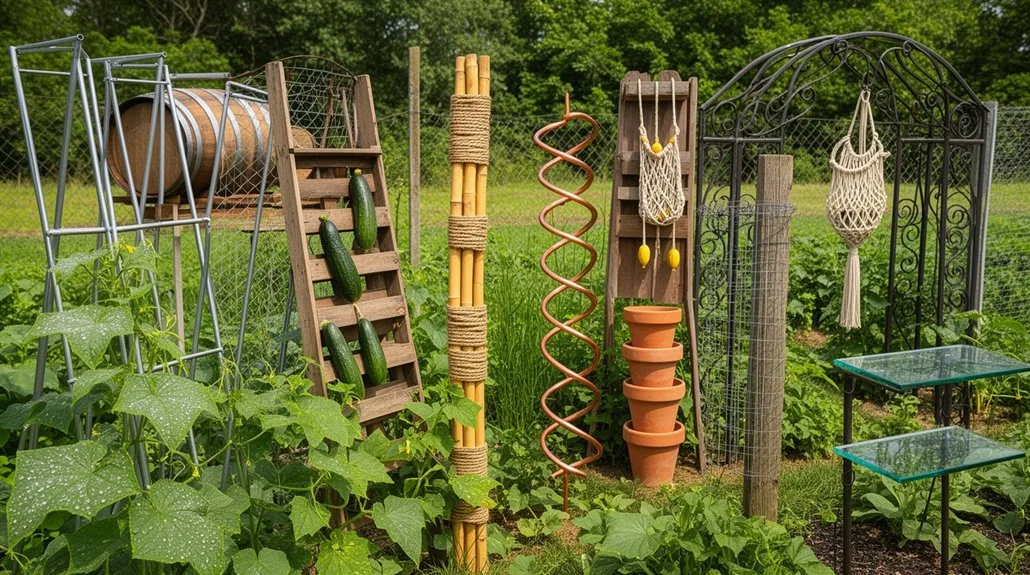
- Grow vertically with cucumbers or pole beans to save precious square footage for other crops.
- Prioritize freshness and cost; it’s incredibly satisfying to grow expensive or delicate items like herbs and heirloom tomatoes that shine straight from the vine.
Plant Spacing: How Many Fit in One Square Foot?

Maximize your harvest by learning exactly how many plants will thrive in each square foot, because careful spacing is your key to a productive garden.
You’ll base everything on your plants’ final mature size. For large plants like broccoli, you’ll place just one per square. Medium plants, such as leaf lettuce or bush beans, fit four per square. Small plants like radishes or carrots fit perfectly at sixteen per square foot!
I’ve learned that this method gives each plant ample room for roots and leaves to grow without competition.
You won’t waste space or struggle with thinning overcrowded seedlings.
Following this simple guide ensures you’re getting the absolute most from your garden bed.
How to Arrange Plants in Your Square Foot Grid

Once you know your plant counts, you can turn that data into a vibrant, organized grid by strategically placing each seedling in its designated square.
Think of each square foot as a mini-garden puzzle you get to solve! I’ve found that a little planning here makes maintenance so much easier later.
Follow these simple placement principles for a thriving, efficient garden.
- Place tall plants like tomatoes or pole beans on the grid’s north side so they don’t shade shorter neighbors.
- Tuck sprawling crops such as cucumbers or melons into a corner and train vines outward.
- Mix fast-growing radishes with slower peppers or broccoli; you’ll harvest the radishes before the others need the space.
- Group herbs together in one square for convenient harvesting and to create a fragrant pest-deterring patch.
Step 2: Create Your Square Foot Garden Grid

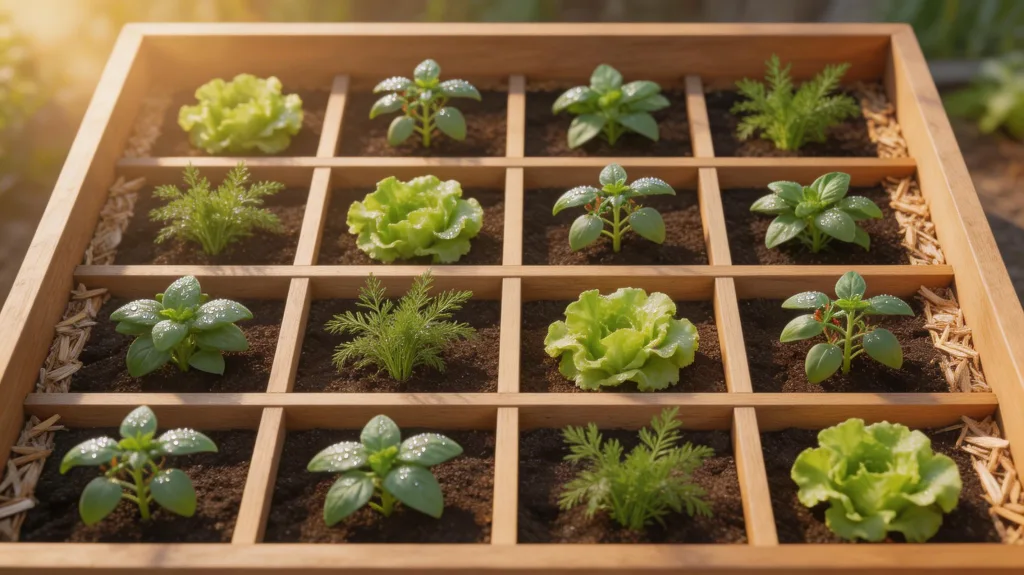
With your plant arrangement planned, you’ll physically map it out by building the iconic grid that defines your square foot garden. I love using simple wooden lattice or durable string—both work perfectly. You’ll lay your material directly over your filled bed, securing it at the corners.
This creates clear, one-foot squares that visually organize your space. Don’t worry about permanence; the grid’s a temporary guide for planting and maintenance. It helps you avoid overcrowding and makes harvesting a breeze.
You’re literally drawing the blueprint for your garden’s success! Seeing those neat squares laid out is incredibly satisfying and turns your plan into a real, manageable garden ready for the next step.
Planting Your Square Foot Garden: Step-by-Step

Your grid is laid out, and now those squares are ready to welcome your plants. This is the fun part where your plan springs to life! Follow your layout map, planting one type of crop per square to keep everything organized. I’ve found that a systematic approach makes the whole process joyful and efficient.
- Poke planting holes according to your seed packet’s depth and spacing, using your finger or a dibber.
- Drop in seeds or nestle transplants, gently firming the soil around them.
- Add labels to each square so you don’t forget what’s planted where.
- Finish by covering seeds with soil and giving everything a gentle pat to ensure good contact.
Stand back and admire your handiwork—you’ve just planted a garden!
When and How to Water Your Square Foot Garden
Watering consistently might be the single most important habit you develop for a thriving garden, and in the square foot method, timing and technique make all the difference.
The best time is early morning, which lets leaves dry and reduces disease. Water deeply but less often to encourage strong roots. I always check the soil first; stick your finger in a square. If the top inch is dry, it’s time.
Use a gentle watering can or a wand attachment on your hose to target the soil, not the foliage, and avoid disturbing your carefully spaced plants. You’ll see a huge difference when you give each square a thorough, direct drink right where it counts!
Simple Fertilizing Tips for Maximum Harvest
While your plants are busy growing, giving them a nutrient boost can really maximize your harvest! I’ve found feeding them regularly makes a huge difference in their size and yield.
Since square foot gardens are densely planted, the soil gets hungry fast. Just remember, a little goes a long way.
- Use a balanced organic fertilizer every three to four weeks, lightly scratching it into the soil surface before watering it in.
- Try compost tea for a gentle, fast-acting feed that your plants will love; I brew a batch every month.
- Side-dress heavy feeders like tomatoes or cucumbers with extra compost midway through the season.
- Always water after feeding to help carry those nutrients straight to the roots.
How to Manage Weeds With Minimal Effort
Weeds inevitably appear, but you can keep them under control with some clever, low-effort strategies from my own garden. First, mulch heavily! I use straw or shredded leaves right after planting; it blocks light and smothers weed seeds. Second, plant densely within your squares; leaves shade the soil, leaving no room for invaders. Finally, adopt the “two-minute rule.” Each time you visit, quickly pull any tiny sprout you see. It’s effortless when they’re small! Consistency here beats weekend-long battles.
| Strategy | My Preferred Material | Key Benefit |
|---|---|---|
| Mulching | Straw or Shredded Leaves | Blocks Light & Moisture |
| Dense Planting | Your Crop Seedlings | Creates Living Shade |
| Quick Patrols | Your Two Minutes | Prevents Establishment |
How to Manage Pests in a Square Foot Garden
Even the most carefully planned square foot garden can attract a few pests, but you can stop them from becoming a problem with some simple, proactive tactics I swear by. The key is regular observation! Get up close and check under leaves every day or two to catch invaders early.
I’ve found these methods incredibly effective for keeping things healthy:
- Invite beneficial insects like ladybugs by planting marigolds or dill in a corner square.
- Use physical barriers such as lightweight row covers to block flying pests from ever landing.
- Pick pests off by hand—it’s immediate and satisfying for larger bugs like caterpillars.
- Try a gentle spray of water or insecticidal soap to dislodge smaller soft-bodied offenders like aphids.
What to Plant Next: Seasonal Succession Plans
Keeping your garden productive all season is a matter of mastering succession planting.
Think of your squares as stages in a play; when one actor exits, another is ready to enter.
As soon as you harvest a spring crop like radishes or spinach, you’ve got a perfect empty square for summer beans or cucumbers.
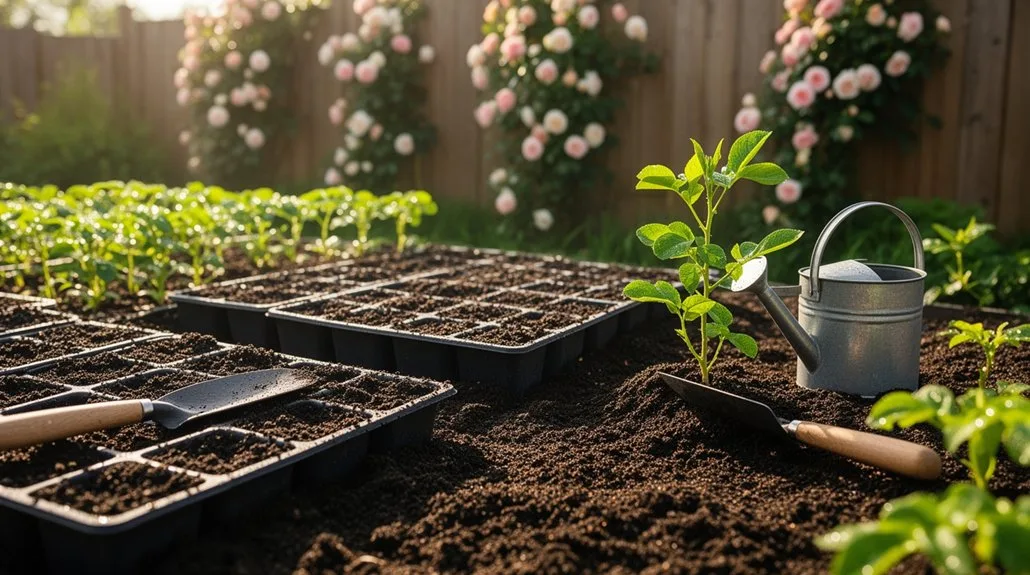
I always have my next batch of seedlings started indoors, so they’re ready to transplant immediately.
For a fall harvest, sow cool-weather lovers like kale or carrots in late summer where your early peas once grew.
This constant rotation maximizes your yield and keeps your garden vibrant.
You’ll be amazed at how much food you can produce from the same small space!
Common Square Foot Gardening Mistakes to Avoid
Because the method seems simple, many folks dive into square foot gardening without planning, which can lead to overcrowding.
I’ve made this error myself, stuffing in extra seeds only to harvest weak, struggling plants. You’ll have a much better season if you sidestep these common pitfalls! Trust the spacing guidelines—they’re there for a reason.
- Ignoring soil quality: Don’t just use garden dirt; your success depends on a light, rich, well-draining mix.
- Skipping the grid: A physical grid is your best friend for maintaining perfect spacing and organization.
- Forgetting vertical support: Plan your trellises early for crops like cucumbers and pole beans to save space.
- Neglecting consistent watering: The concentrated planting demands frequent, gentle watering to keep all those plants happy.
Square Foot Gardening on Balconies and Patios
Maximizing your urban space with square foot gardening transforms even the smallest balcony or patio into a productive vegetable plot. I started with a single 2×2-foot box on my concrete patio, and it was a revelation! Your key considerations are weight, sun, and access. Always use lightweight potting mix, never garden soil, to protect your structure. Ensure you get at least six hours of direct sunlight for most crops. Place your box where you’ll see it daily—that constant connection is key to success.
| Your Challenge | My Simple Solution |
|---|---|
| Limited floor space | Use a single, deep 2×2′ or 4×4′ box. |
| Heavy containers | Build with cedar or use a fabric pot. |
| Wind exposure | Secure boxes to railings or walls. |
| Watering frequency | Install a simple drip irrigation kit. |
Anchor everything securely, and you’ll harvest greens, herbs, and radishes in no time
Advanced Techniques: Succession Planting and Vertical Growing
Taking your square foot garden to the next level means squeezing every bit of bounty from your space through succession planting and vertical growing.
Succession planting is your secret for non-stop harvests. I pull my radishes and immediately pop in bush beans for a second crop. Go vertical to maximize yield! You’ll be amazed at what you can train upward.
- Plan your sequences: Follow cool-season lettuce with warm-season peppers in the same square.
- Use sturdy supports: Install tall trellises or cages at planting to avoid disturbing roots later.
- Choose climbers wisely: Grow pole beans, cucumbers, and even small melons vertically.
- Interplant fast and slow: Tuck quick-growing radishes between slower tomatoes—you’ll harvest the radishes before the tomatoes need the room!
Frequently Asked Questions
How Deep Should the Raised Bed Be?
Aim for a depth of 6-12 inches. You can grow most veggies there. If you want deep-rooters like carrots, go for a full 12 inches. I promise you’ll love the results.
Can I Use Square Foot Gardening for Flowers?
Yes, you can definitely use square foot gardening for flowers! It’s fantastic for arranging color blocks. You’ll group them by height and bloom time, creating stunning, manageable displays that maximize your space beautifully.
How Do I Protect Plants From Frost?
Cover your plants overnight with old sheets or special frost cloths; you’ll create a warm air pocket. Don’t use plastic directly on leaves, as it can freeze them. Uncover everything once morning warms up again.
What Do I Do With the Grid After Harvest?
After harvest, leave the grid in place. You’ll find it’s super handy because it keeps your soil neat. Clean the area and then you’re ready to plan your next planting season right away.
Can I Grow Root Vegetables Like Carrots?
Yes, you can grow carrots! Just loosen your soil deeply so their roots can stretch down without forking. You’ll thin the seedlings later for perfect, straight carrots.
Conclusion
Your square foot garden is a powerhouse of potential in a tiny space. You’ve got the plan, the perfect soil, and the know-how to avoid common pitfalls. Now get out there and plant! You’ll be amazed at how much you can harvest from just a few squares. Keep experimenting with succession planting and vertical grows—your journey to fresh, homegrown food is just beginning.
The Only Tools You Need for a Thriving Garden 🌱
Whether you're a weekend gardener or growing daily — these hand-picked tools make every session faster, easier, and more satisfying.