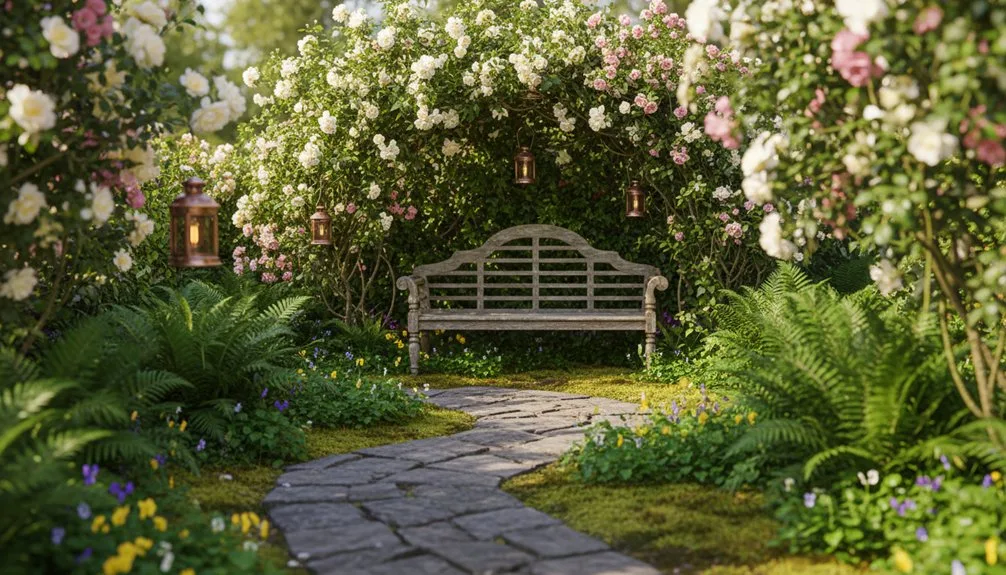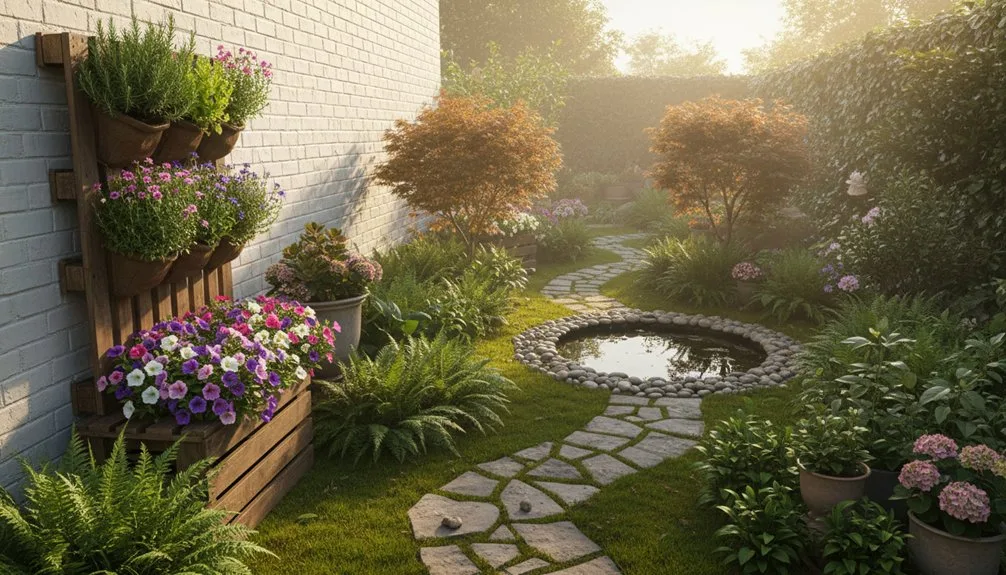
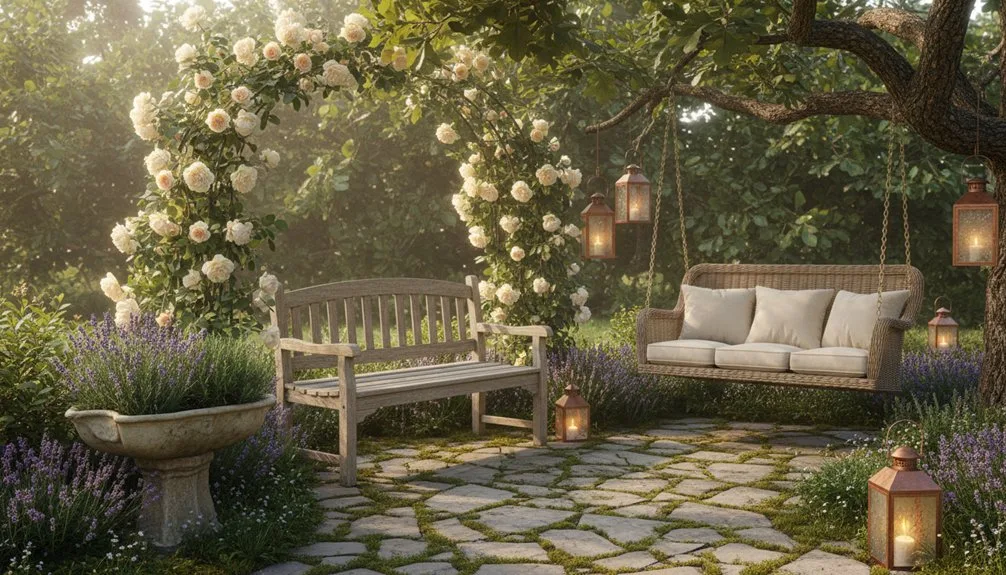
You can transform tight outdoor spaces into intimate rustic gardens by layering vertical plantings with trellises and climbing vines, then anchoring the space with repurposed containers like wheelbarrows and washtubs. Edge gravel pathways with fragrant herbs to soften transitions while suppressing weeds. Mix ground covers, mid-height shrubs, and climbing plants to create visual depth without overwhelming your square footage. Add weathered lanterns and a small water feature for ambiance. There’s much more you’ll discover about maximizing every corner.
Key Takeaways
- Vertical planters and wall-mounted trellises maximize small spaces while creating lush green walls with climbing vines and cascading blooms.
- Up-cycled containers like wooden crates, pallets, and vintage wheelbarrows add rustic character while serving as versatile planting solutions.
- Gravel pathways edged with living herb borders create low-maintenance surfaces that attract pollinators and soften garden transitions naturally.
- Reclaimed wood pergolas trained with wisteria or ivy provide intimate shade structures perfect for cozy seating areas and gatherings.
- Layered lighting with mason jar lanterns and solar string lights creates warm ambience while highlighting focal points like fountains or stone features.
Start Small: Maximizing Impact in Tight Spaces
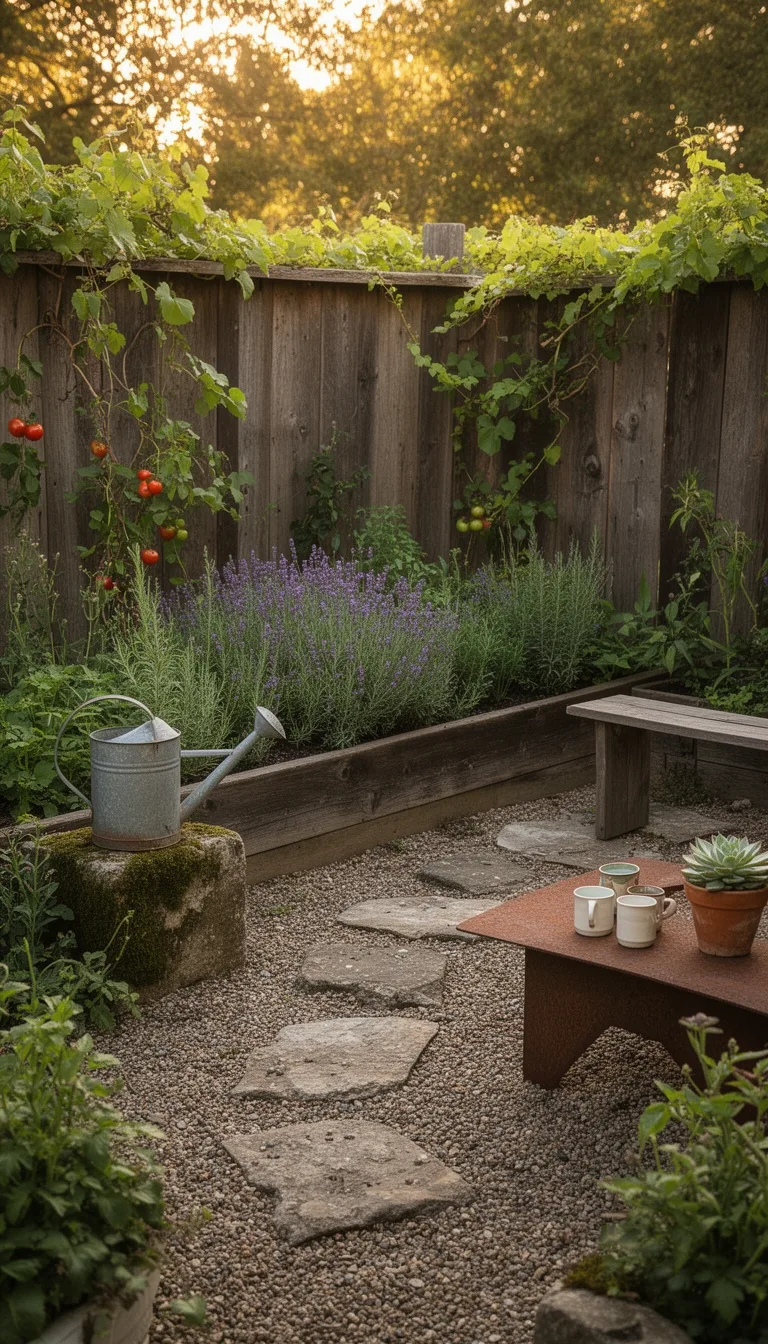
When you’re working with limited garden space, you’ve got to think vertically.
Wall-mounted planters and trellises transform bare surfaces into thriving green walls without consuming precious floor area.
Terracotta pots stacked on walls create lush foliage overhead, while climbing roses and vines cover fences to establish an expansive feel in compact yards.
Container planting strategically amplifies your impact.
Group pots together to mimic traditional borders, or fill overflowing terracotta vessels with blooming flowers in cozy corners.
Upcycled items like vintage wheelbarrows serve double duty as functional planters that anchor intimate spaces. Reclaimed wood elements such as old crates and weathered pallets can be repurposed into unique vertical planters that add authentic texture while maximizing your growing area.
Mason jars suspended with string lights blend practical illumination with rustic charm.
Create Structure With Gravel Pathways and Herb Borders
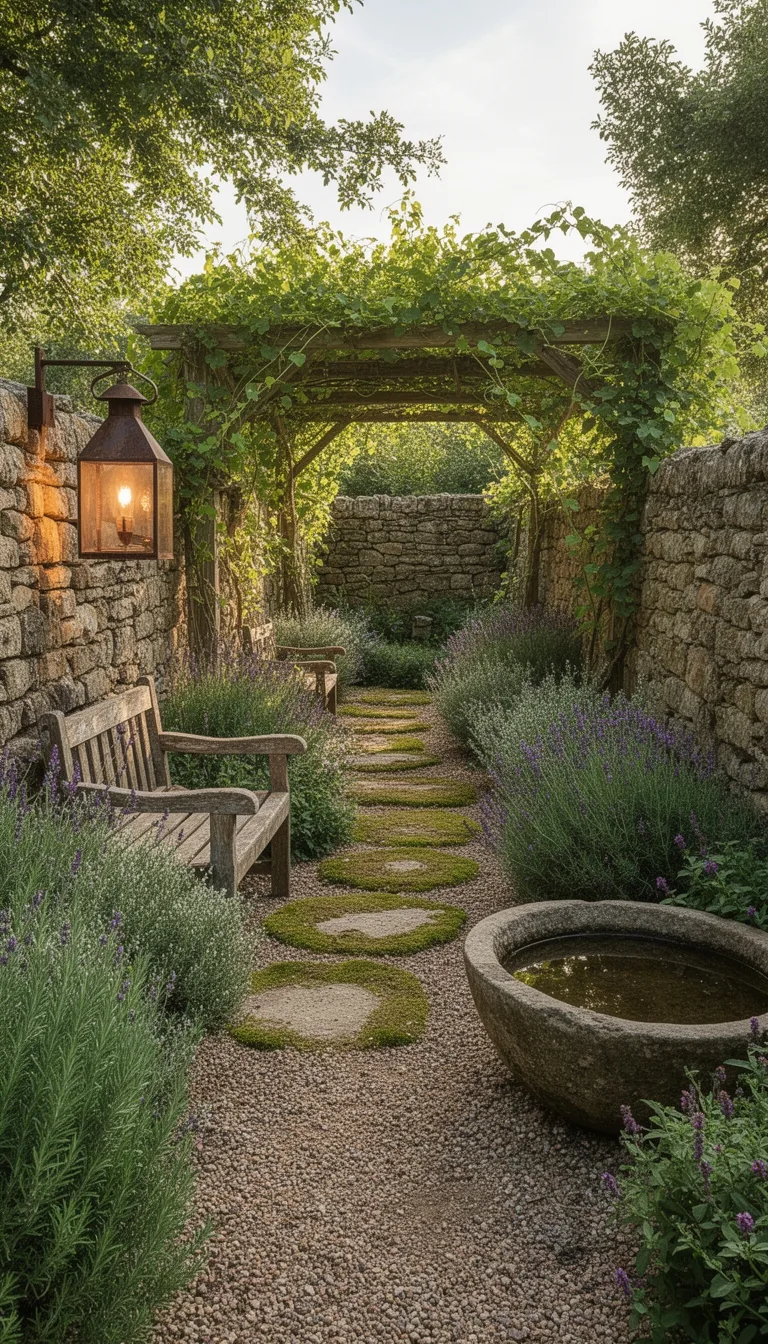
As your garden grows beyond those initial container plantings, you’ll want to establish clear pathways that define spaces and guide movement through your rustic retreat.
Gravel pathways offer the perfect solution for small gardens—they’re affordable, quick to install, and require minimal maintenance beyond occasional raking.
Lay down three inches of compacted gravel to suppress weeds while maintaining that inviting crunch underfoot.
Edge your pathways with living borders of thyme or chamomile, which soften transitions while creating microclimates that warm perennials faster in spring.
These herb borders improve airflow, reducing fungal disease and attracting pollinators for natural pest control.
The permeable surface prevents puddles and muddy footprints while allowing rainwater to replenish groundwater.
You’ll create structure without rigid pavers, gaining fluid design flexibility around flowerbeds and trees.
Choose Containers: Wheelbarrows, Washtubs, and Repurposed Finds
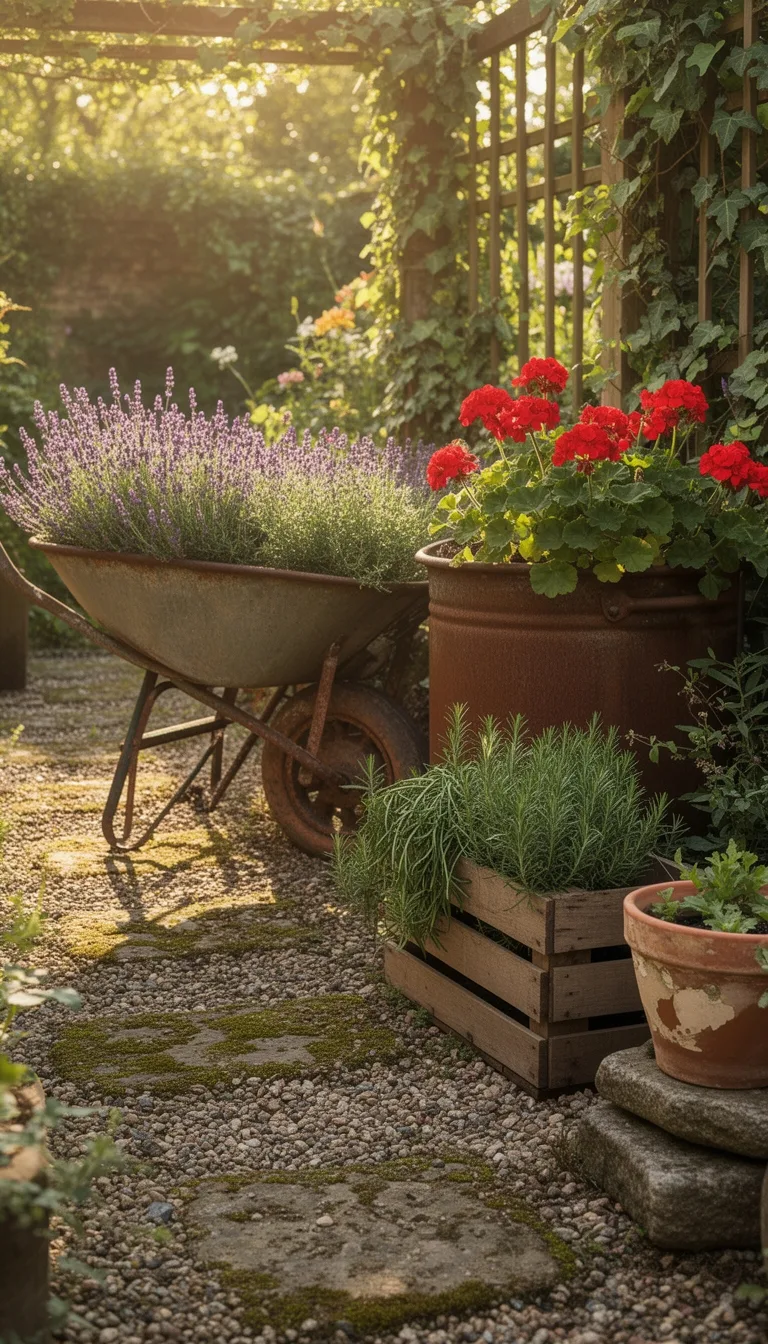
Three of the most versatile rustic containers—wheelbarrows, washtubs, and salvaged finds—transform your garden’s visual impact without requiring you to purchase expensive planters.
When selecting wheelbarrows, inspect bolt tightness, tray integrity, and support legs carefully.
Line them with landscape fabric to protect wood and manage drainage effectively.
You’ll apply the thrill-fill-spill formula, combining eye-catching focal plants with trailing vines and filler blooms for maximum visual depth.
Position drainage holes strategically—side holes one inch up create self-watering effects.
Fill the bottom third with high-quality compost before planting.
Repurposed containers like wooden trugs, antique carts, and wheeled planter boxes extend your rustic aesthetic while accommodating different soil requirements through individual pots.
These adaptable solutions remain mobile, allowing you to reposition plantings seasonally throughout your garden spaces.
Build Vertical With Trellises and Climbing Vines
Why let your garden sprawl across precious ground when you can train it upward? Vertical gardening maximizes your rustic space while creating charming focal points.
Start by matching your vine to your environment’s light conditions.
Then align the vine’s mature height with your trellis—a 6-foot trellis suits faster growers like hyacinth beans or honeysuckle beautifully.
Consider these practical options:
- Hyacinth bean vine covers trellises quickest; start seeds indoors for fastest results
- Honeysuckle requires minimal training and offers steady, reliable growth
- Ivy provides evergreen charm and hardy, romantic appeal once established
Invest in sturdy structures—thick posts or heavy-duty wood slats support robust vines without sagging.
Use metal trellis for heavier climbers.
Provide wire or mesh for weight-bearing support, and tie non-climbing varieties loosely to wooden slats.
Your vertical garden transforms compact spaces into lush, productive sanctuaries.
Layer Heights and Textures Throughout Your Garden
While vertical gardening draws the eye upward, you’ll want to orchestrate multiple height layers throughout your beds to create depth and visual interest that rewards viewers from every angle. Start by anchoring your garden’s foundation with ground covers like lamium, then transition through hostas and low perennials at mid-heights. Pair fine feathery foliage—think ferns—with broad glossy leaves for textural contrast. Bridge gaps with mounding perennials before reaching your backdrop shrubs and small trees.
| Layer | Height Range | Plant Examples | Purpose |
|---|---|---|---|
| Foreground | 6 inches–2 feet | Lamium, hostas, ferns | Edge definition, transitions |
| Midground | 2–6 feet | Hydrangeas, ornamental grasses | Movement, structure |
| Background | 6+ feet | Small trees, specimen shrubs | Vertical punctuation |
| Texture | All layers | Varied foliage types | Depth, visual rhythm |
Repeat textures organically throughout to avoid visual clutter while enhancing appeal.
Add Seating: Vintage Furniture and Cozy Gathering Spots
How do you transform a garden from a beautiful backdrop into a lived-in sanctuary?
You add seating that invites lingering and connection.
Consider these vintage options to anchor your rustic space:
- Classic pieces: Wrought iron café chairs with elegant curves, mid-century aluminum pool chairs in bold colors, or strap steel designs that blend comfort with nostalgic charm
- Upcycled treasures: Vintage bed frame benches, pallet wood seating with storage, or barn door benches that repurpose old materials into functional art
- Grouped arrangements: Position benches along garden paths, pair chairs around small tables for intimate conversations, and layer with pillows for added coziness
These vintage furnishings create natural gathering spots throughout your garden.
Mix textures and heights to develop visual interest while establishing cozy nooks that encourage you and guests to spend time outdoors.
Design Shade With Rustic Pergolas and Wooden Frames
Once you’ve established cozy seating, you’ll want to create the shade that makes those gathering spots truly livable during hot months.
Rustic pergolas built from reclaimed cedar, redwood, or salvaged barn timber blend seamlessly with natural surroundings.
Consider thick, dark wood beams with open roofs that feel expansive, or narrow designs perfect for compact yards positioned against walls or fences.
Add iron details and rope accents for authentic character.
Train climbing vines like wisteria or grape across beams—they’ll provide cooling shade while adding fragrance and beauty.
Pair your structure with natural stone pavers or brick pathways, then line edges with low-growing herbs like thyme or lavender for sensory appeal and practical benefits.
Grow Edibles Alongside Ornamental Plants
Why settle for purely decorative gardens when you can weave edibles throughout your landscape for both beauty and harvest?
You’ll transform your rustic space by integrating productive plants with ornamentals.
Consider these combinations:
- Herbs and flowers: Plant nasturtiums around borders for edible blooms, chives for onion flavor and pom-pom flowers, and rosemary as sculptural hedging that yields cooking clippings.
- Leafy greens: Arrange rainbow Swiss chard, dinosaur kale, and colorful lettuce in patterns that deliver visual interest while you harvest gradually throughout seasons.
- Fruiting plants: Edge pathways with strawberries, intersperse blueberries for spring flowers and fall color, or train rugosa roses for edible petals and decorative rosehips.
You’re maximizing every garden inch, creating layers of texture and color while building a productive edible landscape.
Light Your Garden: Lanterns, Jars, and Ambient Touches
As daylight fades on your productive garden, thoughtful lighting transforms the space into an inviting retreat while ensuring you can safely navigate between plants and harvest areas.
Handcrafted lanterns from artisans like Aldo Bernardi withstand weather with wrought iron and aged metals, anchoring your design.
Mason jars filled with LED tea lights highlight flower beds affordably, while suspended jar clusters mimic fireflies with warm 2200K-3000K bulbs casting golden halos.
String lights draped across pergolas create intimate zones without extensive wiring—solar variants reduce infrastructure further.
Layer fixtures at different heights using wall sconces near seating or harvest tables for task lighting.
These combined elements establish depth, guide movement safely, and extend your garden’s usability into evening hours.
Anchor Spaces With Water Features and Stone Details
What transforms a garden from pleasant to captivating?
Water features and stone details anchor your space, creating focal points that draw the eye and soothe the senses.
Consider these options:
- Water features: Mini wooden waterfalls, rustic tiered fountains, or repurposed barrel features provide gentle cascading sounds that calm your mind while attracting wildlife.
- Stone designs: Natural stone ponds with water lilies and moss-covered rocks establish serene elegance. Stone-lined streams meander through wildflowers, enhancing rustic harmony.
- Strategic placement: Position fountains amid greenery, surround them with native plants like geraniums and petunias, or frame stone streams with natural stones and moss.
These elements work together, transforming your small garden into a tranquil retreat where water sounds and earthy textures create lasting appeal.
Style With Upcycled Finds and Authentic Accents
How can you infuse genuine rustic charm without breaking the bank? You’ll transform your garden by upcycling everyday items into functional decor. Start by repurposing tin cans, mason jars, and teacups as charming planters. Stack wooden pallets vertically or arrange old ladders with wicker baskets for layered displays. Hunt flea markets for galvanized washtubs, milk cans, and weathered furniture—these pieces anchor your space authentically.
| Material | Transformation | Best Use |
|---|---|---|
| Tin cans | Painted herb planters | Fence displays |
| Wooden pallets | Vertical gardens | Wall installations |
| Old ladders | Tiered plant stands | Corner arrangements |
| Galvanized vessels | Statement planters | Focal points |
Don’t overlook quirky finds: rubber boots, bicycles, and jeans become whimsical planters. This approach creates character while honoring sustainability.
Conclusion
You’ve now got all the ingredients to transform your small space into a rustic garden sanctuary. By layering these elements—gravel paths, climbing vines, upcycled treasures, and ambient lighting—you’ll watch your cozy outdoor haven bloom like a patchwork quilt. Don’t overthink it; let your garden grow organically. Start with what you’ve got, add one piece at a time, and you’ll cultivate a peaceful retreat that’s authentically yours without breaking the bank.
The Only Tools You Need for a Thriving Garden 🌱
Whether you're a weekend gardener or growing daily — these hand-picked tools make every session faster, easier, and more satisfying.