
You might see a garden as rows of separate plants, but they’re part of a living community. A companion planting chart helps you map that community strategically. You can use it to pair vegetables and herbs for mutual benefit, deter pests naturally, and boost your harvest’s flavor. Understanding how these interactions work transforms simple planning into a powerful gardening tactic. Let’s explore how to apply these principles in your own plot.
Key Takeaways
- Companion charts quickly show ideal pairings, like tomatoes with basil, and antagonists, like beans with onions.
- Charts organize plants by benefits: pest deterrence, yield improvement, or attracting beneficial insects.
- They help plan garden layouts by mature size, preventing overcrowding and root competition.
- Use charts to integrate flowers like marigolds for nematode control or nasturtiums as aphid trap crops.
- Effective charts combine principles like the Three Sisters system with specific vegetable and herb lists.
What Is Companion Planting and How Does It Work?
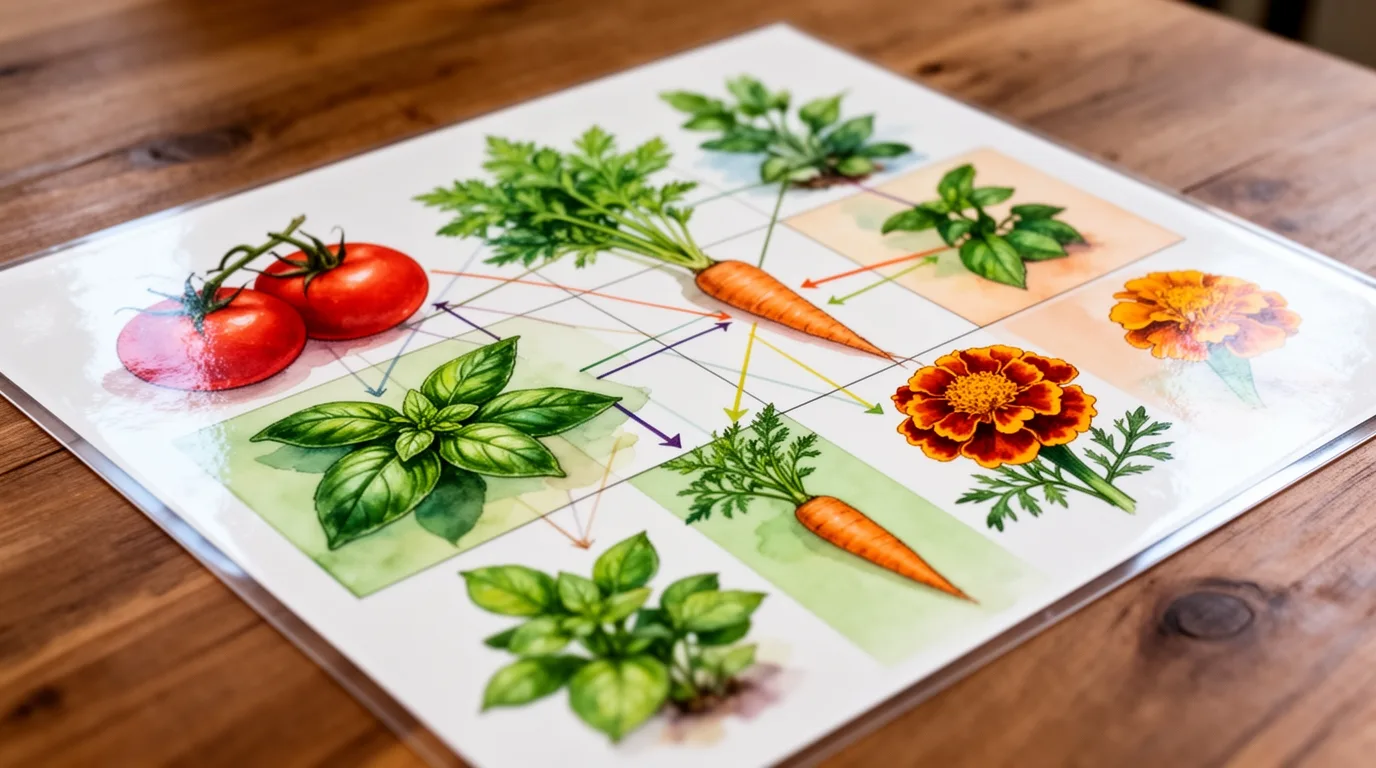
While companion planting might sound complicated, it’s a surprisingly simple concept. You strategically place different plants near each other so they can form a supportive partnership. Think of it as creating a helpful neighborhood in your garden. It works primarily through biological and ecological interactions.
For instance, tall plants like corn can provide needed shade for lettuce, which prefers cooler soil. Some plants, like marigolds, release natural chemicals from their roots that repel specific pests from their neighbors. Others attract beneficial insects that pollinate your crops or prey on harmful bugs. You’re essentially using plant traits—their height, scent, root exudates, or flowering habits—to manage your garden space more efficiently and create a healthier, more balanced ecosystem for your vegetables and herbs.
The Core Benefits of Companion Planting
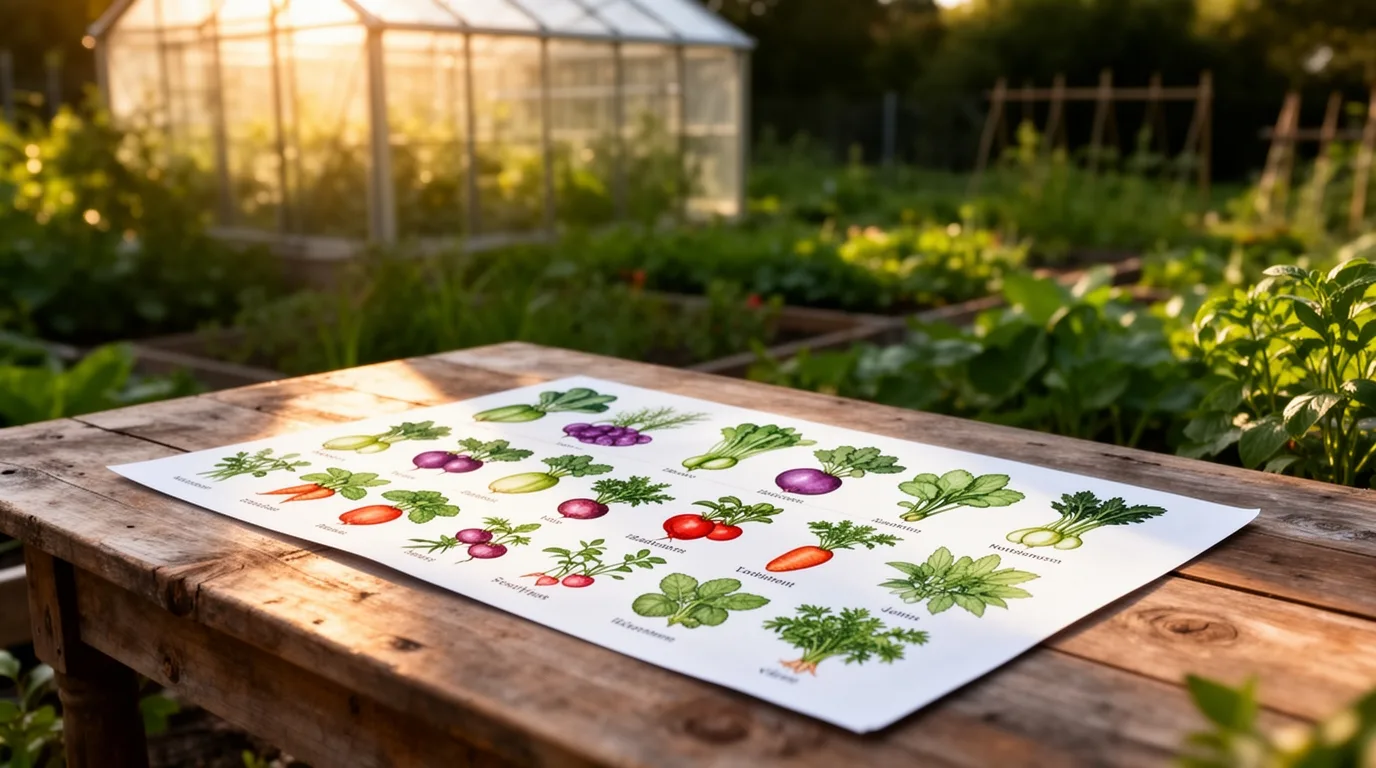
The true power of companion planting lies in its ability to deliver tangible, interconnected benefits that directly address common gardening challenges.
You’ll maximize your garden’s efficiency by using space more effectively. Tall plants provide shade for cool-season crops, while sprawling plants suppress weeds for others. You’ll also bolster plant health through nutrient sharing. For instance, legumes like beans naturally fix nitrogen in the soil, making it available for neighboring heavy feeders like corn.
Furthermore, this strategy attracts beneficial insects—such as pollinators and predatory wasps—to your plot, which is crucial for fruit set and a balanced ecosystem. This creates a resilient, self-supporting garden where plants work together to improve growth, yield, and overall vitality.
How Companion Planting Deters Specific Garden Pests
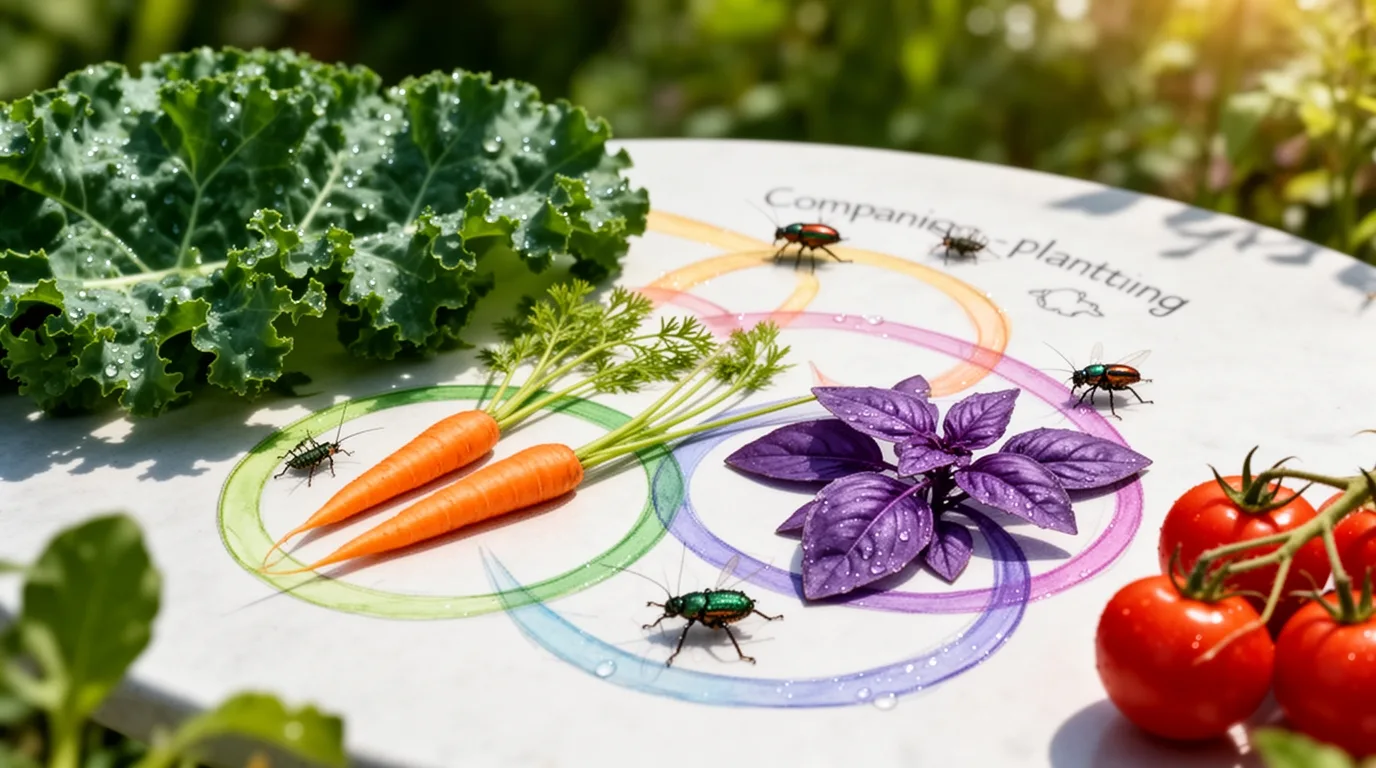
By strategically pairing plants, you can turn your garden into a frontline defense against damaging insects and other pests.
For example, strongly scented herbs like basil confuse pests seeking their host plants.
Interplant marigolds with tomatoes; their roots emit a substance that repels nematodes in the soil.
You can also use trap crops, such as nasturtiums, which lure aphids away from your beans or squash.
Tall plants like corn provide a physical barrier against wind-dispersed pests for lower-growing crops.
Other companions act as insectaries, attracting beneficial predators.
Dill and fennel bring in ladybugs and parasitic wasps that naturally control caterpillar and aphid populations, reducing your need for chemical interventions.
Using Companion Plants to Improve Flavor and Yield
Plant companions don’t just protect your crops; they actively boost their vigor and taste.
You can improve a tomato’s flavor and growth by planting basil nearby; many gardeners swear by this classic pairing.
Similarly, planting chives or garlic near apple trees or rose bushes can subtly enhance their fragrance.
For a higher yield, consider the “Three Sisters”: corn provides a stalk for beans to climb, beans add nitrogen to the soil, and squash’s broad leaves suppress weeds, creating a highly productive system.
Interplanting fast-growing lettuce with slower cabbages maximizes your space and output before the cabbages need the room.
This strategic pairing ensures your garden isn’t only healthy but also exceptionally productive and flavorful.
How to Read a Companion Planting Chart
Now that you’ve seen how pairings improve your garden’s performance, you’ll want to apply that knowledge systematically. A companion planting chart is your visual guide.
You’ll typically see a grid or matrix listing plants along the top and side. Find your primary crop, like beans, on one axis. Scan across or down to see its interactions with other plants listed.
A common symbol, like a plus sign (+), indicates a beneficial companion. A minus sign (-) or an “X” marks an incompatible plant, often called an “antagonist.” A blank space usually means neutral.
Some charts use color coding or icons for benefits like pest repellent or nitrogen fixation. Always check the chart’s legend first to interpret the symbols correctly.
Companion Planting for Tomatoes: Best Friends and Foes
Because tomatoes are a garden staple, knowing their ideal companions and antagonists can maximize your harvest and plant health. Companion planting deters pests, enhances flavor, and saves space. You’ll see the best results by planting basil, marigolds, onions, and carrots nearby.
However, you should keep them far from brassicas, fennel, corn, and potatoes, which compete for nutrients or attract shared blights. Consider these key allies and adversaries:
- Basil: Repels flies and mosquitoes, and many gardeners swear it improves tomato flavor.
- Marigolds: Their roots release a substance that suppresses nematodes in the soil.
- Onions & Garlic: Their strong scent confuses and deters aphids and other sap-sucking pests.
- Potatoes: A major foe; they compete heavily for nutrients and share susceptibility to devastating blight.
Companion Planting for Beans and Peas: Best Friends and Foes
While beans and peas are staple legumes in many gardens, their growth and pest resistance can be significantly improved with strategic companion planting.
Plant your legumes alongside carrots, corn, or radishes. Carrots loosen the soil for them, corn provides a natural trellis for pole beans, and radishes can deter bean beetles.
You should also interplant them with aromatic herbs like summer savory to repel aphids and improve their flavor.
However, you must keep all beans and peas away from members of the allium family, including onions, garlic, and leeks. These plants can stunt legume growth by inhibiting the nitrogen-fixing bacteria on their roots.
Avoid planting them near fennel as well, which secretes growth-inhibiting substances.
Companion Planting for Cucumbers: Best Friends and Foes
As you plan your cucumber patch, understanding their companion plants can dramatically improve your harvest and reduce pest issues. You’ll find that planting certain allies nearby boosts growth and confuses destructive insects, while keeping foes apart prevents competition and disease. Focus on choosing companions that offer clear benefits like pest control or improved pollination.
- Revel in robust vines by pairing cucumbers with corn, which provides sturdy natural support.
- Celebrate pest-free leaves by interplanting with radishes, which deter cucumber beetles.
- Bask in enhanced flavor and growth by including aromatic dill, which attracts beneficial pollinators.
- Avoid disappointment by never planting cucumbers near potatoes, as they compete heavily for nutrients and can increase blight risk.
Companion Planting for Carrots and Root Vegetables
Digging into companion planting for carrots and root vegetables lets you cultivate sweeter roots and a healthier garden bed. You’ll boost their growth by pairing them with aromatic herbs like rosemary, sage, or chives, which repel carrot flies.
Interplant carrots with onions, leeks, or garlic; their strong scent confuses pests targeting your roots. Lettuce is a fantastic shallow-rooted neighbor that won’t compete for deep soil space, providing mutual shade.
Avoid planting carrots near dill or parsnips, as they can stunt growth. Radishes serve a unique function: sow them alongside carrots to mark rows and break soil, making it easier for your carrot seedlings to push through later.
This strategic planting creates a supportive underground community.
Companion Planting for Leafy Greens
To safeguard your leafy greens from pests and bolster their health, pair them with companions that offer protective benefits. You’ll find certain plants mask scents, attract beneficial insects, or even improve soil conditions directly for your lettuce, spinach, and kale. This strategic pairing creates a more resilient and productive garden bed, reducing your need for interventions.
- Experience the relief of watching nasturtiums lure aphids away from your tender spinach.
- Feel the satisfaction as marigolds’ roots suppress nematodes that threaten your lettuce.
- Enjoy the bounty from spinach thriving in the shade of tall corn.
- Appreciate the simplicity of onions or garlic creating a pungent barrier against slugs and other munching pests.
Herbs as Powerful Pest-Repelling Companions
You can enlist herbs as a direct line of defense in your garden, utilizing their potent aromas and compounds to repel unwanted pests naturally.
Strong-scented herbs like rosemary, thyme, and sage deter cabbage moths from your brassicas. Planting basil near your tomatoes confuses and repels hornworms and flies.
Mint effectively wards off ants and aphids, but you must contain it in pots to prevent aggressive spreading.
The strong odor of chives and garlic can help protect roses from aphids and deter beetles.
You interplant these herbs throughout your vegetable beds, creating a chemical barrier that masks the scent of your crops. This method reduces your need for synthetic pesticides while boosting your garden’s biodiversity and resilience.
Using Flowers as Beneficial Companions
While herbs offer a potent aromatic defense, flowers can also be enlisted as strategic companions, attracting beneficial insects and repelling pests through their vibrant blooms.
You’ll turn your garden into a living ecosystem, where blooms provide essential services. Choose flowers like marigolds, whose roots deter nematodes, or nasturtiums, which lure aphids away from your crops.
Consider these key allies:
- Sunflowers stand as cheerful sentinels, offering pollinators a towering feast.
- Calendula secretes compounds that gently repel soil pests near your tomatoes.
- Borage is a heroic attractor of pollinating bees and predatory wasps.
- Cosmos provide delicate, inviting landing pads for tiny beneficial insects like hoverflies.
Interplant them generously to create a beautiful, functional defense system.
Classic Companion Planting Pairings to Try
Beyond the general support of flowers, specific plant partnerships form the backbone of companion planting.
Try pairing tomatoes with basil; the basil may improve the tomatoes’ flavor and repel pests.
Sow lettuce among taller carrots or onions for a living mulch that keeps the soil cool.
Interplant pungent onions or garlic near carrots to deter carrot flies.
You’ll find beans and corn grow famously together; beans climb the corn stalks, and corn thrives on the beans’ nitrogen fixation.
Grow marigolds throughout your vegetable beds, as their roots combat harmful nematodes.
Plant radishes near squash; the fast-growing radishes mark the row and break the soil for slower squash seedlings.
These classic pairings create a more resilient, productive garden.
Vegetables You Should Never Plant Together
Just as some plants thrive together, others actively inhibit each other’s growth through competition or chemical interaction. You’ll avoid stunted harvests and pest problems by keeping these antagonistic pairs separate.
- Beans and Onions: Onion family members release substances that hinder bean growth, leading to weak, spindly plants.
- Tomatoes and Corn: These share the same devastating pests, like corn earworms and tomato fruitworms, creating a massive infestation magnet.
- Potatoes and Tomatoes: As nightshade cousins, they’re vulnerable to the same blights; planting them together can wipe out both crops.
- Cabbage and Strawberries: Slugs adore both, but strawberries also host a fungus that severely stunts cabbage family growth.
A Quick-Reference Companion Planting Chart
Since knowing which plants to pair is crucial, a quick-reference companion planting chart simplifies planning your garden for mutual benefit.
This chart typically lists key vegetables and herbs alphabetically in one column. Adjacent columns then note proven companions you should plant nearby and antagonists you must avoid.
You’ll quickly see, for instance, that basil enhances tomatoes and deters pests, while beans shouldn’t grow near onions.
Keep this chart handy when you’re sketching your garden layout or buying seeds. It’s your essential cheat sheet for combining plants that aid each other through pest control, improved growth, and better flavor, helping you sidestep common inhibitory pairings that can stunt your harvest.
5 Steps to Plan Your Companion Planting Layout
To design a thriving companion planting layout, begin by sketching your garden’s overall dimensions and noting sunlight patterns, soil conditions, and any permanent fixtures.
Next, consult your companion planting chart to group compatible plants. For example, place tall corn to shield lower-growing squash.
Arrange your selected plant groups on your sketch, considering each plant’s mature size to prevent overcrowding.
You’ll create a resilient, productive garden by thoughtfully layering these partnerships in space and time.
- Feel the triumph of outsmarting pests naturally by interplanting aromatic basil with your tomatoes.
- Savor the satisfaction of healthier soil when nitrogen-fixing beans nourish neighboring corn.
- Experience the wonder of a buzzing, balanced ecosystem as pollinator-friendly borage blooms between crops.
- Harvest the joy of a lush, interdependent garden where every plant supports another.
Adapting Companion Planting for Small Spaces
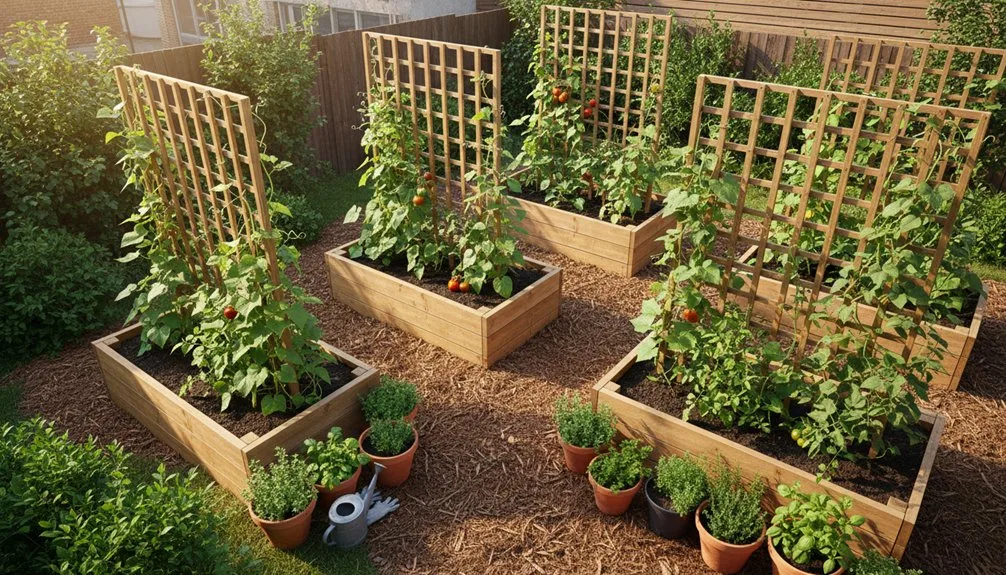
Even when you’re short on square footage, companion planting can flourish on a patio, balcony, or in a compact bed by focusing on vertical layering and container pairings.
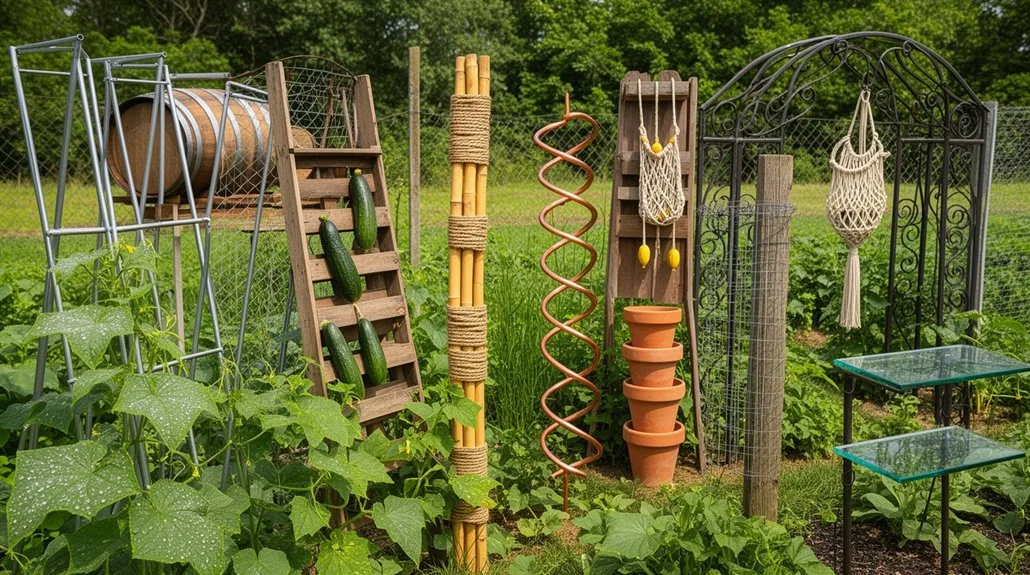
Start by planting taller crops like tomatoes or pole beans in the center of a deep pot, then surround them with lower-growing companions like basil or lettuce. Utilize vertical space by training climbers onto trellises alongside sturdy herbs.
For separate containers, group pots strategically; place a pot of chives near your roses to deter aphids, or set marigolds next to tomato containers to repel nematodes. Prioritize combinations that share similar water and light needs to simplify care in your confined garden.
This efficient approach maximizes yield and pest control.
Troubleshooting Common Companion Planting Mistakes
While companion planting offers many benefits, you might encounter some common issues that can undermine its success if they’re not addressed. To avoid frustration and wasted effort, you must proactively manage these pitfalls.
The most frequent mistakes stem from overcrowding, poor pair selection, ignoring plant families, and forgetting about nutrient competition.
- Crowding Out Companions: Overplanting creates intense competition for light, water, and root space, stunting all your plants.
- Choosing Incompatible Partners: Placing true antagonists like onions and beans together actively inhibits growth for both.
- Ignoring Plant Families: Grouping tomatoes, peppers, and potatoes (all nightshades) concentrates their shared pests and diseases.
- Forgetting About “Hungry” Plants: Planting heavy feeders like corn and cabbage together depletes soil nutrients rapidly, starving both.
Frequently Asked Questions
Can I Companion Plant in Containers or Raised Beds?
You can definitely companion plant in containers or raised beds. Pair plants like tomatoes with basil in a single large pot. Just ensure your container’s big enough for both root systems to grow without competing too intensely.
Does Companion Planting Work With Hydroponic Gardening?
Yes, it can. You’ll apply the same principles, focusing on beneficial plant interactions. However, your success depends entirely on carefully selecting compatible species that thrive in the same nutrient solution and environment.
How Do I Companion Plant With a No-Dig/No-Till Method?
You layer companion plants directly onto your undisturbed soil. You’ll mix compatible seeds in mulch or plant them through compost. It naturally fosters symbiotic relationships without disrupting the soil’s structure.
Are There Companion Plants That Help With Soil Compaction?
Yes, deep-rooted companions like daikon radish or comfrey help. Their taproots break up compacted soil, improving aeration and drainage. You’ll also add organic matter as their roots decompose, naturally loosening the soil for you.
Can Companion Planting Principles Apply to Fruit Trees?
Yes, companion planting works for fruit trees. You’d plant flowers to attract pollinators, use legumes to fix nitrogen, and add shallow-rooted plants as groundcover to suppress weeds and improve soil health.
Conclusion
You’ve learned companion planting’s principles. Put them into action using your chart, sketching your garden plan while noting sunlight and spacing. Pair allies like basil and tomatoes, use marigolds as sentinels, and avoid antagonists. Remember, this strategy builds a resilient, productive garden community. Your thoughtful layout now becomes your best tool for natural pest control, richer flavors, and a thriving harvest.
The Only Tools You Need for a Thriving Garden 🌱
Whether you're a weekend gardener or growing daily — these hand-picked tools make every session faster, easier, and more satisfying.