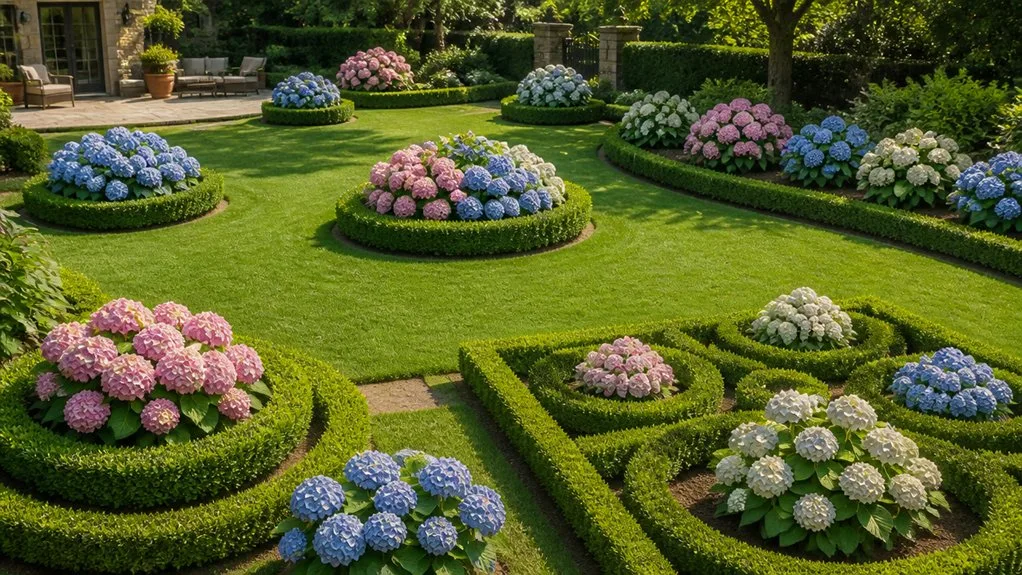
You can transform your yard by pairing hydrangeas’ vibrant seasonal blooms with boxwoods’ architectural structure. Space boxwoods 12-18 inches apart for formal hedges, then layer taller hydrangeas behind as backdrops with dwarf varieties anchoring foregrounds. Stagger bloom times using cultivars like ‘Quickfire’ and ‘Pinky Winky’ for continuous color. Adjust soil pH to control hydrangea hues—acidic for blue, alkaline for pink. Prune boxwoods in late spring, water deeply during dry spells, and mulch to retain moisture. Discover how strategic placement and variety selection unlock fifteen classic design approaches.
Key Takeaways
- Establish formal boxwood hedges with 12-18 inch spacing as elegant structural foundations requiring minimal maintenance year-round.
- Layer plants at varying heights: tall hydrangeas (5-8 feet) as backdrops, mid-layer boxwoods (2-4 feet), dwarf varieties (1-2 feet) foreground.
- Select hydrangea cultivars with staggered bloom times and contrasting fall foliage for continuous seasonal color and visual interest.
- Space hydrangeas 3-5 feet in front of evergreen backdrops to maximize color impact through architectural contrast and depth.
- Prune boxwoods in late spring, water hydrangeas one inch weekly, and apply mulch to retain moisture and regulate temperature.
Create a Formal Hedge Border With Boxwoods
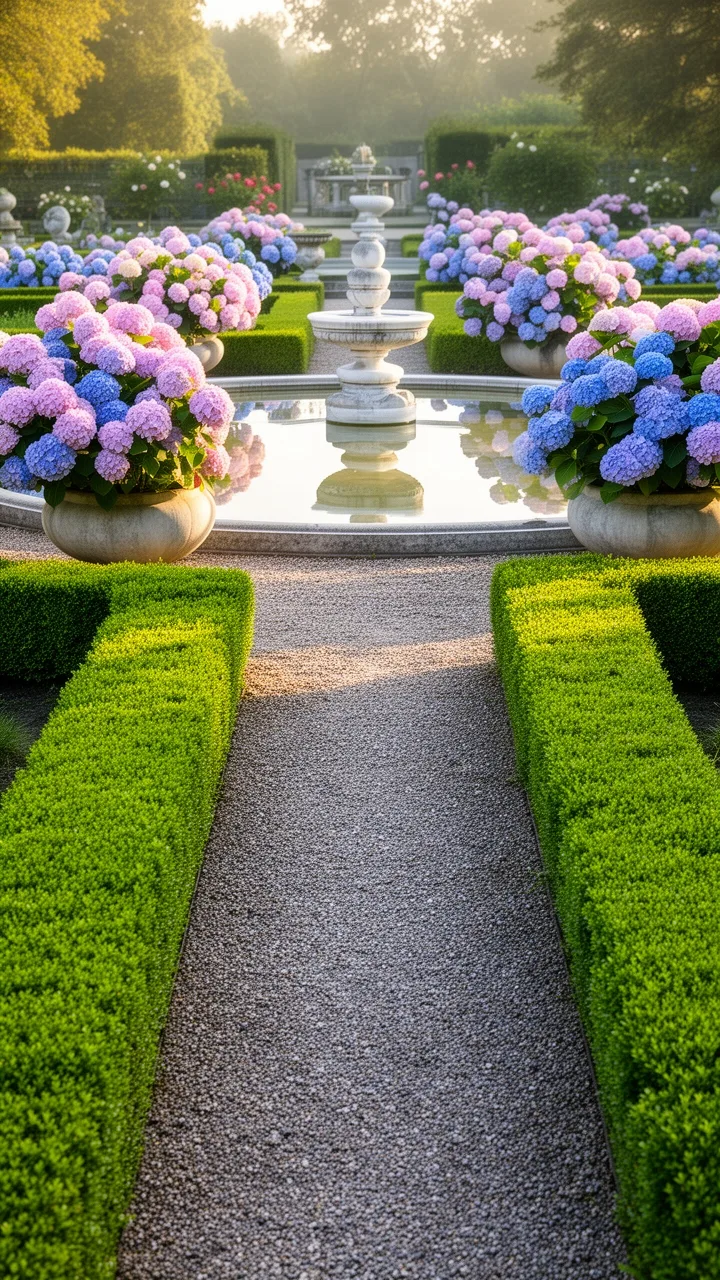
Because boxwoods grow slowly and respond well to pruning, they’re ideal for creating clean, defined hedge borders. You’ll want to space plants 12 to 18 inches apart, depending on the variety, ensuring proper air circulation. Plant them in well-draining soil with partial to full sun exposure. Establish your desired height and width early, then maintain them through regular trimming—typically twice yearly during growing season. Use sharp hedge shears for precise cuts, creating uniform lines that frame your hydrangeas beautifully. This formal structure provides elegant contrast, elevating your landscape’s sophistication while protecting inner plantings from wind and foot traffic.
Maintain Boxwood Hedges: Pruning and Seasonal Care
Once you’ve established your boxwood hedge’s initial form, you’ll need to commit to consistent maintenance to keep it looking sharp and healthy. Prune in late spring and early summer when new growth emerges, using sharp shears for clean cuts that promote dense foliage. Remove any dead or diseased branches immediately. Water deeply during dry spells, providing one inch weekly. Apply mulch to retain moisture and regulate soil temperature. Monitor for boxwood leaf miner and spider mites, treating promptly if detected. In fall, avoid heavy pruning that exposes tender new growth to winter damage.
Design a Colorful Foundation Planting With Hydrangeas
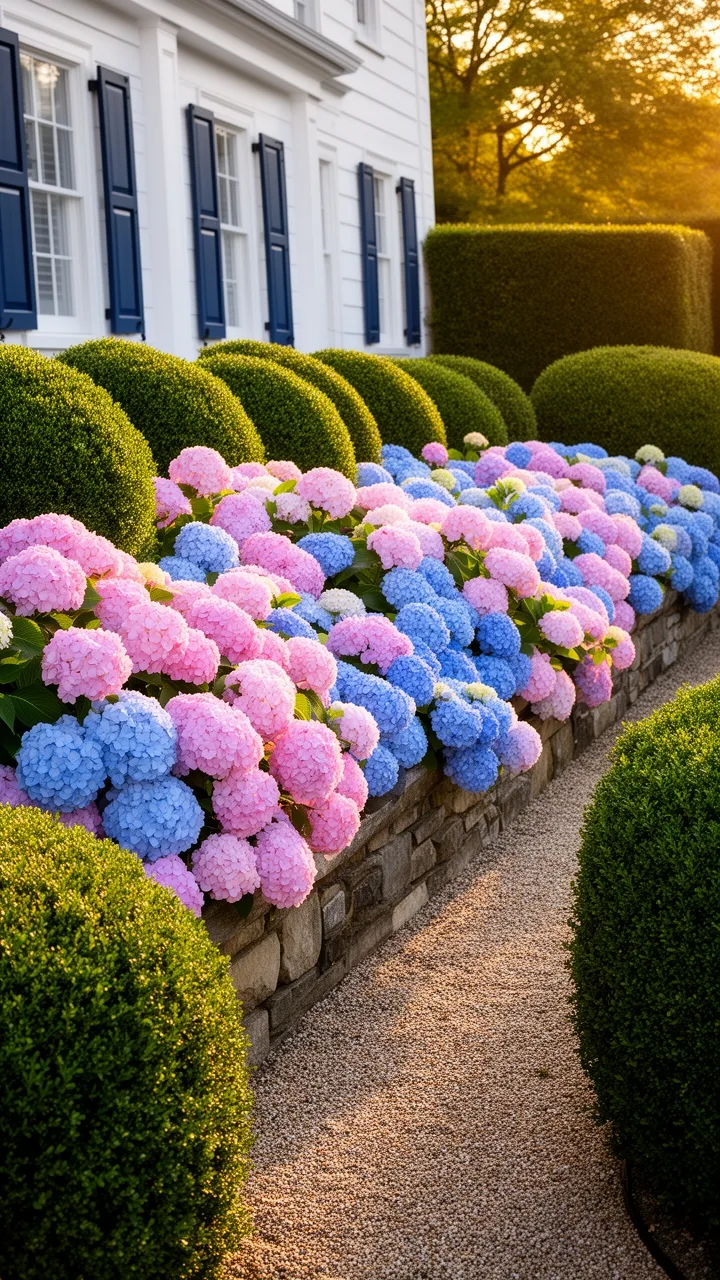
Hydrangeas offer you exceptional versatility for foundation plantings, delivering substantial color impact through their large, clustered blooms while their sturdy structure complements boxwood hedges and architectural elements. You’ll appreciate their extended bloom season, which provides visual interest from summer through fall. Position hydrangeas strategically in front of your home’s foundation, spacing them according to mature width. Layer them with boxwoods to create dimensional depth. Select cultivars matching your soil’s pH levels—acidic soil produces blue flowers, while alkaline soil yields pink blooms. This approach maximizes your landscape’s aesthetic appeal and architectural cohesion.
| Hydrangea Variety | Bloom Color | Height | Bloom Time | Light Requirements |
|---|---|---|---|---|
| Panicle | White/Pink | 6-8ft | July-October | Full sun |
| Bigleaf | Blue/Pink | 4-6ft | June-September | Partial shade |
| Oakleaf | White | 4-6ft | June-August | Partial shade |
| Smooth | Pink/White | 3-5ft | June-July | Full sun/Part shade |
| Mountain | Blue/Pink | 3-4ft | June-August | Partial shade |
Coordinate Hydrangea Colors for Year-Round Appeal
While seasonal color transitions naturally occur throughout the year, you can strategically orchestrate your hydrangea palette to maintain continuous visual appeal from spring through winter. Select varieties with complementary blooming periods—pairing early bloomers like ‘Annabelle’ with late-season cultivars ensures consistent flowering. Choose hydrangeas displaying contrasting fall foliage; some varieties shift to burgundy while others fade to bronze. Incorporate evergreen boxwoods alongside deciduous hydrangeas to anchor your foundation during dormant seasons. Plant mopheads and panicle types together, since they mature at different rates and offer distinct color progressions. This layered approach creates dynamic seasonal interest while maintaining structural coherence year-round.
Mix Hydrangea Varieties for Extended Bloom Season
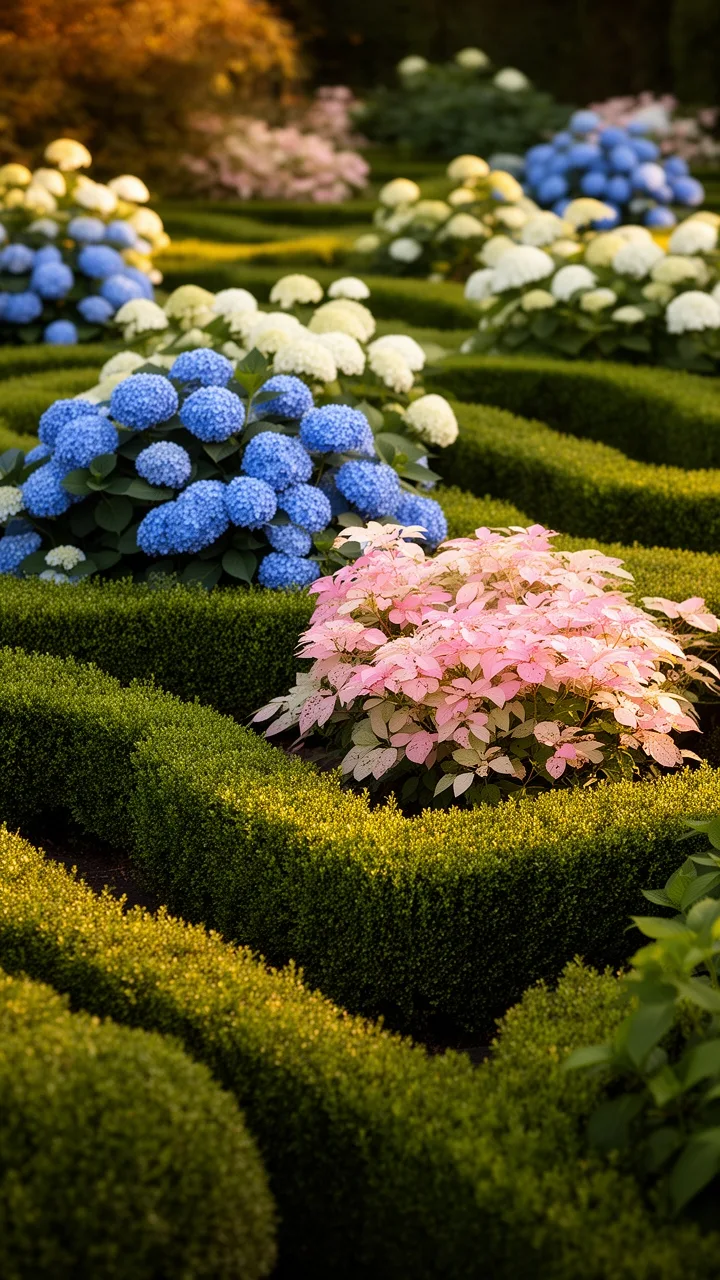
By strategically selecting hydrangea cultivars with staggered flowering times, you’ll create continuous blooms from early summer through fall frost. Plant early bloomers like ‘Quickfire’ alongside mid-season varieties such as ‘Limelight’ and late-flowering ‘Pinky Winky’. Panicle hydrangeas extend bloom windows significantly, flowering two to three weeks longer than mopheads. Oakleaf hydrangeas add architectural interest while blooming mid-to-late summer. Deadheading spent flowers encourages secondary blooming on repeat varieties. Space plants appropriately for mature size, ensuring adequate sunlight for abundant flowering. This layered approach maximizes visual interest while minimizing seasonal gaps in your landscape composition.
Create Winter Interest With Evergreen and Dried Blooms
Most landscapes lose visual impact once frost arrives, but you’ll maintain year-round interest by incorporating evergreen boxwoods and preserving hydrangea blooms. Leave spent flower heads on panicle hydrangeas through winter—they’ll develop tan and burgundy hues, creating architectural texture against snow. Boxwoods retain their dense, structured foliage year-round, providing evergreen scaffolding. Prune boxwoods in late winter to enhance their forms. For maximum contrast, position dried hydrangea stems near boxwood plantings. This combination delivers visual depth during dormant months while requiring minimal maintenance. Come spring, simply remove faded blooms before new growth emerges.
Showcase Hydrangea Colors Against Evergreen Screens
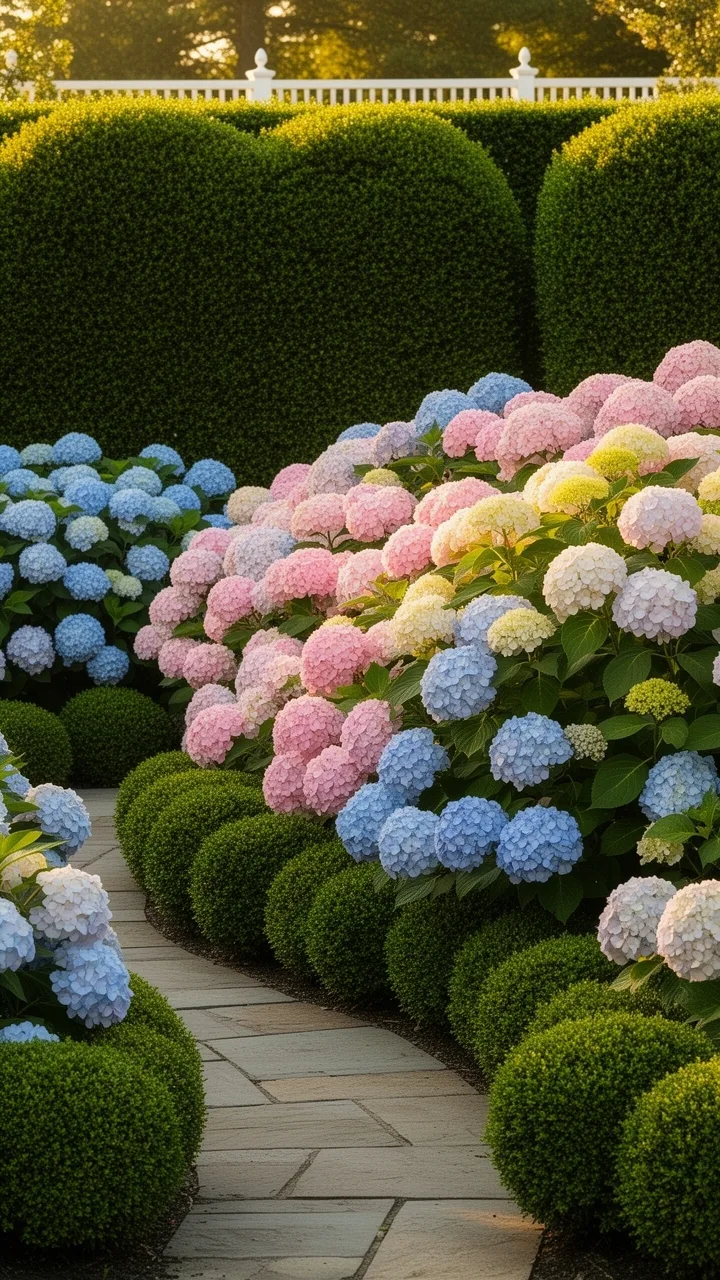
Because hydrangea blooms demand visual prominence, you’ll want to plant them where evergreen backdrops—such as boxwood hedges, yew screens, or holly shrubs—can amplify their color impact. Position hydrangeas 3-5 feet in front of dense evergreen plantings to create depth and contrast. Dark green foliage intensifies pink, blue, and white hydrangea hues, making blooms pop dramatically. Consider the mature size of your evergreens; they shouldn’t overshadow hydrangeas or compete for sunlight. Space plantings adequately for air circulation, reducing fungal issues. This layered approach creates sophisticated, structured garden compositions while allowing each plant’s characteristics to shine distinctly.
Create Visual Depth With Staggered Plant Heights
When you arrange hydrangeas and boxwoods at varying heights, you’ll establish a dynamic visual rhythm that draws the eye through your landscape composition. Strategic layering creates dimensional interest while optimizing sunlight exposure for each plant species.
Consider these techniques:
- Position taller hydrangeas (5-8 feet) as backdrop specimens, with boxwoods (2-4 feet) as mid-layer transitions
- Use dwarf boxwood varieties (1-2 feet) as foreground anchors, establishing graduated focal points
- Space plants to prevent overcrowding while maintaining sight lines through your garden
This tiered approach maximizes visual depth, prevents a flat appearance, and allows proper air circulation. You’ll achieve sophisticated landscape architecture that balances proportion and scale effectively.
Frame Your Entryway With Symmetrical Boxwood Topiaries
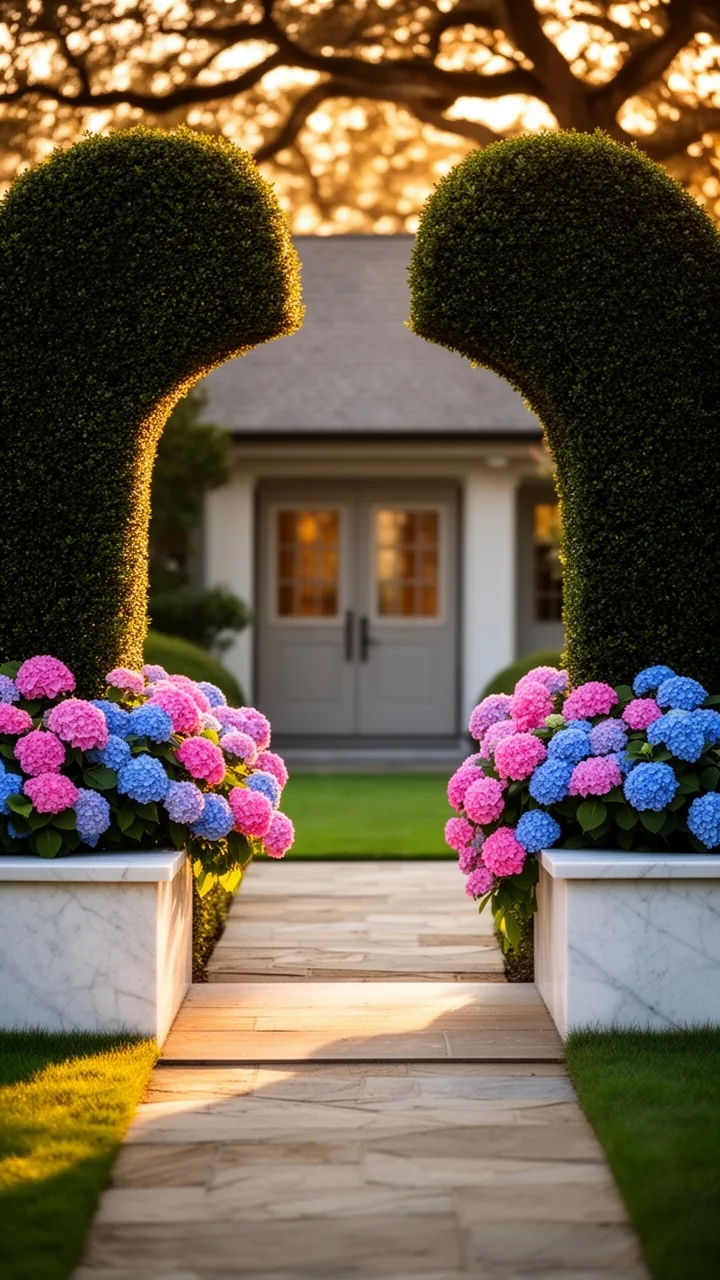
Symmetrical boxwood topiaries create a formal, polished aesthetic that immediately establishes your home’s architectural character. You’ll frame your entryway by positioning matching topiaries on either side of your door, creating visual balance and drawing visitors’ attention upward. This classic approach enhances curb appeal while defining your landscape’s boundary.
| Topiary Style | Maintenance Frequency |
|---|---|
| Cone | Monthly trimming |
| Sphere | Bi-weekly shaping |
| Pyramid | Every 3 weeks |
| Spiral | Weekly precision cuts |
| Columnar | Quarterly pruning |
You’ll achieve optimal results by selecting dwarf boxwood varieties, ensuring they receive adequate sunlight and well-draining soil. Regular pruning maintains their defined shapes throughout growing seasons.
Build Tiered Beds to Display Hydrangeas at Different Levels
While boxwood topiaries establish your entryway’s formal structure, tiered beds let you showcase hydrangeas’ voluminous blooms across multiple planes, creating dramatic visual depth and maximizing your landscape’s visual impact.
To construct effective tiered beds:
- Excavate progressively deeper sections at 12-18 inch intervals, positioning taller hydrangea varieties in back tiers and compact cultivars forward
- Install retaining walls using stone or composite materials to define each level and prevent soil erosion between tiers
- Ensure proper drainage by incorporating gravel layers and sloped surfaces, preventing waterlogging that damages roots
This stratified approach amplifies color saturation, improves air circulation around foliage, and simplifies maintenance access while creating professional-grade dimensional landscaping.
Plant Hydrangeas in Containers for Seasonal Flexibility
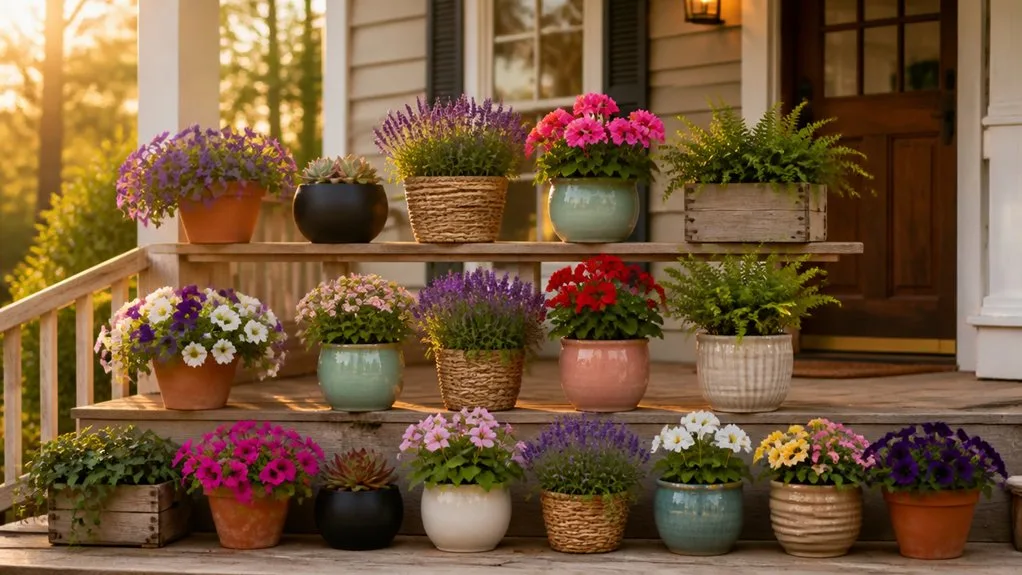
Beyond fixed landscape beds, container planting offers you unparalleled adaptability for hydrangeas, letting you reposition specimens seasonally, protect tender varieties from harsh winters, and transition blooms from outdoor displays to sheltered patios as conditions demand. Select containers with drainage holes and use well-draining potting soil amended with peat moss to maintain optimal moisture levels. Choose pots sized proportionally to mature root systems—typically 18-24 inches for standard varieties. Position containers in dappled shade, ensuring 4-6 hours of indirect sunlight. Monitor soil moisture consistently during growing seasons, as containers dry faster than in-ground beds. This flexibility enables you to cultivate premium cultivars unsuitable for your climate zone.
Scale Designs Down: Dwarf Boxwoods and Compact Hydrangeas
As space constraints or design preferences demand smaller specimens, dwarf boxwoods and compact hydrangeas deliver sophisticated landscaping solutions without sacrificing visual impact.
You’ll appreciate these cultivars’ dimensional efficiency:
- Dwarf boxwoods like ‘Suffruticosa’ reach 2-4 feet, ideal for edging and borders while maintaining classic formality
- Compact hydrangeas such as ‘Bobo’ and ‘Quickfire’ stay under 3 feet, offering abundant blooms in tight quarters
- Proportional scale ensures balanced compositions in small yards, creating cohesive designs that don’t overwhelm spaces
You’ll find these varieties establish faster and require less maintenance than standard sizes. Their reduced mature dimensions allow you to plant denser arrangements, maximizing visual richness within limited footprints while preserving accessibility and sight lines.
Why Oakleaf Hydrangeas Thrive Beside Boxwood Backbones
Oakleaf hydrangeas complement boxwood plantings through contrasting structural qualities that enhance landscape functionality. You’ll appreciate how oakleaf hydrangeas’ vertical growth and textured foliage offset boxwood’s dense, compact forms. Their architectural panicles provide seasonal interest while boxwoods maintain year-round structure. This pairing creates visual depth and layering in your garden beds.
| Feature | Oakleaf Hydrangea | Boxwood |
|---|---|---|
| Height | 4-8 feet | 2-6 feet |
| Texture | Coarse, lobed leaves | Fine, dense foliage |
| Seasonal Interest | Dramatic panicles | Evergreen structure |
You’ll find they thrive in similar shade conditions and soil preferences, simplifying maintenance while maximizing aesthetic contrast and garden functionality.
Establish a Low-Maintenance Hedge Screen for Privacy
A boxwood hedge delivers reliable privacy screening while demanding minimal upkeep throughout the growing season. You’ll appreciate how this dense evergreen establishes year-round concealment for your yard’s perimeter. To maximize performance, consider these essential strategies:
- Spacing: Plant boxwoods 2-3 feet apart to encourage full, interconnected growth
- Pruning: Trim annually in late spring to maintain shape and density
- Drainage: Ensure well-draining soil to prevent root rot and fungal issues
You’ll find boxwoods exceptionally forgiving once established. They tolerate partial shade and various soil conditions, making installation straightforward. Their compact growth habit means you’re controlling spread naturally, reducing maintenance demands compared to other screening options.
Keep Your Yard Colorful Year-Round With Strategic Layering
Strategic layering with hydrangeas and boxwoods creates visual interest that persists through every season. You’ll combine these plants at varying heights to establish depth and texture throughout your landscape. Position boxwoods as foundational evergreen anchors, then intersperse hydrangeas in front or behind them, depending on your desired focal points. This arrangement capitalizes on hydrangea’s seasonal color transformations—vibrant blooms in summer, russet foliage in fall—while boxwoods maintain consistent structure year-round. By staggering plantings and selecting cultivars with different bloom times, you’ll achieve continuous color variation. The layered approach also maximizes visual complexity without requiring excessive maintenance, providing structural framework that sustains aesthetic appeal during dormant winter months.
Conclusion
You’ll find that combining hydrangeas and boxwoods is the cornerstone of timeless landscaping. By layering these plants strategically, you’re building a living architecture that stands the test of time. You’ll want to prune boxwoods regularly, coordinate hydrangea hues seasonally, and incorporate dwarf varieties for visual depth. This dual-plant approach creates that classic aesthetic while minimizing maintenance demands. Your yard becomes a self-sustaining showcase of structure and color.
The Only Tools You Need for a Thriving Garden 🌱
Whether you're a weekend gardener or growing daily — these hand-picked tools make every session faster, easier, and more satisfying.