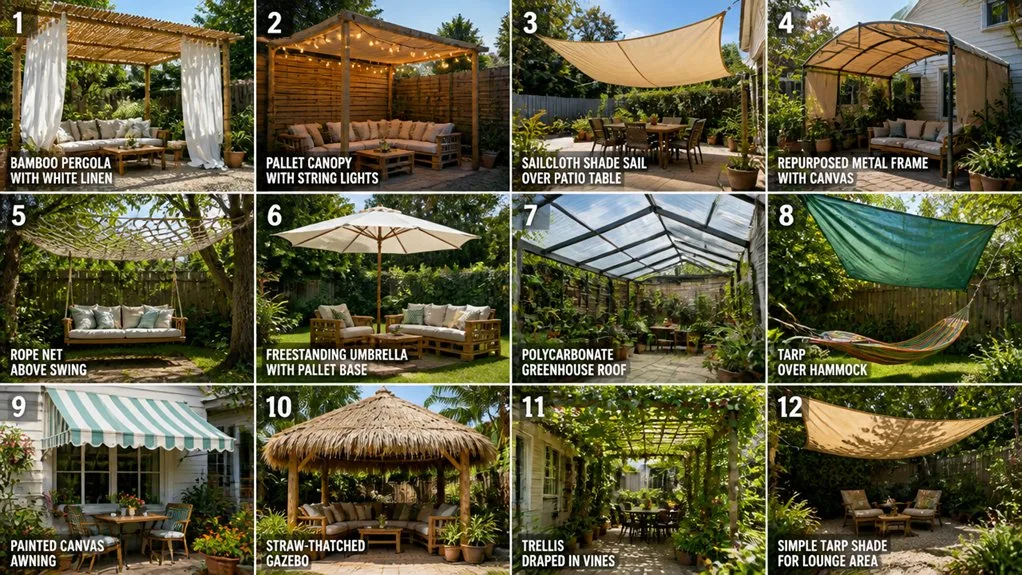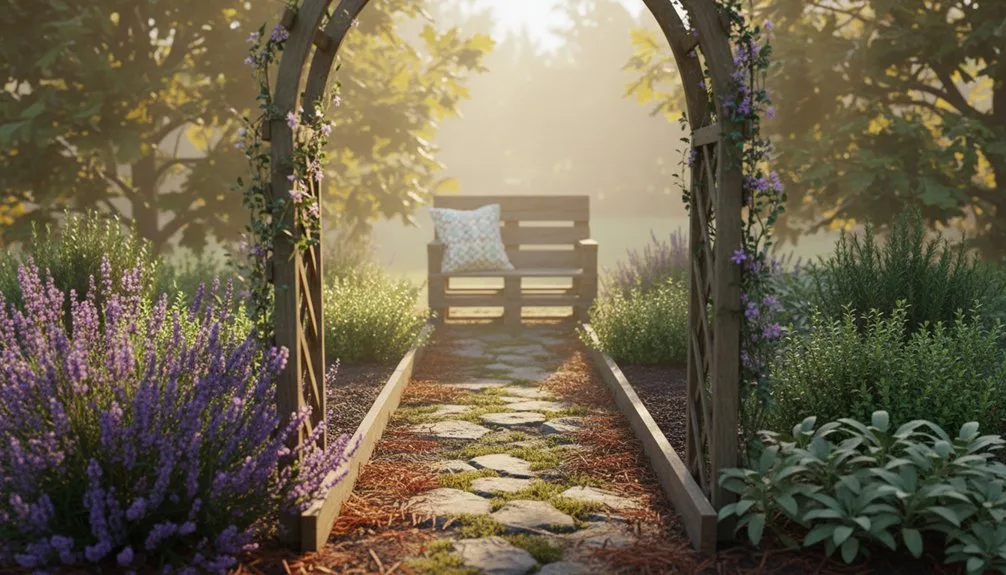
You want a garden that looks good without demanding your time, so you’ll focus on drought‑tolerant succulents, native grasses, and evergreen shrubs that stay vibrant year‑round. Pair them with self‑watering containers, modular vertical planters, and raised beds filled with well‑draining mix, then set up a timed drip system and mulch to keep weeds at bay. Add rock zones, decorative boulders, and a low‑effort solar fountain for visual interest, and you’ll have a functional, attractive space that only needs occasional seasonal touch‑ups.
Key Takeaways
- Use drought‑tolerant succulents, native grasses, and evergreen shrubs for minimal watering and year‑round structure.
- Plant low‑maintenance fruit trees and self‑pruning varieties in well‑drained soil with a single annual mulch layer.
- Install drip irrigation or self‑watering containers with timers, watering deeply only when the top inch of soil is dry.
- Replace lawns with ground‑cover plants like creeping thyme or dwarf mondo grass, and use gravel or coarse sand to suppress weeds.
- Add a solar‑powered fountain or small pond with native aquatic plants to provide visual interest while requiring only occasional cleaning.
Choose Drought‑Tolerant Succulents for Low‑Maintenance Color
A handful of drought‑tolerant succulents can give your garden vibrant color year‑round with minimal effort.
Pick species like Echeveria, Sedum, and Agave because they thrive in full sun, need only occasional watering, and stay compact.
Plant them in well‑draining soil mixed with sand or perlite to prevent root rot.
Space each pot 12‑18 inches apart so foliage gets air circulation, reducing disease risk.
Water deeply once a week during the first month, then cut back to once every two‑three weeks—more in extreme heat, less in cooler seasons.
Fertilize sparingly with a low‑nitrogen, slow‑release formula in spring.
Mulch with gravel or crushed shells to retain moisture and keep weeds at bay, ensuring a tidy, low‑maintenance display.
Plant Native Grasses for Low‑Maintenance Texture
Native grasses add texture and movement to a low‑maintenance garden while requiring minimal care. Choose species native to your climate—such as little bluestem, switchgrass, or buffalo grass—so they thrive on local rainfall and soil.
Plant them in well‑drained beds, spacing each clump 12‑18 inches apart to prevent overcrowding. Amend the soil with a thin layer of compost, then water lightly until roots establish; after that, they survive on natural precipitation.
Mow once a year in early spring to remove dead foliage and encourage fresh growth. Mulch around the base with coarse bark or straw to suppress weeds and retain moisture.
Install Self‑Watering Containers for Low‑Maintenance Irrigation
After planting native grasses, you can keep the garden thriving with minimal effort by adding self‑watering containers. Choose containers with wicking systems, fill them with a slow‑release fertilizer, and position them near sun‑loving plants. The reservoir releases water as the soil dries, so you rarely need to check moisture levels. Adjust the fill line to match plant size, and use a timer only for initial setup. This method cuts watering time, conserves water, and keeps roots healthy.
| Container Type | Capacity (L) | Ideal Plants |
|---|---|---|
| Wicking pot | 5 | Herbs, annuals |
| Reservoir jar | 8 | Perennials |
| Self‑drain pot | 10 | Shrubs |
| Fabric pot | 6 | Succulents |
| Plastic tub | 12 | Small trees |
Mulch to Suppress Weeds & Retain Moisture
By laying a generous layer of organic mulch, you’ll instantly curb weeds while locking in soil moisture, letting your garden thrive with far less effort.
Choose shredded bark, leaf mold, or straw—materials that decompose slowly and enrich soil. Spread 2–3 inches thick, covering the entire planting zone but keeping a few inches away from stems to prevent rot.
Water the mulch after installation so it settles and adheres to the soil surface. Replenish annually or when the layer thins to maintain its protective barrier.
Mulch also moderates temperature, reducing stress on roots during hot spells. By handling weeds and moisture in one step, you free up weekends for other tasks while keeping beds tidy and productive.
Add Evergreen Shrubs That Stay Low‑Maintenance Year‑Round
Plant evergreen shrubs that require minimal care year‑round, and you’ll instantly add structure, color, and privacy without constant attention.
Choose varieties like Boxwood, Dwarf Hinoki Cypress, or Japanese Yew—they tolerate shade, drought, and pruning. Space them 3‑5 feet apart for a dense hedge, then mulch to suppress weeds and retain moisture.
Water deeply once a week during the first growing season; after roots establish, natural rain will suffice.
Trim only to maintain shape, avoiding heavy cuts that stress the plant.
Look for disease‑resistant cultivars, and apply a slow‑release fertilizer in early spring to keep foliage vibrant.
Create a Low‑Maintenance Rock Garden for Year‑Round Interest
Designing a low‑maintenance rock garden starts with selecting drought‑tolerant, evergreen groundcovers and hardy succulents that thrive on minimal watering and occasional pruning. Choose low‑growers like creeping thyme, sedum, and dwarf lavender; they spread quickly, suppress weeds, and stay green year‑round.
Arrange stones in irregular clusters, leaving gaps for soil and plants. Use a mix of sizes—large boulders for visual anchor, smaller pebbles for texture. Add a few ornamental grasses, such as blue fescue, for seasonal movement.
Mulch with coarse sand or gravel to improve drainage and reduce evaporation. Install a drip‑line irrigation system set on a timer; a weekly soak suffices in most climates. Finally, edge the garden with metal or reclaimed wood to keep the design tidy and prevent encroachment.
Incorporate Perennial Herbs That Thrive on Minimal Care
You’ll find that a handful of hardy, low‑maintenance herbs can supply flavor year‑round without demanding constant attention.
Choose rosemary, thyme, and oregano—each tolerates drought, poor soil, and occasional neglect. Plant them in sunny spots, space 12‑18 inches apart, and mulch with straw or wood chips to retain moisture.
Water deeply once a week during dry spells; the established roots will handle the rest.
Harvest leaves as needed, cutting no more than one‑third of the plant to keep it vigorous.
If you need a shade‑tolerant option, try mint in a confined container to prevent invasive spread.
These perennials require minimal pruning, fertilizing, or pest control, delivering fresh aromatics with almost no effort.
Build Raised Beds With Moisture‑Retaining Soil Mix
Start by assembling a sturdy frame—usually cedar or recycled lumber—then fill it with a moisture‑retaining mix of compost, peat moss, and coarse sand or perlite.
Choose a 1‑to‑1‑to‑1 ratio (compost:peat:sand) for optimal water holding and aeration.
Before adding soil, line the bottom with landscape fabric to deter weeds while allowing drainage.
Pack the mix lightly; avoid compaction, which reduces airflow.
Plant shallow‑rooted vegetables or herbs that thrive in moist conditions, spacing them according to seed packets.
Mulch the surface with straw or shredded bark to slow evaporation and suppress weeds.
Check moisture daily with a finger probe; water only when the top inch feels dry, ensuring the mix stays consistently damp without becoming soggy.
This setup minimizes watering frequency and keeps plants productive with minimal effort.
Use Automated Drip‑Irrigation for Low‑Maintenance Watering
Install a simple drip‑irrigation kit to keep your garden hydrated with minimal effort. Choose a timer‑controlled system that syncs with your smart home hub, set it for early morning or late evening to reduce evaporation.
Lay tubing along plant rows, securing emitters near each root zone; use adjustable flow emitters for thirsty perennials and lower‑output ones for succulents. Connect the main line to a pressure regulator to avoid burst pipes, and add a backflow preventer for safety.
Test the layout by running water for a few minutes, checking for leaks and ensuring even distribution. Schedule weekly checks of filter screens and replace clogged emitters promptly.
This automation cuts manual watering time, conserves water, and keeps plants thriving while you focus on other tasks.
Plant Low‑Growth Groundcovers to Eliminate Mowing
Often a low‑growth groundcover can replace a manicured lawn, letting you skip weekly mowing altogether.
Choose species that stay under 4 inches, such as creeping thyme, sedum, or dwarf mondo grass. Plant in well‑drained soil, spacing plugs 12‑18 inches apart for quick coverage.
Water deeply once after planting, then let the roots establish; most groundcovers need only occasional irrigation thereafter.
Mulch lightly to retain moisture and suppress weeds, but avoid thick layers that smother growth. Trim edges with a hand shears if you need a clean border, but the interior requires no clippings.
These plants tolerate foot traffic, drought, and partial shade, giving you a green carpet that stays tidy with minimal effort.
Add a Solar‑Powered Fountain for Low‑Effort Water Features
A solar‑powered fountain gives you a water feature that runs on clean energy and needs almost no upkeep. Choose a compact, self‑contained unit with a built‑in solar panel; it will charge during daylight and operate automatically at dusk.
Place the fountain in a sunny spot, preferably where the panel receives at least six hours of direct light. Connect the hose to a garden reservoir or a decorative basin, then fill with water and add a few drops of biodegradable algae control.
Set the pump to low flow for a gentle sound that masks neighborhood noise. Clean the basin quarterly by draining, scrubbing, and refilling.
The solar panel requires only occasional wiping to remove dust, ensuring reliable, low‑effort operation year‑round.
Select Ornamental Grasses for Seasonal Interest
Typically, you’ll choose ornamental grasses that provide texture, movement, and color throughout the year, ensuring your garden stays interesting from spring’s fresh shoots to winter’s frosted plumes.
Pick varieties with distinct seasonal phases: early‑season grasses like maiden grass (Miscanthus sinensis) burst into bright green, while late‑season options such as fountain grass (Pennisetum alopecuroides) develop airy plumes in fall.
For winter interest, select feather reed grass (Calamagrostis x acutiflora) that retains stiff, bronze‑tinged stalks after frost.
Space plants 2‑3 feet apart to allow airflow and prevent disease.
Amend soil with compost, then water once after planting; thereafter, let rain meet most needs.
Trim dead foliage in early spring to encourage fresh growth and keep the garden tidy.
Lay a Gravel or Decomposed‑Granite Path for Low‑Effort Walkways
Lay down a gravel or decomposed‑granite path by first clearing the strip, leveling the soil, and compacting it to a firm base; then spread a 2‑inch layer of coarse gravel or 1‑inch layer of decomposed granite, rake it smooth, and lightly water to settle the material. Choose a width that matches your foot traffic—typically 3‑4 feet—and edge it with metal, plastic, or stone to keep the material in place.
Use a landscape fabric underneath to prevent weeds and soil mixing. After installation, brush the surface occasionally to maintain evenness, and add a thin top dressing of sand if the stones shift. This low‑effort walkway tolerates heavy use, drains well, and requires minimal upkeep, keeping your garden tidy without constant attention.
Use Pre‑Planted Low‑Maintenance Box Gardens
After you’ve set up a sturdy gravel path, you can boost garden interest without extra labor by adding pre‑planted box gardens.
Choose boxes that fit your space, fill them with a ready‑made mix of hardy perennials, and place them where they’ll get the right sunlight.
Use a drip line for effortless watering and mulch lightly to retain moisture.
The boxes stay tidy, require minimal weeding, and can be moved if you redesign the layout.
- Select a weather‑resistant container (fiberglass or metal).
- Pick a pre‑planted mix of drought‑tolerant herbs and succulents.
- Install a simple drip‑irrigation kit.
- Add a thin layer of organic mulch to suppress weeds.
Plant Shade‑Tolerant Ferns for Dim Areas
Often the best way to brighten a dim corner is with shade‑tolerant ferns, which thrive in low‑light conditions and require minimal upkeep.
Choose hardy varieties like Boston fern, maidenhair, or Japanese painted fern; they tolerate indirect sunlight and tolerate occasional dry spells.
Plant them in well‑draining soil mixed with peat moss to retain moisture without waterlogging.
Water once a week, letting the top inch dry between sessions, and mist during hot spells to boost humidity.
Fertilize lightly with a balanced, slow‑release feed in spring and fall only.
Trim dead fronds regularly to encourage new growth and keep the plant tidy.
Position ferns near walls, under trees, or beneath patio awnings for a lush, low‑maintenance accent in any dim garden spot.
Add a Small Low‑Maintenance Pond With Native Plants
Shade‑tolerant ferns already give dim corners a lush feel, and a small pond can extend that low‑maintenance vibe to the garden’s wet areas.
Choose a pre‑formed liner or a flexible EPDM sheet to keep installation simple, then line the basin with a layer of sand for stability.
Fill with water, add a submersible pump set on a timer, and plant native aquatic species that thrive without constant care.
- Water lilies – broad leaves shade the water, reducing algae.
- Cattails – tall, graceful stalks provide habitat and absorb excess nutrients.
- Pickerel rush – dense clusters create texture and filter runoff.
- Blue-eyed grasses – low‑lying edges prevent erosion and add seasonal color.
Maintain by checking pump function monthly and topping off water after heavy rain.
Install Vertical Planters to Maximize Space With Little Effort
Vertical planters turn a thin wall or fence into a thriving garden strip, letting you grow herbs, salads, or flowering vines without sacrificing floor space. Choose a modular system with drainage holes, attach it with brackets, and fill each pocket with a lightweight soil mix. Water via a drip line or self‑watering reservoir to cut back on daily chores. Position the unit where it catches morning sun and evening shade for most herbs. Harvest regularly to encourage new growth and keep the garden tidy.
| Plant | Light Needs |
|---|---|
| Basil | Full sun |
| Mint | Partial shade |
| Lettuce | Partial shade |
| Nasturtium | Full sun |
| Thyme | Full sun |
Plant Low‑Maintenance Fruit Trees That Prune Themselves
Choosing self‑pruning fruit trees lets you enjoy fresh harvests without the hassle of regular trimming. These trees shed dead wood and shape themselves, so you spend less time on tools and more on eating. Pick varieties known for vigorous, self‑limiting growth, plant them in well‑drained soil, and water consistently during the first season. Their natural pruning habit reduces disease risk and keeps the canopy open for sunlight.
- Meyer Lemon – compact, evergreen, self‑shapes in containers.
- Dwarf Apple ‘M9’ – early‑bearing, minimal limb removal.
- Self‑pruning Peach ‘Bonanza’ – upright habit, fruit on thin branches.
- Fig ‘Brown Turkey’ – low‑maintenance, naturally drops old wood.
Apply a light mulch, fertilize in spring, and enjoy a tidy, productive orchard.
Place Decorative Boulders for Structure Without Work
Scatter a few well‑chosen boulders across your garden beds, and you instantly gain visual interest and structural definition without any ongoing upkeep. Pick native stone or weather‑resistant artificial boulders that match your garden’s color palette; 2–4 ft diameters work best for most residential plots.
Position them near pathways, at the edge of flower borders, or beside low‑maintenance shrubs to create natural “anchors.” Level the ground, dig a shallow pit, and set the boulder on a bed of compacted sand or gravel for stability.
Space each rock 3–5 ft apart to avoid crowding and to allow light to reach surrounding plants. Once placed, the boulders require no watering, pruning, or fertilizing—just occasional cleaning of debris.
This simple arrangement adds depth, guides foot traffic, and keeps your garden looking intentional with minimal effort.
Plan Simple Seasonal Fix‑Ups to Keep Your Garden Fresh
When the seasons change, a quick sweep of garden tasks can revitalize your space without a major overhaul.
Focus on small, repeatable actions that keep beds tidy, plants healthy, and visual interest high.
Use a simple schedule and a few tools, and you’ll see results without spending weekends in the yard.
- Mulch refresh – Add a thin layer of organic mulch after leaf fall to suppress weeds and retain moisture.
- Prune dead wood – Cut back spent stems in early spring to encourage fresh growth and improve airflow.
- Divide perennials – Every 2–3 years, separate overcrowded clumps to prevent crowding and boost vigor.
- Seasonal planting – Insert fast‑growing annuals or bulbs that match the climate, giving instant color and filling gaps.
These bite‑size fixes keep your garden looking polished year‑round with minimal effort.
Frequently Asked Questions
Can I Use Native Plants in a Shaded Garden?
Yes, you can use native plants in a shaded garden; choose species like hostas, ferns, and shade‑tolerant wildflowers. They thrive with minimal watering, resist pests, and blend naturally with local ecosystems.
How Often Should I Replace Mulch in a Low‑Maintenance Garden?
You should replace mulch every 12‑18 months in a low‑maintenance garden; if it breaks down faster, refresh it sooner. Keep a thin layer—about 2‑3 inches—to retain moisture and suppress weeds.
Do Low‑Maintenance Gardens Attract Pests?
Yes, they can attract pests, but you’ll keep them under control by choosing native plants, mulching sparingly, maintaining proper drainage, and regularly inspecting and removing any insects or diseased foliage.
What Is the Best Way to Prevent Soil Erosion on a Sloped Yard?
You should terrace the slope with a mix of retaining walls, stone steps, and deep‑rooted groundcovers; install drainage swales, use mulch to protect soil, and anchor with erosion‑control blankets.
Can I Combine a Rock Garden With a Small Pond?
Yes, you can blend a rock garden with a small pond by placing rocks around the basin’s edge, using larger stones as natural benches, and installing a liner that supports both water and drainage.
Conclusion
You’ve got a garden that practically takes care of itself. Drought‑tolerant succulents give color without constant watering, while native grasses and evergreen shrubs provide year‑round structure. Self‑watering containers and drip‑irrigation timers keep moisture where it’s needed, and mulch or gravel locks it in. Vertical planters, rock zones, and boulders add interest with minimal effort, and a solar fountain brings a low‑maintenance water feature. Stick to this plan, and you’ll enjoy a thriving, low‑maintenance garden all season.
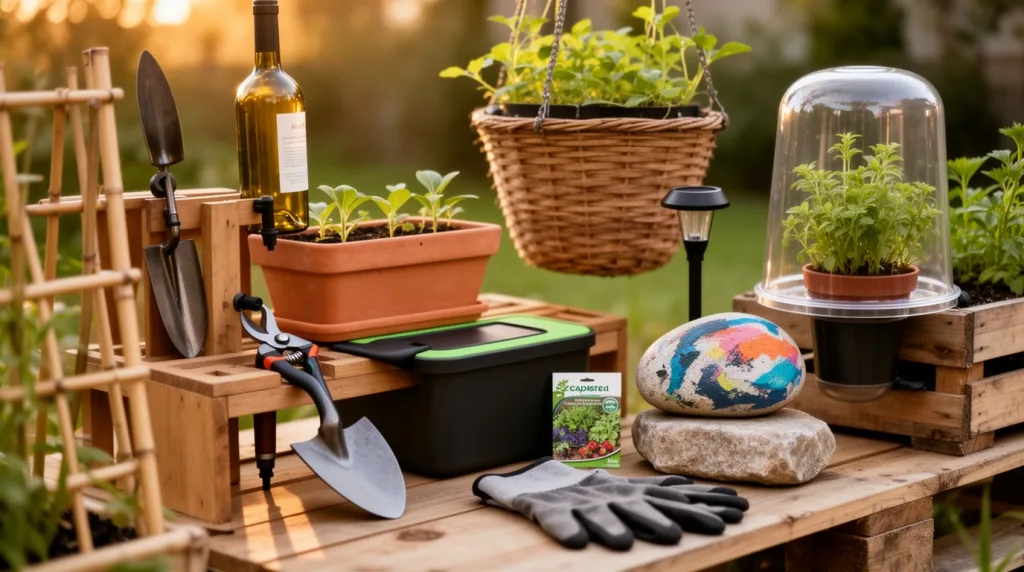
The Only Tools You Need for a Thriving Garden 🌱
Whether you're a weekend gardener or growing daily — these hand-picked tools make every session faster, easier, and more satisfying.