You’re looking for a garden that stays beautiful without demanding constant care, and a well‑planned rock garden can deliver that. By combining textured stones, drought‑tolerant succulents, native perennials, and evergreen anchors, you’ll get year‑round interest while keeping water use and maintenance low. The right mix of boulders, gravel mulch, and shallow pockets lets you add edibles or seasonal blooms without extra effort. Discover how each of the 18 ideas balances aesthetics, durability, and ease of upkeep.
Key Takeaways
- Use drought‑tolerant native plants and succulents in sunny zones to minimize watering and maintenance.
- Install a permeable substrate of coarse sand, perlite, and coconut coir, topped with 2–3 inches of gravel mulch for drainage and moisture retention.
- Position large flagstones or reclaimed boulders as a base, filling gaps with medium stones and groundcover like thyme to suppress weeds.
- Add drip‑irrigation with a timer, watering early morning and relying on rain after the first growing season.
- Stabilize slopes with geotextile fabric, interlocking rocks, and a 2–3 % contour to direct runoff to catch basins and prevent erosion.
How to Choose the Right Low‑Maintenance Rock Garden for Your Space
When you’re planning a low‑maintenance rock garden, start by assessing the site’s sunlight, soil drainage, and climate, because these factors dictate which plants and stone arrangements will thrive without constant care. First, map the sun exposure zones—full sun, partial shade, or full shade—and match them with hardy succulents, sedums, or shade‑loving ferns.
Test drainage by digging a 12‑inch hole; water should disappear within 30 seconds, otherwise amend with coarse sand or select raised beds. Choose native or drought‑tolerant species that suit your hardiness zone to reduce watering.
Pick stones that complement the terrain and are easy to reposition, like flagstones or river rocks. Arrange them in irregular clusters to mimic natural outcrops, leaving gaps for plant growth and easy maintenance.
Finally, install a drip‑irrigation line with a timer to automate watering, ensuring the garden stays vibrant with minimal effort.
Alpine‑Style Rock Garden: Drought‑Tolerant Grasses
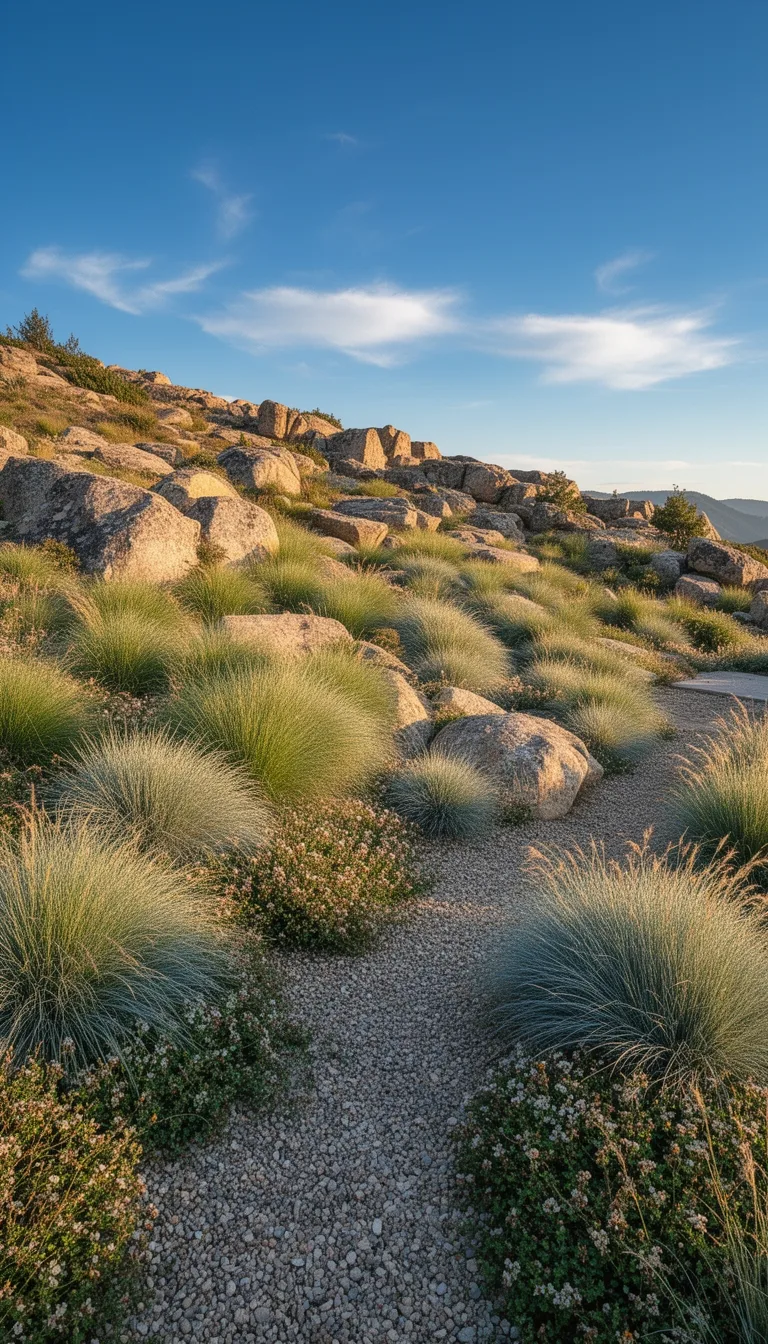
After mapping sun exposure and drainage for a low‑maintenance garden, you can add texture and movement with drought‑tolerant grasses that thrive in alpine‑style rock settings.
Choose fine‑leaf fescues, such as *Festuca glauca*, for silvery blades that contrast dark stone. Plant them in shallow pockets where water drains quickly; their root systems spread horizontally, stabilizing soil and reducing erosion.
Space the grasses 12–18 inches apart to allow air flow and prevent fungal buildup. Pair them with small, hardy sedums to fill gaps and create a layered look.
Mulch lightly with coarse gravel to retain moisture while mimicking alpine scree. Water only during the first growing season, then let natural rainfall sustain the plants, keeping maintenance to a minimum.
Low‑Maintenance Succulent Rockery With Mixed‑Size Boulders
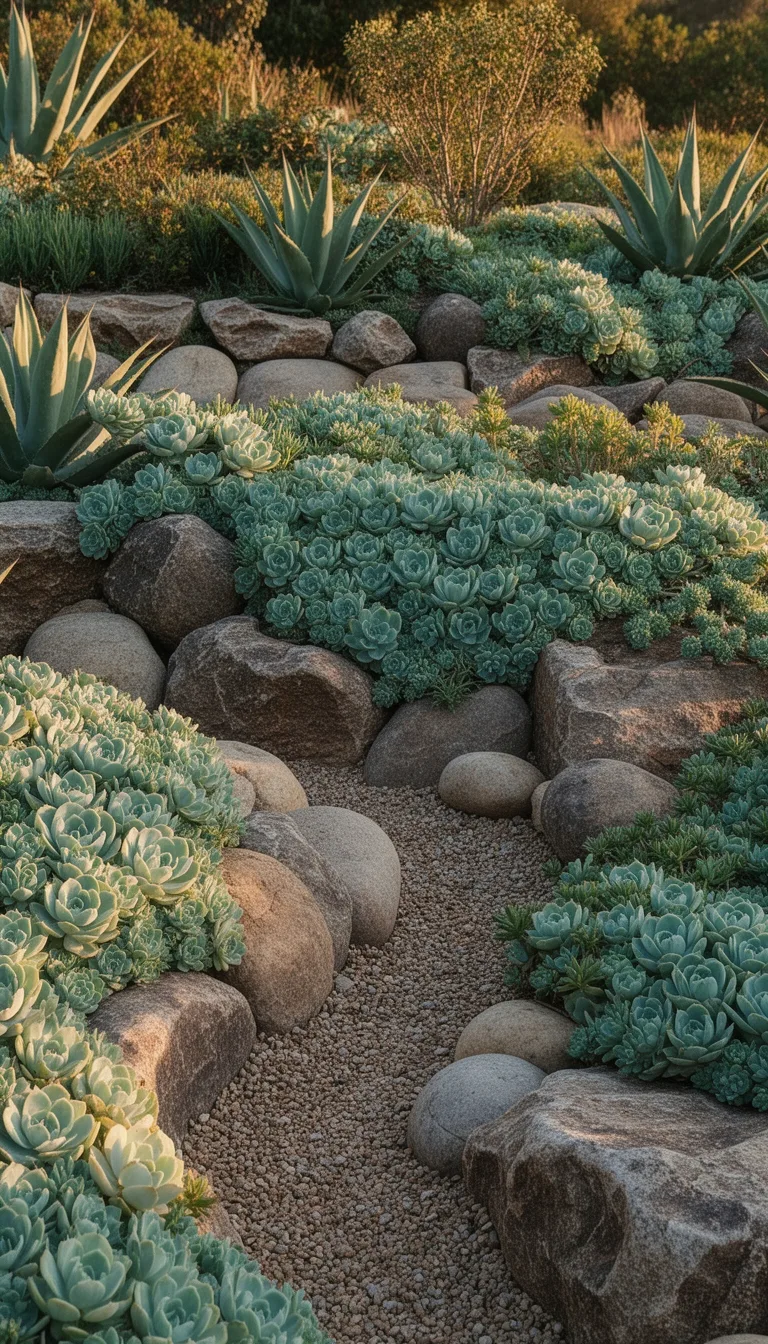
A low‑maintenance succulent rockery with mixed‑size boulders creates a striking, drought‑tolerant centerpiece that thrives on minimal care.
First, choose a well‑draining substrate—sand, coarse gravel, and a touch of loam—to prevent waterlogging.
Lay a base layer of larger boulders (12–18 in) to define the layout, then fill gaps with medium stones (4–6 in) for visual depth.
Plant hardy succulents such as Sedum, Echeveria, and Agave, spacing them 6–12 in apart to allow air circulation.
Water only after the soil dries completely, using a drip‑irrigation timer set to once a week in summer.
Mulch with crushed granite to suppress weeds and retain moisture.
Prune dead leaves quarterly, and you’ll have a resilient, eye‑catching rockery that stays lush year‑round.
Minimalist Zen Garden: Raked Gravel & Low‑Growth Moss

Start with a shallow, level tray of fine, white gravel, then rake it into gentle, flowing lines that echo water ripples; this simple base sets the tone for a minimalist Zen garden and provides a clean canvas for low‑growth moss.
Choose a compact moss species such as *Leucobryum glaucum* that tolerates partial shade and infrequent watering.
Lay a 2‑inch layer of sand beneath the gravel to improve drainage and prevent moss rot.
Plant moss in small, irregular patches, spacing them 6‑12 inches apart for visual balance.
Water once a month with a fine mist, allowing the soil to dry between sessions.
Trim overgrown edges with scissors to keep lines crisp, and rake the gravel weekly to refresh the ripple pattern.
This routine keeps the garden serene with minimal effort.
Wild‑Flower‑Filled Low‑Maintenance Rock Garden Using Native Perennials

Choosing native perennials that thrive in your climate lets you create a wild‑flower‑filled rock garden that looks vibrant year after year with minimal upkeep.
Start by mapping zones of sun, partial shade, and moisture; then place larger clump‑forming species like Echinacea or Rudbeckia in the sunniest pockets, and lower‑growth plants such as Gaillardia and Coreopsis in drier, partially shaded crevices.
Use a mix of seed‑sown annuals (e.g., Liatris and Penstemon) to fill gaps quickly, allowing them to self‑seed.
Install a permeable substrate—gravel mixed with sand and a thin layer of compost—so water drains yet retains enough moisture for roots.
Mulch lightly with coarse bark to suppress weeds while preserving soil temperature.
Schedule a single spring weeding, then let the garden self‑maintain, trimming only dead stems after flowering.
Mediterranean‑Inspired Low‑Maintenance Rock Garden With Lavender & Rosemary
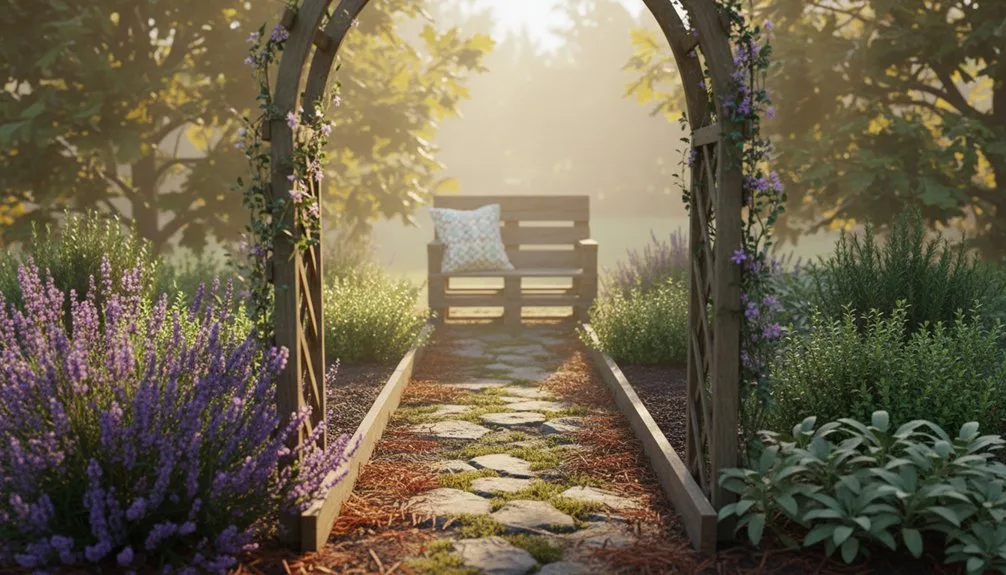
Creating a Mediterranean‑inspired rock garden means blending sun‑loving herbs with rugged stonework for a low‑maintenance oasis. You’ll pick a sunny, well‑drained spot, lay a base of coarse sand and gravel, then arrange large slate or limestone boulders to form terraces. Plant lavender in the front for fragrant color, rosemary on the middle tier for texture, and dwarf thyme or sage in the crevices to fill gaps. Install a drip‑irrigation line that runs along the stone edges; a timer will water once a week. Mulch with crushed olive‑stone to retain moisture and suppress weeds. The result is a fragrant, drought‑tolerant garden that looks mature with minimal upkeep.
| Plant | Placement |
|---|---|
| Lavender | Front edge |
| Rosemary | Mid‑tier |
| Thyme | Crevices |
| Sage | Between rocks |
| Oregano | Upper slopes |
Raised Rock Garden Bed for Small Patios & Balconies
Nestled on a sunny balcony or compact patio, a raised rock‑garden bed gives you the drama of a stone landscape without sacrificing space.
Choose a lightweight, weather‑resistant planter—fiberglass or galvanized steel—about 12‑18 inches high and 2‑3 ft wide.
Fill the bottom with a coarse gravel layer for drainage, then add a mix of sand, perlite, and loam to mimic alpine soil.
Position hardy, low‑maintenance succulents, thyme, or dwarf ornamental grasses in the front, and larger dwarf conifers or dwarf bamboo toward the back for height contrast.
Install a drip‑irrigation line with a timer to keep moisture consistent and reduce watering effort.
Anchor the bed with brackets or a non‑slip mat to prevent tipping in wind.
This setup delivers visual impact, easy upkeep, and a resilient micro‑climate for small outdoor spaces.
Dry‑Stream Bed: Stone Cascades & Water‑Saving Plantings
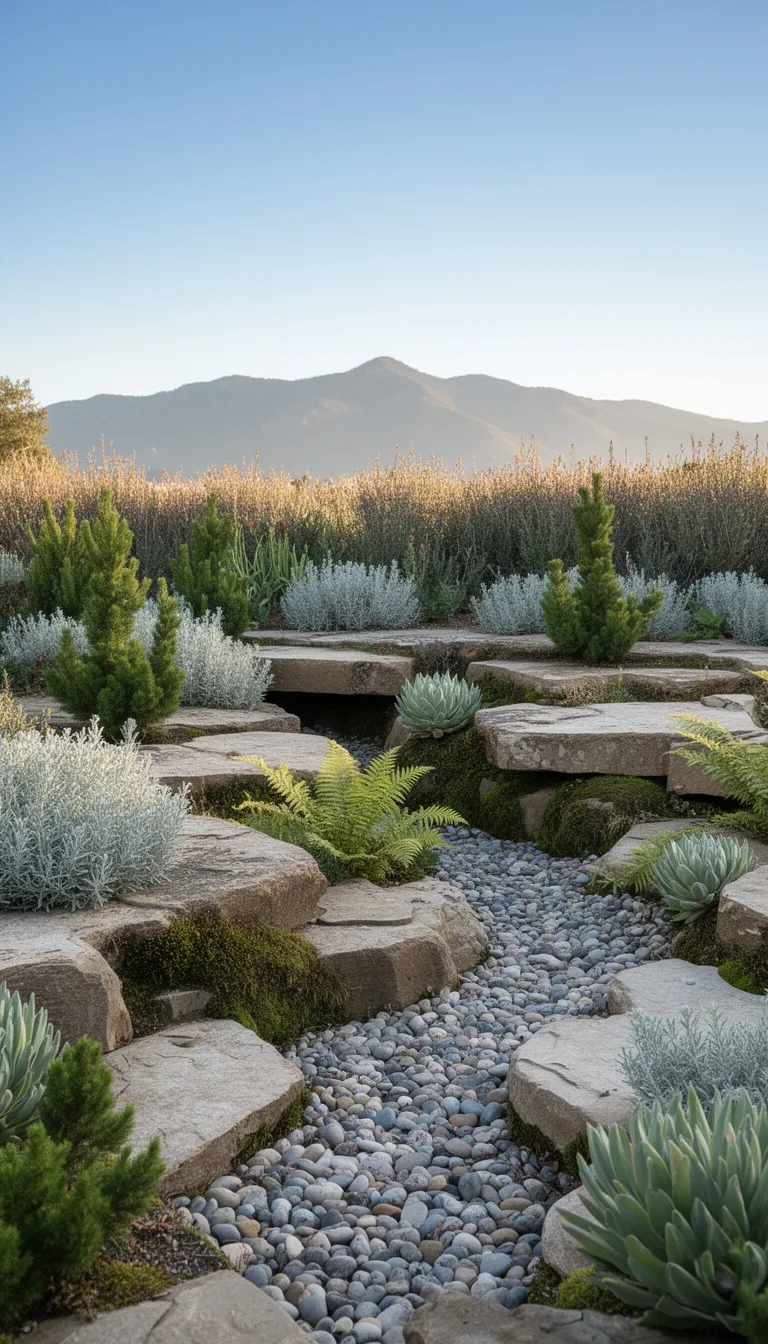
Designing a dry‑stream bed lets you mimic a natural creek while conserving water, so you get the drama of stone cascades without a constant flow. Choose rugged boulders, arrange them in staggered tiers, and fill the channels with gravel or sand to suggest a riverbed. Plant drought‑tolerant succulents, lavender, and ornamental grasses that thrive on occasional mist. Add a drip‑irrigation line hidden behind rocks for precise watering and a subtle sound of trickling water during dry spells. This layout boosts curb appeal, reduces maintenance, and creates a focal point that feels alive year‑round.
| Feature | Materials | Plant Choices |
|---|---|---|
| Stone cascade | River rock, basalt | – |
| Bed filler | Crushed gravel, sand | – |
| Water‑saving plants | Sedum, lavender | – |
| Irrigation | Hidden drip line | – |
How to Stop Erosion on Sloped Terraces With a Low‑Maintenance Rock Garden
Stabilize your sloped terrace by integrating a low‑maintenance rock garden that anchors soil and redirects runoff. Begin with a geotextile fabric to separate soil from stone, then layer coarse gravel for drainage.
Choose interlocking retaining rocks or gabion baskets to create terraces; their mass holds earth while allowing water to flow through gaps. Plant drought‑tolerant groundcovers—creeping thyme, sedum, or moss—between rocks to bind soil and absorb excess moisture.
Install a slight contour, about 2–3 % grade, so water moves laterally toward a dry creek line or catch‑basin. Use permeable edging to prevent compaction and periodically check for displaced stones after heavy rain.
This system minimizes maintenance, controls erosion, and keeps your landscape visually striking.
Edible Low‑Maintenance Rock Garden: Herbs, Berries & Mini‑Vegetables
If you want a rock garden that feeds you as well as looks great, start by selecting hardy, low‑maintenance edibles that thrive in shallow, well‑drained soil.
Choose thyme, oregano, and sage for their shallow root systems and drought tolerance; they spill over rocks, filling gaps with fragrance. Plant dwarf blueberry varieties in raised pockets, using acidic mulch to keep soil pH low and moisture steady. Add miniature tomato or pepper plants in larger crevices, supporting them with a single stake to avoid sprawling. Space each plant 12–18 inches apart to prevent crowding and to allow airflow, reducing disease risk. Use gravel‑covered drip lines for consistent watering, and top‑dress with coarse sand to improve drainage and keep weeds at bay.
Harvesting & Caring for Edible Rock Gardens
Now that your herbs, berries, and mini‑vegetables are established among the rocks, the next step is keeping them productive and healthy throughout the season. Water early in the morning with a fine‑mist nozzle, aiming for soil that’s moist but never soggy; the rocks will retain moisture, so a shallow soak every 5‑7 days usually suffices.
Mulch with coarse sand or shredded bark to suppress weeds and moderate temperature swings. Harvest herbs just before they flower for peak flavor, snipping stems with clean scissors and leaving at least one third of the plant intact.
Pick berries when they’re fully colored but still firm; a gentle shake or scissors cut avoids bruising. For mini‑vegetables, harvest when fruits reach the recommended size, pulling gently to avoid disturbing roots.
Rotate crops annually, moving species to fresh rock pockets to prevent soil‑borne diseases and maintain vigor.
Rock Garden Border Around a Pathway or Deck
Along the edge of a pathway or deck, a rock‑garden border not only defines the walk but also adds texture, color, and low‑maintenance planting space. You’ll choose hardy, drought‑tolerant plants that thrive between stone and soil, then arrange them in a way that guides foot traffic while staying visually interesting.
Keep the border low enough for easy access, use a mix of groundcovers, succulents, and ornamental grasses, and mulch lightly to suppress weeds. A well‑planned border reduces erosion, protects the deck’s footing, and creates a seamless transition to the surrounding garden.
- Sedum ‘Dragon’s Blood’ – vibrant red foliage that spreads quickly.
- Thyme – aromatic, low‑grower that tolerates foot traffic.
- Blue fescue – silvery tufts that contrast dark stones.
- Creeping rosemary – fragrant, evergreen, and drought‑resistant.
- Agave ‘Blue Glow’ – sculptural rosettes that anchor the design.
Integrated Seating & Pebble Flooring for Low‑Maintenance Rock Gardens
A rock‑garden border already gives you a defined edge, so the next step is to turn part of that space into functional seating while keeping upkeep minimal. Choose a low‑profile concrete slab or a reclaimed timber bench that sits flush with the edging. Fill the surrounding area with pea‑gravel or river‑rock mulch; it drains quickly, deters weeds, and stays cool underfoot. Anchor the seat with discreet brackets to prevent shifting, and add a few weather‑resistant cushions for comfort. The pebble floor creates a seamless transition from path to perch, letting you relax without constant raking or mowing.
| Feature | Benefit |
|---|---|
| Flush bench | No tripping hazard |
| Pea‑gravel | Excellent drainage |
| Weather‑resistant cushions | Year‑round comfort |
| Bracket anchoring | Stable, low‑maintenance |
Colorful Autumn‑Foliage Shrubs for Low‑Maintenance Rock Gardens
Looking for shrubs that blaze with color in autumn while demanding little upkeep? You’ll love low‑maintenance varieties that thrive in rocky soil, tolerate drought, and keep your garden vibrant through the season. Choose plants with compact growth, hardy roots, and striking foliage that complements stone and gravel.
- Viburnum davidii – glossy green leaves turn brilliant orange‑red, tolerates full sun and poor soil.
- Mahonia aquifolium – glossy holly‑like leaves shift to deep burgundy, provides winter berries.
- Weigela japonica – narrow upright habit, foliage reddens to copper, blooms early summer.
- Hypericum perforatum – low‑spreading, leaves blaze gold‑yellow, tolerates dry, rocky spots.
- Rhododendron ferrugineum – dwarf alpine, leaves turn rust‑red, thrives in acidic, stone‑filled beds.
These shrubs need minimal pruning, occasional watering, and they keep your rock garden striking without constant care.
Night‑Time Glow: Rock Gardens With Integrated Lighting
Illuminating a rock garden at night transforms stone and foliage into a striking, low‑maintenance showcase.
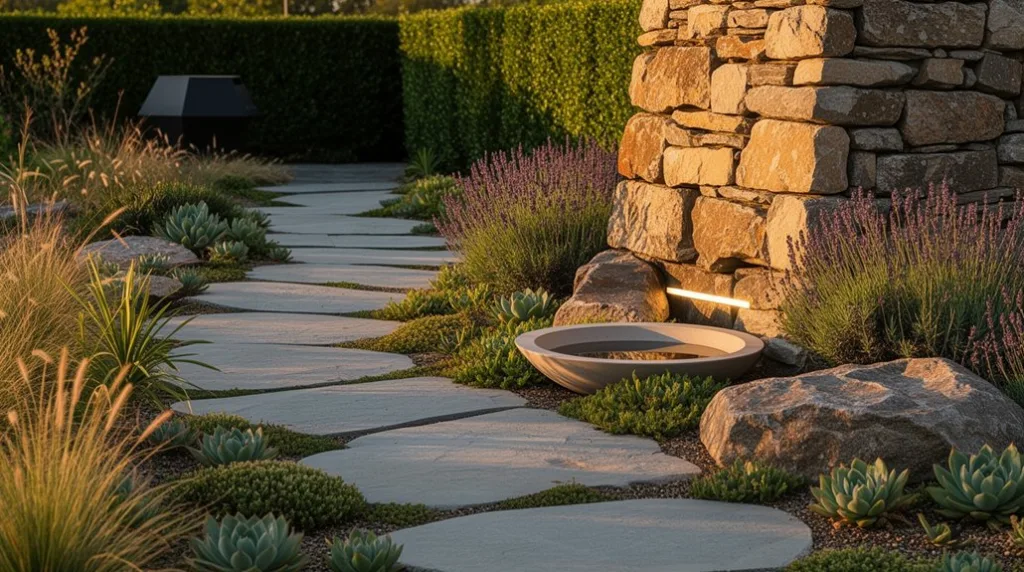
You’ll begin with low‑voltage LED strip lights tucked behind larger boulders; the diffused glow highlights texture without glare.
Add solar‑powered spotlights on a timer to accentuate focal plants, such as dwarf conifers or succulents, and set the timer for dusk to sunrise.
Choose warm‑white LEDs (2700 K) for a cozy ambience, or cool‑white (5000 K) for a modern feel.
Install waterproof, low‑profile fixtures in the ground, burying them just beneath the surface to protect wiring.
Connect all lights to a single smart hub, allowing you to adjust brightness and color remotely.
This setup requires minimal upkeep—just occasional battery checks and occasional cleaning of the lenses.
Eco‑Friendly Low‑Maintenance Rock Gardens: Upcycled Stones & Recycled Materials
Many homeowners can create stunning, low‑maintenance rock gardens while cutting waste and costs by repurposing broken concrete slabs, reclaimed bricks, and salvaged river stones.
You’ll start by sorting materials by size and texture, then lay a base of crushed recycled glass for drainage.
Arrange larger slabs as terraces, interspersing reclaimed bricks for visual rhythm.
Fill gaps with river stones that have been cleaned and de‑iced, then mulch with shredded newspaper to suppress weeds.
Finish with a low‑flow drip irrigation line that taps into rain‑water barrels.
- Crushed recycled glass as a permeable base layer
- Reclaimed brick steps forming gentle, weathering‑resistant paths
- River stones placed in clusters for natural texture
- Shredded newspaper mulch to retain moisture and deter weeds
- Rain‑water‑fed drip lines for efficient, eco‑friendly watering
Seasonal Interest: Spring Bulbs to Winter Evergreens in Rock Gardens
After sorting reclaimed bricks and river stones for your low‑maintenance layout, you can layer seasonal color and texture by planting spring bulbs that bloom through the stone gaps and then adding evergreen foliage that holds the garden together through winter.
Choose early‑blooming tulips, crocuses, and daffodils; plant them 4‑6 in. deep, spacing 3‑4 in. apart, and press soil firmly to prevent shifting.
Follow with a ring of hardy evergreens such as dwarf juniper, boxwood, or low‑grown spruce, spacing them 12‑18 in. apart to create a continuous backdrop.
Mulch lightly with coarse sand to improve drainage and keep weeds at bay. Water sparingly after planting, then let rain sustain the bulbs.
This sequence delivers vivid spring color, midsummer texture, and winter structure with minimal upkeep.
DIY Water‑Retention Mulch & Soil Amendments for Low‑Maintenance Rock Gardens
Creating a DIY water‑retention mulch blend is a simple way to keep your rock garden hydrated while minimizing maintenance. Mix coarse pine bark, shredded coconut coir, composted leaf mold, hydratedlite, and a dash of sand. This blend holds moisture, improves drainage, and breaks down slowly, feeding microbes and keeping weeds at bay.
- Pine bark: rugged texture, deep brown, mimics natural rock debris.
- Coconut coir: spongy, light brown, traps water like a sponge.
- Leaf mold: dark, crumbly, releases nutrients over time.
- Perlite: white, airy, prevents compaction and boosts aeration.
- Sand: fine, tan, creates a stable base and enhances drainage.
Apply 2‑3 inches, work it into crevices, and water thoroughly. The mix stays cool, reduces evaporation, and lets you enjoy a thriving, low‑maintenance rock garden year‑round.
Conclusion
Pick the style that that your your you,,maintenance, with the right mix of stones, drought‑tolerant plants, and smart irrigation. By layering textured boulders, gravel, and shallow pockets, you’ll enjoy year‑round visual interest while keeping water use and upkeep low. Embrace native perennials, succulents, and evergreen anchors to stabilize slopes and deter weeds, and add subtle lighting for nighttime appeal. The result is a resilient, beautiful low‑maintenance landscape that works for you and the environment.
The Only Tools You Need for a Thriving Garden 🌱
Whether you're a weekend gardener or growing daily — these hand-picked tools make every session faster, easier, and more satisfying.