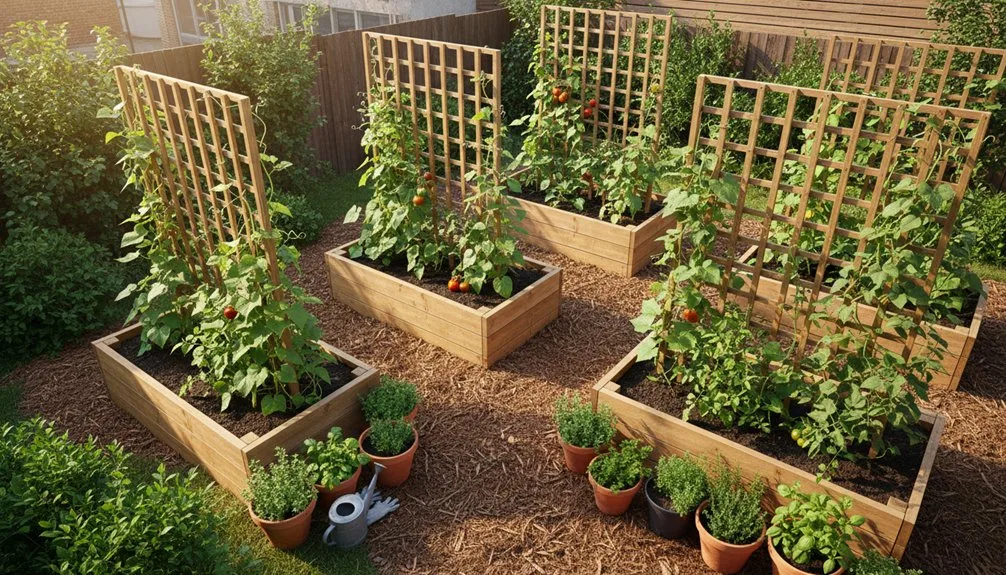
If you’re growing tomatoes, you need a good trellis. It supports heavy vines, keeps fruit clean, and prevents disease. But choosing the right system depends on your tomato type and garden setup. You must also anchor it properly. Let’s compare the best options and how to install them, so your plants stay healthy and productive all season.
Key Takeaways
- Trellising improves air circulation to reduce fungal disease and keeps fruit off damp soil.
- Match sturdy cages to determinate tomatoes and tall systems like stakes to indeterminate vines.
- Secure trellises immediately after transplanting and anchor supports at least one foot deep.
- Use soft ties like jute twine and check them often to avoid damaging growing stems.
- Employ designs like the Florida weave or A-frame to maximize space and simplify plant access.
Why a Tomato Trellis Is Essential for Healthy Plants
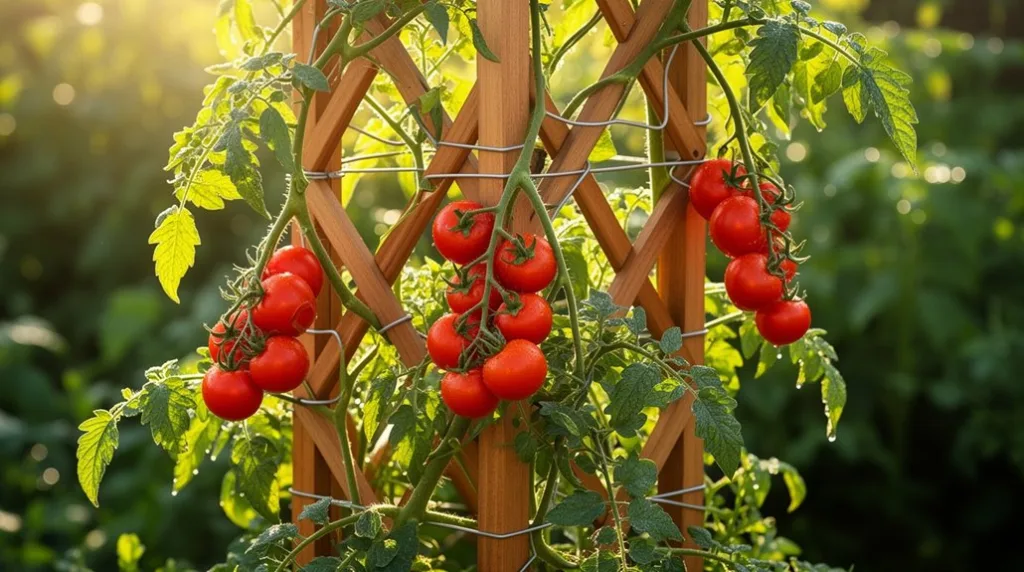
Although tomato plants can sprawl on the ground, training them on a trellis is fundamental for their vitality. You’ll significantly improve air circulation around the foliage, which is your first defense against fungal diseases like blight. A trellis also keeps fruit off the damp soil, preventing rot and slug damage.
You’re ensuring each leaf gets maximum sunlight for better growth and sweeter tomatoes. Managing your plants vertically saves you immense garden space, letting you grow more in the same area.
Harvesting becomes quicker and cleaner, as you won’t be searching through a tangled mat. You’ll also spot pests more easily. Start trellising when plants are young and flexible; it’s far simpler than wrestling an overgrown, heavy vine later.
How to Choose the Right Tomato Trellis for Your Garden
Selecting the perfect trellis starts with assessing your tomato variety’s growth habit and your garden’s available space.
First, determine if your plants are determinate (bushy) or indeterminate (vining). Determinate types often do well with simple, sturdy cages that support their compact, heavy fruit load.
For vigorous indeterminate varieties, you’ll need a tall, robust system like a stake, a woven string trellis, or an A-frame that accommodates continual growth.
Measure your garden beds to ensure your chosen design fits without crowding other plants, as good air circulation prevents disease.
Always consider ease of access for pruning, harvesting, and inspecting leaves, as this ongoing maintenance is crucial for plant health and a successful yield.
Picking the Best Materials for Your Tomato Trellis
Choose durable materials that can support your plants’ weight and withstand the elements. Strong, rot-resistant options ensure your trellis lasts for seasons.
For wooden frames, select cedar or redwood, which naturally resist decay. You can also use pressure-treated lumber, but apply a protective sealant to prevent soil contact. Metal stakes and cages offer excellent longevity, though you should coat them to prevent rust. Natural fiber ties, like jute, are gentler on stems than plastic, but synthetic options last longer.
- Wood: Opt for cedar, redwood, or sealed pressure-treated lumber for rot resistance.
- Metal: Use galvanized steel or coated metal stakes and cages for maximum strength.
- Fasteners: Choose rust-proof screws, nails, or zip ties for secure assembly.
- Ties: Employ soft jute twine or reusable velcro plant ties to avoid stem damage.
When and How to Install Your Tomato Trellis
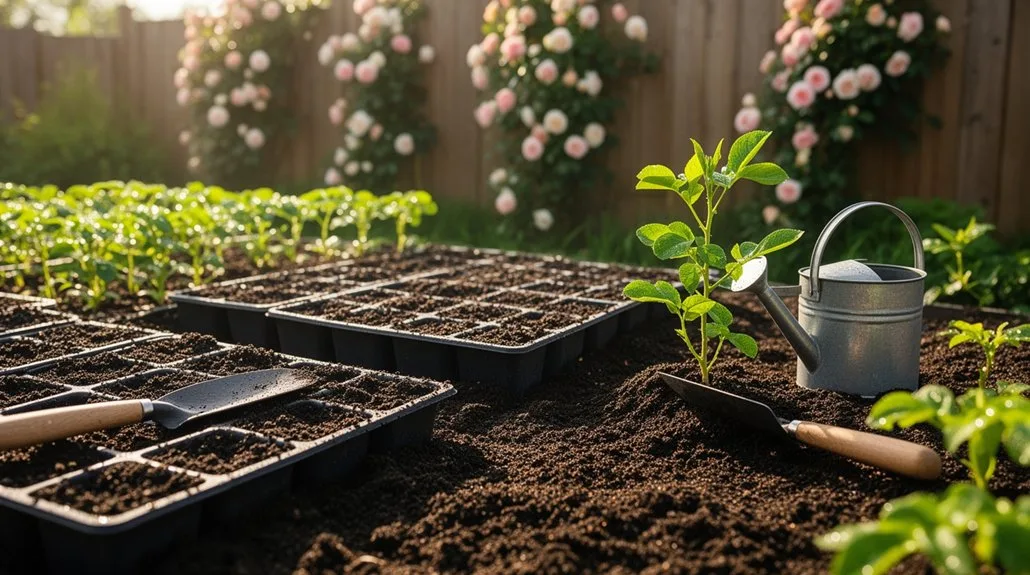
To get your tomatoes off to a strong start, install the trellis right after transplanting your seedlings into the garden. This protects the tender roots from later damage.
First, drive your main support stakes deeply into the ground, at least a foot deep, ensuring they’re sturdy. For a single-stake system, place it about three inches from the plant’s base. If using a vertical weave, set sturdy posts at each row end and run a horizontal wire along the top. You’ll add more guide lines as the plants grow.
Gently tie the main stem to the support using soft plant ties, making a loose loop. Check these ties every week or two; you don’t want them to cut into the expanding stem.
The Classic Tomato Cage: Pros, Cons, and Best Uses
Consider the classic tomato cage, a familiar sight in many gardens. Its open conical form offers immediate, all-around support for your plant as it grows.
You’ll find it’s easiest to install the cage at planting time, carefully pressing its legs into the soil around the seedling. This proactive setup prevents root disturbance later.
For indeterminate varieties, you may need to add taller stakes or tie branches to the cage as they exceed its height. While convenient, these cages can be flimsy; you must select a sturdy model or reinforce it.
- Its radial structure encourages balanced growth and fruit exposure to sunlight.
- The wide openings facilitate easy harvesting from all sides.
- A correctly sized cage provides crucial early support for developing main stems.
- Inexpensive, mass-produced cages often lack the durability for robust, multi-season use.
How to Build a Simple and Sturdy Stake Trellis
Drive a tall, sturdy stake deep into the ground right next to your tomato seedling at planting time. Use an eight-foot metal T-post or a thick wooden stake, sinking at least a foot into the soil for solid support. This prevents root damage later.
As the plant grows, you’ll tie its main stem to the stake every 10–12 inches using soft plant ties, cloth strips, or specialty clips. Make your ties in a loose figure-eight pattern, with the stake in one loop and the stem in the other.
This simple method provides critical vertical support, keeping heavy fruit off the damp soil to prevent rot and disease. It also improves air circulation for healthier foliage.
Building a Florida Weave for Tomato Rows
While a stake trellis works for single plants, a Florida weave is a smart choice when you’ve got a row of tomatoes. You’ll create a supportive web by weaving twine between sturdy stakes, cradling plants as they grow.
This method improves air circulation to fight disease and keeps fruit off the ground. Start by pounding stakes, like metal T-posts or wooden stakes, firmly into the ground at each end of the row and between every two or three plants.
- Install your first line of twine when seedlings are about 1 foot tall, weaving it in a figure-eight pattern around each stake for a secure hold.
- Add new tiers of twine every 6 to 10 inches as the plants grow, providing continuous vertical support.
- Use a sturdy, biodegradable twine, like jute or sisal, that can withstand seasonal weather and tension.
- Always check and tighten the twine mid-season to prevent sagging, which can damage stems or reduce support.
DIY A-Frame Trellises for Maximum Space Efficiency
You can double your growing space by building a sturdy A-frame trellis, a perfect vertical solution for sprawling tomatoes in tight gardens. Construct two identical frames from wooden stakes or bamboo poles, lashing them together securely at the top. Place the frames over your row with plants centered underneath.
You’ll gain more air circulation around foliage, reducing fungal disease risk. Use soft twine or cloth strips to gently tie main stems to the frame as they grow; this prevents damage and supports heavy fruit. This method keeps plants upright, ensuring sunlight reaches all leaves for better ripening. Its open structure also makes pruning and harvesting much easier than with crowded, horizontal growth.
Creating a Vertical String Trellis for Small Spaces
Harness vertical space by setting up a simple string trellis, an ideal system for supporting tomatoes on patios or balconies. You’ll need a sturdy overhead anchor, like a hook or beam, and a growing container for your plant.
Securely tie a length of strong, biodegradable jute or tomato twine to the anchor. Attach the other end loosely to the plant’s base stem using a loose loop knot, which won’t strangle it as the stem thickens.
As the tomato vine grows, gently wind its main stem around the string, encouraging vertical growth. This method improves plant health by promoting crucial air circulation and sunlight exposure, while keeping fruits clean and easy to harvest.
- Select a Soft, Biodegradable Twine: Materials like jute are gentle on stems and can decompose at season’s end.
- Employ a Non-Constricting Base Knot: Use a loose figure-eight or slip knot to secure the string at the soil line.
- Practice Regular, Gentle Training: Wind new growth around the string every few days to prevent breakage.
- Ensure an Unobstructed Light Path: Position your trellis to avoid shading the plant’s lower foliage.
How to Build a Cattle Panel Tomato Archway
Transform a simple cattle panel into a stunning and productive tomato archway. You’ll need one panel, four metal T-posts, and heavy-duty zip ties.
First, select a location with full sun. Space your T-posts to match the panel’s width and hammer them about two feet deep for stability. Center the cattle panel over these posts, creating your arch’s base. Secure the panel to each post using several zip ties; this prevents swaying.
Plant your tomatoes on either side of the arch, spacing them according to their variety’s needs. As the vines grow, you’ll gently weave them through the panel’s grid. This method provides excellent airflow and sunlight exposure, reducing disease risk while making harvesting a breeze.
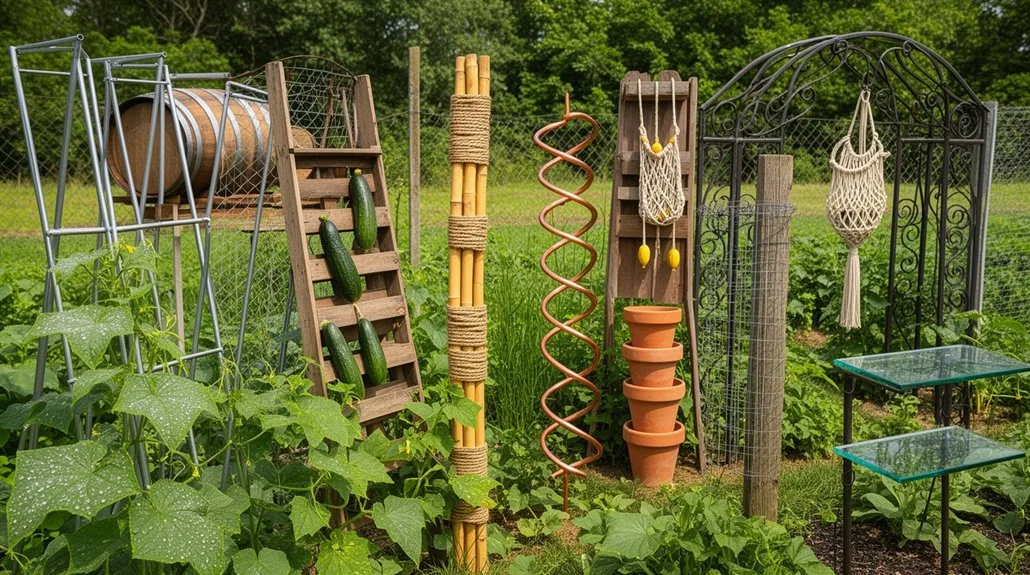
Using a Wooden Ladder as a Rustic Tomato Trellis
When you have an old wooden ladder available, repurposing it as a rustic tomato trellis is a simple and effective project.
You’ll position the ladder between two tomato plants, angling it slightly to increase sun exposure and air circulation for improved plant health. Secure its feet firmly in the soil to prevent tipping.
As your indeterminate vines grow, you’ll train them up the ladder’s steps, using soft twine for support rather than tying them tightly. This method keeps fruits off the ground, reducing rot and pest damage.
To ensure its success and longevity:
- Inspect the ladder for structural integrity and treat it with a non-toxic wood preservative.
- Choose a ladder width that accommodates your garden’s row spacing.
- Anchor the structure using stakes or by burying the bottom steps.
- Regularly prune suckers to direct growth onto the trellis and prevent overcrowding.
Upcycled Tomato Trellis Ideas From Household Items
Repurposing common household items into tomato supports is a clever way to save money and reduce waste.
An old wooden stepladder makes a fantastic, instant A-frame trellis. Just secure it over your plant, and you’ve got sturdy rungs for tying stems.
You can also craft a simple stake from a sturdy broom handle or a length of PVC pipe; push it deep into the soil near the plant’s base for vertical support.
For cage-style support, bend old wire shelving or a chain-link fence panel into a cylinder. Ensure any metal is rust-free to prevent soil contamination.
Always tie stems loosely with soft cloth strips or twine to avoid damaging the plant as it grows and gains weight.
Which Tomato Trellis Works Best for Determinate Varieties?
While those upcycled solutions work well in a pinch, you’ll find determinate, or bush-type, tomatoes have different needs.
They grow to a compact, preset height and set fruit within a concentrated window.
Your goal is to support their dense, often heavy, central foliage to prevent fruit from touching the soil and to improve airflow.
Simple, sturdy cages are often the most effective and manageable choice for this growth habit.
- Select sturdy, wide cages that can handle the plant’s bushy weight without collapsing.
- Install cages early at planting time to avoid damaging the shallow root system later.
- Gently guide stems inward as they grow, but avoid extensive pruning which can reduce yield.
- Ensure the cage is tall enough to support the mature plant’s full height, typically 3 to 5 feet.
Trellising Strategies for Vigorous Indeterminate Tomatoes
Shift your strategy for the vigorous, climbing growth of indeterminate tomatoes, which produce fruit continuously until frost. You’ll need a robust, tall system to manage six to twelve feet of growth. Choose a heavy-duty stake or a strong trellis like a cattle panel arch or a sturdy Florida weave with multiple support lines.
As the main stem grows, you’ll regularly tie it to the support using soft twine or clips; don’t constrict the stem. Prune the “suckers,” the shoots that form in leaf-stem junctions, to direct energy to fruit production and improve air circulation. This prevents disease and keeps your plant manageable, ensuring it supports its heavy fruit load throughout the season.
Simple Steps to Train Your Tomatoes Onto a Trellis
Begin by tying the main stem of your young tomato plant loosely to your trellis or stake with soft twine, allowing room for the stem to thicken. Check these ties weekly and adjust them as the plant grows to prevent girdling.
Your goal is to guide one primary stem upward for optimal airflow and sunlight exposure. Gently weave new growth through the trellis openings as it appears, which encourages the plant to support itself.
Regular training sessions prevent stems from growing unruly and breaking under their own weight.
- Inspect daily for “suckers,” the small shoots that grow in leaf-stem junctions, and pinch them off while they’re less than three inches long to direct energy to fruit production.
- Use a figure-eight tie when securing stems, placing the loop around the trellis and the stem to prevent abrasion and constriction.
- Train in the morning when stems are most pliable to minimize the risk of snapping tender growth.
- Remove lower leaves that show signs of disease or touch the soil to improve air circulation and reduce pathogen spread.
Tying and Pruning Techniques for Trellised Tomatoes
As you continue training your tomatoes, selecting the right tying method and pruning schedule directly impacts their vigor and yield. Use soft plant ties or cloth strips, forming a loose figure-eight around the stem and support to prevent damage. Tie the main stem every 6-12 inches as it grows.
For pruning, identify and remove the suckers—those small shoots growing in the leaf axils. Pinch them off when they’re young, about 1-2 inches long. This directs the plant’s energy into fruit production on the main stem and selected leaders, improving air circulation and reducing disease risk.
Regularly check ties to ensure they aren’t constricting stems, and prune weekly for best results.
How to Fix a Sagging, Breaking, or Overloaded Trellis
Even with the best tying and pruning, a trellis can sometimes sag, break, or become overloaded with heavy vines. Address these issues promptly to prevent plant stress and damage.
For a sagging structure, you’ll first need to reinforce its foundation by re-driving stakes or adding extra supports at an angle. You can then relieve the immediate load by gently redistributing the vine weight.
- Install angled braces from the main posts to the ground to counteract leaning.
- Tie a horizontal support between wobbly vertical posts to create a rigid frame.
- Prune away non-fruiting branches and some foliage to reduce overall weight.
- Secure broken sections with sturdy wire, metal brackets, or a wood splint.
How a Trellis Makes Harvesting Tomatoes Much Easier
Trellising your tomatoes pays off handsomely when harvest time arrives.
By keeping vines off the ground, you’ll find every fruit is clearly visible and accessible. You won’t have to hunt through tangled foliage or lift heavy branches, which prevents damaging stems. It’s much simpler to check for ripeness, spot pests, and identify any disease since the plant’s structure is open.
You can harvest with one hand, gently plucking ripe tomatoes without wrestling the plant. This organized growth also means you’re less likely to miss a tomato, ensuring you get your full yield.
A tidy trellis system saves you time and effort, making the routine task of picking a pleasure rather than a chore.
Protecting Your Trellis and Plants From Wind and Weight
Beyond the ease of harvest, you’ll also want your trellis to withstand the elements. A robust structure protects both your investment and your plants from wind damage and the heavy load of ripening fruit. You can secure your system with a few key practices.
- Anchor Posts Deeply: Drive your main trellis posts at least 18 inches into the ground and consider using concrete footings for permanent installations.
- Use Heavy-Duty Materials: Select sturdy wood, thick metal, or strong nylon netting that won’t sag under the weight of mature vines.
- Employ Cross-Bracing: Add diagonal supports between vertical posts to prevent lateral sway during strong gusts.
- Regularly Prune and Tie: Maintain plant health by pruning excess foliage and securely tying main stems to the trellis every few weeks to distribute weight evenly.
Frequently Asked Questions
Can I Trellis Tomatoes in a Container?
Yes, you can. Use stakes or cages and tie stems loosely to support them. This improves air circulation and reduces disease, helping container tomatoes stay healthy and produce more fruit.
Do Trellises Prevent Tomato Diseases?
Yes, trellises can prevent diseases. They keep foliage dry and improve airflow, which reduces fungal infections. You’ll also spot problems sooner and avoid soil contact, making plants healthier.
Should I Remove Trellises in Winter?
Remove trellises only if you store them indoors. You’ll prevent rust and decay. If you leave them outdoors, keep them upright to avoid damaging your soil structure or harming dormant plants nearby.
Can I Reuse a Trellis Next Season?
Yes, you can reuse it. Just clean it first to remove disease. Scrub with a diluted bleach solution, rinse well, and let it dry completely before storing it for winter. You’ll prevent spreading problems next year.
Will Trellises Damage Tomato Plant Roots?
No, trellises won’t damage roots if you install them carefully. Plant your tomato first, then gently push the stake into nearby soil. You’ll avoid harming the root zone and still get solid support.
Conclusion
To keep your plants healthy, install a strong, well-anchored trellis before planting. Tie your vines with soft loops and prune suckers regularly. This improves air flow, keeps fruit clean, and makes picking simple. Check ties and supports often, adding cross-bracing if things sag. A good trellis directs energy to your tomatoes, giving you a bigger, better harvest all season.
The Only Tools You Need for a Thriving Garden 🌱
Whether you're a weekend gardener or growing daily — these hand-picked tools make every session faster, easier, and more satisfying.